


Login
Get Instant Pricing On 23,000+ Aircraft


Traveling from Pittsburgh to Key West offers various flight options, including limited nonstop services and connecting itineraries. Private charters provide a direct and flexible alternative, with prices and schedules varying by season. Understanding the best times to book and the differences between commercial and private flights can enhance your travel experience.
Jeff Ryan Serevilla
Oct 9, 2026
|
5
min read


View all
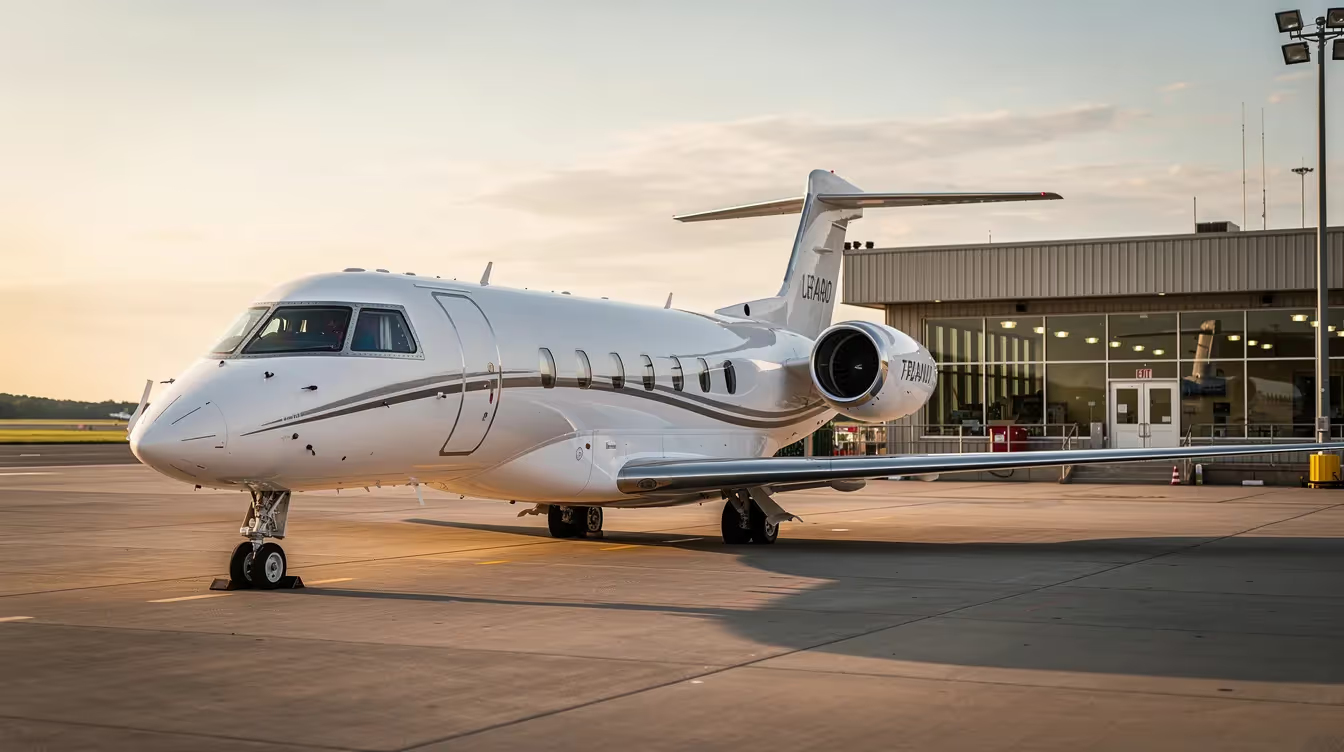
Jettly simplifies private air travel by offering an aircraft charter service that allows travelers to rent entire aircraft for customized trips, providing flexibility and convenience over commercial flights. With access to over 20,000 aircraft globally, Jettly's platform enables users to search, compare, and book flights easily, eliminating the hassles of traditional airport processes. Charter flights save time and enhance comfort, making them ideal for both business and leisure travel, while also allowing access to more airports than commercial airlines. Overall, Jettly offers a transparent and efficient way to experience private aviation tailored to individual needs.
Jay Franco Serevilla
May 31, 2026
|
5
min read

View all
Business jets are essential for modern corporate and private travel, offering flexibility, convenience, and efficiency by providing direct access to numerous airports worldwide. They cater to various travel needs, from short regional flights to long intercontinental journeys, while prioritizing privacy and productivity. Jettly simplifies the process of accessing over 20,000 business aircraft with transparent pricing and instant booking options, making it easier for travelers to choose the right aircraft based on their specific requirements. The business jet market is expected to evolve in the coming years, focusing on sustainability and enhanced connectivity.
Jay Franco Serevilla
May 31, 2026
|
5
min read

View all
The Cessna Citation Encore (Model 560) is a light jet introduced in 2000, known for its balance of speed, cabin comfort, and operating costs, making it ideal for regional trips of 1.5–3 hours. With a range of approximately 1,700 nautical miles and a maximum cruise speed of 426–430 knots, it can operate from shorter runways, enhancing access to smaller airports. Jettly provides a platform for travelers to compare charter options and pricing for the Citation Encore, offering transparent, on-demand services without ownership commitments. The aircraft features upgraded Pratt & Whitney engines, advanced avionics, and a comfortable cabin layout for 7-9 passengers, making it suitable for both business and leisure travel.
Jay Franco Serevilla
May 31, 2026
|
5
min read

View all
The King Air 350 is a versatile twin-engine turboprop ideal for private charter, offering a spacious cabin for up to nine passengers and the ability to operate from shorter runways. With a maximum range of 1,806 nautical miles and cruise speeds around 312 knots, it balances performance and comfort for various missions, including corporate travel, air ambulance services, and special operations. Charter rates typically start in the mid-$2,000s per hour, while ownership costs can exceed $1 million annually. Jettly provides on-demand access to the King Air 350, emphasizing transparent pricing and flexible booking options for travelers.
Jay Franco Serevilla
May 31, 2026
|
5
min read

View all
The Gulfstream G150 is a midsize private jet known for its speed, range, and comfort, accommodating 6-8 passengers for trips up to approximately 3,000 nautical miles. Developed by Israel Aircraft Industries and Gulfstream Aerospace, it features advanced avionics and fuel-efficient engines, making it a popular choice for private charters. Jettly offers on-demand charter options for the G150, providing instant pricing and digital booking, while also allowing travelers to customize services like catering and ground transport. With pre-owned models priced between $5 million and $8 million and annual operating costs around $2.1 million, chartering offers a cost-effective alternative to ownership.
Jay Franco Serevilla
May 31, 2026
|
5
min read

View all
Private aviation has evolved beyond traditional aircraft ownership, with subscription and membership models reshaping how travelers access private jets. Jet cards, all-you-can-fly programs, and on-demand charter services now offer flexibility, predictable pricing, and lower upfront costs compared to owning an aircraft. These alternatives appeal to executives, entrepreneurs, and frequent travelers who value convenience without the operational burden of ownership. As costs of ownership continue to rise, subscription-based flying is becoming the preferred model for many private aviation users.
Jay Franco Serevilla
May 27, 2026
|
5
min read
Explore our latest articles and updates.

5
min read
Cirrus SR22 Insurance Costs: What Owners Should Really Expect in 2026
Cirrus SR22 insurance costs can range from $2,500 to over $9,000 annually, influenced by factors like hull value and pilot experience. Understanding these costs and investing in training can help owners manage their insurance expenses effectively as they head into 2026.
Read More
5
min read
Keystone Aviation Utah: Private Jet Charter & Aircraft Services in Salt Lake City
Keystone Aviation, now Elevate Jet, offers premier private jet charter services from Salt Lake City, Utah. With a diverse fleet and extensive local knowledge, they provide flexible and efficient travel options for both business and leisure. Partnered with Jettly, customers can access transparent pricing and a seamless booking experience.
Read MoreJoin our community and receive the latest blog updates directly in your inbox.
MEMBERSHIPS AND ASSOCIATIONS



Disclaimer: Jettly operates as a charter broker, offering access to a global digital jet charter marketplace. Jettly is not a direct air carrier and does not own or operate aircraft. All advertised flights are conducted by third-party air carriers that are fully licensed and hold the appropriate Part 135 or Part 121 certifications issued by the Federal Aviation Administration (FAA) or equivalent regulatory authorities under U.S. or foreign law. Jettly complies fully with the U.S. Department of Transportation's Part 295 and Part 298 Charter Broker regulations. Jettly does not carry additional liability insurance. Passengers are covered by aircraft operator insurance. TICO: 50023770


