


Login
Get Instant Pricing On 23,000+ Aircraft


This article provides developers and travel planners with essential insights into accessing JetBlue's aviation data, including flight schedules and real-time status. It highlights the importance of integrating JetBlue's API with private charter services like Jettly to enhance travel solutions and optimize trip planning. Understanding these options allows for seamless passenger experiences and operational advantages.
Jay Franco Serevilla
Sep 13, 2026
|
5
min read



View all
Helicopter flight costs in 2025-2026 range from $1,200 to over $5,000 per hour, influenced by aircraft type, distance, and demand. Factors like location, seasonality, and additional fees also play a significant role in determining the final price. Booking in advance and considering shared flights can help travelers save on costs.
Jay Franco Serevilla
Jul 24, 2026
|
5
min read

View all
The ATR 72-201 and ATR 72-202 are efficient turboprop aircraft designed for regional group charters, accommodating 66 to 72 passengers. With their reliable performance and operational flexibility, they are ideal for corporate shuttles, sports teams, and tour operators. Jettly offers seamless booking options for these versatile aircraft, making them a practical choice for group travel.
Jay Franco Serevilla
Jul 24, 2026
|
5
min read

View all
The ATR 42 is a versatile regional turboprop ideal for short-haul flights, accommodating 30-50 passengers. This guide provides insights into its performance, variants, and how to book a charter through Jettly, making it a cost-effective choice for group travel.
Jay Franco Serevilla
Jul 24, 2026
|
5
min read

View all
The Boeing 737, a twin-engine jetliner, is the best-selling commercial aircraft family, with over 10,000 units delivered. Spanning four generations, including the latest 737 MAX, it offers enhanced performance, efficiency, and comfort, making it a popular choice for both commercial airlines and private charters.
Jay Franco Serevilla
Jul 24, 2026
|
5
min read

View all
Solairus Aviation is a leading U.S. private aviation company specializing in aircraft management and charter services, managing over 355 aircraft nationwide. This article compares Solairus's owner-focused model with digital charter platforms like Jettly, highlighting their core services, fleet capabilities, and safety standards to help travelers choose the best option for their needs.
Jay Franco Serevilla
Jul 24, 2026
|
5
min read

View all
Talon Aviation and Talon Air are two distinct entities in the aviation sector, with Talon Aviation focusing on flight training in North Carolina and Talon Air specializing in private jet charters from New York. This guide clarifies their differences and highlights the role of Jettly, a digital marketplace that connects travelers to a wide range of private jet options. Understanding these services can help you choose the right aviation path for your needs.
Jay Franco Serevilla
Jul 24, 2026
|
5
min read
Explore our latest articles and updates.
5
min read
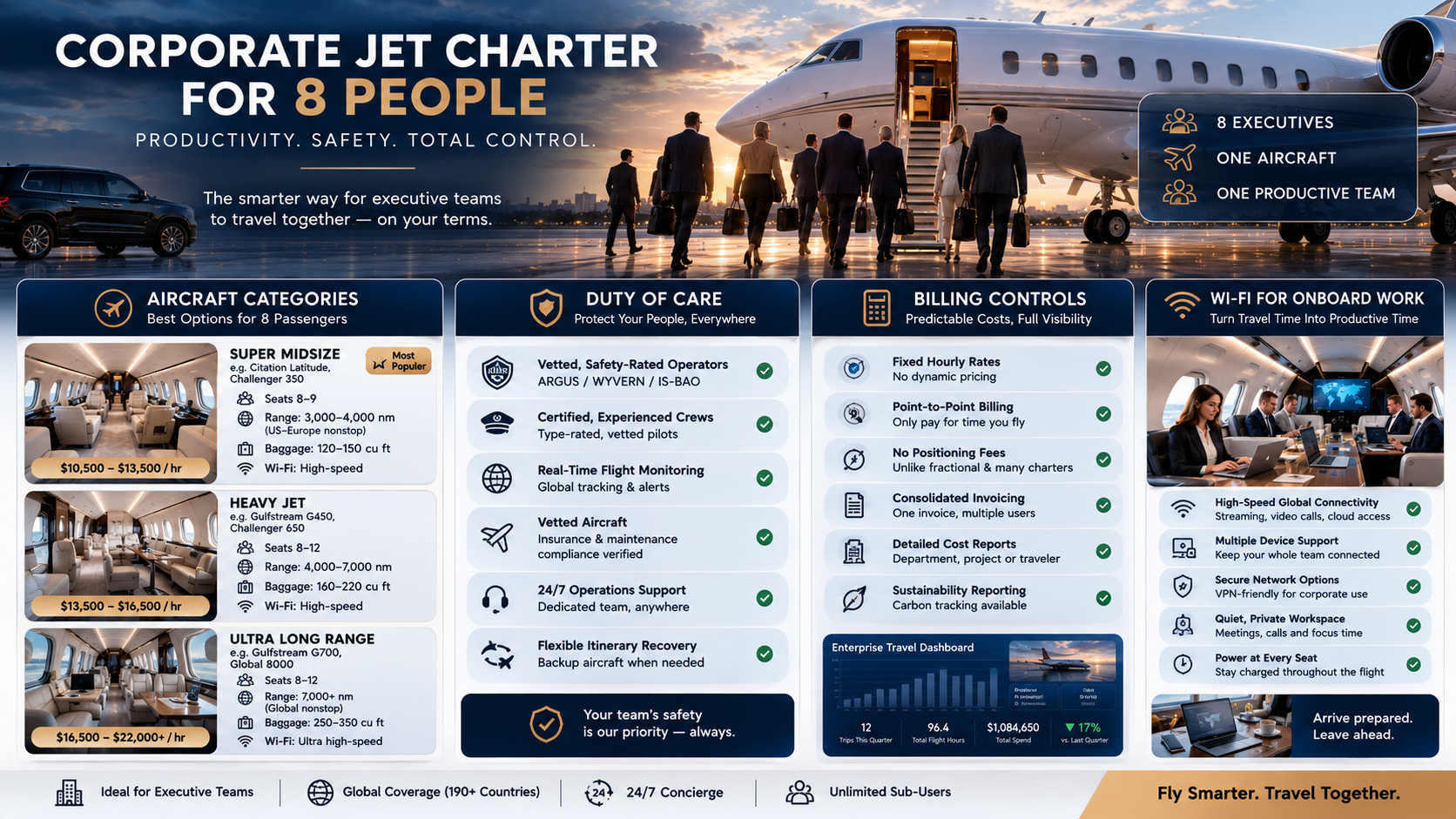
Corporate Jet Charter for 8 People: Aircraft Categories, Duty of Care, Billing Controls, and Wi‑Fi for Onboard Work
This comprehensive guide outlines the essentials for corporate jet charters accommodating teams of eight, focusing on aircraft categories, duty of care, billing controls, and onboard connectivity. It emphasizes the importance of selecting the right jet type, ensuring reliable Wi-Fi for work, and implementing effective billing practices to manage costs. By understanding these factors, organizations can enhance their private aviation experience and ensure smooth travel for their leadership teams.
Read More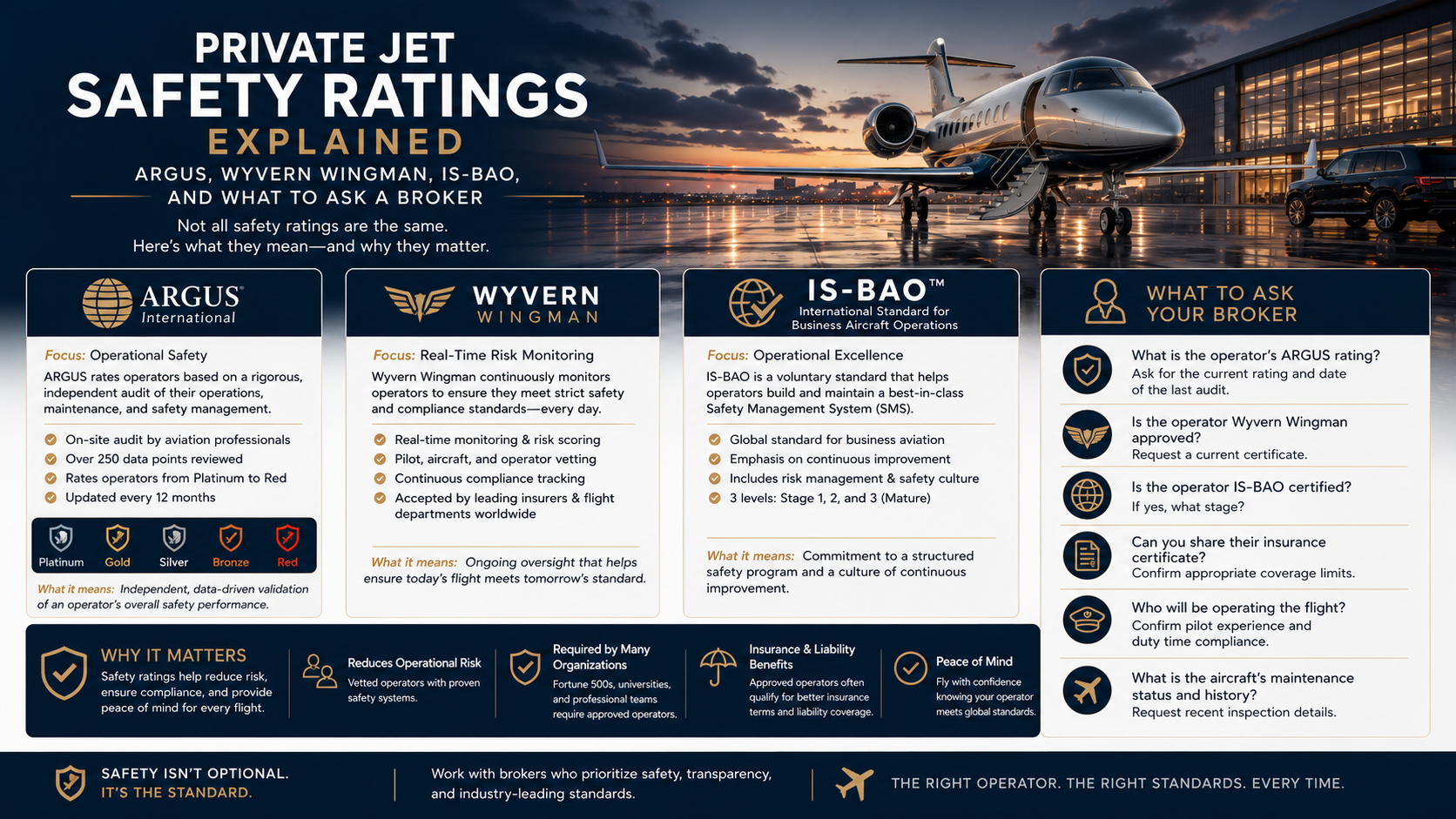
5
min read
Private Jet Safety Ratings Explained (ARGUS, WYVERN Wingman, IS-BAO, and What to Ask a Broker)
Private jet safety ratings, such as ARGUS, WYVERN, and IS-BAO, are essential tools for evaluating charter operators. These ratings assess how well operators train crews, maintain aircraft, and manage risks, providing an extra layer of safety assurance. Understanding these ratings and verifying the operator's credentials can significantly enhance your travel safety.
Read MoreJoin our community and receive the latest blog updates directly in your inbox.
MEMBERSHIPS AND ASSOCIATIONS



Disclaimer: Jettly operates as a charter broker, offering access to a global digital jet charter marketplace. Jettly is not a direct air carrier and does not own or operate aircraft. All advertised flights are conducted by third-party air carriers that are fully licensed and hold the appropriate Part 135 or Part 121 certifications issued by the Federal Aviation Administration (FAA) or equivalent regulatory authorities under U.S. or foreign law. Jettly complies fully with the U.S. Department of Transportation's Part 295 and Part 298 Charter Broker regulations. Jettly does not carry additional liability insurance. Passengers are covered by aircraft operator insurance. TICO: 50023770


