



Login
Get Instant Pricing On 23,000+ Aircraft

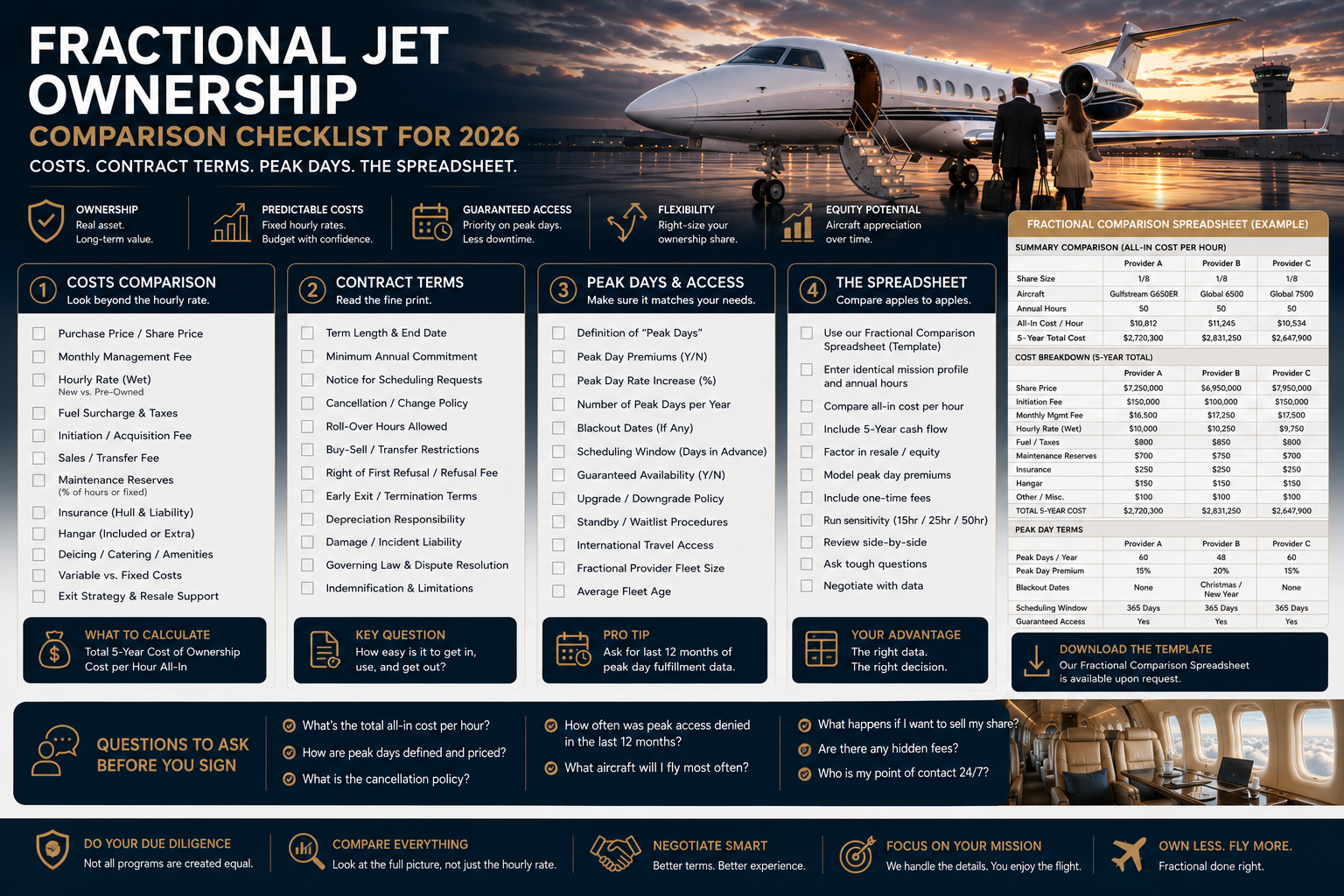
The 2026 Fractional Jet Ownership Comparison Checklist is essential for buyers to evaluate proposals effectively. It standardizes quotes into an effective cost per occupied hour, ensuring transparency in costs and contract terms. This comprehensive guide also addresses peak-day reliability, helping buyers make informed decisions in fractional jet ownership.
Jay Franco Serevilla
Jul 25, 2026
|
5
min read



View all
Civil aviation encompasses a diverse range of aircraft types, from commercial airliners to private jets. Understanding these categories helps travelers and aviation enthusiasts make informed decisions about their flying needs. This guide details the various aircraft types, their missions, and how to choose the right plane for specific travel requirements.
Jay Franco Serevilla
Oct 23, 2026
|
5
min read

View all
In 2026, Jettly revolutionizes private jet travel with real-time flight tracking, providing travelers with live updates on aircraft positions, ETAs, and status notifications. This technology enhances trip planning, allowing for better coordination of ground transport and instant pricing based on current data. With over 20,000 aircraft available, Jettly ensures a seamless and predictable travel experience for its users.
Jay Franco Serevilla
Oct 23, 2026
|
5
min read

View all
Tracking Southwest Airlines arrival flights is crucial for smooth pickups and connections. This guide covers real-time status checks, key terms, and how private jet charters through Jettly offer more control over arrival times. Understanding flight status updates can significantly enhance your travel experience.
Jay Franco Serevilla
Oct 23, 2026
|
5
min read

View all
Flight tracking by tail number allows users to monitor specific aircraft using their unique registration codes. This method is particularly useful in private aviation, where flights often lack public schedules. Jettly utilizes this technology to enhance safety, operational efficiency, and customer communication for charter services.
Jay Franco Serevilla
Oct 23, 2026
|
5
min read

View all
Understanding flight timing is crucial for optimizing private jet travel. This guide covers essential aspects like departure windows, time zones, and how to leverage platforms like Jettly for efficient scheduling. By mastering these details, travelers can significantly reduce wasted time and enhance their overall travel experience.
Jay Franco Serevilla
Oct 23, 2026
|
5
min read

View all
This guide provides an in-depth look at jet fuel types, standards, and performance metrics essential for private jet travelers and aviation professionals. It covers key specifications like flash point, freezing point, and density, which are crucial for aircraft safety and operational efficiency. Understanding these factors helps ensure reliable private jet operations and informed charter decisions.
Jeff Ryan Serevilla
Oct 23, 2026
|
5
min read
Explore our latest articles and updates.

5
min read
Best Day of the Week to Buy Plane Tickets: Data, Myths, and Smart Booking Strategies
Finding the best day of the week to buy plane tickets is a common query, but no single day guarantees the lowest fare. Mid-week days often show slightly lower fares, but factors like booking window and flight timing are more crucial for savings. This guide explores data-backed patterns and smart strategies for both commercial and private jet travel.
Read More
5
min read
Best Time To Buy Hawaii Tickets: How To Lock In The Best Deal On Your Hawaii Trip
Discover the best strategies for booking flights to Hawaii and save money on your trip. This guide outlines optimal booking windows, travel periods, and tips for finding the best deals. Whether you're traveling for leisure or business, understanding these factors can help you secure the best airfare.
Read MoreJoin our community and receive the latest blog updates directly in your inbox.
MEMBERSHIPS AND ASSOCIATIONS



Disclaimer: Jettly operates as a charter broker, offering access to a global digital jet charter marketplace. Jettly is not a direct air carrier and does not own or operate aircraft. All advertised flights are conducted by third-party air carriers that are fully licensed and hold the appropriate Part 135 or Part 121 certifications issued by the Federal Aviation Administration (FAA) or equivalent regulatory authorities under U.S. or foreign law. Jettly complies fully with the U.S. Department of Transportation's Part 295 and Part 298 Charter Broker regulations. Jettly does not carry additional liability insurance. Passengers are covered by aircraft operator insurance. TICO: 50023770


