


Login
Get Instant Pricing On 23,000+ Aircraft

>
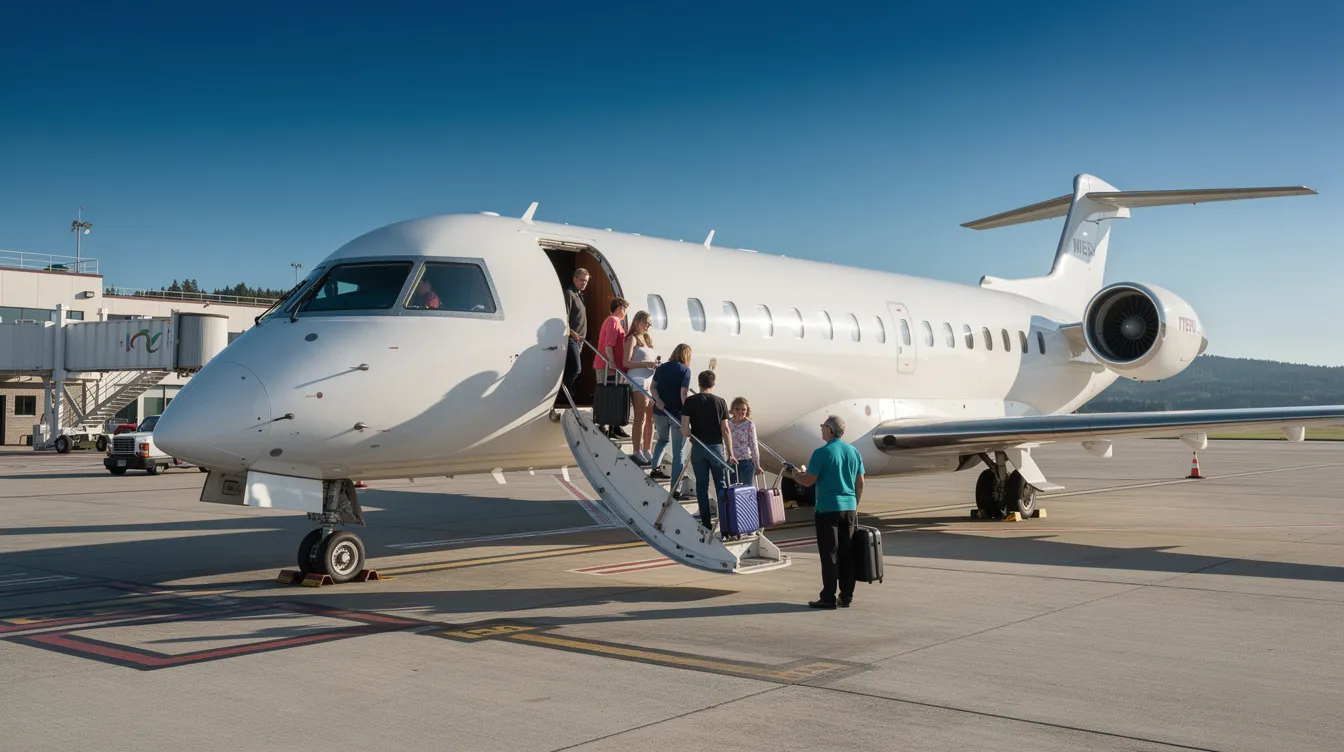
American Eagle Airlines is the regional brand of American Airlines, operating one of the largest regional flight networks in the world and linking smaller cities to major hubs across the United States and beyond. This guide is for travelers, business professionals, and anyone comparing regional airline service with private jet charter. Understanding the differences between American Eagle and private charter options can help travelers make informed decisions about cost, convenience, and flexibility. For millions of travelers each year, American Eagle serves as the bridge between regional communities and the broader American Airlines network, with flights operated by carriers such as Envoy Air and other regional partners.
For frequent travelers, corporate executives, and high-net-worth individuals weighing regional airline service against private aviation, that distinction matters. This guide looks at American Eagle’s operations, history, fleet, route network, and onboard experience, then compares it with private jet charter on the factors that most affect real trip planning: cost, schedule flexibility, airport access, privacy, and overall convenience.
American Eagle is the regional brand of American Airlines, linking smaller cities to major hubs like Dallas–Fort Worth and Charlotte Douglas International Airport. It employs a combination of wholly owned subsidiaries and contracted regional airlines, including Envoy Air, Piedmont Airlines, and PSA Airlines, all under the American Airlines Group umbrella.
The corporate entity was once called "American Eagle Airlines," rebranded to Envoy Air in 2014 to avoid confusion between the operating company and the broader American Eagle brand. The American Eagle brand name still appears on regional flights today.
American Eagle flights are fully integrated into American Airlines' operations, meaning passengers earn AAdvantage miles, follow the same baggage policies, and experience consistent service standards.
American Eagle operates over 340 daily flights from Charlotte alone and serves 242 destinations as of October 2024, primarily on domestic USA routes with some service into Canada, Mexico, and the Caribbean.
For travelers who need schedule flexibility, privacy, or point-to-point routing that bypasses hubs, Jettly offers a private jet charter platform with access to 20,000+ aircraft globally and instant pricing—a practical alternative to regional commercial routes.
American Eagle functions as the regional brand of American Airlines, designed for feeder services into large hubs across the United States, Canada, Mexico, the Caribbean, and parts of Central and South America. All regional partners operate under the American Eagle brand, sharing service standards with American Airlines. The American Eagle network includes several regional carriers, ensuring broad coverage and consistent service across the network.
American Airlines Group, headquartered in Fort Worth, Texas, coordinates both mainline American Airlines and regional Eagle-branded operations. American Eagle employs a combination of wholly-owned subsidiaries and contracted regional airlines. The wholly owned subsidiaries include Envoy Air, Piedmont Airlines, and PSA Airlines, while contracted carriers include Republic Airways, SkyWest Airlines, and Mesa Airlines.
When combined with American Airlines, the network reaches over 350 destinations in 60+ countries. An American Eagle flight focuses primarily on short- and medium-haul regional routes, connecting travelers making domestic or international connections from regional airports.
A key distinction: "American Eagle" is a brand. The former corporate entity "American Eagle Airlines" is now Envoy Air Inc. Multiple regional carriers fly under the American Eagle banner using shared livery and ticketing systems.
With this overview of the brand and its structure, let's explore how American Eagle developed and evolved over time.
American Eagle operated its first flight on November 1, 1984. The brand was created to aggregate multiple commuter and regional airlines—Metroflight, Wings West, Simmons, and others—under one identity feeding American Airlines hubs.
Through the 1990s, AMR Corp (then the parent of American Airlines) acquired and merged several of these operators. American Eagle Airlines, Inc. was formed in 1998 by consolidating several regional carriers into a single operating entity. Executive Airlines remained distinct for a time but was later integrated.
On January 14, 2014, the company announced it would rebrand to Envoy Air to avoid confusion between the operating company and the broader American Eagle brand. The change became effective in April 2014. Despite the corporate name change, most passengers still see "American Eagle" on boarding passes and aircraft—it remains the marketing brand for regional services.
Key milestones in the history include the introduction of regional jets (ERJ-145s) in the late 1990s, the gradual transition away from many turboprops, and closer alignment with American Airlines' loyalty and hub strategies.
Now that we've covered the brand's history and evolution, let's look at the main carriers operating under the American Eagle banner.
Several fully owned and contract regional carriers operate American Eagle flights, each with its own fleet, crew, and base structure. Envoy Air, PSA Airlines, and Piedmont Airlines operate as main carriers for American Eagle.
Envoy Air: The airline's headquarters is in Irving, Texas. Envoy operates a large Embraer regional jet fleet, primarily feeding Dallas–Fort Worth (DFW), Chicago O'Hare, and Miami. It runs roughly 970 daily flights to over 160 destinations with 21,000+ employees.
Piedmont Airlines: Historically focused on turboprop and small regional jet operations along the U.S. East Coast, connecting smaller cities to hubs such as Philadelphia and Charlotte. Piedmont currently operates ERJ-145 equipment.
PSA Airlines: Based in Dayton, Ohio, PSA is wholly owned by American Airlines Group. It operates Bombardier CRJ regional jets, linking cities to Charlotte Douglas, Washington National, and other eastern hubs. PSA is moving headquarters functions to Charlotte to align with the CLT hub.
Additional contracted carriers—Republic Airways (sometimes referenced as Republic Airlines), SkyWest Airlines, and Mesa Airlines—also fly under the American Eagle banner on selected routes, filling capacity where the wholly owned subsidiaries do not operate.
With an understanding of the main regional carriers, let's examine the types of aircraft that make up the American Eagle fleet.
The American Eagle fleet is composed entirely of regional jet aircraft optimized for short-haul and medium-haul flights, with seating typically between 37 and 76 passengers. The fleet mainly utilizes Embraer 170 and 175 regional jets across Envoy's operation, while PSA Airlines operates CRJ-700 (65 seats) and CRJ-900 (76 seats) aircraft.
Most American Eagle aircraft are configured in 2–2 or 1–2 seating without middle seats. Select aircraft offer a small First Class or premium cabin. Envoy is committed to growing its fleet to approximately 214 E-Jets by the end of 2027.
The shift from turboprops to regional jets over the past two decades improved speed and comfort but sometimes reduced service to very small communities—creating demand for alternatives such as on-demand charter.
Earlier American Eagle fleet types included ERJ-135, ERJ-140, ERJ-145LR, and CRJ-200 variants. Many flew from the late 1990s through the 2010s. The adoption of regional jets began in the late 1990s as replacements for turboprops on longer routes from hubs like Dallas–Fort Worth, Chicago O'Hare, and Miami International Airport.
The expansion of the regional jet fleet allowed American Airlines to offer more frequencies and nonstops from smaller cities into its hub network. Regional jet branding remained firmly under "American Eagle," creating a consistent customer experience even as specific aircraft types changed over the years.
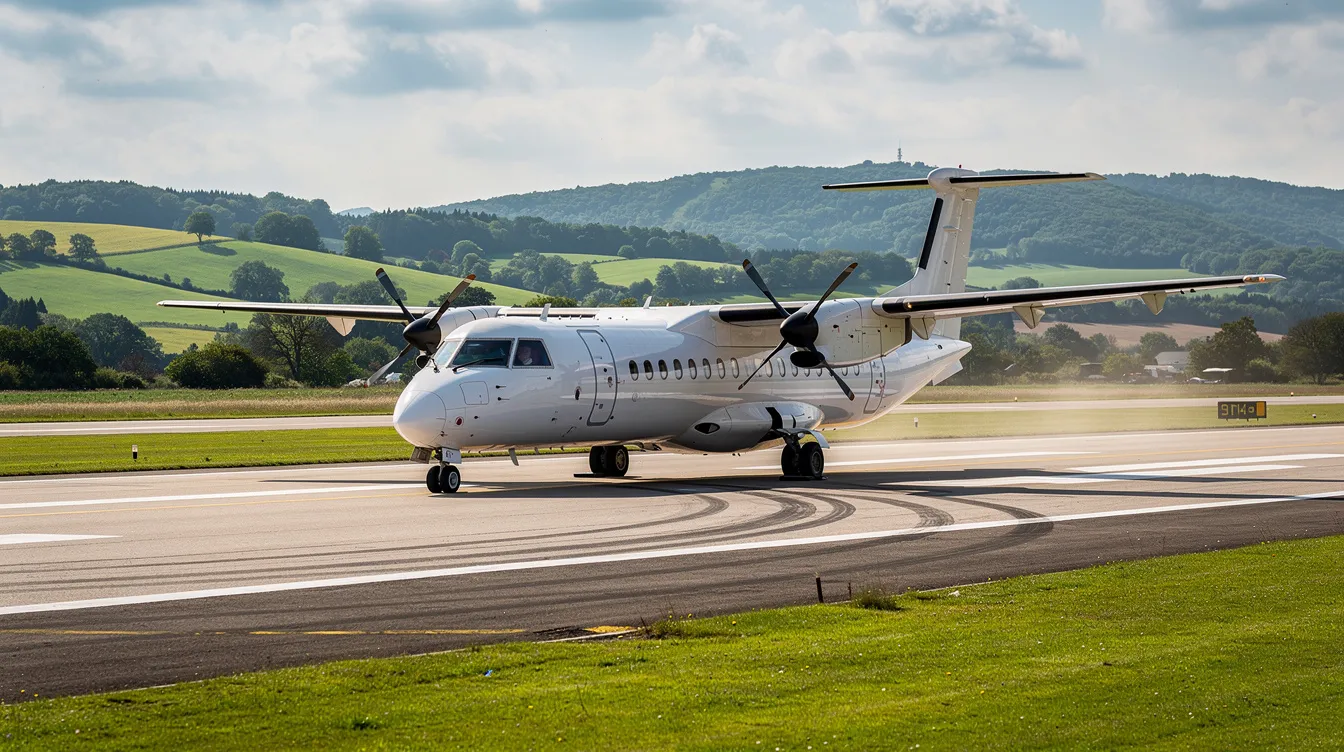
American Eagle historically operated turboprops, including the ATR 42/72, de Havilland Dash 8, and Saab 340. These aircraft served short-distance and low-yield routes where jet service was not economically viable.
Turboprops were favored for their fuel efficiency on short legs and ability to serve smaller regional airports with shorter runways. Gradual retirement of many turboprops from American Eagle service occurred from the late 2000s into the mid-2010s as passenger preference and economics shifted toward regional jets. For travelers comparing today's experience to earlier American Eagle flights, those earlier operations often felt more "commuter airline" in style. Those interested in modern turboprop charter options can still access similar aircraft categories through private charter.
With an understanding of the fleet, let's look at where American Eagle operates and its key destinations.
American Eagle connects smaller cities to American Airlines' mainline network through major hubs. Key hubs include:
|
Hub |
Code |
Notable Role |
|---|---|---|
|
Charlotte Douglas International Airport |
CLT |
Largest Eagle hub; 340+ daily flights |
|
Dallas–Fort Worth International Airport |
DFW |
Major southwestern hub |
|
Chicago O'Hare International Airport |
ORD |
Midwest connecting point |
|
Miami International Airport |
MIA |
Caribbean and Latin gateway |
|
Phoenix Sky Harbor |
PHX |
Southwest regional feeder |
|
Philadelphia International Airport |
PHL |
East Coast hub |
|
New York (JFK & LaGuardia) |
JFK/LGA |
Northeast metro access |
|
Washington National |
DCA |
D.C. corridor service |
American Eagle serves 242 destinations as of October 2024, mainly domestic U.S. markets with some services into Canada, Mexico, the Caribbean, and Central America. American Eagle focuses mainly on domestic USA routes, but international flight connections through hubs like Miami serve destinations as far as San Juan and other Caribbean points
Frequently served routes include DFW–Tulsa, CLT–Savannah, MIA–Key West, and PHX–El Paso—illustrating how Eagle flights link smaller communities to long-haul international departures, while private platforms enable crowdsourced and shared private jet flights between similar city pairs. This scheduled, hub-and-spoke model contrasts with the point-to-point flexibility offered by private jet charter platforms. For example, travelers near Charlotte can fly directly to secondary cities without connecting through a hub, while Jettly's airport locator tool helps identify nearby airfields for point-to-point private flights.
Popular destinations include New York City, Chicago, and Miami, alongside secondary markets around each hub. Frequent city pairs include Charlotte–New York, Dallas–Austin, and Chicago–Cleveland, supporting both business and leisure travelers.
These routes link corporate centers like Dallas–Fort Worth and Chicago with smaller industrial or energy towns. Typical flight lengths are often under two hours with high-frequency schedules on core routes. However, departure times remain fixed—less convenient than tailored scheduling available via private charter, jet cards, or other solutions where understanding jet card costs and pricing structures can clarify the trade-offs.
With the network and destinations in mind, let's move on to what you can expect onboard an American Eagle flight.
American Eagle mirrors American Airlines' basic service standards but in a smaller regional aircraft environment. American Eagle offers Economy and First Class options, though First Class is not available on all regional flights. Most American Eagle flights only have Economy Class.
Service is tailored to short-haul flights: complimentary soft drinks, snacks on many routes, and limited buy-on-board options depending on flight duration. In-flight entertainment is primarily via the American Airlines app. Flight attendants—typically one on smaller jets—focus on safety and basic hospitality, with limited galley facilities constraining meal options.
Main Cabin is the default on all American Eagle flights, with typical seat pitch around 30–31 inches in a 2–2 layout. Overhead bin space is limited on smaller jets, and passengers boarding from regional stands may use stairs rather than jet bridges.
Main Cabin passengers earn AAdvantage miles and Elite Qualifying credits on eligible fares, just as on American Airlines mainline flights.
First Class is available on selected regional jets such as the E175 and CRJ-900, with wider seats, extra legroom (38–40+ inches), dedicated flight attendant attention, and complimentary beverages. Seat availability in premium cabins can be limited during peak corporate travel times, prompting some frequent flyers to evaluate the best jet card programs as an alternative route to consistent premium access.
Main Cabin Extra provides more space in Economy with additional legroom and sometimes priority boarding—ideal for frequent business travelers on regional routes. For guaranteed space and privacy on every trip, a dedicated private aircraft booked via Jettly offers a different level of control. Learn more about the benefits of private jet travel.
With the onboard experience covered, let's review the practicalities of baggage, check-in, loyalty, and payment options.
American Eagle follows American Airlines' baggage policies, though baggage policies may vary by route and airline. Small overhead bins on regional jets sometimes require gate-checking roller bags.
Check-in and departure timelines:
Check-in opens two hours before departure
Ticket counter closes 45 minutes before departure
Domestic flights require check-in one and a half hours prior to departure
International flights require check-in two hours prior to departure
Online check-in availability varies by airline operator
For any international trip, travelers should also confirm the destination country's entry requirements or restrictions before departure.
AAdvantage integration means earning and redeeming miles, elite benefits like priority boarding, and complimentary upgrades on eligible American Eagle flights.
You can pay for flights in installments. Afterpay allows payments in 4 equal interest-free installments. Klarna offers flexible payment plans for flight bookings. Affirm allows monthly payments over 3, 6, or 12 months. Zip lets you split payments into manageable installments.
Private charter through Jettly eliminates standard baggage rules and check-in lines entirely, with tailored ground handling services instead, and access to a broad range of private charter aircraft suited to different trip profiles.
With these logistics in mind, let's compare American Eagle with private jet charter and see when each option makes sense.
American Eagle is ideal for scheduled, cost-effective regional travel. Private jet charter via Jettly suits travelers prioritizing time savings, privacy, and route flexibility, and there are now multiple practical pathways for getting a seat on a private jet easily without full ownership.
Consider total travel time: security queues, boarding, and connection times on regional commercial flights can add 2–3 hours to each trip. A private flight from a nearby airport can cut that dramatically—charter passengers typically arrive 20–30 minutes before departure.
Common use cases for Jettly customers include executives traveling between secondary business cities, families flying from local airfields to vacation destinations such as private jet charter flights in Atlanta, Georgia, and urgent same-day trips where commercial schedules do not align. Travelers comparing regional airlines with private aviation can benefit from a broader overview of charter airlines and private flight options. Jettly's digital platform offers access to a global inventory of 20,000+ aircraft, instant pricing, and the ability to charter light jets, turboprops, or helicopters on routes similar to or beyond the American Eagle network.
While regional carriers like American Eagle must work within fixed timetables and hub structures, private charter enables flexible departure times, bespoke routing, and tailored onboard catering.

American Eagle generally has lower ticket prices per seat. Private charter costs range from approximately $2,000 to $14,000 per flight hour, depending on aircraft type, but Jettly's private jet charter cost estimator can help you forecast and compare these expenses, which can be cost-effective for groups sharing the cost or for high-value trips where time saved equates to business value.
Jettly's transparent pricing and on-demand model differ from traditional jet cards and fractional ownership, though some frequent flyers may still prefer structured jet card programs, appealing to travelers who fly occasionally or prefer not to commit long-term funds. Private aircraft can access thousands of smaller airports not served by American Eagle, allowing travelers to bypass hubs like DFW or Charlotte and fly directly between two smaller cities.
With the cost and flexibility factors in mind, let's examine the safety and operational standards of both travel options.
Both regional airlines and reputable private charter operators are subject to strict safety regulations. Eagle Airlines operates under FAA Part 121 regulations, with standardized maintenance facilities, crew training, and safety audits.
Flight attendants on American Eagle flights—typically one on smaller regional jets—handle safety briefings, emergency procedures, and basic hospitality. Smaller regional aircraft have limited galley facilities, constraining meal options compared with mainline long-haul aircraft.
Jettly works only with licensed, vetted operators that meet or exceed regulatory requirements under FAA Part 135, and travelers can learn more about Part 135 charter companies and their safety standards. Larger private jets may include dedicated cabin crew with the option for customized service and catering, supported by specialized services like Jettly Eats in-flight catering and managed through Jettly's corporate flight management tools.
With safety and service standards addressed, let's summarize how to choose between American Eagle and JetBlue for your next trip.
Key decision factors include budget, schedule flexibility, group size, required privacy, origin and destination airport options, and the importance of loyalty points.
Choose American Eagle when:
Flying solo on popular business routes with good schedules
Earning or redeeming AAdvantage miles matters
Budget is the primary concern
Choose Jettly when:
Multi-city itineraries or remote destinations are involved
Time-critical meetings demand flexible departure
A group of four or more can share charter costs
The nearest commercial airport with Eagle service is far from your origin
Environmental considerations also factor in: modern regional jets and private aircraft both trend toward greater fuel efficiency. Some charter customers opt for carbon offsetting or efficient aircraft categories or explore affordable airplane rental options that balance cost, efficiency, and mission profile.
Jettly positions itself as a complement to regional airlines—ideal for trips where commercial schedules and hubs do not align with traveler needs. Its private jet memberships are designed for travelers who want predictable access and wholesale rates without long-term ownership commitments. Ready to explore private travel on your terms? Review aircraft options or request a quote at https://www.jettly.com for routes you currently fly with American Eagle.
The corporate airline once called American Eagle Airlines changed its name to Envoy Air Inc in 2014, but still operates many American Eagle-branded flights for American Airlines. Passengers typically see "operated by Envoy Air" in booking details, while the aircraft and marketing remain branded as American Eagle. Other carriers like PSA Airlines and Piedmont also flew under the same brand, operating independently.
Most American Eagle tickets issued by American Airlines earn AAdvantage miles and qualify for elite benefits such as priority boarding and potential upgrades, according to fare class and status. Travelers should always check fare rules and operating carrier details when booking through third parties to confirm mileage accrual.
American Eagle flights are booked through American Airlines and major travel agencies. Jettly focuses specifically on private jet charter and does not issue standard airline tickets. Many travelers combine both—using American Eagle for some legs and arranging private charters through Jettly or partners like Dexter Air Taxi private jet operator services for routes where commercial options are limited or schedules are misaligned.
Practical triggers include needing to depart outside scheduled times, reaching airports not served by regional carriers, traveling with a group that can share charter costs, or requiring privacy for business discussions. Compare total door-to-door time and productivity, not just ticket price, when deciding.
Jettly's online platform allows travelers to enter origin, destination, and dates to view on-demand charter options across light jets, turboprops, and larger aircraft serving similar regional city pairs. Those exploring ongoing private flying may compare what a jet card is and how it works, consider location-specific options like private jet charter in Kolkata, West Bengal, or even join Jettly's ULTRA high-ticket affiliate program to earn commissions by referring new private flyers. Ready to explore private travel on your terms? Review aircraft options or request a quote at https://www.jettly.com.
American Eagle Airlines plays a vital role in connecting regional communities to American Airlines' extensive network through a large fleet of regional jets operated by multiple carriers. It offers cost-effective, scheduled service with loyalty benefits and consistent standards. However, for travelers seeking greater flexibility, privacy, and direct point-to-point travel without hub connections, private jet charter platforms like Jettly provide a compelling alternative. With instant pricing, access to thousands of aircraft, and tailored service options, Jettly complements American Eagle’s regional flights by meeting the needs of business executives, families, and high-net-worth individuals who prioritize convenience and time savings. Ready to experience private travel on your terms? Explore flight options or request a quote at https://www.jettly.com
Share this post:
Jay Franco Serevilla
Jul 7, 2026
|
5
min read
Discover tips and trends in the industry.
5
min read
Cheap Thanksgiving Flights: How to Find Holiday Flight Deals in 2026
Finding cheap Thanksgiving flights in 2026 is all about timing and flexibility. With Thanksgiving on November 26, booking 30 to 45 days in advance and flying on off-peak days can lead to significant savings. Consider private jet options for added convenience and reduced travel stress, especially during peak holiday travel times.
Read More
5
min read
Best Time to Buy International Airline Tickets to Europe
Finding the best time to buy international airline tickets to Europe can save travelers hundreds of dollars. Booking 3 to 7 months in advance typically yields the best prices, especially during shoulder seasons. This guide offers insights on timing, fare tracking, and alternative airports to maximize savings and flexibility.
Read MoreStay updated with our latest insights and tips to elevate your journey with us.
MEMBERSHIPS AND ASSOCIATIONS



Disclaimer: Jettly operates as a charter broker, offering access to a global digital jet charter marketplace. Jettly is not a direct air carrier and does not own or operate aircraft. All advertised flights are conducted by third-party air carriers that are fully licensed and hold the appropriate Part 135 or Part 121 certifications issued by the Federal Aviation Administration (FAA) or equivalent regulatory authorities under U.S. or foreign law. Jettly complies fully with the U.S. Department of Transportation's Part 295 and Part 298 Charter Broker regulations. Jettly does not carry additional liability insurance. Passengers are covered by aircraft operator insurance. TICO: 50023770


