


Login
Get Instant Pricing On 23,000+ Aircraft

>
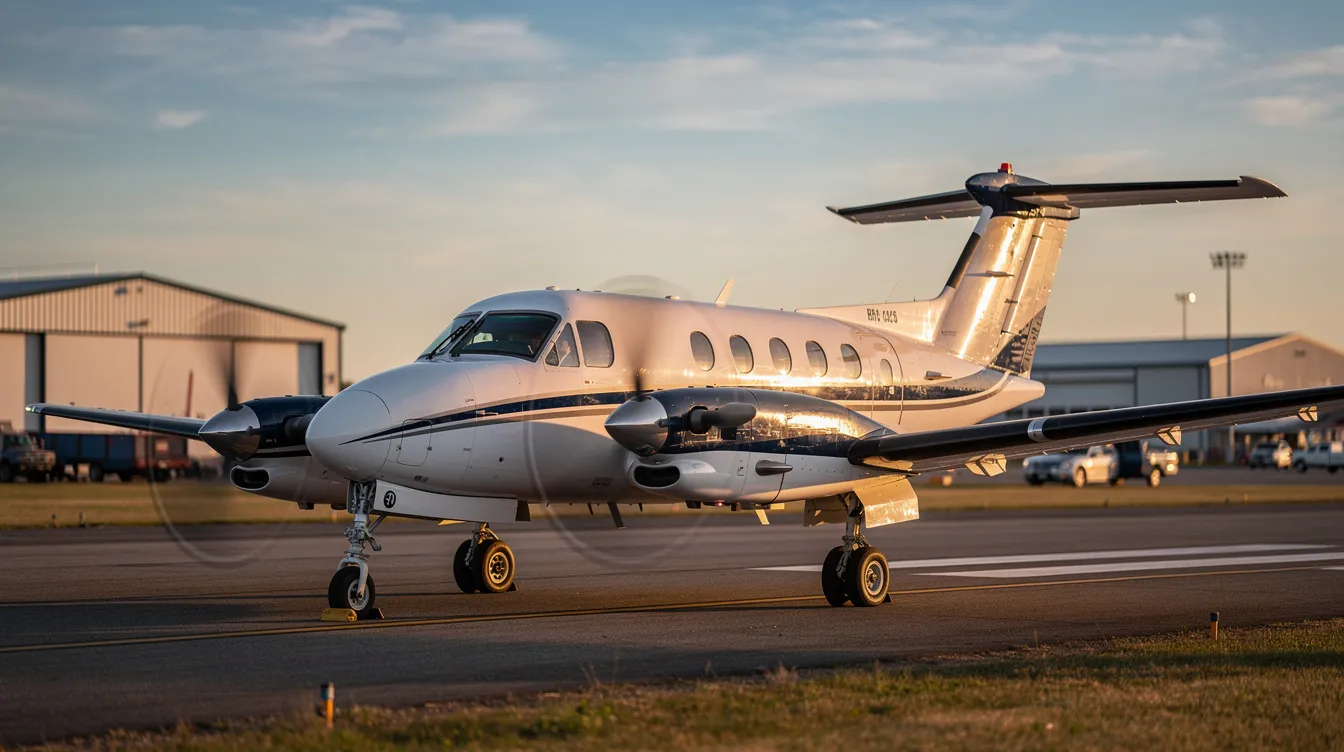
The Beech C90A remains one of the most practical turboprop charter aircraft for regional travel. Built between 1983 and 1992, it offers twin-engine reliability, pressurized comfort, and the ability to reach airports that many jets simply cannot. This guide covers everything a charter traveler needs to know—from specs and cabin comfort to operating economics and how to book a King Air C90A flight through Jettly.
The Beechcraft King Air C90A is a twin-turboprop from the King Air 90 series, widely used for charter, air ambulance, and utility aircraft missions. It belongs to the broader King Air family that has logged over 3,000 deliveries across the 90 series alone.
The King Air C90A typically seats four to six passengers in a club-style layout, reaches a maximum cruise speed of 223 knots, and delivers a practical range of about 840 nautical miles—ideal for regional trips.
Produced from 1983 to 1992, the C90A features two Pratt & Whitney PT6A-21 engines rated at 550 shp each, with improved landing gear and systems over earlier C90 models.
For most travelers, chartering a King Air aircraft through Jettly is more cost-effective than ownership. Hourly charter pricing for the C90A generally ranges from $1,200 to $1,500, well below light jets on similar routes.
This article compares the C90A with other Beechcraft King Air models, outlines operating economics, and shows how to book this aircraft on Jettly's digital charter platform.
The Beech C90A sits within the Beechcraft King Air 90 series as a proven regional workhorse. Its combination of twin-engine safety, pressurized cabin, and turboprop efficiency makes it one of the most popular aircraft in its class for private charter.
The King Air C90A is a multi-engine aircraft that typically seats four to six passengers, with some configurations allowing up to seven seats depending on the operator's layout.
Introduced in the mid-1980s as an evolution of the earlier King Air C90, it features redesigned engine cowlings derived from the F90-1, updated systems, and aerodynamic refinements.
With an approximate range of 840 nm under normal IFR conditions, the C90A handles routes like Toronto to New York, Dallas to Denver, or London to Geneva without refueling stops.
From a traveler's perspective, the C90A offers a balance of cost, comfort, and access to smaller airports that many light jets cannot use—a key advantage when booking through Jettly's charter platform and its airport locator tool.
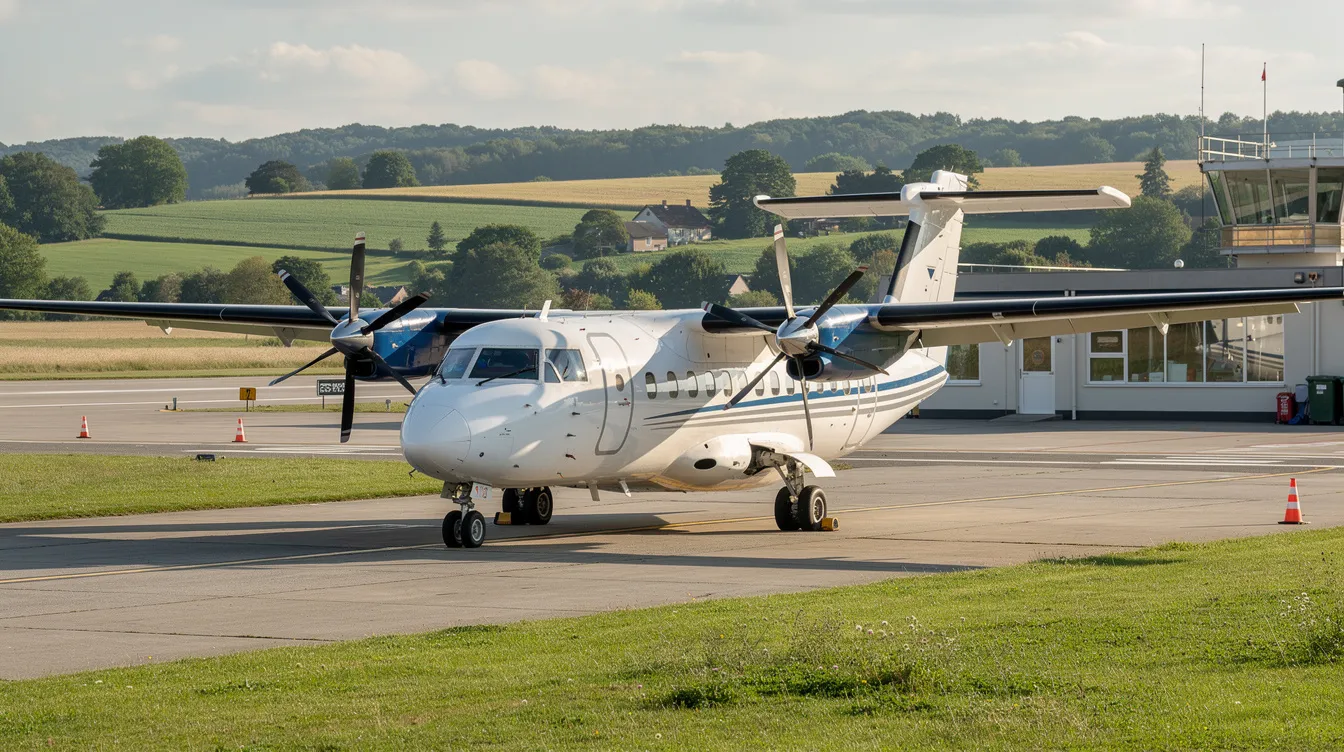
The King Air line traces its origins to the Beechcraft Queen Air, a piston-powered twin that Beechcraft transformed into a turboprop-powered, pressurized aircraft in the early 1960s. That transformation created two families of King Air aircraft: the smaller 90 series and the larger 100/200/300 series.
The original King Air 90 entered service in 1964, powered by Pratt & Whitney PT6A engines. Successive upgrades through the A90, B90, and C90 (1971) improved pressurization, payload, and handling.
The C90A, introduced around 1983–1984, belongs to the 90 series—the entry-level tier of the Beechcraft King Air line. It sits below the 200/250 and 300/350 models in capacity and range.
Total King Air 90/100 series production exceeded 3,000 aircraft by the late 2000s. C90A production concluded in 1992 after approximately 235 units were built.
Later 90 series variants built on the C90A's foundation. The C90B added four-bladed propellers and propeller synchrophasing to reduce cabin noise. The C90GTx pushed further with higher-power engines and modern avionics, giving travelers more refined options within the same airframe family.
These numbers matter for charter customers planning routes, estimating flight times, and understanding what airports are reachable.
|
Specification |
Value |
|---|---|
|
Engines |
2 × Pratt & Whitney PT6A-21 turboprops, 550 shp each |
|
Maximum cruise speed |
223 ktas |
|
Typical cruise speed |
220–223 ktas |
|
Range (IFR, with reserves) |
~840 nm |
|
Maximum range (ferry/light load) |
Up to ~1,300 nautical miles |
|
Service ceiling |
30,000 ft |
|
Maximum takeoff weight |
10,100 lb (4,580 kg) |
|
Fuel consumption |
78 gallons per hour |
|
Cabin length |
12 ft 4 in |
|
Cabin width |
4 ft 6 in |
|
Cabin height |
4 ft 9 in |
|
Landing distance |
~2,700–3,000 ft |
|
Takeoff distance (at MTOW) |
~5,300 ft |
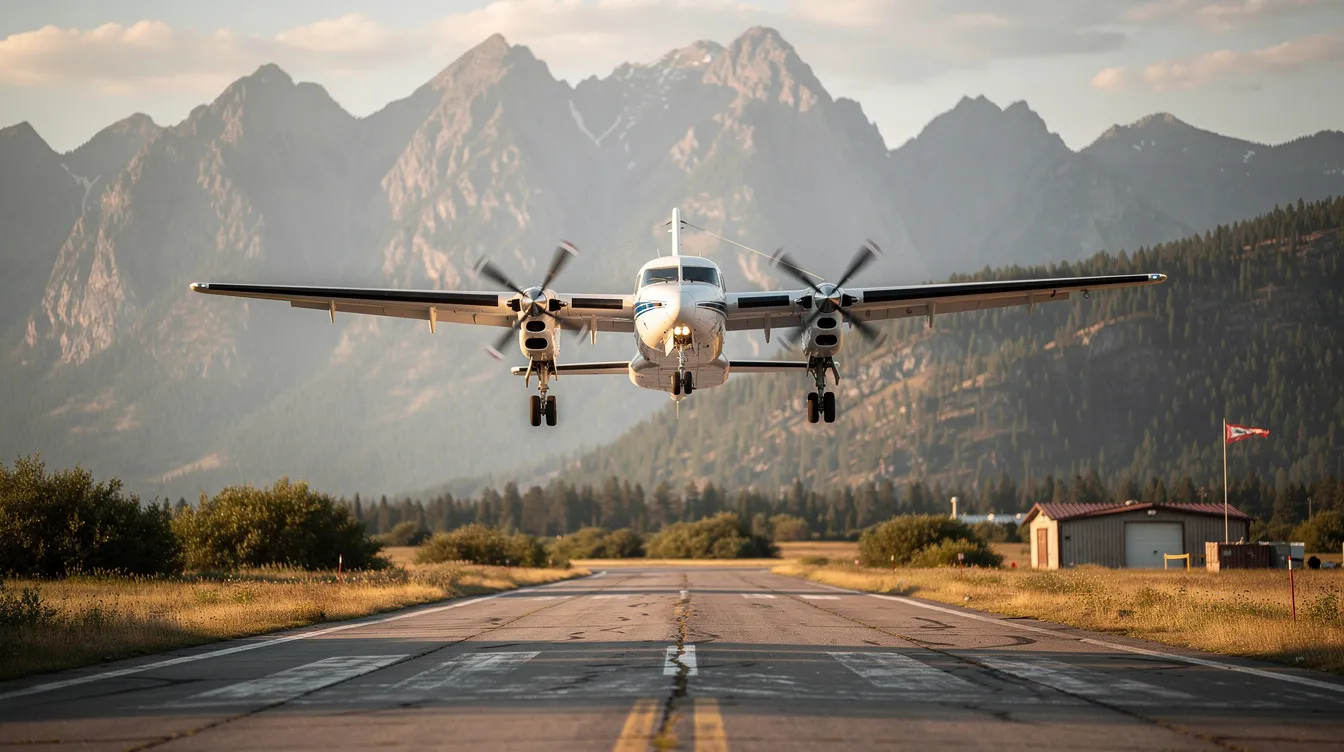
The C90A features short-field capabilities and rugged reliability thanks to its robust, retractable tricycle landing gear. This allows the aircraft to access short and unimproved runways as short as 2,040 feet, which would ground most light jets, making it a strong choice for remote or secondary airfields.
Pressurization sits at around 4.8 PSI, which keeps cabin altitude comfortable at cruise but falls short of what larger jets deliver at higher flight levels.
The PT6A engine family is widely regarded as one of the most reliable powerplants in turboprop aviation, a factor that directly benefits charter safety and dispatch reliability.
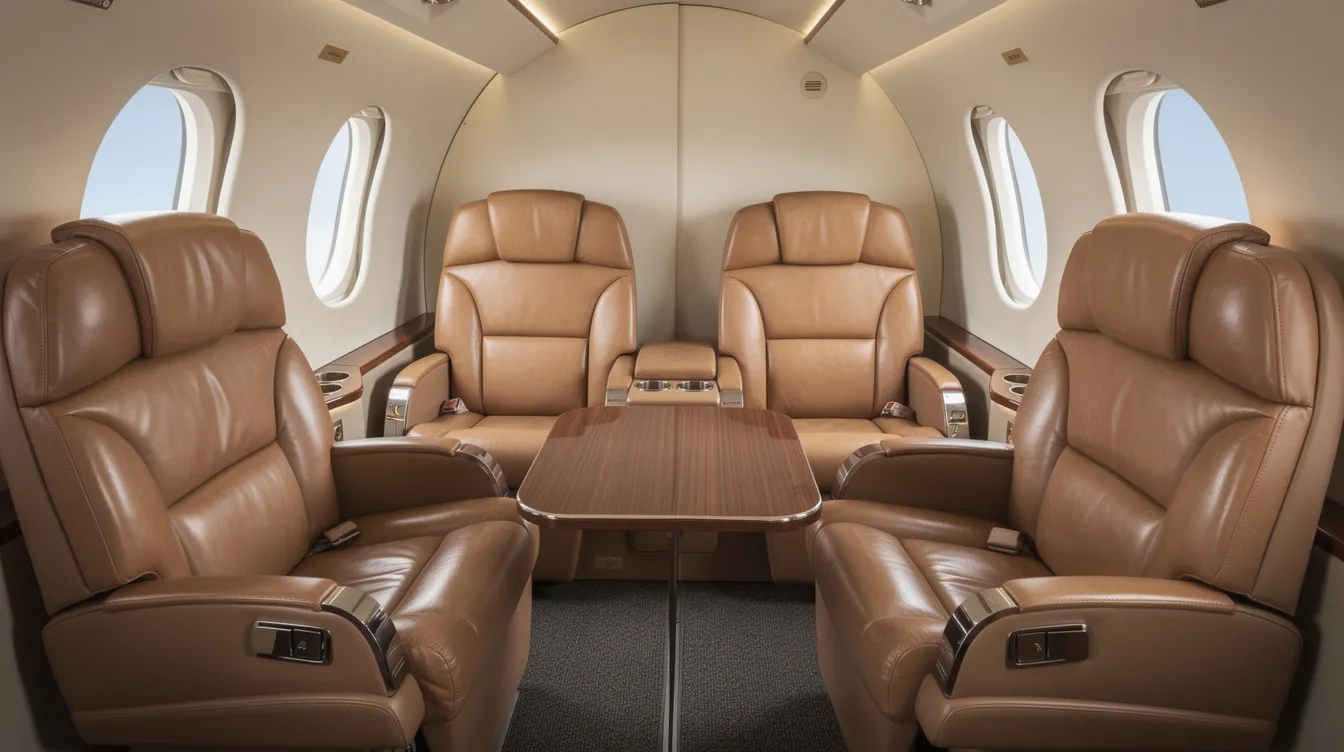
The C90A cabin is a pressurized space optimized for seated comfort rather than walking around. With a cabin height of just under 4 ft 9 in, most adults cannot stand upright—but for flights of one to three hours, the layout works well.
Typical seating includes four club seats facing each other, plus one or two additional aft seats. This configuration suits business groups, families, or couples traveling with luggage.
Charter C90A aircraft commonly feature leather seating, fold-out tables between club seats, overhead or sidewall storage, and internal baggage access during flight.
The heating system and dual-zone climate control keep cabin temperature stable at cruise altitudes—an important detail for winter routes through Canada, northern Europe, or mountainous regions.
Optional amenities vary by operator: belted lavatory, power outlets, and basic in-flight refreshments are common. Some operators listed on Jettly add upgraded soundproofing and LED lighting.
Cabin noise is noticeable compared to jets, though many operators have invested in insulation upgrades and improved propeller technology to bring levels down to a comfortable conversation range.
The same C90A airframe supports multiple mission profiles, which helps keep fleet utilization high and charter pricing competitive. The C90A is favored for short-to-medium-range missions across various sectors.
Corporate and private charter: The Beech King Air C90A handles regional business hops, weekend getaways, and shuttle flights between secondary cities. Corporate and regional charter operations often utilize the C90A for business trips where speed matters but light jet costs do not make sense, drawing on Jettly's extensive private charter aircraft network.
Air ambulance: The King Air C90A is widely used for air ambulance services. Its pressurized cabin, twin-engine safety, and rear door access make it suitable for stretcher installations and medical equipment. A typical medevac setup includes two pilots, a medical crew, and one patient, with many flights enhanced by tailored in-flight catering for private jets when patient needs allow.
Liaison transport and military versions: Similar C90/C90A aircraft have served in military and navy roles for navigation training (trainer version), liaison transport, and aerial observation. The Japan Maritime Self-Defense Force operated the type as the TC-90 to train pilots in multi-engine aircraft operation.
Government and survey: Civil agencies have operated the type for aerial survey, maritime patrol, and various roles requiring a dependable utility aircraft platform.
Jettly can arrange both passenger and medically configured King Air aircraft through vetted operators, especially for time-critical travel needs. For more details, see the air ambulance charter guide.
Many King Air C90A aircraft on the charter market benefit from aftermarket modifications that enhance performance, comfort, or mission flexibility. These upgrades explain why two C90As on the same platform can differ significantly in pricing.
Engine upgrade options: C90 series aircraft can be re-engined with PT6A-135A engines for improved climb and cruise performance. Blackhawk XP42 engines provide 42% more power for C90S, dramatically improving hot-and-high takeoff performance and single-engine climb rates. The engine model selected directly affects fuel capacity usage, speed, and payload.
Aerodynamic kits: Raisbeck wing lockers increase payload capacity for King Airs while also improving aerodynamics. Recontoured rear fuselage kits improve cruise performance by reducing drag around the T-tail area. Improved engine cowlings further reduce parasitic drag.
Interior refurbishment: Upgraded soundproofing, modern LED lighting, refreshed seating materials, and updated panel trim all impact the passenger experience. These do not change raw performance but can justify higher charter rates.
Cargo conversion: The CargoLiner modification adds a large pallet-accessible cargo door, turning the C90A into a freight-capable platform. This and other combi modifications (reinforced flooring, large rear door access) appear in specialized charters and utility aircraft operations.
Understanding these aftermarket modifications helps travelers on Jettly compare options and weigh them against other affordable airplane rental choices. A C90A with Blackhawk engines and Raisbeck wing lockers flies differently—and charges differently—than a stock airframe.
Understanding cost is critical for deciding whether to charter or own, and how King Air economics compare with broader private jet cost structures. Here is what the numbers look like for a King Air C90A.
|
Cost Category |
Typical Figure |
|---|---|
|
Annual operating cost |
~ $843,683 (at ~300 hrs/year) |
|
Fixed annual costs |
~ $200,000 (crew, insurance, hangar, training) |
|
Variable annual costs |
~ $405,252 (fuel, maintenance, reserves) |
|
Hourly operating cost |
$1,200–$1,500 |
|
Fuel burn |
78 gallons per hour |
|
Pre-owned purchase price |
$400,000–$1.5 million |
The C90A has lower operating costs for users flying more than 100 hours per year compared to many alternatives in its class. It is generally cheaper to operate than larger turboprops like the King Air 200 or 350.
Pre-owned C90A models serve as a cost-effective entry point for turboprop ownership, with prices varying based on total airframe time, engine hours remaining, avionics suite, and interior condition.
Fixed annual expenses—crew salaries, insurance, hangar storage, and recurrent training—run approximately $200,000 regardless of how much the aircraft flies. This makes on-demand charter more sensible for travelers flying fewer than 200–250 hours per year.
Jettly's charter cost estimator and dedicated jet card flight cost estimator let travelers see route-specific pricing for King Air C90A flights, allowing quick comparison with light jets or other turboprops before committing.
Choosing the right aircraft size for each trip saves money and improves comfort. Here is how the C90A stacks up within the Beechcraft King Air family.
|
Model |
Seats |
Range (nm) |
Cruise Speed (ktas) |
Best For |
|---|---|---|---|---|
|
King Air C90A |
4–6 |
~840 |
223 |
Regional flights, small groups |
|
King Air 200/260 |
8–9 |
~1,700 |
300+ |
Longer routes, larger groups |
|
King Air 350 |
9–11 |
~1,800 |
310+ |
Transcontinental, full teams |
All 90 series models share similar fuselage dimensions but differ in engines, avionics, and cabin noise levels. The Beech C90 is the baseline, while the C90A adds structural and handling improvements.
The 200/260 series aircraft offer more seats, extended range, and faster cruise speed—but at higher charter rates and with longer runway requirements, as illustrated by charter options like the King Air 200 aircraft.
The 300/350 series represents the top end of the King Air family, with transcontinental capability for larger groups. These are powered by more capable engines and operated by crews trained for longer, more complex missions.
The C90A excels on regional flights under roughly 800–900 nm, for groups of two to five passengers, and on itineraries requiring access to smaller or remote airports. Chartering a C90 is more economical for regional flights than stepping up to a larger turboprop or light jet.
Jettly is a digital private aviation platform that connects travelers to a large fleet of turboprops, including the Beechcraft King Air C90A, on an on-demand basis. No long-term commitment or fractional ownership is required.
Booking steps: Enter your route and dates, filter for turboprops or King Air models, compare offers side by side, and confirm the flight entirely online.
Transparent information: Jettly provides instant or near-instant pricing for many King Air C90A routes, including aircraft photos, interior layouts, baggage capacity, and operator safety records, positioning it among leading charter airlines and private aviation platforms.
Special requests: The platform can accommodate air ambulance configurations, pet-friendly flights, in-flight catering, or ground transportation coordination. Travelers can also explore how to buy a seat on a private jet or participate in crowdsourced private jet flights and shared empty seats. Learn more about how to charter a private jet through the platform.
Flexible pricing: Jettly's transparent pricing model and optional membership structures contrast with traditional jet card programs that require large upfront deposits and minimum commitments, and travelers can review detailed jet card costs before deciding.
The C90 can operate from shorter, unpaved runways than jets, giving Jettly users access to destinations that competitors' jet-only inventories cannot reach.
Explore King Air C90A and other Beech King Air options at https://www.jettly.com.
Turboprops like the King Air C90A can be more fuel-efficient than comparable light jets on short regional sectors, making them a smarter choice both financially and environmentally.
At 78 gallons per hour and a cruise speed of 223 knots, the C90A's fuel burn per nautical mile on sectors under 800–900 nm is lower than most small jets flying the same routes. This reduces both cost and per-passenger emissions and aligns well with strategies for affordable private jet charter.
The ability to use smaller airports closer to final destinations shortens ground transfers and avoids the taxi delays, holding patterns, and congestion common at major hubs, echoing one of the core advantages discussed in guides on how renting a plane works.
Many operators listing King Air aircraft on Jettly adopt modern maintenance and flight planning practices—optimized climb profiles, efficient cruise altitude selection, and careful fuel management—to further reduce consumption during operation, similar to professional operators such as Dexter Air Taxi.
For travelers interested in reducing their travel footprint, the C90A's efficiency on regional routes makes it a practical option worth considering over jets for trips under 900 nm.
These FAQs address practical traveler questions that go beyond the technical overview above. Each answer is specific to the Beechcraft King Air C90A and charter travel through Jettly.
The C90A is optimized for seated comfort with club seating, good legroom, and a cabin quiet enough for conversation on two- to three-hour sectors. The cabin height of 4 ft 9 in does not allow full stand-up height for most adults, but the pressurized environment and dual-zone heating system keep conditions comfortable throughout the flight. Modern soundproofing and upgraded interiors on many chartered C90A aircraft help reduce fatigue compared with older turboprops. For flights over three hours, some travelers may prefer a larger King Air or light jet such as a long-range Falcon 900B private jet, and Jettly's platform lets them compare these options easily.
The C90A's turboprop engines, anti-ice systems, and pressurized cabin make it suitable for many winter routes, subject to operator procedures and weather limits. The heating system and environmental controls maintain cabin comfort even in cold conditions—an important factor for routes in Canada, northern Europe, or mountainous regions. All flights arranged through Jettly are operated by certified carriers whose pilots follow strict regulatory and safety standards when assessing weather conditions.
A typical baggage allowance is around 300–350 lb of luggage for four passengers. Exact capacity depends on passenger count and fuel requirements—full fuel payload flexibility means that longer routes may require lighter baggage loads. The internal baggage area is often accessible in flight, adding flexibility for items like laptops, coats, or instruments. Travelers booking via Jettly should confirm baggage needs in advance, especially for bulky items like skis, golf clubs, or medical equipment. The aircraft holds a type certificate that reflects its tested weight and balance limits.
The C90A's turboprop engines and prop noise make it somewhat louder than most small jets. However, later 90 series upgrades and aftermarket soundproofing have significantly reduced cabin noise. Many charter operators equip their C90A with improved insulation and propeller technology, so noise levels are typically comfortable for conversation and laptop work. Sensitive travelers can request noise-canceling headsets or consider a newer King Air variant listed on Jettly if acoustic comfort is a key priority.
Same-day and next-day King Air C90A charters are often possible through Jettly, especially on popular regional routes. Booking several days to a week in advance typically leads to better pricing and more aircraft choices, particularly during peak seasons or for complex multi-leg itineraries, and frequent flyers may benefit from Jettly's private jet memberships. For specialized missions like air ambulance or remote-field operations, travelers should allow extra time for permits, crew planning, and medical coordination. You can fly multi-engine aircraft like the C90A with minimal lead time, but planning ahead pays off—whether you are comparing it with regional jets like the Canadair CRJ-200 or arranging private jet charter in Kolkata, West Bengal or New Delhi, Delhi.
The Beech C90A offers a strong blend of efficiency, reliability, and flexibility for regional flights up to around 840 nm, especially for groups of two to five passengers. Its twin-engine safety, pressurized cabin, and short-runway performance make it a practical alternative to light jets in many real-world scenarios—whether the mission is a business trip, family travel, or an emergency air ambulance service.
Instead of bearing ownership costs that can exceed $843,000 per year, most travelers can access every benefit of the King Air C90A on demand through Jettly's digital charter platform.
Ready to experience private travel on your terms? Compare King Air C90A options, view instant pricing, or request a personalized quote at https://www.jettly.com.
Share this post:
Jay Franco Serevilla
Jun 15, 2026
|
5
min read
Discover tips and trends in the industry.
5
min read
Ultimate JetCharters: How Ultimate Jet and Private Jet Charter Compare in 2026
As the private jet charter landscape evolves in 2026, understanding the differences between Ultimate Jetcharters LLC and modern platforms like Jettly is essential. Ultimate Jetcharters, once a key player in group travel, has ceased operations, leaving travelers to seek flexible and efficient alternatives. Jettly offers access to over 20,000 aircraft, providing instant pricing and tailored services for various travel needs.
Read More
5
min read
Jet Rides: How to Experience Real Fighter Jet Flights with Jettly
Jet rides offer a thrilling range of experiences, from luxurious private jet charters to adrenaline-pumping fighter jet flights. Jettly connects travelers with vetted operators for both comfort and adventure, making it easy to compare options and book unforgettable flights. Whether you're an aviation enthusiast or looking for a unique gift, this guide covers everything you need to know about jet rides.
Read MoreStay updated with our latest insights and tips to elevate your journey with us.
MEMBERSHIPS AND ASSOCIATIONS



Disclaimer: Jettly operates as a charter broker, offering access to a global digital jet charter marketplace. Jettly is not a direct air carrier and does not own or operate aircraft. All advertised flights are conducted by third-party air carriers that are fully licensed and hold the appropriate Part 135 or Part 121 certifications issued by the Federal Aviation Administration (FAA) or equivalent regulatory authorities under U.S. or foreign law. Jettly complies fully with the U.S. Department of Transportation's Part 295 and Part 298 Charter Broker regulations. Jettly does not carry additional liability insurance. Passengers are covered by aircraft operator insurance. TICO: 50023770


