


Login
Get Instant Pricing On 23,000+ Aircraft

>
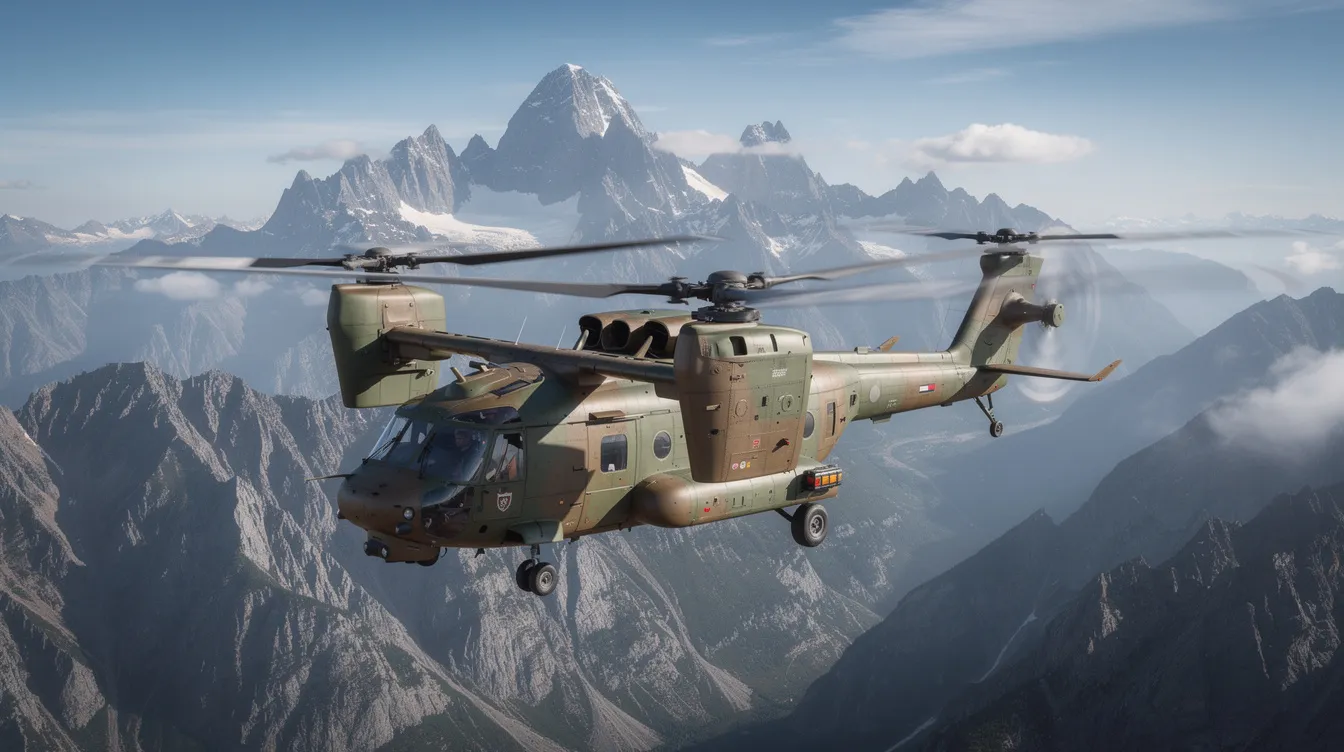
Chinook helicopters for sale are usually surplus CH-47D airframes released from military service since the 2010s, not new-build aircraft, and civilian buyers cannot purchase the newer CH-47F variant. The CH-47 Chinook is a twin-engine, tandem-rotor heavy-lift helicopter originally designed by Boeing (then Vertol) and first fielded in the early 1960s, and it remains one of the most recognizable military aircraft ever built. Interest in Chinook helicopters for sale has grown steadily as the U.S. Army and allied governments have retired older airframes in favor of modernized variants.
The first publicly auctioned CH-47D airframes appeared around 2013, after more than five decades of exclusively military use. Those early GSA auction events attracted global attention from commercial operators, investors, government agencies, and organizations that need heavy-lift capacity for firefighting, construction, disaster relief, and other specialized missions. Today, most sales opportunities come through established operators and brokers rather than direct government disposals.
This article examines the Chinook variants that reach the market, what surplus CH 47D models typically cost and how they are sold, why CH-47F and CH-47G aircraft remain restricted to government channels, and the regulatory and operational issues that shape civilian use, while contrasting them with more conventional private charter aircraft options for most travelers. It also helps buyers, operators, and companies deciding between ownership and mission-based access to compare a direct purchase with charter options. Jettly, a digital aviation platform connecting clients with over 20,000 aircraft worldwide, can help match customers with heavy-lift helicopters through vetted commercial operators for missions where owning a Chinook is not practical.
This guide is intended for commercial operators, aviation professionals, and organizations considering the purchase or charter of a Chinook helicopter. Understanding the market and regulatory landscape is essential for anyone seeking to acquire or operate these unique heavy-lift helicopters.
The Chinook helicopter has been in active military service for over 60 years, and surplus CH-47D airframes represent the only realistic path for private or commercial buyers searching for Chinook helicopters for sale today.
The Chinook helicopter has been in active military service for over 60 years, with the first CH-47A delivered in 1962. Surplus CH-47D airframes represent the only realistic path for private or commercial buyers searching for Chinook helicopters for sale today. The U.S. government began auctioning CH-47D helicopters starting in 2013 through GSA Auctions, which manages the sale of surplus military aircraft, including Chinooks. These CH-47D models sold at auction for prices ranging from $2 to $3.5 million. However, acquiring a Chinook helicopter involves navigating financial, legal, and regulatory hurdles, as government approvals are often required. Surplus military Chinooks typically require substantial refurbishment before commercial use, and civilian ownership of demilitarized CH-47D helicopters is uncommon and subject to regulatory requirements. Four commercial operators currently sell CH-47D helicopters, which are used primarily for heavy lift services such as firefighting, external sling loading, and disaster relief. Due to FAA regulations, commercial CH-47Ds cannot carry passengers. The CH-47F model, first delivered in 2009, features advanced digitized flight controls, is powered by two 4,733-horsepower engines, and has a maximum payload capacity exceeding 21,000 pounds with a maximum takeoff weight of 54,000 pounds. The CH-47F can fly at speeds exceeding 175 mph. Modern CH-47F aircraft purchased by governments typically cost between $50 and $70 million each, with some new military or civil-certified models costing up to $90 million. For example, in 2019, the UAE agreed to purchase ten CH-47F helicopters for $830.3 million. Civilian versions of the Chinook primarily include the Boeing Vertol 234. Maintenance and repair of Chinooks require FAA Part 145 Repair Stations due to life-limited components that demand careful oversight for safety. Chinooks are ideally suited for heavy lifting and utility tasks due to their cargo hook system and can carry up to 26,000 pounds externally. Their cabin can accommodate 33 troops or internal cargo. Beyond heavy lift operations, Chinooks support disaster relief, humanitarian missions, and medical evacuation missions. Since their introduction in 1962, Chinooks have been deployed in combat and support roles worldwide.
CH-47D Chinooks sold at auction for approximately $2 to $3.5 million during the early-to-mid 2010s, but U.S. government auctions for these d models have largely concluded, shifting the market toward commercial operators and foreign military surplus.
Modern CH-47F and CH-47G variants remain reserved for the United States military and approved allied governments, with per-airframe program costs frequently ranging from $60–90 million.
Commercial CH-47D fleets mainly support heavy-lift work, including aerial firefighting, logging, construction, and disaster relief under restricted-category FAA approvals.
For clients who need heavy-lift helicopter capability without the complexity of ownership, Jettly can arrange charter access to helicopters and other aircraft through its global network at jettly.com.
|
Chinook Model |
Year Introduced |
Typical Buyer |
Price Range (USD) |
Key Features |
Usage Restrictions |
|---|---|---|---|---|---|
|
CH-47D |
1982 |
Commercial operators, government surplus buyers |
$2M - $8.5M (surplus), up to $6M+ (refurbished) |
Upgraded engines, composite blades, and restricted-category certification |
Cannot carry passengers, limited to external load and utility missions |
|
CH-47F |
2009 |
U.S. military and approved allied governments only |
$50M - $90M per unit |
Digitized flight controls, higher payload (21,000+ lb), modern avionics |
Not available for civilian purchase |
|
Boeing Vertol 234 |
Civilian version |
Commercial heavy-lift operators |
Varies by configuration |
Based on military design, used for firefighting, logging, and construction |
FAA restricted-category certification applies |
CH-47D: A major upgrade of the original Chinook, the CH-47D features improved engines, composite rotor blades, and modernized avionics. These airframes, built from 1979 to 2002, are the primary models available to civilian buyers, typically through surplus sales or specialized heavy-lift operators. Civilian ownership is uncommon and subject to regulatory requirements.
CH-47F: The latest standard military Chinook, introduced in 2009, features advanced digitized flight controls and increased payload capacity. The CH-47F is reserved for the U.S. military and approved allied governments and is not available for civilian purchase.
Boeing Vertol 234: The main civilian version of the Chinook helicopter, based on the military CH-47 design. The Vertol 234 is used for commercial heavy-lift operations, including firefighting, construction, and disaster relief.
Restricted-category certification: An FAA certification category for surplus military aircraft, including CH-47Ds, that limits their use to specific missions such as external-load operations, firefighting, and disaster relief. Aircraft with this certification cannot carry passengers and must comply with strict operational and maintenance requirements.
Heavy-lift operations: Missions that require helicopters to transport large or heavy external loads, such as construction materials, firefighting equipment, or disaster relief supplies. Chinooks are ideally suited for these tasks due to their powerful engines and cargo hook system.
Demilitarized: Refers to military helicopters that have had sensitive equipment and armaments removed, making them eligible for civilian use under regulatory oversight. Demilitarized CH-47Ds are the only Chinook models typically available to commercial operators and organizations outside government channels.
Boeing's CH-47 Chinook traces its origins to the late 1950s when the U.S. Army sought a new medium-to-heavy-lift helicopter. The design featured tandem rotors, eliminating the need for a tail rotor and providing exceptional lifting power. The first CH-47A was delivered in 1962, and the aircraft quickly proved its worth.
Key variants that influence today's market:
CH-47A/B/C (1960s–1970s): The Chinook was used extensively in the Vietnam War for artillery resupply, troop transport, and cargo missions. Over 750 Chinooks were in U.S. and South Vietnam fleets during that conflict, cementing the aircraft's reputation for reliability under combat conditions. These early models carried machine guns for self-defense in hostile zones.
CH-47D (1980s upgrade): The CH-47D entered service in 1982 with upgraded engines (T55-GA-714A), composite rotor blades, and improved avionics. Nearly all earlier A/B/C airframes were eventually rebuilt to D standard. This is the primary variant now entering commercial hands.
CH-47F (2000s–present): The CH 47F was introduced in 2009 with major upgrades including a digitized CAAS cockpit, improved vibration reduction, and better airframe maintainability. It remains tightly controlled by the U.S. Department of Defense and partner governments.
MH-47G: A special operations variant flown by U.S. Army Special Operations Command, equipped with aerial refueling capability and advanced sensors. Not available to civilian buyers.
Export and license-built versions also exist. Japan's Kawasaki and Italy's Agusta have produced Chinooks under license, but these airframes are typically managed within each country's military and defense establishment, rarely entering open civilian markets.
U.S. and allied militaries began retiring older CH-47D models as production of the CH-47F ramped up from the late 2000s through the mid-2010s. This created a window of opportunity that had never existed before in the Chinook's history.
One widely cited milestone occurred in 2013, when the U.S. government first offered CH-47D Chinook helicopters for sale to civilian buyers via online GSA auction listings through the General Services Administration. Two airframes were initially listed with starting bids near $1 million, and a subsequent batch of ten CH 47D helicopters sold at final prices ranging from about $2 to $3.5 million per airframe.
The typical government disposal path follows a predictable sequence:
The army designates surplus airframes for disposal.
Military-sensitive systems, avionics, and equipment are removed (demilitarization).
Airframes are listed on the GSA auction website or equivalent channels.
Export control checks are conducted for international buyers.
Specialized maintenance and repair organizations handle refurbishment and conversion.
As of the mid-2020s, U.S. government auctions for CH-47D models have concluded. Most airframes suitable for conversion have already been sold or repurposed. Direct government sales of airworthy D-models are now rare to nonexistent.
New availability trends depend on allied nations retiring or downsizing their own Chinook fleet. For example, Billings Flying Service acquired six CH-47Ds from the Dutch military in mid-2023, demonstrating that foreign surplus remains a viable, if infrequent, source for qualified buyers.
For non-government buyers, the CH 47D is currently the most realistic Chinook helicopter model to find for sale. Purchases typically happen through established commercial operators or specialized aviation brokers rather than direct government channels.
Historical pricing context:
During early-to-mid 2010s surplus events, CH-47D Chinooks sold at auction for approximately $2 to $3.5 million per airframe, sold "as is, where is"
These prices exclude shipping, overhaul, avionics, mission-specific equipment, and regulatory certification
By mid-2026, scarcity has driven base airframe values upward—clean, low-hour CH-47D airframes may command $4–6 million before conversion
What to expect from a surplus CH-47D:
Airframe build dates typically range from 1979 to 2002
Flight hours vary widely; many have high component usage, requiring gearbox and engine overhauls
Aircraft are usually delivered without avionics, firefighting gear, or external-load equipment
Total project costs to reach mission-ready status often run into the multi-million-dollar range per helicopter when factoring in repair, engineering, and certification
Most commercially operated CH-47D Chinooks in the United States hold FAA restricted-category approvals, limiting operation to external-load and utility work rather than general passenger transport. Understanding these restrictions is critical before purchasing. For broader context on helicopter costs, Jettly's guide on helicopter pricing covers other rotorcraft categories.
The CH 47F and MH-47G are front-line assets for the U.S. Army and Air Force, produced under long-term Boeing contracts and sold primarily through Foreign Military Sales managed by the Defense Security Cooperation Agency to approved partner nations.
Cost realities for CH-47F procurement:
The CH-47F features 4,733-horsepower Honeywell engines and can carry over 21,000 lb of payload internally and externally
The CH-47F Block 2 aims for a payload of 22,000 lb with structural and performance enhancements
The UAE purchased ten CH-47F helicopters for $830.3 million, reflecting the massive cost of full support packages, including spares, training, and engineering
Germany's order for up to 60 CH-47F Block II aircraft under FMS runs into the billions, with per-airframe lifecycle costs approaching $60–90 million
The state department drives export decisions based on strategic and political considerations. Private entities cannot simply purchase a CH-47F from Boeing or the U.S. government. Because CH-47F airframes are still relatively young—most delivered from 2009 onward—there is no secondary civilian market for them.
Any website or broker promising easy access to CH-47F helicopters for private owners should be approached cautiously. Due diligence and legal review are essential before engaging with such offers. CH-47F sales are limited to the U.S. military and allies through formal government channels.

Demilitarized Chinook helicopters—mainly CH-47D models—have become valuable heavy-lift tools for commercial operators worldwide. Four commercial operators sell or operate demilitarized CH-47D helicopters in North America, including Columbia Helicopters, Billings Flying Service, CHI Aviation, and similar firms with proven track records in heavy-lift operations.
Key mission types supported by commercial chinook fleets:
Aerial firefighting with large-capacity water buckets or internal tanks, often deployed during wildfire seasons across the western United States and Canada
Disaster relief logistics, moving food, water, generators, and rescue equipment into areas cut off by floods, earthquakes, or hurricanes
Heavy construction support, lifting HVAC units, communication towers, bridge sections, and building materials to remote or elevated sites
Logging and timber extraction in mountainous or roadless terrain
Maintenance and construction of power lines and remote energy infrastructure
Chinooks are used for disaster relief and search-and-rescue missions across multiple countries, from Australia to Afghanistan. Operators often run mixed fleets combining the CH-47D with smaller helicopters and fixed-wing cargo aircraft, giving clients flexibility across mission profiles.
For organizations that need heavy-lift capability but don't operate their own Chinook fleet, charter platforms like Jettly connect customers with appropriate aircraft and experienced operators, drawing from Jettly's broader private charter aircraft network. Learn more about Jettly's helicopter charter options for mission-specific needs.
Owning and operating a Chinook helicopter involves significantly more complexity than typical private helicopters or business jets. Prospective buyers should understand these hurdles before committing capital.
Regulatory hurdles:
FAA restricted-category certification under 14 CFR § 21.185 governs most surplus military helicopters in the U.S., limiting permitted operations to specific mission types
Foreign-military surplus CH-47Ds are not automatically eligible for FAA restricted-category certification unless specific exemptions are granted. Billings Flying Service obtained such an exemption for its Dutch-surplus fleet
Export controls and ITAR regulations may apply when purchasing, importing, or performing maintenance on ex-military airframes
Noise and environmental requirements vary by region and can restrict operating locations
Operational demands:
Two qualified pilots with tandem-rotor experience and type-specific training are required
Large ground support teams and specialized maintenance tooling are necessary
Access to heavy-lift-capable hangars and Boeing-approved or equivalent MRO providers is essential
High hourly operating costs are driven by fuel burn from twin T55 engines, crew salaries, maintenance reserves, and insurance
The economics of chinook operations are usually justified only when there is a steady pipeline of commercial contracts, government support work, or long-term contract commitments in firefighting or construction. Prospective buyers should consult aviation attorneys, insurance specialists, and experienced Part 135 charter companies before purchasing or entering a lease program.
Full ownership of a CH-47D makes sense for some organizations but not all. The alternative—chartering heavy-lift helicopters or using on-demand access through platforms like Jettly, including options to crowdsource private jet flights and share empty seats—often proves more practical for clients with intermittent demand.
When ownership may make sense:
Established commercial utility or firefighting companies with long-term government contracts that may also monetize their broader aviation traffic through an ultra-high-ticket affiliate program
Government agencies are building internal heavy-lift capability for defense or disaster response
Large industrial or construction projects requiring frequent heavy external loads over extended periods
When charter access is the better path:
No long-term capital commitment or maintenance burden
Ability to select the right aircraft type (including Boeing models other than the Chinook) based on each specific mission, similar to how Jettly’s private charter aircraft network matches jets to trip profiles
Access to experienced crews and operators without building an in-house operation
Transparent, permission pricing rather than absorbing fixed costs during idle periods, supported by tools similar to a private jet charter cost estimator in the fixed‑wing world
Jettly's marketplace model lets customers specify mission details—payload, location, timeline—and receive options from a global network of vetted operators. Whether the job calls for a heavy-lift helicopter, a cargo aircraft, or a combination, clients get transparent pricing without signing long-term ownership or fractional contracts, positioning the platform as a compelling NetJets alternative. Jettly's disaster response air transport solutions page details how the platform supports time-critical operations.
Learn more about Jettly's charter options at https://www.jettly.com.
The CH-47's military origins as a battlefield workhorse translate directly into civilian value. Its payload capacity, range, and tandem-rotor stability make it uniquely capable for jobs that smaller helicopters simply cannot handle. For perspective on how far helicopters can fly, Jettly's range guide covers multiple rotorcraft types.
Real-world mission examples:
Heavy construction: Chinooks can carry up to 26,000 pounds externally, enabling crews to place multi-ton loads—steel beams, prefabricated house sections, transmission towers—on mountain ridges or congested urban rooftops in a single lift
Wildfire suppression: Operating with 2,000+ gallon water buckets, Chinooks deployed during western U.S. fire seasons can cover terrain that ground crews cannot reach, often replacing multiple smaller helicopters on a single contract
Disaster relief: In 1992, Chinooks provided relief after Hurricane Andrew. Chinooks supported humanitarian efforts after the 2004 Asian tsunami. More recently, Chinooks participated in the 2021 Kabul airlift operation, demonstrating the aircraft's ability to operate under extreme conditions, while modern charter platforms now enable rapid deployment to regions such as Kolkata, West Bengal, for similar missions
Remote energy and mining: Transporting drilling equipment, generators, and engineering teams to sites with no road access, powered by the Chinook's heavy external-load capability
Aerospace and testing: Chinooks have supported space-agency prototype drop tests, leveraging their stable hover and high-altitude performance
For clients planning complex operations—such as a multi-week construction project or rapid disaster response—Jettly can coordinate a mix of fixed-wing cargo aircraft for long-haul transport plus helicopters for final-mile heavy lift. This approach often proves more cost-effective than maintaining a dedicated chinook fleet year-round and can be tailored to specific regions, from private jet charter in Houston, Texas, to international hotspots.
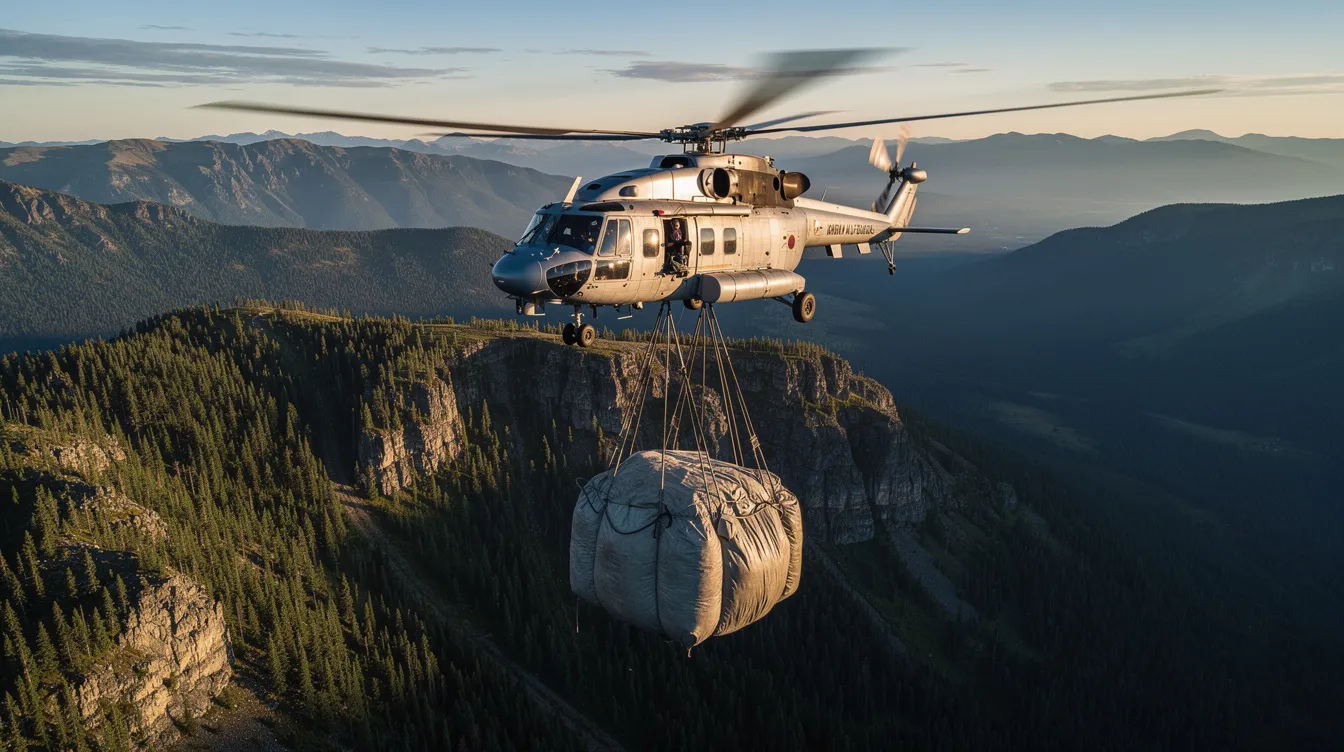
The first step is defining the mission. Frequency of use, payload requirements, operating regions, and regulatory environment all determine whether outright purchase, long-term lease, or on-demand charter is the right form of access.
For buyers pursuing a CH-47D purchase:
Engage an aviation consultant experienced in surplus military aircraft
Verify aircraft history, maintenance records, and airframe condition through independent inspection
Plan for import and export approvals if the transaction crosses national borders
Build a multi-year operating budget covering crew, maintenance, insurance, hangar, and parts
Confirm that the purchasing entity can meet FAA restricted-category (or equivalent) requirements in the country of operation
For clients leaning toward charter:
Supply mission details, dates, and locations to a broker or digital platform such as Jettly, using tools like its airport locator tool to refine departure and arrival options
Review proposed aircraft solutions and pricing from multiple operators, much like using a jet card flight cost estimator when comparing fixed‑wing options
Confirm the safety qualifications, insurance coverage, and operational history of the chosen company, applying the same diligence recommended when comparing the best private jet charter companies
Request references from past clients for similar mission profiles and study broader industry overviews, like an ultimate list of charter airlines, to understand available operator types
Clients new to heavy-lift operations should consider starting with chartered missions. This provides real-world operating cost data and operational experience before committing to the multi-million-dollar search for a CH-47D airframe and complements broader guidance on affordable private jet charter for fixed‑wing travel.
Ready to explore heavy-lift helicopter options or private flights for your next project? Visit https://www.jettly.com to request a quote or speak with the team, or review Jettly’s jet card programs if you frequently supplement Chinook missions with fixed‑wing travel.
For cross-country missions that might mix rotorcraft and fixed‑wing segments, Jettly’s guide to finding the best cross-country plane can help planners pair Chinook capability with suitable jets or turboprops.
Pilots must hold a rotorcraft-helicopter rating and obtain type-specific training for the CH-47 platform, which covers tandem-rotor handling, maximum gross weight operations, and emergency procedures. Most commercial operators require a minimum of 2,000–3,000 total flight hours plus dedicated Chinook transition training before pilots are cleared for revenue flights. Military-trained pilots who have previously flown the CH-47 typically have a shorter path to commercial certification, but FAA or equivalent civil authority sign-off remains mandatory.
When evaluating VIP movement strategies, organizations often weigh shared charter flights vs. full charters on fixed‑wing aircraft alongside specialized helicopter options.
Converting a restricted-category CH-47D for VIP or routine passenger use is extremely difficult under current FAA rules. Restricted-category aircraft are generally prohibited from carrying passengers except in specific approved configurations tied to the aircraft's special-purpose operation. While some officials and government agencies have explored interior modifications, the regulatory and certification costs typically make this impractical for private owners.
Beyond the initial airframe acquisition, owners should budget for engine and gearbox overhauls (each costing hundreds of thousands of dollars), annual insurance premiums, hangar or outdoor storage, crew salaries for two pilots plus maintenance personnel, fuel (the twin T55 engines have high burn rates), and a parts pipeline that often depends on surplus military supply or Boeing-approved vendors. Annual operating budgets for a single CH-47D can reach well into seven figures, depending on flight hours and mission type.
Established operators with mission-ready CH-47D helicopters can typically mobilize within 24–48 hours for domestic operations, depending on crew availability and the distance to the disaster zone. Contract mechanisms with agencies like the U.S. Forest Service or FEMA pre-position aircraft during high-risk seasons (wildfire, hurricane), reducing response times further. For organizations without their own fleet, platforms like Jettly can help coordinate emergency charter flights and heavy-lift helicopter access on short notice, acting as a broker similar to its role with operators such as DEXTER AIR TAXI.
In the United States and several other countries, private individuals can legally own a demilitarized CH-47D under restricted-category or equivalent certification, provided they meet all regulatory requirements for the aircraft's intended use. However, ownership alone does not grant unlimited operating rights. The aircraft must be flown within its approved mission profile, and most jurisdictions restrict flight over populated areas or passenger carriage. Prospective owners in any country should consult local aviation authorities and legal counsel before purchasing, and may find that flexible private jet memberships or helicopter charter access better fit their overall aviation needs. For tailored advice or a mission-specific quote, visit https://www.jettly.com or explore brokered operator options like ZENFLIGHT private jet services.
Chinook helicopters for sale primarily consist of surplus CH-47D models, offering a unique opportunity for commercial operators and organizations requiring heavy-lift capabilities. While the CH-47F remains exclusive to military and allied governments due to regulatory and cost constraints, the CH-47D provides a viable pathway for civilian use under restricted certifications. Prospective buyers must carefully consider the significant financial, legal, and operational commitments involved in ownership, including maintenance, crew training, and regulatory compliance.
For many, chartering through platforms like Jettly offers a flexible, cost-effective alternative to full ownership, granting access to heavy-lift helicopter services without the complexities of managing a fleet. Whether purchasing or chartering, understanding the Chinook’s capabilities and market dynamics is essential for making informed decisions that align with mission requirements. Learn more about Jettly’s charter options at https://www.jettly.com and explore how private aviation can meet your heavy-lift needs efficiently and transparently.
Share this post:
Jay Franco Serevilla
Jul 7, 2026
|
5
min read
Discover tips and trends in the industry.

5
min read
Best Time to Buy International Airline Tickets to Europe
Finding the best time to buy international airline tickets to Europe can save travelers hundreds of dollars. Booking 3 to 7 months in advance typically yields the best prices, especially during shoulder seasons. This guide offers insights on timing, fare tracking, and alternative airports to maximize savings and flexibility.
Read More
5
min read
When Do Plane Tickets Get Cheaper? Timing Your Booking for Better Flight Prices
Understanding when plane tickets get cheaper is essential for travelers looking to save on airfare. Generally, booking domestic flights 1 to 3 months in advance and international flights 2 to 8 months ahead yields the best prices. Factors like travel dates, day of the week, and seasonality significantly impact ticket costs, making it crucial to stay flexible and track fare changes.
Read MoreStay updated with our latest insights and tips to elevate your journey with us.
MEMBERSHIPS AND ASSOCIATIONS



Disclaimer: Jettly operates as a charter broker, offering access to a global digital jet charter marketplace. Jettly is not a direct air carrier and does not own or operate aircraft. All advertised flights are conducted by third-party air carriers that are fully licensed and hold the appropriate Part 135 or Part 121 certifications issued by the Federal Aviation Administration (FAA) or equivalent regulatory authorities under U.S. or foreign law. Jettly complies fully with the U.S. Department of Transportation's Part 295 and Part 298 Charter Broker regulations. Jettly does not carry additional liability insurance. Passengers are covered by aircraft operator insurance. TICO: 50023770


