


Login
Get Instant Pricing On 23,000+ Aircraft

>

The story of the first commercial plane is a story about ambition, engineering, and the moment flying became a real passenger service. The first commercial plane used in sustained scheduled passenger service was the Benoist Airboat Model XIV, which took off from a pier in St. Petersburg, Florida, on January 1, 1914, and crossed Tampa Bay in 23 minutes. That short flight launched an industry that now moves billions of people each year, and the line from that first airboat to today’s jet airliners and private jet platforms is shorter than most people realize.
For aviation enthusiasts and frequent flyers alike — including corporate executives, high-net-worth individuals, and families who value flexibility, convenience, and luxury — the history matters because it shows how air travel evolved from rigid scheduled routes into the broader mix of options available today. This article traces that arc, from the Wright brothers and the Benoist XIV to the de Havilland Comet and the Boeing 747, then into the rise of private aviation and how modern platforms like Jettly make on-demand private jet charter more accessible through digital booking, broad aircraft access, and streamlined service.
The first commercial plane in terms of sustained scheduled passenger service was the Benoist Airboat Model XIV, flown by the St. Petersburg–Tampa Airboat Line beginning January 1, 1914. The first jet airliner, the de Havilland Comet, followed decades later with its prototype's maiden flight on July 27, 1949.
Key dates in commercial aviation history:
1903: The Wright Flyer achieves the first powered, controlled flight at Kitty Hawk.
1 January 1914: The first commercial flight crosses Tampa Bay in 23 minutes.
27 July 1949: The de Havilland Comet prototype completes its first flight.
Late 1950s: The jet airliner era begins with the Boeing 707 and Douglas DC-8 entering service.
That first commercial flight proved that scheduled air travel could work. It had fare-paying passengers, a timetable, civic backing, and a dedicated route - all foundational elements that still define the airline industry today.
Modern travelers now have choices that early aviators could never have imagined. Beyond scheduled commercial airliners, digital platforms like Jettly offer flexible private jet charters with instant pricing and access to over 20,000 aircraft worldwide.
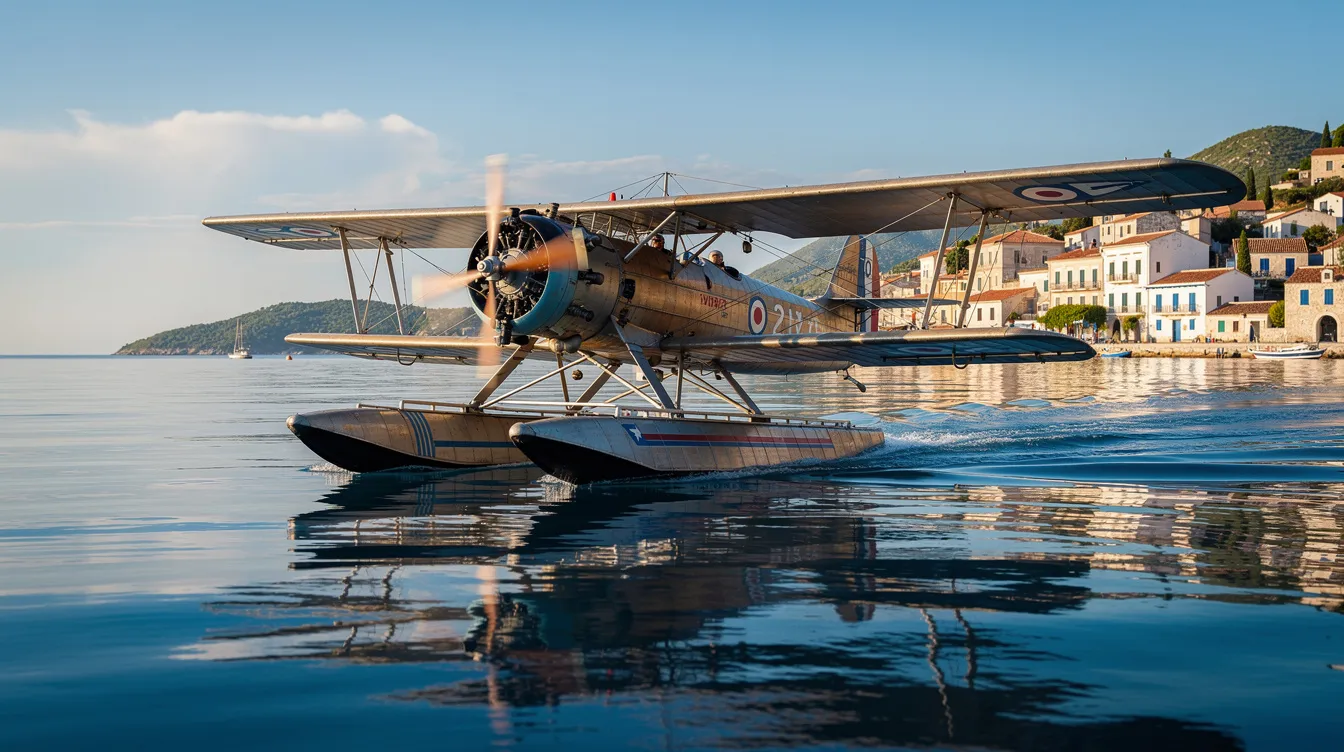
Historians approach the term "first commercial plane" from several angles. Some point to the earliest paid passenger flight - a novelty ride at a county fair. Others focus on the first scheduled airline with a timetable and ticketing system. Still others define the milestone as the first commercial jet airliner, which brought speed and altitude to a different level entirely.
This article focuses primarily on the Benoist XIV flying boat, which is widely recognized as the first aircraft used in sustained scheduled commercial passenger service. Unlike earlier barnstorming rides or exhibition flights, the Benoist XIV operated on a regular air service route with defined schedules, fare-paying passengers, and municipal support.
The distinction between propeller-driven early commercial aircraft and jet-powered airliners matters too. The de Havilland Comet, which first flew in 1949, introduced an entirely different category of commercial air travel - faster, higher, and pressurized. Both milestones are covered here because together they form the backbone of how commercial flight evolved from a wooden boat on the water to an aluminum tube at 35,000 feet.
The foundation for all commercial aviation was laid on December 17, 1903, when the Wright brothers completed the first powered, controlled flight at Kitty Hawk, North Carolina. The Wright Flyer stayed airborne for just 12 seconds on its first attempt. But it proved that heavier-than-air flight was possible - and that was enough to change the world.
Between 1903 and 1908, aviation technology advanced quickly. The Wright brothers and other early aviators refined engines, wing structures, and control surfaces. By 1908, Wilbur Wright carried Charles Furnas as one of the first passengers in a fixed-wing aircraft. These were not commercial flights - they were demonstrations, test runs, and public exhibitions.
Flying schools and early airfields emerged around this period. The idea that aircraft could carry people beyond novelty started to take hold. But reliability, safety, and economics were still far from solved. For modern travelers, understanding the costs and options of renting aircraft builds on those early lessons, but no one had yet built a business around flying passengers from point A to point B on a schedule.
That changed in Florida.
The first commercial airline was the St. Petersburg–Tampa Airboat Line, an operation conceived by Percival E. Fansler and made possible by aircraft builder Thomas W. Benoist. Fansler saw an opportunity: the two cities of Petersburg and Tampa sat on opposite sides of Tampa Bay, separated by roughly 23 miles of water. By boat or overland, the trip took hours. By air, it could take minutes.
Fansler secured support from St. Petersburg's Board of Trade, which guaranteed the line's expenses if it couldn't break even. Local civic leaders provided hangar space at the municipal pier. Financing came partly from local businessmen who saw the promotional value of hosting the world's first scheduled commercial air service.
Tickets were priced at $5 one-way - expensive for 1914 but reasonable for travelers who valued speed. Freight was carried at $5 per 100 pounds. The route operated twice daily, with some chartered flights outside the regular schedule. The St. Petersburg-Tampa Airboat Line began on January 1, 1914, and ran until May 5, 1914.
The first aircraft to operate regular scheduled commercial passenger flights was the Benoist Airboat Model XIV, a wood-and-canvas biplane flying boat. It was purpose-built for water operations, with a hull design that allowed takeoff and landing on Tampa Bay.
Key design features:
Configuration: Biplane with an open cockpit
Seating: Pilot plus one passenger (aircraft No. 45 had a slightly larger layout that could carry additional weight)
Engine: Roberts straight-6 inline piston engine, rated at approximately 75 horsepower, with engines mounted in a pusher configuration behind the wing
Propeller: Two-bladed wooden propeller
Performance figures suited the short Tampa Bay crossing:
|
Specification |
Value |
|---|---|
|
Top speed |
~64 mph (103 km/h) |
|
Range |
~124 miles (200 km) |
|
Wingspan |
~44 feet (13.7 m) |
|
Length |
~26 feet (7.9 m) |
|
Empty weight |
~1,257 lbs (570 kg) |
|
Max takeoff weight |
~1,587 lbs (720 kg) |
The Benoist Model XIV could carry one passenger and a pilot, and the small "fleet" - primarily aircraft No. 43 and No. 45 - shaped how the airline operated. With such limited capacity, each flight was essentially a one-on-one experience between pilot and passenger, a far cry from later aircraft that could carry dozens or hundreds.
On January 1, 1914, at approximately 10:26 a.m., the first commercial flight departed from St. Petersburg's municipal pier. Tony Jannus was the pilot of the first commercial flight, and Abram C. Pheil—the former mayor of St. Petersburg who won his seat at auction for $400—became its first passenger.
The inaugural flight lasted 23 minutes over Tampa Bay, covering roughly 29 kilometers. Jannus flew low - often less than 50 feet above the water, skimming in ground effect. More than 3,000 spectators gathered at the pier to watch the takeoff, making it as much a civic event as an aviation milestone.
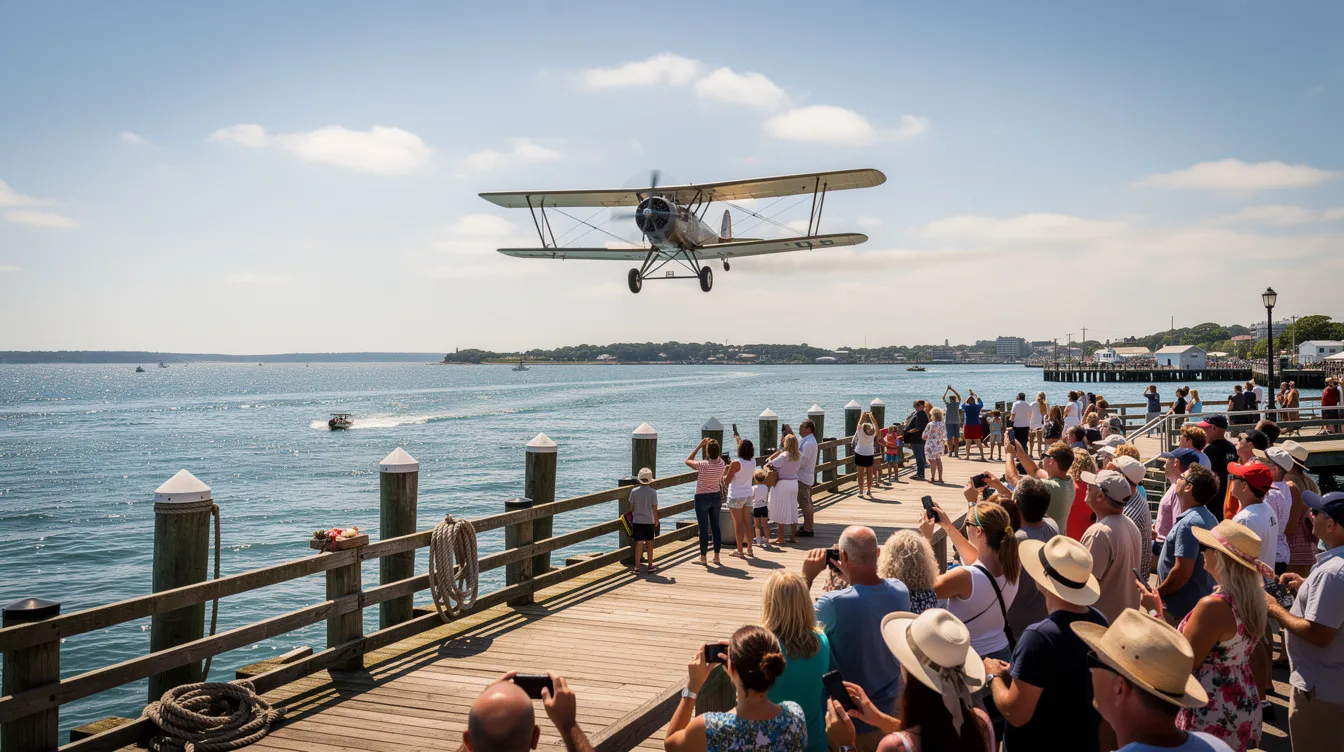
The first commercial flight carried that one passenger and took 23 minutes. The first air cargo on board was a bundle of St. Petersburg Times newspapers. It was a historic event not just for its technical achievement, but for what it proved: that scheduled air travel could dramatically cut travel time versus steamship or train.
What had been an hours-long journey by boat or overland road became a 23-minute flight. For the first time, flying wasn't just a stunt - it was transportation.
The St. Petersburg–Tampa Airboat Line operated twice-daily flights, six days a week, for nearly four months. The first airline operated for nearly four months, carrying 1,205 passengers across 172 scheduled trips before shutting down on May 5, 1914.
Why did it end? Several factors converged:
The winter tourist season in Florida tapered off, reducing demand.
The city's financial guarantee expired.
The economics of flying one passenger at a time couldn't sustain long-term operations.
But the airline's brief existence changed public perception permanently. People saw that flying could move passengers and goods reliably, on schedule. It sparked investor interest in aviation ventures, encouraged municipalities to think about air infrastructure, and set early precedents for ticketing, timetables, and pilot credentialing. The concepts it introduced - scheduled service, fare collection, route planning - became the DNA of every commercial airline that followed.
Tony Jannus and the Benoist XIV are far from forgotten. The Tony Jannus Distinguished Aviation Society presents an annual award honoring outstanding achievement in commercial aviation. In both St. Petersburg and Tampa, memorials and museum exhibits preserve the story of the first commercial plane.
A replica of Benoist XIV No. 43 is on display at the St. Petersburg Museum of History in the Benoist Pavilion - the St. Petersburg museum that keeps this chapter of aviation history alive for visitors. The Tony Jannus Award has been given to leaders at airlines, including United Airlines, American Airlines, and others, who have shaped the industry.
In 2014, centennial reenactments marked 100 years since the first commercial flight. Organizations, including IATA, participated, and media coverage renewed public awareness of how a single route across Tampa Bay helped launch modern commercial aviation. Today, the area near Tampa International Airport carries on that legacy as a major aviation hub - a direct descendant, in spirit, of a wooden pier and a canvas-covered flying boat.
After the Benoist XIV era, commercial aviation didn't grow overnight. The First World War redirected aviation resources toward military applications and military service, but it also accelerated engine and airframe development. When the war ended, surplus aircraft and trained pilots flooded the civilian market.
In the 1920s, government air mail contracts became the lifeblood of early airlines. Passenger airline services expanded significantly using government airmail contracts, which subsidized operations and allowed carriers to experiment with passenger service even when it wasn't yet profitable, laying the groundwork for the modern private and charter airline industry.
Key aircraft from this transitional period:
Curtiss JN-4 "Jenny": Originally designed for military training, widely used by barnstormers and early mail carriers.
Boeing 40A: A mail-and-passenger hybrid that could carry two passengers and 2,000 pounds of mail, bridging the gap between postal service and air transport.
Curtiss Condor: The Curtiss Condor first flew in 1932 and carried 14 passengers, representing a significant step up in capacity.
Meanwhile, the Sikorsky Ilya Muromets is recognized as the first true commercial airliner in many aviation histories. The Ilya Muromets featured a comfortable cabin for passengers and introduced features like a lavatory, heating, and lighting - amenities that wouldn't become standard in Western commercial aircraft for years.
These early days of commercial aviation were defined by small steps: a few more passengers here, a slightly longer route there, each one proving that air service could work at scale.
The 1930s marked the shift from experimental air transport to something recognizable as an airline industry. The Boeing 247, debuting in 1933, is celebrated as the first modern commercial airliner. The Boeing 247 featured all-metal construction and retractable landing gear - a dramatic departure from wood-and-fabric biplanes. It was the first airliner that looked and performed like a modern airliner rather than a wartime leftover.
The Douglas DC-3 contributed to the profitability of airline operations in the 1930s. Before the DC-3, most airlines lost money on passenger service and survived on mail contracts. The DC-3 changed the math: it could carry more passengers over longer distances at lower cost, making passenger-only routes financially viable for the first time, just as today's leading private jet charter companies rely on efficient fleets and strong demand to sustain their operations.
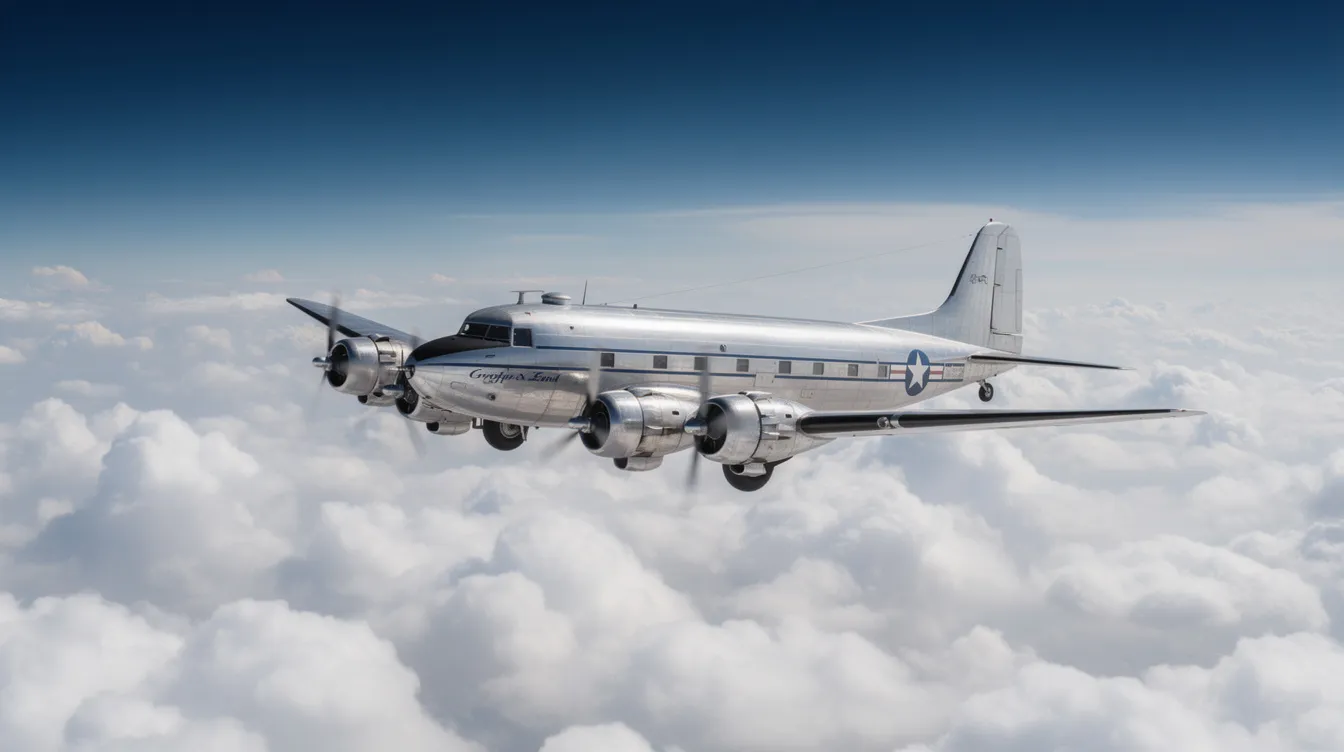
Flying boats also played a critical role in this era. Pan American Airways operated the Martin M-130 "China Clipper" on transoceanic routes. The first airliner to fly nonstop to Hawaii was the China Clipper, which flew nonstop 2,400 miles from San Francisco to Honolulu - a feat that opened the Pacific to regular air travel.
By the late 1930s, pressurized cabins appeared in aircraft like early Lockheed Constellation variants, allowing flights at high altitudes above weather. These advances made commercial air travel increasingly practical for business travelers, and later for the broader public.
The de Havilland Comet was the world's first commercial jet airliner, and it represented a leap as dramatic as the Benoist XIV had been four decades earlier. The prototype completed its first flight on July 27, 1949, beating American and Soviet competitors to the jet age.
The Comet's design was striking: four Ghost turbojet engines embedded in the wing roots, a pressurized cabin with large windows, and a clean aerodynamic profile that allowed it to fly faster and higher than any piston-powered airliner. Jet engines have far fewer moving parts than piston engines, which promise better reliability and lower maintenance over time.
BOAC introduced the Comet into commercial service in May 1952, flying from London to Johannesburg. Passengers experienced radically shorter travel times and smoother rides at altitude compared to propeller aircraft. For a brief period, the British aircraft corporation behind de Havilland led the world in commercial aviation technology.
But structural issues related to metal fatigue - particularly around the square windows and fuselage joints - led to a series of accidents in 1953–54. The Comet was grounded, redesigned, and eventually returned to service in improved variants (Comet 4). The painful lessons learned about pressurization cycles and fatigue testing directly benefited every jet airliner that followed.
The jet age of commercial air travel took off in the late 1950s. The Boeing 707 entered commercial service on October 26, 1958, flying Pan American's New York-to-Paris route. Jet passenger service began in the late 1950s in the U.S., and the Douglas DC-8 entered service in September 1959, giving airlines competitive options from multiple aircraft manufacturers.
These jet airliners shrank the world. Transatlantic crossings that once took days by ship or 12+ hours by propeller now take under eight hours. Other airliners from the era - including the Convair 880/990 and, later, the Sud Aviation Caravelle with its rear fuselage-mounted engines - expanded the jet fleet available to national airlines and international carriers, much as modern travelers now weigh a wide range of options when considering how much a private jet costs to own or use.
The real game-changer for mass air travel came with wide-body airliners. The Boeing 747, introduced in 1970, democratized international travel. Its ability to carry four passengers a hundred times over - up to 400+ in some configurations - slashed per-seat costs and made flying affordable for the middle class for the first time. Pan American was again a launch customer, continuing its role as a pioneer.

Later developments included the supersonic transport - most notably the British and French Concorde. Concorde entered service in 1976, allowing passengers to fly faster than the speed of sound between London, Paris, and New York. Air France and British Airways operated Concorde routes for nearly three decades before the French Concorde and its British counterpart made their last flight in 2003. A Concorde now sits in the National Air and Space Museum, a reminder of an era when speed was the ultimate measure of progress.
The concepts born in 1914 - timetables, ticketing, route licensing, municipal support for airports - still underpin the airline industry. What started as a single route between two cities across Tampa Bay became a global network connecting every continent.
American Airlines, Pan American Airways, TWA, and United Airlines used evolving aviation technology to build extensive route networks. Hub-and-spoke systems, class differentiation (economy, business, first), loyalty programs, and narrow-body aircraft for short-haul routes all emerged from this evolution.
Today's commercial airliners carry hundreds of passengers on routes the Benoist XIV's designers couldn't have imagined. The progression from a single flying boat to a fleet of wide-body jets, entering service on dozens of new routes each year, reflects a continuous cycle: better aircraft enable more routes, more routes drive demand, and demand funds better aircraft—and at the personal level, that same cycle has produced a range of the cheapest private aircraft options that bring private flying within reach of more travelers.
Early commercial flights were rigid. One route, one schedule, one passenger, limited comfort. The open cockpit of the Benoist XIV offered no protection from wind or spray. There was no choosing your departure time or destination - you flew when and where the airline said, or you didn't fly at all.
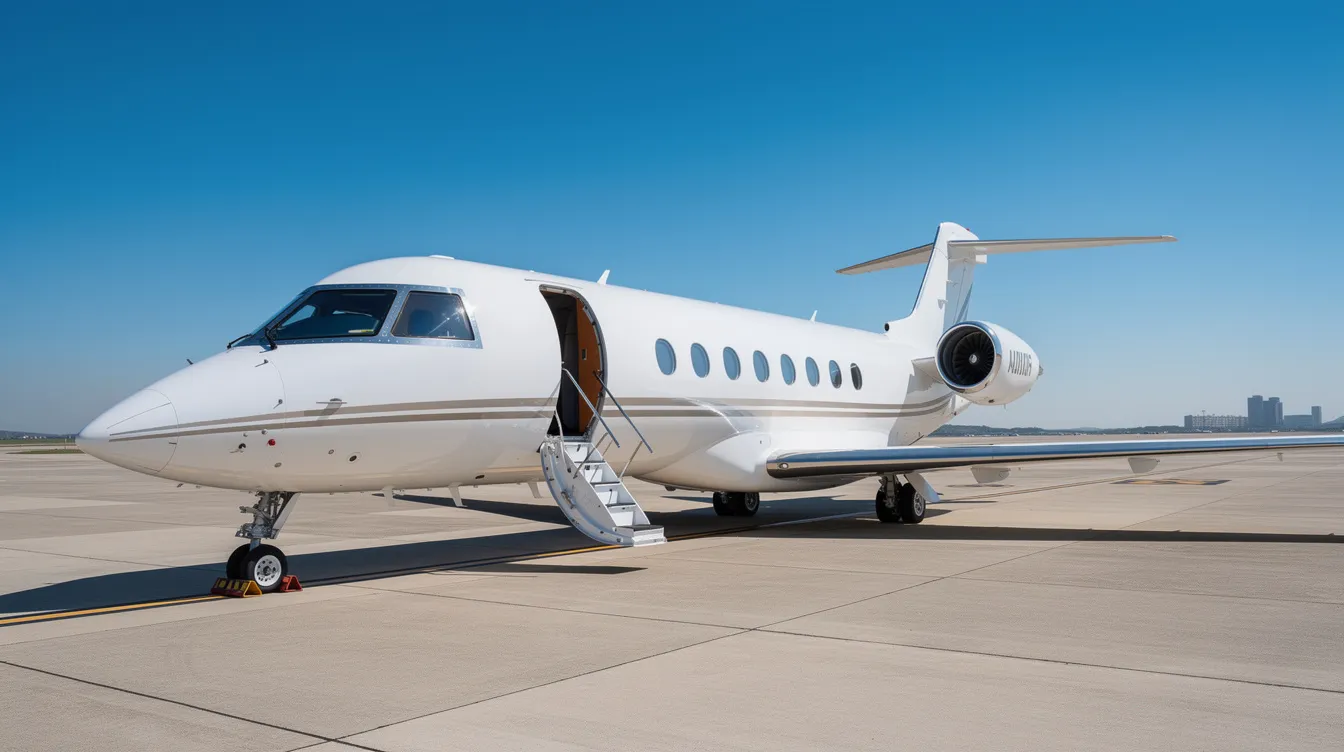
Modern private aviation is the opposite. Travelers choose departure times, aircraft type, and routing. They can fly into smaller regional airports - often closer to their final destination than a major hub - using tools like an airport locator for private jets - and skip the lines, layovers, and baggage carousels that define commercial flight versus private flight.
Real-world scenarios where private jet charter makes the difference show why some travelers opt for shared charter flights versus full charters:
Same-day business trip: An executive needs to attend a morning meeting in one city and be back home for dinner. No commercial schedule allows that, but a private jet does—and costs can be reduced further when travelers use crowdsourced and shared private jet flights to fill empty seats.
Urgent family travel: A medical emergency requires immediate travel to a small regional airport not served by commercial airlines. A charter flight departs within hours.
Multi-city itineraries: A client visiting three cities in two days avoids overnight layovers and backtracking by chartering direct legs or by purchasing a single seat on a shared private jet when a full aircraft charter isn't necessary.
What was once an experimental, one-passenger flight over Tampa Bay has evolved into a full spectrum of options. The benefits of private jet travel - flexibility, time savings, privacy - complement scheduled airline services for time-sensitive or high-value trips, and understanding how much it costs to rent a private jet helps travelers decide when that flexibility is worth the premium.
The pioneering spirit behind the first commercial plane - matching an aircraft to a passenger who needed to get somewhere faster - is the same principle that powers Jettly's platform today. The difference is scale, speed, and technology.
Jettly operates as a digital private jet charter marketplace, giving travelers on-demand access to over 20,000 aircraft worldwide. Through the platform, users can get instant pricing, compare aircraft types, use a private jet charter cost estimator, and book a private jet in minutes rather than days.
Key advantages over traditional commercial air travel:
|
Feature |
Commercial Airlines |
Jettly Private Charter |
|---|---|---|
|
Scheduling |
Fixed timetables |
Fly when you want |
|
Airport access |
Major hubs only |
5,000+ airports, including regional |
|
Routing |
Hub-and-spoke, connections |
Direct point-to-point |
|
Privacy |
Shared cabin |
Private cabin |
|
Booking speed |
Hours to weeks |
Minutes |
|
Pricing transparency |
Varies widely |
Instant, transparent quotes |
Jettly offers both membership options, dedicated jet card programs, and on-demand access, so travelers can choose what fits their needs without long-term ownership commitments like traditional fractional shares or legacy providers. Many flyers also consider it a compelling NetJets alternative for flying private. Learn more about how Jettly works to see how the platform streamlines the entire process.
Every vetted operator on the platform meets regulatory, safety, and insurance standards - the kind of oversight structures that evolved directly from the regulatory frameworks early commercial aviation helped create, and the same discipline applies when using tools like a jet card flight cost estimator to plan frequent private flying.
The Benoist XIV, the de Havilland Comet, and every milestone in between form a single story: the steady expansion of what's possible in the air. Each step - from a canvas-covered flying boat to pressurized jet airliners to supersonic transport - pushed air travel further, faster, and closer to the expectations of modern passengers.
Today, platforms like Jettly represent the latest phase of this evolution. They use digital tools to make private aviation more accessible and efficient, carrying forward the same core idea that Percival Fansler and Tony Jannus proved in 1914: that getting there by air is better than the alternative.
Ready to experience private travel on your terms? Whether you're exploring ULTRA high-ticket affiliate opportunities in private aviation, evaluating the true cost of leasing a private jet, arranging in-flight catering for private jets, or planning a bespoke private jet charter in Kolkata, West Bengal, you can explore flight options or request a quote at https://www.jettly.com.
These FAQs address common questions about the history of commercial aviation and how it connects to modern private jet travel.
Yes, though it was small and could carry only one or two passengers, the Benoist XIV is widely regarded as the first aircraft used in sustained, scheduled commercial passenger service. Earlier flights did involve passengers paying for rides, but those were exhibition or barnstorming events - not part of a regular timetable or dedicated airline operation. The scheduled, ticketed, civic-backed nature of the St. Petersburg–Tampa Airboat Line is what sets the Benoist XIV apart from earlier paid flights.
The first commercial flight refers to the January 1, 1914 Tampa Bay crossing by a Benoist XIV flying boat. It was powered by a piston engine, flew at less than 50 feet above the water, and covered 29 kilometers in 23 minutes. The de Havilland Comet, introduced in 1949, was the first jet airliner. It used turbojet engines to fly higher, faster, and farther - cruising at altitudes above 30,000 feet and cutting transatlantic travel times in half compared to propeller aircraft.
Uncomfortable by any modern standard. The first passenger, Abram C. Pheil, rode in an open-cockpit Benoist XIV, so passengers were exposed to wind, engine noise, and spray from the water below. There was no cabin pressurization, no seat belt in the modern sense, and no amenities. Early passengers were often civic leaders, businesspeople, or adventurous travelers willing to accept discomfort and risk in exchange for the thrill - and the dramatic time savings - of flying across the bay.
In the 1920s and 1930s, air travel remained expensive and niche, mostly limited to business travelers and the wealthy. Accessibility increased after World War II, when larger four-engine propeller airliners entered service and wartime aviation infrastructure was repurposed for civilian use. The jet age of the late 1950s accelerated growth further. Deregulation in the United States during the late 1970s, combined with competition and larger aircraft like the Boeing 747, brought fares low enough for mass-market adoption.
Private jet charter can significantly reduce door-to-door travel time, provide access to thousands of airports that commercial airlines don't serve, and offer privacy and schedule flexibility that fixed-timetable carriers cannot match. For time-sensitive business trips, complex multi-city itineraries, or situations where commercial connections simply don't exist, private aviation fills the gap. Platforms like Jettly make it straightforward to compare aircraft, see transparent pricing, and book on demand - without the overhead of aircraft ownership. For a detailed comparison of costs, visit the private jet charter costs guide.
The journey from the Benoist Airboat Model XIV's inaugural flight in 1914 to today's advanced jet airliners and private aviation platforms underscores the remarkable evolution of commercial flight. That first scheduled service proved the viability of air travel as transportation, setting standards for timetables, ticketing, and passenger experience that still resonate.
Modern travelers benefit from this legacy through a diverse range of options, including flexible private jet charters that offer convenience, speed, and personalized service beyond the capabilities of traditional airlines. Platforms like Jettly build on over a century of innovation by providing instant access to thousands of aircraft worldwide, transparent pricing, and streamlined digital booking.
Whether for business or leisure, understanding the history of the first commercial plane enriches appreciation for how far aviation has come—and how private aviation today continues to redefine what’s possible in air travel. Ready to experience private travel on your terms? Explore flight options or request a quote at https://jettly.com.
Share this post:
Jay Franco Serevilla
Jul 10, 2026
|
5
min read
Discover tips and trends in the industry.
5
min read
Fastest Non-Military Jet: The Ultimate Guide to High-Speed Private Travel
Discover the fastest non-military jet, the Bombardier Global 8000, which reaches speeds of Mach 0.94 and offers an intercontinental range of 8,000 nautical miles. This guide explores the importance of speed in private aviation, comparing top contenders and highlighting how Jettly connects travelers with high-speed jets for efficient travel.
Read More
5
min read
AVCARD: The Aviation Fuel Card Powering Smarter Fuel Purchasing
AVCARD is a versatile aviation fuel card from World Fuel, enabling operators to manage fuel purchases and operational expenses seamlessly at over 8,600 locations worldwide. It simplifies billing with detailed invoicing and supports various fuel types, making it essential for flight departments and charter operators. With no annual fee and integration with contract fuel programs, AVCARD enhances cost control and efficiency in aviation fuel procurement.
Read MoreStay updated with our latest insights and tips to elevate your journey with us.
MEMBERSHIPS AND ASSOCIATIONS



Disclaimer: Jettly operates as a charter broker, offering access to a global digital jet charter marketplace. Jettly is not a direct air carrier and does not own or operate aircraft. All advertised flights are conducted by third-party air carriers that are fully licensed and hold the appropriate Part 135 or Part 121 certifications issued by the Federal Aviation Administration (FAA) or equivalent regulatory authorities under U.S. or foreign law. Jettly complies fully with the U.S. Department of Transportation's Part 295 and Part 298 Charter Broker regulations. Jettly does not carry additional liability insurance. Passengers are covered by aircraft operator insurance. TICO: 50023770


