



Login
Get Instant Pricing On 23,000+ Aircraft

>

A jet fighter plane is a military aircraft built primarily for air-to-air combat, engineered for high speed, extreme maneuverability, and precision weapons delivery to secure air superiority and strike targets when needed. These aircraft have shaped military strategy since the final days of World War II, and today platforms like the F-35 Lightning II, the Eurofighter Typhoon, and the F-22 Raptor define what modern air power looks like-and what it takes to control the sky.
For readers interested in military aviation technology and history—whether enthusiasts, defense professionals, or anyone comparing aircraft types—this article traces the evolution of jet fighters from their origins in the 1940s through today's stealth-driven fifth generation and into emerging sixth-generation concepts. It explains how they work, what roles they fill in combat, which modern models matter most, how onboard systems such as sensor fusion and stealth shape missions, how future designs are developing, and how a fighter jet differs from a private jet. Understanding jet fighter planes gives useful context for how modern militaries achieve air superiority and project national defense through technology, tactics, and integrated operations.
Jet fighter planes are specialized military aircraft designed for aerial combat, optimized for speed, maneuverability, and weapons delivery. They are critical for establishing air superiority and conducting precision strikes.
Fighter aircraft have evolved through distinct generations- from first-generation designs like the Me 262 and MiG-15, through fourth-generation multirole platforms like the F-16 and Eurofighter Typhoon, to today's fifth-generation stealth fighters such as the F-35 Lightning II and Chengdu J-20. Sixth-generation programs are now in development.
Modern fighters emphasize stealth, sensor fusion, and precision-guided weapons over pure speed, making integrated operations and data sharing the foundation of mission success.
While jet fighters are military platforms, some ex-military jet aircraft serve in training, testing, and high-performance experiential flights. These are distinct from private jets used for business and leisure travel, though both share underlying jet propulsion technology.
Readers interested in private aviation-not combat aircraft-can explore on-demand charter options through digital platforms like Jettly at jettly.com.
Jet fighter planes are specialized military aircraft designed for aerial combat. A fighter jet is a fast, highly maneuverable military jet aircraft built primarily for air-to-air combat, with secondary air-to-ground roles depending on the variant. Jet fighters are capable of sustained supersonic speeds and high maneuverability, setting them apart from bombers, transport aircraft, and civilian jets.
The key difference between a fighter aircraft and other aircraft lies in mission profile, agility, and weapon systems. Bombers prioritize payload and range. Attack aircraft focus on ground targets. Civilian jets emphasize passenger comfort and fuel efficiency. A fighter jet balances speed, agility, sensors, and weapons to defeat enemy fighters or strike targets with precision.
Core missions for jet fighters include:
Air superiority-controlling the skies against enemy aircraft
Interception-rapid response to incoming enemy aircraft
Escort-protecting bombers and other aircraft
Ground attack and strike (multirole)
Reconnaissance
Iconic examples span the entire jet age: the Me 262 (the first operational jet fighter), the F-86 Sabre, F-4 Phantom II, F-16 Fighting Falcon, Eurofighter Typhoon, F-22 Raptor, and F-35 Lightning II. Throughout this article, "fighter aircraft," "fighter jet," and "jet fighters" are used interchangeably.
The story of jet fighters begins with a transition that changed warfare forever. During World War I and into World War II, fighter aircraft evolved from fabric-covered biplanes armed with light machine guns into powerful, high-speed piston-engine monoplanes. Early fighters in the World War era relied on machine guns, visual contact, and close-range dogfighting. But by the early 1940s, engineers in Germany and Britain were testing a radically different concept: jet propulsion.
First operational jet fighters appeared at the end of World War II. Germany's Messerschmitt Me 262-first flying under jet power in July 1942 and entering active service in 1944-was the world's first operational jet fighter. About 1,430 were built, though fewer than 300 saw combat due to production delays and engine reliability issues. Britain's Gloster Meteor entered service around the same period.
The Korean War (1950–1953) became the first large-scale jet-versus-jet conflict. The Soviet MiG-15 and American F-86 Sabre fought over Korea's skies, proving that swept-wing jet designs had made piston-engine fighters obsolete for air superiority. By the mid-1950s, frontline air forces had largely retired piston-engine fighters from air combat roles.
These early jet fighters laid the foundation for the "generation" framework-a way to understand the technological leaps that followed.
"Fighter generations" are informal but widely used labels for major design and technology eras. Fighters are categorized into five primary generations based on technological advances, with a sixth now in early development.
Here is the broad timeline:
|
Generation |
Era |
Defining Features |
|---|---|---|
|
First |
1940s–1950s |
Subsonic jets, guns, minimal radar |
|
Second |
1950s–1960s |
Supersonic flight, early missiles |
|
Third |
1960s–1970s |
Improved avionics, multi-mission capability |
|
Fourth |
1970s–2000s |
True multirole, fly-by-wire, digital avionics |
|
Fifth |
2000s–2020s |
Stealth, sensor fusion, network-centric ops |
|
Sixth |
2020s–onward |
Under development (AI, drones, directed energy) |
There is overlap between generations. Some aircraft receive "4.5-generation" or "Generation 4+" labels when older frames adopt newer technology like AESA radars or limited stealth treatments. Fighter aircraft have evolved from early subsonic designs to advanced multi-role platforms across these eras.
The F-35 Lightning II and F-22 Raptor are widely cited benchmarks for fifth-generation fighters, while programs like NGAD (US) and Japan's F-X target the sixth generation.
First generation fighters were early subsonic designs with straight or mildly swept wings, basic radar (if any), and guns as primary armament. Engine reliability was poor, range was limited, and maintenance was demanding. These production aircraft represented a massive leap over piston fighters in speed but came with serious growing pains.
Key first generation aircraft:
Germany: Me 262 Schwalbe-top speed ~540 mph, the world's first operational jet fighter
UK: Gloster Meteor
USA: Lockheed P-80/F-80 Shooting Star
USSR: MiG-9 and early MiG series
These early jets still relied heavily on visual dogfighting tactics. Pilots used similar maneuvers to those developed in the propeller era, adapted for higher speeds. Night fighters equipped with rudimentary radar began to appear, as night fighters evolved to operate in poor visibility conditions-an early step toward all-weather capability.
Despite their limitations, first-generation jets laid the foundation for later breakthroughs: swept wings for higher speed, afterburning engines for greater thrust, and the gradual integration of electronics into the cockpit.
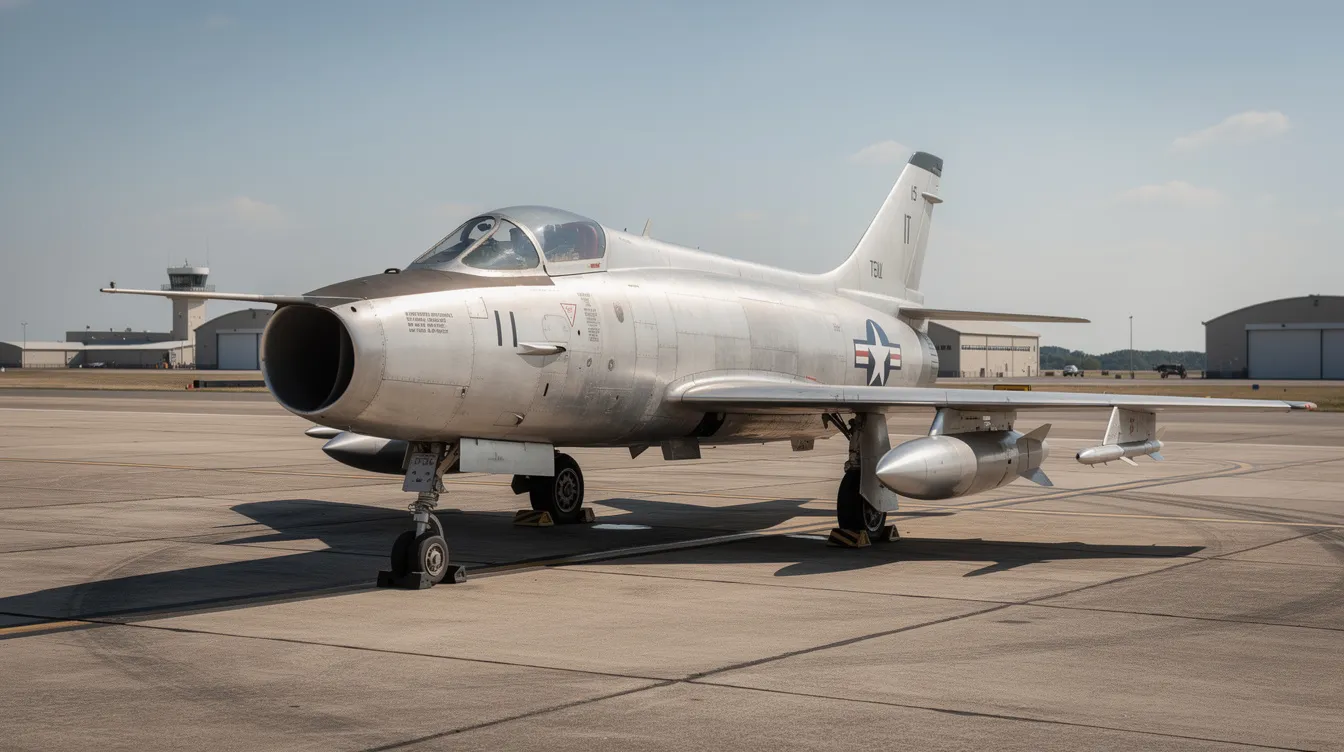
Second generation fighters introduced supersonic capability in level flight; fighters became capable of breaking the sound barrier in the 1950s. Fighter planes can travel faster than the speed of sound, and this era proved it decisively. Swept or delta wings, afterburning turbojets, and early onboard radar defined the period.
Air-to-air missiles emerged as primary weapons, though guns often remained as backup. The shift from guns to missiles was not always smooth-early missiles were unreliable, and pilots learned the hard way that backup armament mattered.
Notable second generation fighters:
USA: F-100 Super Sabre, F-104 Starfighter
USSR: MiG-19, early MiG-21 variants
France: Dassault Mirage III
UK: English Electric Lightning
The interceptor role dominated this era. Long-range, high-speed aircraft were specifically designed to defeat enemy bombers under all-weather conditions. Many of these fighters saw combat in regional conflicts-including Middle Eastern wars in the 1960s-and shaped Cold War air defense doctrine across NATO and Warsaw Pact nations.
Third generation fighters brought improved maneuverability, more capable radars, better missile reliability, and expanded ground-attack capability. This era introduced the concept of dual-role fighters that could handle both air combat and offensive missions against ground targets.
Lessons from Vietnam (1964–1973) reshaped fighter design philosophy. Missile-only tactics underperformed in practice-pilots needed guns, agility, and better training. The US Navy's TOPGUN program and similar initiatives emerged directly from these hard-learned lessons, driving renewed focus on dogfighting skills.
Notable third-generation aircraft:
USA: F-4 Phantom II (multirole workhorse, heavily armed for both air and ground roles), F-111 (tactical strike)
USSR: MiG-23, Su-17/20/22
France: Mirage F1
Sweden: Saab 37 Viggen
The shift from pure air superiority or interception toward more flexible mission profiles accelerated. Fighter bombers that could switch between air-to-air and air-to-ground tasks in a single sortie became increasingly valued. Analog avionics grew more sophisticated, setting the stage for digital fly-by-wire systems in the next generation.
Fourth-generation fighters brought digital technology and enhanced maneuverability to the forefront. These were highly maneuverable, multirole aircraft with digital avionics, fly-by-wire control systems, and designs rooted in energy-maneuverability theory.
Typical capabilities included:
Beyond-visual-range (BVR) missiles with radar guidance
Pulse-Doppler radars capable of tracking targets against ground clutter
Head-up displays (HUDs) and helmet-mounted sights
High off-boresight missiles
Composite materials for lighter, stronger airframes
Key fourth generation examples:
USA: F-15 Eagle (air superiority), F-16 Fighting Falcon (multirole)
USSR/Russia: Su-27, MiG-29
Europe: Eurofighter Typhoon, Dassault Rafale
Sweden: JAS 39 Gripen
European fighters often prioritize high-speed intercepts and operations from short runways, reflecting the geographic and strategic realities of defending European airspace. The Eurofighter Typhoon, for instance, was optimized for air superiority but evolved into a capable strike platform through continuous upgrades.
The "4.5-generation" label applies to upgraded fourth-generation fighters featuring AESA radars, reduced radar cross-section treatments, and advanced data links-bridging the gap to fifth-generation performance at lower cost. Examples include the Typhoon, Rafale, Su-35, and F-15EX.
Fifth-generation fighters introduced stealth capabilities to operate undetected, redefining what air superiority means. Core attributes include very low observable stealth design, internal weapons bays, sensor fusion, advanced data links, and network-centric operations. Fifth-generation fighters focus on stealth and data fusion capabilities rather than pure speed or dogfighting prowess.
The emphasis shifted to first-look, first-shot, first-kill advantage. Stealth fighters are equipped with low-observable technology to evade detection, allowing them to engage enemy aircraft before being seen. The US emphasizes high-tech, lower-volume production of fifth-generation fighters, investing heavily in capability per airframe rather than fleet size.
Active fifth-generation fighters in service:
F-22 Raptor: US-only air superiority fighter with exceptional stealth and agility
F-35 Lightning II: Multirole stealth fighter used by multiple NATO and allied air forces. The F-35 is designed for multirole capabilities and integrates air, land, sea, space, and cyber operations. The F-35 has a radar cross-section equivalent to a golf ball, making it extremely difficult to detect.
Chengdu J-20 "Mighty Dragon": China's long-range stealth fighter
Su-57 "Felon": Russia's stealth-capable multirole fighter
These fighters act as a powerful force multiplier in joint operations, fusing data from multiple domains to give commanders and pilots a decisive advantage. Many air forces now upgrade legacy fourth-generation fleets to operate alongside smaller numbers of fifth-generation jets, balancing cost and capability.
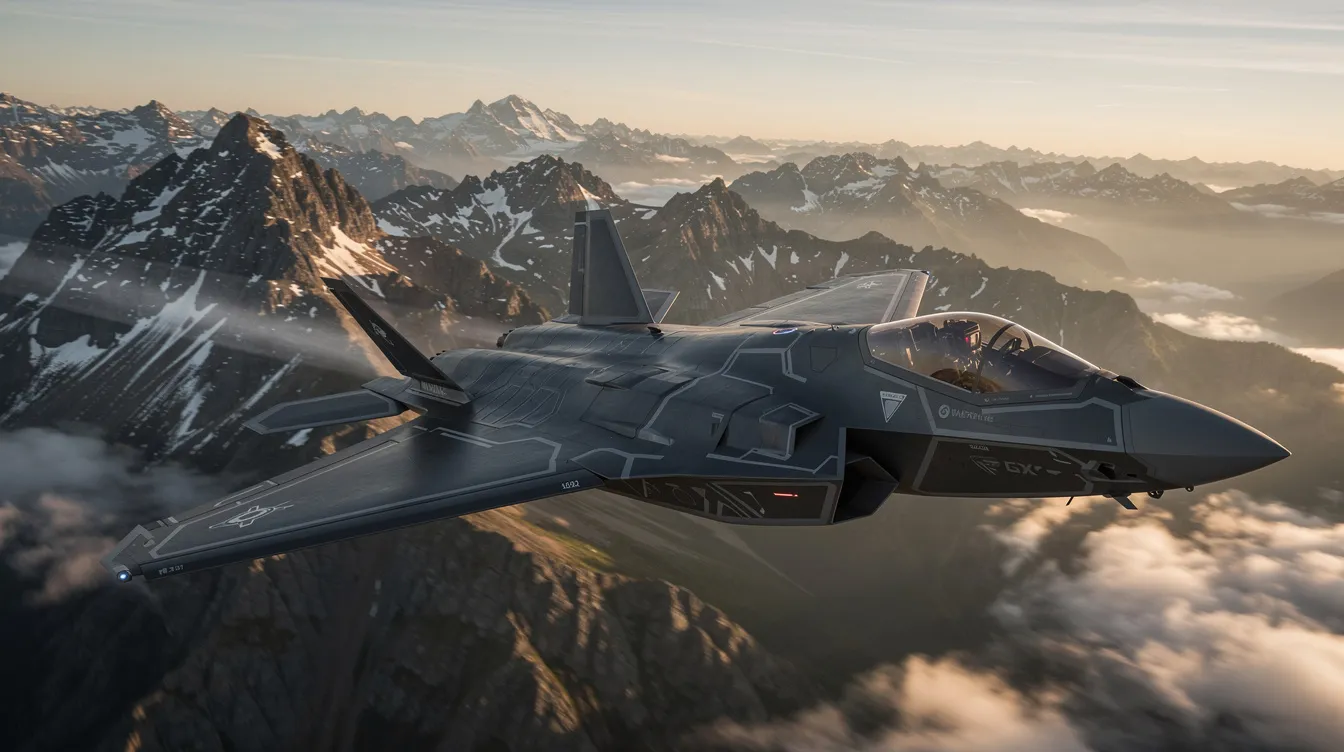
Sixth-generation fighter programs entered demonstrator and development phases in the 2020s, aiming for service dates in the 2030s. No sixth-generation fighter is in operational front-line service as of mid-2026.
Key programs include:
USA: Next Generation Air Dominance (NGAD), designated F-47, awarded to Boeing for development
Europe: Future Combat Air System (FCAS) and Tempest-though the FCAS fighter component was officially abandoned by France and Germany in June 2026 due to cost and coordination challenges
Japan: F-X program
China and Russia: Advanced concepts with limited public details
Envisioned features for such aircraft include optionally manned operation, loyal wingman drones, more advanced stealth across multiple spectra, AI-assisted decision-making, directed-energy weapons, and extended-range, long-endurance missions.
Sixth generation is expected to operate as part of a "system of systems," tightly integrated with unmanned platforms and space-based assets. The collapse of FCAS demonstrates just how difficult multinational coordination on new aircraft programs can be-estimated costs ran to roughly €100 billion.
"Fighter" is an umbrella term covering several specialized roles. Understanding these roles clarifies why different fighter jets look and perform so differently.
Air superiority fighters: Air superiority fighters dominate air combat with speed and maneuverability, optimized to defeat enemy fighters and protect friendly airspace. Examples: F-22 Raptor, early F-15C, Su-27 family.
Multirole fighters: Multirole fighters can perform various combat roles effectively, handling both air-to-air and air-to-ground missions-sometimes in the same sortie. Examples: F-35, F-16, Rafale, Eurofighter Typhoon.
Interceptors: Interceptors are designed to engage enemy aircraft quickly, climbing fast to reach incoming threats and destroy enemy bombers or cruise missiles. Examples: MiG-25, MiG-31, historical F-106.
Strike fighters: Strike fighters are primarily designed to strike ground targets, carrying heavy air-to-ground ordnance while retaining self-defense air-to-air capability.
Heavy fighters: Heavy fighters have greater armament and fuel capacity than single-engine types, often carrying more weapons and operating at longer ranges.
Specialized variants: Carrier-based fighters (F/A-18E/F Super Hornet), electronic warfare variants (EA-18G Growler), and reconnaissance derivatives show the breadth of fighter aircraft families.
Night fighter variants evolved to operate in poor visibility conditions, eventually leading to the all-weather capability standard in modern fighter aircraft.
Air superiority combines technology, tactics, training, and support infrastructure. Having the best fighter jet in the world means little without the ecosystem to employ it effectively. Jet fighters are critical for establishing air superiority and conducting precision strikes, but they cannot do it alone.
Core elements of achieving air superiority:
Situational awareness: Radar, infrared sensors, and data links provide pilots with a comprehensive picture of the battlespace. Modern fighters increasingly rely on advanced avionics and sensor integration to maintain awareness.
BVR missile capability: Long-range radar-guided weapons allow engagement before visual contact. Modern fighters utilize advanced radar systems and computer-guided missiles to maximize range and accuracy.
Stealth and electronic warfare: Stealth technology reduces the aircraft's radar cross-section, while EW suites disrupt enemy systems.
Support infrastructure: AWACS aircraft, tanker fleets, satellite communications, and ground control systems multiply fighter effectiveness.
A practical example: in integrated operations, F-35s share data with fourth-generation partners like F-16s or Typhoons. The F-35 acts as a sensor node, sharing target information via secure data links to extend the engagement range of the entire formation. This ability to share data across platforms turns a mixed fleet into a cohesive fighting force.
Training matters as much as hardware. Realistic exercises like Red Flag and joint multinational drills ensure pilots and planners can execute complex missions. Air superiority often becomes a prerequisite for successful ground and naval operations in modern conflicts.
Several fighter jets dominate discussions in 2026. Here are the most prominent, with distinguishing features and key data points.
F-35 Lightning II: Fifth-generation multirole stealth fighter. The F-35 has over 1 million flight hours recorded across the global fleet, and more than 880 F-35s are currently in active service with the US and allies. Operating cost per flight hour for the F-35A dropped below $50,000 in 2023. The F-35 has a radar cross-section equivalent to a golf ball-a measure of how difficult it is to detect on radar.
F-22 Raptor: US-only air superiority fighter. The F-22 has a top speed of Mach 2.25, and the F-22 Raptor can supercruise at Mach 1.8 without afterburners. Only about 195 were built, making it rare and expensive at roughly $80,000+ per flight hour.
Eurofighter Typhoon European consortium-built fighter emphasizing air superiority, upgraded for swing-role missions with AESA radar and advanced sensors. Operating costs run approximately $60–65,000 per flight hour.
Dassault Rafale French omnirole fighter with advanced avionics and electronic warfare. Widely exported and continuously upgraded (e.g., F4 standard). Performance capabilities span air superiority, nuclear strike, and carrier operations.
Su-57 Felon: Russia's stealth-capable multirole fighter. The Sukhoi Su-57 features 3D thrust-vectoring nozzles for exceptional maneuverability. Small fleet size, with production continuing.
Chengdu J-20 "Mighty Dragon": China's long-range stealth fighter for air superiority and strike. The Chengdu J-20 can reach Mach 2 without afterburners, and the Chengdu J-20 has a weapons payload of 24,000 lbs. No exports; growing PLAAF numbers.
F-15EX Eagle II: Updated fourth-generation air superiority and strike platform. The F-15EX can carry nearly 30,000 lbs of weapons-one of the highest payloads of any fighter in active service.
There is no single universally "best" fighter. Effectiveness depends on mission requirements, support assets, training, and pilot skill. Rankings based on stealth, agility, weapons load, and network connectivity will always be debatable.
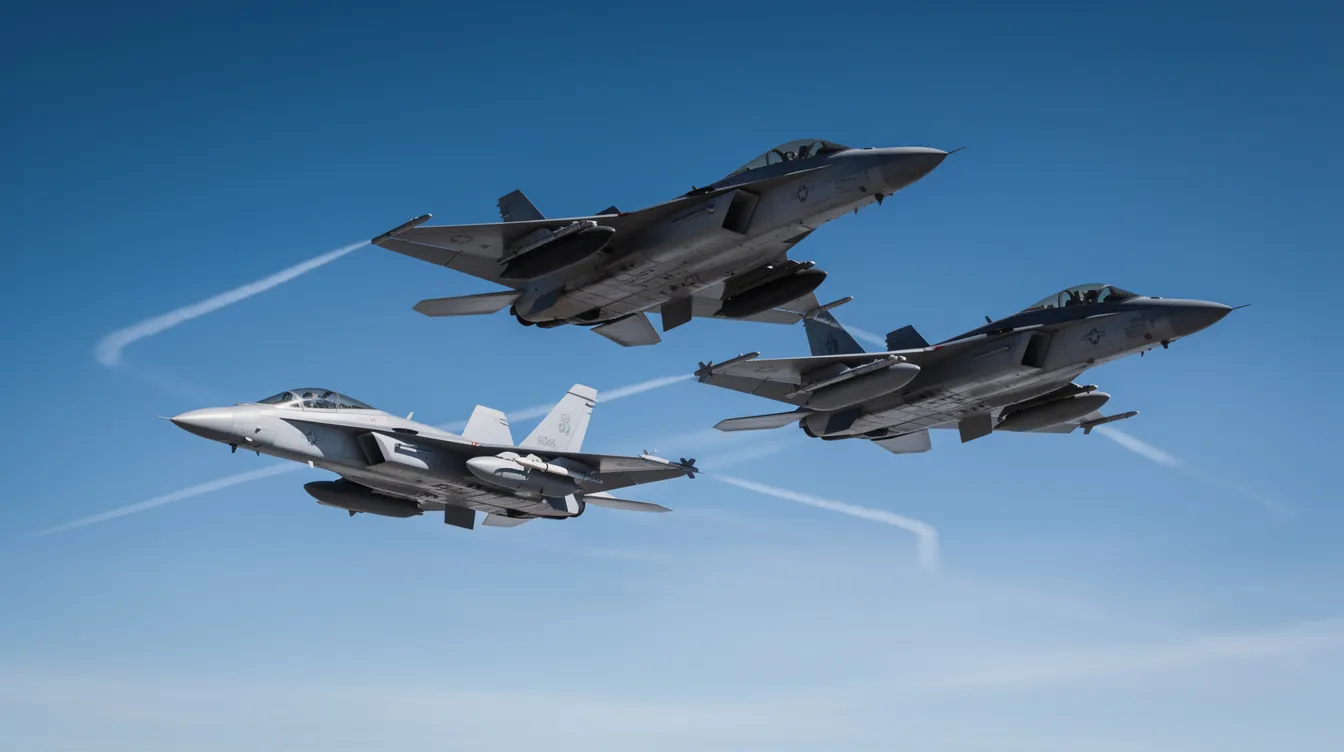
Modern fighter aircraft are flying sensor and data-processing platforms as much as they are airframes and engines. The pilot's ability to make decisions quickly depends on the technology integrated into every system.
Key onboard systems include:
Engines: Afterburning turbofans enabling supersonic speeds and high climb rate. Fighter jets are typically built with advanced thrust-vectoring engines for maneuverability, allowing rapid changes in direction during combat.
Radar: Often AESA (Active Electronically Scanned Array), providing long-range tracking and multi-target engagement. Advanced sensors like these give pilots awareness of threats hundreds of kilometers away.
Electro-optical/infrared systems (IRST, EOTS): Passive target detection without emitting radar signals-critical against stealth threats.
Electronic warfare suites: Jamming, decoys, and threat warning systems that protect the aircraft from enemy missiles and radar.
Sensor fusion is what ties everything together. It combines inputs from radar, IRST, EW, and data links into a single, intuitive tactical picture. Instead of monitoring separate screens, the pilot sees one unified display showing threats, friendlies, and terrain. Advanced avionics process enormous volumes of data in real time.
Secure data links allow fighters to share targets, threat information, and mission updates with other aircraft, AWACS, and ground stations. Cockpit design now focuses on reducing pilot workload through large-area displays, helmet-mounted sights, and voice or touch interfaces.
Fighter aircraft typically carry a mix of air-to-air and air-to-ground weapons depending on role and mission. Jet fighters carry a range of weapons including air-to-air missiles and precision-guided bombs.
Air-to-air weapons:
Short-range infrared missiles (e.g., AIM-9X Sidewinder) for dogfights
Medium and long-range radar-guided missiles (e.g., AIM-120 AMRAAM) for BVR engagements
Internal gun or cannon for close-in combat and last-resort use
Air-to-ground weapons:
Precision-guided bombs (laser-guided, GPS/INS)
Air-to-surface missiles for ships, radar sites, and armored targets
Stand-off weapons that allow launches from outside heavy air defenses
Mission planners tailor loadouts for specific tasks: defensive counter-air, offensive counter-air, strike coordination, close air support, or suppression of enemy air defenses. In private aviation, by contrast, customers choose from a wide range of private charter aircraft types optimized for range, cabin size, and operating costs rather than weapons payload. Stealth fighters like the F-35 often carry weapons internally for low-observable missions, with external pylons used when stealth is less critical-trading signature management for payload capacity.
Combat radius and long-range mission capability are crucial for projecting air power over large areas. Two key terms define this:
Combat radius: The distance an aircraft can fly, engage in combat, and return with fuel reserves.
Ferry range: Maximum one-way distance with external tanks and no combat load.
Design factors affecting range include internal fuel capacity, engine efficiency, use of external drop tanks, and aerial refueling via tanker aircraft. Long-range fighters like the F-15 and Su-35 extend their reach using conformal and drop tanks. The J-20 was specifically designed for extended ranges in Pacific and continental-scale operations.
Long-range capability is essential for nations with large territories or commitments far from home bases. It directly influences basing decisions, alliance structures, and the ability to project air power without relying entirely on forward-deployed forces. In the civilian world, understanding how private jets handle international flights highlights similar planning challenges around range, airspace, and regulations-even without the combat dimension.
Modern air forces integrate fighter jets into broader force structures that include AWACS, tankers, transports, and ground control systems. No fighter operates in isolation. Likewise, private aviation relies on a network of charter airlines and operators that coordinate aircraft, crews, and support services for business and leisure travelers.
Peacetime roles:
Quick reaction alert (QRA) intercepts of unidentified aircraft entering national airspace
Air policing over national or alliance airspace
Multinational training exercises and NATO deployments
Wartime missions:
Establishing air superiority or air supremacy
Escorting strike packages
Suppression or destruction of enemy air defenses (SEAD/DEAD)
Precision strike in support of ground forces
Over recent decades, fighters have flown both air-to-air and air-to-ground sorties in operations across the Balkans, Middle East, and other theaters. Many air forces now operate mixed fleets-legacy fourth-generation plus fifth-generation-to balance capability, cost, and fleet size. In civil aviation, cost-conscious travelers increasingly look to crowdsourced shared private jet flights to fill empty seats and reduce charter expenses. The F-35's full mission capable rate dropped from approximately 38% in 2021 to roughly 25% by 2025, illustrating the sustainment challenges that come with operating high-tech fleets.
Retired fighter jets do not simply disappear. Many enter secondary roles or limited civil use after their frontline careers end.
Typical post-service paths include:
Aggressor and training aircraft for air forces and defense contractors
Flight-test platforms for new sensors, weapons, and aerodynamic research
Museum exhibits and static displays preserving aviation history
A small number of ex-military jet aircraft-such as the L-39 Albatros, certain MiG-21 variants, and the de Havilland Vampire-are maintained by private operators for training and adventure flights. However, strict maintenance standards, pilot qualifications, and airspace permissions are required for civil operation of former fighter aircraft.
These aircraft are distinct from business jets used in private charter, but both contribute to the broader jet aviation ecosystem. For travelers, understanding how much a private jet really costs puts those civil platforms in financial perspective compared with complex, government-funded fighter programs.
Fighter jets and business jets share underlying jet engine technology and some avionics concepts, but they serve entirely different missions.
|
Attribute |
Fighter Jet |
Private Jet |
|---|---|---|
|
Primary purpose |
Air combat, strike, reconnaissance |
Passenger transport |
|
Seats |
1–2 |
4–18+ |
|
Cabin comfort |
Minimal |
High priority |
|
Weapons |
Missiles, bombs, guns |
None |
|
Design focus |
Speed, agility, stealth |
Range, efficiency, comfort |
|
Typical user |
Air force pilot |
Business traveler, family |
Some high-performance trainers and ex-military jets occasionally serve niche roles in civilian markets, but they are rare compared with standard business jet types. For a breakdown of different aircraft classes and categories, light jets, midsize jets, and heavy jets cover the spectrum of private travel needs, and guides to the best private plane manufacturers for each budget help buyers and charter clients match aircraft to mission profiles.
Digital aviation platforms like Jettly specialize in private jet charter-not fighter aircraft-offering on-demand access to thousands of civilian jets for business and leisure travel, along with tools to locate suitable airports and request quotes. Learn more about Jettly's charter options at jettly.com.
While front-line fighter jets are restricted to military use, civilians can still experience high-performance jet flight in various forms.
Typical options include a range of civil experiences that differ markedly from booking a seat on a business jet; travelers interested in accessing private cabins at a lower cost can explore how to buy a seat on a private jet through shared and semi-private services.
Typical options include:
Flights in former military trainers like the L-39 Albatros with professional pilots
Aerobatic jet experiences offering rolls, loops, and high-G maneuvers
Edge-of-space flight profiles in certain high-altitude capable jets (where available and permitted)
Safety is paramount: comprehensive pre-flight briefings, experienced pilots (often ex-military), and strict adherence to aviation regulations are standard. These experiences are separate from private jet charter, which focuses on efficient point-to-point travel rather than aerobatics or combat-style flying, though there are now many ways to get a seat on a private jet easily through memberships, apps, and shared flights.
Readers drawn to the speed and efficiency of jet aircraft for travel-rather than aerobatic thrills-can explore business and leisure charter through Jettly's platform and compare top private jet charter companies to find the best fit for their needs.
Military and civil aviation regularly overlap in technology development, pilot training, and airspace management.
Technology transfer: Advanced materials, engine efficiency improvements, and avionics that originated in fighter programs have benefited business jets. Navigation systems, weather radar, and safety technologies refined in both domains flow between military and civilian sectors.
Pilot pathways: Many business jet captains began their careers flying military fighters or trainers, bringing high levels of training and discipline into the private charter sector.
Operational commonalities:
Both military and private aviation value access to smaller airports for rapid, flexible operations
Both prioritize reliability, turnaround speed, and mission success-whether that mission is a combat sortie or a time-critical business trip
Platforms that streamline aircraft access and logistics in the private sector mirror, in a civilian context, the planning sophistication found in modern air forces. Jettly's approach to transparent booking and instant pricing reflects this same emphasis on efficiency and readiness, helping travelers understand how private jet charter pricing works in practice. For those weighing different travel modes, a look at commercial flight vs private flight can help clarify the advantages, including whether shared charter flights or full charters make more sense for a given trip.
Many frontline fighters can exceed Mach 2-over 2,400 km/h at altitude. The F-15EX and MiG-31 can reach around Mach 2.5 in ideal conditions. By contrast, typical commercial airliners cruise around Mach 0.78–0.85 (roughly 830–920 km/h). Stealth-focused aircraft like the F-35 typically operate at a lower top speed of about Mach 1.6 but prioritize stealth and sensor capability over supersonic speeds. Sustained high-Mach flight is rare in routine operations due to fuel consumption and airframe stress.
Civilians generally cannot own active frontline fighters with current weapons and classified systems. However, some de-militarized older fighters and trainers-such as L-39 Albatros variants and certain ex-MiG models-are privately owned. Such aircraft must be properly de-armed, maintained, and certified. Pilots must hold appropriate licenses and training. Most people experience high-performance jet flight through supervised experience providers rather than direct ownership, while others compare elite civil options such as industry leaders like NetJets when deciding how to access private aviation.
New aircraft in the fifth-generation category carry significant price tags. The F-35A has a flyaway cost of roughly $62–77 million per unit depending on variant and production lot. Total ownership cost-including maintenance, training, infrastructure, and upgrades-over the life of a fighter can reach several hundred million dollars. By comparison, private business jets range from a few million dollars for light jets to $60+ million for large, long-range models, making charter solutions appealing for many travelers. Tools like a jet card flight cost estimator and Jettly's cost estimator can help compare private flight pricing.
Air superiority fighters are specifically designed to defeat enemy aircraft and protect friendly airspace, emphasizing climb rate, maneuverability, and air-to-air armament. The F-22 and early F-15C are classic examples. Multirole fighters are designed from the outset to perform both air-to-air and air-to-ground missions, sometimes in the same sortie. The F-35, F-16, Rafale, and Eurofighter Typhoon in current configurations all serve as multirole or swing-role fighters.
Jet fighters are combat aircraft built for speed, maneuverability, and weapons delivery. They typically seat one or two crew members with minimal cabin comfort. Private jets in charter fleets focus on comfortable cabins, seating from 4 to 18 passengers or more, luggage capacity, and efficient point-to-point travel with no weapons systems. Readers interested in the convenience and time savings of jet travel for business or leisure can explore charter options or structured jet card programs at jettly.com.
Jet fighter planes have progressed from early first-generation designs like the Me 262 and MiG-15 to today's stealthy, networked fifth-generation fighters such as the F-35 Lightning II and Chengdu J-20. Each generation brought a leap in performance capabilities-from breaking the sound barrier to achieving near-invisibility on radar.
Air superiority now depends on stealth, long-range weapons, sensor fusion, and integrated operations far more than on raw speed alone. Sixth-generation concepts promise even deeper integration with unmanned systems and AI, ensuring jet fighters remain central to national defense for decades to come.
Fighter jets and private jets serve fundamentally different purposes, but they share a technological lineage rooted in jet propulsion, advanced materials, and precision engineering. One dominates the airspace above a battlefield. The other gets you to a meeting or a vacation on your schedule, without the hassle of commercial terminals, whether you're flying between major hubs or arranging a private jet charter in cities like Kolkata.
Share this post:
Jay Franco Serevilla
Jul 13, 2026
|
5
min read
Discover tips and trends in the industry.
5
min read
Bell 407 Operating Cost Per Hour: Complete Owner and Charter Guide
The Bell 407 is a versatile light helicopter known for its reliability and efficiency. Understanding its operating cost per hour is crucial for potential owners and charter operators, as it varies based on fixed and variable expenses. This guide provides a comprehensive breakdown of costs, helping you make informed decisions about ownership or chartering.
Read More
5
min read
Medevac Flight Cost: What a Medical Evacuation Really Costs in 2026
In 2026, medevac flight costs range from $25,000 for short domestic transfers to over $200,000 for complex international missions. Factors influencing pricing include distance, aircraft type, and patient medical needs. Understanding these costs is crucial for families facing urgent transport decisions, especially when insurance coverage varies significantly.
Read MoreStay updated with our latest insights and tips to elevate your journey with us.
MEMBERSHIPS AND ASSOCIATIONS



Disclaimer: Jettly operates as a charter broker, offering access to a global digital jet charter marketplace. Jettly is not a direct air carrier and does not own or operate aircraft. All advertised flights are conducted by third-party air carriers that are fully licensed and hold the appropriate Part 135 or Part 121 certifications issued by the Federal Aviation Administration (FAA) or equivalent regulatory authorities under U.S. or foreign law. Jettly complies fully with the U.S. Department of Transportation's Part 295 and Part 298 Charter Broker regulations. Jettly does not carry additional liability insurance. Passengers are covered by aircraft operator insurance. TICO: 50023770


