


Login
Get Instant Pricing On 23,000+ Aircraft

>

The private jets charter market is forecasted to reach $29.38 billion in 2025 and $11.9 billion by 2033. Its typical customers are business executives, wealthy individuals, and group travelers who can afford it.
While the post-pandemic world has seen a significant rebound in the volume of business travel, with firms like McKinsey & Company noting that companies are reinvesting in face-to-face engagement, the nature of that travel has changed. As businesses simultaneously tighten their belts, that renewed demand is shifting from the ultra-premium first-class cabin to the more cost-effective business class. This strategic shift has brought a unique opening for private charter jets to fill a needed void.
Looking strictly at the data, it’s safe to say that private charter is starting to look more and more attractive for businesses that must factor travel into their expenses. Jettly highlights some of the reasons behind this shift.
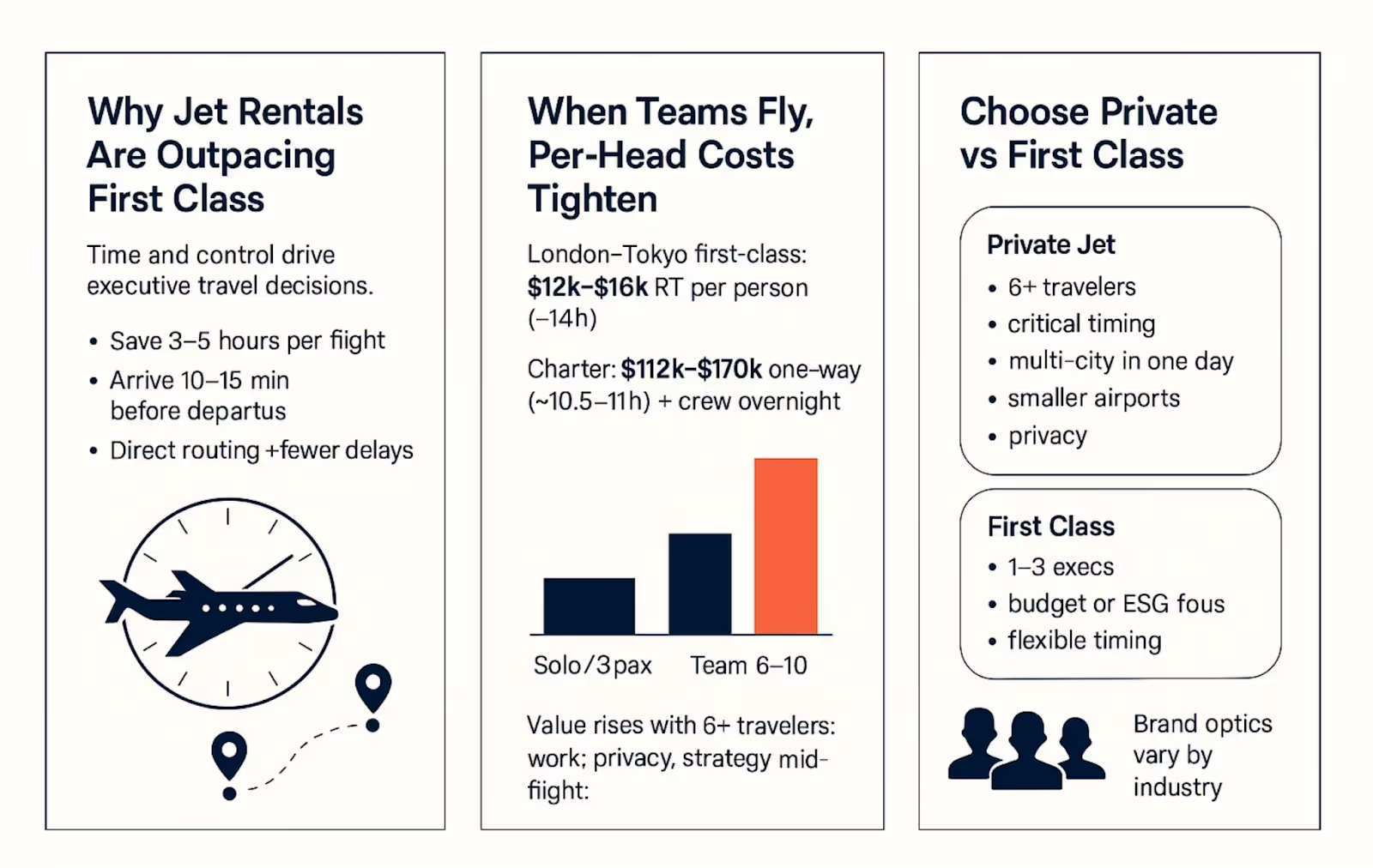
In business, time is money, and a high-paid executive spending several hours navigating commercial travel may not be the most efficient use of their time.
First class in this scenario is becoming less of an option because you need to cut down on wasted time.
Time constraints, the number of people who travel, and the urgency of business are some of the primary factors driving the rise in jet rentals.
Flexibility and Scheduling
Flying first class with an airline is a luxurious experience that many executives enjoy, but it also comes with less control over the schedule, layovers, or destination. In a chartered flight, you can set the time of departure and the route, and fly directly to closer or less congested airports.
Private jet travellers save time due to:
Because the charter can depart or land at smaller airports, businesses can plan trips that include multiple locations in one day. This reduces the need for overnight stays and keeps costs down.
Cost per Person
Believe it or not, chartering a private jet can be surprisingly cost-effective compared to commercial travel—but only when the conditions are perfect. It's a matter of strategy, not just raw numbers.
For a single executive or a very small team, the math is simple: Flying first-class on a commercial airline is almost always the more economical choice. There are other benefits to taking a private jet, but the cost wouldn’t be one of them in this situation. The cost of chartering an entire state-of-the-art aircraft for one or two people is a significant investment that commercial fares, even at the premium level, simply cannot match.
So, where does the math change? With scale and complexity.
Imagine you need to send a full delegation, consisting of 10 senior executives and their specialized equipment, to an international summit. Suddenly, the equation shifts. You're no longer comparing one charter fee to one commercial ticket. You're comparing it to the eye-watering cost of 10 first-class seats, excess baggage fees for sensitive equipment, and the massive logistical headache of coordinating a dozen separate bookings.
That's where the private charter shines. It consolidates all those variables into one streamlined, predictable cost. But the real return on investment isn't just about the money. During that uninterrupted flight, the aircraft becomes a secure, flying boardroom.
Your team can strategize, rehearse presentations, and hold confidential meetings. They arrive not just at the destination, but as a cohesive unit—rested, aligned, and ready to perform at their peak from the moment the wheels touch the ground. You're not just buying a flight; you're buying a competitive advantage.
Brand Reputation and First Impressions
The world of business is all about the image you manage to project. And nowadays, flying first class is no longer as much of an image gain as it once was because of delays and all the hassle built into the commercial flying experience.
On the other hand, the exclusivity of a private jet can project success and power. But this is only true for certain industries, like luxury items, investment firms, or elite consultancies. Other industries see this way of traveling as wasteful and damaging to the environment, so tread carefully.
There’s a time for private aviation and a time for flying commercial. Companies that manage to find the right balance and take a hybrid approach are the ones that have the most to win.
When does it make sense to use one over the other? It depends on your end-goal.
It makes sense to use a private jet when:
Choose first class on commercial flights when:
Jet rentals are on a growing trend, but, for now at least, they are not yet fully outpacing first-class corporate travel. Many executives value private charters for flexibility, privacy, and access to smaller airports, especially for multi-city trips or groups.
However, first-class remains the more cost-efficient option, especially for solo travelers. The decision often depends on company policies, sustainability concerns, and the nature of the trip.
Share this post:
Jay Franco Serevilla
Oct 6, 2025
|
5
min read
Discover tips and trends in the industry.
5
min read
Corporate Aircraft: A Complete Guide to Business Aviation Access
Corporate aircraft have revolutionized business travel by providing efficient alternatives to commercial aviation, allowing for greater productivity and flexibility. This guide details various types of corporate aircraft, including turboprops and ultra-long-range jets, and explains how businesses can access them through ownership or on-demand charter services like Jettly. Key benefits include significant time savings, access to smaller airports, and the ability to tailor travel to specific mission profiles. As digital platforms streamline the booking process, many companies are opting for charter services to convert fixed aviation costs into variable expenses, enhancing financial flexibility and operational efficiency.
Read More
5
min read
Small Aircrafts: A Practical Guide For Modern Private Travel
Small aircraft, including single-engine pistons, turboprops, and light jets, offer flexible and efficient private travel, significantly reducing travel times compared to commercial airlines. With the ability to access over 5,000 smaller airports, these aircraft cater to business and leisure travelers seeking convenience and privacy. Jettly provides on-demand access to a global fleet of over 20,000 aircraft, allowing users to charter flights without the commitments of ownership or jet cards. The guide emphasizes the advantages of small aircraft, including time savings, safety features, and cost-effective chartering options, making it a practical choice for frequent travelers.
Read MoreStay updated with our latest insights and tips to elevate your journey with us.
MEMBERSHIPS AND ASSOCIATIONS



Disclaimer: Jettly operates as a charter broker, offering access to a global digital jet charter marketplace. Jettly is not a direct air carrier and does not own or operate aircraft. All advertised flights are conducted by third-party air carriers that are fully licensed and hold the appropriate Part 135 or Part 121 certifications issued by the Federal Aviation Administration (FAA) or equivalent regulatory authorities under U.S. or foreign law. Jettly complies fully with the U.S. Department of Transportation's Part 295 and Part 298 Charter Broker regulations. Jettly does not carry additional liability insurance. Passengers are covered by aircraft operator insurance. TICO: 50023770


