


Login
Get Instant Pricing On 23,000+ Aircraft

>
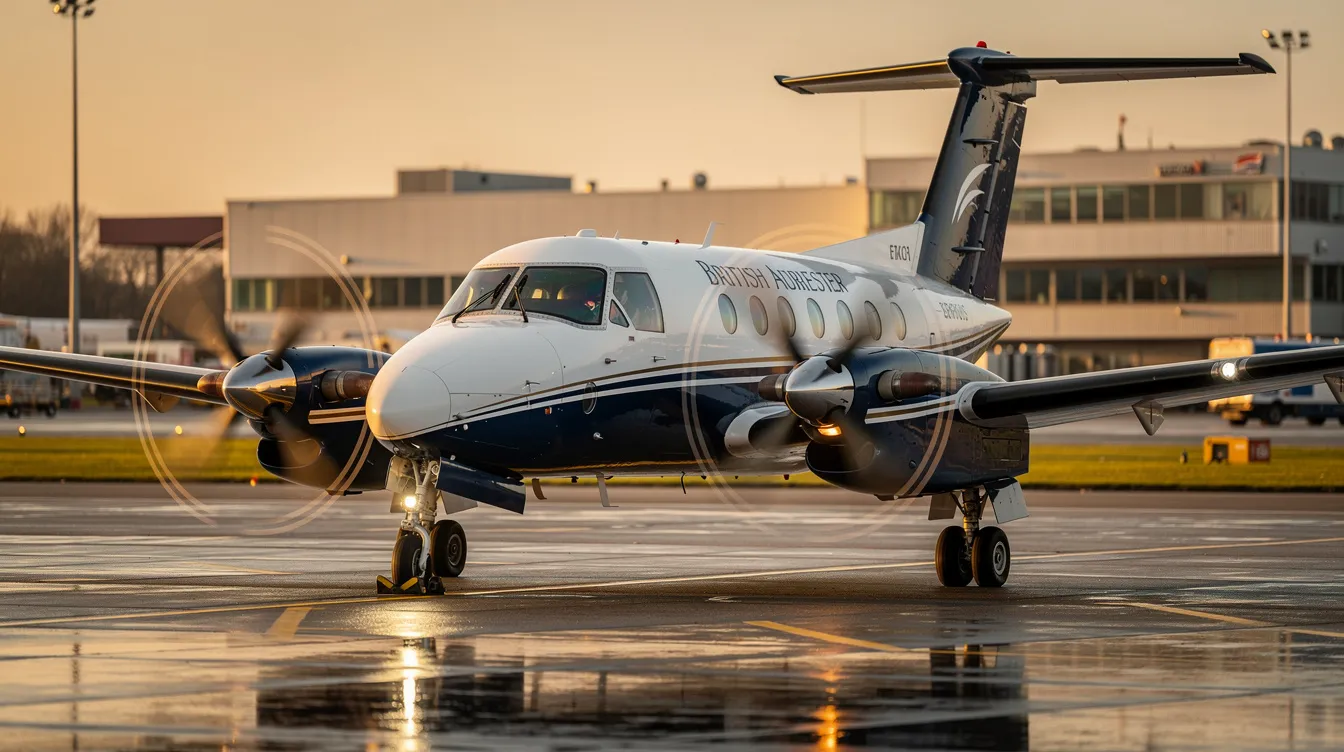
The British Aerospace Jetstream 31 is a twin-turboprop regional aircraft that has connected smaller cities to major hubs since the early 1980s. This article is intended for charter customers, aviation enthusiasts, and travelers considering private group flights. Built on a lineage stretching back to the original Handley Page design, this 19-seat turboprop remains a practical choice for on-demand charter and group travel. Here is what charter customers need to know about its history, performance, safety record, and how to book one through Jettly.
The Jetstream 31 is a 19-seat pressurized turboprop derived from the original Handley Page Jetstream, widely used for regional airline, corporate shuttle, and charter operations since entering service in 1982.
Its first flight took place on March 28, 1980, and UK certification followed in June 1982. Over 400 Jetstream 31 and Jetstream 32 aircraft have been delivered, making it one of British Aerospace's most successful commuter platforms.
The type evolved from the Handley Page HP-137 and was later refined into the Super 31 / Jetstream 32, offering a more powerful Jetstream variant with upgraded Garrett TPE331 engines and enhanced performance for hot-and-high operations.
Although not a "private jet" in the strict sense, the Jetstream 31 is a popular pressurized turboprop for on-demand charter, corporate shuttles, and small-group travel arranged through platforms like Jettly.
This article covers development history, technical specifications, safety record, typical charter missions, and how travelers can book the type via Jettly's digital marketplace.
The Jetstream 31 is a British-built, twin-engine, 19-seat regional turboprop introduced by British Aerospace in the early 1980s. The Jetstream 31 is a twin-turboprop regional aircraft (Fact: 1), seating 19 passengers (Fact: 2), and is equipped with twin Honeywell TPE331 turboprops (Fact: 3). It is part of the broader British Aerospace Jetstream family, derived from the earlier Handley Page Jetstream commuter design of the late 1960s. The aircraft serves as a bridge between smaller pistons and larger regional jets, filling a niche for short-haul scheduled service, regional corporate travel, air ambulance missions, and ad-hoc charter. It is favored by feeder airlines looking to connect smaller cities to major hubs efficiently. For charter customers using Jettly, the Jetstream 31 typically serves groups seeking cost-effective private travel on routes of roughly 200–600 nautical miles. Its comfortable, stand-up cabin and durable, robust design make it a reliable workhorse for point-to-point regional flights.
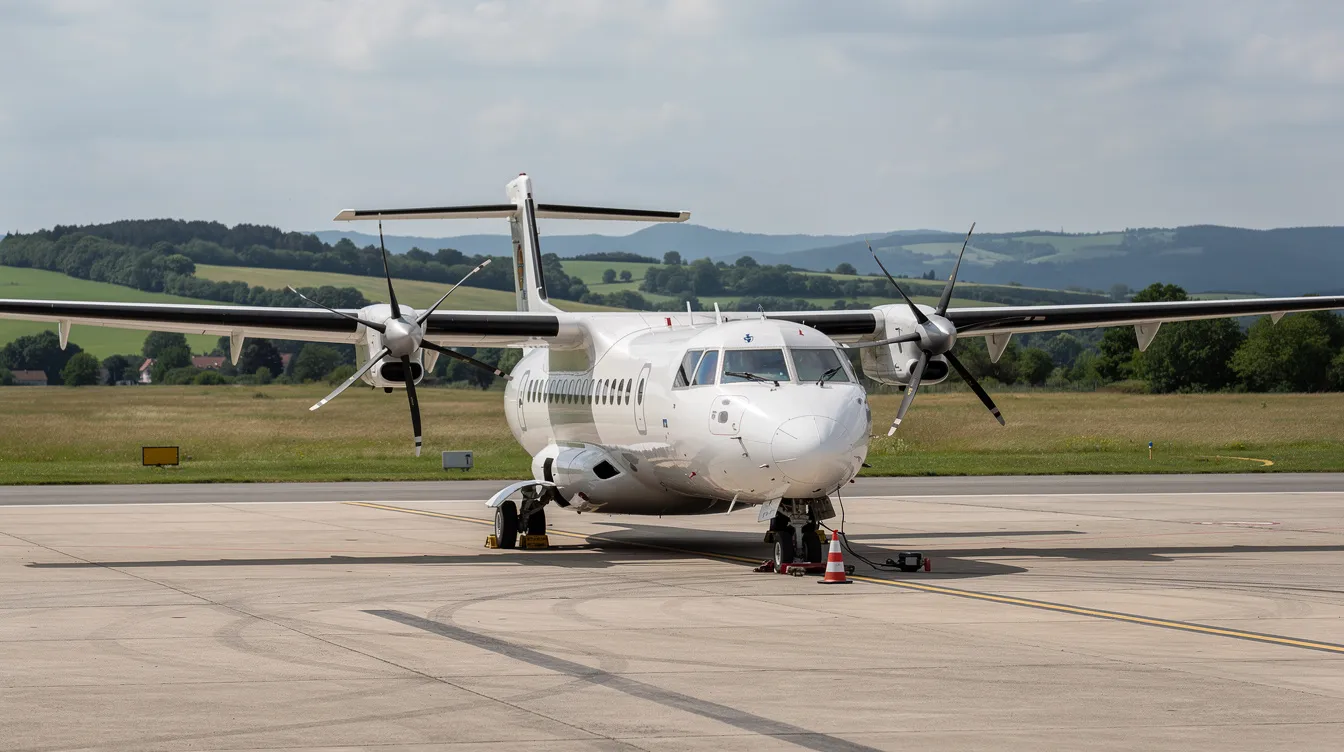
The Jetstream story begins with the Handley Page HP-137 Jetstream 1, which flew for the first time on 18 August 1967 as a high-performance commuter aircraft designed for the US and European regional market. Handley Page faced persistent technical issues with weight, drag, and engine performance alongside severe financial trouble. The company went bankrupt in 1969, halting full-scale development of the Jetstream 2.
Scottish Aviation took over parts of the program in the early 1970s, producing Jetstream versions converted for military training roles in England and abroad. When British Aerospace was formed in 1977 through collaboration among BAC, Hawker Siddeley, and Scottish Aviation, development began in 1978, and the company later developed the Jetstream 31 as a modernized, pressurized commuter turboprop.
Key milestones in the development schedule include:
1978 - Development of the Jetstream 31 began
March 1980 - The Jetstream 31 prototype flew for the first timewere made
June 1982 - UK certification was completed
Late 1982 - Initial commercial deliveries were made to regional operators in Europe and North America
October 1988 - The Super 31 / Jetstream 32, with more powerful engines, was certificated
1997 - The J32EP (enhanced performance) upgrade package was certified for better performance in hot-and-high conditions and improved payload capacity
Production ended in 1993, but the aircraft's market presence has endured well beyond that date.
The Jetstream 31 features a low-wing, T-tail configuration with two Garrett TPE331 engines, conventional retractable tricycle landing gear, and a pressurized fuselage optimized for short sectors and small airports. The cabin measures approximately 24.25 ft in length and is often preferred for its spacious cabin layout. Standard seating is three-abreast in a 1+2 configuration with a central aisle, accommodating up to 19 pax plus a two-person crew in the cockpit. Some operators fit fewer seats for corporate or executive layouts, adding extra legroom and cargo space.
The Jetstream 31 provides true airline-level comfort for passengers despite its compact dimensions. Pressurization allows comfortable flight at 20,000–25,000 ft, and the cabin height permits most passengers to stand upright. Compared with light jets, the Jetstream is noisier and slower, cruising at a maximum speed of 482 km/h (260 knots), but it offers a more economical solution for short-haul group charter where budget and runway length are key concerns.
A typical Jettly-arranged Jetstream 31 flight means boarding at a smaller regional airport, experiencing short taxi times, direct routing, and efficient point-to-point travel - all without the crowds and delays of commercial hubs. Travelers can identify suitable departure and arrival airfields using Jettly's airport locator tool and enhance the onboard experience with tailored in-flight catering for private jets.
The standard Jetstream 31 is equipped with twin Honeywell TPE331-10 turboprop engines, each rated at around 700 kW (approximately 940 shp), driving four-blade, constant-speed, reversible propellers. Some engine variants may include water-methanol injection for enhanced performance during takeoff in demanding conditions.
The Super 31 / Jetstream 32 uses more powerful Garrett TPE331-12UAR engines rated at about 760 kW (around 1,020 shp), delivering better climb rate, cruise speed, and hot-and-high capability.
Key specifications at a glance can also help travelers interpret results from Jettly's private jet charter cost estimator when comparing turboprops with jets for specific missions:
|
Parameter |
Jetstream 31 |
|---|---|
|
Maximum cruising speed |
482 km/h (260 knots) |
|
Maximum range |
Up to 680 nautical miles |
|
Range with 19 passengers |
1,185 km (640 nm) |
|
Operating empty weight |
4,360 kg (9,613 lb) |
|
Maximum takeoff weight |
6,950 kg |
|
Wingspan |
15.85 m (52 ft 0 in) |
|
Length |
14.37 m (47 ft 2 in) |
|
Height |
5.37 m (17 ft 6 in) |
|
Wing area |
25.1 m² (270 sq ft) |
|
Service ceiling |
~25,000 ft |
The Jetstream 31 has been widely used since 1982 by regional airlines, charter companies, and military operators across the USA, Canada, England, and beyond. Like any long-serving aircraft type, it has been involved in a number of incidents and accidents over its decades of service.
On 20 January 1998, a Jetstream 31 with registration C-FBIE operating an Alberta Citylink flight from Calgary to Lloydminster conducted a non-precision ADF approach to runway 25. The pilot flew an unstable approach with a high descent rate. On landing, the left main landing gear collapsed, and the aircraft slid along the runway approximately 1,800 ft. There was no fire and no injuries among those on board. The probable cause was determined to be an unstabilized approach influenced by ice and premature power reduction. A Jetstream 31 crash in 1998 had no fatalities.
In a more serious accident in December 1994, a Jetstream 32 operating as American Eagle Flight 3379 (registration N918AE) crashed on approach near Raleigh after the captain failed to maintain adequate control following a misinterpreted engine indication, with signs of engine failure being misread. The aircraft experienced multiple stall warnings and a high descent rate before impact with trees several miles from the runway. Fifteen people were killed, and the probable cause centered on crew coordination failures and mishandling of the missed approach.
Investigation findings from these and other events led to improvements in crew training, standard operating procedures, and stall-recovery techniques across Jetstream fleets. Modern charter operations of the Jetstream 31 are subject to strict regulatory oversight, maintenance standards, and crew recurrent training. Jettly works only with operators that meet relevant safety and regulatory requirements in their jurisdictions, a commitment reflected in its comprehensive guide to charter airlines and private aviation. Lessons learned from past accidents contribute to higher safety standards across the entire turboprop category.
The Jetstream family was adopted by several air forces and government agencies as multi-engine trainers and light transport aircraft. Derivatives of the Handley Page and British Aerospace Jetstream were used by the Royal Navy (as the Jetstream T3 for radar observer training) and other European forces for multi-engine pilot training, navigation training, and liaison duties.
In the United States, Jetstream types served primarily in civilian regional service. The US Air Force has operated similar-class turboprop trainers and transports rather than the Jetstream itself; the type's military footprint is more prominent in the UK and Commonwealth nations. The airframe's reliability, short-field capability, and pressurization made it well-suited for training crews transitioning to larger multi-engine aircraft in military flight schools. Surplus military airframes later entered civilian charter and corporate fleets, some of which remain accessible through platforms like Jettly within its broad catalog of private charter aircraft.
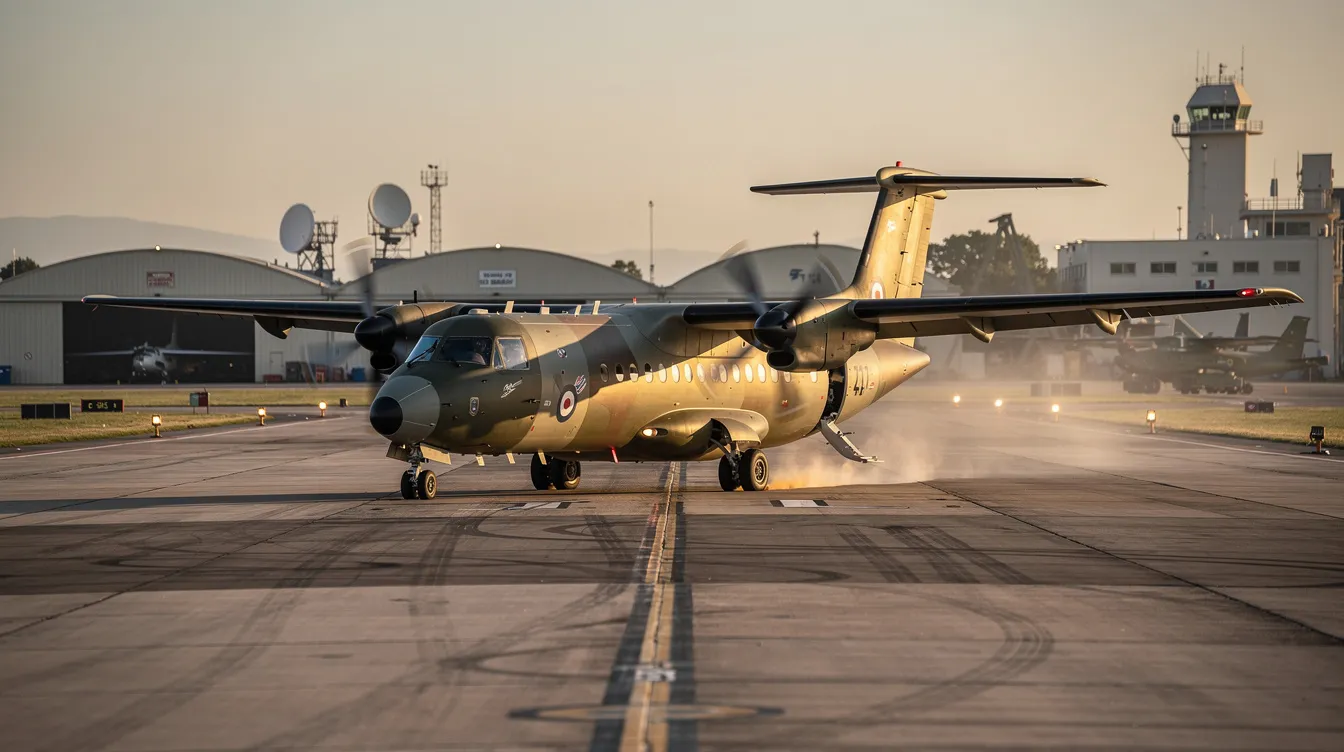
The Jetstream 31 is a practical turboprop option within Jettly's marketplace, ideal for cost-conscious groups that value direct point-to-point travel and access to smaller airports over high cruise speeds. The Jetstream 31 offers relatively low operating costs on low-demand routes compared to larger regional jets, and the aircraft is frequently chartered for executive groups seeking access to smaller runways.
Typical charter missions booked through Jettly include corporate shuttles between regional business hubs, sports team movement, incentive trips, and family or group leisure travel on sectors of roughly 300–800 miles. The aircraft can operate from smaller airfields with good short-field performance, opening up destinations that jets cannot reach and pairing well with Jettly's options for crowdsourcing private jet flights and sharing empty seats when groups wish to reduce overall charter costs.
Jettly's digital platform allows users to search for Jetstream 31 and Jetstream 32 options within a global inventory of more than 20,000 aircraft, see indicative pricing, and request on-demand quotes without long-term commitments. For frequent flyers, Jettly also offers private jet memberships that provide access to wholesale rates and additional benefits. Service aspects such as preferred departure times, choice of regional airports, basic in-flight catering, and ground transportation connections can all be coordinated through the platform.
Learn more about Jettly's charter options at https://www.jettly.com, including large-group options like the Boeing 737-800 charter overview and operator-specific offerings through partners such as Dexter Air Taxi and Zenflight.
The Jetstream 31 competes with other 15–19-seat turboprops such as the Beechcraft 1900, Fairchild Metroliner, and Embraer EMB 110, as well as smaller business turboprops like the King Air series on some routes. Compared to piston twins such as the Cessna 340 light cabin-class aircraft, the Jetstream 31 offers better comfort and reliability, along with significantly greater range and capacity.
For a Jettly customer, a Jetstream 31 charter makes the most sense for short regional hops with 10–19 passengers, where turboprop fuel efficiency offsets slower speed. A smaller turboprop or light jet could be a better fit for 4–8 travelers needing faster cruise speeds or a quieter cabin. Indicative charter rates for the Jetstream class typically fall in the range of $2,400–$2,800 per flight hour, often lower per seat than a comparable light jet when the cabin is full. Resources such as Jettly's private jet charter cost estimator and its guide to affordable private jet charter pricing help travelers benchmark these figures. Jettly's platform allows side-by-side evaluation of different aircraft categories so users can weigh Jetstream 31 options against jets, smaller turboprops, or helicopters, depending on their trip profile.
Total production reached approximately 386 airframes across the Jetstream 31 and Jetstream 32 variants, though over 400 Jetstream 31 and Jetstream 32 aircraft have been delivered when accounting for all sub-variants and conversions. Deliveries ran mainly through the 1980s and early 1990s before production was completed in 1993.
Active Jetstream 31/32 fleets today are largely in the hands of regional airlines, charter companies, and cargo or utility operators. Many aircraft have been built to last and have received updated avionics and interior refurbishments. While the type is no longer in production, the support infrastructure - spares, engine overhaul, and independent MRO providers - keeps the Jetstream viable in the charter market. Availability through Jettly may be region-specific, with a stronger presence in North America, parts of Europe, and certain developing markets. When a Jetstream 31 is not available on a desired route or date, Jettly's platform can surface alternative turboprops with similar seating and range or position itself as a flexible NetJets alternative for private flying.
The Jetstream 31 seats 19 passengers plus two flight crew in its standard commuter configuration, making it one of the largest aircraft in the 19-seat regional turboprop category. Some charter operators configure the cabin with fewer seats for extra legroom, baggage space, or a more corporate-style layout. Customers should confirm the exact seating and configuration with Jettly at the quotation stage, especially for groups near the 19-passenger limit, and may consider options like crowdsourced and shared private jet flights for additional savings, or join Jettly's high-ticket affiliate program if they frequently refer new charter clients.
In real-world charter use with passengers and baggage, the Jetstream 31 comfortably handles routes in the 300–680 nautical mile range, depending on payload, weather, and traffic considerations. The range with 19 passengers is 1,185 km (640 nm). Under favorable conditions and lighter loads, the maximum range of the Jetstream 31 is up to 680 nautical miles. Travelers should discuss specific routing and any fuel-stop requirements with Jettly's team to tailor the flight schedule to their needs, especially when planning regional missions to busy gateways such as Kolkata, West Bengal, by private jet charter.
The Jetstream 31, like other certified commercial aircraft, is designed, tested, and operated under strict airworthiness standards. Some historical accidents have involved Jetstream 31/32 aircraft, but investigation findings have driven improvements in training, operating procedures, and safety practices over time. Jettly only sources flights from licensed operators that comply with relevant safety regulations, maintenance requirements, and crew training standards set by authorities such as the FAA, Transport Canada, or EASA, and all aircraft listed in its global private charter aircraft marketplace are operated by vetted third-party carriers.
On short regional routes with a full passenger load of 12–19 travelers, the per-seat cost of a Jetstream 31 charter is often lower than a light jet because turboprops generally burn less fuel and have lower direct operating costs. Light jets offer higher cruise speeds and quieter cabins but seat fewer passengers, making them more expensive per seat for larger groups. For those considering jet card products, Jettly's jet card flight cost estimator provides another way to benchmark one-way pricing. Jettly's platform lets users compare pricing between a Jetstream 31 and comparable jets for their specific route and dates.
The Jetstream 31 is particularly well-suited to short-haul regional sectors of 200–600 nm between secondary cities, islands, or remote locations with shorter runways. Examples include regional hops like Toronto–Sudbury, London–Isle of Man, or Dallas to smaller Texas cities, all of which can be explored using tools such as Jettly's airport locator and city-specific pages like its private jet charter services in Atlanta, Georgia, and Houston, Texas. Its short-field performance allows charter customers to depart closer to home and land nearer to final destinations, often saving significant ground travel time compared with routing through commercial airline hubs.
The Jetstream 31, born from the original Handley Page Jetstream and refined by British Aerospace, remains a proven 19-seat turboprop for short-haul, small-group travel. Corporate teams, sports clubs, tour groups, and extended families benefit most when they prioritize cost-efficient private travel, regional airport access, and direct routing over luxury finishes or high cruise speeds.
Thanks to Jettly's digital charter marketplace, customers can easily explore Jetstream 31 and similar turboprop options alongside jets and helicopters, with transparent pricing and on-demand booking. Travelers new to private aviation can also review Jettly's guidance on how to get a seat on a private jet easily to understand different booking models and cost-sharing strategies. Whether the site of your next meeting or destination is a secondary city, an island, or a remote contact point, the Jetstream 31 can get your group there efficiently.
Experience private travel tailored to your needs. Discover available flights or request a personalized quote at https ://www.jettly.com.
Share this post:
Jay Franco Serevilla
Jun 15, 2026
|
5
min read
Discover tips and trends in the industry.

5
min read
Richmor Aviation, Inc.: Charter Services, Flight School, and How Jettly Helps You Compare Options
Richmor Aviation, Inc. has been a key player in New York's aviation sector since 1967, offering charter services and a renowned flight school. For those seeking to compare private jet options beyond Richmor, Jettly provides a digital marketplace to explore a vast network of aircraft and operators. This guide details Richmor's offerings and how Jettly enhances the travel experience.
Read More
5
min read
Plane Flying Height in km: How High Different Aircraft Fly and Why It Matters
Most commercial planes fly between 9 to 12 km, while private jets can reach up to 15.5 km. The chosen altitude balances fuel efficiency, safety, and passenger comfort. Understanding these heights helps travelers appreciate the dynamics of air travel and optimize their flight experience.
Read MoreStay updated with our latest insights and tips to elevate your journey with us.
MEMBERSHIPS AND ASSOCIATIONS



Disclaimer: Jettly operates as a charter broker, offering access to a global digital jet charter marketplace. Jettly is not a direct air carrier and does not own or operate aircraft. All advertised flights are conducted by third-party air carriers that are fully licensed and hold the appropriate Part 135 or Part 121 certifications issued by the Federal Aviation Administration (FAA) or equivalent regulatory authorities under U.S. or foreign law. Jettly complies fully with the U.S. Department of Transportation's Part 295 and Part 298 Charter Broker regulations. Jettly does not carry additional liability insurance. Passengers are covered by aircraft operator insurance. TICO: 50023770


