


Login
Get Instant Pricing On 23,000+ Aircraft

>
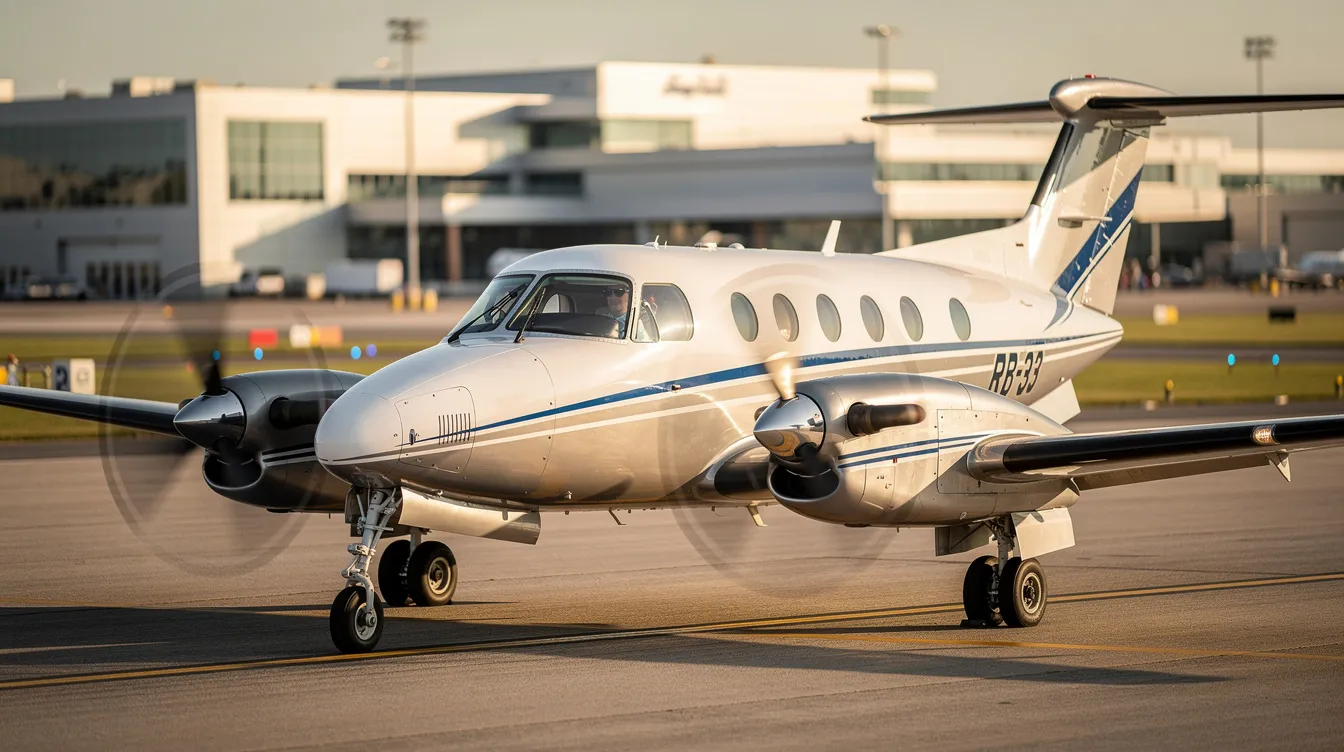
The Beechcraft King Air 360 continues a decades-long tradition of turboprop reliability, combining modern avionics with cabin refinements that make it a strong choice for private charter. This guide is intended for private charter customers, business travelers, and aviation enthusiasts interested in understanding the performance, comfort, and operational advantages of the King Air 360. For travelers who value airport flexibility, cost efficiency, and a comfortable ride, the King Air 360 sits in a sweet spot between single-engine turboprops and light jets. Here's what charter customers should know before booking.
The Beechcraft King Air 360 is the latest model in the King Air turboprop family, built by Textron Aviation and introduced around 2020. It pairs a maximum cruise speed of 312 knots with a maximum range of 1,806 nm and a cabin designed for up to 11 passengers in various configurations.
The aircraft reaches a maximum cruise speed of about 312 knots true airspeed, covers up to 1,806 nautical miles with NBAA IFR reserves, and seats 7–11 passengers depending on configuration.
The IS&S ThrustSense full-regime autothrottle system and Collins Pro Line Fusion avionics significantly cut pilot workload, supporting safe two-pilot or single-pilot operations on charter missions.
A takeoff distance of approximately 3,300 ft at maximum takeoff weight opens access to smaller regional and remote airports, benefiting Jettly travelers on business, leisure, and air ambulance flights.
Annual operating cost for the King Air 360 is roughly $1,154,256 at typical utilization, with direct operating costs around $1,300–1,500 per hour, making it more cost-effective than many light jets on shorter routes.
First engine overhauls occur around 3,600 flight hours, costing between $500,000 and $550,000, while second overhauls can range from $800,000 to $1.2 million.
Jettly frequently sources King Air 360 and related King Air models for cost-efficient, flexible turboprop charter. Explore options at jettly.com.
The King Air 360 is the next king in the long-running Beechcraft King Air line. Manufactured by Textron Aviation and certified in the US in late 2020, it succeeds the King Air 350i with targeted upgrades rather than a ground-up redesign. The aircraft is designed for private and business aviation, serving corporate, government, and medical operators worldwide.
Here are the core specs:
|
Specification |
Value |
|---|---|
|
Engines |
Twin Pratt & Whitney Canada PT6A-60A turboprops (~1,050 shp each) |
|
Maximum cruise speed |
312 knots TAS |
|
Long-range cruise speed |
~280–290 knots TAS |
|
Maximum range |
1,806 nm (NBAA IFR reserves) |
|
Service ceiling / operating altitude |
35,000 feet |
|
Takeoff distance (MTOW, sea level) |
~3,300 ft |
|
Maximum takeoff weight |
15,000 lb |
|
Passenger capacity |
Up to 11 (including crew) |
The aircraft fits within the broader King Air family as an evolution from the Super King Air 300/350 series, retaining the proven airframe and PT6A engine lineage while adding modern cockpit technology and cabin refinements.
Operators choose the King Air 360 for its reliability, multi-mission capability, and access to runways that jets can't serve. Twin-engine aircraft like this provide enhanced safety for overwater flights and operations into challenging airfields, which makes the platform popular for corporate shuttles, government transport, and medical evacuation.
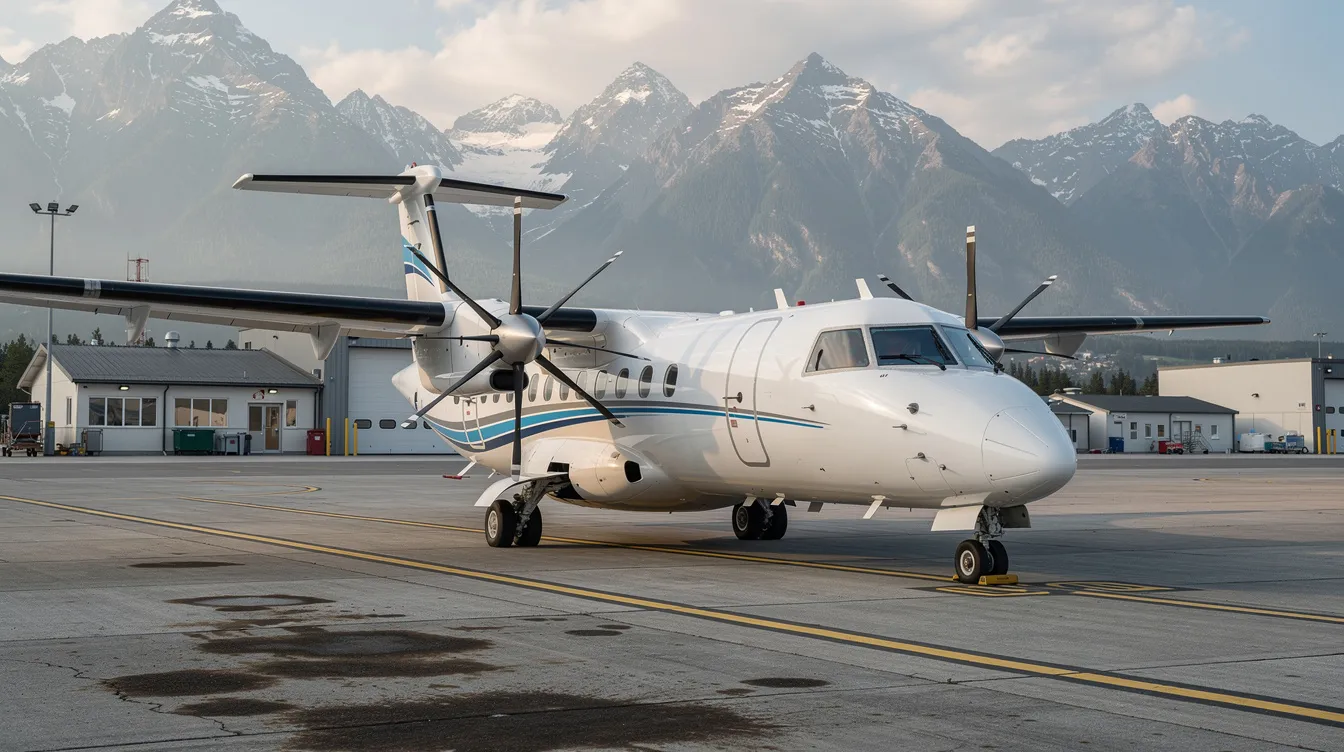
When Textron Aviation launched the 360, the "king rises" narrative centered on meaningful cabin improvements rather than a complete airframe overhaul. The upgrades target both appearance and function.
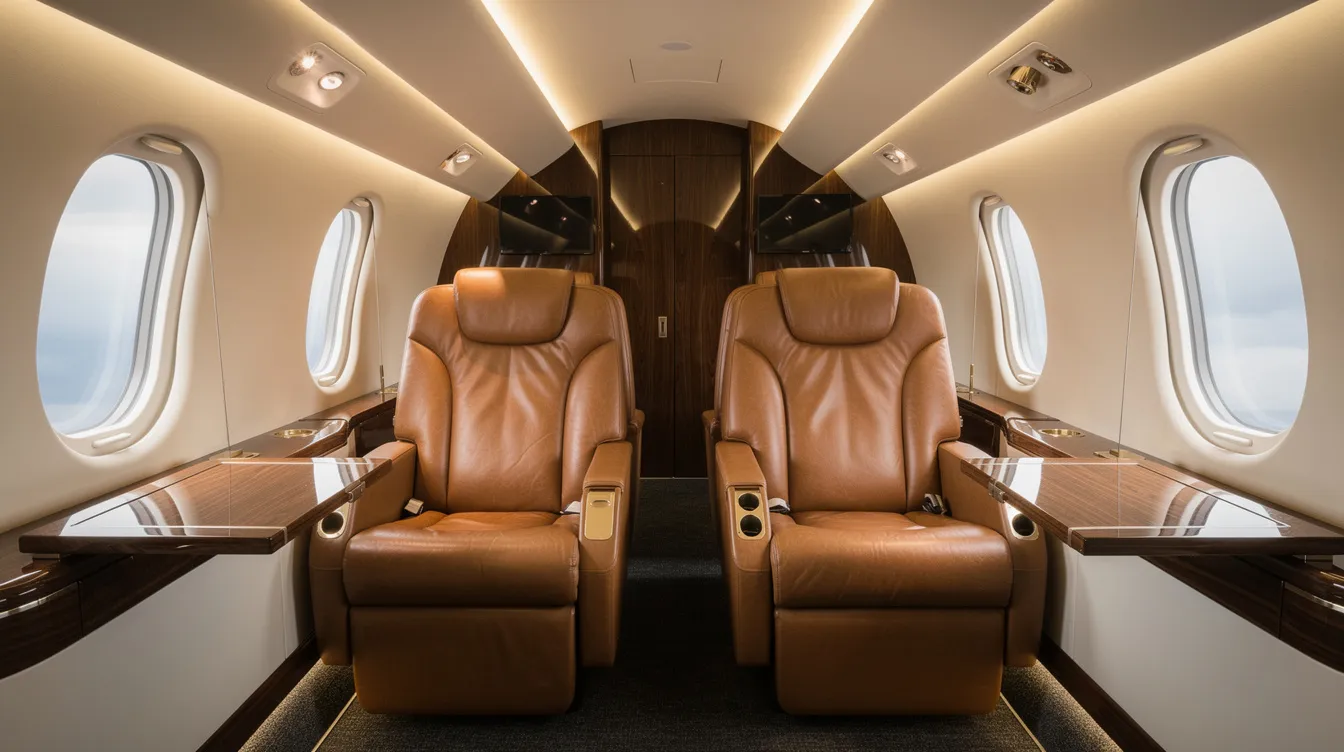
The enhanced digital pressurization system automatically manages cabin pressure during climb and descent. This keeps the cabin altitude lower than in earlier models. Specifically, the cabin altitude is 5,960 feet at 27,000 feet of flight altitude, a lower cabin altitude resulting in reduced passenger fatigue and a higher cabin pressure environment compared to the 350i.
Standard features include reshaped cabinetry, pinhole lighting accents, and six new interior schemes with contemporary design cues inspired by premium automotive interiors, similar to the fit and finish found in luxury SUVs. The available color palettes range from neutral earth tones to richer leather options.
The upgraded seat design uses pressure-mapping data to reduce hot zones under the tailbone and thighs. Better lumbar support, refined upholstery, and adjustable headrests make a real difference on flights over two hours. The seat design works for both business travelers who need to stay productive and families with children or elderly passengers who want to arrive at destinations feeling relaxed.
These cabin improvements are visual as well as functional. Compared to the 350i, the 360 offers lower cabin altitude, more interior schemes, and refined cabinetry throughout.
Flight performance is where the King Air 360 earns its spot in charter fleets. This iconic aircraft delivers strong numbers for a turboprop, and those numbers translate directly into practical route capability.
Maximum cruise speed: 312 knots TAS at optimal altitude
Normal cruise speed: ~280–290 knots for fuel-efficient operations
Fuel burn: approximately 129 gallons per hour in cruise
Maximum range: 1,806 nm with standard NBAA IFR reserves
Operating altitude: up to 35,000 feet (FL350)
Climb rate: ~2,700 fpm on both engines
At the maximum operating altitude of 35,000 feet, the aircraft cruises above most weather and commercial traffic. The constant-speed propellers, paired with optimized power output from the PT6A-60A engines, allow for efficient takeoff and fuel consumption on shorter legs.
Sample non-stop city pairs within the 360's range include:
New York – Miami (~1,280 NM)
Toronto – Dallas (~1,200 NM)
London – Athens (~1,450 NM)
Short-field performance is a major advantage. The aircraft needs only about 3,300 ft of paved runway at maximum takeoff weight, which opens hundreds of smaller regional airports that many light jets cannot reliably access, similar to other King Air models such as the King Air 200. Wing lockers provide additional baggage capacity for passengers traveling with gear or equipment.
The flight deck is one of the King Air 360's biggest differentiators versus earlier King Air models. Reducing pilot workload and enhancing safety were the primary design goals for this latest upgrade.
The King Air 360 features the Pro Line Fusion avionics suite, which provides advanced flight management and situational awareness. The Collins Pro Line Fusion avionics suite anchors the cockpit. It includes three touchscreen displays for enhanced control, synthetic vision, integrated terrain awareness, and a dual flight management system that simplifies route programming and approaches. The system also integrates a crew alerting system, traffic alert and collision avoidance technology, a warning system for terrain proximity, and multi-scan weather radar for comprehensive situational awareness. Dual navigation receivers provide redundancy for IFR operations.
The IS&S ThrustSense® Autothrottle is a system that automates engine power management, reducing pilot workload and enhancing safety. This regime autothrottle system delivers precision control across all flight phases, from takeoff through landing and go-around. It features overtorque and overtemp protection, auto feathering in the event of engine failure, and an automatic flight guidance system that smoothly manages thrust transitions. The result is reduced fatigue on longer flights and more consistent performance during demanding operations. The cockpit is designed for single-pilot operation, giving charter operators added flexibility, though most charter flights fly with two pilots for added safety.
Digital pressurization also reduces pilot workload. The system automatically schedules climb and descent profiles for cabin pressure, freeing the crew to focus on navigation, traffic, and communications. Onboard maintenance system updates through integrated diagnostics allow crews to troubleshoot issues quickly.
These avionics and automation features support consistent, predictable operations on both single-pilot and two-pilot flights. For Jettly's charter network, this means smoother scheduling on high-frequency corporate shuttle routes and air ambulance missions where reliability cannot be compromised.
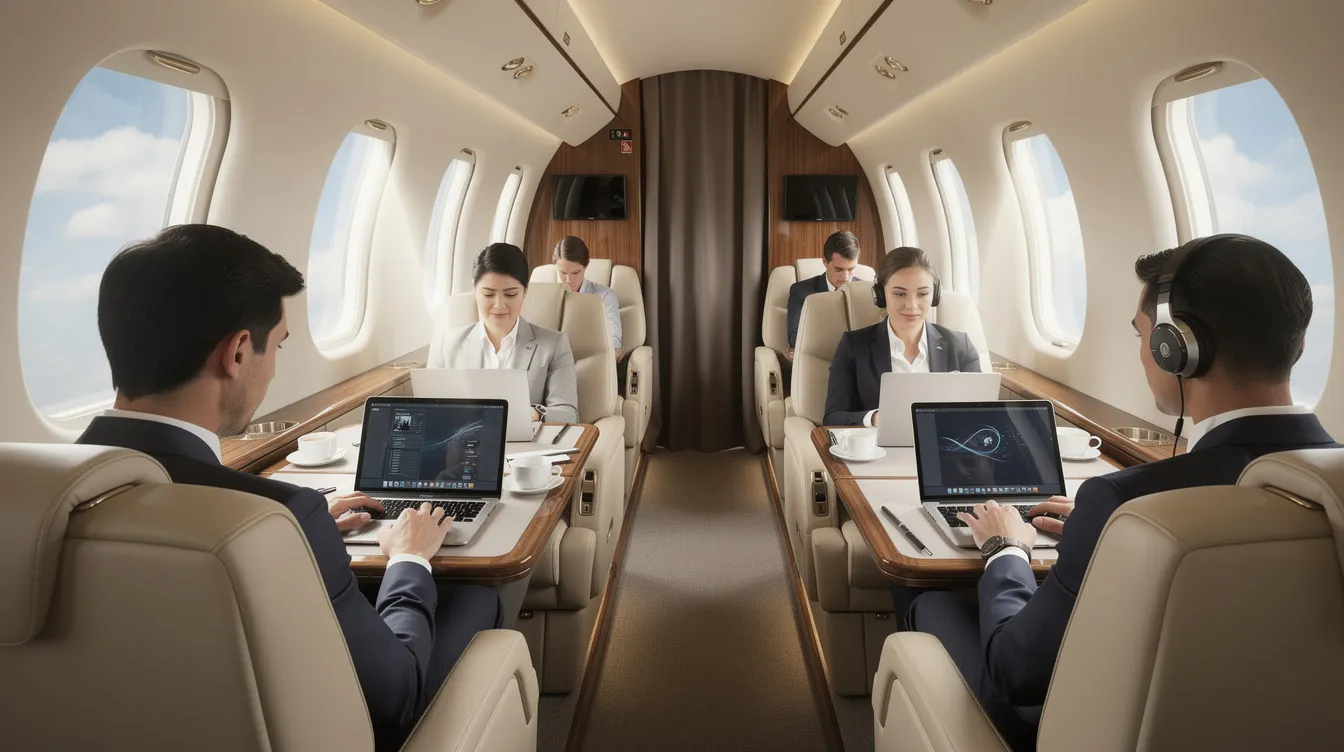
The King Air 360 cabin measures roughly 19 feet long, 4.5 feet wide, and 4.8 feet high, with a total volume of about 344 cubic feet. Most charter operators configure it in a double-club layout with a center aisle, seating 8–9 passengers comfortably. The aircraft can carry up to 11 passengers in denser configurations.
Passenger comfort starts with the environment. The aircraft features a redesigned cabin for improved passenger comfort, with lower cabin altitude than earlier King Air models, improved soundproofing, and CoolView® windows that reduce cabin temperatures and infrared rays, improving passenger comfort. The noise level is notably lower than that of older turboprops, though still slightly higher than that of pressurized jets.
For productivity, the cabin includes practical business-friendly features:
Fold-out tables that pull out from sidewalls or seat-back positions
Standard power outlets at key seats
USB charging ports throughout the cabin
Increased sidewall armrest widths and table heights for laptop use
Additional features include a private aft lavatory, refreshment center, and flexible seating configurations. Some operators offer removable seats or divans to support different mission profiles, increasing passenger comfort on both business and family trips.
Use case 1: A team of four executives flies from a secondary city to a regional meeting. They use the fold-out tables for a pre-arrival briefing, laptops plugged into standard power outlets, arriving prepared without losing half a day to connections.
Use case 2: A family of five books a weekend escape to a mountain resort served by a 4,000-foot runway. Ample baggage space, including wing lockers, handles ski gear and luggage without compromise.
The Beechcraft King line has served air ambulance, government, and surveillance roles for decades. The King Air 360 continues that tradition with a modern airframe suited for special mission operations.
For air ambulance configurations, the 360 cabin accommodates stretcher installations, medical equipment racks, supplemental oxygen, and layouts that give medical staff room to move. Short-field capability means the aircraft can reach smaller regional airfields near community hospitals, and lower operating costs compared to jets make it financially viable for medical transport programs, especially when compared with other private charter aircraft categories in Jettly’s network.
Some operators and government agencies use variants like the King Air 360ER for coastal mapping, emergency response, and multi-sensor survey work. These missions may involve multispectral and hyperspectral sensors, digital cameras, gamma radiation detectors for environmental monitoring, and other specialized payloads. The aircraft's range, endurance, and ability to loiter at low speed make it well-suited for these roles. Hyperspectral sensors paired with digital cameras allow for detailed terrain and environmental analysis during extended flights.
Jettly can source appropriately configured King Air aircraft for urgent medical transport, time-sensitive organ transfer flights, or disaster response when available through its operator network.
While exact costs depend on utilization and region, the King Air 360 typically carries a lower direct operating cost than comparable light jets. This matters for charter customers focused on value and aligns with broader trends in private jet operating cost structures across different aircraft sizes.
Key cost benchmarks, which you can compare with live charter estimates using Jettly’s private jet charter cost estimator:
|
Cost Category |
Estimate |
|---|---|
|
Annual operating cost |
~$1,154,256 |
|
Direct operating cost per hour |
~$1,300–$1,500 |
|
First engine overhaul (~3,600 hrs) |
$500,000–$550,000 |
|
Second engine overhaul |
$800,000–$1,200,000 |
|
New aircraft list price |
~$7.9 million |
Charter customers on Jettly pay only per flight, so ownership expenses like engine overhauls and insurance aren't their concern, even though private jet maintenance costs can be substantial for owners. The aircraft features advanced avionics that reduce long-term maintenance complexity, though overtemp protection systems and the full-regime autothrottle system do add to initial acquisition costs.
The King Air 360 is the smart choice for travelers evaluating the per-trip economics of private flying and looking to understand their overall one-flight cost more clearly. The King Air 360 is the smart choice for:
Regional business hops of 400–1,800 nm
Trips to airports with runways under 5,000 feet
Routes where jet-like block times aren't essential, but cost savings are
For larger groups, longer non-stop missions, or routes where top speed is critical, Jettly's inventory includes midsize and heavy jets, as outlined in its broader overview of charter airlines and private flight options. But where efficiency, airport flexibility, and a comfortable ride matter most, the King Air 360 consistently delivers.
Jettly regularly matches customers with King Air 360 and other King Air aircraft through its private charter aircraft marketplace of more than 20,000 aircraft. The platform's inventory includes this latest model alongside older King Air variants to cover a range of budgets and mission profiles.
Typical customer profiles that benefit from the King Air 360, including those open to crowdsourced private jet flights and shared empty seats to reduce per-passenger cost:
Executives traveling between secondary cities with limited commercial service
Project teams visiting remote industrial or construction sites
Families heading to vacation homes near smaller airports
Medical providers are arranging time-sensitive patient transfers
Jettly's instant pricing and route search let travelers compare the King Air 360 against light jets and other turboprops in real time. Customers can adjust dates, airports, and aircraft categories to see how cost, travel time, and airport access shift while exploring affordable private jet charter options that fit their budget. The Pratt & Whitney Canada PT6A-60A engines powering the 360 are among the most widely serviced turboprops globally, which helps keep charter availability strong across regions.
Membership and on-demand options mean customers can access King Air aircraft without long-term contracts, jet cards, or fractional ownership commitments by choosing from Jettly’s flexible private jet memberships. Whether the need is a one-time flight or a recurring weekly shuttle, Jettly handles sourcing and operator vetting.
Ready to explore turboprop charter options? Request a quote or browse King Air availability at jettly.com.
The aircraft can carry up to 11 passengers, including crew, in maximum-density configurations. However, most executive charter setups seat 7–9 passengers comfortably in a double-club layout with aft seating. For flights over two hours, the 7–8 passenger configuration offers the best balance of legroom, baggage capacity, and cabin comfort.
On routes of 300–800 nm, the King Air 360's maximum cruise speed of over 300 knots, combined with access to smaller airports closer to the final destination, typically saves several hours over commercial airline travel plus ground transfers. A 600 nm trip that might take 6–8 hours door-to-door via commercial airlines often takes under 3.5 hours by King Air charter.
The aircraft is designed for paved runways of about 3,300 ft or more at maximum takeoff weight, making it suitable for many regional and mountain airports. Operations into unpaved or rough strips depend on specific operator approvals and airfield conditions. Jettly can help verify runway suitability during the booking process.
Many King Air 360 operators install cabin Wi-Fi systems, but equipment varies by individual aircraft. Jettly customers can specify Wi-Fi as a requirement when searching or requesting a quote, and the platform will match them with a suitably equipped aircraft.
Modern King Air cabins benefit from sound-dampening insulation and the lower cabin altitude enabled by the enhanced digital pressurization system. While cabin noise level is typically slightly higher than that of most pressurized jets, the difference is modest with current insulation technology. Many passengers find the cabin space, cost savings, and airport flexibility more than compensate for any marginal increase in ambient sound.
The Beechcraft King Air 360 offers a compelling blend of performance, comfort, and operational flexibility that makes it an excellent choice for private charter travelers. Its efficient takeoff capabilities, advanced avionics, and spacious, well-appointed cabin ensure a smooth and productive flight experience. With the ability to access smaller airports and deliver cost-effective regional travel, the King Air 360 stands out as a versatile option between single-engine turboprops and light jets.
For travelers seeking reliable, transparent, and convenient private aviation solutions, Jettly’s platform provides instant access to King Air 360 charters worldwide. Whether for business trips, family vacations, or special missions, Jettly connects customers with vetted operators offering competitive pricing and flexible booking options.
Ready to experience the benefits of flying on a King Air 360? Explore available flights or request a personalized quote today at jettly.com.
Share this post:
Jay Franco Serevilla
Jun 15, 2026
|
5
min read
Discover tips and trends in the industry.
5
min read
Learjet Inc 31A: Performance, Cabin Experience, and Charter Insights
The Learjet 55 is a renowned midsize business jet known for its speed, altitude capability, and spacious stand-up cabin. Since its introduction in the early 1980s, it has remained a practical choice for charter travelers and aircraft buyers alike. This guide covers its performance, cabin features, operating costs, and charter options, providing essential insights for those interested in this versatile aircraft.
Read More
5
min read
Learjet 55: Performance, Cabin, Costs, and Charter Options
The Learjet 55 is a renowned midsize business jet known for its speed, altitude capability, and spacious stand-up cabin. Since its introduction in the early 1980s, it has remained a practical choice for charter travelers and aircraft buyers alike. This guide covers its performance, cabin features, operating costs, and charter options, making it a valuable resource for aviation enthusiasts.
Read MoreStay updated with our latest insights and tips to elevate your journey with us.
MEMBERSHIPS AND ASSOCIATIONS



Disclaimer: Jettly operates as a charter broker, offering access to a global digital jet charter marketplace. Jettly is not a direct air carrier and does not own or operate aircraft. All advertised flights are conducted by third-party air carriers that are fully licensed and hold the appropriate Part 135 or Part 121 certifications issued by the Federal Aviation Administration (FAA) or equivalent regulatory authorities under U.S. or foreign law. Jettly complies fully with the U.S. Department of Transportation's Part 295 and Part 298 Charter Broker regulations. Jettly does not carry additional liability insurance. Passengers are covered by aircraft operator insurance. TICO: 50023770


