


Login
Get Instant Pricing On 23,000+ Aircraft

>
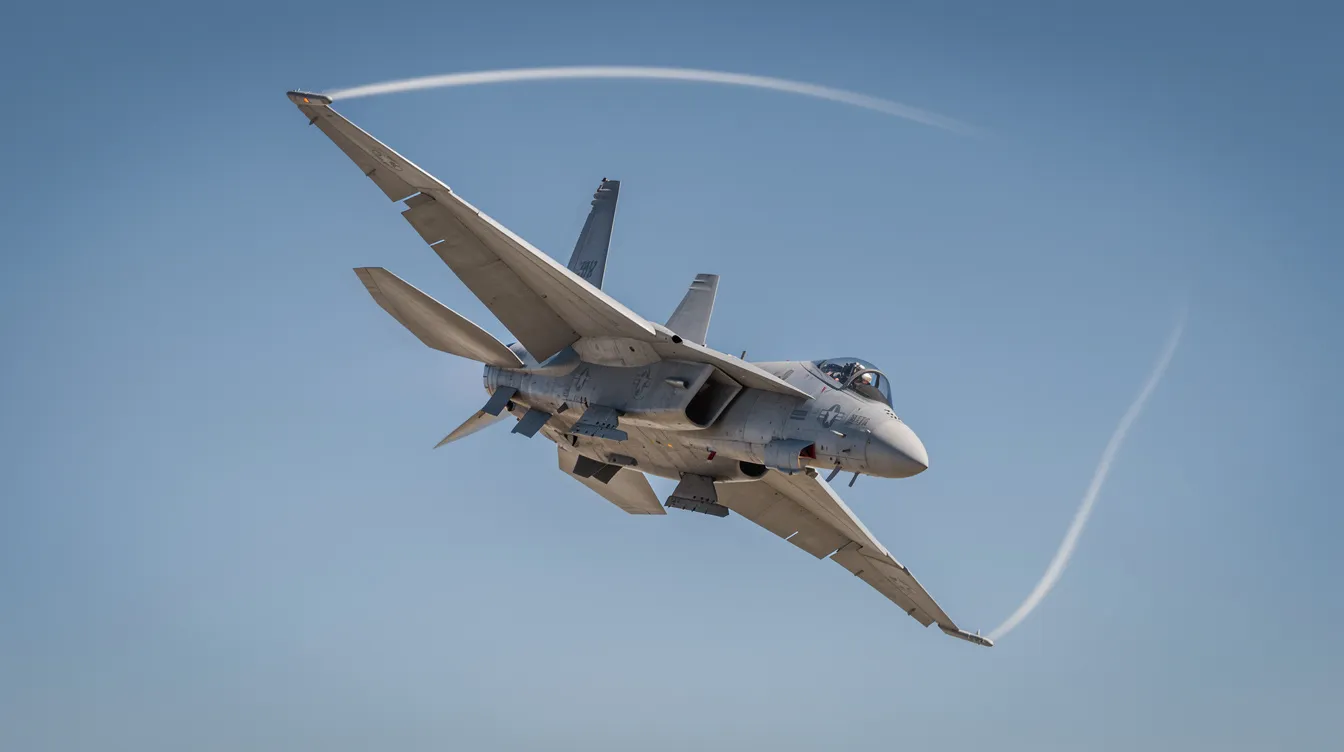
A light fighter is a small, agile combat aircraft built for air-to-air combat and light attack missions, valued for high maneuverability, lower weight, often a single engine, and lower operating costs than larger multirole fighters. The light fighter has shaped air combat doctrine for over five decades, proving from Cold War dogfights to today’s digital engineering labs that smaller, cheaper aircraft can still compete with bigger, heavier alternatives.
For aviation enthusiasts, defense professionals, military planners, and even private jet travelers looking at how military design influences civilian aircraft choices, this article traces the concept from its 1960s origins through the Lightweight Fighter program that produced the F 16 and F/A-18. It also examines the design logic behind the category, including Energy-Maneuverability theory, compares light fighters with light attack and trainer aircraft, reviews modern global examples, and looks at how cost, sustainment, and digital development are reshaping what air forces expect from tactical aircraft—and why those same ideas still matter when evaluating defense procurement and private aviation.
Light fighters are compact, agile combat aircraft optimized for cost-effective air combat and light attack missions, distinct from larger multirole jets and heavy bombers. They offer critical advantages such as greater agility and lower costs.
The US Air Force's historic lightweight fighter program produced the YF-16 and YF-17 prototypes, which led to the F-16 Fighting Falcon and F/A-18 Hornet and reshaped modern air combat doctrine.
Light fighters prioritize high maneuverability and lower operational costs, making them viable for air policing, border defense, and regional deterrence across many nations.
Modern light fighter concepts now integrate open-architecture avionics, digital engineering, and potentially loyal wingman drones, aiming to shorten development cycles and reduce lifetime sustainment costs. They offer cost-effective alternatives to heavier fighters.
While light fighters are military platforms, technologies like fly-by-wire controls, composite structures, and efficient jet engines influence business jets and civil aircraft categories available on platforms like Jettly.
A light fighter is a type of combat aircraft designed to be small and agile, optimized primarily for air-to-air combat and light attack roles. The term light fighter emphasizes smaller airframes and reduced fuel consumption compared with full-size multirole aircraft or heavy fighters like the F-15 Eagle or Su-27 Flanker.
These aircraft sit in a distinct weight class. A typical lightweight fighter has a single engine, relatively low empty weight (often under 20,000 lb), a strong thrust-to-weight ratio, and high maneuverability. They usually feature retractable gear optimized for speed and climb, and sometimes a bubble canopy for superior pilot visibility.
How does a light fighter compare to a light attack aircraft like the A-29 Super Tucano? The key differences are performance envelope and mission set:
Light fighters are jet-powered, capable of supersonic or high-subsonic speeds, and designed for air defense and air combat against enemy fighters.
Light attack aircraft are often turboprop-driven, slower, and oriented toward close air support and counter-insurgency at low altitudes.
Heavy fighters carry larger weapons loads, more internal fuel, bigger radars, and advanced electronic warfare suites-but at significantly higher procurement and operating costs.
That said, light fighters typically carry fewer weapons than larger fighters. Their smaller size gives them limited payload capacity and operational ranges. Shorter range and endurance are common disadvantages. Smaller size also limits the radar capability of light fighters, and most light fighters lack advanced stealth technology and are vulnerable to radar detection. They generally lack the advanced electronic warfare capabilities found on high-end fighters.
However, advanced light fighters can still be capable despite carrying fewer weapons. Light fighters may have smaller visual and radar signatures than larger fighters, and many can operate from shorter runways or dispersed bases. This makes them valuable for nations that need quantity and flexibility over raw firepower.
The light fighter concept sits between trainer aircraft and full-size multirole fighters. While Jettly does not charter military combat aircraft, understanding these design trade-offs helps readers appreciate how performance, mission profiles, and cost trade-offs also shape civil aircraft classes-from light jets to turboprops-available on the platform.
During the 1950s and early 1960s, Cold War air forces chased speed and technology. The prevailing belief was that future air combat would happen beyond visual range, with air-to-air missiles doing most of the work. Fighters grew heavier, more complex, and far more expensive. Radar-guided missiles and massive onboard systems seemed to make agility irrelevant.
Then reality intervened. In the Vietnam War, early air-to-air missile reliability proved disappointing. Pilots still needed to identify targets visually before engaging, and close-range maneuvering remained a matter of survival. Ground fire and enemy fighters exposed the limitations of overweight, underpowered aircraft designed around missile-centric doctrine. Light fighters are designed for agility and rapid response in combat-a lesson Vietnam drove home the hard way.
A small group within the US Air Force began pushing back against the trend toward ever-larger, more expensive aircraft. Key figures included:
Colonel John Boyd, a fighter pilot and military strategist
Pierre Sprey, a Pentagon analyst
Other members of the informal "Fighter Mafia"
These advocates argued that a simpler, lighter, high-performance fighter could outperform heavier designs in the air combat regimes that actually mattered. Their ideas would reshape aircraft design for decades.
At the heart of the light fighter concept lies Energy-Maneuverability (E-M) theory, developed by Colonel John Boyd and mathematician Thomas Christie in the early 1960s. In plain terms, E-M theory measures how well a fighter can manage its "energy"-the combination of speed (kinetic energy) and altitude (potential energy)-during a dogfight.
A fighter that retains energy better can outmaneuver its opponent. It can turn tighter, climb faster, and accelerate out of danger more effectively. They often have high maneuverability and agility in combat, and high agility in light fighters allows for valuable tactical advantages in these energy exchanges.
E-M theory translated directly into design requirements that favored lightweight fighters:
High thrust-to-weight ratio: more power relative to aircraft weight means faster acceleration and climb
Low wing loading: larger wing area per pound of aircraft weight enables tighter sustained turns
Low drag: clean aerodynamic design preserves energy in maneuvers
Sustained turn rate at Mach 0.9 and 30,000 ft: a benchmark for real-world air combat performance
Minimal unnecessary weight: every extra pound penalizes climb, turn rate, and energy retention
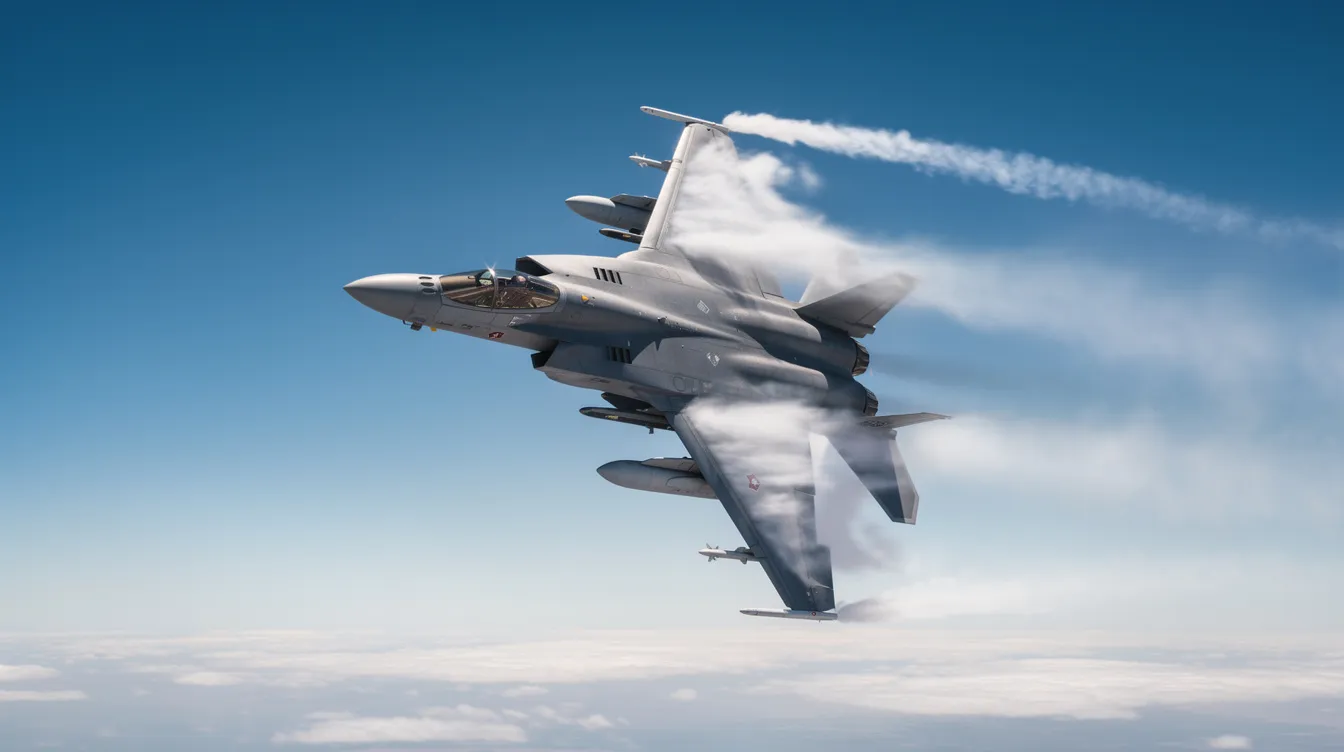
E-M charts became powerful tools in the late 1960s and early 1970s, allowing analysts to compare prospective fighters across flight regimes and argue against overweight designs. These same principles still underpin modern aircraft design-digital modeling and open-architecture avionics build on the same basic performance logic, even as sensors and computing have advanced dramatically.
By the late 1960s, the intellectual groundwork was in place. Studies like the Advanced Day Fighter (ADF) and Fighter Experimental (F-X) explored new high-performance designs that prioritized maneuverability over payload and range. In April 1972, the US Air Force formally launched the lightweight fighter program, issuing a Request for Proposals for a new class of tactical aircraft.
The program's requirements were deliberate and strict:
Empty weight below approximately 20,000 lb
Optimized for air combat in the Mach 0.6–1.6 speed band
Operating altitude around 30,000–40,000 ft
Flyaway cost target of roughly $3 million per unit (in early 1970s dollars)
Focus on air superiority rather than heavy ground attack
The concept of light fighters focuses on quantity and operational flexibility-the LWF program embodied this philosophy. The so-called "Lightweight Fighter Mafia" within the Pentagon and Air Force pushed hard for a genuine lightweight air combat platform instead of another bloated multirole jet.
The F-16 was developed under the Lightweight Fighter Program, along with its competitor. Two contractors won prototype contracts:
General Dynamics produced the YF-16: a single-engine design powered by the Pratt & Whitney F100 (approximately 23,840 lbf thrust), featuring fly-by-wire controls, intentional static instability for superior agility, and a bubble canopy for pilot visibility.
Northrop Grumman (then Northrop) produced the YF-17: a twin-engine design with GE YJ101 afterburning engines and leading-edge root extensions (LERX) for lift at high angles of attack.
Both prototypes reflected E-M design priorities and represented a deliberate break from the trend toward heavier, more complex modern aircraft.
In 1974, the lightweight fighter concept transitioned into the broader Air Combat Fighter (ACF) program. The air force decided the winner would not just fill a niche-it would replace multiple aging combat aircraft across the entire air force inventory.
NATO allies agreed to procure the selected fighter, raising the geopolitical stakes considerably. Export considerations, interoperability, and production economics all factored into the decision.
In January 1975, the YF-16 won the ACF competition. The reasons were clear:
Superior maximum range and combat radius
Better sustained maneuverability in key air combat flight regimes
Lower operating cost per flight hour
Favorable pilot feedback on handling and situational awareness
The YF-16 entered service as the F-16 Fighting Falcon and went on to become one of the most widely produced modern fighters in history, equipping armed forces in over 25 countries.
The YF-17, though it lost the air force competition, found a second life. The U.S. Navy adapted its airframe into the F/A-18 Hornet to meet carrier operations requirements, adding structural strengthening, twin engines for over-water safety, folding wings, and modifications that increased weight and complexity. This showed how a lightweight fighter platform could be adapted for multirole use.
YF-16 vs YF-17 at a glance:
|
Feature |
YF-16 |
YF-17 |
|---|---|---|
|
Engine |
Single Pratt & Whitney F100 |
Twin GE YJ101 |
|
Empty Weight |
Lower |
Higher |
|
Range |
Longer |
Shorter |
|
Maneuverability |
Better sustained turn rate |
Better high-angle-of-attack handling |
|
Cost |
Lower manufacturing cost |
Higher due to twin engines |
|
Intended Use |
Air Force lightweight fighter |
Basis for Navy carrier fighter |
Three related but distinct categories often get confused: the lightweight fighter, the light attack aircraft, and the advanced jet trainer with combat capability. The differences matter for understanding how armed forces structure their fleets.
Lightweight fighters (e.g., F-16 in its original configuration) are tuned for air combat and air defense missions. They carry an internal gun, air-to-air missiles, and sometimes precision ground attack munitions. Light fighters are ideal for air-to-air combat and ground support in contested environments.
Light attack aircraft (e.g., A-29 Super Tucano, AT-6 Wolverine) are optimized for close air support and counter-insurgency missions at lower speeds and low altitudes. The A-29 Super Tucano carries up to 1,550 kg of ordnance. These are often subsonic aircraft-sometimes turboprops-designed for extensive use over hostile terrain where speed is less critical than loiter time and precision. Light fighters are efficient in counter-insurgency scenarios as well, though they are more expensive to operate than turboprops in that role.
Advanced trainers with combat capability (e.g., Yak-130, M-346FA) serve as lead-in fighter trainers that can also perform light combat roles. The M-346FA can carry weapons weighing up to 3,000 kg, giving it genuine strike potential for air forces that cannot buy a full range of specialized combat aircraft.
Light fighters generally have slower top speeds compared to heavy fighters, but they outpace light attack aircraft by a wide margin. Light fighters typically have limited payload and range due to size constraints, yet they remain far more capable in air-to-air engagements than any trainer aircraft or turboprop.
Here is how mission types typically map to aircraft categories:
Air policing and air superiority: lightweight fighter
Border patrol and intelligence gathering: lightweight fighter or light attack
Counter-insurgency (COIN): light attack aircraft
Advanced pilot training: trainer aircraft with combat capability
Close air support in contested airspace: multirole aircraft or heavyweight fighter
The light fighter concept is making a comeback, reshaped by digital engineering and modular design. Light fighter jets are gaining popularity for low-intensity conflicts, and air forces worldwide are rethinking how they build and sustain combat fleets.
The US Air Force's "Digital Century Series" concept, championed around 2019, represents this shift. The original Century Series included fighters from 1954 to 1959, aircraft like the F-100 Super Saber and F-106 Delta Dart that were developed rapidly and served relatively short operational lifespans. The Digital Century Series aims for rapid fighter design upgrades using modern tools:
Digital engineering and virtual prototyping to compress development timelines
Open-architecture avionics that allow sensors, mission systems, and software to be swapped or upgraded rapidly
Modular systems that can be tailored to specific threats
Smaller production batches, each with 10–20-year service lives, rather than a single model serving 40–60 years
Under this model, a new fighter design could be developed every 10–15 years. Light fighters are designed for shorter operational lifespans of 10–20 years, which align with the Digital Century Series philosophy. The light fighter concept emphasizes adaptability over longevity.
This approach could support lighter, cheaper combat aircraft built quickly for specific mission sets, possibly partnered with AI-enabled loyal wingman drones. However, it depends on major changes to acquisition culture, budgeting rules, and industry incentives-challenges that analysts at institutions like CSIS have documented in detail.
The economics of modern fighters tell a stark story. For major combat aircraft programs, sustainment-maintenance, repairs, upgrades, spares, and personnel account for roughly 70–80% of the total lifetime cost. Development and procurement are just the front door.
Consider the numbers:
The F-35 program's sustainment costs are projected at $1.6 trillion over its lifetime
The F-35A's annual sustainment cost per aircraft has reached approximately $6.6 million, well above its $4.1 million target
The F-22 has a service life of over 60 years, meaning decades of accumulating maintenance expenses
Air forces simultaneously fund new bombers, missiles, nuclear modernization, and training pipelines
Shorter fighter service lives could reduce long-term sustainment costs by keeping technology current and avoiding the spiral of expensive upgrades on aging airframes. Light fighters have lower acquisition and operational costs per flight hour than their heavier counterparts, making them viable for tasks like air policing and regional defense.
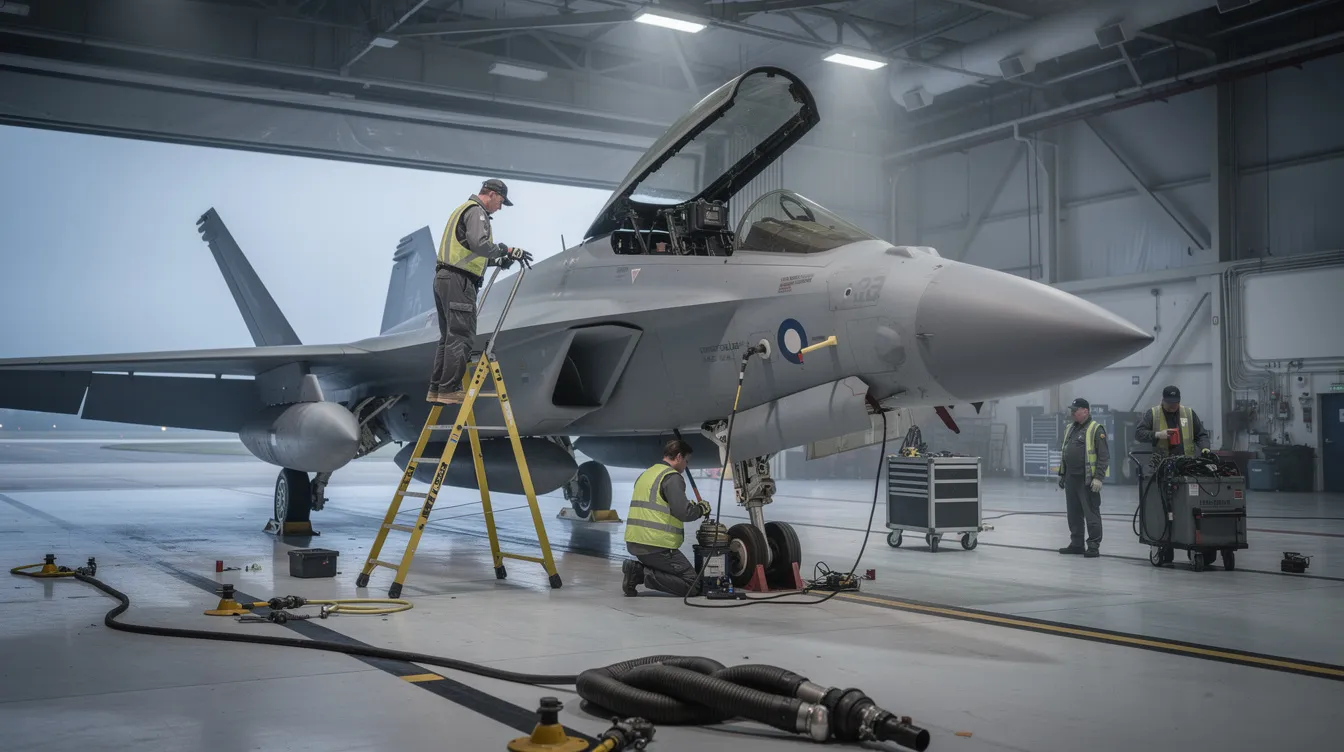
Light fighters may have lower survivability in high-end conflicts, but that trade-off is acceptable when the mission is intercepting slow-moving intruders or patrolling uncontested airspace. Nations can field light fighters in larger numbers due to lower costs, and light fighters are more cost-effective, allowing more aircraft to be purchased for the same budget.
Greater fleet size enables increased sortie rates and wider coverage-a critical advantage for air forces guarding large borders or maritime zones. This is why the light fighter concept continues to resonate with defense planners worldwide, even as high-end fighters like the F-35 dominate headlines.
Several modern light fighters and light combat aircraft illustrate how the concept plays out across many nations:
HAL Tejas (India): A single-engine, 4.5-generation lightweight fighter with a delta wing and extensive use of composite materials. The HAL Tejas can carry a maximum payload of 3,500 kg. It entered service in 2016 and serves as India's primary domestically developed light combat aircraft for air defense and light strike missions.
KAI T-50 / FA-50 (South Korea): An advanced supersonic trainer aircraft that doubles as a light combat aircraft. The KAI TA-50 entered service in 2011 and has been exported to several countries. It fills the gap between pure training and frontline combat for air forces seeking a single platform for both roles.
L-159 ALCA (Czech Republic): A light combat aircraft and trainer-attack hybrid used for air policing within NATO and light attack duties. It represents a practical, low-cost solution for smaller air forces.
Textron AirLand Scorpion (U.S.): A jet-powered light attack and intelligence, surveillance, and reconnaissance (ISR) platform. The Textron Scorpion has a maximum payload capacity of 4,173 kg and was designed specifically around affordability and ease of maintenance.
Hongdu L-15 (China): An advanced jet trainer with a developed combat variant capable of carrying precision weapons for light strike and training missions.
Countries choose light fighters to increase fleet size and reduce training costs. Many of these platforms use retractable gear and high-lift wings to balance short-runway performance with efficient cruise, echoing classic fighter design trade-offs that also appear in affordable private aircraft options.
Light fighters are effective for intelligence gathering and border patrols, missions where the cost of flying a heavy fighter is difficult to justify. Less room for sensors and upgrades is a limitation, but for air forces focused on specific regional threats, these aircraft deliver exactly what the modern battlefield demands, much as travelers weigh operators when consulting the ultimate list of charter airlines in private aviation.
The design logic behind light fighters-balancing performance, cost, range, and agility-parallels trade-offs seen across civil and business aviation, as well as decisions involved in choosing the best personal plane. Both military planners and private travelers face the same fundamental question: what is the right aircraft for the mission?
Technologies developed for lightweight fighters have directly influenced business jets, regional aircraft, and even civilian military jet experience flights:
Advanced composite materials reduce weight and improve fuel efficiency
Digital fly-by-wire controls enhance safety and handling precision
Efficient turbofan and turbojet designs from fighter programs power modern business jets produced by leading private plane manufacturers
Aerodynamic innovations like wing blending and high-lift devices improve short-field performance
In private aviation, the "right tool for the mission" philosophy appears in how travelers choose among light jets for short business hops, midsize jets for cross-country flights, and turboprops for regional access to smaller airfields. Jettly's private charter aircraft platform categorizes aircraft by size and performance to match travelers with the right platform for their mission profile and budget, much like an air force matches missions to specific fighter or light attack platforms.
Jettly focuses exclusively on private charter rather than military operations, operating as an instant-book private jet marketplace. But understanding why a fighter designer chooses a single engine over two, or trades payload capacity for agility, helps readers appreciate the engineering behind every modern aircraft-military or civilian.
Concepts like structural efficiency, fuel optimization, and aerodynamic refinement in light fighters translate directly into smoother, more efficient airframes for business and private jets. Decades of fighter development have advanced materials science, propulsion systems, and cockpit design in ways that benefit every aircraft category, including those built by top private plane manufacturers.
Jettly's global inventory, available through its private jet memberships, includes over 20,000 aircraft that benefit from this research heritage. Travelers use different aircraft categories depending on mission needs:
Light jets for short regional flights (e.g., New York to Washington, Toronto to Montreal)-fast, efficient, and accessible from smaller airports that can be identified quickly with an airport locator tool
Midsize jets for cross-country missions where range and cabin space matter
Heavy jets for transcontinental or transatlantic itineraries requiring maximum range and passenger comfort
The platform emphasizes transparent pricing, instant digital booking, and access to a wide fleet of aircraft, supported by a private jet charter cost estimator that helps travelers understand pricing drivers-paralleling how air forces value flexibility and mission-tailoring across a diversified combat aircraft fleet.
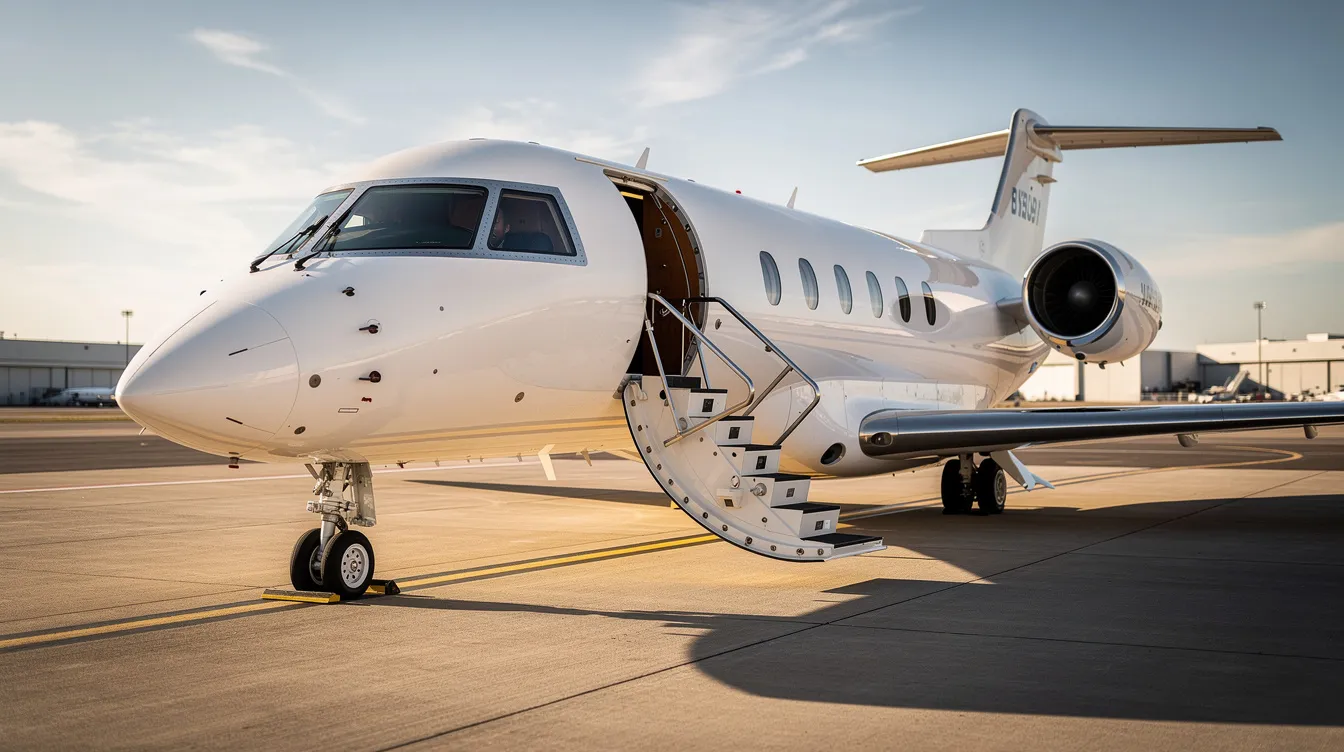
Just as a force commander selects between a lightweight fighter for air policing and a heavy fighter for deep strike, a traveler selects between a light jet for a short hop and a heavy jet for an ocean crossing. The optimization logic is the same.
The following FAQ addresses common questions about light fighters not fully covered above, focusing on practical distinctions, procurement considerations, and connections to civil aviation.
Light fighters are generally smaller, lighter, and less expensive to procure and operate than full-size multirole fighters. They typically feature a single engine and reduced payload capacity. Multirole fighters like the F-35 (built by Lockheed Martin) or Rafale are designed for a broad spectrum of missions-air superiority, deep strike, electronic warfare-while light fighters focus on air defense, air policing, and limited strike roles. Some more modern fighters blur the line by equipping light fighters with advanced sensors and precision weapons, but the underlying cost and weight differences remain significant. The first aircraft in any air force fleet to fly a patrol mission is often a light fighter, not a heavy multirole platform.
Piloted light fighters provide rapid on-scene judgment, visual identification, and flexible rules-of-engagement handling that current unmanned systems cannot fully replicate. Many governments prefer piloted presence when patrolling national airspace or intercepting unknown aircraft, roles where a lightweight fighter is cost-effective and politically appropriate. In practice, many air forces pursue mixed fleets, combining manned light fighters, heavy fighters, attack helicopters, and drones for different mission sets. Pilots flying light fighters bring situational awareness and decision-making power that autonomous systems are still developing.
Light fighters usually have lower per-hour operating costs than heavy fighters due to smaller engines, reduced fuel burn, and simpler systems. However, total lifetime costs depend on fleet size, usage rate, and upgrade plans. Sustainment-spares, depot maintenance, software updates-often dominate overall cost for any expensive aircraft, so air forces must plan how long they intend to keep a given light fighter model in operational service. Some modern concepts propose intentionally shorter service lives of 10–20 years with more frequent replacement to keep technology current and avoid spiraling sustainment budgets, reflecting how the Digital Century Series aims for rapid fighter design upgrades rather than decades-long commitments.
Light attack aircraft, especially turboprops, are generally not suited for high-speed air defense or complex air combat. They lack the speed, climb rate, and radar performance of jet-powered fighters. They can handle some air policing in low-threat environments-such as intercepting slow-moving aircraft-but would be vulnerable in contested airspace against modern jets and missiles. This is why many air forces that operate light attack aircraft also maintain at least a small fleet of light or medium fighters for higher-end air combat tasks requiring power, speed, and the capabilities of the same types of jet engines found on dedicated combat aircraft.
Understanding trade-offs among speed, range, payload, and cost in fighter design mirrors decisions travelers make when choosing between light jets, midsize jets, and larger aircraft for private charters. On a platform like Jettly, travelers perform a similar optimization: selecting an aircraft that meets mission needs-distance, passengers, airports-while controlling cost and time, much like the process of finding the best cross-country plane for your travel journey. Just as air forces match missions to specific fighter or light attack platforms, travelers can create a new account on Jettly and review aircraft categories to find the right fit for upcoming trips.
The light fighter concept has evolved from 1970s Lightweight Fighter experiments into today's digitally engineered, open-architecture vision of modular combat aircraft. What started with John Boyd's energy charts and a pair of prototype fighters has become a global design philosophy embraced by armed forces on every continent.
While high-end stealth fighters dominate defense headlines, lightweight fighters and light attack aircraft still play essential roles in air policing, regional defense, and cost-effective air combat training worldwide. As budgets tighten and emerging technologies like drones and AI mature, future air force fleets will likely rely on a mix of heavy fighters, light fighters, attack helicopters, and unmanned systems-each optimized for specific missions on the modern battlefield.
The light fighter concept endures because its core logic is timeless: match the platform to the mission, control costs, and maintain flexibility. Whether that principle is applied to a combat aircraft defending national airspace or a private jet carrying executives to their next meeting, the engineering philosophy remains the same.
Ready to experience private travel on your terms? You can lower costs by sharing empty seats on private flights or by using Jettly's platform, which offers affordable private jet charters, to explore flight options or request a quote at https://www.jettly.com.
Share this post:
Jay Franco Serevilla
Jul 7, 2026
|
5
min read
Discover tips and trends in the industry.
5
min read
When Do Plane Tickets Get Cheaper? Timing Your Booking for Better Flight Prices
Understanding when plane tickets get cheaper is essential for travelers looking to save on airfare. Generally, booking domestic flights 1 to 3 months in advance and international flights 2 to 8 months ahead yields the best prices. Factors like travel dates, day of the week, and seasonality significantly impact ticket costs, making it crucial to stay flexible and track fare changes.
Read More
5
min read
Day of Cheap Flights: How to Time Your Booking for the Best Flight Deals
Discover the truth behind the elusive 'Day of Cheap Flights' and learn how to consistently find the best flight deals. This guide highlights seasonal patterns, optimal booking windows, and effective search tools to help travelers save money on both commercial and private flights.
Read MoreStay updated with our latest insights and tips to elevate your journey with us.
MEMBERSHIPS AND ASSOCIATIONS



Disclaimer: Jettly operates as a charter broker, offering access to a global digital jet charter marketplace. Jettly is not a direct air carrier and does not own or operate aircraft. All advertised flights are conducted by third-party air carriers that are fully licensed and hold the appropriate Part 135 or Part 121 certifications issued by the Federal Aviation Administration (FAA) or equivalent regulatory authorities under U.S. or foreign law. Jettly complies fully with the U.S. Department of Transportation's Part 295 and Part 298 Charter Broker regulations. Jettly does not carry additional liability insurance. Passengers are covered by aircraft operator insurance. TICO: 50023770


