


Login
Get Instant Pricing On 23,000+ Aircraft

>
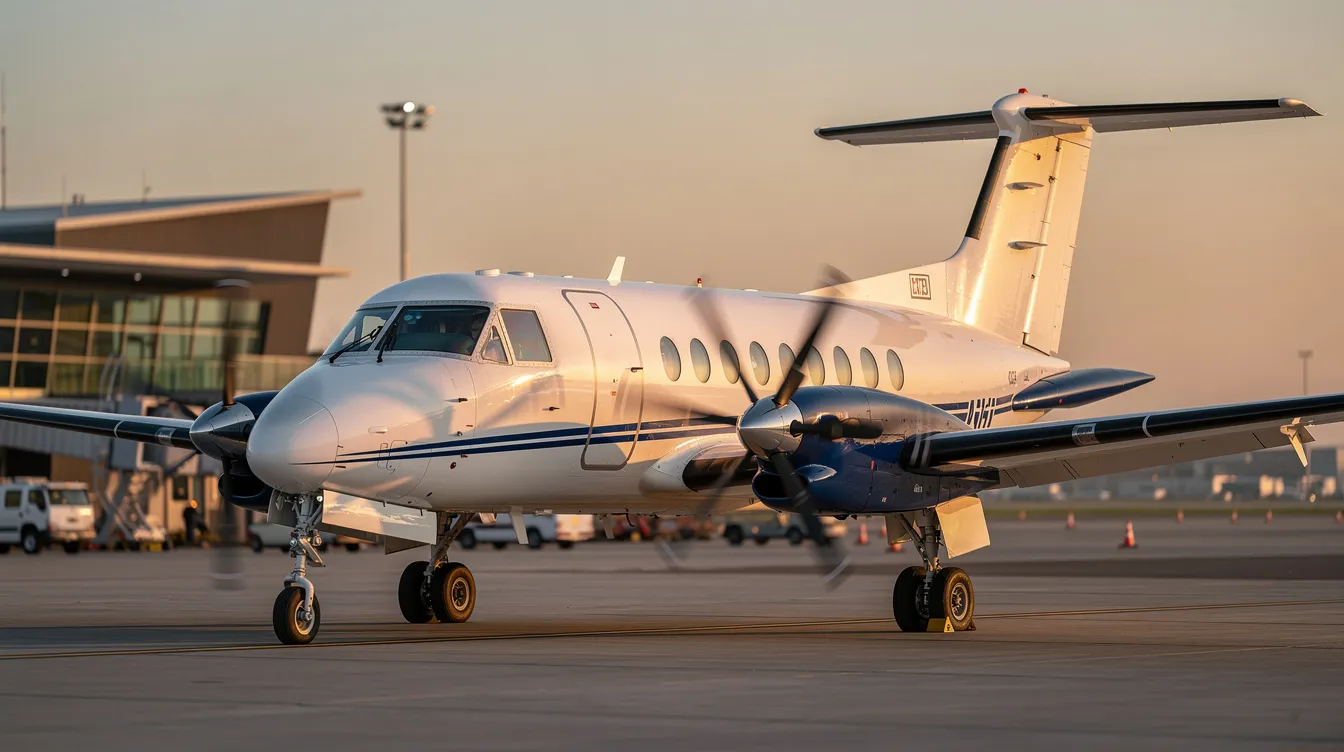
The Fairchild Swearingen Metroliner is a 19-seat, pressurized turboprop aircraft built for regional passenger, charter, and cargo work.
This comprehensive guide explores the Fairchild Swearingen Metroliner, with a special focus on the Metro III variant, and is designed for charter customers, cargo operators, and aviation enthusiasts alike. Here, you'll discover why the Metroliner remains a vital player in regional aviation, offering efficient solutions for both passenger and freight transport. Whether you're considering chartering a flight, moving urgent cargo, or simply interested in the aircraft's operational history and capabilities, this guide will help you understand where the Metroliner fits in today's charter and cargo markets, what makes it unique, and how it compares to other regional turboprops.
The Metro III remains useful because it can fly short regional sectors efficiently, carry groups, and handle freight from smaller airports.
In cargo form, the Metro III can carry up to 1,800 kg of cargo and accommodate seven typical EU pallets measuring 120 x 100 cm.
Jettly can help travelers compare a metroliner with similar turboprops, light jets, or cargo aircraft for a specific route and budget using its private jet charter cost estimator.
The Metroliner is a family of 19-seat, pressurized, twin-engine turboprop aircraft that first served regional markets in the early 1970s. The Fairchild Swearingen Metroliner includes the Swearingen Metro, Metro II, Metro III, and later Metro 23 designations.
This aircraft was built to serve routes of about 300–600 nautical miles, where small airliners or jets may cost more to operate. It sits between a King Air-style plane and a small regional jet, with good runway access, practical speed, and a reputation for efficient transportation.
One naming note matters. The aircraft Metroliner is different from the U.S. rail Metroliner. The rail Metroliner was a pioneering high-speed rail service in the US, which began on January 16, 1969, and operated between Washington, D.C., and New York City.
The airplane story began with Ed Swearingen’s Merlin business aircraft in Texas. Engineers stretched the fuselage, deleted the left rear cargo door to increase passenger capacity, kept a low wing layout, and used two TPE331 engines to create a 19-passenger commuter aircraft. The first Metro was delivered in 1972 to MIBA in Zaire, and Commuter Airlines began operating the Metro in January 1973.
Fairchild later took control of the project and continued improvements. The Metro II, Metro III, and Metro 23 added higher weights, cabin refinements, avionics improvements, and better performance. The wings, nose, aft fuselage, engine nacelles, landing gear, and control systems were refined over the fleet’s life.
Metro production finally ended at the factory in 1998 due to declining turboprop demand. Metro production ended in 1998 with 703 aircraft built, and 703 Metro and related aircraft were built in total. Proposed versions, including jet-powered concepts, never changed the main point: the Metroliner remained a practical regional machine.
The Metro III is the best-known model for charter and cargo. The Metro III was introduced in the early 1990s for many cargo operators, and it has been in cargo service since the early 1990s.
Typical seating is up to 19 passengers with two pilots. The aircraft is about 59 ft long, with a wingspan of 57 ft. Its two Garrett, now Honeywell, TPE331 turboprops produce roughly 1,000–1,100 shp each, giving a cruise speed around 240–260 knots and a ceiling near 25,000–28,000 ft.
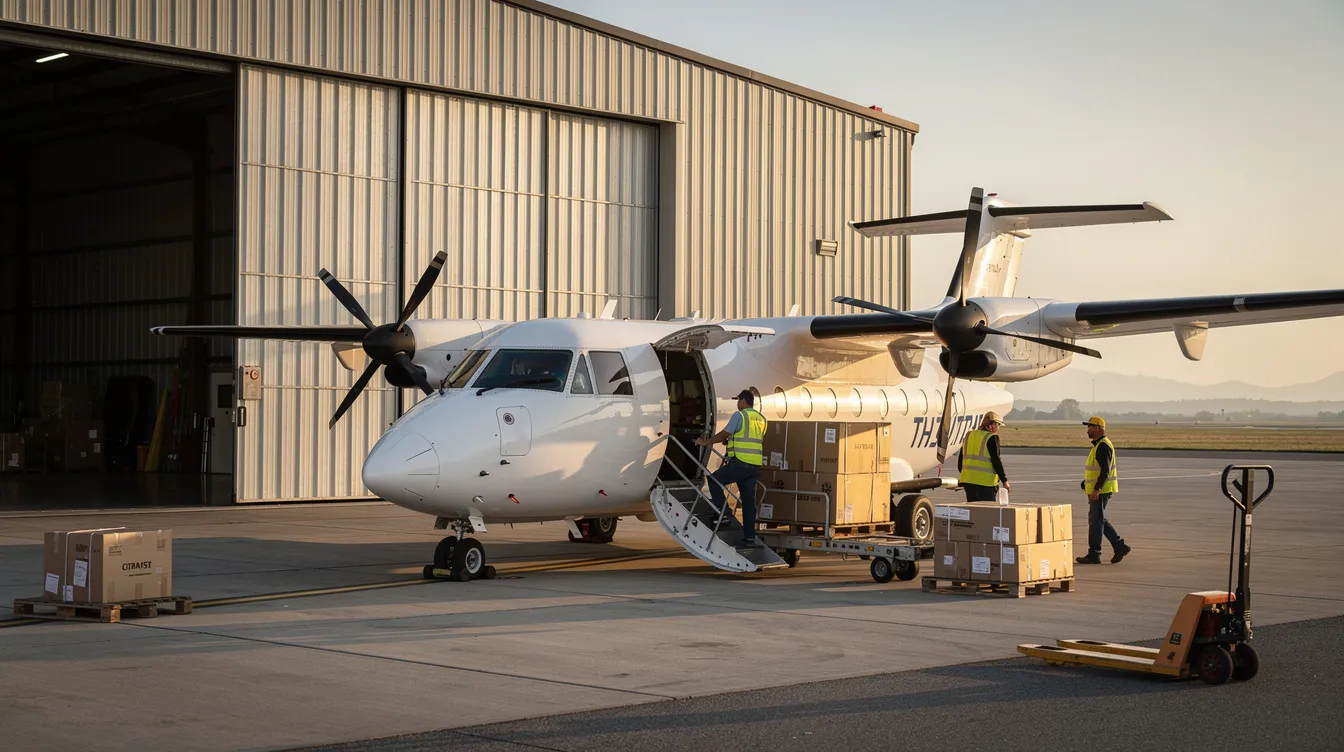
For freight, the Metro III can carry up to 1,800 kg of cargo. It can accommodate seven typical EU pallets measuring 120 x 100 cm. The aircraft features reinforced floors for cargo handling, and the Metro III features reinforced floors for cargo operations, making it effective for short-haul cargo operations.
|
Specification |
Detail |
|---|---|
|
Passenger Capacity |
Up to 19 |
|
Length |
Approximately 59 ft |
|
Wingspan |
Approximately 57 ft |
|
Engine Type |
2 x Garrett/Honeywell TPE331 turboprops |
|
Engine Power |
1,000–1,100 shp each |
|
Cruise Speed |
240–260 knots |
|
Service Ceiling |
25,000–28,000 ft |
|
Cargo Capacity |
Up to 1,800 kg |
|
Cargo Pallet Capacity |
Seven EU pallets (120 x 100 cm) |
|
Cargo Floor |
Reinforced for heavy loads |
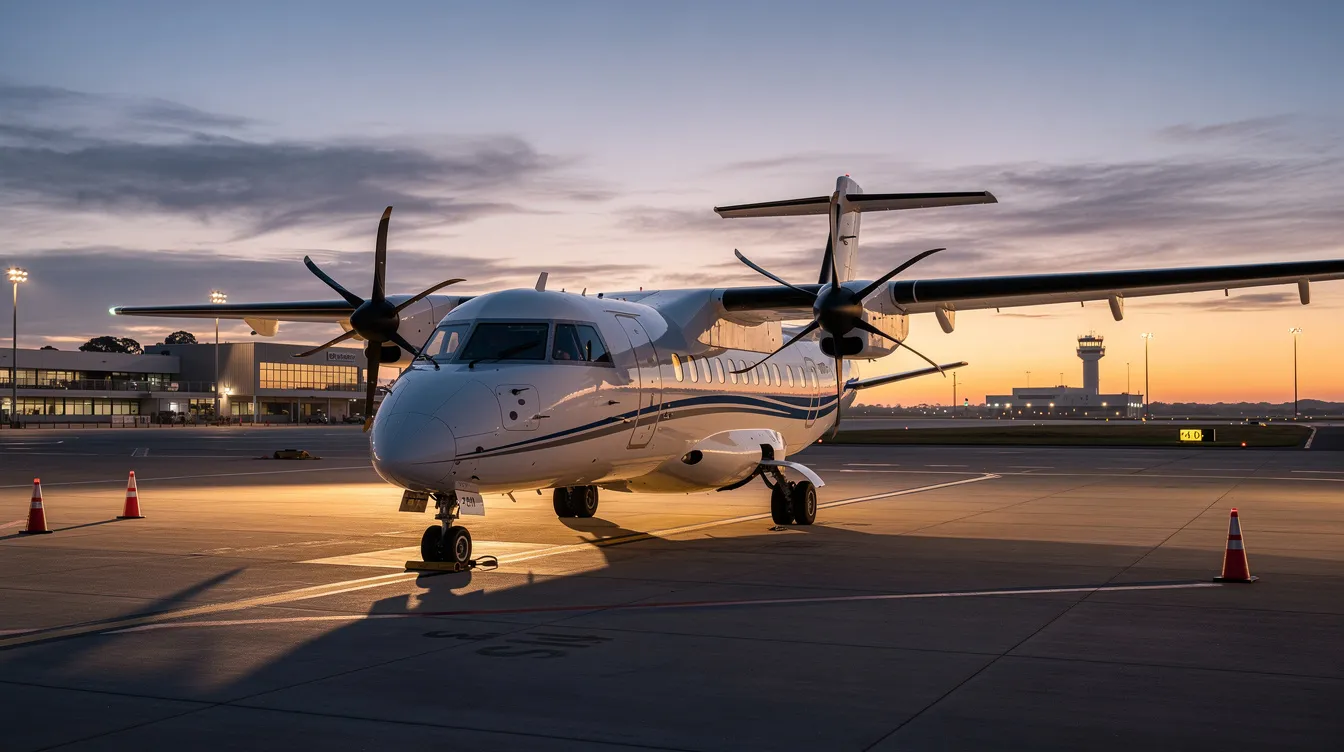
The Metroliner cabin is long and narrow. In passenger service, it usually has 1–1 seating, a center aisle, modest windows, and basic refreshments, which can be enhanced with dedicated in-flight catering for private jets. It is pressurized, but it is not as quiet as newer jets, so it works best for short regional flight needs.
Cargo versions remove seats, use reinforced flooring, and may include a large cargo door for faster loading. Operators can carry automotive parts, medical supplies, aircraft components, or equipment for an industrial project. Some airframes are configured as passenger, combi, or pure cargo aircraft.
The aircraft’s ability to switch roles is a major reason pilots and operators still value it. It can take off from secondary airports, land close to the destination, and reduce waiting time when scheduled services are not useful.
The Metroliner entered airline use in North America before expanding across Europe, Africa, Australia, and other regional markets. Through the 1970s to the 1990s, it helped smaller communities connect to larger airliners at hub airports.
As regional jets grew, many aircraft moved into charter, air taxi, night freight, and specialty work through operators such as Dexter Air Taxi and other partners. As of July 2019, 196 Metroliners were in airline service. In Australia, 61 Metros were registered as of December 2008, showing how the type found a strong community in rugged regional markets.
Military and government versions also used the airframe for training, surveillance, and utility transport. Like any aircraft, safety history includes accidents involving weather, maintenance, and pilot error, which is why current operators rely on strict training, inspection, and handling standards.
The Metro III is a cargo workhorse because it combines payload, speed, and airport flexibility. It can operate efficiently on short-haul sectors where a larger jet would impose too high a cost to incur a small shipment.
Common loads include aircraft parts, auto components, medical freight, and urgent “go-now” cargo. The large cargo door, reinforced floors, and quick loading process help reduce turnaround time when every hour matters.
Special mission versions include air ambulance, surveillance, maritime patrol, and government transport. Some have sensors installed, updated avionics, or noise-reduction upgrades to keep the fleet useful into the future.
Jettly is a digital charter marketplace for private jet and turboprop access. When available, a metroliner can appear as a practical option for customers who need capacity more than a luxury cabin, fitting Jettly’s positioning as a flexible NetJets alternative.
The Metro III makes sense for corporate shuttle flights, crew movements, sports groups, film teams, and regional events within Jettly’s broader private charter aircraft network. For cargo, it can support businesses that need parts delivered outside normal airline timetables.
Jettly’s instant pricing helps users compare a metro with light jets, larger turboprops, or regional aircraft on the same route. The goal is simple: match the aircraft to the mission, not the other way around.
A metroliner usually offers lower operating costs than a comparable small jet on routes under 500–600 nautical miles. Examples include New York–Toronto, Dallas–Houston, or similar intra-European segments.
Choose this plane when passenger count, baggage, or cargo matters more than cabin width. A light jet may be faster and quieter, but the Metro III can carry more people or freight at a strong cost-per-seat point, especially if you leverage crowdsourced and shared private jet flights to reduce individual costs.
Exact pricing changes by region, fuel, crew, airport fees, and aircraft availability, and understanding one flight cost on a private charter helps set realistic expectations. Jettly lets users filter by seat count, budget, and category, then compare the Metroliner against other turboprops.
Jettly’s marketplace may include other turboprop aircraft such as Beechcraft 1900, Jetstream 31, Saab 340, King Air models, and even Cirrus options for smaller trips, all covered in its guide to charter airlines and private flights. The Metroliner is narrower than a Beechcraft 1900D or Saab 340, but it is efficient and fast for its class.
Its strengths are cruise speed, range, runway flexibility, and useful cargo volume. Its trade-offs are cabin noise, limited baggage space when fully seated, and less comfort than modern business jets, though many travelers still prioritize value by following tips for booking the cheapest private flights.
For budget-conscious group charter or urgent freight, that balance can be attractive. The best option depends on routing, payload, airspeed needs, runway limits, and passenger expectations.
Metroliner aircraft offered through Jettly are flown by certified operators who follow applicable civil aviation rules, similar to the top private jet charter companies in the market. Operators maintain gear, engines, avionics, motors, and structural components through scheduled inspections.
Many aircraft have recently received GPS navigation, terrain awareness, ADS-B, glass cockpit upgrades, and other improvements across Jettly’s partnered private jet operators, like Dexter Air Taxi. Maintenance teams pay close attention to aging structure, pressurization, the fuselage, and cargo-floor condition.
Environmental performance is also part of the discussion. Efficient routing, sensible aircraft matching, and optional carbon offsetting can help reduce impact. Rail transport significantly lowers individual carbon footprints and alleviates highway congestion, and the rail Metroliner was considered a greener transportation option compared to cars and planes.
The rail Metroliner service was a response to the High-Speed Ground Transportation Act of 1965. The primary Metroliner route connected Washington Union Station and New York Penn Station, with key intermediate stops including Baltimore, Wilmington, Philadelphia, Trenton, and Newark.
The goal was a 2.5-hour, non-stop trip between New York and Washington, D.C. The Metroliner was designed for high-density corridors to significantly reduce travel times, and Metroliners aimed to compete with air travel by offering speeds up to 160 mph between major hubs that now appear in tools like Jettly’s airport locator platform.
The Metroliner offered faster travel times than automobiles and buses by avoiding congestion. The Metroliner successfully shifted travelers from air to rail, spurred significant investment in Northeast Corridor infrastructure, and initial service reliability issues led to the replacement of EMU cars in the 1980s. The Metroliner brand was phased out after the introduction of the Acela Express in 2000.
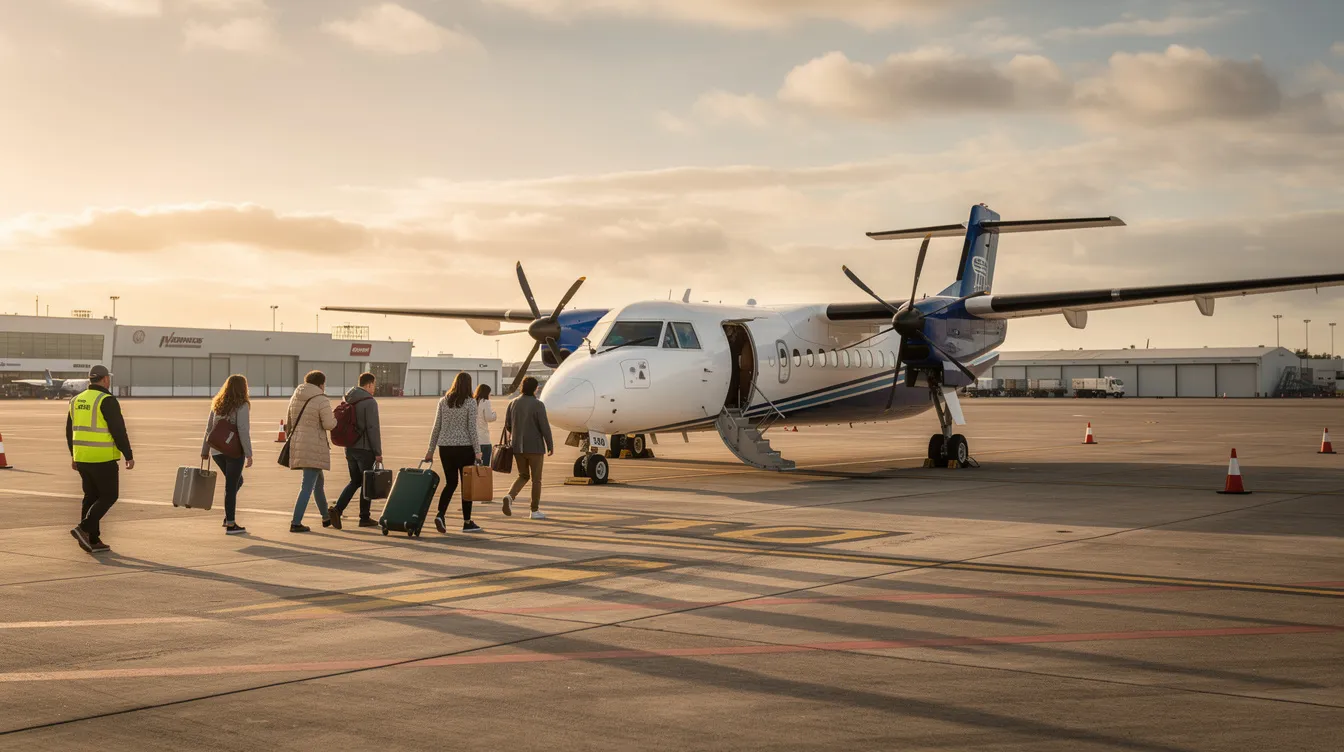
Yes, for short regional trips. The cabin is functional and pressurized, but narrower and louder than a typical business jet. In the opinion of many charter users, it is best for practical group travel rather than premium long-range comfort.
When fully seated, baggage is usually limited to a standard suitcase and a small personal item per passenger, subject to weight and fuel planning, although flexible travelers sometimes take advantage of discounted empty leg flights when available. If the trip is cargo-heavy, provide details during the quote process so the operator can confirm the best configuration.
Yes, the Metro III’s turboprop design gives it strong runway flexibility compared with many jets, which adds to the options for getting a seat on a private jet easily via on-demand apps and shared flights. Final approval depends on runway length, surface, elevation, weather, and operator performance calculations before the aircraft can safely land or depart.
Add Fairchild Swearingen Metroliner, Metro III, or Metro preference in the trip notes. If that aircraft is not available for the date or destination, Jettly can present similar turboprops with comparable seating and cost, or help you buy an individual seat on a private jet through shared or repositioning options.
Yes. Metro III freighters are widely used for urgent cargo because they combine payload, range, cargo door access, and smaller-airport capability. That makes the metroliner a strong choice for parts, medical supplies, or other shipments that cannot wait weeks or even days.
Booking through Jettly is direct. Users enter a route, date, passenger count, and trip details, then review available aircraft and pricing, or consider ongoing private jet memberships if they fly frequently.
Metroliner availability varies by world region and route. If no Metro III is available, Jettly can show comparable turboprops or cargo aircraft with similar range, payload, and performance.
Frequent flyers can compare on-demand booking with membership options and review Jettly’s affordable private jet charter pricing overview. Ready to fly on your terms? Explore flight options or request a quote at https://www.jettly.com.
Share this post:
Jay Franco Serevilla
Jun 15, 2026
|
5
min read
Discover tips and trends in the industry.

5
min read
Key West Florida Airport Code: Guide to EYW and Private Jet Travel
Key West International Airport, with the code EYW, is the main gateway to Key West, Florida, accommodating both commercial and private jet travelers. This guide provides essential information on the airport, its services, and the advantages of flying privately versus commercially. With its compact layout and growing passenger traffic, EYW offers convenience and flexibility for visitors heading to the Florida Keys.
Read More
5
min read
Fly AAA: How Jettly Simplifies Private Air Travel for AAA Members and Frequent Flyers
Jettly revolutionizes private air travel for AAA members by offering on-demand jet charters with transparent pricing and instant booking. This article compares traditional AAA commercial flights with Jettly's flexible private charter services, helping travelers choose the best option for their needs. Whether prioritizing cost or schedule control, understanding these choices enhances the travel experience.
Read MoreStay updated with our latest insights and tips to elevate your journey with us.
MEMBERSHIPS AND ASSOCIATIONS



Disclaimer: Jettly operates as a charter broker, offering access to a global digital jet charter marketplace. Jettly is not a direct air carrier and does not own or operate aircraft. All advertised flights are conducted by third-party air carriers that are fully licensed and hold the appropriate Part 135 or Part 121 certifications issued by the Federal Aviation Administration (FAA) or equivalent regulatory authorities under U.S. or foreign law. Jettly complies fully with the U.S. Department of Transportation's Part 295 and Part 298 Charter Broker regulations. Jettly does not carry additional liability insurance. Passengers are covered by aircraft operator insurance. TICO: 50023770


