



Login
Get Instant Pricing On 23,000+ Aircraft

>
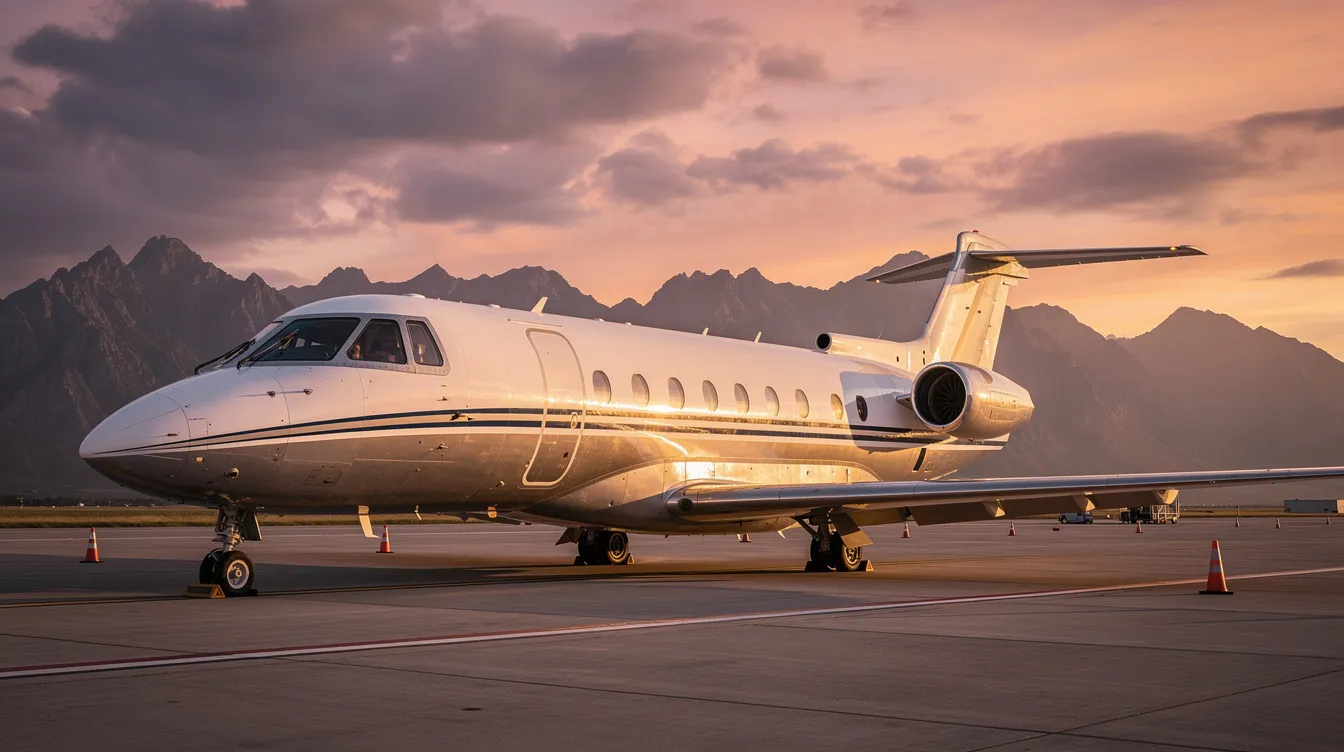
The idea of owning a million-dollar plane carries undeniable appeal. It suggests freedom, speed, and the ability to fly on your own schedule. But what does a million dollars actually get you in private aviation today? The answer may surprise both dreamers and serious buyers.
This guide breaks down the real aircraft, cabins, performance, and operating costs behind a $1M private jet purchase price in 2026. It also examines when chartering through a platform like Jettly makes more financial sense than aircraft ownership.
Around $1 million typically buys older light jets (e.g., early-2000s Cessna Citation II, Learjet 31A/35A) or turboprops like the King Air B200-not new aircraft.
Operating costs can easily reach $400,000–$700,000 per year, often exceeding the purchase price within just a few years.
On-demand private jet charter via Jettly often makes more financial sense than owning a $1M aircraft unless flying 200+ hours annually.
Charter gives travelers access to newer, more capable aircraft classes without depreciation risk or maintenance surprises.
Readers can compare ownership vs. charter costs and explore flights at https://www.jettly.com.
When people search for a million-dollar plane, they're typically referring to a private jet or business aircraft acquired for roughly $800,000 to $1.5 million. Around $1 million is often considered the entry point for serious personal aviation.
This price point almost always covers pre-owned jets, not factory-new aircraft. The production of aircraft is limited compared to cars, which leads to high manufacturing costs. Many airplanes are hand-assembled, requiring inspections and quality checks throughout the manufacturing process. Modern private jets often cost around $1 million due to high development and certification costs, but that figure lands buyers in the pre-owned market, typically among airframes from the late 1990s to early 2000s.
Common categories at this budget include older light jets (Cessna Citation II, Learjet 31A), some early midsize jet variants, and well-equipped turboprops like the King Air B200. Aircraft valued around $1 million typically include pre-owned very light jets and single-engine piston aircraft as well.
Market factors like post-2020 private aviation demand, tighter supply of older airframes, and the status of engine maintenance programs all influence whether a specific aircraft lands near $1M or pushes well higher. Many travelers searching this term are actually deciding between buying an older jet and chartering through platforms like Jettly.
Here are real aircraft that regularly appear in the $800,000–$1.5M range in 2026:
Cessna Citation II / SII (late 1980s–early 1990s): Among 152 sales in the trailing 12 months to Q2 2026, the average sold price was approximately $846,000. Asking prices range from ~$349,000 for high-time examples to over $1M for recently refurbished airframes with modern avionics and engine program enrollment.
Learjet 31A (early 1990s–2001): Listings range from ~$500,000 to $1,250,000. A 2001 Learjet 31A with approximately 5,870 total hours was recently listed at $1,250,000, while a 1999 model with ~10,400 hours was priced at $1,090,000. Aircraft on MSP Gold engine programs and with completed major inspections command the highest prices.
King Air B200 turboprop (mid-1980s–mid-1990s): Active listings start around $1,150,000 for older, higher-time examples and climb to $3.7M+ for recent-year, low-time units. Older B200s can dip near $1M but usually need avionics upgrades or have significant airframe hours.
For contrast, more modern aircraft jump well above $1M. New light jets typically range from $5 million to $9.5 million. The 2025 Embraer Phenom 300E costs approximately $9.45 million. A $10 million budget can buy a pre-owned Challenger 350. These comparisons illustrate how quickly values rise once you move beyond the million-dollar bracket.
Actual prices depend heavily on maintenance status, avionics upgrades (e.g., Garmin G600/750, ADS-B Out compliance), and whether engines are enrolled in programs like MSP Gold or JSSI.
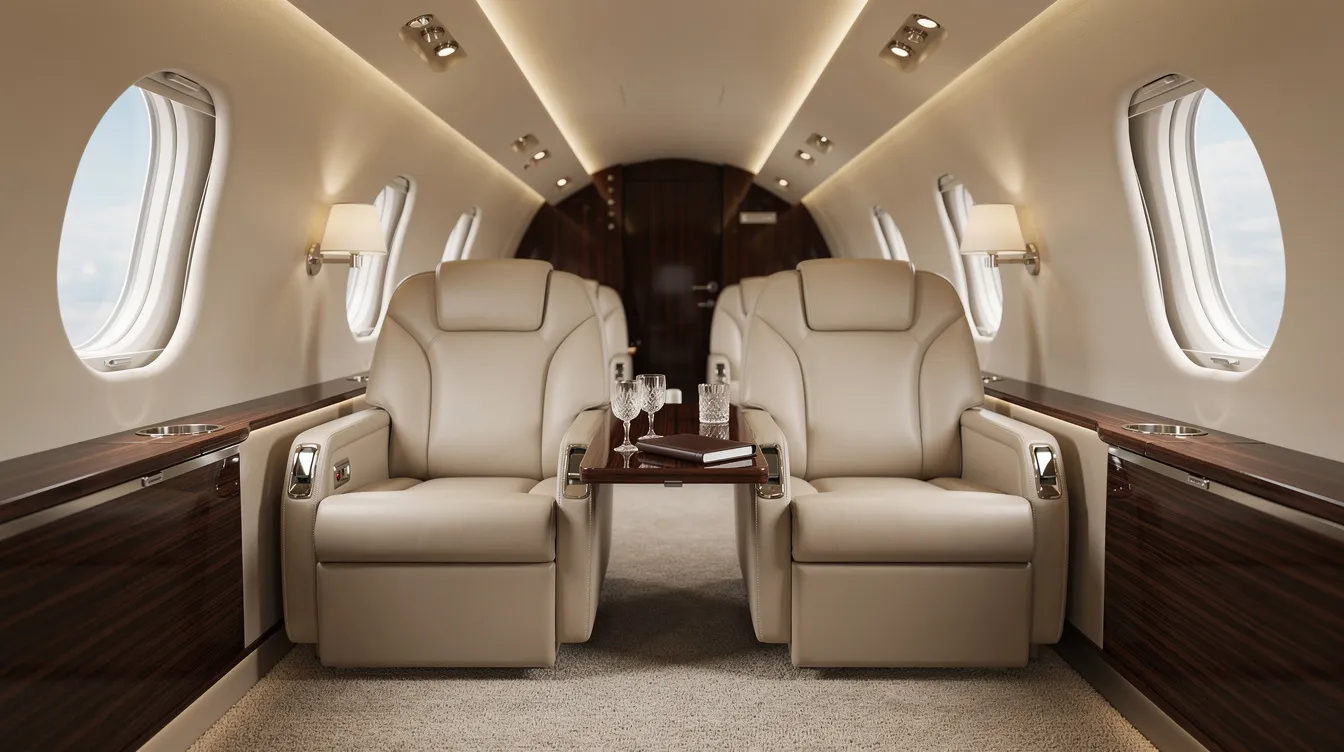
The cabin experience on a $1M jet can still feel genuinely premium. But it's not comparable to a brand-new Gulfstream G650 or Bombardier Global 6500.
Typical cabin layouts for light jets at this level include:
6–8 seats arranged in club seating plus a side-facing seat
An aft belted lavatory (functional, not spacious)
Cabin volume adequate for regional trips but not stand-up height in most older Citations or Learjets
Refreshed interiors-many aircraft in this bracket have had 2020s-era repaint and interior refit work, but may lack the ultra-modern design language of current-production jets
Airplanes require lightweight materials such as aluminum alloys and carbon-fiber composites. These materials keep the structure strong while minimizing weight, though older airframes use more traditional aluminum construction.
Most aircraft in the $1 million price range feature glass cockpit avionics and autopilot. Private jets typically offer advanced systems like GPS navigation and collision-avoidance systems. Modern jets include terrain awareness warning systems for safety. Many have been upgraded with dual Garmin GTN 750 displays, ADS-B Out transponders, and synthetic vision systems that enhance safety in low-visibility conditions. Wi-Fi options like Gogo AVANCE L3 may be installed, though upgrades can cost hundreds of thousands of dollars.
Shops like Duncan Aviation regularly serve as go-to facilities for interior refurbishment, avionics upgrades, and paint on these older airframes.
The trade-off is real: some $1M jets still run older cockpit suites if the previous owner skipped upgrades, which can affect pilot training requirements, future resale value, and regulatory compliance.
Even a "budget" private jet dramatically outperforms commercial airlines in flexibility and airport access. Private jets have access to over 5,000 airports in the U.S., compared to about 500 served by commercial airlines.
Here's what to expect from aircraft in the $1M range:
Range: Early Citation and Learjet light jets typically cover 1,200–1,800 nautical miles nonstop. That's enough for routes like New York–Miami, London–Rome, or Los Angeles–Dallas without refueling.
Cruise speed: Mach 0.70–0.80 (roughly 430–470 knots), comparable to many new light jets and faster than turboprops.
Airport access: Most light jets operate comfortably from runways as short as 4,000–5,000 feet, opening up thousands of smaller airports and slashing door-to-door travel time.
For perspective, the 2025 Embraer Phenom 300E has a range of 2,010 nautical miles. The Bombardier Challenger 350 offers a range of 3,200 nautical miles. At the top end, the Gulfstream G650ER can fly 7,500 nautical miles-but those aircraft cost tens of millions.
From Los Angeles, a million-dollar light jet could reach Denver, Seattle, Houston, or anywhere in the western half of the continent nonstop. From Dallas, most of the eastern seaboard is within range. From Paris, you could reach Istanbul, Lisbon, or Scandinavia, and an airport locator tool can help identify suitable fields near your actual origin and destination.
Turboprops like the King Air B200 trade speed (300–350 knots) for shorter runway capability, making them ideal for remote airports that jets can't reach. Some buyers in the Middle East and other regions with dispersed infrastructure favor turboprops for exactly this reason.

The million-dollar purchase price is just the entry fee. Owners should budget for annual operating costs, which can reach several hundred thousand dollars. Annual operating costs typically run 10–15% of aircraft value-meaning a $1M jet costs $100,000–$150,000 per year in baseline expenses before you even fly it. For a $10 million jet, annual operating costs are 10–15% of its value, or $1–1.5M.
Hangar: $30,000–$70,000 (hangar fees can exceed $100,000 annually depending on location)
Insurance: $30,000–$80,000 for hull and liability
Crew salaries: Crew salaries for light jets range from $250,000 to $350,000 annually if the owner employs pilots full-time. Some smaller jets are single-pilot certified, which can reduce this cost.
Management fees, training, regulatory compliance: $20,000–$50,000+
Fixed costs alone can total $200,000–$400,000 per year regardless of how many hours you fly.
Light jets cost approximately $2,000–$2,800 per flight hour in 2026, covering fuel, engine program contributions, parts, and maintenance labor. Super-midsize jets have operating costs of $3,800–$5,000 per flight hour. Aircraft engines must operate reliably under demanding conditions and are among the most expensive components to maintain.
Engine and APU programs like MSP Gold or JSSI convert large repair risks into predictable costs through hourly contributions. These maintenance reserves smooth out what would otherwise be unpredictable six-figure overhaul bills.
At 200 annual flight hours on a light jet (for a more granular breakdown, see this complete guide to private jet operating costs):
|
Category |
Estimated Cost |
|---|---|
|
Variable costs (200 hrs × ~$2,200/hr) |
$440,000 |
|
Fixed costs |
$250,000 |
|
Total |
~$690,000 |
At 100 hours per year, the total drops only modestly (to ~$470,000), because fixed costs remain constant. This is why utilization patterns matter enormously. For a deeper breakdown, see Jettly's Private Jet Charter Costs guide.
Here's the central question: buy an older private jet, or use on-demand charter with no ownership burden?
Full ownership makes sense at 200–300 flight hours annually. Below that threshold, charter almost always wins on total cost. On-demand charter is especially well-suited for travelers who fly fewer than 50 hours annually. Ownership involves high fixed costs like hangar fees and crew salaries that persist whether the plane flies or sits, whereas accessing a broad fleet of private charter aircraft lets you pay only for the trips you actually fly.
Consider this comparison for 100 hours of flying per year:
|
Factor |
Owning ($1M Light Jet) |
Chartering (Light Jets via Jettly) |
|---|---|---|
|
Capital outlay |
~$1,000,000 + financing |
$0 |
|
Annual cost (100 hrs) |
~$470,000 |
~$350,000–$450,000 |
|
Depreciation exposure |
Yes (~4–5%/year) |
None |
|
Maintenance downtime |
Owner's problem |
Operator's problem |
|
Aircraft flexibility |
One plane, one class |
Any class, any trip |
Use Jettly's Private Jet Cost Calculator to see real numbers for your specific routes.
Charter lets travelers experience aircraft like the Embraer Phenom 300E, a Cessna Citation CJ3+, or a Challenger 300-aircraft that would cost far more than $1M to own. The key advantages of charter include the ability to select different aircraft classes per trip, no exposure to depreciation, and zero long maintenance downtime.
The global fleet of business jets spans tens of thousands of aircraft, but only a slice trades near the $1M level at any given time. How many private jets fall into this bracket? Fewer than you might expect.
Most sub-$1.5M listings tend to be 20–40 years old, including early Cessna Citation models, classic Learjets, and certain Hawker or Beechcraft variants found on secondary markets. The private jet market for these older airframes is active but finite.
Values shift over time. Aircraft that sold for $7–10M new in the early 2000s may drift near $2–3M today but haven't yet reached $1M if well-maintained. Super-midsize jets can range from $9 million to $13 million when new, and even the oldest examples of these models rarely drop to the million-dollar floor.
The Citation II market saw average sold prices grow ~38.9% year-over-year through Q2 2026, suggesting rising demand for value-tier aircraft is pushing prices upward.
Charter platforms like Jettly make it unnecessary for users to track exact fleet counts. Travelers can book any suitable aircraft by route and budget, without worrying about how many specific aircraft exist at a given price point.
Not all million-dollar aircraft serve the same mission profile. Here's how the three main classes compare:
Light jets (e.g., Citation II, Learjet 31A):
Seat 6–8 passengers; passenger count suited for regional business trips or family travel within a continent
Range of 1,200–1,800 NM; cruise at 430–470 knots
Lower operating costs than larger jets; some are single-pilot certified
Best for: business shuttles, weekend trips, city-pair routes under 1,500 NM
Midsize jets (e.g., older Hawker 800, early Citation XLS):
Very few recent midsize aircraft fall to $1M; expect 1990s-era airframes with larger cabins but higher operating costs
Better cabin volume and range than light jets
Best for: longer domestic routes, groups of 6–9 passengers needing more room and luggage capacity
Turboprops (e.g., King Air B200, Pilatus PC-12):
A million dollars buys a capable turboprop with strong short-field performance and lower hourly fuel burn than jets
Slower (300–350 knots) but excels at accessing remote airports with shorter runways
Best for: regional hops, rural destinations, operators who value versatility over speed
Jettly customers can choose among light jets, midsize jets, or turboprops per trip instead of locking into one class through ownership. That flexibility is difficult to replicate when you own a single aircraft.
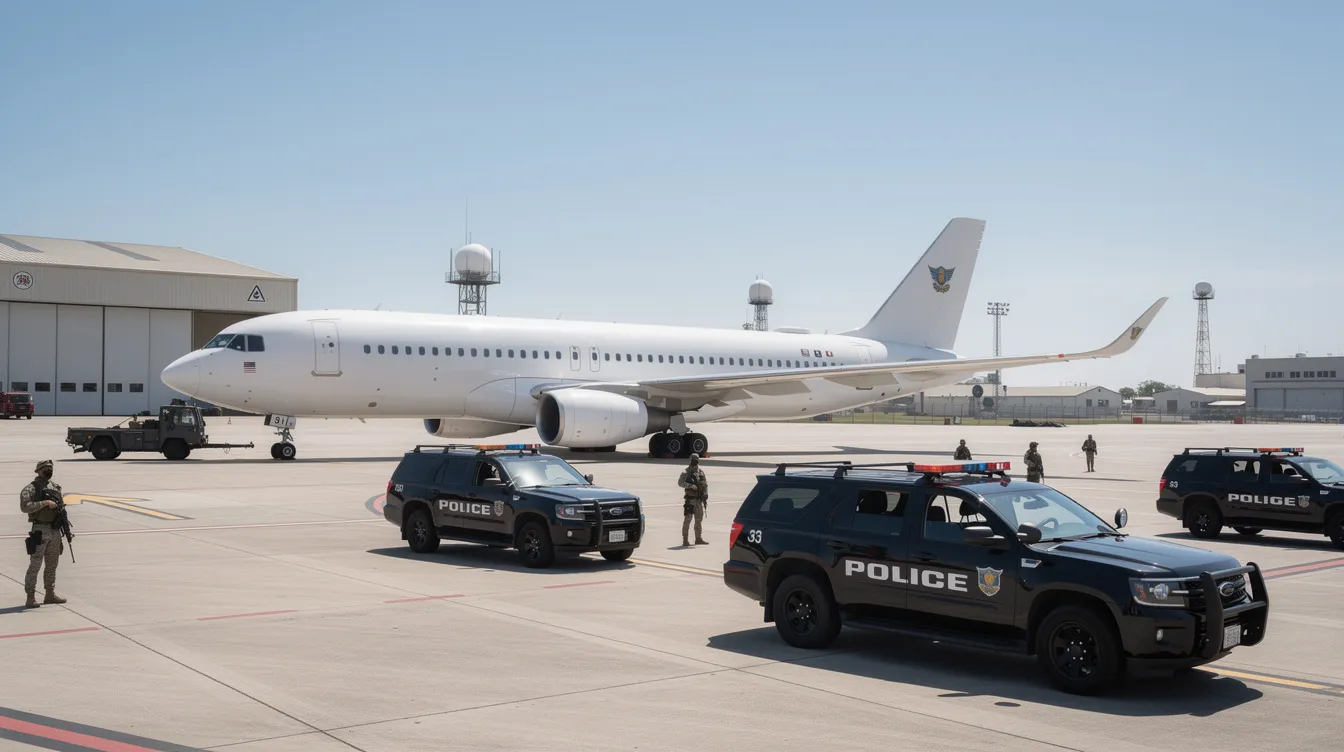
When headlines mention "million dollar planes," context matters. A U.S. Air Force presidential aircraft or a head-of-state transport sits in a completely different category from a $1M private jet.
The Boeing 747-8 is valued at approximately $400 million in its presidential configuration. Aircraft regularly operate from Joint Base Andrews carrying secure communications, advanced defensive systems, and fully customized interiors configured as flying offices and command centers. The Qatari government operates its own fleet of VIP jets-a Qatari jet in the state fleet often features custom cabins and military-grade communications equipment.
These military and government aircraft make headlines as "hundred million dollar" or even "billion dollar" planes. But most private buyers, business travelers, and charter clients operate far below this cost range.
The mission profiles couldn't be more different. Government and military aircraft serve national security and diplomacy. Private business jets serve corporate travel, family trips, and time-saving for entrepreneurs. They are not status symbols in the same sense-they're tools.
Many travelers interested in a million-dollar plane end up exploring access models instead of full ownership. Safety and certification costs for aircraft include extensive testing and compliance with strict regulations-costs that owners bear, but charter clients avoid.
Fractional ownership involves buying a share (e.g., 1/16 or 1/8) of a specific aircraft. It offers guaranteed availability and a defined number of annual flight hours, but requires long-term contracts, capital outlay, and monthly management fees. Learn more in Jettly's Fractional Private Jet Ownership guide and this overview of fractional jet ownership pros, cons, and costs.
Jet cards provide predictable hourly rates without capital outlay through prepaid blocks of hours on private jets. They offer predictable costs and guaranteed availability, though most programs lock buyers into fixed pricing tiers and terms. See How Jet Cards Work for a detailed breakdown, compare world-class corporate jet card programs, and review this guide on what a jet card is and how it works.
Digital membership and subscription models offer platform access, lower booking fees, and value-add services such as concierge, catering coordination, or carbon offsetting. Jettly positions itself as a flexible alternative without the lock-ins of traditional jet cards through its range of private jet memberships.
Part 135 certification imposes stricter operational requirements on charter operators, meaning passengers on chartered flights benefit from higher safety standards. ARGUS Platinum certification represents the top 1% of operators, while Wyvern Wingman certification emphasizes pilot training and currency. When chartering, travelers can verify operator credentials-something an owner managing their own plane must handle independently; understanding how Part 135 charter companies operate helps you vet providers more effectively.
These options can replicate the experience of owning a million-dollar plane- same cabin classes, same airports-without the asset risk. The tax treatment may also differ, with charter expenses sometimes qualifying as deductible business travel while ownership creates complex depreciation and tax scenarios.
Jettly operates as a tech-driven private jet charter marketplace that helps travelers avoid premature ownership decisions. Rather than committing a million dollars to a depreciating asset, travelers can access the same class of aircraft on demand, often positioning Jettly as a flexible NetJets alternative for flying private at lower cost.
The platform offers access to over 20,000 aircraft globally, including light jets, midsize jets, super-midsize jets, turboprops, and long-range jets-all bookable on demand. Transparent, instant pricing and digital booking let users see concrete costs for typical trips (e.g., New York–Miami, LA–Vegas, Toronto–Vancouver) before even considering ownership.
Because Jettly does not require jet cards or fractional ownership commitments, travelers can test different aircraft types-a Cessna Citation for a short hop, an Embraer Phenom for a business mission, or a Dassault Falcon for a longer route-without long-term contracts. Travelers comparing providers can review the best private jet charter companies and a broader list of charter airlines and private flight options. Learn how to book a private jet in minutes.
Use case: A business traveler flying 40–60 hours per year spends roughly $150,000–$300,000 annually chartering light jets through Jettly. That same traveler would spend $1M upfront plus $400,000+ annually to own a comparable plane-with a single aircraft type, depreciation risk, and management responsibilities on top. Tools like Jettly's jet card flight cost estimator can help model these numbers on specific routes.
For most travelers, charter passes the final exam that ownership often fails: delivering private flight capability without the financial and operational burden.
Ready to explore charter options and pricing? Visit https://www.jettly.com.
Before committing to aircraft ownership, run through this self-assessment:
Estimate your realistic annual flight hours. Under 150 hours per year, on-demand charter usually beats ownership on total cost and flexibility. The delivered value of owning only appears at higher utilization.
Can you budget $400,000–$700,000 per year for operating costs? Annual operating costs are typically 10–15% of purchase price, and that's before variable costs at scale. This figure is in addition to the purchase price and potential financing.
Are you willing to manage a flight department? Overseeing maintenance, dealing with downtime, coordinating crew schedules, or hiring a management company at additional cost adds operational complexity. Many airlines and fleet operators have dedicated teams for this-individual owners often underestimate the burden.
Does your mission profile justify a single aircraft? Consider your typical passenger count, longest regularly flown route, need for short-runway access, and desire for connectivity equipped with systems like Gogo AVANCE or Starlink.
Have you considered the world of charter first? Flying regularly on chartered aircraft helps define your preferred cabin size, range requirements, and comfort level before committing capital. Exploring top private jet charter companies and the breadth of private charter aircraft available can clarify what actually fits your missions.
If several of these questions gave you pause, starting with Jettly charter and revisiting ownership later is the lower-risk path. You can operate from the same airports, fly the same routes, and serve the same travel needs-without the seven-figure commitment.
Below are answers to common questions not fully covered in the sections above.
No. Brand-new private jets from major manufacturers (Cessna, Bombardier, Dassault, Embraer, Gulfstream) start well above $3–4M for very light jets and rise into tens of millions for larger models. New light jets typically range from $5 million to $9.5 million. A $1M budget is realistically limited to pre-owned light jets and turboprops that are often 20+ years old, or occasionally distressed sale aircraft from slightly newer production years.
For travelers flying fewer than about 100–150 hours per year, chartering through a platform like Jettly is usually more economical than taking on ownership fixed costs. Charter avoids surprise maintenance bills, hangar contracts, and crew management while still providing access to similar aircraft categories. Some flyers may even benefit from shared charter flights versus full charters depending on budget and privacy needs. You can check cheap private jet charter prices for a sense of current rates.
Many older jets can be upgraded with systems like Gogo AVANCE L3/L5 or Ku/Ka-band satellite internet, but upgrades can cost hundreds of thousands of dollars. When chartering via Jettly, travelers can filter for aircraft equipped with Wi-Fi and other cabin technologies without paying to install them.
Yes-placing an aircraft on a Part 135 charter certificate may offset 30–50% of annual costs through revenue flights. However, higher utilization means more wear, faster component cycles, and complex regulatory requirements. The pilot and crew must meet Part 135 standards, and financial outcomes vary widely by aircraft type, home base, and market demand. Some owners also explore crowdsourcing private jet flights and sharing empty seats to recover a portion of trip expenses.
Use on-demand charter through Jettly to fly several trip types-short hops, longer business missions, family vacations-on different aircraft classes. This real-world experience helps define your preferred cabin size, range needs, and comfort level before committing to any specific plane or alternative like fractional jet ownership, where detailed fractional ownership cost breakdowns and even niche options such as fractional ownership of a Cessna 172 may enter the picture. It's the most practical way to test private aviation without risking capital.
A million-dollar plane can deliver impressive flexibility, genuine time savings, and a comfortable flying experience. But the true cost of ownership-operating costs, depreciation, management-often surprises first-time buyers.
Many travelers and businesses achieve similar benefits more efficiently through on-demand charter, memberships, or fractional programs. Options such as Jettly's private jet memberships can deliver predictable access without tying up millions in aircraft equity. The rest of the equation depends on your annual flight hours, mission profile, and willingness to manage an aging asset.
Before buying, use the checklist and comparisons in this article to pressure-test the decision. And if charter makes more sense for now, that's not a compromise-it's a smarter use of capital.
Discover the freedom of private travel tailored to your schedule. Check real-time charter prices and available aircraft, or get a personalized quote at https://www.jettly.com.
Share this post:
Jay Franco Serevilla
Jul 13, 2026
|
5
min read
Discover tips and trends in the industry.
5
min read
How High Does a Helicopter Fly? Maximum Altitude, Limits & Practical Uses
Helicopters typically fly between 500 and 5,000 feet during routine operations, with some models reaching service ceilings of 20,000 feet or more. The highest recorded flight reached 40,820 feet in 1972, but most helicopters operate much lower due to factors like air density and engine power. Understanding these limits is essential for travelers considering helicopter charters for various missions.
Read More
5
min read
Chesapeake Regional Airport (KCPK) Private Jet & Traveler Guide
Chesapeake Regional Airport (KCPK) is a premier destination for private and charter aviation in coastal Virginia, offering a 5,500-foot runway and dedicated facilities. This guide provides essential information for pilots and travelers, including booking options through Jettly, making it an ideal choice for efficient and private travel.
Read MoreStay updated with our latest insights and tips to elevate your journey with us.
MEMBERSHIPS AND ASSOCIATIONS



Disclaimer: Jettly operates as a charter broker, offering access to a global digital jet charter marketplace. Jettly is not a direct air carrier and does not own or operate aircraft. All advertised flights are conducted by third-party air carriers that are fully licensed and hold the appropriate Part 135 or Part 121 certifications issued by the Federal Aviation Administration (FAA) or equivalent regulatory authorities under U.S. or foreign law. Jettly complies fully with the U.S. Department of Transportation's Part 295 and Part 298 Charter Broker regulations. Jettly does not carry additional liability insurance. Passengers are covered by aircraft operator insurance. TICO: 50023770


