



Login
Get Instant Pricing On 23,000+ Aircraft

>

Fighter jets are typically named using birds of prey, weather phenomena, mythology, and national symbols to convey speed, agility, and dominance.
Famous aircraft like the F-16 Fighting Falcon, Eurofighter Typhoon, and F-22 Raptor have names reflecting air superiority, agility, and striking power.
Naming conventions evolved from simple manufacturer codes in World War II to carefully branded, politically resonant names in the jet age and stealth era.
Expensive fighter jet programs, such as the F-35 Lightning II, use legacy names to connect new technology to proven aircraft lineages.
Each fighter jet name serves a strategic communication function beyond simple identification.
While Jettly focuses on private jet charter, the same emphasis on naming clarity and performance applies when selecting civilian jets.
The name of a fighter jet usually combines an official military designation with a nickname, which is why aircraft are known by names like the F-16 Fighting Falcon, Eurofighter Typhoon, F-22 Raptor, and F-35 Lightning II. The designation follows a formal system of letters and numbers that separates fighters, attack aircraft, and bombers, while the nickname is chosen by manufacturers, armed forces, or sometimes pilots themselves.
For aviation enthusiasts, military history readers, and anyone comparing how aircraft are presented in both defense and private aviation, these names reveal more than branding. They point to an aircraft’s role, capabilities, national identity, and place in aviation history. This overview looks at how fighter jet naming works across countries, how it evolved from World War II aircraft to modern stealth fighters, and how the same logic behind clear, performance-linked naming also appears in private jet branding and selection.
The United States uses prefix letters to indicate mission type:
F = Fighter (e.g., F-15, F-22)
B = Bomber (e.g., B-52)
A = Attack/ground attack (e.g., A-10)
E = Electronic warfare
X = Experimental aircraft
Manufacturers propose popular names during development.
The Air Force and defense ministries approve the final choice.
Developers submit multiple name options, checked against a master list for trademark conflicts and uniqueness.
Names should be short (ideally no more than two words) and characterize the aircraft's mission or capabilities.
NATO and Western allies often add evocative names like Falcon, Raptor, or Typhoon.
Names are influenced by marketing, export appeal, and politics, especially for high-cost, export-focused fighter aircraft.
Russian and Chinese forces typically use manufacturer-based codes:
Su- (Sukhoi)
MiG- (Mikoyan-Gurevich)
J- (Jian, meaning fighter in Chinese)
Names are influenced by technical roles, marketing, and politics.
World War II saw the first global branding of fighters, with names used for morale, propaganda, and battlefield recognition. This era laid the foundation for every naming tradition that followed.
Aircraft like the Hawker Hurricane, manufactured by Hawker Aircraft, and the Supermarine Spitfire became symbols of national resilience during the Battle of Britain.
Names evoked weather and aggressiveness:
"Spitfire" suggested fiery defiance.
"Hurricane" referenced destructive natural force.
These names were essential for public engagement and wartime morale.
German aircraft like the Bf 109 and Focke-Wulf Fw 190 derived their designations from manufacturers (Bayerische Flugzeugwerke and Focke-Wulf).
Germany relied on alphanumeric codes rather than evocative nicknames.
Allies sometimes attached informal reporting names later.
The United States used the "P" prefix for "Pursuit" before switching to "F" for "Fighter" in 1948.
Iconic examples:
P-51 Mustang – escort fighter, named for the wild horse.
P-47 Thunderbolt – ground attack workhorse, named for lightning's striking power.
P-38 Lightning – long-range interceptor with twin-boom design and distinctive wings.
Evocative names aided recognition in media and among allies.
Japan fielded fighters like the Mitsubishi A6M Zero, where "Zero" referenced the Japanese Imperial year 2600 (1940).
The Nakajima Ki-43 Hayabusa, meaning "Peregrine Falcon," showed that animal symbolism paralleled Western naming traditions.
It's worth noting that military aviation naming stretches back even further than World War II. Early World War I scouts like the Morane Saulnier L helped establish the concept of purpose-built fighters, though formal naming conventions were still decades away.
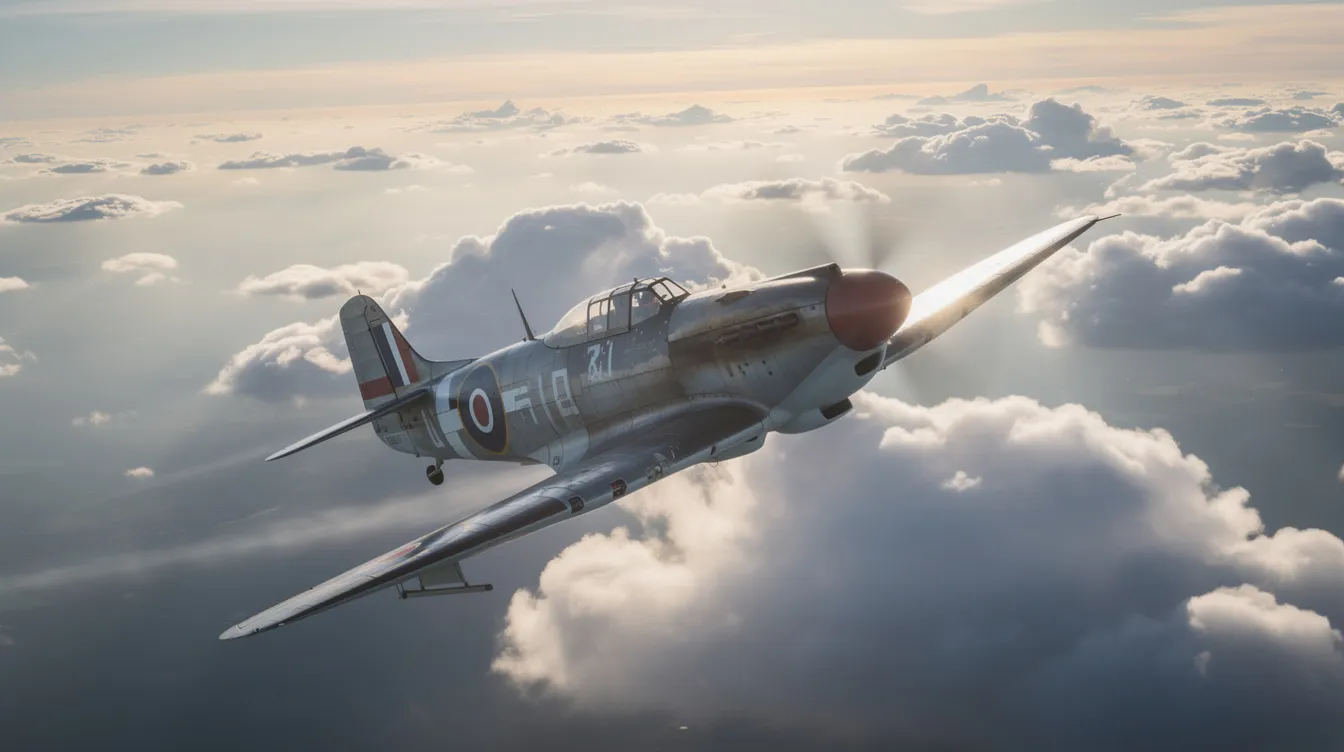
After 1945, air forces worldwide transitioned from propeller fighters to jet fighters and experimental aircraft. Names began to reflect speed, nuclear-era power, and the high-speed capability that gave early jet-era naming and design a clear advantage in defining the new generation.
Early U.S. jets like the F-86 Sabre used sword imagery to evoke cutting through air at high speed in aerial combat.
The "Century Series" fighters (F-100 through F-106) represented a new era where designations themselves carried prestige.
The F-100 Super Sabre's first flight in 1953 marked the USAF's entry into supersonic operation.
Soviet fighters like the MiG-15, MiG-17, and MiG-21 kept manufacturer-based numeric designations, developed in an environment of East-West competition. "MiG" derives from the Mikoyan-Gurevich design bureau.
NATO sometimes attached reporting names for identification—the MiG-21, for example, received the code name "Fishbed."
European fighters also embraced evocative names:
English Electric Lightning reflected Britain's emphasis on high-speed interception.
Saab Draken ("Dragon" in Swedish) drew on Scandinavian mythological tradition.
These names balanced technical designations with punchy labels easy to use in training manuals, news reports, and international export brochures.
From the 1970s onward, the United States Air Force and Navy combined alphanumeric codes with predatory or weather-themed names aimed at projecting air superiority and global reach.
Part of Grumman's naval "cat" series (Wildcat, Hellcat).
Designed for carrier operations and fleet defense.
Named after the national bird, symbolizing sovereignty and dominance.
Known for air superiority and unmatched payload capability in its modern F-15EX Eagle II variant.
Named after an aggressive insect.
Multirole "F/A" prefix indicates both fighter and attack roles.
Named for a bird of prey, emphasizing agility in aerial combat.
Official name is "Fighting Falcon," but pilots widely use the informal nickname "Viper."
One of the most agile and widely deployed jet fighter models globally.
Named for a stealth predator, projecting air dominance.
First operational fifth-generation fighter.
Top speed of Mach 2.25, with a combination of air-to-air and air-to-ground capabilities.
Production ended after only 187 units, making it exceptionally rare.
Name deliberately links new aircraft technology to the P-38 Lightning lineage, a combat plane that proved its value in World War II.
More than 880 units have been delivered globally.
Advanced cockpit built around modern pilot-interface systems.
|
Aircraft |
Name |
Naming Tradition |
|---|---|---|
|
F-14 |
Tomcat |
Grumman's naval "cat" series (Wildcat, Hellcat) |
|
F-15 |
Eagle |
National bird, sovereignty, dominance |
|
F/A-18 |
Hornet / Super Hornet |
Aggressive insect, multirole "F/A" prefix |
|
F-16 |
Fighting Falcon |
Bird of prey, agility in aerial combat |
|
F-22 |
Raptor |
Stealth predator, air dominance |
|
F-35 |
Lightning II |
Heritage tribute to WWII P-38 Lightning |
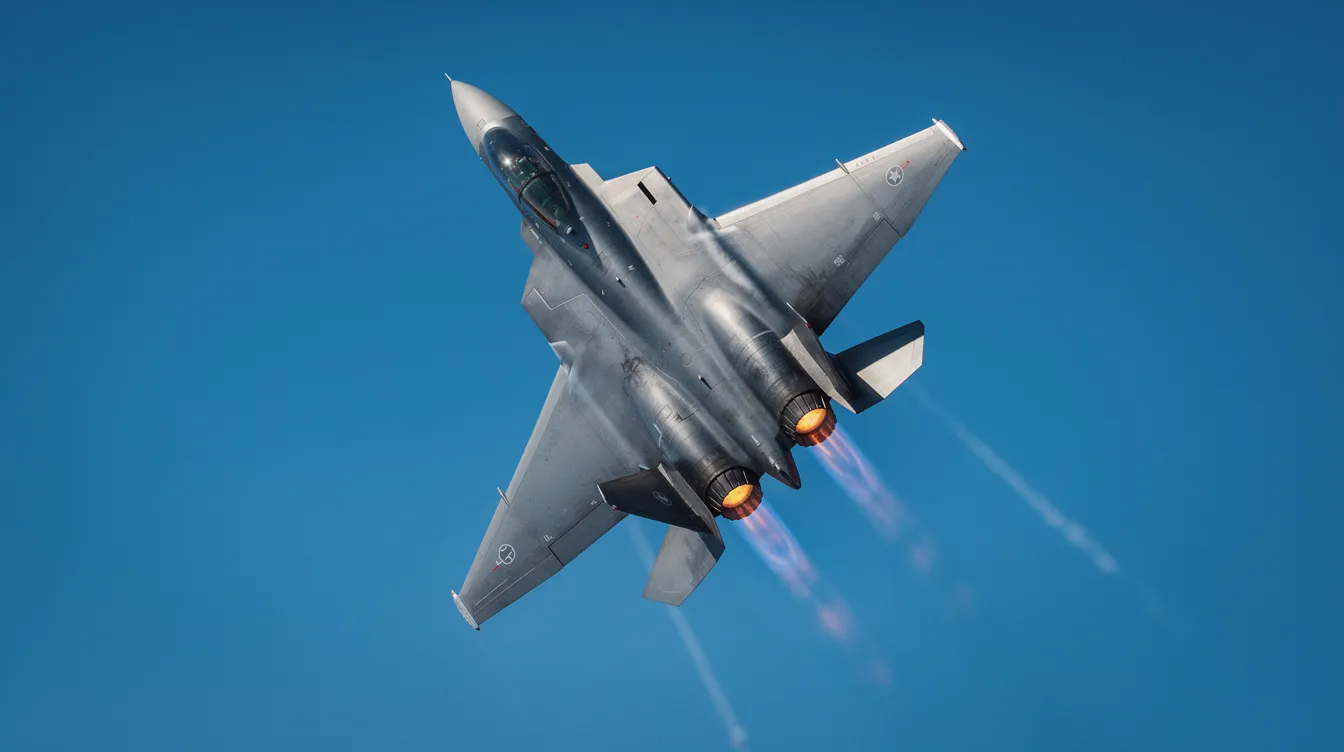
Soviet and Russian fighter aircraft use manufacturer-based numbering domestically, while NATO assigns English code names for Western documentation and communication.
Under the NATO system, fighter jets from non-NATO countries receive code names starting with "F."
Jet-powered aircraft get two-syllable names.
Propeller-driven models get one-syllable names.
Notable examples:
MiG-21 "Fishbed" – Cold War workhorse, operated by dozens of countries.
MiG-29 "Fulcrum" – Agile air superiority fighter.
Su-27 "Flanker" – Long-range interceptor with exceptional range.
MiG-25 "Foxbat" – Reconnaissance and interception platform that could fly at Mach 3.2.
The Su-35 "Flanker-E" is a modern variant emphasizing high-speed maneuvering and advanced avionics.
The Su-57 Felon, with approximately 30 units in service as of 2026, is Russia's primary fifth-generation stealth program.
Russian naming conventions reflect continuity of design bureaus (MiG, Sukhoi) and emphasize rugged performance and weapons payload over stealth.
China's air force (PLAAF) increasingly fields indigenous fighter jets whose names combine J- codes with evocative nicknames for domestic and export use.
The "J" prefix stands for "Jian" (fighter in Chinese).
Chengdu J-10 "Vigorous Dragon" – Multirole fighter symbolizing national aerospace progress.
Chengdu J-20 "Mighty Dragon" – Stealth fighter with 250 units in active service and a weapons payload of 24,000 lbs.
Shenyang FC-31 / J-31 "Gyrfalcon" – Twin-engine experimental aircraft aimed at export markets.
As China expands its military aviation exports, names play a growing role in branding and differentiation.
European fighter jets often adopt meteorological or animal names to signal agility, speed, and flexible mission profiles.
Eurofighter Typhoon – Developed by a multinational team (UK, Germany, Italy, Spain), referencing powerful storms and heritage association with earlier European combat aircraft.
Dassault Rafale – In French, "rafale" means a gust or squall of wind; a fighter designed in France and marketed as an "omnirole" fighter.
Saab JAS 39 Gripen – "Gripen" means "Griffin" in Swedish, referencing the mythological hybrid creature combining eagle and lion traits. The JAS designation stands for "Jakt, Attack, Spanning" (fighter, attack, reconnaissance).
Other European aircraft like the Panavia Tornado and the older Mirage series show continuity in naming styles—weather and illusion themes, while the Mirage family also reinforced France’s recognizable naming style.
Birds of prey (Eagle, Falcon, Raptor): Suggest dominance in the air; usually associated with air-superiority or air-combat-focused fighters, and a name may imply strength in one area of combat performance more than another.
Weather names (Typhoon, Rafale, Thunderbolt): Signal striking power and rapid response; typically for strike or multirole aircraft.
Mythological creatures (Griffin, Dragon): Reflect national culture and heritage, particularly for non-U.S. manufacturers.
Many fighter jets serve as multirole aircraft capable of various combat missions, and their names reflect this flexibility.
Variants within a family (like the F-35A, F-35B, and F-35C Lightning II) share the core name to reflect a single production program, with suffix letters indicating specialization.
Even experimental aircraft like the X-series may receive informal names that help pilots and engineers discuss them more naturally.
The Lockheed Martin F-35 Lightning II leads as the world's most expensive fighter jet program.
Each F-35 Lightning II costs approximately $110 million per unit.
The F-22 Raptor costs over $140 million per unit and was produced in limited numbers.
Name chosen to evoke elite, stealthy predation.
Advanced projects like the U.S. Next Generation Air Dominance (NGAD) and European Future Combat Air System (FCAS) are still in development; their eventual names will be crucial for public recognition and allied buy-in.
|
Military Fighter Jet |
Estimated Unit Cost |
Notable Naming Feature |
|---|---|---|
|
F-35 Lightning II |
$110 million |
Legacy name, global export appeal |
|
F-22 Raptor |
$140+ million |
Stealth predator, elite branding |
|
Su-57 Felon |
N/A |
NATO reporting name, stealth emphasis |
Stealth fighter aircraft emerged in the late Cold War to reduce radar signature, making names and imagery key parts of their public identity. Fifth-generation fighter jets include advanced avionics and sensor fusion, where sensor fusion combines data from multiple sensors for enhanced tactical awareness, and stealth remains central to their identity and public branding.
|
Aircraft |
Name |
Stealth Detail |
|---|---|---|
|
F-22 Raptor |
Raptor |
Can supercruise at Mach 1.8 without afterburner |
|
F-35 Lightning II |
Lightning II |
Has a radar cross-section equivalent to a golf ball |
|
Chengdu J-20 |
Mighty Dragon |
250 units in active service with a carry capacity of 24,000 lbs |
|
Su-57 |
Felon (NATO) |
~30 units in service, Russia's 5th-gen entry |
Stealth capabilities improve survivability against radar detection, making these aircraft essential for any air force seeking to operate in contested airspace.
These jets are branded as symbols of national technological leadership, with names chosen to resonate both domestically and with potential export partners.
|
Military Fighter Jet Naming |
Civil/Private Jet Naming |
|---|---|
|
Emphasizes combat capability |
Emphasizes comfort, range, and status |
|
Names like "Fighting Falcon," "Raptor" |
Names like "Global," "Challenger," "Citation" |
|
Reflects mission (air superiority, strike, etc.) |
Reflects prestige and worldwide reach |
Private jets are named to signal comfort, range, and status rather than combat capability, and platforms offering private charter aircraft highlight cabin size, range, and mission profile rather than combat roles.
Names like "Global," "Challenger," "Legacy," and "Citation" emphasize prestige and worldwide reach, and many travelers compare these categories while evaluating how much a private jet costs for ownership or charter.
Jettly connects travelers to a wide inventory of private jets, turboprops, and helicopters whose names convey cabin size, speed, and mission suitability while also offering guidance on affordable private jet charter for different trip profiles.
U.S. names: Stress global reach and technological edge; birds of prey and storms signal offensive and defensive air superiority.
Russian names: Reflect design bureau continuity (MiG, Sukhoi) and rugged performance; NATO code names aid interoperability.
European names: Highlight partnership and shared defense (Eurofighter Typhoon) while preserving national aerospace identity.
Emerging powers: Develop indigenous fighter aircraft with names that project national pride and independent defense capability.
The pattern is consistent: a name must serve the dual purpose of internal morale and external signaling. Whether a country is trying to dominate a region or maintain deterrence, the name it gives its fighters tells you something about its ambitions.
|
Military Category |
Private Aviation Equivalent |
|---|---|
|
Lightweight interceptor (agile, short range) |
Light jet for short hops (e.g., New York–Boston) |
|
Multirole fighter (flexible, moderate range) |
Midsize jet for regional business travel |
|
Heavy strike fighter (long range, large payload) |
Large-cabin jet for intercontinental trips (e.g., Toronto–London) |
Platforms like Jettly use clear aircraft naming, photos, and performance data so travelers can quickly understand which private jet model suits their mission, and tools like a private jet charter cost estimator help align aircraft choice with budget.
Tools such as an airport locator help match routes to suitable aircraft, and broader guides to the charter airlines and private aviation market give context on how these fleets are branded and deployed.
Manufacturers typically propose names during development.
Air forces and defense ministries approve the final choice.
In the United States, the process involves submitting multiple name options reviewed against a master list for conflicts and relevance.
For large programs like the F-35, Congressional interest and public perception also influence the decision.
The service secretary gives final approval.
Birds of prey like the Eagle, Falcon, and Raptor suggest agility, hunting ability, and dominance, and each name gives a plane a more vivid public identity.
Weather names like Typhoon, Rafale, and Thunderbolt imply speed, shock, and overwhelming striking power.
These metaphors translate well across languages and cultures, making them ideal for both domestic identity and international export appeal.
Not always. Pilots and crews often adopt informal nicknames that stick within squadrons and popular culture.
The F-16 Fighting Falcon is widely called "Viper" by its pilots.
Unofficial names sometimes become more recognized than the official ones, though military documentation maintains the formal designation.
NATO employs a standardized system managed by the Five Eyes Air Force Interoperability Council.
Fighter jets from non-NATO countries receive code names starting with "F," with jet-powered aircraft getting two-syllable names.
Names are chosen to be distinctive, easy to pronounce, and unambiguous in radio communications.
Civil and private aircraft names focus on comfort, range, and brand image rather than combat roles.
Names like "Citation," "Global," and "Challenger" emphasize prestige and capability for business and leisure travel, and travelers often compare top private jet charter companies and their fleets before choosing a provider.
Travelers comparing private jets on Jettly can use aircraft names and specifications to quickly understand which model fits their trip, or opt for flexible private jet memberships that simplify pricing and access across multiple aircraft types.
Fighter jet names carry significant meaning beyond mere identification. They reflect each aircraft’s specific roles, technological advantages, and the strategic ambitions of their manufacturers and air forces. From World War II icons like the Mustang and Spitfire to cutting-edge stealth fighters such as the F-35 Lightning II and Chengdu J-20, these names evoke power, agility, and national pride. Understanding the naming conventions across the U.S., Russia, China, and Europe provides insight into the history, culture, and priorities behind these advanced machines. While Jettly operates in the private aviation sector, the clarity and purpose behind fighter jet naming offer a useful parallel when selecting civilian aircraft for business or leisure. For travelers seeking convenience, flexibility, and performance, knowing the story behind an aircraft’s name can enhance the experience of private jet travel. Learn more about Jettly’s charter options at https://www.jettly.com.
Ready to experience private travel on your terms? Explore flight options or request a quote at https://www.jettly.com
Share this post:
Jay Franco Serevilla
Jul 13, 2026
|
5
min read
Discover tips and trends in the industry.
5
min read
Cessna 182 Cost of Ownership in 2026: Fixed Costs, Operating Costs, and Realistic Budgets
In 2026, owning a Cessna 182 Skylane involves navigating fixed and variable costs that can range from $180 to $350 per flight hour. Fixed costs typically amount to $6,500 to $19,500 annually, while variable costs, including fuel and maintenance, can add another $100 to $200 per hour. Understanding these expenses is crucial for pilots considering ownership versus alternatives like chartering.
Read More
5
min read
US Military Base Oman: Strategic Access, RAFO Thumrait, and Travel Options
Oman hosts U.S. military access through key facilities like RAFO Thumrait, Masirah Island Airbase, and Duqm Port, but does not have sovereign U.S. bases. This strategic partnership enhances regional security and logistics while maintaining Omani sovereignty. Travelers can utilize civil airports in Muscat and Salalah for access, with private jet services available through Jettly.
Read MoreStay updated with our latest insights and tips to elevate your journey with us.
MEMBERSHIPS AND ASSOCIATIONS



Disclaimer: Jettly operates as a charter broker, offering access to a global digital jet charter marketplace. Jettly is not a direct air carrier and does not own or operate aircraft. All advertised flights are conducted by third-party air carriers that are fully licensed and hold the appropriate Part 135 or Part 121 certifications issued by the Federal Aviation Administration (FAA) or equivalent regulatory authorities under U.S. or foreign law. Jettly complies fully with the U.S. Department of Transportation's Part 295 and Part 298 Charter Broker regulations. Jettly does not carry additional liability insurance. Passengers are covered by aircraft operator insurance. TICO: 50023770


