



Login
Get Instant Pricing On 23,000+ Aircraft

>
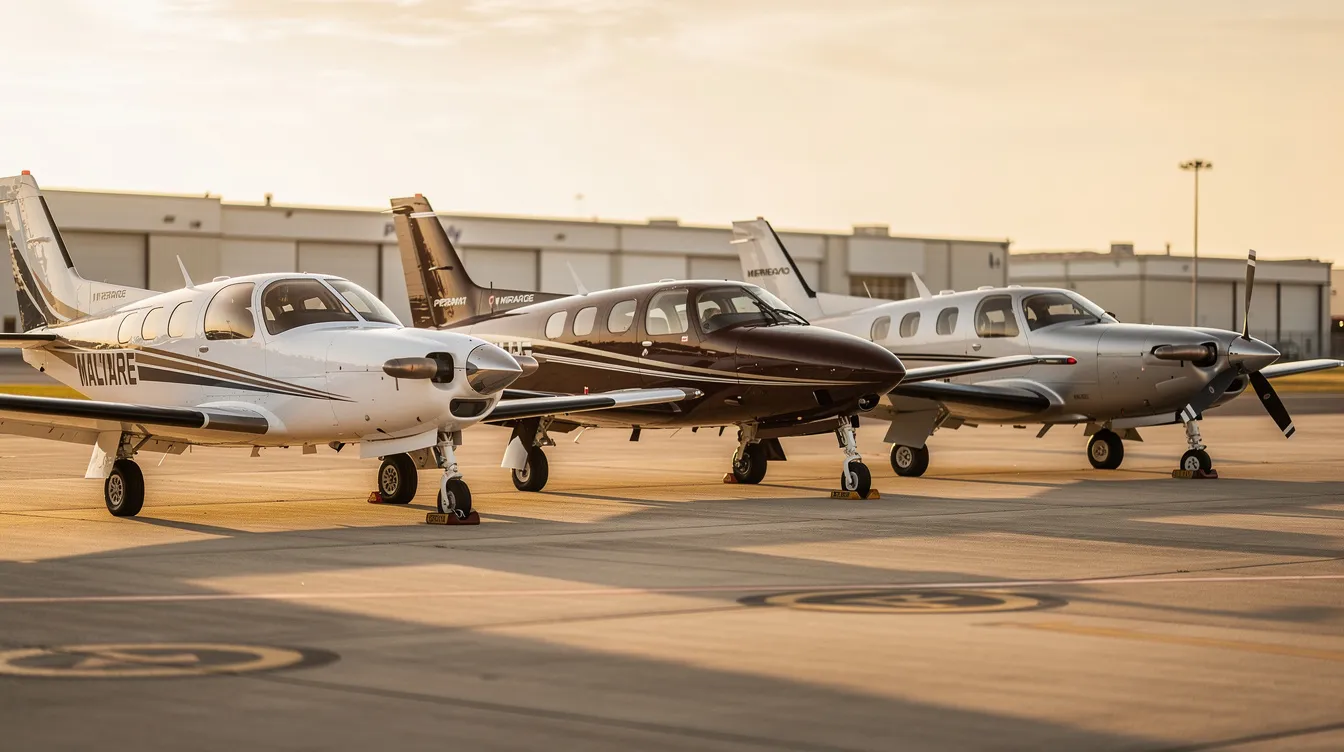
The Piper PA-46 family represents a distinctive line of single-engine, pressurized aircraft designed for private pilots and charter operators seeking a balance of performance, comfort, and efficiency. Since its introduction in the early 1980s, the PA-46 series has evolved through multiple variants, including piston-powered models like the Malibu and Mirage, as well as turboprop versions such as the Malibu Meridian. Known for its spacious cabin, high-altitude capabilities, and advanced avionics, the PA-46 serves as a versatile option bridging the gap between traditional piston aircraft and entry-level jets. This guide explores the history, features, performance, safety, and charter options of the Piper PA-46 family, highlighting why it remains a popular choice among private flyers and charter customers worldwide.
This guide is designed for private flyers, charter customers, and aviation enthusiasts interested in the Piper PA-46 family. It covers model history, performance, charter use, and how the PA-46 compares to other private aircraft.
The Piper PA-46 family is a six-seat, pressurized, single-engine aircraft line built by Piper Aircraft in Vero Beach, Florida. Often chartered through platforms like Jettly for efficient regional trips, the Piper PA-46 bridges the gap between high-performance piston aircraft and entry-level jets. The PA-46 family includes piston models like Malibu and Mirage as well as turboprop versions, all known for pressurized cabin-class comfort.
The PA-46-310P Malibu launched in the early 1980s, evolved into the Malibu Mirage (PA-46-350P), and later into the turboprop PA-46-500TP Malibu Meridian. Today, Piper markets these as the M350 and M500 within its M-Class lineup. PA-46 aircraft typically offer a cruise speed range from 200 to over 270 knots, ranges exceeding 1,000 nautical miles, and the ability to cruise in the 25,000–30,000 ft band. PA-46 models are widely used for personal, corporate, and air-taxi travel.
Jettly connects travelers with PA-46 operators worldwide, offering on-demand charter, transparent pricing, digital booking, and flexible private jet memberships as a NetJets alternative for flying private at lower cost. Ready to explore options? Visit https://www.jettly.com.
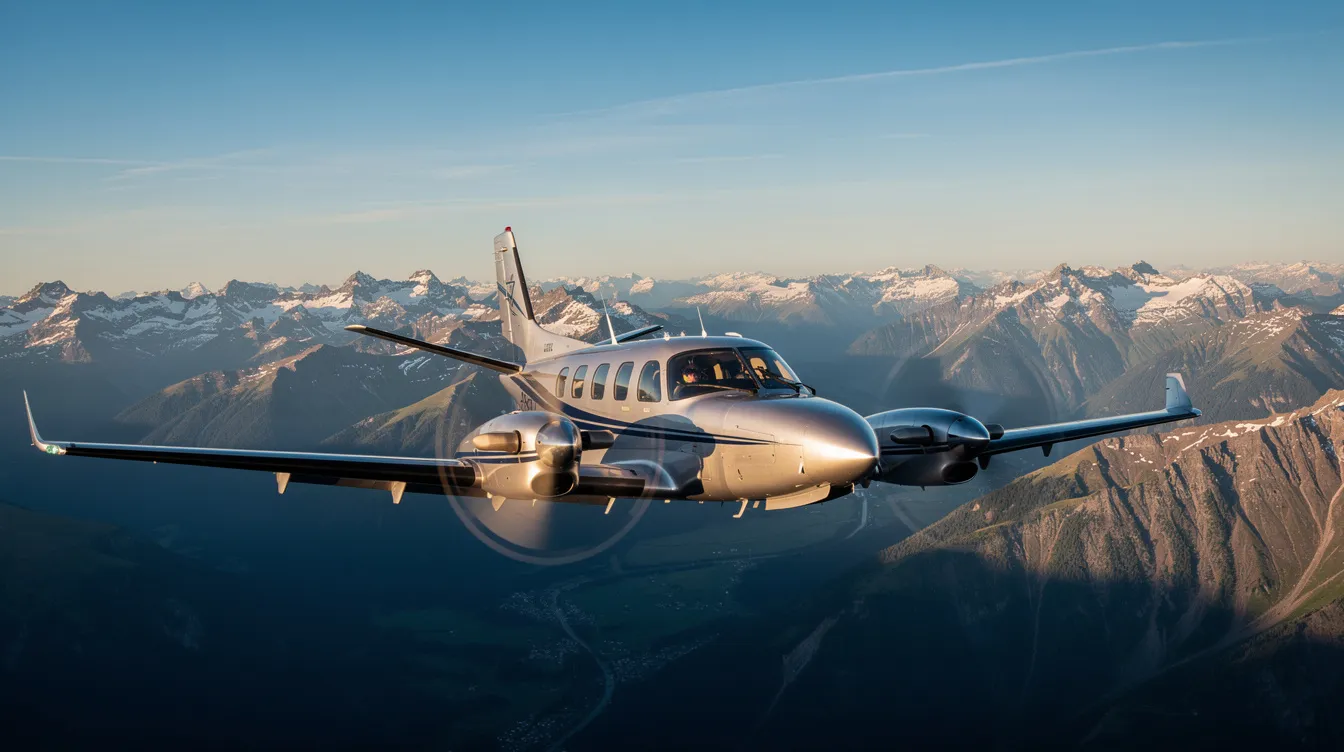
The Piper PA-46 family includes piston models like Malibu and Mirage as well as turboprop versions, all known for pressurized cabin-class comfort. Most PA-46 models feature a spacious cabin accommodating up to six passengers and sit within the cheapest private aircraft segment for many owners and charterers, especially for those exploring affordable aeroplane rent options and cost structures.
The Piper PA-46 is a long-range, high-altitude, pressurized cabin-class aircraft first certified in 1983. Beginning as the PA-46-310P Malibu, the line expanded to include the Piper Malibu Mirage (PA-46-350P) and the turboprop-powered version, the Malibu Meridian (PA-46-500TP). Most PA-46 models feature a spacious cabin accommodating up to six passengers in a club seating layout with a rear baggage area, and the PA-46 family remains part of a well-established high-performance fleet of pressurized single-engine aircraft.
Pressurization systems in the PA-46 improve comfort and reduce fatigue while flying, and the PA-46 models allow comfortable flight at altitudes up to 25,000 feet—with turboprop variants reaching near 30,000 ft. Core performance spans from roughly 210 knots cruise speed on the piston side to over 270 knots for newer turboprops, with ranges exceeding 1,000 nautical miles in most configurations.
These characteristics position the PA-46 between traditional piston singles and light jets in the charter market. For small groups seeking speed, pressurization, and lower cost than a jet, this light plane is a strong fit for regional and mid-range flight requests through Jettly's platform and aligns with many considerations in choosing the best cross-country plane for your travel.
The PA-46 prototype first flew in August 1982. Piper certified the Malibu in September 1983, and deliveries began that December. The original 310P Malibu used a 310 hp Continental TSIO-520-BE engine, and over 400 units were delivered before recurring engine failures pushed Piper Aircraft toward redesign.
Production of the Malibu Mirage commenced in October 1988. The PA-46-350P replaced the Continental with a 350 hp Lycoming TIO-540-AE2A, delivering improved reliability and performance. Throughout the 1990s, various changes arrived: wing and retractable landing gear refinements, improved de-icing, and avionics evolution from analog panels to integrated Garmin glass cockpits. Features included retractable landing gear systems and electric flaps for improved handling.
Piper announced the turboprop version in 1997. The PA-46-500TP Malibu Meridian received FAA certification in September 2000, with first customer deliveries in November 2000.
By the 2010s, Piper introduced rebranded models—M350, M500, M600 SLS—adding new features like Garmin G3000 avionics, digital autopilots, and HALO emergency autoland. The M600 received FAA certification on June 18, 2016. The M700 Fury was unveiled in 2024 as the latest model, powered by a 700-hp engine.
The unpressurized version, called the Matrix, shared the basic airframe without a pressure vessel, serving as a cost-conscious option during its 2008–2015 production run. A new interior and new wing design elements arrived across model years as Piper refined the platform and positioned itself among the best private plane manufacturers for different budgets and needs.
Many 1980s–2000s PA-46 aircraft remain active in Part 135 charter fleets, accessible on demand through digital platforms like Jettly for a wide range of private charter aircraft.

The PA-46-310P Malibu and PA-46-350P Piper Malibu Mirage are the core piston variants, valued for low operating cost and long range compared with light jets. The PA-46-310P featured a pressurized cabin, a 310 hp engine, a typical cruise around 210–215 ktas, and seating for up to six, including the pilot.
The 310P was discontinued around 1988 after accidents partly attributed to engine reliability concerns. These issues led to design and engine changes rather than the abandonment of the plane concept.
The PA-46-350P Malibu Mirage has a 350 hp engine, slightly higher cruise speed (around 220–225 ktas), and improved climb performance. Closely related derivatives like the Piper Matrix offered an unpressurized, cost-conscious alternative, and over time, specific model years saw systematic improvements:
Stronger wing structures and updated fuel systems
Digital engine monitoring and composite three-blade propellers
Garmin G1000 and later NXi avionics suites in later serial number ranges
A new interior with redesigned control yokes and ergonomic refinements
The M350 has a range of 1,343 nautical miles and includes anti-hypoxia tools for emergency descent. Certain serial number blocks—such as mid-1990s Mirages—introduced upgraded paint, bearing improvements, and refined cockpit layouts.
Typical use cases for piston PA-46 aircraft in charter include 2–4 passengers on 600–900 nm legs: Toronto–Charleston, Los Angeles–Denver, or London–Ibiza. Many of these aircraft appear on Jettly's marketplace via professional operators, offering cost-conscious travelers an alternative that is often priced below light jets, especially for those exploring different ways to get a seat on a private jet easily or applying tips for booking the cheapest private jet flights.
The PA-46-500TP Malibu Meridian, now known as the M500, is the turboprop upgrade powered by a Pratt & Whitney PT6A-42A engine. It has a 500 hp engine, and the M500 cruises at 260 knots at 30,000 feet. The M500 has a maximum takeoff weight of 5,092 lb, with a range typically around 1,000–1,100 nm depending on load and fuel capacity.
Structural changes relative to the piston PA-46 include larger wing and tail surfaces, reinforced landing gear, and more fuel capacity. The M500 includes Electronic Stability and Protection (ESP) features, with later models standardizing on Garmin G1000 NXi or G3000 avionics.
The M600 pushes performance further. The M600 has a maximum cruise speed of 274 knots and an NBAA IFR range of 1,484 nmi—figures that put it squarely in turboprop charter territory typically occupied by larger twins.
|
Model |
Engine |
Cruise Speed |
Range |
Max Takeoff Weight |
|---|---|---|---|---|
|
M350 (piston) |
350 hp Lycoming |
~220 ktas |
1,343 nmi |
~4,340 lb |
|
M500 (turboprop) |
500 shp PT6A |
260 ktas |
~1,100 nmi |
5,092 lb |
|
M600 (turboprop) |
600 shp PT6A |
274 ktas |
1,484 nmi |
~6,000 lb |
Typical charter missions via Jettly include 3–5 passengers on trips like New York–Chicago, Dallas–Santa Fe, or Munich–Valencia—routes where short-runway performance and speed matter. Compared to larger turboprops like the King Air 200 or high-performance singles and twins such as the Piper Aerostar 600, the PA-46 carries fewer passengers but offers lower direct operating costs and single-pilot flexibility, making it one of the more attractive choices among the cheapest private aircraft options for budget-conscious travelers.
The Meridian and M500 serve as a bridge between private piston aircraft ownership and full jet charter, especially for travelers who may later graduate to fixed-rate access via world-class corporate jet card programs.
The PA-46, particularly early Malibu and Malibu Mirage models, has been the subject of safety scrutiny. Between 1989 and 1991, multiple fatal accidents involving PA-46-350P aircraft triggered joint FAA and NTSB investigations. Many of these accidents were attributed to departures from controlled flight in instrument conditions.
The FAA initially issued emergency airworthiness directives restricting certain operations. The Malibu Mirage Owners and Pilots Association (MMOPA) and Piper worked with regulators, leading to nuanced directives that emphasized pilot training and weather avoidance. A special certification review subjected the PA-46 to extensive structural tests—confirming the aircraft met design requirements when flown within its envelope.
Key regulatory conclusions: airframe and autopilot design were compliant, but safe operation demanded disciplined training, understanding of high-altitude pressurized single-engine operations, and strict adherence to limitations. These aircraft demand rigorous maintenance due to complex systems and pressurization.
PA-46 aircraft are certified for Flight Into Known Icing (FIKI) conditions. Advanced avionics in recent PA-46 models include modern safety systems like Garmin G1000 to help protect against envelope exceedances. Piper introduced an emergency autoland system in 2020, and Transport Canada approved the HALO system on August 3, 2023.
As of January 2019, 225 accidents had been reported involving PA-46 aircraft, including 106 hull losses causing 219 fatalities. Despite this, the PA-46 remains one of the most thoroughly tested single-engine aircraft in general aviation.
For charter customers, Jettly verifies that all PA-46 flights are conducted by licensed commercial pilots flying under certified operators meeting regional regulatory standards, whether you’re flying with branded partners such as Dexter Air Taxi or other approved carriers.
Jettly functions as a digital private aviation marketplace, connecting travelers with a global network of over 20,000 aircraft—including numerous PA-46 variants—and tools such as an airport locator for private flights, reflecting its role within the global fleet of private jets and current industry trends. The platform's website handles the booking process securely, performing security verification to screen requests and protect users. This security service helps filter malicious bots and ensures verification is successfully completed before any bot can interfere. If issues arise, the system may respond with a ray ID for troubleshooting, displayed on the page while waiting for confirmation, whether you're booking directly or through partners like Zenflight instant-book private jet charter.
Typical charter use cases for PA-46 aircraft include both traditional whole-aircraft rentals and innovative models that crowdsource private jet flights and share empty seats, fitting within broader frameworks that explain how renting a plane works from start to finish:
Executive day trips between regional cities
Weekend family getaways to coastal or mountain destinations
Urgent same-day travel when commercial schedules fall short
Route examples that match PA-46 performance:
New York–Nashville (~650 nm)
Toronto–Halifax (~650 nm)
Los Angeles–Sun Valley (~500 nm)
Paris–Palma de Mallorca (~570 nm)
Piston PA-46 flights are often priced at the lower end of the private market on a per-hour basis. Turboprop Meridian/M500 charters run somewhat higher but remain competitive versus jets on 1–2-hour segments. Travelers comparing hourly rates and rental structures can benefit from a broader guide to affordable aeroplane rent, costs, and options alongside Jettly's private jet charter cost estimator for route-specific pricing.
The booking flow is straightforward: search routes and dates, view instant quotes for available aircraft, compare cabin layouts and performance, and confirm flights digitally—no jet card commitment required. Additional services like ground transportation and in-flight catering for private jets are frequently available through Jettly's partners.

The PA-46 occupies a unique spot in the market between non-pressurized pistons, larger turboprops, and light jets, fitting neatly into the broader landscape outlined in the ultimate list of charter airlines and private flight options. Here's how it stacks up:
Four-seat singles (Cessna 182, Cirrus SR22): The PA-46 offers pressurization, higher cruise altitudes, and a more comfortable six-seat cabin. Hourly costs are somewhat higher, but the speed and altitude gains reduce flight time and fatigue significantly.
Larger turboprops (King Air C90/200): The PA-46 typically carries fewer passengers but burns less fuel. For groups of 2–4, direct operating cost per passenger is often meaningfully lower.
Light jets (Citation Mustang, Phenom 100): Jets surpass PA-46 models in speed and cabin altitude, but charter rates are higher. On legs under 600 nm, door-to-door travel time is often similar because the PA-46 can access smaller airports closer to your actual destination.
Choose a PA-46 on Jettly when you have a small passenger count (2–4 people), routes under about 1,000 nm, and budget efficiency is a priority. Single-engine turboprops and efficient piston aircraft like the PA-46 often burn less fuel per passenger-mile than small jets, relevant for travelers interested in lower carbon footprints and comparing the best private jet charter companies and their offerings.
Jettly's search tools make it easy to compare PA-46 aircraft alongside jets and larger turboprops for each specific trip while also highlighting routes where affordable private jet charter can be competitive with commercial business fares.
Below are common questions about the Piper PA-46 family and chartering these aircraft through Jettly, along with broader insights similar to guides on how to buy a seat on a private jet and evaluations of shared charter flights vs. full charters.
The PA-46 was certified under rigorous FAA standards and has undergone additional special certification reviews confirming structural and systems compliance. Safety depends on maintenance quality, pilot training, and respect for operating limitations—all mandatory for commercial charter operators on Jettly's platform. Professional charter pilots receive recurrent training specific to high-altitude, pressurized types, and modern avionics add further safety margins.
The cabin seats up to six (one pilot plus five passengers), but many charter flights carry 2–4 passengers for optimal comfort and baggage capacity. Club seating provides reasonable legroom, though taller passengers may find headroom tighter than in some light jets.
One of the PA-46's strengths is its ability to use relatively short runways at regional airports, bringing travelers closer to their final destinations. Runway length, elevation, temperature, and weight all affect performance, so the operating charter company runs specific calculations before confirming each flight.
Booking several days to a week ahead usually provides the best aircraft selection and pricing. Jettly can often accommodate last-minute requests if a suitable PA-46 is available, and the online platform delivers fast quoting compared with traditional broker methods.
Piston variants (Malibu, Mirage, M350) run on avgas with lower hourly costs but slower cruise speeds. The turboprop-powered version (Meridian, M500, M600) uses Jet-A fuel, cruises faster and higher, and handles hot or high-altitude airports better—but at a higher per-hour rate, which is often analyzed with tools like a jet card flight cost estimator and broader breakdowns of how much a private jet really costs to own or charter.
The Piper PA-46 family offers a versatile and efficient solution for private flyers seeking pressurized cabin comfort, solid performance, and cost-effective regional travel. From the piston-powered Malibu Mirage to the turboprop Meridian and advanced M-Class models, these aircraft bridge the gap between high-performance singles and light jets. Their ability to operate from smaller airports, combined with modern avionics and safety features, makes them a practical choice for business and leisure travelers alike.
For those interested in chartering a PA-46, Jettly provides a seamless platform to explore available aircraft, compare pricing, and book flights instantly with trusted operators worldwide. Whether planning an executive day trip, family getaway, or urgent travel, Jettly’s digital marketplace offers flexible access to the PA-46 fleet without the commitments of ownership or jet cards. Learn more about Jettly’s charter options at https://www.jettly.com.
Ready to experience private travel on your terms? Explore flight options or request a quote at https://jettly.com.
Share this post:
Jay Franco Serevilla
Jul 17, 2026
|
5
min read
Discover tips and trends in the industry.

5
min read
Boeing 777-300 & 777-300ER Overview
The Boeing 777-300 and 777-300ER are advanced long-haul aircraft known for their efficiency and capacity. With significant upgrades in range and engine power, the 777-300ER has become a preferred choice for intercontinental flights. This guide provides insights into their features, cabin layouts, and comparisons with private jet charters, helping travelers make informed decisions.
Read More
5
min read
Range of 777: How Far Each Boeing Variant Can Fly
The Boeing 777 family features an impressive range, from 5,240 nautical miles for the 777-200 to 9,500 nautical miles for the upcoming 777-8. This extensive range allows airlines to operate virtually every long-haul route, making the 777 a staple in commercial aviation. Understanding these capabilities is essential for both travelers and operators in optimizing flight planning.
Read MoreStay updated with our latest insights and tips to elevate your journey with us.
MEMBERSHIPS AND ASSOCIATIONS



Disclaimer: Jettly operates as a charter broker, offering access to a global digital jet charter marketplace. Jettly is not a direct air carrier and does not own or operate aircraft. All advertised flights are conducted by third-party air carriers that are fully licensed and hold the appropriate Part 135 or Part 121 certifications issued by the Federal Aviation Administration (FAA) or equivalent regulatory authorities under U.S. or foreign law. Jettly complies fully with the U.S. Department of Transportation's Part 295 and Part 298 Charter Broker regulations. Jettly does not carry additional liability insurance. Passengers are covered by aircraft operator insurance. TICO: 50023770


