


Login
Get Instant Pricing On 23,000+ Aircraft

>
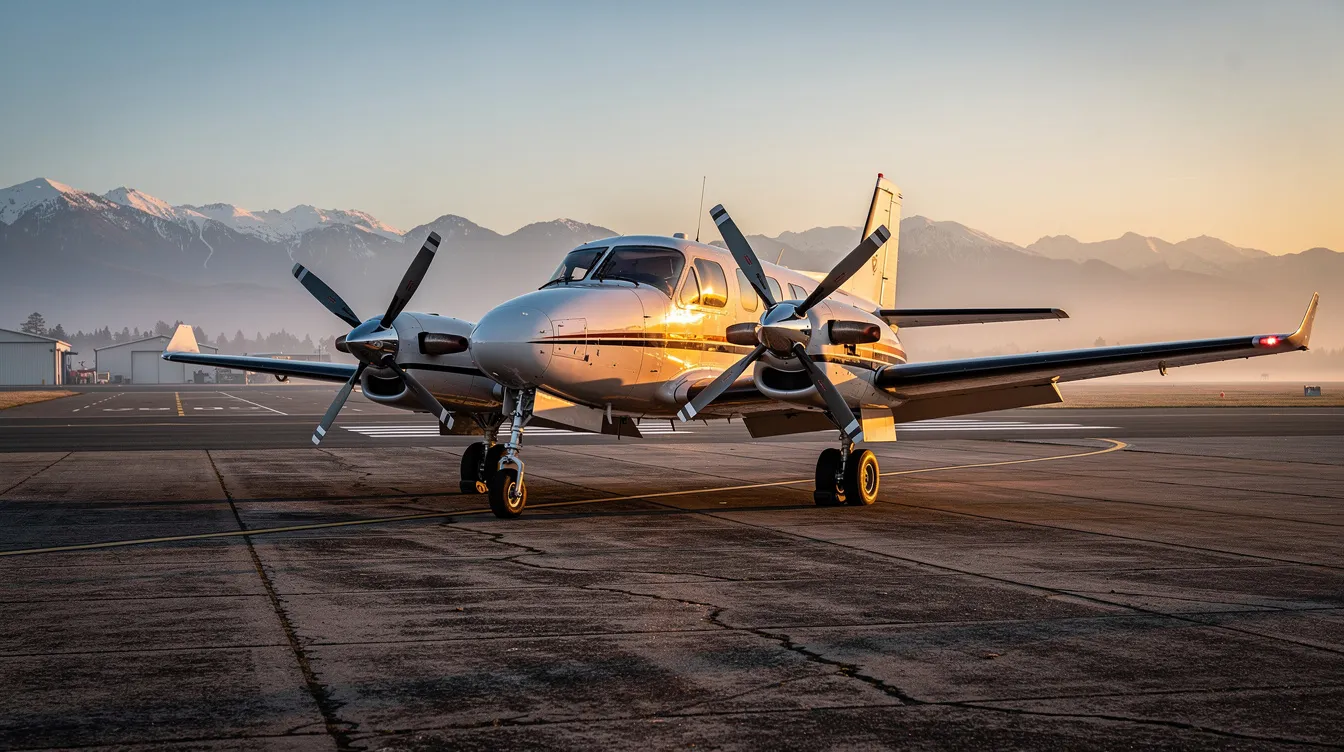
The Piper Navajo cost per hour typically runs about $325 to $420 per flight hour for private ownership at 100–200 hours a year, while chartering the stretched Navajo Chieftain is closer to $1,127 per hour. The Piper Navajo and its stretched sibling, the Navajo Chieftain, have served as regional workhorses since the late 1960s. Powered by Lycoming engines and seating up to nine passengers, these cabin-class aircraft handle charter, cargo, medevac, and advanced flight training missions across North America and beyond.
Understanding the true Navajo cost per hour means accounting for fuel, maintenance, engine overhaul reserves, insurance, crew, and overhead - not just fuel burn alone. For aircraft owners, operators, charter customers, and frequent flyers weighing charter against ownership, those numbers shape budgeting, trip planning, and aircraft purchase decisions. This article breaks down the full hourly picture using 2025–2026 market data, including fixed versus variable expenses, ownership economics, useful load, charter pricing, and practical cost examples so you can compare options accurately.
A privately owned Piper Navajo (PA 31) typically costs $325–$420 per flight hour at 100–200 hours per year, while the Piper Navajo Chieftain runs approximately $1,127 per hour in charter settings.
Fuel burn for the Piper Navajo is 33–40 gallons per hour, and fuel costs represent 55–65% of hourly variable operating costs.
Total operating costs, including ownership expenses, typically range from $350 to $600 per flight hour, depending on variant, location, and utilization.
The airplane's useful load of 2,000–2,400 lb and 6–9 seat capacity make it a cost-effective cabin class twin for regional charter and commercial missions.
Charter customers can skip fixed cost burdens entirely - compare live pricing for turboprop flights on Jettly's platform.
The hourly operating cost of a Piper Navajo typically ranges from $300 to over $500 per hour, depending on how costs are calculated. Here's a quick breakdown:
|
Cost Type |
Navajo 325 / PA-31-310 |
Navajo Chieftain (PA-31-350) |
|---|---|---|
|
Owner-operator (fuel + maintenance + reserves) |
$325–$420/hr |
$400–$500+/hr |
|
Fully burdened (add hangar, insurance, depreciation) |
$350–$600/hr |
$450–$650+/hr |
|
Typical charter rate |
$700–$1,000/hr |
~$1,000–$1,127/hr |
Typical operating costs sit between $280 and $360 per hour for budget-conscious operations at higher annual utilization. Cost per hour narrows as flight hours increase because fixed costs are amortized and spread over more hours. Chieftain variants sit at the high end due to their 350 hp counter-rotating engines burning more fuel
All figures are estimates. Real-world costs vary by operator, region, and fuel prices - use them as planning benchmarks; broader private jet operating cost breakdowns follow the same fixed-versus-variable logic described here.
Acquisition price affects total cost of ownership through finance charges and market depreciation. Current used market ranges:
Older, high-time Navajo 325 / PA-31-300 models: $150,000–$220,000
Well-equipped Navajo C / PA-31-310 variants: $200,000–$280,000 (typical good-condition Navajo 325 models average $200,000–$280,000)
Piper Navajo Chieftain (PA-31-350): $280,000–$350,000+ (average pre-owned price around $300,000)
Chieftain models cost more than standard Navajo 325 models. Engine time since major overhaul significantly affects pricing, along with avionics upgrades, corrosion condition, and complete maintenance logs. Used Piper Navajo prices range from $150,000 to $350,000 across all Navajo models.
A $250,000 aircraft financed over 10 years at 6% interest with 2–3% annual depreciation adds roughly $40–$60 per hour in capital costs at 200 hours per year, similar to how capital and rental inputs shape affordable aeroplane rent costs and options.
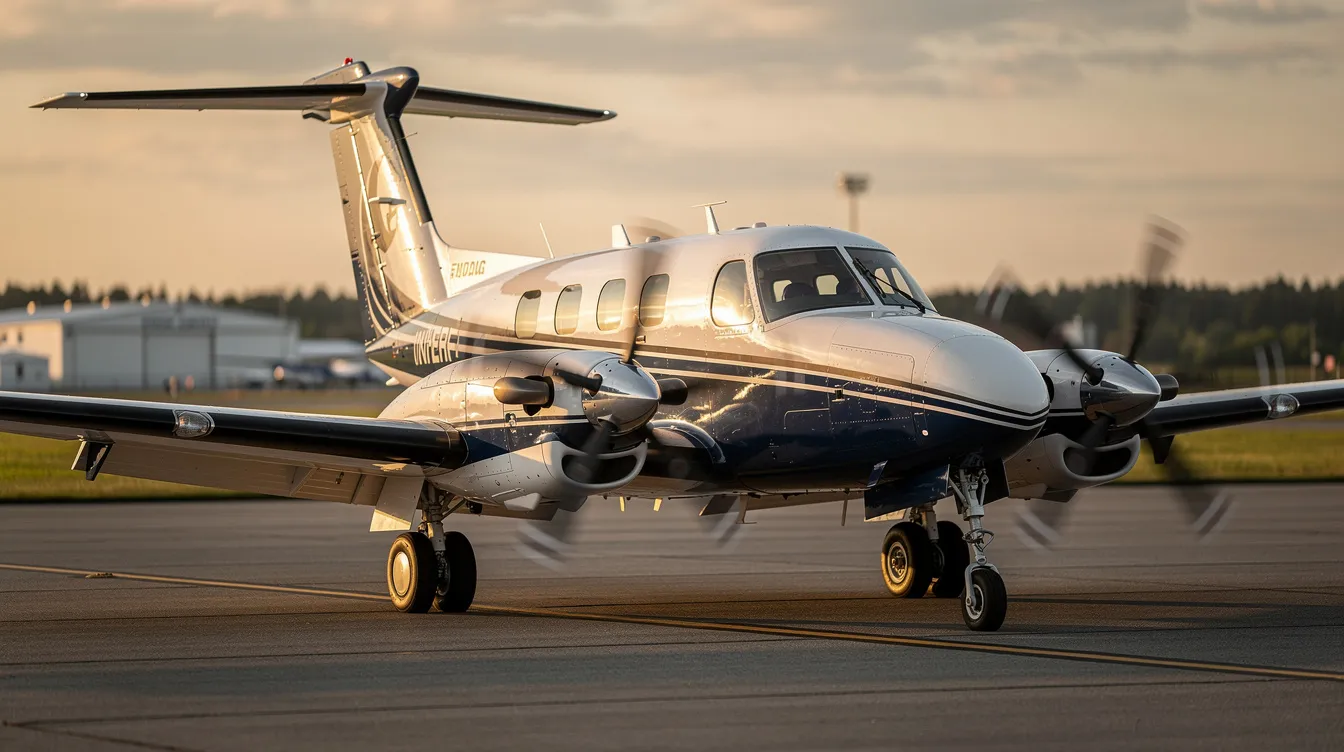
Fixed costs do not change with the number of hours the aircraft is flown annually. Variable cost scales directly with flying time. Together, they define total annual operating costs.
Fixed costs (total fixed costs average $100,120 annually for commercially operated Navajo models):
Hangar fees: $4,000–$8,000/year by location
Insurance: $4,000–$6,000/year depending on hull value and pilot experience
Annual inspections and regulatory compliance
Crew salaries and recurrent training (if professionally crewed)
Variable costs (total variable costs approximately $125,230 per year at high utilization):
Fuel and oil: $178–$238 per flight hour
Engine and propeller overhaul reserves: $40–$50 per hour for engine reserves alone
Routine maintenance and inspections generally add $150–$200 per hour
Landing, parking, and handling fees
Unscheduled maintenance can significantly impact variable costs
At 100 hours per year, $16,000 in fixed costs adds $160 per hour. At 200 hours, that drops to $80 per hour. At 400 hours, just $40.
|
Scenario |
Annual Hours |
Total Annual Cost |
Cost Per Hour |
|---|---|---|---|
|
Navajo 325, low use |
100 |
~$39,000–$42,000 |
~$390–$420 |
|
Navajo 325, moderate use |
200 |
~$61,472 |
~$307 |
|
Chieftain, moderate use |
150 |
~$64,000 |
~$429 |
Operating at 200 hours per year decreases total ownership costs to roughly $307 per hour. Higher aircraft utilization lowers the cost per flight hour because fixed overhead gets absorbed across more trips. Adding market depreciation as a "shadow" cost increases the true total cost by another $25–$40 per hour, depending on the acquisition price.
Fuel and engine reserves are the largest contributors to variable cost. The Piper Navajo consumes roughly 33–40 gallons of fuel per hour, varying by model and cruise power settings.
Navajo 325: 33–36 GPH × $6.50/gal = ~$215–$234/hr
Navajo Chieftain: 40–44 GPH × $6.50/gal = ~$260–$286/hr
The recommended time between overhauls for the Lycoming engines is 1,800 to 2,000 hours. Engine overhauls cost between $44,000 and $60,000 total (both engines), producing engine overhaul reserves of $40–$50 per hour. Hourly maintenance costs are estimated at around $150 to $160 per hour for the Piper Navajo overall. Aircraft age, maintenance history, and environment influence maintenance costs - turbocharged variants and older airframes with more cylinders showing wear tend to run higher.
Due to high engine overhaul costs, significant reserves must be budgeted per hour for engine replacements. Many operators pad reserves above theoretical minimums to catch unplanned expenses, especially when flying under Part 135 charter company regulations that demand rigorous maintenance and documentation.
The Piper Navajo's useful load of 2,000–2,400 lb and 6–9-seat cabin give it a strong cost-per-seat advantage over smaller light twins. On regional routes with high load factors, the airplane's higher variable cost per hour translates into a competitive cost per passenger mile. Operators can trade fuel for payload on shorter missions, using careful weight planning to stay within limits while maximizing passengers and baggage. That flexibility is especially useful when missions do not require carrying to the maximum fuel capacity. For charter customers, this means access to more cabin and cargo capacity without necessarily increasing the per-hour rate when compared with other high-performance twins like the Piper Aerostar 600 and similar aircraft.
The pa 31 has been connected to advanced multi-engine flight training since its production run began in 1967. Flight schools use older Navajo models for crew-style training where students accept higher hourly rates to log time on a larger aircraft with complex systems - the decker and similar cockpit configurations offer realistic crew coordination experience. Note that the training cost per hour quoted to students is significantly higher than the bare operating costs to cover instruction and profit margin, and may differ from lighter utility types such as the Cessna 207 used in regional and training roles.
In commercial operations, small charter carriers and air taxi operators fly the original Navajo and Navajo Chieftain on missions up to 400–600 NM. The plane also serves air ambulance, freight, and remote community roles where its takeoff performance, altitude capability, and pressurized cabin options (on select variants) prove critical. These mission types may change loading assumptions and hourly economics depending on payload and range requirements, much as regional jets like the Canadair CRJ-200 balance cost with capacity on short-haul sectors.
Most turboprop charter customers aren't buying a Piper Navajo - they're booking it for specific trips or leveraging private jet memberships for flexible access. Charter pricing per hour includes crew, repositioning, maintenance reserves, insurance, operator margin, and overhead. Jettly's digital marketplace displays transparent quotes for pa 31 and other private charter aircraft across multiple categories on specific routes and dates.
Example scenarios:
Short hop (New York–Boston): ~1 hour block time on a Navajo-class turboprop, estimated $1,000–$1,200 total
Longer mission (Vancouver–Calgary): ~2 hours, $2,000–$2,500 total, consistent with broader affordable private jet charter pricing guidance
Charter customers pay zero annual fixed costs, hangar, or overhaul bills. The operator bears long-term maintenance, depreciation risk, and personal liability. Use Jettly's charter cost estimator and dedicated jet card flight cost estimator to compare real-time pricing across multiple aircraft categories by route and budget.
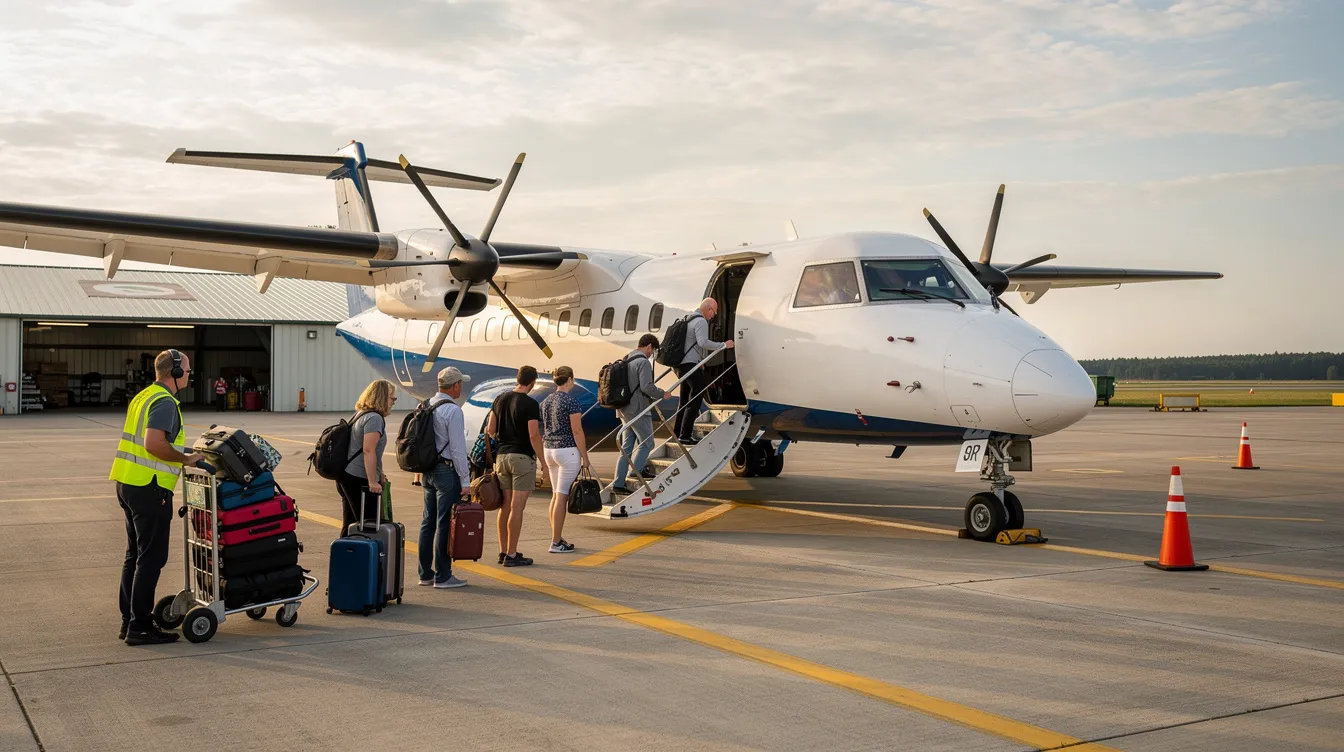
These FAQs address common questions about Navajo cost, performance data, and charter options.
A $ 1.00-per-gallon change in Avgas price shifts fuel cost by $33–$44 per hour based on the 33–44 GPH burn range. Since fuel costs represent 55–65% of variable costs, even moderate market swings can meaningfully change operating budgets, a theme echoed in broader private jet operating cost analyses. Operators and frequent flyers should re-evaluate cost projections whenever fuel markets shift by more than $0.50 per gal.
Despite its age, the PA 31 remains popular in regional charter and commuter roles where reliability, useful load, and moderate runway requirements matter, particularly within diversified private charter aircraft fleets. Modern avionics upgrades and careful maintenance keep total operating costs competitive with newer turboprop alternatives.
The Navajo's per-hour cost is generally lower than larger, faster turboprops like the King Air 350 but higher than very light twins, while offering strong payload and cabin comfort. Comparisons should also consider airframe size, including fuselage length, when judging cabin comfort and mission fit against other aircraft. Use Jettly's platform or explore structured jet card programs with fixed hourly rates to compare multiple aircraft categories by route and budget rather than relying on generic averages.
Many schools use smaller twins for basic multi-engine training, but the Navajo can be cost-effective for advanced, crew-style training where students pay higher hourly rates. Higher fuel burn and maintenance reserves must be offset by training value, course pricing, and aircraft utilization to function economically.
Enter your route, dates, and passenger count on Jettly's platform to receive instant or near-instant quotes. The marketplace shows the total trip cost, aircraft model, and operator details, allowing customers to calculate an effective cost per hour and compare across available aircraft. Visit https://www.jettly.com to get started, or use the dedicated airport locator tool to plan routings and find convenient departure and arrival options.
The Piper Navajo cost per hour reflects a balance between fixed and variable expenses, with typical ownership costs ranging from $280 to $420 per flight hour and charter rates reaching around $1,127 per hour for the Navajo Chieftain. Introduced in the late 1960s, this twin-engine aircraft offers strong climb performance, useful load capacity, and seating for six to nine passengers, making it a practical choice for regional travel, training, and charter missions.
Factors such as fuel burn, maintenance, engine overhaul reserves, and insurance all influence operating costs. With transparent pricing and flexible access through platforms like Jettly, travelers and operators can make informed decisions that optimize convenience and value. To explore current Piper Navajo charter options and get personalized quotes, visit https://www.jettly.com.
Share this post:
Jay Franco Serevilla
Jul 5, 2026
|
5
min read
Discover tips and trends in the industry.

5
min read
Cheapest Time to Fly to Italy: How to Find the Lowest Fares (and Faster Private Options with Jettly)
Discover the best times to fly to Italy for the lowest fares, from November to March, and learn how to find affordable flights. This guide also explores when private jet charters via Jettly can be a cost-effective alternative for groups and last-minute trips.
Read More
5
min read
Best Day of the Week to Buy Plane Tickets: Data, Myths, and Smart Booking Strategies
Finding the best day of the week to buy plane tickets is a common query, but no single day guarantees the lowest fare. Mid-week days often show slightly lower fares, but factors like booking window and flight timing are more crucial for savings. This guide explores data-backed patterns and smart strategies for both commercial and private jet travel.
Read MoreStay updated with our latest insights and tips to elevate your journey with us.
MEMBERSHIPS AND ASSOCIATIONS



Disclaimer: Jettly operates as a charter broker, offering access to a global digital jet charter marketplace. Jettly is not a direct air carrier and does not own or operate aircraft. All advertised flights are conducted by third-party air carriers that are fully licensed and hold the appropriate Part 135 or Part 121 certifications issued by the Federal Aviation Administration (FAA) or equivalent regulatory authorities under U.S. or foreign law. Jettly complies fully with the U.S. Department of Transportation's Part 295 and Part 298 Charter Broker regulations. Jettly does not carry additional liability insurance. Passengers are covered by aircraft operator insurance. TICO: 50023770


