


Login
Get Instant Pricing On 23,000+ Aircraft

>
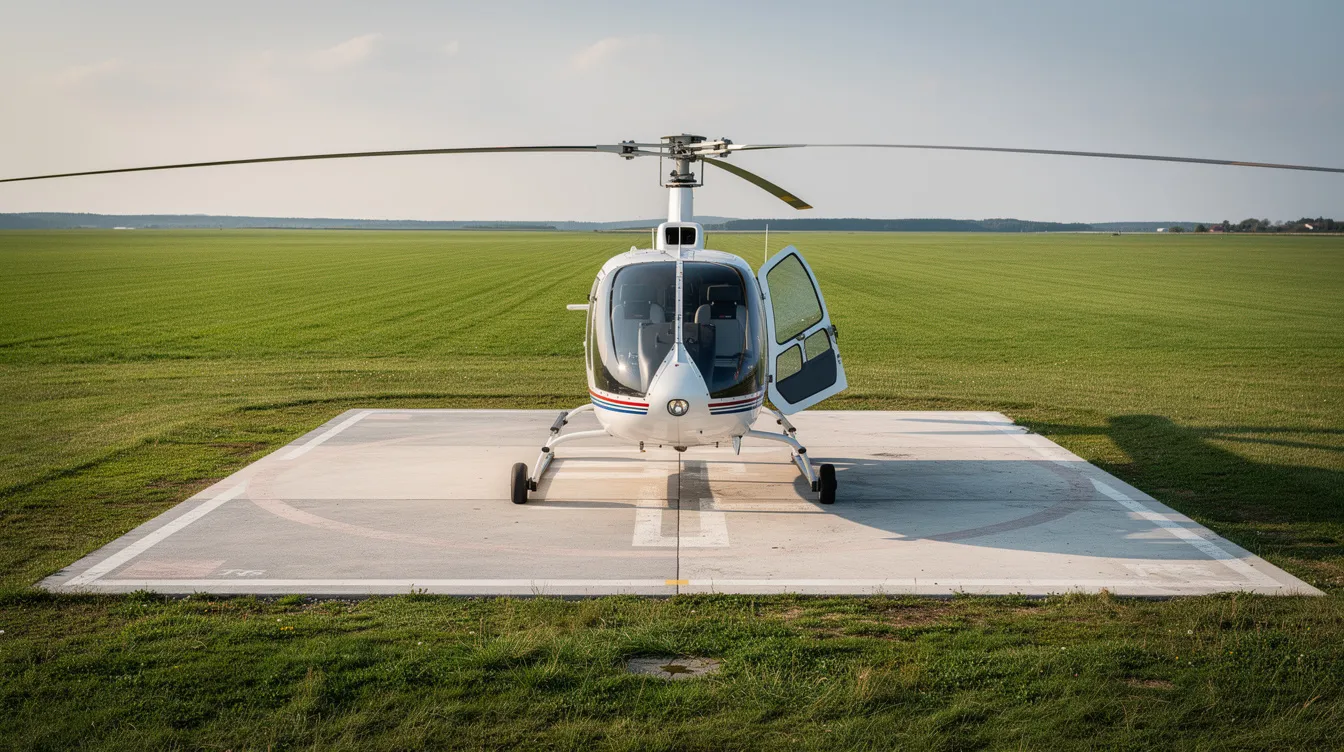
The Robinson R22 is one of the most recognizable light helicopters in the world - a compact, two-seat piston machine that reshaped how pilots learn to fly rotary-wing aircraft. Since entering production in 1979, it has become the go-to trainer for flying clubs, private individuals, and commercial schools on every continent. By 2019, Robinson had delivered over 4,800 R22 helicopters, a testament to their enduring popularity. This guide covers its design, variants, safety record, pricing, and how it compares to the turbine helicopters and private jets available through platforms like Jettly.
The Robinson R22 is a two-seat, light piston helicopter with a two-bladed main rotor and two-bladed tail rotor, widely used for flight training and utility work since its first flight in August 1975 and the start of production in 1979.
The most common modern variants, including the R22 Beta II, are powered by a 124-hp derated Lycoming O-320 engine, providing reserve power and low operating costs across varied conditions.
The R22 has a maximum takeoff weight of 1,370 lb and an empty weight of 796 lb, with a cruise speed of 96 knots and a maximum speed of 102 knots, climbing at a rate of 1,200 ft/min.
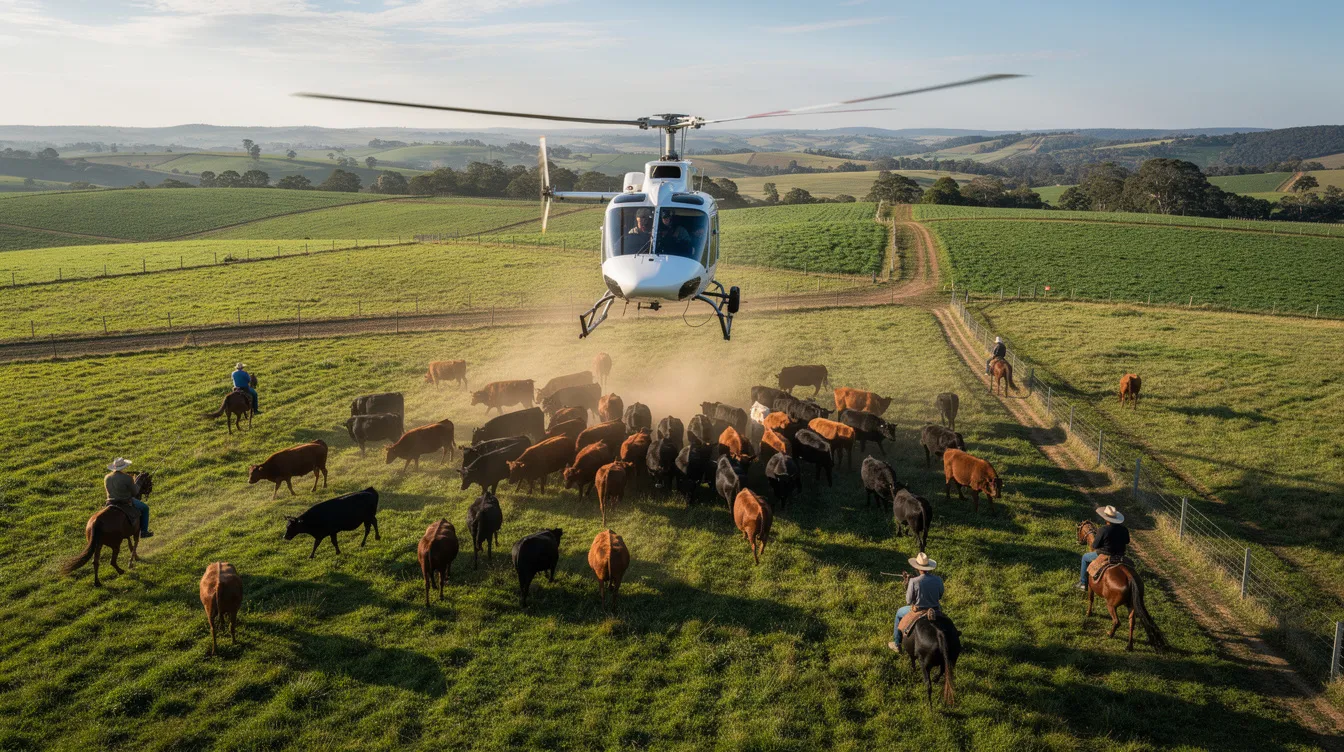
Its compact size, responsive rotor blades, and strong tail rotor authority make it ideal for initial helicopter training, aerial survey, and livestock mustering — but less suited to luxury charter.
Pricing for Robinson R22 helicopters ranges from $65,000 to $429,500, with a 2027 R22 Beta II listed around $375,000, reflecting its affordability and low operating costs compared to turbine helicopters.
Safety improvements, including Robinson's Pilot Safety Course, established in 1982 and completed by over 17,000 students by 2012, along with design updates and stricter endorsements, have significantly reduced accident rates over time. Fatal accidents per 100,000 flight hours fell from 6.0 in 1982 to 0.7 in 1997, despite 182 fatal accidents recorded by June 2010.
The R22 series includes multiple variants such as the R22 Beta II, R22 Mariner, and R22 Police, with the Beta II being especially popular for flight training and livestock management.
While Jettly mainly arranges turbine helicopters and private jets, understanding the R22 helps buyers compare entry-level training aircraft with charter-ready machines.
The Robinson R22 is a light, two-seat Robinson helicopter designed by Frank Robinson, an engineer who spent years at other rotorcraft manufacturers before founding the Robinson Helicopter Company in Torrance, California. His goal was straightforward: build a helicopter that many private individuals and small operators could actually afford. The result transformed accessible helicopter training worldwide.
The aircraft made its first flight in August 1975. The FAA granted type certification in March 1979, but the certificate was temporarily revoked in 1981 due to main rotor blade delamination issues. Robinson responded with redesigns and stringent quality controls before resuming production. By 2019, over 4,800 units had been delivered.
The basic structure is simple: a single 124 hp Lycoming O-320 piston engine mounted behind the cabin drives a two-bladed rotor system through a gearbox and belt arrangement. A two-bladed tail rotor handles anti-torque. The cockpit features a T-bar cyclic control positioned between the seats, skid landing gear, and a bubble-style enclosed cabin with wide visibility. The doors are removable for aerial work.
Why the R22 became the default trainer:
Relatively low acquisition and operating costs compared to turbine alternatives
Mechanical simplicity that keeps maintenance predictable
Responsive handling that builds strong pilot fundamentals
For Jettly's audience, think of the R22 as the entry point: many pilots who fly the turbine helicopters and private jets booked through our platform started their careers in this very aircraft.
The R22's design philosophy prioritizes light weight, mechanical simplicity, and fuel economy over cabin comfort. Every engineering decision serves efficiency - from the airframe to the rotor system.
The airframe combines a welded steel tube frame with aluminum monocoque skin sections and composite fairings. A plexiglass canopy wraps around the front and sides, giving both occupants excellent sightlines. Impact-resistant windshields are fitted for protection against bird strikes and debris. The doors can be removed entirely for operations like aerial photography or livestock mustering. The aerodynamic fuselage optimizes airspeed while keeping the empty weight down to just 796 lb - critical when the maximum takeoff weight is only 1,370 lb. Fuel is stored in bladder tanks, and a crashworthy fuel system is standard on later models.
The main rotor is a semi-rigid, two-bladed teetering design using only a teetering hinge and two coning hinges - no fully articulated hub. This keeps weight and complexity minimal but means the rotor has relatively low inertia, which demands precise rotor speed management during autorotation. The rotor blades are constructed of stainless steel with an aluminum honeycomb core. A rotor brake allows pilots to stop the blades after shutdown. Tail rotor pedals control the two-bladed tail rotor for yaw authority, and the R22 is known for strong tail rotor response in hover, crosswinds, and confined-area work.
The aircraft is powered by a 124 hp Lycoming O-320 engine in the original variant. Key performance figures:
|
Metric |
Value |
|---|---|
|
Maximum speed |
102 knots |
|
Cruise speed |
96 knots |
|
Climb rate |
1,200 ft/min |
|
Range (with reserves) |
~200 NM |
|
Maximum takeoff weight |
1,370 lb |
|
Empty weight |
796 lb |
These numbers suit short training hops and local missions. Airspeed and fuel economy are competitive within the light piston class, though the limited useful load means careful weight planning is essential.
The instrument panel features a standard 6-hole layout, with an optional 8-hole panel available for operators wanting additional instruments. Common avionics upgrades include Garmin GTN 650Xi navigation units, GMA 350Hc audio panels, artificial horizon, and vertical compass. Later models incorporate a throttle correlator and governor that reduce pilot workload by automatically managing engine RPM as collective changes are made - a meaningful safety improvement for student pilots. The engine compartment is accessed through panels behind the cabin, keeping maintenance straightforward.
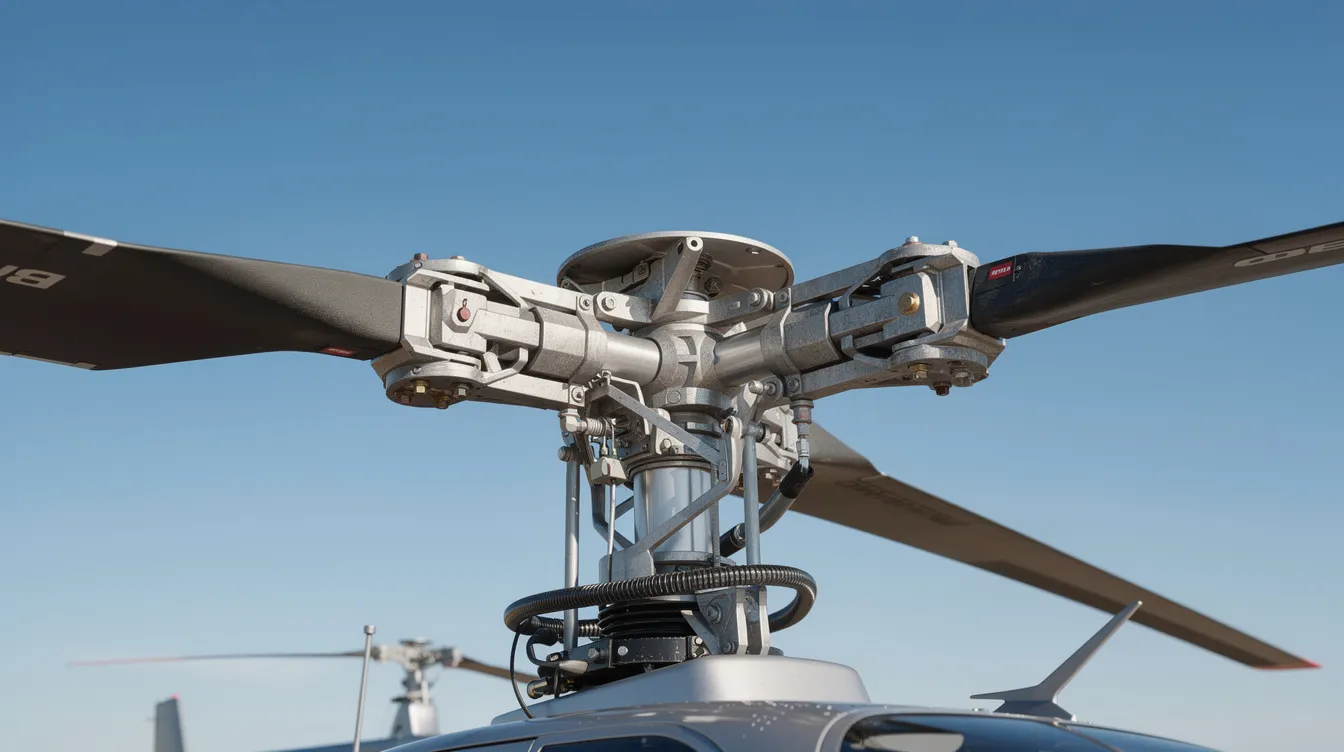
The Robinson R22 family evolved through several variants, each improving performance and handling while keeping the same robust airframe and basic structure.
The original model entered production in the late 1970s with the Lycoming O-320 engine and basic instrumentation. While it is now out of production, some examples remain in service with operators and private individuals who value its simplicity. The R22 series also includes specialized versions like the R22 Mariner (equipped with floats for water operations) and R22 Police (fitted with searchlights and communication equipment).
The R22 Beta introduced more flexible engine power settings, governor improvements, and refinements targeted at training operators. This variant became a staple at many flight schools and flying clubs, offering better performance than the original while remaining affordable. The throttle correlation system and governor made it easier for students to manage rotor speed during maneuvers.
The r22 beta ii is the current main production version, in production since 1979 and continuously refined. It features a derated Lycoming O-360 engine that delivers better performance in hot weather and at high altitudes, where the additional displacement helps provide reserve power. This reserve power margin is a meaningful safety advantage during demanding operations.
Standard equipment on the Beta II typically includes a 6-hole instrument panel, with options for an 8-hole panel, Garmin GTN 650Xi, GMA 350Hc audio panel, artificial horizon, vertical compass, and a pilot-side accessory bar. Many operators choose the Beta II for intensive training and light commercial work, while older Beta or standard R22 models suit low-utilization private owners looking for low acquisition costs.
As a curiosity, the R22 airframe has even been adapted for unmanned use. Boeing/Frontier Systems developed the "Maverick" and "Renegade" UAVs on the R22 platform - a testament to the airframe's versatility beyond crewed flight.
The Robinson R22 serves a wide range of roles around the world. Primary flight training dominates, but operators also use it for time-building, aerial photography, traffic watch, pipeline and powerline patrol, cattle and livestock mustering, and light utility work. Its low fuel burn and relatively low hourly cost make it the aircraft of choice for operators who need an efficient, no-frills helicopter, comparable in philosophy to many of the cheapest private aircraft options.
The R22 is favored for training precisely because its light rotor system forces students to develop precise control and situational awareness, much like pilots choosing the best personal plane must match aircraft handling with their own experience. The semi-rigid rotor with only a teetering hinge means students must actively manage rotor speed and avoid low-G conditions - skills that make them better pilots in any helicopter they later fly.
Safety is the most scrutinized aspect of the R22's history, and it deserves candid treatment. By June 2010, the type had accumulated 182 fatal accidents. Early years saw elevated accident rates, particularly involving mast-bumping, low-G events, and training mishaps. The aircraft's type certificate was revoked in late 1981 following concerns about main rotor blade delamination. The Robinson Helicopter Company responded by redesigning the rotor blades and implementing strict maintenance and inspection practices before production resumed.
In 1982, Robinson established the Pilot Safety Course, emphasizing low-G avoidance, rotor RPM management, and autorotation practice. Over 17,000 students completed the Pilot Safety Course by 2012. The impact was dramatic: fatal accidents per 100,000 flight hours fell from 6.0 in 1982 to 0.7 in 1997.
Several jurisdictions now require special R22/R44 awareness training endorsements before pilots can operate these types commercially. These additional requirements, combined with Robinson's ongoing safety initiatives, have substantially improved statistics over time.
Robinson R22 helicopters are priced from $65,000 for older models to upwards of $429,500 for newer or overhauled examples. A 2027 R22 Beta II is listed at around $375,000. Operating costs remain low compared to turbine helicopters, making the R22 an economical choice for flight schools and private owners focused on affordable aircraft options.
While the R22 is not typically offered for luxury charter due to its size and basic fit-out, its affordability makes it the first step for many pilots who later fly turbine helicopters and private jets. If you are exploring helicopter charter options for business or leisure, you will likely be stepping into aircraft piloted by aviators who cut their teeth in an R22, and may also want to understand how private jet charter pricing works.
The R22 is an entry-level tool - purpose-built for training and light utility. Charter helicopters and private jets operate in an entirely different category, just as high-performance military jet experience flights represent a separate niche focused on adrenaline rather than transport efficiency. Understanding the gap helps travelers and aspiring pilots make informed decisions.
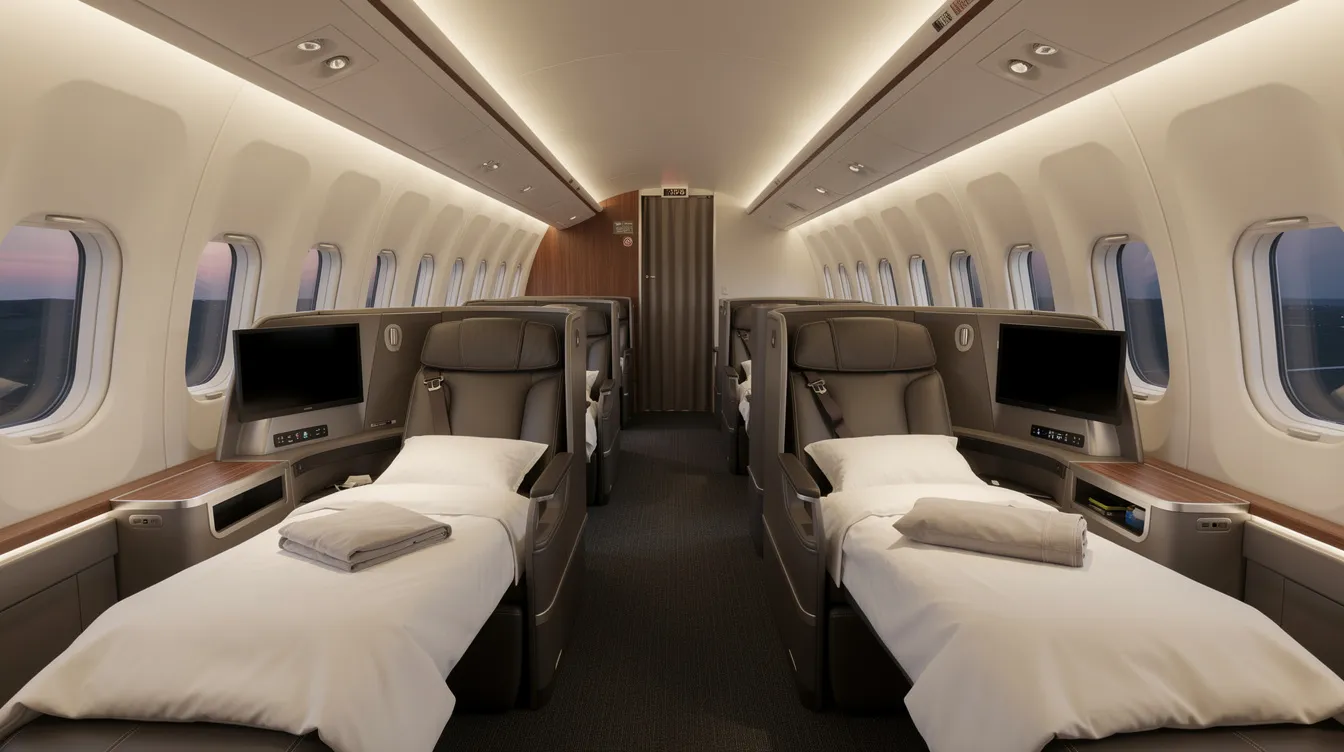
The R22 offers two narrow seats, minimal baggage space, and limited noise insulation. Charter helicopters like the Airbus H125, the Eurocopter EC30, or the Bell 407 feature multi-passenger cabins, climate control, and premium interiors. Private jets extend that further with pressurized cabins, in-flight catering, and transcontinental range.
The R22 is suited to short-range local flights and training. Charter helicopters handle longer distances, IFR operations, and all-weather business travel, while regional jets like the Canadair CRJ-200 cover short- to medium-haul routes with greater speed and comfort. For a deeper look at turbine Robinson models used in charter, see our Robinson R66 Turbine Helicopter Guide and our overview of the best cross-country planes for longer journeys.
Owning and operating an R22 for hour-building costs far less per hour than chartering a turbine machine. But for travelers who do not want to bear maintenance, hangar, and insurance costs, on-demand private jet rental through Jettly is often more cost-effective. Our platform offers instant pricing across a global inventory of 20,000+ aircraft - from single-engine turbine helicopters to heavy jets. You can explore helicopter rental costs, browse our private charter aircraft, or use our charter cost estimator to compare options.
If you are primarily a traveler, focus on charter and private jet memberships via Jettly. If you are an aspiring helicopter pilot, the R22 is likely where you will train before flying the aircraft typically booked on Jettly's marketplace, potentially using tools like our jet card flight cost estimator as your travel needs evolve.
These questions address practical concerns not fully covered above, useful for both aspiring pilots and curious charter customers who may also be evaluating how much a private jet costs.
The R22 is widely used for ab initio training because of its low cost and responsive handling, but it requires disciplined instruction. The light rotor inertia and sensitivity to control inputs mean beginners must train with reputable schools and instructors who follow Robinson's safety guidance and local regulatory endorsements. When operated within its limitations by well-trained pilots, it is an effective and efficient training platform.
Jettly's marketplace primarily features larger, turbine-powered helicopters and private jets that better suit comfort, range, and passenger payload requirements, often serving as a flexible NetJets alternative. R22S are generally operated for training or niche utility work rather than executive charter. If you are seeking short regional helicopter hops, consider the single-engine turbine helicopters available on Jettly, or review how renting a plane works - learn how to book a private aircraft here.
The R22 cruises at approximately 96 knots with a practical range of roughly 200 nautical miles with reserves, depending on weight and atmospheric conditions. These figures make it suitable for short training sorties and local missions, not for longer nonstop trips, better handled by charter helicopters or jets.
The R22's simple systems and piston engine generally keep direct maintenance and overhaul costs lower than those of turbine helicopters, and owners often use handling wheels to move it easily while it is on the ground. However, strict adherence to calendar- and hour-based inspections is critical. Major time-limited components - including rotor blades and the engine - require scheduled overhaul or replacement to maintain airworthiness and resale value, just as buyers comparing top private plane manufacturers must factor long-term maintenance into total ownership cost. Operators who plan ahead find that the total cost of ownership remains manageable relative to any other helicopter on the market.
In most jurisdictions, a commercial pilot helicopter license, R22-type specific training, and recurrent proficiency checks are required. Many authorities also mandate additional awareness training specific to Robinson helicopters, focusing on handling characteristics such as low-G maneuver avoidance and rotor RPM management. These requirements exist because the R22's flight characteristics, while excellent for building skill, demand respect and ongoing proficiency, just as safety-focused travelers carefully evaluate the safest private jets in the world.
The Robinson R22 helicopter remains a cornerstone in pilot training and light utility aviation due to its affordability, simplicity, and responsive handling. While it is not suited for luxury charter or long-range travel, its design and performance have made it a reliable platform for building pilot skills and conducting specialized missions like livestock mustering and aerial photography. For travelers seeking private helicopter or jet charter, platforms like Jettly offer access to a wide range of turbine-powered aircraft that provide greater comfort, capacity, and range. Understanding the R22’s role in the aviation ecosystem highlights the progression from entry-level rotorcraft to advanced private travel options, making it an essential part of many pilots’ journeys and the broader rotorcraft community.
Ready to experience private travel on your terms? Explore flight options or request a quote at https://www.jettly.com.
Share this post:
Jay Franco Serevilla
Jul 7, 2026
|
5
min read
Discover tips and trends in the industry.
5
min read
Topflightfares: How to Spot Real Deals and When to Choose Private Jets Instead
Travelers today face numerous options when booking flights, from premium commercial fares to private jet charters. This guide helps you evaluate deals, identify risks, and determine when private jets may offer better value, especially for groups or last-minute trips. With insights on pricing, hidden fees, and safety, you can make informed travel decisions.
Read More
5
min read
Learjet 45: Performance, Specs, and Charter Guide
The Learjet 45 is a renowned mid-size business jet known for its impressive performance and comfort, accommodating up to eight passengers. With a maximum cruise speed of 464 knots and a range of approximately 1,971 nautical miles, it is ideal for corporate and charter use. This guide covers essential information for travelers and aviation enthusiasts, including specifications, operating costs, and charter options through platforms like Jettly.
Read MoreStay updated with our latest insights and tips to elevate your journey with us.
MEMBERSHIPS AND ASSOCIATIONS



Disclaimer: Jettly operates as a charter broker, offering access to a global digital jet charter marketplace. Jettly is not a direct air carrier and does not own or operate aircraft. All advertised flights are conducted by third-party air carriers that are fully licensed and hold the appropriate Part 135 or Part 121 certifications issued by the Federal Aviation Administration (FAA) or equivalent regulatory authorities under U.S. or foreign law. Jettly complies fully with the U.S. Department of Transportation's Part 295 and Part 298 Charter Broker regulations. Jettly does not carry additional liability insurance. Passengers are covered by aircraft operator insurance. TICO: 50023770


