



Login
Get Instant Pricing On 23,000+ Aircraft

>
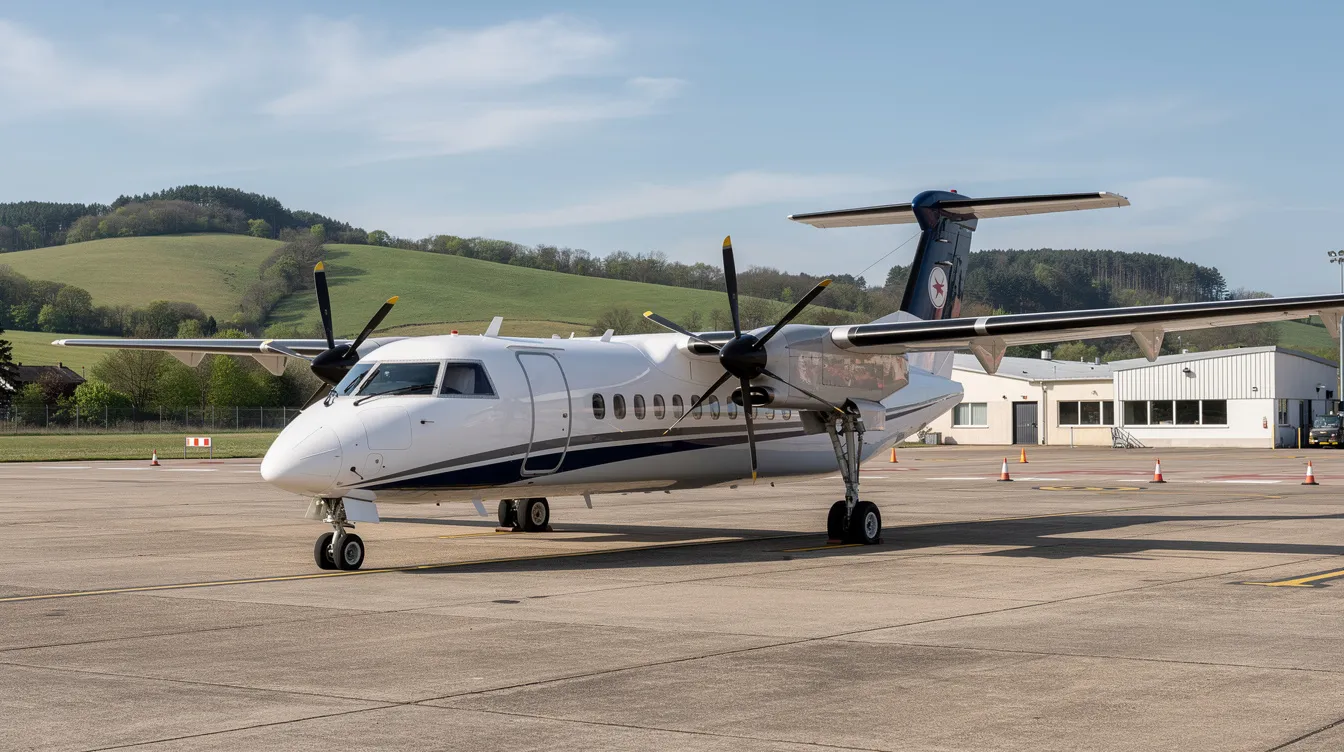
The Saab 340A is a twin-engine turboprop airliner designed for regional markets that continues to serve operators worldwide decades after its introduction. This guide is intended for charter customers, aviation enthusiasts, and logistics planners interested in the Saab 340A. For groups of 25 to 36 passengers looking to fly short regional routes without the cost of multiple smaller jets, this aircraft remains a strong contender. Here is what charter customers, aviation enthusiasts, and logistics planners need to know about its specs, history, and how to book one through Jettly.
The Saab 340A is a 30–36 seat twin turboprop regional airliner developed through a partnership between Saab AB in Sweden and Fairchild Aircraft in the United States, with Fairchild responsible for wings and engine nacelles and Saab handling fuselage and final assembly.
Maximum cruising speed: approximately 271 knots
Service ceiling: 25,000 feet
Maximum payload: 3,130 kg—making it suitable for short-haul passenger and cargo operations
A total of 159 Saab 340A models were manufactured before Saab chose to cease production of the entire 340 line in 1999, yet over 200 remain in active service with dispatch reliability exceeding 99%.
Jettly's marketplace includes Saab 340A aircraft available for group charters, corporate shuttles, and cargo flights, offering transparent pricing and on-demand access for regional routes.
The Saab 340A is a twin-engine turboprop airliner designed for regional markets. The Saab 340A was launched in September 1980 as a joint development between Sweden's Saab AB and America's Fairchild Aircraft. The goal was clear: capture the growing 30–40 seat commuter market with a purpose-built turboprop that could handle short regional hops efficiently. Saab built the fuselage, vertical stabilizer, and completed final assembly, while Fairchild was responsible for the wings, engine nacelles, and empennage.
The prototype completed its first flight on 25 January 1983. The first production Saab 340 flew in March 1984, and the first Saab 340 was delivered on 6 June 1984 to Swiss regional airline Crossair—the launch customer. Crossair began scheduled service from Basel to Paris one week later, on 15 June that year, marking the model's entry into commercial life during the regional airline boom of the 1980s.
The 340A served as the baseline model in Saab's regional aircraft strategy. It was later followed by the Saab 340B (with more powerful engines and higher operating weight) and the Saab 2000, a larger derivative aimed at a different seat class.
The Saab 340A is an all-metal, low-wing monoplane with a pressurized cabin and T-tail, designed for short regional routes and quick turnarounds. The airframe incorporates extensive metal bonding to enhance structural integrity, and the structure has a high resistance to fatigue and cracks-critical for aircraft operating high-cycle regional schedules.
The wingspan of the Saab 340A is 21.44 m (70 ft 4 in), while its length is 19.73 m (64 ft 9 in) and overall height is 6.97 m (22 ft 10 in), with straight high-aspect-ratio wings initially produced by Fairchild. After Fairchild's decision to withdraw from the partnership in 1985, production of those components relocated to Saab in Sweden, and the type designation changed from SF-340A to Saab 340A.
The powerplant consists of two General Electric CT7-5A2 turboprop engines, each producing approximately 1,735 shaft horsepower in engine power. These drive four-blade constant-speed propellers (typically Dowty Rotol units), balancing fuel efficiency with acceptable cruise speed for sectors of 200–400 nautical miles. The design provides a spacious cabin for passenger comfort, and robust landing gear supports operations at regional airfields. The Saab 340A is recognized for its short-field performance capability, able to serve regions with runways shorter than 5,500 feet.
What charter clients care about most are real-world numbers. Here are the Saab 340A's key performance figures:
|
Parameter |
Value |
|---|---|
|
Max cruising speed |
515 km/h (278 knots) |
|
Service ceiling |
25,000 ft |
|
Maximum takeoff weight |
12,370 kg (27,275 lb) |
|
Maximum payload |
3,130 kg (~6,900 lb) |
|
Typical seating |
30–36 passengers |
|
Maximum seating |
Up to 37 passengers |
|
Seat pitch |
~30 in (76 cm) |
|
Cabin layout |
2-1 (two seats on one side, one on the other) |
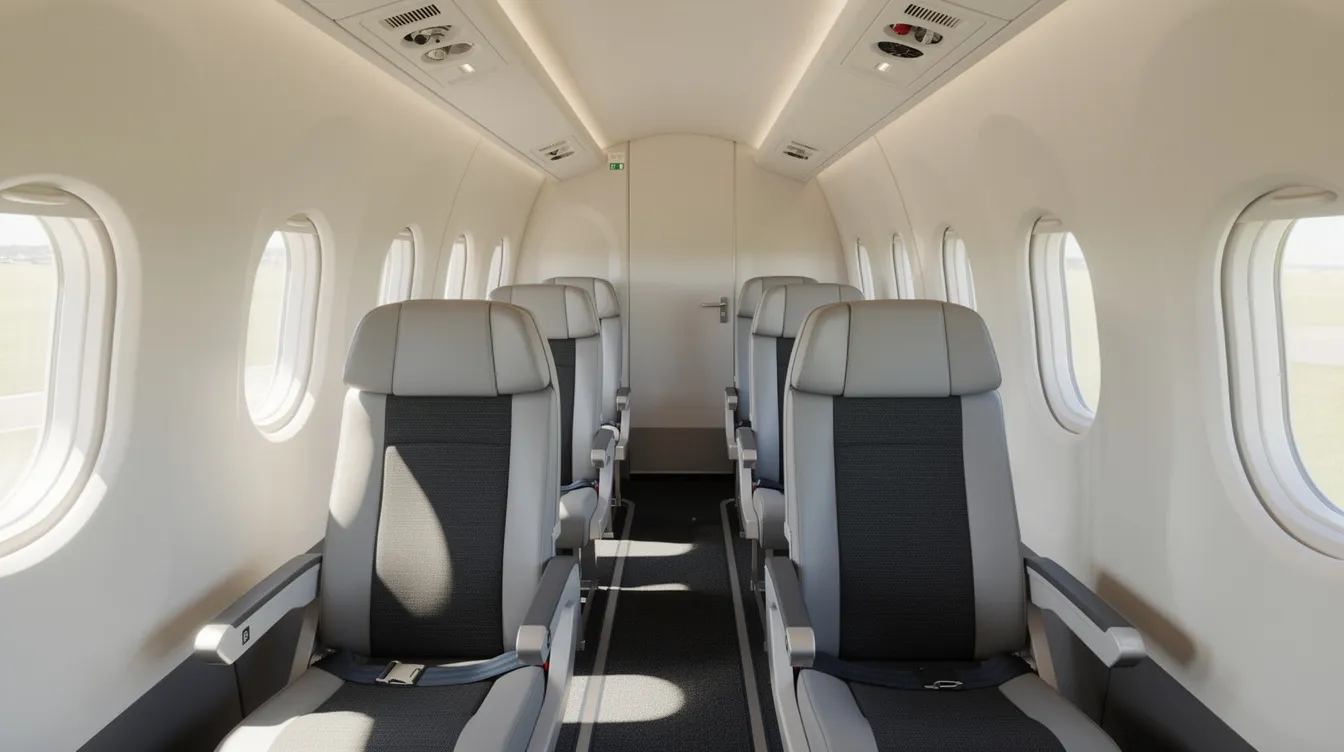
The cabin uses a 2-1 layout, which increases window seat availability and reduces the feel of crowding. VIP or corporate shuttle configurations use fewer seats for added comfort and cargo space. Many Saab 340As are converted into freighters as they age, with a cargo door measuring approximately 1.30 × 1.35 m, making them viable for time-critical cargo or express parcels. The aircraft is utilized for passenger transport and cargo operations, and the Saab 340A is often compared with regional jets due to its operational profile, making it a strong candidate for missions such as private jet charter to Abuja and other regional hubs. For travelers still weighing whether to charter, fractionalize, or rent smaller aircraft, Jettly’s guide to affordable aeroplane rent costs and options offers helpful context. For a broader view of 30-passenger aircraft options, Jettly covers several comparable types, from regional turboprops like the Saab 340A to widebody VIP aircraft such as the Boeing 767-300ER private jet for rent.
Series production of the Saab 340A began in 1984 and continued until the improved 340B took over. A total of 159 Saab 340A models were manufactured. The Saab 340B was introduced in September 1989, featuring more powerful engines (CT7-9B), higher maximum takeoff weight, and better noise and vibration control. A total of 50 Saab 340Bs were ordered by American Eagle in 1989, underscoring strong demand from major US airlines. The last Saab 340B Plus was delivered in March 1994.
By the late 1990s, increasing competition from regional jets like the CRJ-200, weaker sales, and challenging margins for a relatively small manufacturer led Saab to shutter production, while other manufacturers diversified into platforms such as the Eurocopter EC30 light helicopter. Production of the Saab 340 ended in 1999 after 460 deliveries across all variants. Saab then shifted toward full support, defense, and surveillance roles for the platform. In 2006, Saab formally announced a leasing deal for 25 340s, showing the market had not diminished value in the type. By July 2018, 210 Saab 340s were in service worldwide.
The Saab 340A built its reputation on reliability and fuel efficiency in short-haul flights, serving dense regional corridors and point-to-point routes like those supported by private jet charter in Addis Ababa. Early customers included Crossair in Europe and various US commuter carriers operating as feeders to larger airlines, similar in role to modern operators highlighted on Jettly such as Dexter Air Taxi’s private jet services. The aircraft became a common head-turner on regional routes of 30–90 minutes across North America, Europe, and Australia, particularly where smaller cabins like the Cessna 340 light piston twin would be too limited in capacity.
Passengers will feel slightly higher noise and vibration than on pure jets-an inherent trait of turboprop engines and propellers. However, the cabin offers good visibility, comfortable seating, and quick boarding at smaller city airports where weather and air traffic congestion are less of a concern. Flying at lower altitudes gives passengers a silver lining: better views and access to airports that larger jets cannot reach.
The Saab 340A's structure has proven remarkably durable. The Saab 340's airframe life was extended to 80,000 flight hours, and the aircraft has accumulated over 16 million flight hours fleet-wide. Dispatch reliability for the Saab 340A exceeds 99%, making it one of the most reliable regional aircraft still operating. Ongoing support from Saab and specialist maintenance providers keeps systems, parts, and airworthiness updates current.
In today's charter market, the Saab 340A fills a practical gap between smaller business jets and larger airliners. It is ideal for group charters, corporate shuttles, sports teams, and dedicated cargo runs where 25–36 passengers or significant payload capacity is needed, fitting alongside boutique operators like Bubba Air Aircraft Charter in Jettly’s network.
Jettly lists Saab 340A aircraft within its global inventory as regional turboprop options available for ad-hoc charter and on-demand shuttles, and frequent flyers can complement these trips with Jettly’s jet card programs for private travel. Typical use cases include point-to-point corporate travel between secondary cities, transporting staff to remote work sites, and dedicated cargo or combi flights for time-sensitive shipments, as well as scenarios where travelers may prefer to buy a seat on a private jet instead of chartering the whole aircraft.
Operational advantages over jets on short sectors are clear: the ability to use shorter runways, efficient fuel burn, flexible cabin setups, and lower cost per seat when the aircraft flies close to capacity. The Saab 340A will not stop a speed race against a jet, but when group size or payload is the priority-not maximum speed-it delivers. Those planning a trip can use Jettly’s private jet charter cost estimator alongside instant pricing tools at jettly.com to compare options.
Booking a Saab 340A through Jettly follows a straightforward process. Enter the route and dates, specify passenger count and any cargo or baggage needs (including payload requirements), and filter for turboprop or regional aircraft. Jettly returns instant pricing based on the week's availability, hourly rates, positioning fees, and airport charges, and its airport locator tool helps identify suitable departure and arrival fields.
Cost per seat drops significantly when the aircraft is filled close to capacity. For example, a company shuttling 30 staff between two regional hubs on a 250 nm route could complete the flight in under 90 minutes at a competitive per-seat cost-far less than booking multiple smaller jets, especially when they apply strategies from Jettly’s guide on affordable private jet charter pricing. Travelers wanting to lower individual costs even further can take advantage of Jettly’s platform for crowdsourcing private jet flights and sharing empty seats. A sports team traveling to an away game in a nearby city gets the same benefit: one aircraft, one landing, everyone together.
Jettly works only with vetted operators who maintain relevant certifications and meet maintenance standards, even for older but well-supported types like the Saab 340A. Frequent flyers may benefit from Jettly’s private jet memberships, which pair well with on-demand Saab 340A charters. Ready to fly? Request a customized quote for a Saab 340A or similar aircraft and save time compared to commercial travel, or explore higher-capacity narrowbody options such as the Boeing 737-800 charter when your group size outgrows a turboprop.

Many Saab 340A aircraft remain in active service worldwide. With dispatch reliability exceeding 99% and an airframe life extended to 80,000 flight hours, the type continues to deliver reliable and economical performance for short regional flights, especially when chartering for 25–34 passengers on routes under 500 nautical miles.
The Saab 340A, being a turboprop with engines and propellers mounted in nacelles on the wing, is generally noisier with more vibration than a modern business jet. However, it still provides comfortable seating in a 2-1 layout, good cabin visibility, and quick boarding at smaller airports. Seats near the mid-wing area tend to be louder, while front rows offer a quieter ride.
The aircraft features a maximum payload capacity of 3,130 kg, which covers typical checked baggage for 30-plus passengers. In freighter or combi configurations, the cargo door and hold volume accommodate significant loads for express parcels or equipment. Jettly helps match specific payload needs to the right aircraft and configuration.
Although Saab chose to cease production of the 340 series in 1999, the manufacturer and specialist maintenance providers worldwide continue to supply parts, upgrades, and airworthiness support. Fighters and transport aircraft from the same era have similar support models, and the 340A benefits from a large installed base that keeps the supply chain active for extending its operational life, much like leading private plane manufacturers for every budget and need support their legacy fleets.
Customers can request a Saab 340A or similar regional turboprop on Jettly. Pricing is shown transparently based on route, duration, and aircraft availability. Hourly charter rates for the Saab 340A typically range from $2,000 to $2,500 per flight hour, and per-seat costs become highly competitive for larger groups compared with chartering multiple smaller jets. Those considering prepaid hours can use Jettly’s jet card flight cost estimator to understand longer-term pricing. Visit jettly.com to explore options and get a quote.
The Saab 340A remains a practical and reliable choice for regional group travel and cargo operations, balancing capacity, efficiency, and short-field performance. With over 200 aircraft still in active service and strong manufacturer support, it continues to offer excellent dispatch reliability and cost-effective operation on routes under 500 nautical miles. Jettly’s platform provides easy access to Saab 340A charters with transparent pricing and instant booking, making it a valuable option for businesses, sports teams, and groups seeking flexible, comfortable, and efficient regional air travel.
Ready to experience private travel on your terms? Explore flight options or request a quote at https://www.jettly.com
Share this post:
Jay Franco Serevilla
Jul 13, 2026
|
5
min read
Discover tips and trends in the industry.
5
min read
GE Honda HF120 Engine: Technology, Performance, and Impact on Light Business Jets
The GE Honda HF120 engine is a cutting-edge turbofan that powers the HondaJet family, delivering exceptional performance and efficiency for light business jets. With a focus on fuel efficiency, low emissions, and reduced noise, the HF120 sets a new standard in private aviation. Its advanced design and technology ensure reliability and comfort for charter travelers.
Read More
5
min read
Cessna 182T for Sale: Market Overview, Pricing, and Buying Guide
The Cessna 182T Skylane is a popular single-engine aircraft known for its reliability and performance. With a price range from $239,897 to $879,250, buyers can find models from 2001 to 2024. Understanding key factors like total time, engine status, and avionics is crucial for making informed purchasing decisions.
Read MoreStay updated with our latest insights and tips to elevate your journey with us.
MEMBERSHIPS AND ASSOCIATIONS



Disclaimer: Jettly operates as a charter broker, offering access to a global digital jet charter marketplace. Jettly is not a direct air carrier and does not own or operate aircraft. All advertised flights are conducted by third-party air carriers that are fully licensed and hold the appropriate Part 135 or Part 121 certifications issued by the Federal Aviation Administration (FAA) or equivalent regulatory authorities under U.S. or foreign law. Jettly complies fully with the U.S. Department of Transportation's Part 295 and Part 298 Charter Broker regulations. Jettly does not carry additional liability insurance. Passengers are covered by aircraft operator insurance. TICO: 50023770


