


Login
Get Instant Pricing On 23,000+ Aircraft

>
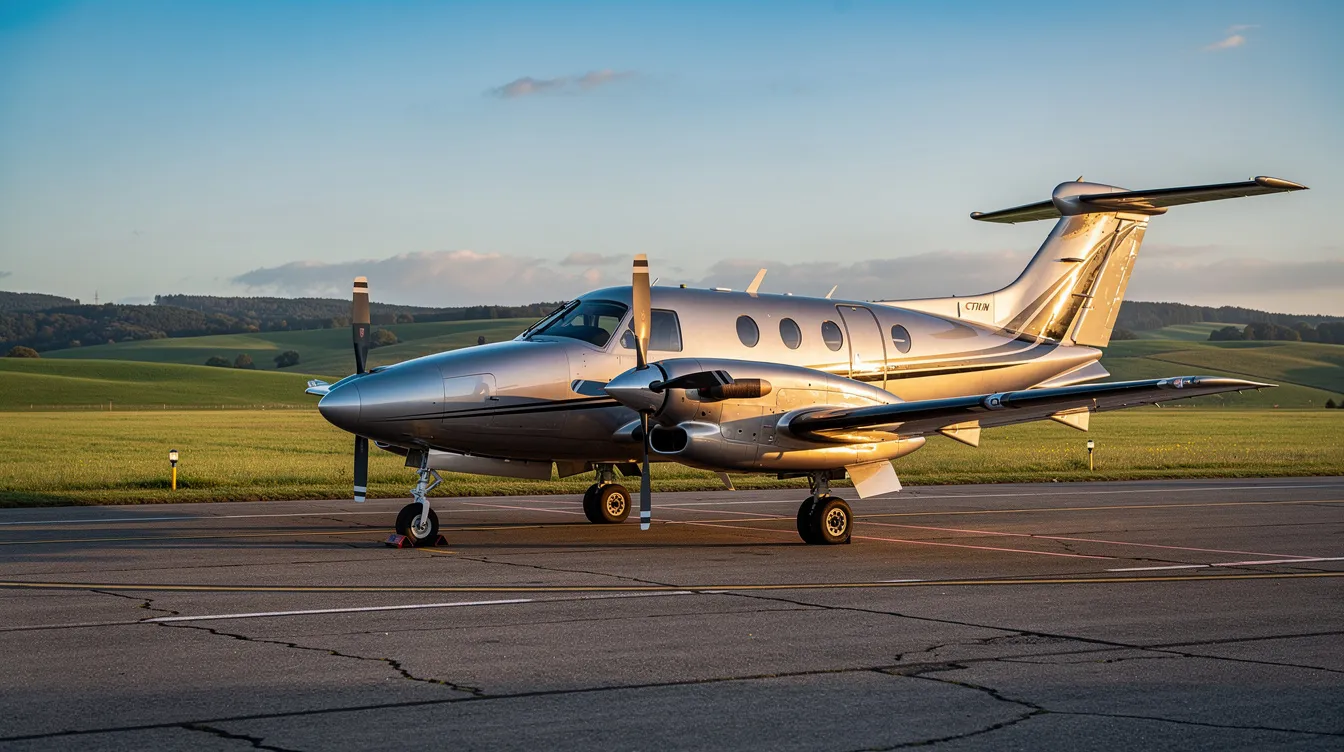
The TBM 850 sits in a sweet spot that few aircraft occupy. It is designed to provide jet-like speeds with turboprop cost efficiency, giving charter customers access to a fast, fuel-smart platform for regional travel. This guide covers everything a charter traveler needs to know - from performance numbers to cabin comfort, operating economics, and how to book a TBM 850 through Jettly.
The TBM 850 offers jet-like speeds with turboprop cost efficiency, ideal for regional travel.
It features a maximum cruise speed of 320 knots and a service ceiling of 31,000 feet.
The aircraft has a maximum range of 1,520 nautical miles, supporting nonstop regional trips.
Seating capacity includes 1 pilot and 5 passengers, suitable for small business groups or families.
Excellent runway performance allows takeoff in 3,110 feet and landing in 2,250 feet, accessing remote airports.
Operating costs are lower than comparable light jets, with hourly costs around $1,147.68.
Available on-demand through Jettly, providing flexible charter options without ownership commitments.
To summarize the key specifications and benefits of the TBM 850, the following table highlights its main features, performance metrics, and advantages for charter travelers.
|
Feature |
Specification |
Benefit |
|---|---|---|
|
Engine Type |
Single-engine turboprop |
Delivers jet-like speeds with lower operating costs |
|
Maximum Cruise Speed |
320 knots |
Rivals entry-level light jets at a lower hourly cost |
|
Service Ceiling |
31,000 feet |
Enables efficient, smooth flights above most weather |
|
Maximum Range |
1,520 nautical miles |
Supports nonstop regional trips |
|
Seating Capacity |
1 pilot + 5 passengers |
Ideal for small business groups and families |
|
Runway Performance |
Takeoff: 3,110 ft; Landing: 2,250 ft |
Accesses remote and short runways that jets cannot use |
|
Hourly Operating Cost |
$1,147.68 |
Lower than comparable light jets |
|
Direct Operating Cost |
$2.48 per nautical mile |
Cost-effective for regional missions |
|
Charter Access |
Available on-demand via Jettly |
No ownership or management commitment required |
The sections below break down the TBM 850's performance, cabin experience, avionics, operating economics, and how it stacks up against other charter options. Whether you're comparing it to a Phenom 100 or a King Air, the numbers tell a clear story.
The TBM 850 is a high-performance single-engine turboprop produced by Socata (now Daher) between 2006 and 2013. It evolved from the earlier TBM 700 platform, upgraded with a Pratt & Whitney Canada PT6A-66D engine flat-rated at 850 shaft horsepower. That power bump pushed the maximum cruise speed to 320 knots and improved climb performance across the flight envelope.
About 320 TBM 850 units were built during its production run, placing the model squarely between the older TBM 700 variants and the aerodynamically refined TBM 900 that followed. The TBM 850's typical purchase price on the pre-owned market sits around $2,287,500, depending on year, avionics, and maintenance history. Many of these aircraft fly as privately owned machines, but a growing number are also available on-demand through charter platforms like Jettly - giving travelers max cruise capability without the burden of ownership.
Speed, range, altitude, and runway performance are the numbers that matter most when planning a charter flight. Here is where the TBM 850 earns its reputation.
The TBM 850's maximum cruising speed is 320 knots true airspeed (roughly 593 km/h). In practice, many operators fly at long-range cruise settings between 290 and 310 knots to balance fuel flow against flight time. Even at reduced power, the aircraft is competitive with entry-level light jets on sectors under 800 nautical miles.
The TBM 850 can fly over 1,400 nautical miles in typical configurations. With lighter load and favorable winds, it can cover a range of approximately 1,585 nautical miles. A practical example: Los Angeles to Aspen (roughly 550 NM) is a comfortable nonstop hop in about two hours. New York to Miami (around 1,000 NM) is feasible nonstop with a moderate payload.
The TBM 850 can reach an altitude of 31,000 feet in under 20 minutes. Cruising at higher altitudes improves fuel efficiency and keeps passengers above most weather, which translates to a smoother ride.
Takeoff distance required is 3,110 feet under standard conditions. Landing distance required is 2,250 feet. The TBM 850 is capable of operating from short runways of 2,100 feet, and it can take off and land in under 1,500 feet with a full load under ideal conditions. This opens up hundreds of regional and secondary airports that many light jets simply cannot use - or must restrict payload to access.
The TBM 850's max takeoff weight and useful load are core payload specs, and it typically has a useful load of 1,443 pounds, which means the aircraft can carry a full passenger complement plus bags on most regional missions without weight-limit headaches.
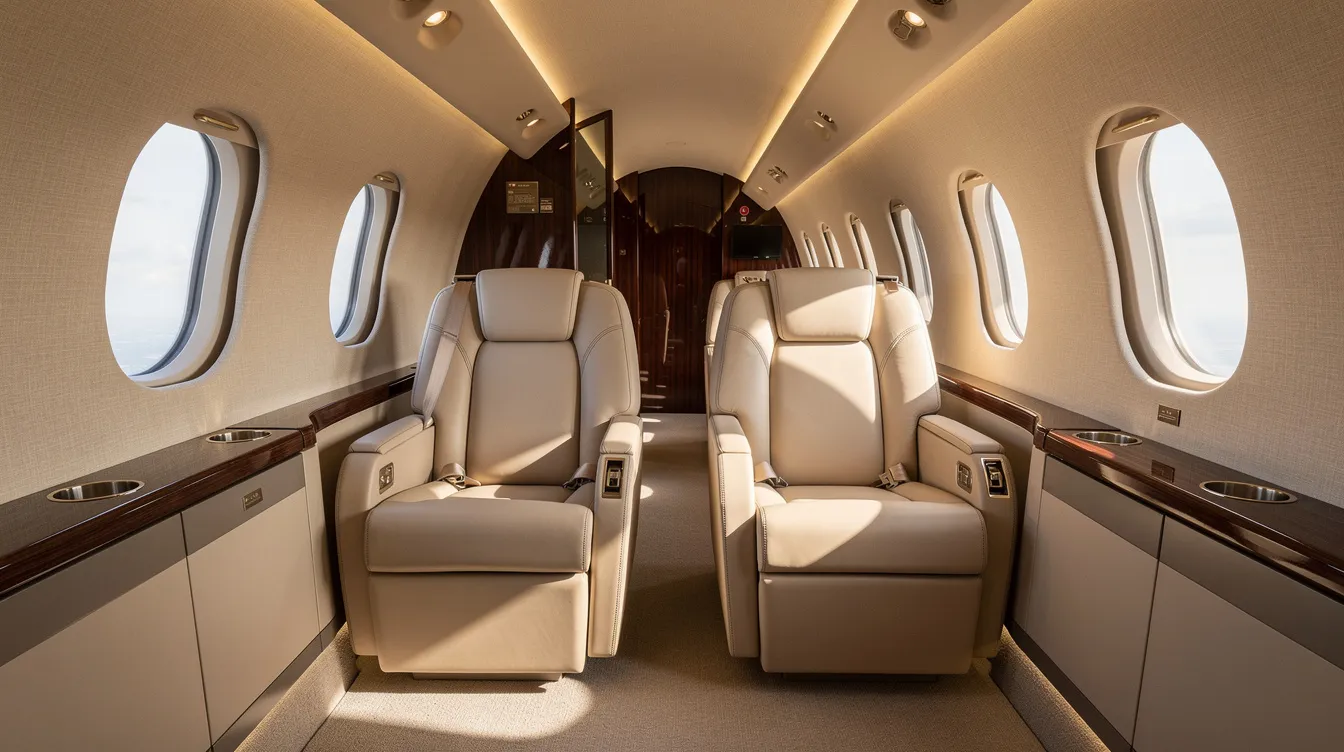
The TBM 850 cabin is best understood as a pressurized, well-finished environment built for small groups rather than a walk-around jet interior.
The passenger cabin stretches about 10 ft in length, with a width of approximately 4 ft and a maximum cabin height of 4 ft 1 in. In practice, this means seated passengers have adequate shoulder and headroom, but movement through the cabin requires some care.
The TBM 850 seats a maximum of six passengers comfortably, with many charter configurations using a four-seat club arrangement plus two forward-facing seats. The TBM 850 cabin features luxury materials like high-quality leathers across most charter examples, giving the interior a refined feel.
A large rear door with integrated steps and handholds makes boarding straightforward for most travelers. Some aircraft also include a separate pilot door for cockpit entry.
Expect individual reading lights, personal air vents, window shades, and a combined air conditioner/environmental control system that keeps the cabin comfortable at altitude. Noise levels are lower than piston aircraft but somewhat higher than midsize jets - a trade-off most passengers accept for the cost savings.
The rear baggage compartment accommodates roughly 30 cubic feet of storage - enough for several carry-on bags, a couple of checked bags, or one to two golf bags, depending on the configuration.
Avionics on the TBM 850 vary by production year and upgrade history, but charter travelers can expect modern glass cockpit technology on most available aircraft.
Earlier TBM 850s shipped with Bendix/King instrument suites. From 2008 onward, the cockpit includes a Garmin G1000 integrated flight deck as standard, featuring large color displays, a moving map, an integrated autopilot, and simplified systems monitoring. Most TBM 850s are equipped with Garmin G1000 avionics today, whether factory-installed or retrofitted.
Safety equipment typically found on charter-configured TBM 850s includes terrain awareness warning systems (TAWS), traffic advisory systems (TAS), weather radar, and modern GPS navigation. These systems support safe IFR operations at high altitude and in virtually all weather conditions.
The PT6A-66D engine behind this aircraft has a strong reliability record with a time-between-overhaul interval of approximately 3,500 hours. When operated under commercial standards - the kind of oversight required for charter flights - the airframe and engine combination delivers dependable, on-time performance. For charter passengers, what matters is this: the technology and maintenance framework support a high level of security and reliability, flight after flight.
Operating cost is where the TBM 850 makes its strongest case against light jets. This section covers the numbers and the mission types that fit, helping you compare pay-as-you-go chartering against options like jet card flight cost estimators and broader analyses of how much a private jet really costs.
The overall cost of TBM 850 operation is one of its biggest advantages over light jets. The TBM 850 burns roughly 75 to 80 gallons per hour at higher power settings, dropping at long-range cruise. Single-engine maintenance is simpler and less expensive than twin-engine jets, and crew and insurance costs trend lower as well. Hourly operating costs for the TBM 850 come in at $1,147.68. Annual fixed costs total $168,081, while total variable costs run $344,304 at typical utilization. Direct operating costs are $2.48 per nautical mile. Travelers can benchmark these numbers using Jettly's private jet charter cost estimator and broader guidance on affordable private jet charter pricing. The aircraft generally offers lower operating costs than light jets across comparable missions.
The TBM 850 excels at business trips with 2 to 4 passengers within 1,000 NM - think same-day out-and-back meetings, weekend family getaways, or transfers to resort destinations. It provides access to many remote airstrips that jets cannot use, making it practical for mountain resorts, ranches, and properties off the beaten path while aligning with many of the cheapest private jet booking strategies that favor smaller, efficient aircraft and secondary airports.
|
Route |
Distance |
Approx. Block Time |
|---|---|---|
|
Los Angeles – Aspen |
~550 NM |
~2 hours |
|
Toronto – New York |
~350 NM |
~1.5 hours |
|
Paris – Rome |
~540 NM |
~2 hours |
On segments like these, the TBM 850 often matches light jets on door-to-door time while saving a meaningful amount on hourly charter pricing. Similar time and cost dynamics apply on routes into busy hubs like Chennai in Tamil Nadu, Kolkata in West Bengal, or New Delhi in the National Capital Territory, where private charter can dramatically shorten total travel time compared with commercial connections.
Travelers often compare the TBM 850 to light jets and larger turboprops. Here is how the numbers break down, and how it fits among top private jet charter companies and the broader landscape of charter airlines and private operators.
Light jets may offer slightly higher max cruise at longer ranges and stand-up cabin height. But on trips under 800 NM, the TBM 850 delivers similar flight times at a lower hourly rate. Its short-field performance also unlocks airports that some jets cannot reach without payload restrictions.
Larger turboprops bring more cabin volume, more seats, and more baggage space. They handle bigger groups and heavy sports equipment better. But the TBM 850 is typically faster in cruise and burns less fuel per hour, giving it the edge for small groups focused on speed.
Choose TBM 850 for fast regional hops with 2–4 passengers and light luggage.
Choose a larger turboprop for groups of five or more or heavy cargo.
Choose a light jet when cabin comfort and speed at longer range are the top priority.
Jettly's platform allows travelers to instantly compare TBM 850 options against jets and other turboprops on the same route, with transparent pricing that makes the comparison straightforward, whether you fly ad hoc or leverage structured programs like Jettly jet cards and private jet memberships.
Booking a TBM 850 through Jettly's digital marketplace follows a simple process.
Booking flow: Users enter their route and dates on the platform, filter by aircraft type (including single-engine turboprop), review live TBM 850 options, and select based on price, schedule, and operator rating. Jettly provides instant pricing where available, with clarity on hourly rate, estimated flight time, and additional costs such as taxes, de-icing, or positioning fees.
All flights are performed by licensed operators complying with regional commercial regulations - Part 135 in the U.S. or equivalent standards elsewhere. Pilots are type-qualified on the TBM 850, and aircraft are maintained under commercial maintenance programs, similar in rigor to leading providers like NetJets and other major private aviation brands, with Jettly positioning itself as a cost-effective alternative for many trip profiles.
Optional services include in-flight catering, ground transportation coordination, and access to smaller airports closer to your origin or final destination using Jettly's airport locator tool. Explore TBM 850 availability and compare it with other private charter aircraft at https://www.jettly.com for upcoming trips.

The TBM 850 fits travelers who want near-jet speed without jet-level costs. Small groups of 1 to 4 passengers, moderate luggage, flight lengths up to about 1,000–1,200 NM, and a preference for smaller airports closer to origin and destination - that is the sweet spot.
There are limitations worth noting. There is no stand-up cabin. The aisle and baggage space are more compact than what you find in most jets. Some passengers may prefer multi-engine aircraft for subjective comfort, though safety statistics for modern single-engine turboprops are strong.
If your itinerary involves short, constrained runways and mountain airports, the TBM 850's turboprop performance can be a real advantage over certain jets, including for cross-border trips where you might also consider the requirements for private jets flying internationally. This era of on-demand charter, making aircraft like the TBM 850 accessible without ownership, has changed the value equation for a lot of regional travelers, especially when compared with traditional fractional models, where Jettly positions itself as a flexible NetJets alternative, and through innovations like crowdsourced and shared private flights. The combination of strong max cruise performance and turboprop efficiency is hard to beat in its class.
Ready to experience private travel on your terms? Explore flight options or request a quote at https://www.jettly.com.
The published maximum cruise speed is 320 knots, but many operators set cruise slightly below that - typically 290 to 310 knots - to balance fuel efficiency and passenger comfort at altitude. For most 300–600 NM trips, door-to-door time is often similar to or better than flying commercial, because charter passengers skip long check-in lines, security queues, and bot-managed boarding processes that add hours to commercial travel.
The aircraft seats up to six, but the most comfortable configuration for charter is usually 3–4 adults plus bags, especially on longer legs. Families with children can often use the full seating more comfortably due to smaller body size and lighter baggage. For travelers primarily buying seats rather than whole-aircraft charters, guides on how to buy a seat on a private jet and easy ways to get a private jet seat can help align expectations around space and comfort. The product of this layout is a cabin that feels personal rather than cramped.
Modern single-engine turboprops use highly reliable engines - the Pratt & Whitney PT6 series in the TBM 850's case - with strong safety records. Commercial charter flights operate under strict regulatory frameworks with qualified pilots, regular maintenance, and operational oversight, a continuing challenge that depends on maintaining standards consistently. The impact of these standards is that safety levels are comparable to those of other charter aircraft categories. Read more on the page of your local aviation authority for specific regulatory details.
The TBM 850's short takeoff and landing distances allow it to use many regional airports with runways in the 2,100–4,000 ft range. Some jets either cannot use these fields or must restrict their load to operate safely. This can reduce overall travel time by giving passengers arrivals closer to city centers, resorts, or remote properties not served by commercial airlines. Rick, a frequent charter traveler based in Colorado, once described the TBM 850 as "the only way to get within 20 minutes of the lodge without driving for hours."
Visit https://www.jettly.com, enter departure and arrival airports, dates, and passenger count. The platform will show instant pricing options, including TBM 850s where available. If you need help comparing the TBM 850 with light jets or larger turboprops for a specific itinerary, Jettly's support team is provided through the platform to help you find the right fit. They can also confirm equipment details, electrically heated features for cold-weather departures, and battery backup systems included on specific aircraft before you book.
The TBM 850 offers a compelling blend of speed, efficiency, and flexibility for regional private travel. On routes like Los Angeles to Aspen or Toronto to New York, it often matches light jets in door-to-door time while providing significant savings on hourly charter rates. This makes it an ideal choice for business travelers and small groups seeking quick, cost-effective access to secondary airports and remote destinations.
Similar advantages apply on busy routes into major hubs such as Chennai in Tamil Nadu, Kolkata in West Bengal, and New Delhi in the National Capital Territory, where private charter can substantially reduce total travel time compared to commercial flights. To explore how the TBM 850 compares with other aircraft, visit Jettly’s private jet charter options or learn more about affordable private jet charter pricing. Ready to experience private travel on your terms? Explore flight options or request a quote at https://www.jettly.com.
Share this post:
Jay Franco Serevilla
Jun 15, 2026
|
5
min read
Discover tips and trends in the industry.
5
min read
Nicest Private Jet: A 2026 Guide to the Pinnacle of Private Aviation
In 2026, the definition of the nicest private jet has evolved, focusing on ultra-long-range performance, refined design, and nonstop capabilities. This guide helps travelers and aviation enthusiasts understand the key features that distinguish top private jets, including models like the Bombardier Global 7500 and Gulfstream G700. With insights on aircraft categories and practical advice for selecting the right jet, readers can make informed choices for their private aviation needs.
Read More
5
min read
San Jose Private Jet Charter with Jettly
San Jose private jet charter services by Jettly offer a seamless travel experience for both business and leisure travelers. With access to over 20,000 aircraft and multiple airport options, Jettly ensures quick and efficient bookings, allowing travelers to maximize productivity and minimize travel stress.
Read MoreStay updated with our latest insights and tips to elevate your journey with us.
MEMBERSHIPS AND ASSOCIATIONS



Disclaimer: Jettly operates as a charter broker, offering access to a global digital jet charter marketplace. Jettly is not a direct air carrier and does not own or operate aircraft. All advertised flights are conducted by third-party air carriers that are fully licensed and hold the appropriate Part 135 or Part 121 certifications issued by the Federal Aviation Administration (FAA) or equivalent regulatory authorities under U.S. or foreign law. Jettly complies fully with the U.S. Department of Transportation's Part 295 and Part 298 Charter Broker regulations. Jettly does not carry additional liability insurance. Passengers are covered by aircraft operator insurance. TICO: 50023770


