


Login
Get Instant Pricing On 23,000+ Aircraft

>
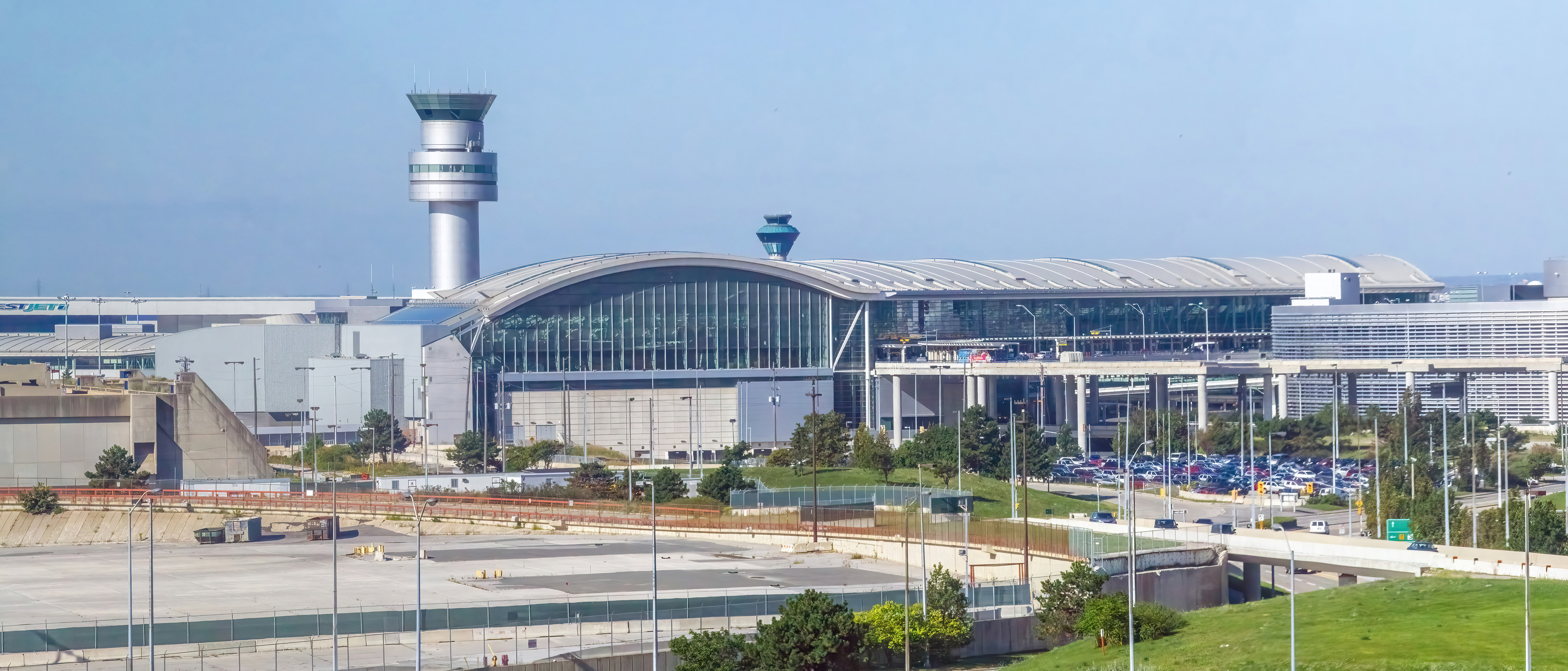
For high-net-worth individuals, corporate leaders, and financial decision-makers, the core issue associated with air travel is not comfort or exclusivity. It is access. The fundamental problem private aviation solves is the geographic limitation of commercial travel.
The numbers illustrate this unambiguously: Commercial airlines serve roughly 500 airports in the United States, while private aviation reaches more than 5,000. For organizations operating across distributed regions, industrial corridors, or secondary markets, that tenfold difference in airport access is a structural economic advantage rooted in time efficiency, mobility control, and operational certainty.
Here, Jettly examines the structural gap between commercial and private airport accessibility.
Commercial aviation is not expanding its reach. It is consolidating it.
According to PwCs 2025 Aviation Industry Review and Outlook, airlines continue to rationalize their networks as they confront chronic aircraft shortages, rising operating costs, and persistent delivery delays. These constraints force carriers to concentrate capacity into high-yield hub routes rather than maintain service to smaller markets. The trend is durable, not cyclical. Commercial accessibility is becoming narrower as airlines optimize for scale.
This is reinforced by reporting from International Airport Review, which outlines a growing mismatch between the number of viable public-use airports in the United States and the shrinking subset served by commercial airlines. Many regional airports still maintain runways, services, and operational capability, yet have no scheduled airline service. Private aviation uses these airports routinely, effectively restoring direct access to locations commercial networks no longer support.
The result is a structural accessibility gap with financial implications. When executives rely on commercial schedules, they inherit the inefficiencies of the hub-and-spoke model. When they use private aviation, they bypass them entirely.
The 5,000-to-500 ratio frames the economics of travel in tangible terms. The real cost of commercial air travel is rarely the ticket itself. It is the hidden accumulation of indirect routing, long surface transfers from hub airports, and lost productive time. Private aviation reduces these friction costs by enabling direct origin-to-destination movement across a broader geographic network.
Time-cost elasticity becomes an essential factor. When a trip requires multiple connections, an overnight stay, or a lengthy drive to reach a final destination beyond the commercial grid, travel stops being a logistical exercise and becomes an operational drag. Businesses feel the cost through delayed decisions, reduced agility, and fewer productive hours.
This is why the accessibility gap has become a practical financial issue. Organizations with distributed operations, such as energy firms, manufacturers, logistics companies, and regional investors, face frequent trips to areas commercial airlines no longer serve. Private aviation transforms these travel patterns from multistep itineraries into direct flights.
Several developments across 2024 and 2025 illustrate how airport access is diverging between commercial and private aviation.
First, the PwC 2025 outlook confirms that commercial aviation network expansion is limited by supply-side constraints. Airlines are extending the life of older aircraft and delaying new route development because their fleets cannot grow at the pace originally projected. This pushes carriers toward concentrating service at major hubs.
Second, industry activity data from WingX, a JetNet company, shows that business jet departures surpassed 3.6 million flights in 2024, with fractional and on‑demand operators recording their highest utilization levels in more than five years. As reported by Aviation Week Network, this surge reflects a sustained shift in demand toward point‑to‑point travel that bypasses traditional commercial hubs, particularly on routes where scheduled airline service has been reduced or eliminated.
Taken together, these data points confirm that commercial aviation’s geographic footprint is contracting while private aviation’s is expanding. The result is a widening accessibility gap anchored in structural industry forces.
For most corporations, private aviation’s value lies not in amenities but in the economics of time. Executives often need to visit multiple regional sites, assess investment properties, or meet partners in secondary markets. Commercial travel introduces variability, including delays, multileg routing, and time-consuming ground transfers. Private aviation compresses the itinerary into the exact hours required.
This has practical outcomes. Instead of planning business activity around airline schedules, organizations align travel with operational needs. That flexibility becomes a form of capital efficiency. The organization converts lost time into usable hours and treats mobility as a strategic resource rather than a constraint.
Airport accessibility is set to widen further as infrastructure investment accelerates at regional airports rather than major hubs. In the United States, the Federal Aviation Administration (FAA) announced more than $332 million in Bipartisan Infrastructure Law grants in 2025 to modernize airports across 32 states, with significant funding directed to smaller facilities for runway rehabilitation, terminal upgrades, and airfield safety improvements. This enhances operational capability at airports already central to private aviation.
Additional federal funding supports systems-level modernization. In late 2024, the FAA committed $20 million to upgrade or rebuild airport-owned control towers across 15 states, improving air traffic management and reliability at nonhub airports. These upgrades directly benefit private operators whose scheduling flexibility depends on predictable airfield operations.
International investment mirrors this trend. Ireland’s Department of Transport allocated €7.8 million in 2025 to reinforce safety and sustainability infrastructure at regional airports, including Donegal, Kerry, and Ireland West. These facilities have limited commercial service but remain fully viable for business aviation.
Local expansion reinforces the pattern. As Axios reports, Ankeny Regional Airport in Iowa is extending its runway to accommodate larger aircraft.
These developments indicate that most new aviation capacity is emerging at regional airports, strengthening private aviation’s geographic advantage.
The central insight of this analysis is simple: Private aviation solves the geographic limitations of commercial air travel. For decision-makers who operate beyond major hubs, the ability to access 5,000 airports rather than 500 reshapes the economics of movement. It allows organizations to reclaim time, expand their operational footprint, and act with greater agility.
In a business environment where schedule flexibility, direct market access, and rapid decision-making have tangible financial value, control over one’s mobility network becomes a strategic asset. Private aviation provides that control, and the data shows that its advantage is widening.
Share this post:
Jay Franco Serevilla
Jan 22, 2026
|
5
min read
Discover tips and trends in the industry.

5
min read
King Airs for Sale: Buyer’s Guide, Pricing & Charter Alternatives
This guide provides insights for potential buyers, charter clients, and aviation enthusiasts interested in Beechcraft King Air turboprop aircraft, detailing current market trends, pricing, and ownership versus chartering options. As of May 2026, pre-owned King Air prices range from approximately $630,000 for older models to over $7 million for newer variants, with key models including the King Air 200, 250, 300, and 350. Jettly offers a charter platform for on-demand access to King Air fleets globally, allowing users to avoid the long-term commitments of ownership while benefiting from flexible travel options. Key considerations for buyers include aircraft age, maintenance history, and avionics upgrades, while chartering may be more economical for those flying less than 200 hours annually.
Read More
5
min read
Dornier Do 328: Regional Turboprop Icon and Modern Charter Option
The Dornier Do 328 is a versatile regional turboprop aircraft, accommodating around 30 passengers, known for its blend of turboprop efficiency and jet-like performance, introduced in 1993. It features several variants, including the Do 328-100 and the Dornier 328JET, and is suitable for various roles such as corporate shuttles and special missions, with a maximum range of approximately 1,850 nautical miles. Currently supported by 328 Support Services and Deutsche Aircraft, the aircraft remains operational with regional airlines and charter operators, offering cost-effective travel options. The upcoming D328eco variant aims to enhance sustainability and efficiency, aligning with modern aviation trends.
Read MoreStay updated with our latest insights and tips to elevate your journey with us.
MEMBERSHIPS AND ASSOCIATIONS



Disclaimer: Jettly operates as a charter broker, offering access to a global digital jet charter marketplace. Jettly is not a direct air carrier and does not own or operate aircraft. All advertised flights are conducted by third-party air carriers that are fully licensed and hold the appropriate Part 135 or Part 121 certifications issued by the Federal Aviation Administration (FAA) or equivalent regulatory authorities under U.S. or foreign law. Jettly complies fully with the U.S. Department of Transportation's Part 295 and Part 298 Charter Broker regulations. Jettly does not carry additional liability insurance. Passengers are covered by aircraft operator insurance. TICO: 50023770


