


Login
Get Instant Pricing On 23,000+ Aircraft

>
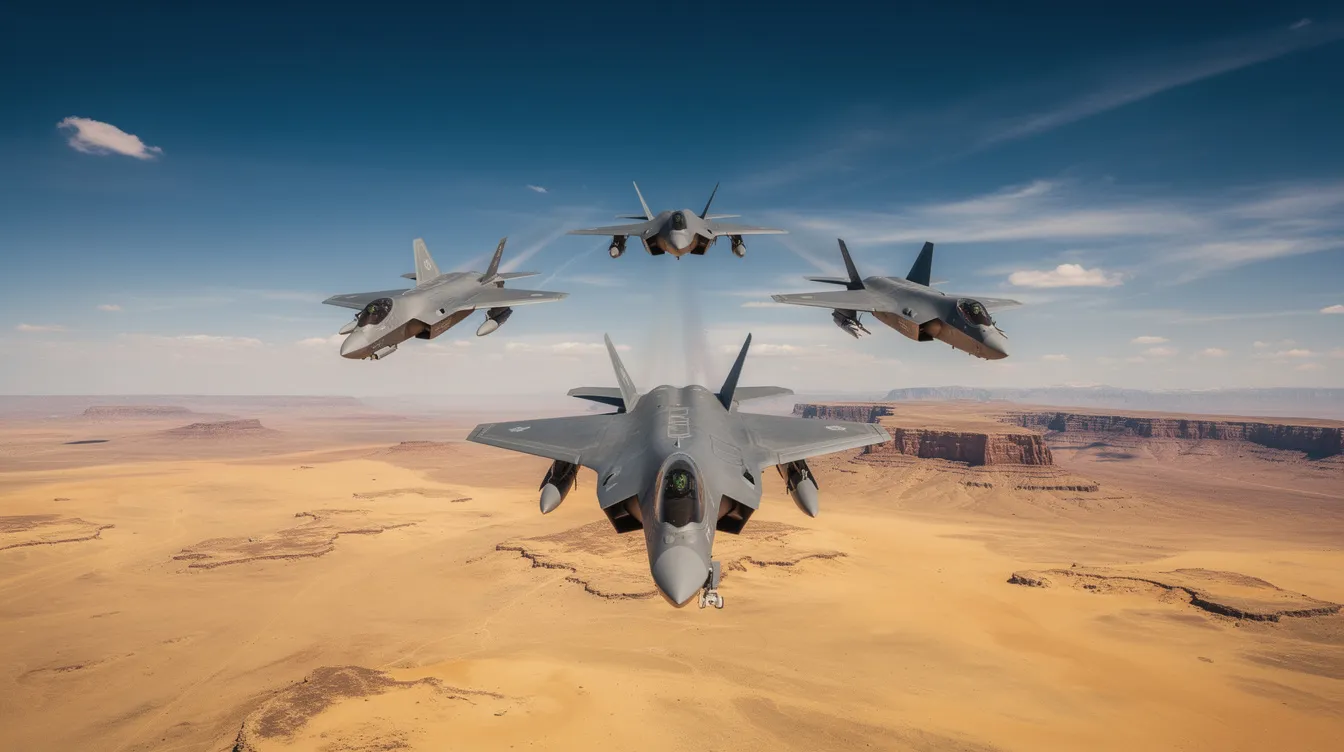
US fighter jets are the foundation of American air power: a diverse fleet flown by the Air Force, Navy, and Marines to maintain air superiority, deliver strike power, defend carrier groups, and project force worldwide. For more than seven decades, they have helped the United States deter adversaries and control the skies in major conflicts. Today’s aircraft emphasize stealth, sensor fusion, networking, and multirole capability over mere speed and maneuverability, representing a technological leap that would be unrecognizable to pilots of earlier eras.
Fighter jets are distinct from bombers and attack aircraft, and their role sits at the center of US military power and national security. For aviation enthusiasts, military analysts, defense professionals, and readers interested in how military innovation shapes broader aviation, understanding these aircraft means understanding how America fights, deters, and advances aerospace technology.
Throughout this page, you will learn how US fighter jets evolved from Cold War icons to active 5th-generation platforms like the F 22 and F 35, where legacy workhorses such as the F 16 and F/A-18 Super Hornet still fit, and how upcoming 6th-generation efforts may change the balance again. We will also draw a line from high-performance combat aviation to the civilian side, where companies like Jettly focus on safety, efficiency, and digitally booked private air travel rather than supersonic speed or stealth coatings.
Stealth and sensor fusion define the modern era. US fighter jets like the F-22 Raptor and F-35 Lightning II have redefined air superiority through low-observable design, advanced radar, and networked warfare capabilities.
Legacy fighters remain essential. The F-16 Fighting Falcon, F-15 Eagle, and F/A-18 Super Hornet continue to serve as the backbone of the US Air Force and Navy, kept viable through continuous upgrades to avionics, radar, and weapons systems.
The US has operated 47 major fighter types since 1945, and today's fleet reflects decades of combat-tested development, from Cold War icons to 5th-generation platforms and upcoming 6th-generation programs.
Information dominance matters as much as speed. Modern fighter jets emphasize information dominance as well as flying performance, operating as nodes in broader military networks.
Aviation passion crosses boundaries. Whether it's combat jets or private charter, the same principles of safety, maintenance excellence, and mission-focused design apply. Platforms like Jettly's comprehensive private aviation platform bring that same precision to the world of civilian air travel.
Air superiority means controlling the skies so opposing forces cannot significantly interfere with friendly operations. Air dominance pushes even further, toward basically uncontested airspace. History repeatedly shows why this matters: during the Korean War, F-86 Sabers broke enemy MiG-15 dominance and turned the tide. In Operation Desert Storm (1991), coalition air forces achieved near-total air control within days, allowing ground operations to proceed with minimal aerial threats.
Several core performance factors define what makes a modern fighter capable of winning and holding that edge:
Speed - the difference between subsonic cruise, supersonic dash on afterburner, and sustained supercruise without afterburner (as the F-22 achieves at roughly Mach 1.8).
Agility - high thrust-to-weight ratios, relaxed stability design, and advanced flight control systems make the aircraft responsive in close combat.
Range and time on station - internal fuel capacity, efficient engines, and aerial refueling capability allow long-range operations far from base.
Radar and sensors - Active Electronically Scanned Array (AESA) radars provide superior long-range detection and tracking. Modern aircraft integrate data from onboard sensors and satellite feeds for enhanced situational awareness.
Weapons payload - from short-range infrared missiles to long-range beyond-visual-range munitions and precision-guided bombs.
Stealth technology allows modern fighters to penetrate heavily defended airspace by dramatically reducing their radar cross-section through shaping, coatings, and internal weapons bays. Combined with sensor fusion, which merges inputs from radar, infrared, electronic warfare, and off-board sources into a single cockpit picture, sensor fusion in modern fighters reduces pilot workload and improves decision-making. The pilot sees one coherent threat display rather than juggling multiple screens.
Modern fighters operate as nodes in a larger network, sharing information with other forces. The F-35, for instance, acts as a flying sensor node, transmitting targeting data to other aircraft, ships, and ground units in real time. This network-centric approach is central to how the USAF and Navy plan operations today. Multirole flexibility further amplifies this: rather than maintaining separate fleets for air-to-air and ground attack missions, the US services increasingly rely on platforms that can perform both, reducing logistical burdens and allowing fewer jet types to serve across more mission models, much as private charter relies on diverse private charter aircraft options to match each mission profile.
Fifth-generation fighter jets are designed for advanced stealth and sensor fusion, combined with supercruise capability, internal weapons carriage, and sophisticated data links. The US leads this category with two operational types, and no competitor comes close in deployed numbers or combat-proven integration; a quick comparison table of those two operational 5th-generation types follows.
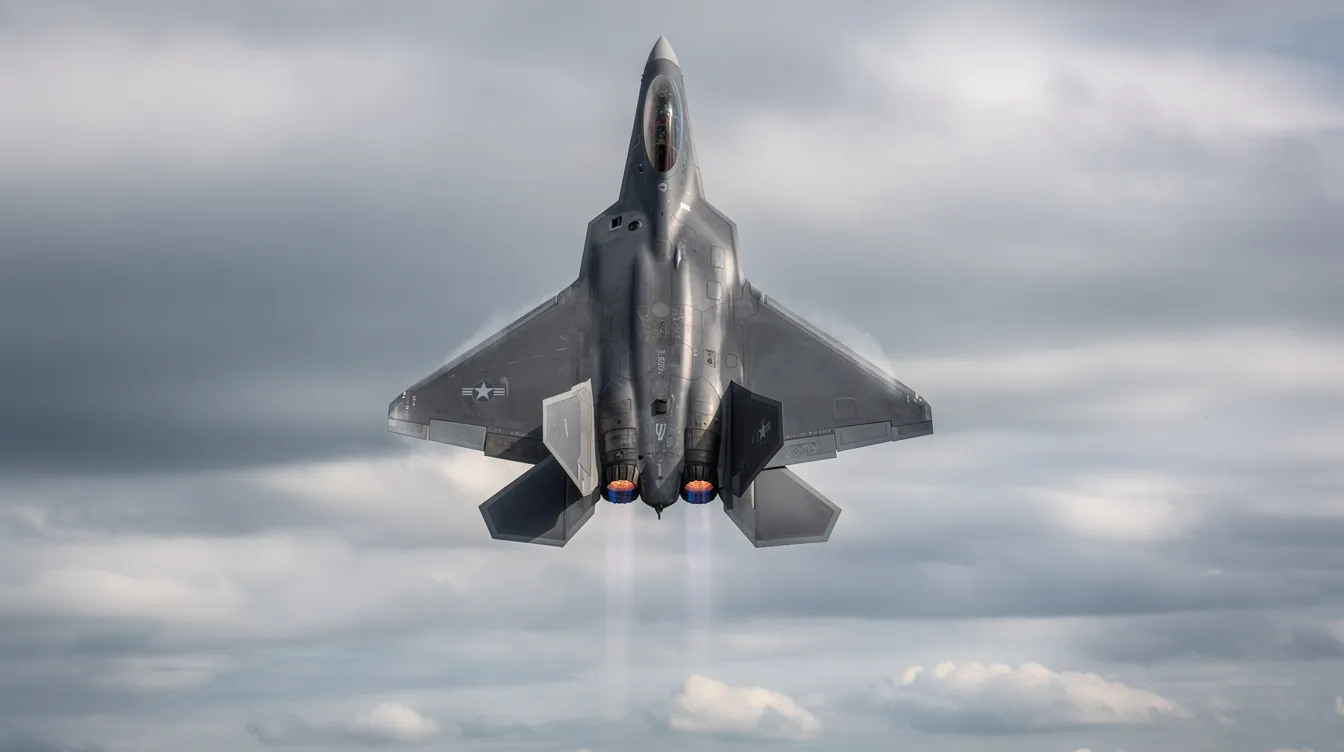
The F-22 Raptor emerged from the Advanced Tactical Fighter (ATF) program, with its first flight in 1997 and entry into active service with the USAF in 2005. Originally, the Air Force planned to acquire roughly 750 airframes, but cost overruns, shifting post-Cold War strategy, and a US law banning exports reduced the final count. Only 195 were built, with the F-22 Raptor having only 177 aircraft in active operation today.
The F-22 is considered a pure air superiority fighter. It can supercruise at approximately Mach 1.8 without afterburner, and the F-22 has a top speed of Mach 2.25. Its radar cross-section is often compared to a marble. Extreme agility, powered by twin Pratt & Whitney F119 engines with thrust vectoring, makes it the most stealthy and agile platform in the world for aerial combat. However, its non-exportable status and limited fleet size mean the F-22 operates exclusively within the US Air Force.
The F-35 Lightning II, born from the Joint Strike Fighter (JSF) program, had its first flight in 2006. It entered service in three variants designed for three different operators:
F-35A - conventional takeoff and landing for the USAF (IOC August 2016)
F-35B - short takeoff and vertical landing (STOVL) for the Marines (IOC July 2015)
F-35C - carrier-capable variant with larger wings and strengthened landing gear for the Navy (IOC February 2019)
The F-35 has a radar cross section equivalent to a golf ball, carries an advanced AESA radar, a distributed aperture system providing 360-degree infrared coverage, and a helmet-mounted display that replaces the traditional HUD. It excels in multirole missions: air-to-air, strike, suppression of enemy air defenses, and electronic warfare, all while allowing pilots to share data seamlessly across the battlespace.
The F-35 is the most widely deployed 5th-generation fighter in the world. As of 2026, the F-35 has over 880 units in active service globally, with deliveries exceeding 1,335 aircraft across US and allied operators. The USAF alone has a program of record for approximately 1,763 F-35As, while the Marines plan for 420 total (280 B and 140 C variants), just as civilian travelers can choose between legacy providers and NetJets alternatives like Jettly when selecting their own airpower.
How do the two compare? The F-22 remains the premier air-to-air platform with unsurpassed kinematics and stealth, but it is limited in numbers and cannot be exported. The F-35 is a more versatile, exportable workhorse optimized for information dominance and networked operations, making it the aircraft building the future of allied air power.
Fourth- and 4.5-generation fighters are versatile for air-to-air and ground-attack missions. Designs from the 1970s and 1980s, these jets remain vital through continuous upgrades to radar, avionics, and weapons systems, earning the "4.5-generation" label in their modernized forms.
The McDonnell Douglas (now Boeing) F-15 Eagle first flew in 1972 and entered service in 1976. Its air-to-air combat record is unmatched - no F-15 has ever been lost in aerial combat. The newest variant, the F-15EX Eagle II, brings digital fly-by-wire controls, a modern AESA radar, advanced electronic warfare systems, and an open-architecture cockpit. The F-15EX can carry almost 30,000 lbs of weapons, making it the heaviest-loaded fighter in the US inventory.
The F-15EX basically serves as a "missile truck," complementing stealthy jets by hauling large numbers of long-range air-to-air and air-to-surface weapons into the fight. Where stealth is less critical but payload and range matter, the F-15EX fills the place no other platform can.
The F-16 Fighting Falcon first flew in 1974 and entered USAF service in 1978. With more than 4,600 built historically, it is one of the most-produced fighter jets in aviation history. The F-16 Fighting Falcon has 2,102 units in operation globally today, and it remains central to the US Air Force and dozens of allied air forces. Its multirole flexibility, relatively low operating cost, and proven combat record from Desert Storm through the Balkans, Iraq, Afghanistan, and more recent conflicts keep it in high demand. The latest F-16V "Viper" upgrades add AESA radar and modern avionics, extending the type's relevance well into the 2030s.
The McDonnell Douglas F A 18 Hornet first flew in 1978, and the F/A-18 has been in service since 1978, making it one of the longest-serving carrier fighter families in US Navy and Marine Corps operational history. The original Hornet (F/A-18C/D) retired from USN frontline service in 2019, but the larger, more capable F/A-18E/F Super Hornet - first flying in 1995 - remains the Navy's primary carrier-based strike fighter.
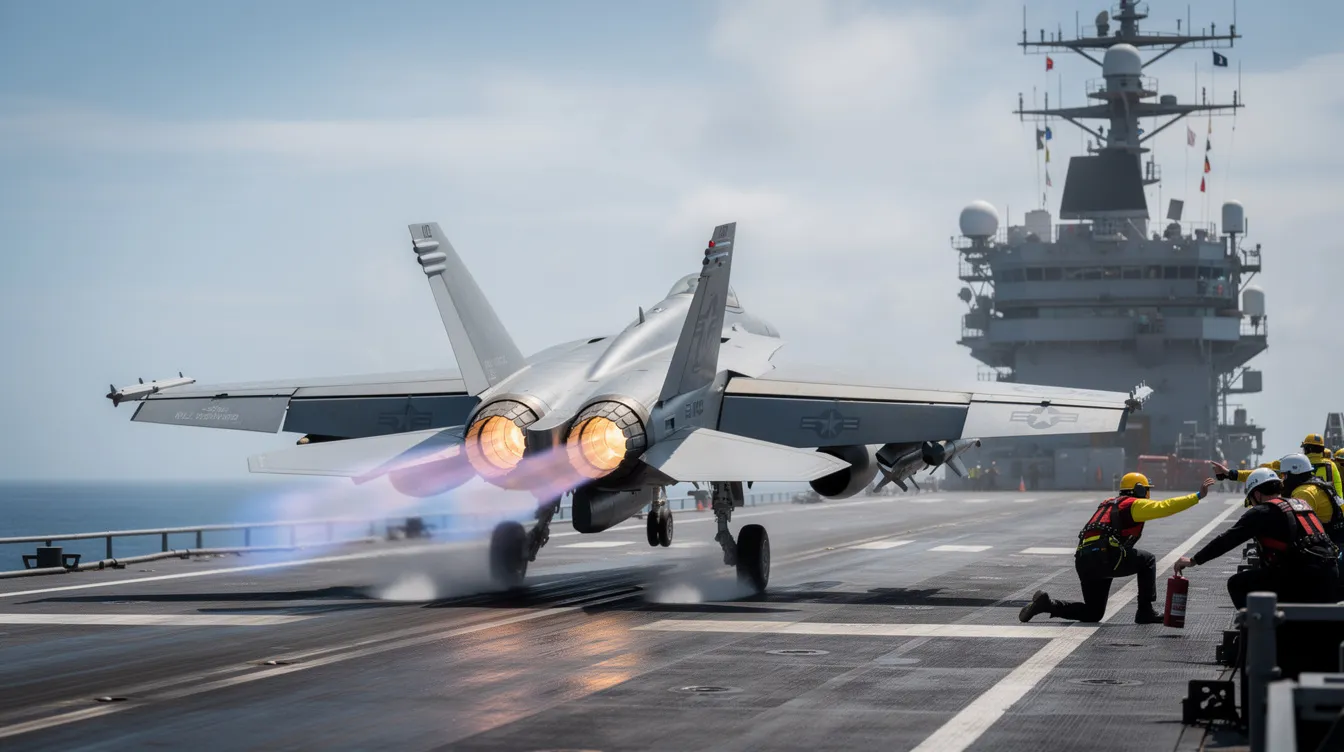
Carrier operations demand specific design features: catapult-assisted takeoff, arrested recovery, folding wings for hangar storage, and strengthened landing gear. The Super Hornet Block III upgrade adds reduced radar cross-section, advanced cockpit displays, new mission computers, and networked sensor capabilities. With a maximum takeoff weight of roughly 66,000 lbs and a top speed exceeding Mach 1.8, the Super Hornet will continue to operate from carrier decks until the F/A-XX arrives in the 2030s.
Some aircraft transcend their operational history to become cultural icons. The F 4 Phantom II and F-14 Tomcat are two such jets, remembered not just for their combat performance but for their place in popular imagination.
The McDonnell Douglas F-4 Phantom II made its first flight in 1958 and entered Navy service in 1960, followed by the Air Force in 1963. It saw extensive action in the Vietnam War as an interceptor, fighter-bomber, and reconnaissance platform. The Phantom's combat lessons - particularly its early reliance on missiles over guns and the resulting need for better dogfight training - directly shaped the development of programs like TOPGUN and drove advances in radar, missiles, and pilot tactics that influenced every subsequent US fighter design.
The Grumman F-14 Tomcat first flew in 1970 and served the Navy from 1974 until retirement in 2006. Its variable-sweep wings, long-range AIM-54 Phoenix missiles, and iconic carrier operations made it the ultimate fleet defense fighter of its era. Other notable types from this period include the F-86 Saber, F-100 Super Saber, F-105 Thunderchief, and F-8 Crusader - each contributing lessons in supersonic flight, missile integration, and survivability that underpin today's designs.
While these jets no longer fly in US active service, many survive in museums and gate displays around the world, and a handful remain in limited foreign service or even private ownership, feeding ongoing public interest in military aviation.
The US is now in the early stages of building 6th-generation fighters to succeed or complement the F-22 and F-35 in the 2030s and beyond. The driving force is a rapidly evolving threat environment: advanced air defense systems, long-range missiles, and the proliferation of new aircraft from near-peer competitors demand a fresh approach.
The USAF's Next Generation Air Dominance (NGAD) program envisions a "system of systems" - a crewed fighter paired with collaborative uncrewed combat aircraft known as "loyal wingmen," tied together by advanced networking. Human-machine teaming is increasingly important in future air combat, integrating drones with crewed fighters to multiply combat power without proportionally increasing pilot risk.
The Navy's parallel effort, the F/A-XX program, aims to replace the Super Hornet and EA-18G Growler while operating alongside carrier-based F-35Cs. Key anticipated features across both programs include enhanced stealth across wider frequency bands, adaptive cycle engines for improved range and fuel efficiency, AI-assisted decision-making, and directed-energy weapons.
For global context, note that competition is intensifying, and this short list of peer or near-peer competitor fighters relies on defense analyst estimates. The Chengdu J-20 is estimated at 250 units in active service for China, and it can reach Mach 2 without afterburners. Russia's Su-57 has approximately 30 units in service as of 2026, far fewer but still representing a credible development effort. In Europe, the Eurofighter Typhoon can supercruise at Mach 1.5, and next-generation programs like FCAS and Tempest are underway.
Modern US fighter jets represent a technological leap over older models, focusing on survivability and networking. And as history shows, advances in military aviation technology - from composite materials to fly-by-wire controls to cockpit ergonomics - eventually influence civil and private aviation, closing the gap between the view from a fighter's canopy and the view from a business jet cabin, whether operated by NetJets or other industry leaders in private aviation.
Fighter squadrons and private aviation share more DNA than you might expect. Both depend on rigorous maintenance, highly trained crews, regulated operations, and mission-focused aircraft selection. The difference is the mission itself: where fighter jets search for and engage threats at Mach 2, private aviation exists to move people and teams safely, comfortably, and efficiently, and flexible private jet memberships help frequent flyers align aircraft access with their operational tempo.
Jettly operates as a digital private jet charter marketplace, giving travelers access to over 20,000 aircraft worldwide through instant pricing and on-demand booking - no fractional ownership or rigid jet card commitments required, plus additional tools such as a jet card flight cost estimator to help plan frequent missions. Much like choosing the right fighter for the right mission, Jettly lets you select the type of aircraft that fits your travel profile, whether that is a light jet for a short hop or a long-range large-cabin aircraft for intercontinental trips, drawing on one of the world’s largest private charter aircraft inventories.
Key advantages for aviation-minded travelers include tools like a private jet charter cost estimator to understand pricing before you fly, and:
Access to more airports than commercial airlines, reducing ground time, whether you are flying into major hubs or arranging private jet charter in Kolkata, is often planned with a dedicated airport locator tool
Transparent pricing with flexible membership or pay-as-you-go options for routes worldwide, including private jet charter in New Delhi, and structured jet card programs
Tailored services, including in-flight catering and coordinated ground transport through operators such as Dexter Air Taxi private jet services, are supported by specialized in-flight catering for private jets
The ability to book a private jet digitally, on your schedule, with brokered access to operators like Zenflight private jet charter, or even share costs through crowdsourced private jet flights and empty seats
Whether your fascination lies with the excellence of a 5th-generation fighter or the comfort of a Gulfstream cabin, aviation connects us all, from traditional charter airlines to modern platforms that curate a comprehensive list of charter airlines.
Below are answers to common questions that go beyond what was covered in the main article, including how enthusiasts can access high-end aviation experiences similar to those described in guides on getting a seat on a private jet easily.
The F-22 is optimized for air superiority. Its supercruise, extreme agility, and minimal radar cross-section make it the go-to platform when the mission is to establish control of the skies and eliminate opposing fighters. The F-35, by contrast, is a multirole, sensor-centric design built for information dominance. It excels at suppression of enemy air defenses, strike missions, electronic warfare, and sharing real-time data across the joint force. Think of the F-22 as a specialist and the F-35 as a versatile all-rounder that ties every element of the fight together.
The original plan called for approximately 750 Raptors, but that number was cut to 187 delivered operational airframes. Several factors drove the reduction: significant cost overruns (each F-22 ended up costing well over $150 million per unit), a changing strategic environment after the end of the Cold War that shifted priorities, high sustainment costs for stealth maintenance, and a US law that explicitly prohibited export sales. With no allied customers to share development and production costs, the program became unsustainable at its originally planned size.
All three families are projected to serve well into the 2030s and potentially the 2040s. The F-16 is receiving Viper upgrades with AESA radar and modern avionics. The F-15EX is a new aircraft being delivered right now, with a structural life designed for decades of operations. The Super Hornet Block III is undergoing upgrades and new production, with the Navy expecting to fly the type until the F/A-XX arrives. These platforms fill roles where sheer numbers, heavy payload, or cost-effectiveness matter more than low-observable stealth.
Technically, yes - but it is extremely difficult and expensive. Acquiring an ex-military fighter requires full demilitarization, FAA experimental category certification, specialized insurance, and the ability to maintain complex systems. The operating costs alone can run thousands of dollars per flight hour. For most aviation enthusiasts, a far more practical way to experience high-performance flight is through private jet charter, especially when you understand how affordable private jet charter pricing can be structured. Platforms like Jettly offer access to a wide range of aircraft classes without the regulatory and financial burdens of owning a decommissioned fighter and with considerably more comfort.
The United States Coast Guard does not operate fighter jets. Its aviation fleet consists primarily of helicopters and fixed-wing patrol and search-and-rescue aircraft optimized for maritime safety, law enforcement, and homeland security missions. Combat air superiority and strike missions fall exclusively to the US Air Force, Navy, and Marine Corps, while the private side of aviation is handled by a variety of top private jet charter companies serving civilian travelers.
US fighter jets have continuously evolved to meet the demands of modern air combat, blending speed, stealth, sensor fusion, and networked warfare into unmatched aerial capabilities. From Cold War icons like the F-4 Phantom and F-14 Tomcat to cutting-edge 5th-generation platforms like the F-22 Raptor and F-35 Lightning II, these aircraft have shaped global air power and set standards for military aviation worldwide. As the US pursues next-generation technologies through programs like NGAD and F/A-XX, human-machine teaming and advanced networking will redefine air dominance for decades to come.
Beyond their military significance, the precision, safety, and innovation seen in these fighter jets resonate across the broader aviation landscape, influencing private charter and commercial flight. Platforms like Jettly embody this spirit by bringing advanced technology and seamless digital experiences to civilian travelers, connecting the legacy of high-performance flight with the convenience and luxury of modern private aviation.
In essence, US fighter jets are not just tools of war—they are symbols of technological excellence, strategic foresight, and the enduring pursuit of air superiority that continues to inspire aviators and enthusiasts alike.
Share this post:
Jay Franco Serevilla
Jul 7, 2026
|
5
min read
Discover tips and trends in the industry.
5
min read
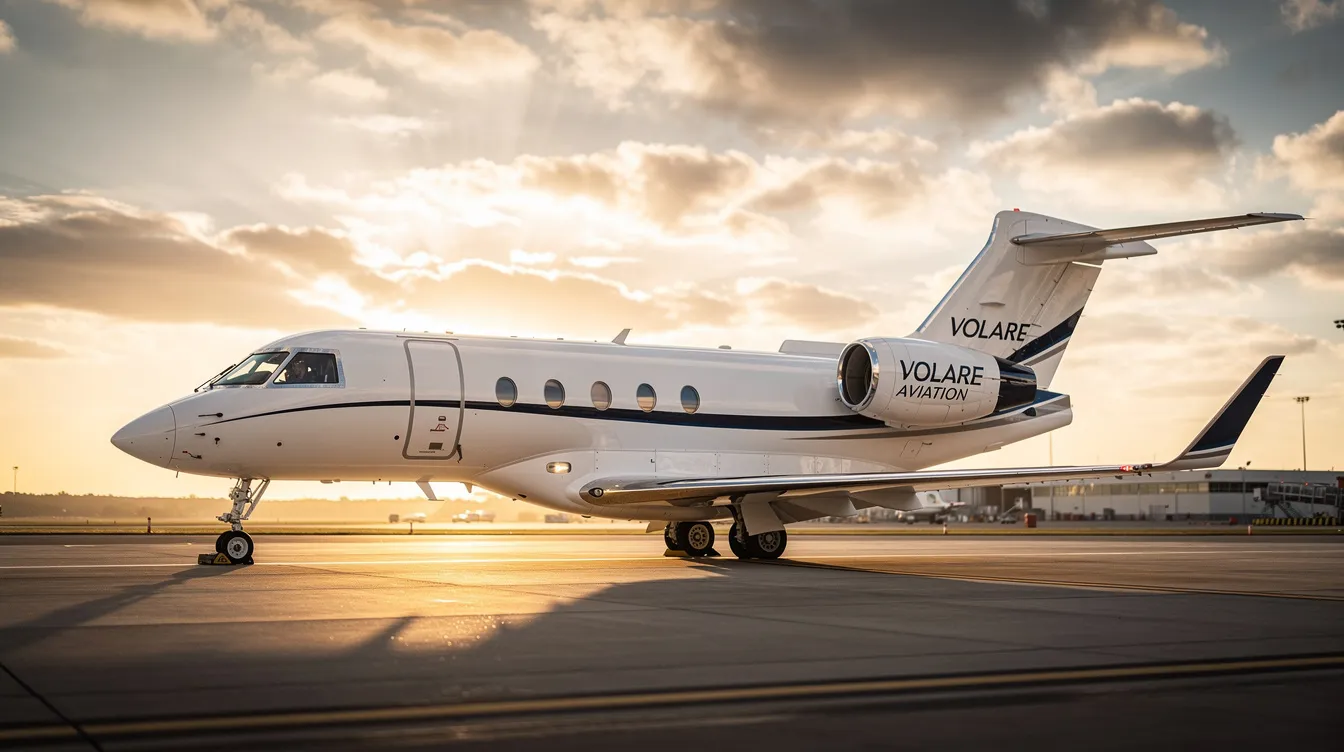
Volare Aviation and Modern Private Aviation: How Jettly Helps You Charter Smarter
Volare Aviation offers boutique private aviation services at Oxford Airport, specializing in aircraft ownership, management, and charter. With the rise of digital platforms like Jettly, private jet and helicopter travel has become more accessible, allowing travelers to choose flexible options without the need for ownership. This article explores the advantages of private aviation, including reduced travel time and personalized service.
Read More
5
min read
Why So Many Plane Crashes? Causes, Trends, and How Modern Aviation Stays Safe
Plane crashes are often the result of a combination of factors, including human error, mechanical failures, and weather conditions. Despite media coverage suggesting otherwise, air travel remains statistically safe, with improvements in aviation safety over the decades. Understanding the causes and trends can help travelers make informed decisions about their flying options.
Read MoreStay updated with our latest insights and tips to elevate your journey with us.
MEMBERSHIPS AND ASSOCIATIONS



Disclaimer: Jettly operates as a charter broker, offering access to a global digital jet charter marketplace. Jettly is not a direct air carrier and does not own or operate aircraft. All advertised flights are conducted by third-party air carriers that are fully licensed and hold the appropriate Part 135 or Part 121 certifications issued by the Federal Aviation Administration (FAA) or equivalent regulatory authorities under U.S. or foreign law. Jettly complies fully with the U.S. Department of Transportation's Part 295 and Part 298 Charter Broker regulations. Jettly does not carry additional liability insurance. Passengers are covered by aircraft operator insurance. TICO: 50023770


