



Login
Get Instant Pricing On 23,000+ Aircraft

>
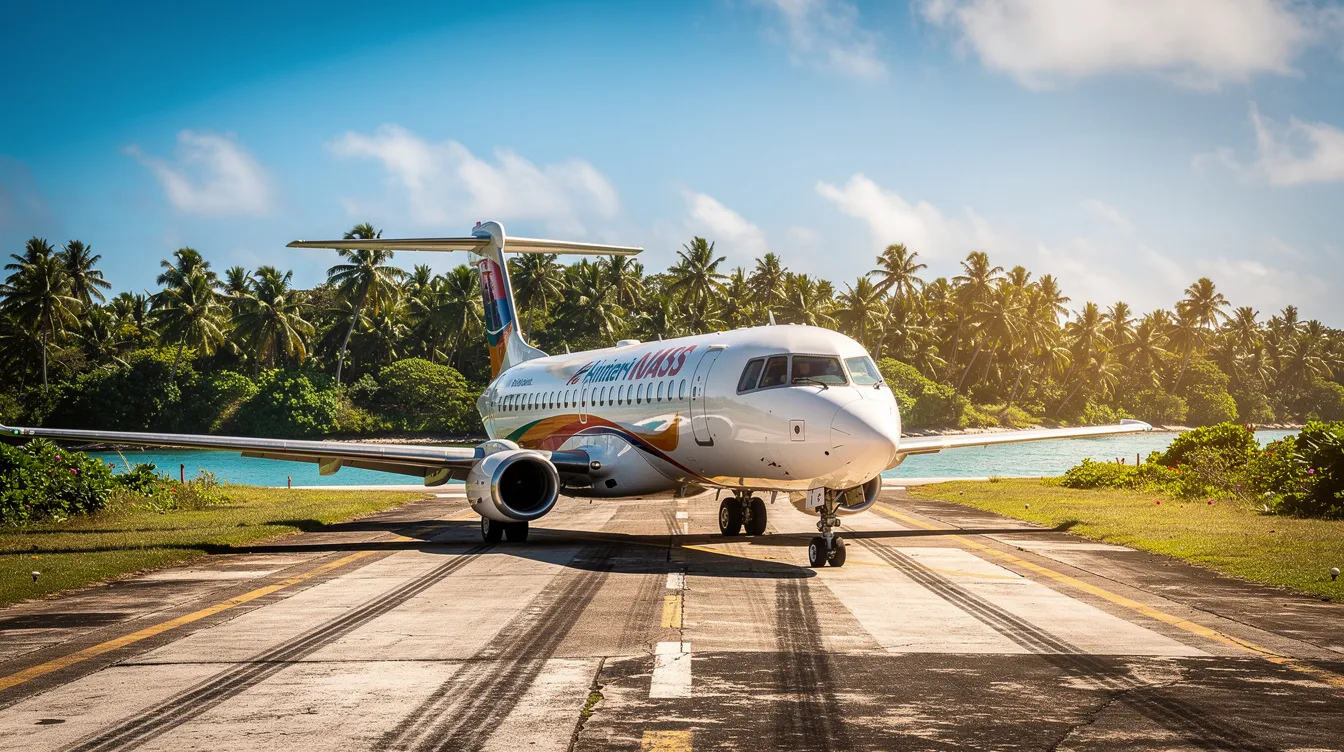
Some airlines operate hundreds of aircraft across dozens of countries. Others fly just one or two planes between a handful of destinations—and by active fleet size, that is usually how the world’s smallest airline is defined, not by revenue or passenger count. For frequent flyers, corporate executives, high-net-worth travelers, and anyone tracking niche aviation markets or private jet alternatives, these micro-fleet carriers are more than a curiosity: they connect remote communities, island nations, and developing regions where larger operators see no profit motive.
This guide looks at how the world’s smallest airlines are measured, which one-aircraft and three-aircraft carriers qualify, the shortest commercial flights they operate, and the operational limits that come with tiny fleets. It also explains why these airlines matter to travelers: when limited schedules, aircraft availability, or route coverage leave gaps, platforms like Jettly can complement them with more flexible private jet charter options.
The world's smallest airline is typically defined by active fleet size, not revenue or passenger count. Several flag carriers operate just one to three aircraft.
Airlines like Air Albania, Aruba Airlines, Air Burkina, Sudan Airways, Surinam Airways, and Air Marshall Islands frequently rank among the smallest national carriers by fleet size.
The Orkney Islands host the world's shortest scheduled commercial flight, connecting Westray and Papa Westray in roughly 53 seconds. Loganair is often recognized for operating at a small scale in aviation.
Small airlines prioritize community access over scale, serving regions across West Africa, the Marshall Islands, the Caribbean, and the Pacific.
Jettly is a private jet charter platform offering on-demand aircraft access and transparent pricing as a scalable alternative on underserved routes.
The label "world's smallest airline" usually refers to carriers with the smallest active fleet size - sometimes just a single aircraft - rather than lowest revenue or passenger count. Aviation data providers like ch aviation and Cirium track fleet size by differentiating between aircraft that are active, stored, or wet-leased. This article focuses on active, operational aircraft as of 2024–2026.
A flag carrier is a national airline officially representing a country, often government-owned. Not every small airline is a flag carrier; some are private, regional, or charter-based. But several of the world's tiniest fleets belong to official national carriers.
Fleet size can fluctuate fast. A single lease ending, a plane entering heavy maintenance, or a regulatory grounding can change a carrier's status overnight. The examples here are snapshots, not permanent rankings.
Key metrics for comparing small airlines include fleet size, destinations served, fixed-wing aircraft types in use, and the carrier's role in connecting remote areas like the Marshall Islands, Burkina Faso, and Suriname. While some military air arms also operate micro-fleets, this article stays within civil aviation.
Several countries rely on national flag carriers that operate only one to three aircraft, yet still perform essential diplomatic and economic roles. These carriers serve as a country's aviation face to the world, offering limited but symbolically important connections.
Most countries with micro-fleet flag carriers operate narrowbody jets configured for around 100–180 seats, plus occasional wet-leased widebodies for long-haul routes. Political instability, small home markets, and high operating costs keep fleet sizes minimal.
Some concentrate on regional routes in the Middle East, West Africa, or the Caribbean, while others maintain at least one long-haul connection to Europe or North America. BermudAir operates with a fleet of 2 aircraft, serving as a link for that British overseas territory. Czech Airlines, founded in 1923 - one of the oldest in the world - currently operates just 2 aircraft. Fly Arna has a fleet size of only 1 aircraft.
Below are compact profiles of airlines that frequently appear in rankings of the smallest national carriers by fleet size, which sit at the opposite end of the spectrum from the large operators discussed in guides to the best private jet charter companies.
|
Airline |
Country |
Fleet Size |
Key Routes |
Founded |
|---|---|---|---|---|
|
Air Albania |
Albania |
3 aircraft |
Tirana to London, Turkey, Europe |
2018 |
|
Air Burkina |
Burkina Faso |
3 aircraft |
Ouagadougou to West Africa destinations |
1967 |
|
Aruba Airlines |
Aruba |
2 aircraft |
Aruba to Miami, Fort Lauderdale, Caribbean |
2006 |
|
Sudan Airways |
Sudan |
~1–2 aircraft |
Khartoum hub, limited network |
1946 |
|
Surinam Airways |
Suriname |
2 Boeing 737s |
Paramaribo to Amsterdam, Miami, Aruba |
1962 |
|
Cabo Verde Airlines |
Cape Verde |
~2 Boeing jets |
Domestic island hops, Europe, Americas |
1958 (as TACV) |
Air Albania has a fleet size of 3 aircraft and is based in the capital Tirana. Turkish Airlines holds 49% ownership. The airline links Albania to key European cities, though its operations were suspended in December 2025 for regulatory non-compliance.
Air Burkina was founded in 1967 and operates from its hub at Ouagadougou with Embraer E-jets connecting Burkina Faso to destinations across West Africa. Operating from a landlocked, lower-income country in Africa presents constant fuel and maintenance challenges.
Aruba Airlines has a fleet size of 2 aircraft. The carrier serves leisure routes from the island of Aruba to Miami, Fort Lauderdale in Florida, and other Caribbean points that land near Princess Juliana International Airport in Sint Maarten.
Sudan Airways was founded in 1946, making it one of Africa's oldest airlines. Its fleet has shrunk to roughly one active Airbus A320 due to prolonged instability, European Union safety bans, and sanctions. The national carrier ranks among the most diminished flag carriers in the world.
Surinam Airways operates two Boeing 737-800s from Paramaribo, connecting Suriname to Amsterdam in the Netherlands, Miami, and Aruba. A previously leased 777 later became Boeing's ecoDemonstrator testbed.
Cabo Verde Airlines was established in 1958 as TACV. Today it balances domestic island service with transatlantic links to Europe and the Americas using a fleet of roughly two Boeing aircraft. Scheduling a fleet this small to serve both tourists and local demand requires careful planning, especially compared with flexible international private jet itineraries that can be adjusted around demand.
Exact fleet counts vary by source - one database might cite two aircraft while another notes an extra airframe in storage. But all share extremely limited active fleets.
Some of the world's smallest airlines are literal lifelines for remote island communities, transporting passengers, medical teams, and supplies where no other transport option exists, much like the specialist operators featured in comprehensive guides to charter airlines.
Air Marshall Islands was founded in 1980, shortly after independence. Based in Majuro, it operates a small fleet of Dash 8s and Dornier 228-212s, each seating fewer than 40 passengers. The airline connects scattered atolls across the central Pacific where distances are too great for ferries.
Operating challenges are severe: salt-laden environments accelerate corrosion, maintenance infrastructure is limited, and sourcing spare parts for turboprop aircraft takes weeks. When even a single plane goes unserviceable, entire communities lose their only scheduled air service.
Similar micro-carriers serve other archipelagos. In the Orkney Islands, Loganair operates Britten-Norman Islanders on ultra-short hops. Nauru Airlines and other Pacific operators provide the international links into hub airports in Australia and Singapore, while tiny local carriers handle last-mile inter-island transport, complemented in some regions by long-range international private jet services.

Many of the world's shortest flights are operated by very small airlines using light aircraft with fewer than 20 seats, a very different mission profile from the long-range jets featured in overviews of the best private plane manufacturers.
Loganair operates the world's shortest scheduled commercial flight, connecting Westray and Papa Westray in the Orkney Islands of Scotland. The distance of the flight is 1.7 miles or 2.7 kilometers, the actual flight time is often around 53 seconds, and the route uses a Britten-Norman BN-2 Islander aircraft with about 8 seats. Loganair's service primarily connects students, teachers, and patients. The flight operates daily and has been running since 1967.
The shortest international flight is 24km long, making shared-capacity models on some routes comparable in spirit to shared versus full private charters. Other notably short routes include:
St Martin to St Barthelemy: 31km
Brazzaville to Kinshasa (Democratic Republic of the Congo): about 50 minutes despite minimal distance
Kasane to Victoria Falls: 77km
Dammam to Bahrain: 87km
These services must prioritize reliability and quick turnarounds. Pilots often fly multiple sectors a day between tiny airstrips with minimal ground infrastructure. While some ultra-short segments are served by larger carriers, many remain the domain of the world's smallest airlines, sustained by government subsidies or essential-service contracts, with private alternatives sometimes using crowdsourced and shared private jet flights to make thin routes viable.
While the world's smallest airlines play crucial roles, their tiny fleets can limit flexibility. Typical constraints include very low flight frequency - sometimes just a few departures per week - limited route maps, older cabin products, and zero redundancy if maintenance grounds the only plane, which can make affordable private jet charter pricing an appealing alternative on time-sensitive trips.
Private jet charter platforms such as Jettly complement small airlines on certain routes. A business team flying from Miami or Fort Lauderdale to Aruba for meetings can avoid adjusting to limited schedules by using an airport locator tool for private jet charters. A family arranging a multi-stop Caribbean or West African itinerary that small regional airlines do not operate directly can design their own route.
Key benefits include time savings, choice of aircraft class from turboprops to heavy jets drawn from a broad private charter aircraft marketplace, the ability to use smaller airfields, and full control over departure times. Charter becomes particularly attractive for groups sharing the whole aircraft or for urgent, last-minute travel - check same-day charter options for examples.
Jettly is a tech-driven private aviation platform that complements the world's smallest airlines by offering flexibility where scheduled service is thin. The platform connects users to a global inventory of over 20,000 charter aircraft - from light jets for short hops to long-range jets for intercontinental segments - and supports recurring flyers through private jet membership plans.
Instant pricing and digital booking reduce planning friction, supported by tools like a private jet charter cost estimator. Instead of piecing together multiple small-airline segments through complex hubs, travelers compare options in minutes. Jettly works with certified operators meeting relevant civil aviation authority standards - an important factor for travelers comparing options against carriers with restricted oversight histories.
Real-world scenarios include executives needing a same-day return between regional capitals in West Africa where Air Burkina's timetable doesn't align, or travelers wanting a private connection to remote islands without waiting for the next limited departure. Options like empty-leg flights can sometimes undercut business-class fares. Travelers comparing membership, empty legs, and on-demand charter can explore ways to get a seat on a private jet. Learn more about how to charter a private jet through the platform.
These questions cover data reliability, safety, and traveler choices not fully addressed above, building on broader discussions of the private aviation landscape found in industry-wide charter airline overviews.
Fleet data comes from industry databases like Planespotters.net and airline disclosures. Rankings can change rapidly due to leasing, maintenance, or company restructuring. Different sources may disagree on whether stored or wet-leased aircraft count toward fleet size, so treat any ranking as a snapshot rather than a permanent measure.
Safety is regulated by national civil aviation authorities and international bodies like ICAO. Travelers should check recent safety records and restrictions - such as European Union blacklists - for specific airlines. Many small carriers maintain solid safety records despite limited fleets, but older aircraft and fewer maintenance redundancies can increase operational risk in some cases.
National prestige, control over strategic routes, employment, and brand representation all play a role. A national carrier ensures connectivity to politically or economically important destinations that foreign airlines might not prioritize. For many countries, the airline is as much a symbol as a service - a company that represents the nation on the global stage, just as leading private operators compete with NetJets alternatives like Jettly to represent modern private aviation.
Many charterable turboprops and light jets can operate from short or unimproved runways, but not all. Runway length, surface type, and elevation matter. Platforms like Jettly match small aircraft to specific runway performance needs, helping travelers reach destinations that even some scheduled carriers cannot by drawing on a broad fleet of private charter aircraft.
Per-seat costs are usually higher on private jets. However, charter can be cost-competitive for groups sharing the aircraft, last-minute trips, or complex itineraries where multiple connections on small airlines would add hotel nights and lost productivity. Empty-leg opportunities sometimes bring prices below business-class fares on certain routes. Employees traveling as a group often find the math works in charter's favor, especially when paired with predictable-rate options like jet card membership programs.
The world's smallest airline carriers - in places like Aruba, Burkina Faso, the Marshall Islands, Suriname, and Cape Verde - play an outsized role in connecting remote communities and representing national identity. "World's smallest airline" refers to minimal fleet size, not importance. These carriers operate everything from ultra-short hops in the Orkney Islands to long-thin connections linking small nations to global hubs in London, Europe, and beyond, while private operators such as Dexter Air Taxi and similar jet services focus on point-to-point flexibility.
When scheduled service falls short, private charter through platforms like Jettly offers more control over timing, routing, and aircraft choice across every coast and continent - from the Pacific to China to the Middle East and the emirates of the Gulf, including international private jet flights that cross oceans and remote regions.
Experience private travel tailored to your needs. Discover available flights or request a personalized quote at https://www.jettly.com.
Share this post:
Jay Franco Serevilla
Jul 15, 2026
|
5
min read
Discover tips and trends in the industry.

5
min read
What Airlines Have Had Crashes? Major Airline Accidents, Safety Records, and What They Mean for Air Travel
Many major airlines, including American Airlines and Japan Airlines, have experienced fatal crashes throughout their histories. While these incidents are significant, they must be viewed in context, as air travel remains one of the safest modes of transportation today. Understanding the historical data and safety improvements can help travelers make informed decisions about their flight options.
Read More
5
min read
Elon Musk Aircraft: Inside Elon Musk's Private Jets, Fleet History, and How to Fly Similar Jets with Jettly
Elon Musk's private jet fleet, primarily consisting of Gulfstream models, showcases the intersection of luxury and necessity in modern aviation. This guide explores Musk's aircraft history, the evolution of his fleet, and how platforms like Jettly provide access to similar jets for those who seek the convenience of private travel without ownership. Discover the details of Musk's jets and how they reflect his dynamic lifestyle and business needs.
Read MoreStay updated with our latest insights and tips to elevate your journey with us.
MEMBERSHIPS AND ASSOCIATIONS



Disclaimer: Jettly operates as a charter broker, offering access to a global digital jet charter marketplace. Jettly is not a direct air carrier and does not own or operate aircraft. All advertised flights are conducted by third-party air carriers that are fully licensed and hold the appropriate Part 135 or Part 121 certifications issued by the Federal Aviation Administration (FAA) or equivalent regulatory authorities under U.S. or foreign law. Jettly complies fully with the U.S. Department of Transportation's Part 295 and Part 298 Charter Broker regulations. Jettly does not carry additional liability insurance. Passengers are covered by aircraft operator insurance. TICO: 50023770


