


Login
Get Instant Pricing On 23,000+ Aircraft


Business aviation revolutionizes corporate travel by providing unmatched flexibility, privacy, and efficiency. With access to over 5,000 airports and the ability to book on-demand, it enhances productivity and reduces travel time significantly. Platforms like Jettly simplify the process, making private jet travel accessible and cost-effective for businesses.
Jeff Ryan Serevilla
Sep 27, 2026
|
5
min read



View all
The guide on microjet aircraft highlights their significance in aviation for private pilots and enthusiasts, emphasizing their role in advancing propulsion, materials, and efficiency. Microjets, which include small jet-powered aircraft and jet sailplanes, are primarily used for training, research, and airshows rather than commercial transport. Innovations in microjet technology influence broader aerospace trends and enhance the performance of larger business jets available through platforms like Jettly. Overall, while microjets are not typically available for charter, their development contributes to the evolution of private aviation and the accessibility of jet travel.
Jay Franco Serevilla
May 20, 2026
|
5
min read
View all
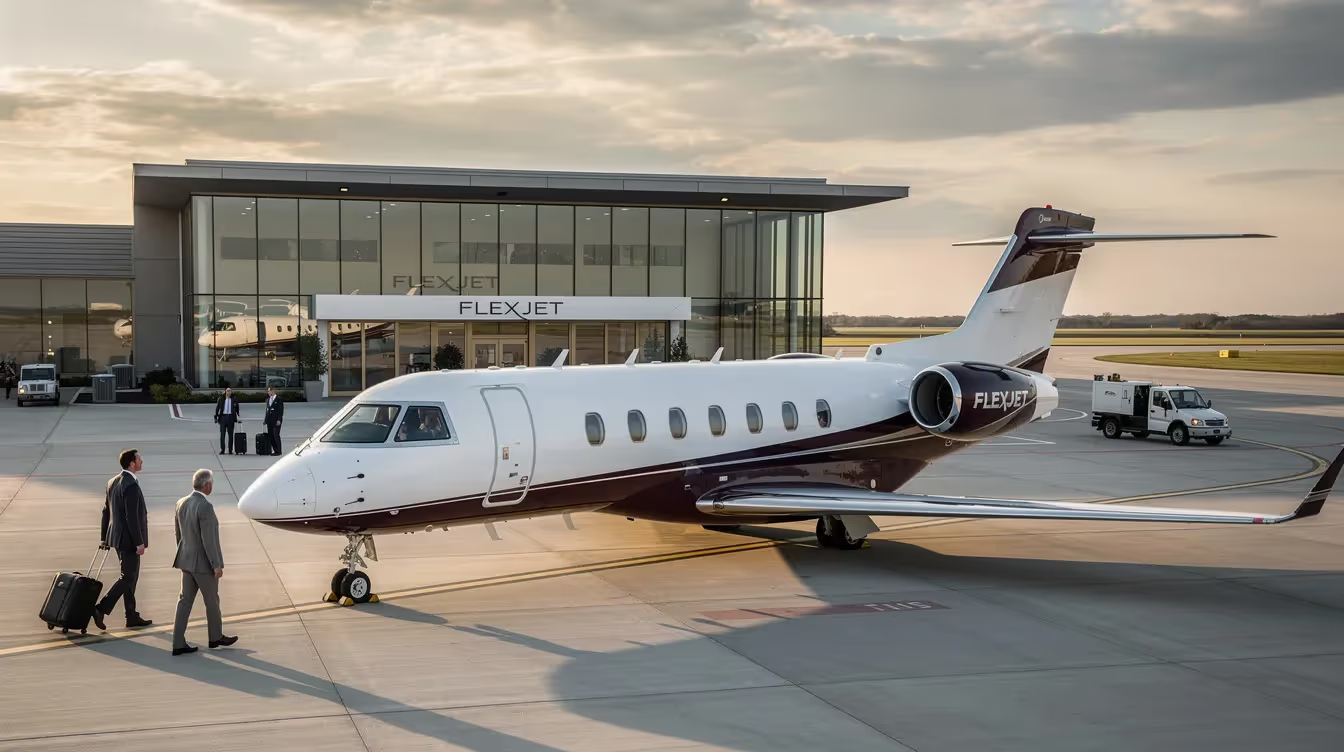
This guide compares Flexjet's fractional jet ownership model with on-demand charter services like Jettly, helping travelers determine which option best suits their needs. Flexjet is ideal for frequent flyers (50+ hours per year) seeking consistent access to a specific fleet and the benefits of ownership, while Jettly offers flexibility with trip-based booking and no long-term commitments. Flexjet operates a fleet of over 250 aircraft, focusing on premium experiences, whereas Jettly provides access to a global marketplace of aircraft without acquisition costs. Ultimately, the choice depends on flight frequency, budget, and travel preferences.
Jay Franco Serevilla
May 20, 2026
|
5
min read

View all
This guide compares JetOptions Private Jets and Jettly, two leading private jet charter services, highlighting their distinct booking models and offerings. JetOptions operates as a traditional charter broker, providing personalized service and access to vetted operators, while Jettly functions as a digital marketplace with instant pricing and access to over 20,000 aircraft globally. Key differences include JetOptions' concierge-style booking and jet card programs versus Jettly's transparent pricing and flexible membership options. Both services adhere to high safety standards, ensuring reliable travel experiences for various needs, from business to leisure.
Jay Franco Serevilla
May 20, 2026
|
5
min read

View all
This guide compares JetBlue's premium Mint service and charter options to true private jet travel, helping travelers choose based on comfort, privacy, flexibility, and value. "JetBlue private" typically refers to JetBlue Mint, Mint Studio, or JetBlue Charters, which offer premium commercial experiences rather than traditional private jet services. While JetBlue provides strong amenities like lie-flat seats and priority boarding, true private jet services, such as those offered by Jettly, allow for on-demand scheduling, greater privacy, and access to a wider range of airports. Ultimately, travelers should consider JetBlue for cost-effective, straightforward routes and Jettly for more complex or time-sensitive travel needs.
Jay Franco Serevilla
May 19, 2026
|
5
min read
View all
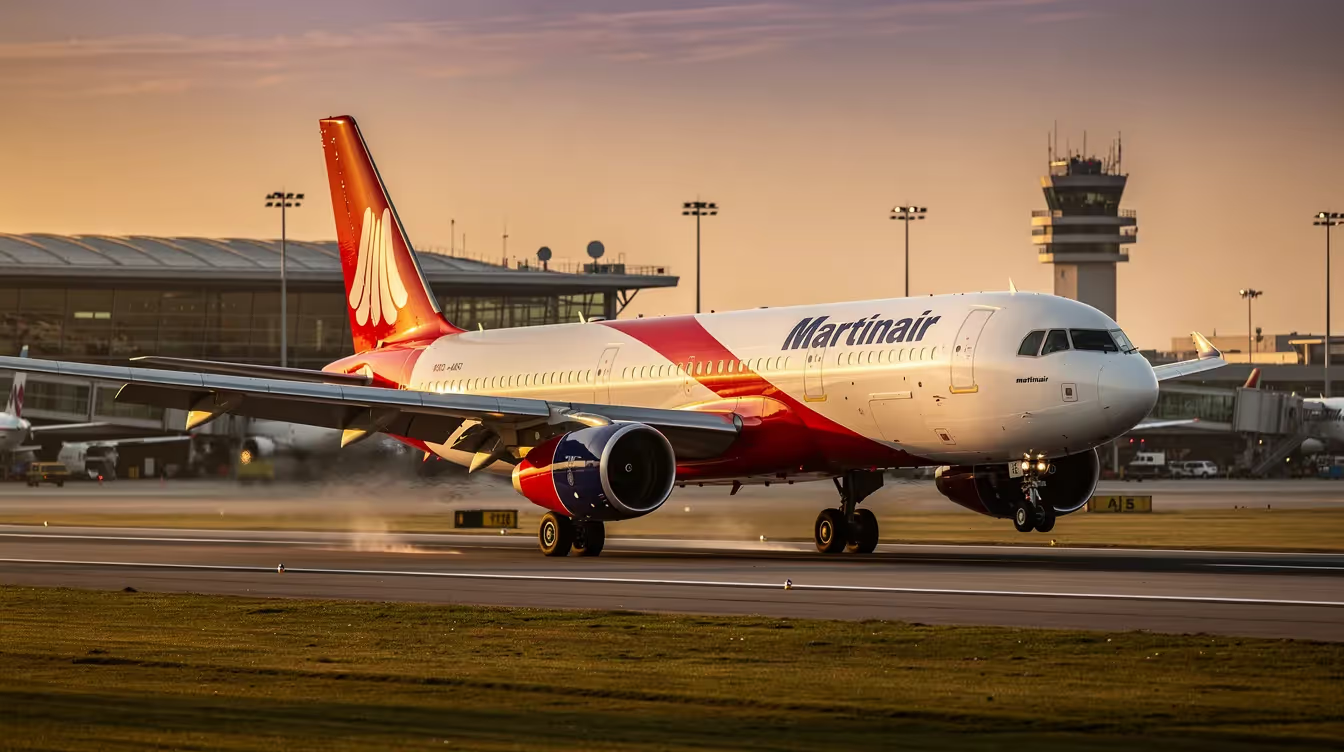
Martinair is a Dutch cargo airline under the Air France–KLM group, specializing in global freight transportation with a fleet of Boeing 747 freighters, while U.S. operators like MartinAir and Martinaire focus on regional aircraft charter and cargo services. Since ceasing passenger flights in 2011, Martinair has concentrated on heavy logistics, express cargo, and specialized shipments, such as perishables and pharmaceuticals. For travelers and businesses needing flexible air travel, Jettly offers a digital marketplace for on-demand private charters, providing access to over 20,000 aircraft globally. This allows customers to efficiently compare options for both scheduled cargo services with Martinair and urgent charter needs through Jettly.
Jay Franco Serevilla
May 19, 2026
|
5
min read
View all
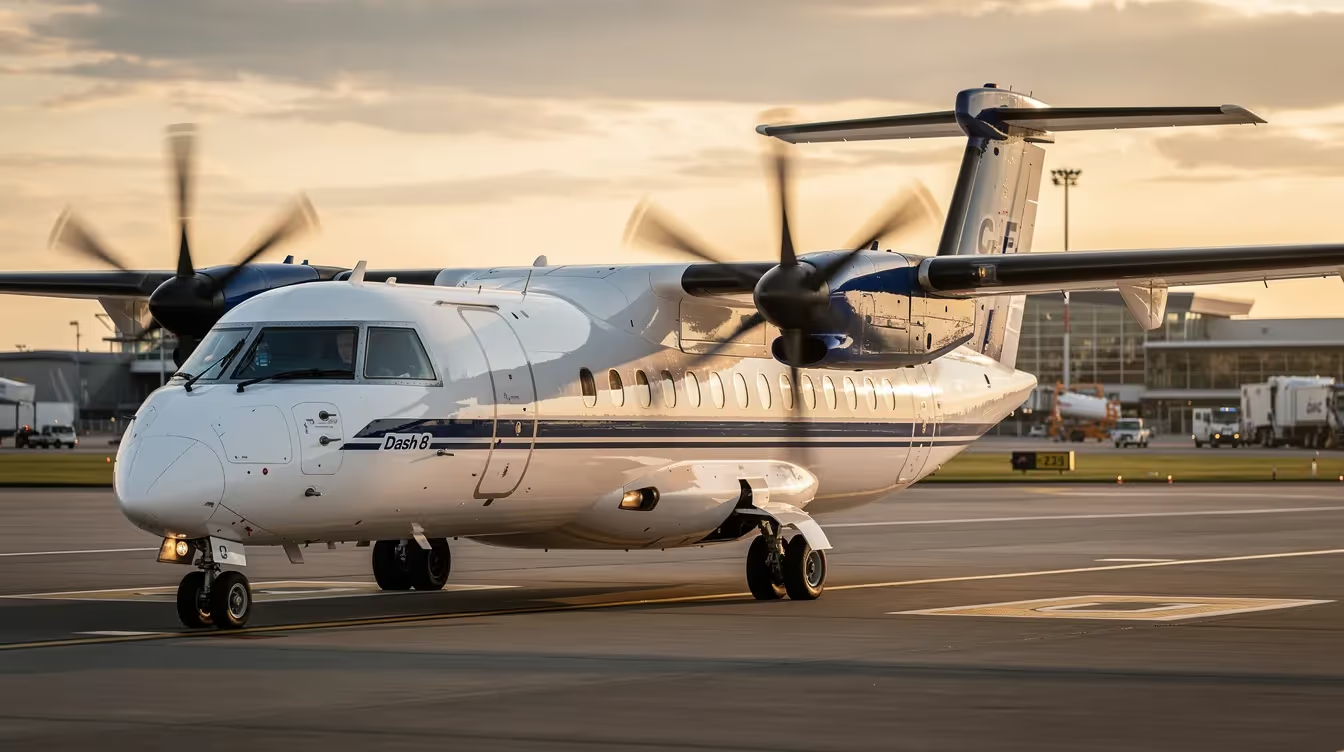
The Dash 8 engine, part of the Pratt & Whitney Canada PW100/PW150 family, powers the de Havilland Canada DHC-8 and Bombardier Dash 8 turboprop aircraft, known for their efficiency and reliability in regional air travel since the 1980s. These engines enable operations from shorter runways, making them suitable for diverse missions, including regional airlines and charter flights. The Dash 8 series has evolved through various upgrades, enhancing performance, capacity, and operational cost-effectiveness, particularly for routes under 1,200 nautical miles. Understanding the Dash 8 engine's capabilities helps travelers and operators evaluate turboprop options against jets for group charters and remote area access.
Jay Franco Serevilla
May 19, 2026
|
5
min read
Explore our latest articles and updates.

5
min read
Private Airplanes Cost: What It Really Takes to Fly, Rent, or Own
Understanding the costs of private airplanes involves three main components: chartering flights, purchasing an aircraft, and ongoing operational expenses. In 2026, charter rates range from approximately $2,000 to over $14,000 per hour, while purchase prices for new jets start at around $3.5 million and can exceed $81 million for ultra-long-range models. Annual operating costs can reach $500,000 to $2 million or more, depending on the aircraft type and usage, making chartering more cost-effective for those flying fewer than 200-250 hours annually. Jettly offers a digital marketplace for on-demand private jet charters, providing transparent pricing and flexibility without the burdens of ownership.
Read More
5
min read
How Much Is It to Purchase a Private Jet? A 2026 Cost Breakdown
In 2026, purchasing a private jet ranges from approximately $2 million for older very light jets to over $100 million for ultra-long-range models, with annual operating costs typically between $500,000 and $2 million. Buyers must consider not only the acquisition cost but also ongoing expenses such as crew salaries, maintenance, and insurance, which can significantly impact total ownership costs. For those flying less than 200 hours annually, chartering through platforms like Jettly may be more cost-effective than ownership, while frequent flyers may benefit from full or fractional ownership. Understanding the various costs and options available is crucial for making informed decisions about private jet travel.
Read MoreJoin our community and receive the latest blog updates directly in your inbox.
MEMBERSHIPS AND ASSOCIATIONS



Disclaimer: Jettly operates as a charter broker, offering access to a global digital jet charter marketplace. Jettly is not a direct air carrier and does not own or operate aircraft. All advertised flights are conducted by third-party air carriers that are fully licensed and hold the appropriate Part 135 or Part 121 certifications issued by the Federal Aviation Administration (FAA) or equivalent regulatory authorities under U.S. or foreign law. Jettly complies fully with the U.S. Department of Transportation's Part 295 and Part 298 Charter Broker regulations. Jettly does not carry additional liability insurance. Passengers are covered by aircraft operator insurance. TICO: 50023770


