


Login
Get Instant Pricing On 23,000+ Aircraft


Flying a plane requires skilled, licensed pilots who undergo extensive training. This article explores the various types of pilots, their training processes, and the controls they manage during flights. It also highlights the role of private jet charter services like Jettly in connecting travelers with professional pilots and aircraft.
Jay Franco Serevilla
Oct 1, 2026
|
5
min read


View all
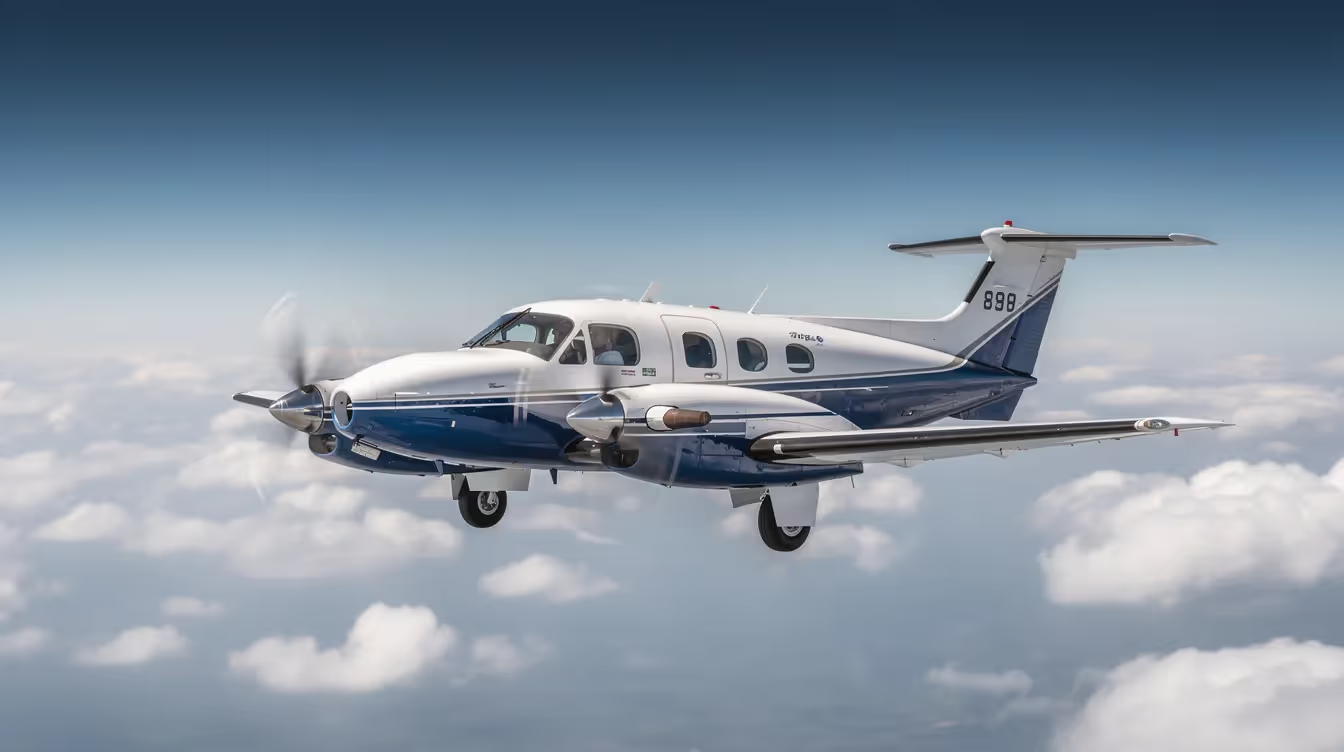
The Beechcraft Baron 58 is recognized as one of the fastest piston twin aircraft in general aviation, typically cruising at speeds of 180–190 KTAS, with turbocharged variants exceeding 200 KTAS. Its performance is influenced by factors such as aircraft weight, altitude, and temperature, making trip planning essential for charter clients to set realistic expectations regarding duration and costs. Jettly incorporates the Baron 58 into its network for efficient regional travel, highlighting its balance of speed, comfort, and lower operating costs compared to jets. Overall, the Baron 58 is an ideal choice for short to medium-range private charters, offering a compelling mix of performance and economy.
Jay Franco Serevilla
May 15, 2026
|
5
min read
View all
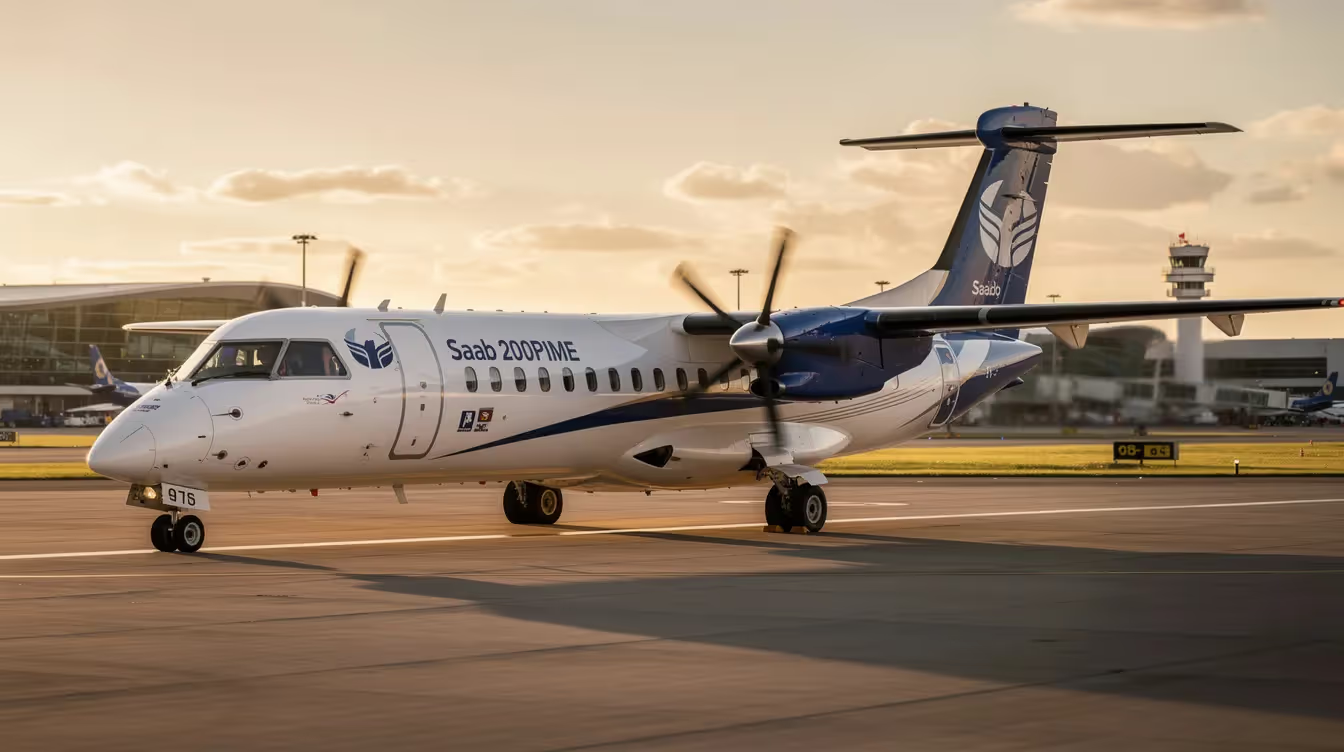
The Saab 2000 is a high-speed turboprop aircraft designed for regional and charter operations, offering jet-like performance with enhanced fuel efficiency and the ability to access smaller airports. With a maximum speed of 370 knots and a range of approximately 1,000 nautical miles, it serves as an economical choice for airlines and charter companies, particularly for groups needing to transport 40-50 passengers. Despite production ceasing in the early 2000s, the aircraft remains in active service globally, supported by specialized maintenance networks. Jettly facilitates charter flights on the Saab 2000, providing transparent pricing and flexible booking options for various travel needs.
Jay Franco Serevilla
May 15, 2026
|
5
min read

View all
Eclipse planes, particularly the Eclipse 500, 550, and SE, are recognized for their fuel efficiency and ability to operate from shorter runways, making them ideal for private and charter flights. Developed by Eclipse Aviation and later by Eclipse Aerospace and ONE Aviation, these very light jets offer competitive performance at lower operating costs compared to traditional jets. Despite past corporate challenges, refurbishment programs have kept the fleet relevant, appealing to travelers seeking cost-effective and flexible private flying options. Jettly provides an accessible platform for booking these jets on demand, allowing users to enjoy the benefits of private aviation without the burdens of ownership.
Jay Franco Serevilla
May 15, 2026
|
5
min read

View all
Witham Field, also known as Martin County Airport (KSUA), is a key hub for private jet travelers in Stuart, Florida, offering convenient access to the Treasure Coast region. The airport features three runways, on-site customs services, and full-service FBOs, making it ideal for both business and leisure aviation needs. Witham Field provides a less congested alternative to larger airports like Palm Beach International, often resulting in faster arrivals and departures for travelers. Jettly facilitates private jet charters to and from Witham Field, enhancing the travel experience with tailored services and quick customs processing.
Jay Franco Serevilla
May 15, 2026
|
5
min read

View all
The Super Bowl significantly boosts private jet travel, with around 1,000 jets arriving in the San Francisco Bay Area for the event, leading to a surge in demand of over 1,100% compared to typical levels. Jettly facilitates this process by offering access to over 20,000 aircraft and coordinating logistics, including airport slot reservations, which are essential due to strict FAA and NFL regulations during the event. Travelers are advised to book their private jets weeks in advance to secure availability and avoid delays, as airports like San Jose Mineta serve as primary hubs. Jettly's platform simplifies the booking process, providing transparent pricing and comprehensive support for a seamless travel experience.
Jay Franco Serevilla
May 15, 2026
|
5
min read

View all
The Dash 8-200 is a twin-engine regional turboprop airliner that seats 37-39 passengers and is designed for short-haul routes, offering improved performance and fuel efficiency compared to its predecessor, the Dash 8-100. With a maximum range of 1,125 nautical miles and the ability to operate from short runways, it is particularly suited for regional airlines and charter operators in remote areas. The aircraft's operational reliability, low operating costs, and flexible cabin configurations make it a popular choice for various missions, including corporate shuttles and emergency transport. Jettly provides charter options for the Dash 8-200, allowing travelers to customize their flight experience with tailored services and competitive pricing.
Jay Franco Serevilla
May 15, 2026
|
5
min read
Explore our latest articles and updates.

5
min read
Joel Osteen Private Jet: What's Fact, What's Controversy, and What It Says About Modern Ministry
Joel Osteen, pastor of Lakewood Church, does not own a private jet, as he has publicly stated that his wealth comes from book sales and media deals rather than a church salary. While Lakewood Church occasionally uses private aviation for staff travel due to logistical needs, this is distinct from personal ownership. The scrutiny surrounding Osteen's lifestyle stems from broader concerns about prosperity gospel preachers and their perceived luxury, which raises ethical questions about financial stewardship. Digital charter platforms like Jettly offer a transparent and flexible alternative for private travel, allowing users to access private jets without the financial burdens of ownership.
Read More
5
min read
Topjet Executive & Jettly: How Modern Private Jet Charter Really Works
Private jet charter has evolved significantly, with companies like Topjet Executive partnering with digital platforms such as Jettly to offer travelers quick access to aircraft, transparent pricing, and flexible routes. Topjet Executive, based in Milan, operates a fleet of 15 jets and a helicopter, catering to both business and leisure travelers, while Jettly serves as a marketplace connecting users to over 20,000 aircraft worldwide. This collaboration allows for instant quotes and easy comparisons of options, enhancing the overall travel experience. By utilizing modern booking tools and personalized services, travelers can enjoy the convenience and luxury of private jet travel without long-term commitments.
Read MoreJoin our community and receive the latest blog updates directly in your inbox.
MEMBERSHIPS AND ASSOCIATIONS



Disclaimer: Jettly operates as a charter broker, offering access to a global digital jet charter marketplace. Jettly is not a direct air carrier and does not own or operate aircraft. All advertised flights are conducted by third-party air carriers that are fully licensed and hold the appropriate Part 135 or Part 121 certifications issued by the Federal Aviation Administration (FAA) or equivalent regulatory authorities under U.S. or foreign law. Jettly complies fully with the U.S. Department of Transportation's Part 295 and Part 298 Charter Broker regulations. Jettly does not carry additional liability insurance. Passengers are covered by aircraft operator insurance. TICO: 50023770


