



Login
Get Instant Pricing On 23,000+ Aircraft


Civil aviation encompasses a diverse range of aircraft types, from commercial airliners to private jets. Understanding these categories helps travelers and aviation enthusiasts make informed decisions about their flying needs. This guide details the various aircraft types, their missions, and how to choose the right plane for specific travel requirements.
Jay Franco Serevilla
Oct 23, 2026
|
5
min read



View all
Alaska Airlines, headquartered in SeaTac, Washington, is a leading U.S. carrier with a strong West Coast presence, operating over 1,400 daily flights to more than 140 destinations. The airline is a member of the oneworld alliance, offering a loyalty program called Atmos Rewards, which allows travelers to earn and redeem miles on both Alaska and partner flights. Alaska Airlines is recognized for its operational reliability, low cancellation rates, and superior customer service, making it a preferred choice for routine travel, while private jet charters via platforms like Jettly provide flexibility for last-minute or specialized trips. The airline's diverse fleet, including Boeing 737s and newly acquired Airbus A330s from Hawaiian Airlines, supports its extensive domestic and international network.
Jay Franco Serevilla
Apr 18, 2026
|
5
min read

View all
Choosing the best plane for a family of four requires consideration of comfort, safety, performance, and cost, with options ranging from piston singles to turboprops and light jets. Popular models include the Cessna 182, Cirrus SR22, and Beechcraft Bonanza A36, each suited for different travel needs and budgets. Families flying less than 150-200 hours annually may find chartering through platforms like Jettly more cost-effective than ownership, as it eliminates maintenance and operational costs. Ultimately, families should assess their specific travel requirements and consider testing routes via charter before committing to an aircraft purchase.
Jay Franco Serevilla
Apr 18, 2026
|
5
min read

View all
The Learjet private jet, a staple in business aviation since its first flight in 1963, is renowned for its speed, agility, and efficient cabin designs, with models like the Learjet 35, 45, 60, 70, and 75 available for charter. Although Bombardier ceased production in 2021, thousands remain active in global charter fleets, offering cruise speeds around Mach 0.80 and ranges between 1,900 and 2,800 nautical miles. Travelers can easily charter Learjets through platforms like Jettly, which provide transparent pricing and access to various models without the burdens of ownership. The Learjet's performance, cabin comfort, and operational flexibility make it an ideal choice for business trips, family getaways, and urgent travel needs.
Jay Franco Serevilla
Apr 18, 2026
|
5
min read

View all
The cost of buying a plane varies widely, with used two-seat trainers starting around $15,000 and new large business jets exceeding $75 million. Buyers must also consider ongoing expenses, which can equal or surpass the purchase price over time, including maintenance, fuel, insurance, and crew salaries, with annual operating costs often ranging from $500,000 to over $1 million. For those flying less than 150 hours annually, chartering through platforms like Jettly may be more cost-effective than ownership, as it eliminates asset risk and maintenance responsibilities. Ultimately, the decision between buying and chartering should be based on individual flying needs and financial considerations.
Jay Franco Serevilla
Apr 18, 2026
|
5
min read

View all
Plane operating costs encompass the ongoing expenses necessary to keep an aircraft operational, distinct from its purchase price. These costs vary significantly by aircraft type, with small pistons costing around $150–$250 per flight hour, while heavy jets can exceed $8,000 per hour. For travelers flying less than 150–200 hours annually, chartering through platforms like Jettly is often more economical than ownership, which involves substantial fixed and variable costs. Jettly provides access to over 20,000 private charter aircraft globally, allowing users to avoid the complexities and financial burdens of aircraft ownership while enjoying the benefits of private aviation.
Jay Franco Serevilla
Apr 18, 2026
|
5
min read

View all
The article explores the various sleeping arrangements available on airplanes, including hidden crew bunks for flight attendants and pilots, as well as luxurious lie-flat beds in premium cabins and private jet staterooms. It highlights the importance of these spaces for safety and comfort during long-haul flights, with regulations mandating crew rest areas on flights exceeding 8-12 hours. Jettly's platform simplifies the process of finding flights with ideal sleeping arrangements, allowing travelers to compare options for both commercial and private aviation. Ultimately, the choice of sleeping accommodations depends on budget, route, and personal preferences.
Jay Franco Serevilla
Apr 18, 2026
|
5
min read
Explore our latest articles and updates.
5
min read
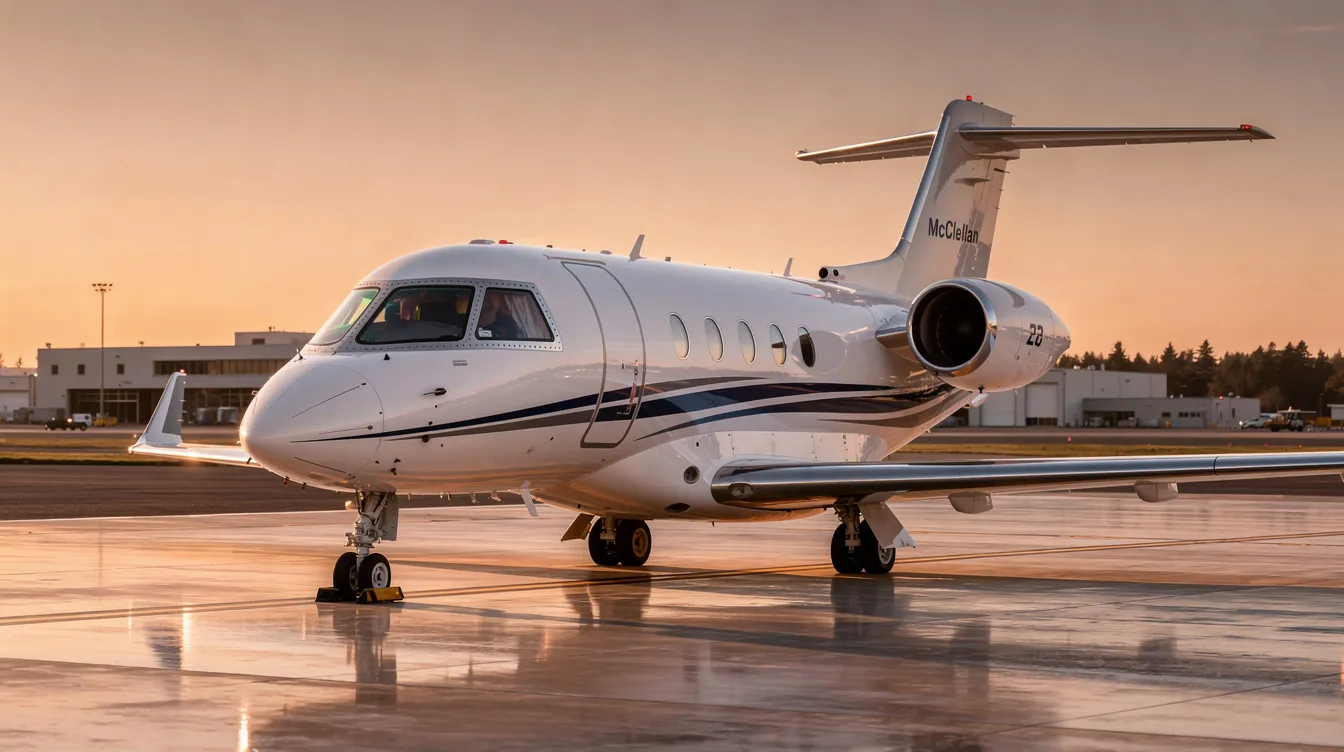
McClellan Jet Services: FBO Facilities, Jet Services, and Charter Alternatives
McClellan Jet Services is a premier fixed-base operator (FBO) at McClellan Airport, offering comprehensive ground support and amenities for private jet travelers. With 24/7 operations, it provides fueling, ground handling, and passenger services, while Jettly's digital platform facilitates seamless private jet charter bookings. Together, they enhance the private aviation experience for business and leisure travelers in Northern California.
Read More
5
min read
Arrow Jets: How Jettly Makes Private Jet Travel Simple, Fast, and Transparent
Jettly revolutionizes private jet travel by offering a digital platform that simplifies the booking process for over 20,000 aircraft worldwide. With instant pricing and transparent cost breakdowns, travelers can easily access fast, direct flights tailored to their needs. This on-demand model eliminates the complexities of traditional jet ownership, making private aviation more accessible and efficient.
Read MoreJoin our community and receive the latest blog updates directly in your inbox.
MEMBERSHIPS AND ASSOCIATIONS



Disclaimer: Jettly operates as a charter broker, offering access to a global digital jet charter marketplace. Jettly is not a direct air carrier and does not own or operate aircraft. All advertised flights are conducted by third-party air carriers that are fully licensed and hold the appropriate Part 135 or Part 121 certifications issued by the Federal Aviation Administration (FAA) or equivalent regulatory authorities under U.S. or foreign law. Jettly complies fully with the U.S. Department of Transportation's Part 295 and Part 298 Charter Broker regulations. Jettly does not carry additional liability insurance. Passengers are covered by aircraft operator insurance. TICO: 50023770


