



Login
Get Instant Pricing On 23,000+ Aircraft

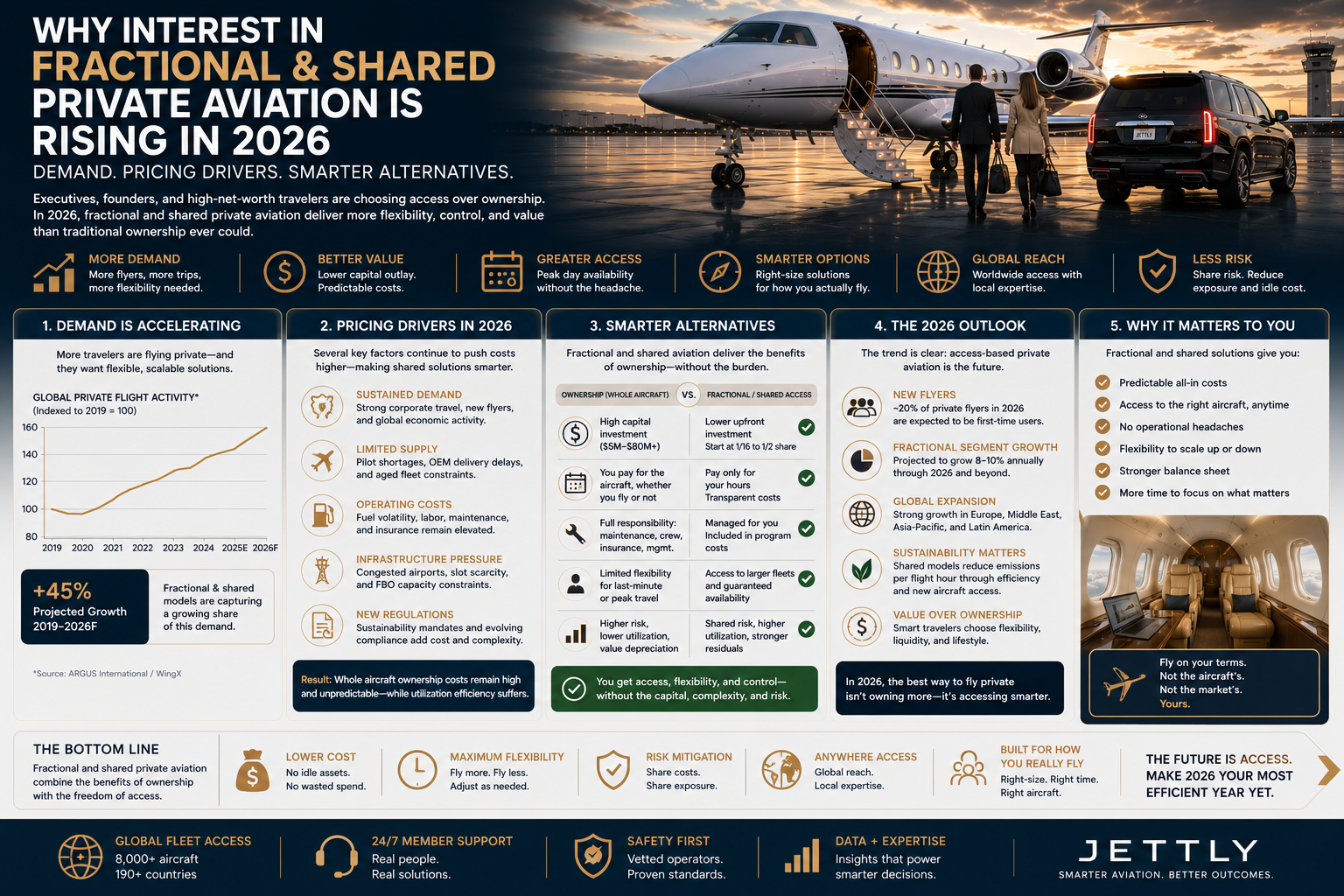
Interest in fractional and shared private aviation is surging in 2026 due to increased demand and tight availability. Travelers are seeking predictable access and transparent pricing, making fractional ownership and shared flights more appealing alternatives to traditional charter services.
Jay Franco Serevilla
Jul 25, 2026
|
5
min read



View all
The Beechcraft King Air 350 is a highly versatile turboprop aircraft, typically seating eight to nine passengers in a comfortable executive layout. With various cabin configurations available, it caters to business travel, family trips, and medical missions, making it a popular choice for private charters. Jettly offers instant pricing and comparisons for different King Air 350 options to suit diverse travel needs.
Jay Franco Serevilla
Sep 26, 2026
|
5
min read

View all
Weekend flights are generally more expensive due to higher demand, with prices increasing by about 19% compared to midweek departures. This trend is confirmed by 2026 data, showing that Friday and Sunday flights often carry the highest premiums. However, travelers can find cheaper options by flying midweek or exploring private jet charters.
Jeff Ryan Serevilla
Sep 26, 2026
|
5
min read

View all
Private Plane Magazine serves as a comprehensive guide to private jet travel, offering readers practical insights into aircraft types, costs, and booking processes. It emphasizes clarity and actionable information, helping both business and leisure travelers navigate the complexities of private aviation. With a focus on real examples and transparent pricing, the magazine aims to demystify the private jet experience.
Jeff Ryan Serevilla
Sep 26, 2026
|
5
min read

View all
The Russian private jet charter market has transformed significantly since 2022 due to sanctions and airspace restrictions. Despite these challenges, demand remains strong, with travelers adapting by utilizing neutral hubs and global platforms like Jettly for compliant travel. This article explores the current market landscape, aircraft options, pricing, and how to navigate private jet travel involving Russia.
Jeff Ryan Serevilla
Sep 25, 2026
|
5
min read

View all
Sports teams increasingly rely on private jet charters for travel, optimizing logistics and enhancing performance. These jets provide flexibility, speed, and tailored services that commercial flights cannot match, ensuring teams arrive rested and ready for competition.
Jeff Ryan Serevilla
Sep 25, 2026
|
5
min read

View all
Meregrass Inc, Wildcat Touring, and Jettly offer diverse private jet charter options tailored to different travel needs. Meregrass operates a fleet of Falcon jets and Saab turboprops for direct bookings, while Wildcat Touring provides semi-private flights on seasonal routes. Jettly serves as a digital marketplace connecting travelers to over 20,000 aircraft globally, offering flexibility and instant pricing.
Jeff Ryan Serevilla
Sep 25, 2026
|
5
min read
Explore our latest articles and updates.

5
min read
Boeing 737-700 Safety: What Passengers and Private Charter Flyers Should Know
The Boeing 737-700 boasts a strong safety record since its introduction in 1998, distinct from the 737 MAX series. Governed by the FAA and other global regulators, its safety is maintained through rigorous inspections and operator compliance. Passengers can trust the 737-700 for both commercial and private charters, as it lacks the controversial MCAS system found in the MAX models.
Read More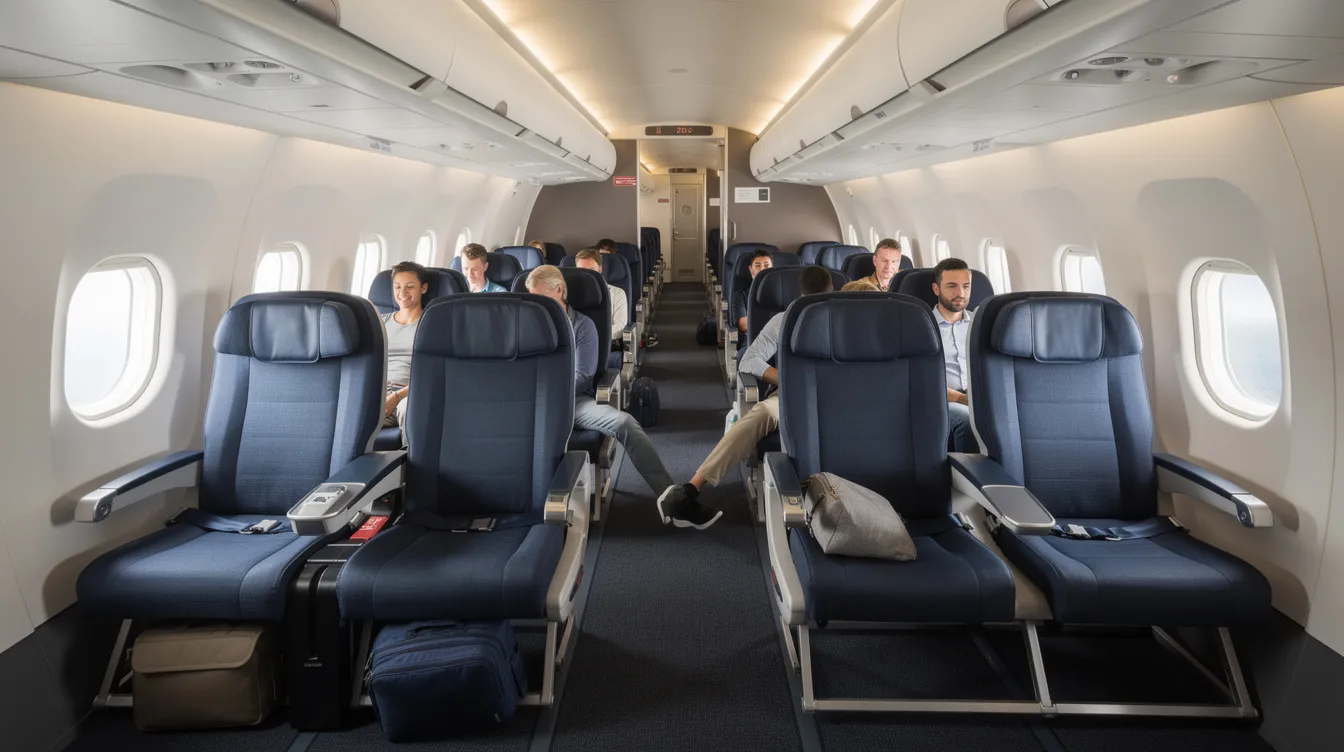
5
min read
Delta Comfort Plus Seating Chart: How to Choose the Best Seats (and When to Go Private)
Navigating the Delta Comfort Plus seating chart can enhance your travel experience by providing extra legroom and amenities. This guide details how to choose the best seats, understand aircraft layouts, and when to consider private jet charters for more comfort. Discover the benefits of Comfort Plus and how it compares to other classes, ensuring you arrive at your destination refreshed.
Read MoreJoin our community and receive the latest blog updates directly in your inbox.
MEMBERSHIPS AND ASSOCIATIONS



Disclaimer: Jettly operates as a charter broker, offering access to a global digital jet charter marketplace. Jettly is not a direct air carrier and does not own or operate aircraft. All advertised flights are conducted by third-party air carriers that are fully licensed and hold the appropriate Part 135 or Part 121 certifications issued by the Federal Aviation Administration (FAA) or equivalent regulatory authorities under U.S. or foreign law. Jettly complies fully with the U.S. Department of Transportation's Part 295 and Part 298 Charter Broker regulations. Jettly does not carry additional liability insurance. Passengers are covered by aircraft operator insurance. TICO: 50023770


