



Login
Get Instant Pricing On 23,000+ Aircraft

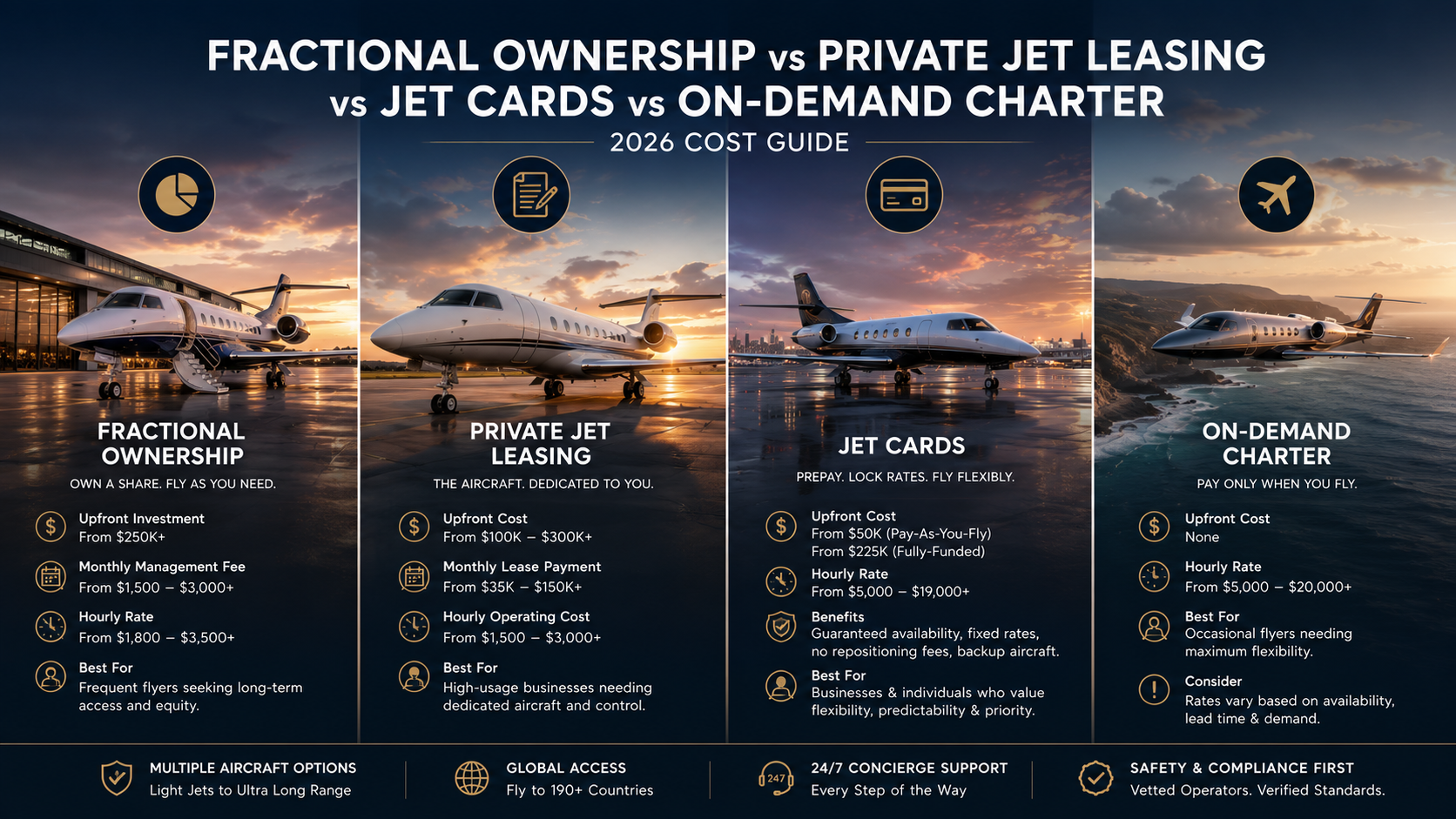
Navigating private jet access models can be complex, with options like fractional ownership, leasing, jet cards, and on-demand charter each offering unique pricing structures. Understanding these models is crucial for making informed decisions based on your flying habits and financial commitments. This guide breaks down the costs and benefits of each option, helping you choose the best fit for your travel needs.
Jay Franco Serevilla
Jul 25, 2026
|
5
min read



View all
The Beechcraft King Air 200 is a versatile twin-turboprop aircraft known for its short takeoff distance, typically ranging from 2,479 to 3,300 feet. This capability allows it to access smaller regional airports, making it a popular choice for charter clients. Factors such as aircraft weight, temperature, and runway conditions significantly influence its performance, which is crucial for operational planning.
Jay Franco Serevilla
Aug 24, 2026
|
5
min read

View all
The SOCATA TB 9 Tampico is a versatile single-engine aircraft known for its stable handling and comfortable cabin, making it a popular choice for flight training and light touring since the 1980s. While it remains a reliable option for aspiring pilots, modern charter services like Jettly now offer faster and more efficient alternatives for similar missions.
Jay Franco Serevilla
Aug 24, 2026
|
5
min read

View all
The aviation industry is responsible for 2-3% of global CO₂ emissions, but airlines are adopting greener practices to achieve net-zero emissions by 2050. This guide highlights how travelers can reduce their carbon footprint through sustainable aviation fuels, efficient aircraft, and platforms like Jettly that facilitate greener flying options. By making informed choices, frequent flyers can significantly impact the industry's environmental footprint.
Jay Franco Serevilla
Aug 24, 2026
|
5
min read

View all
The Airbus A340 is a long-range, four-engine commercial jet designed for intercontinental flights, known for its spacious cabins and reliability. Although largely replaced by more fuel-efficient twin-engine aircraft, it remains popular for charter services, VIP transport, and government missions. This guide explores the A340's variants, performance, and its evolving role in the aviation market.
Jay Franco Serevilla
Aug 24, 2026
|
5
min read

View all
SkySouth Aviation is a premier private jet charter and full-service FBO located at Burlington Alamance Regional Airport in North Carolina. Since 2003, it has provided exceptional services including charter flights, medical missions, and comprehensive ground support, making it a convenient alternative to larger commercial airports. With a focus on safety, flexibility, and personalized service, SkySouth caters to both business and leisure travelers.
Jay Franco Serevilla
Aug 23, 2026
|
5
min read

View all
Steelman Aviation, operating as AirSmart, specializes in private charter flights using a fleet of Pilatus aircraft from North Las Vegas. With a focus on regional travel across the Western USA and Mexico, they offer tailored solutions for leisure and corporate trips. Travelers can easily access their services through Jettly's digital marketplace, ensuring transparent pricing and a variety of aircraft options.
Jay Franco Serevilla
Aug 23, 2026
|
5
min read
Explore our latest articles and updates.

5
min read
Types of Planes in Civil Aviation: From Commercial Airliners to Private Jets
Civil aviation encompasses a diverse range of aircraft types, from commercial airliners to private jets. Understanding these categories helps travelers and aviation enthusiasts make informed decisions about their flying needs. This guide details the various aircraft types, their missions, and how to choose the right plane for specific travel requirements.
Read More
5
min read
Real-Time Flight Tracking: How Jettly Brings Global Flight Data Into Your Trip Planning
In 2026, Jettly revolutionizes private jet travel with real-time flight tracking, providing travelers with live updates on aircraft positions, ETAs, and status notifications. This technology enhances trip planning, allowing for better coordination of ground transport and instant pricing based on current data. With over 20,000 aircraft available, Jettly ensures a seamless and predictable travel experience for its users.
Read MoreJoin our community and receive the latest blog updates directly in your inbox.
MEMBERSHIPS AND ASSOCIATIONS



Disclaimer: Jettly operates as a charter broker, offering access to a global digital jet charter marketplace. Jettly is not a direct air carrier and does not own or operate aircraft. All advertised flights are conducted by third-party air carriers that are fully licensed and hold the appropriate Part 135 or Part 121 certifications issued by the Federal Aviation Administration (FAA) or equivalent regulatory authorities under U.S. or foreign law. Jettly complies fully with the U.S. Department of Transportation's Part 295 and Part 298 Charter Broker regulations. Jettly does not carry additional liability insurance. Passengers are covered by aircraft operator insurance. TICO: 50023770


