


Login
Get Instant Pricing On 23,000+ Aircraft


The Navy Blue Angels, established in 1946, are the United States Navy's premier flight demonstration squadron, showcasing naval aviation excellence. They inspire millions through their precision flying and community outreach, connecting the public to military service. Their legacy continues to influence both military and civilian aviation standards.
Jay Franco Serevilla
Aug 2, 2026
|
5
min read


View all
Jettly offers leading-edge helicopter experiences that combine advanced rotorcraft, skilled pilots, and a seamless booking process. Ideal for both business and leisure travelers, Jettly connects users to a variety of helicopter tours and charter flights worldwide, ensuring safety and transparency in costs.
Jay Franco Serevilla
Jul 26, 2026
|
5
min read

View all
The Mil Mi-26 is the largest passenger helicopter, accommodating up to 83 people, while the Sikorsky S-92 is the leading choice for civil aviation with a capacity of 19 passengers. These helicopters play vital roles in offshore transport, search and rescue, and VIP services. Charter options are available through platforms like Jettly, which facilitate access to helicopters for specialized missions.
Jay Franco Serevilla
Jul 26, 2026
|
5
min read

View all
Helicopters typically produce noise levels ranging from 83 to over 100 decibels, depending on the aircraft type and flight phase. Understanding these noise levels is crucial for passenger comfort and community impact, especially for those considering private helicopter travel. Modern advancements in helicopter design and noise-reduction technologies are helping to mitigate these sound levels.
Jay Franco Serevilla
Jul 26, 2026
|
5
min read
View all
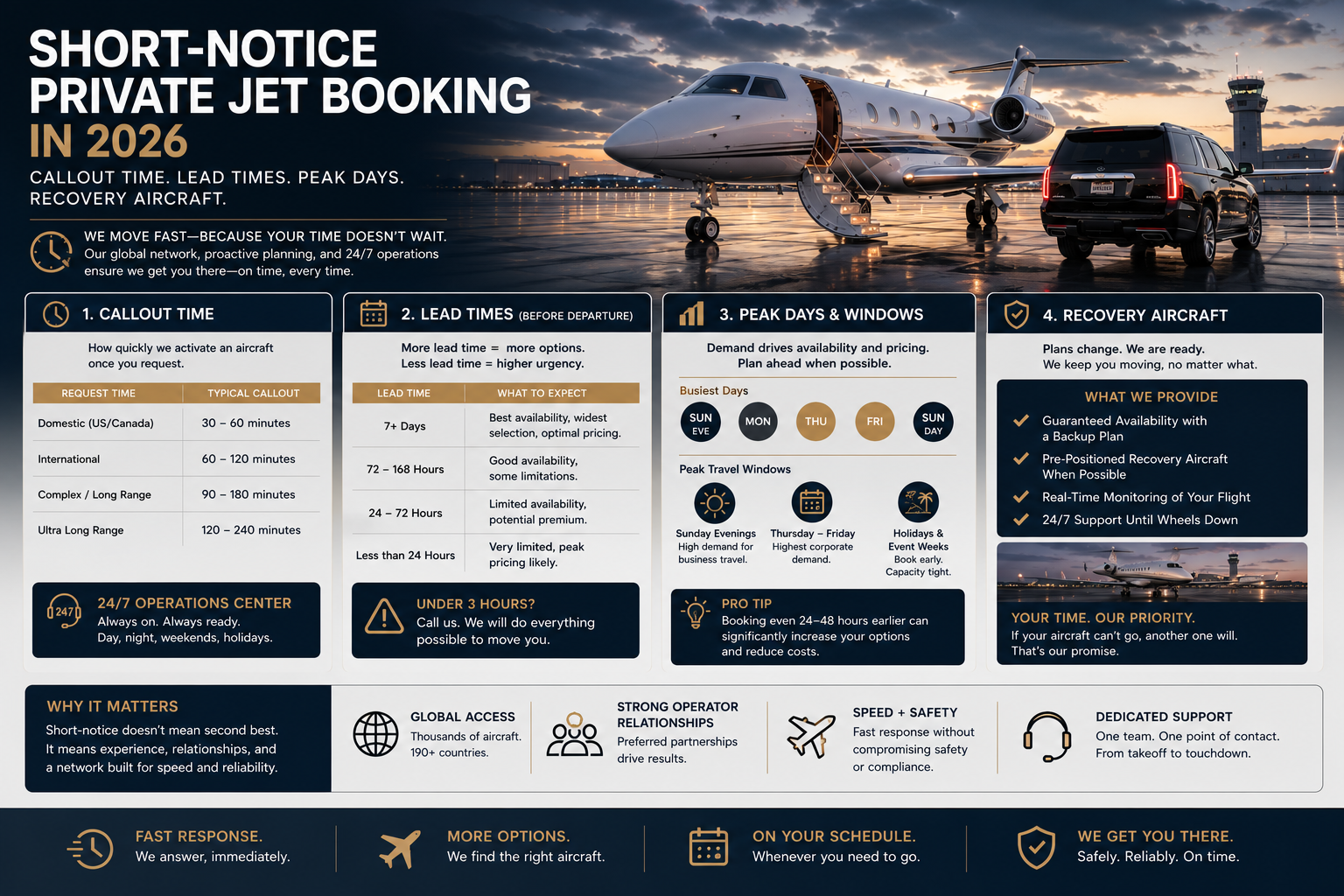
Short-notice private jet booking requires understanding key factors like callout time, lead times, and peak-day rules. While ordinary days may allow flights within hours, peak travel days necessitate longer planning and flexibility. This guide helps you navigate the complexities of private aviation to ensure a smooth booking experience.
Jay Franco Serevilla
Jul 25, 2026
|
5
min read
View all
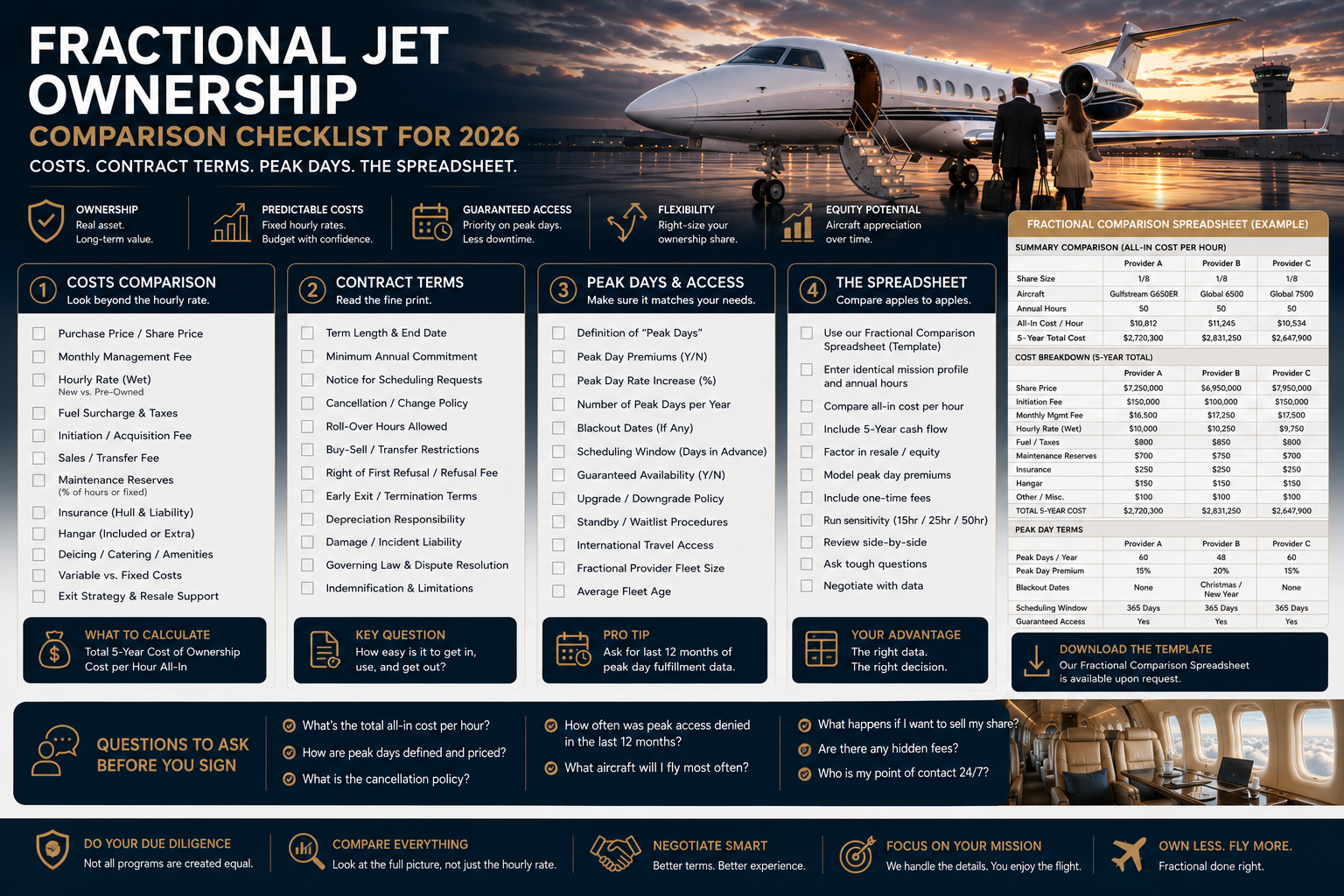
The 2026 Fractional Jet Ownership Comparison Checklist is essential for buyers to evaluate proposals effectively. It standardizes quotes into an effective cost per occupied hour, ensuring transparency in costs and contract terms. This comprehensive guide also addresses peak-day reliability, helping buyers make informed decisions in fractional jet ownership.
Jay Franco Serevilla
Jul 25, 2026
|
5
min read
View all
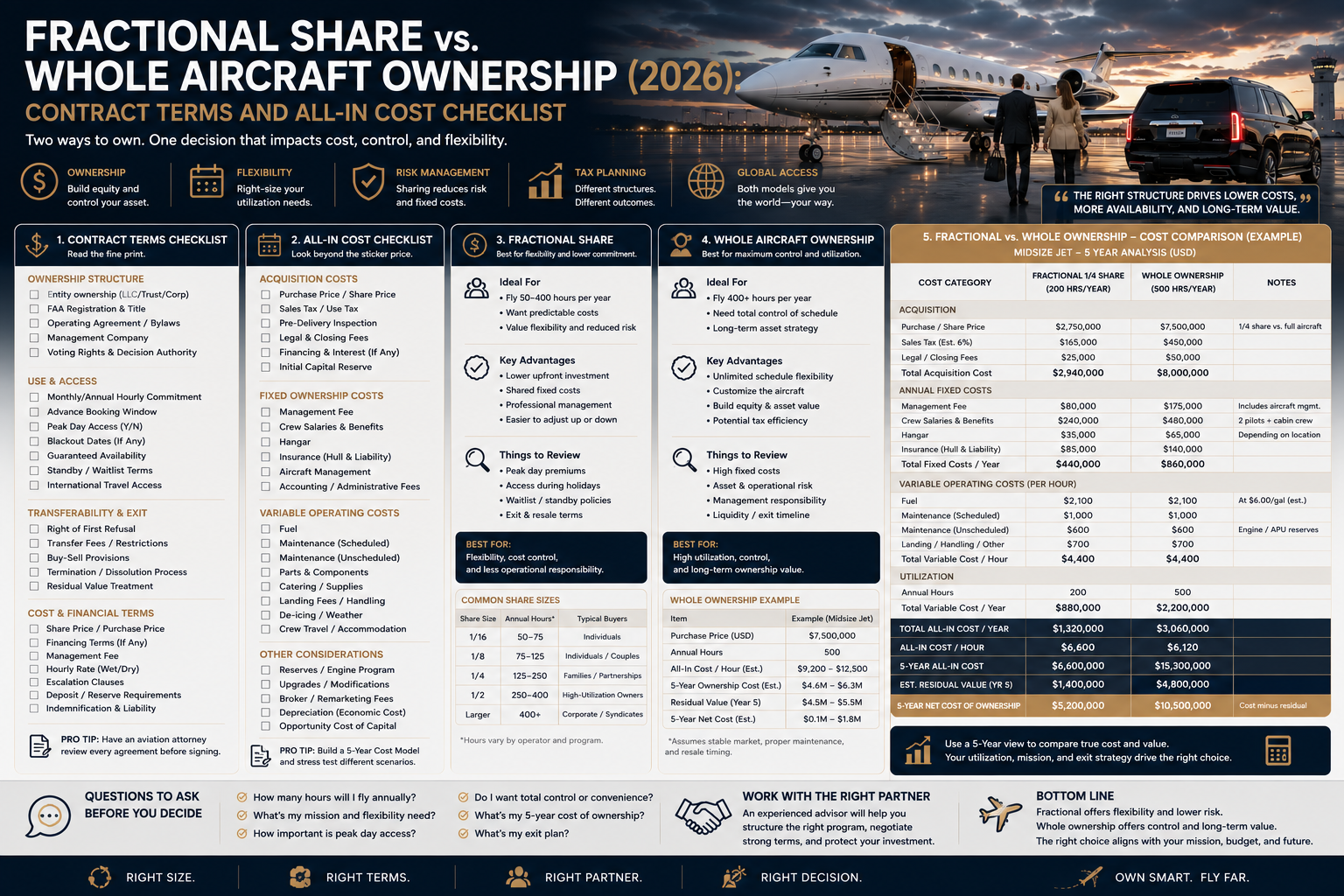
In 2026, buyers of private aviation must weigh fractional share ownership against whole aircraft ownership based on their flying needs, capital commitment, and operational flexibility. This guide provides a comprehensive checklist to evaluate contract terms and all-in costs, emphasizing the importance of understanding effective cost per occupied hour and peak-day reliability. By aligning ownership structures with flight patterns and financial goals, buyers can make informed decisions that suit their unique aviation requirements.
Jay Franco Serevilla
Jul 25, 2026
|
5
min read
Explore our latest articles and updates.

5
min read
Who Flies a Plane: From Private Jet Captains to Celebrity Pilots
Flying a plane requires skilled, licensed pilots who undergo extensive training. This article explores the various types of pilots, their training processes, and the controls they manage during flights. It also highlights the role of private jet charter services like Jettly in connecting travelers with professional pilots and aircraft.
Read More
5
min read
Free Flight Tracker: How to Monitor Commercial and Private Flights in Real Time
Free flight trackers have revolutionized how we monitor aircraft in real-time, providing accessible tools for tracking both commercial and private flights. These platforms aggregate data from various sources to deliver live updates on flight status, routes, and estimated arrivals. While free versions offer essential features, premium options and services like Jettly enhance the experience by enabling booking and detailed trip management.
Read MoreJoin our community and receive the latest blog updates directly in your inbox.
MEMBERSHIPS AND ASSOCIATIONS



Disclaimer: Jettly operates as a charter broker, offering access to a global digital jet charter marketplace. Jettly is not a direct air carrier and does not own or operate aircraft. All advertised flights are conducted by third-party air carriers that are fully licensed and hold the appropriate Part 135 or Part 121 certifications issued by the Federal Aviation Administration (FAA) or equivalent regulatory authorities under U.S. or foreign law. Jettly complies fully with the U.S. Department of Transportation's Part 295 and Part 298 Charter Broker regulations. Jettly does not carry additional liability insurance. Passengers are covered by aircraft operator insurance. TICO: 50023770


