


Login
Get Instant Pricing On 23,000+ Aircraft


Flying a plane requires skilled, licensed pilots who undergo extensive training. This article explores the various types of pilots, their training processes, and the controls they manage during flights. It also highlights the role of private jet charter services like Jettly in connecting travelers with professional pilots and aircraft.
Jay Franco Serevilla
Oct 1, 2026
|
5
min read


View all
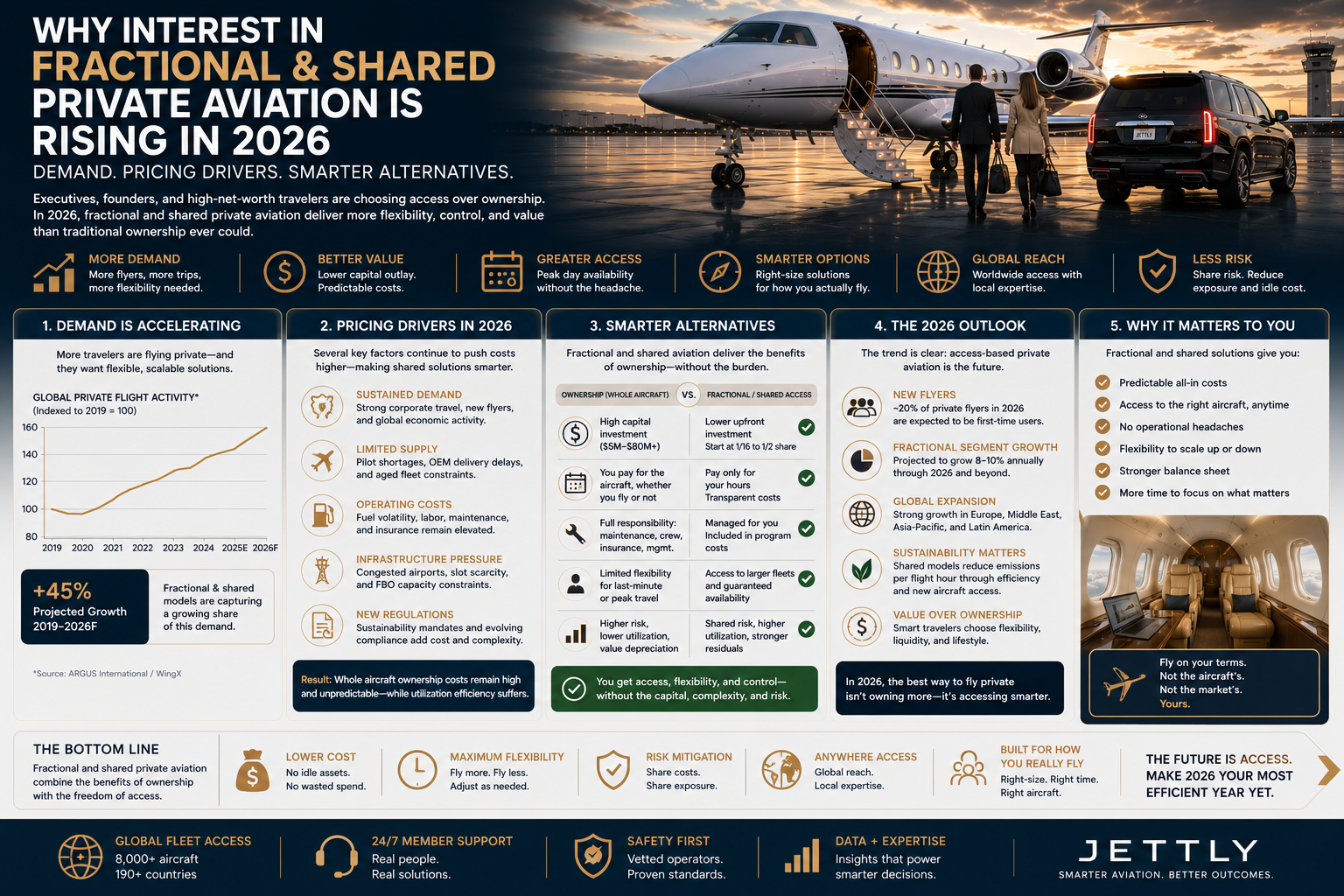
Interest in fractional and shared private aviation is surging in 2026 due to increased demand and tight availability. Travelers are seeking predictable access and transparent pricing, making fractional ownership and shared flights more appealing alternatives to traditional charter services.
Jay Franco Serevilla
Jul 25, 2026
|
5
min read
View all
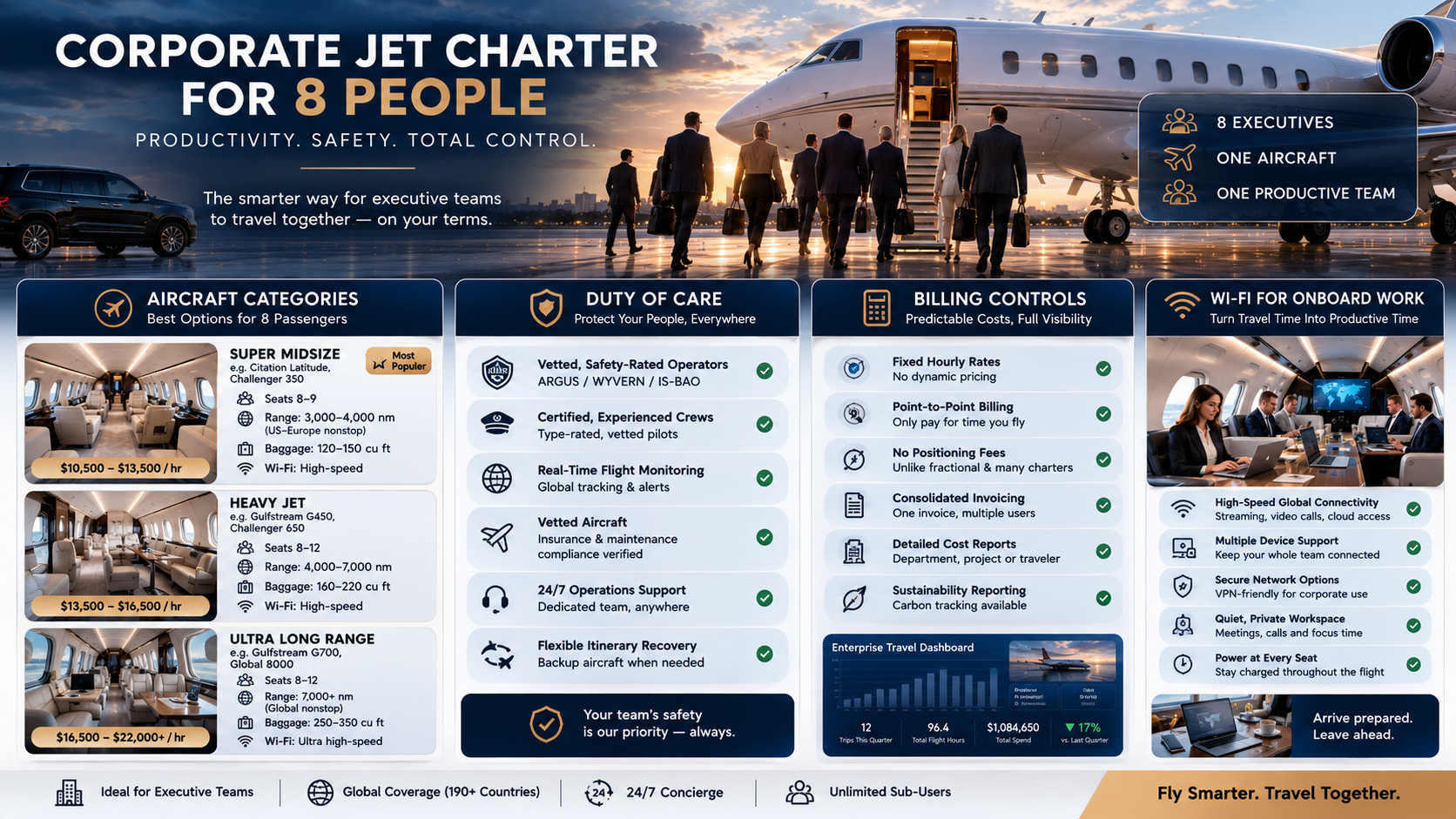
This comprehensive guide outlines the essentials for corporate jet charters accommodating teams of eight, focusing on aircraft categories, duty of care, billing controls, and onboard connectivity. It emphasizes the importance of selecting the right jet type, ensuring reliable Wi-Fi for work, and implementing effective billing practices to manage costs. By understanding these factors, organizations can enhance their private aviation experience and ensure smooth travel for their leadership teams.
Jay Franco Serevilla
Jul 25, 2026
|
5
min read
View all
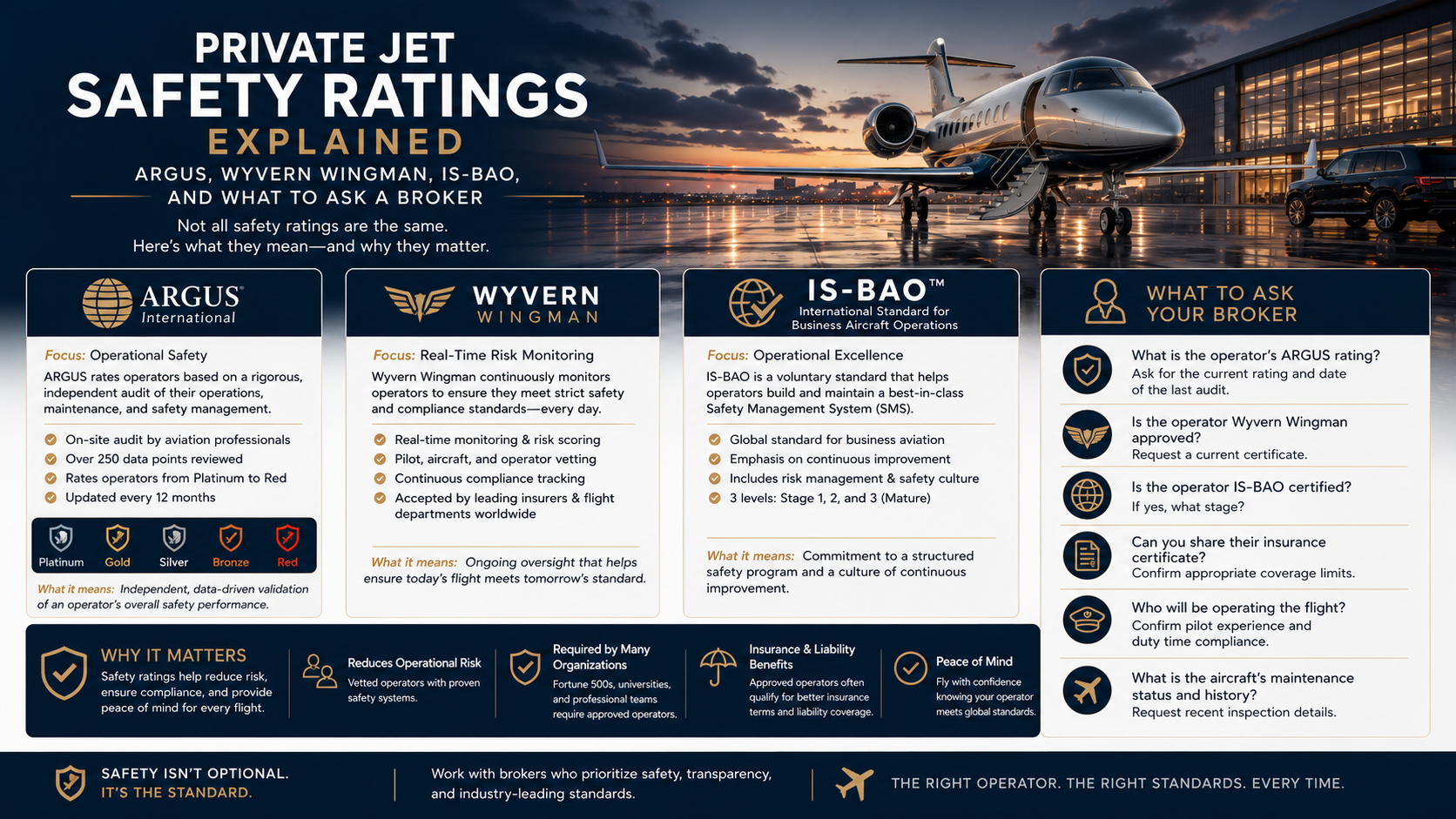
Private jet safety ratings, such as ARGUS, WYVERN, and IS-BAO, are essential tools for evaluating charter operators. These ratings assess how well operators train crews, maintain aircraft, and manage risks, providing an extra layer of safety assurance. Understanding these ratings and verifying the operator's credentials can significantly enhance your travel safety.
Jay Franco Serevilla
Jul 25, 2026
|
5
min read

View all
Understanding private jet baggage limits is crucial for travelers. Unlike commercial airlines, private jets have unique restrictions based on aircraft type, baggage volume, and door geometry. This guide provides essential insights into luggage capacity, especially for bulky items like skis and golf bags, ensuring a smooth travel experience.
Jay Franco Serevilla
Jul 25, 2026
|
5
min read
View all
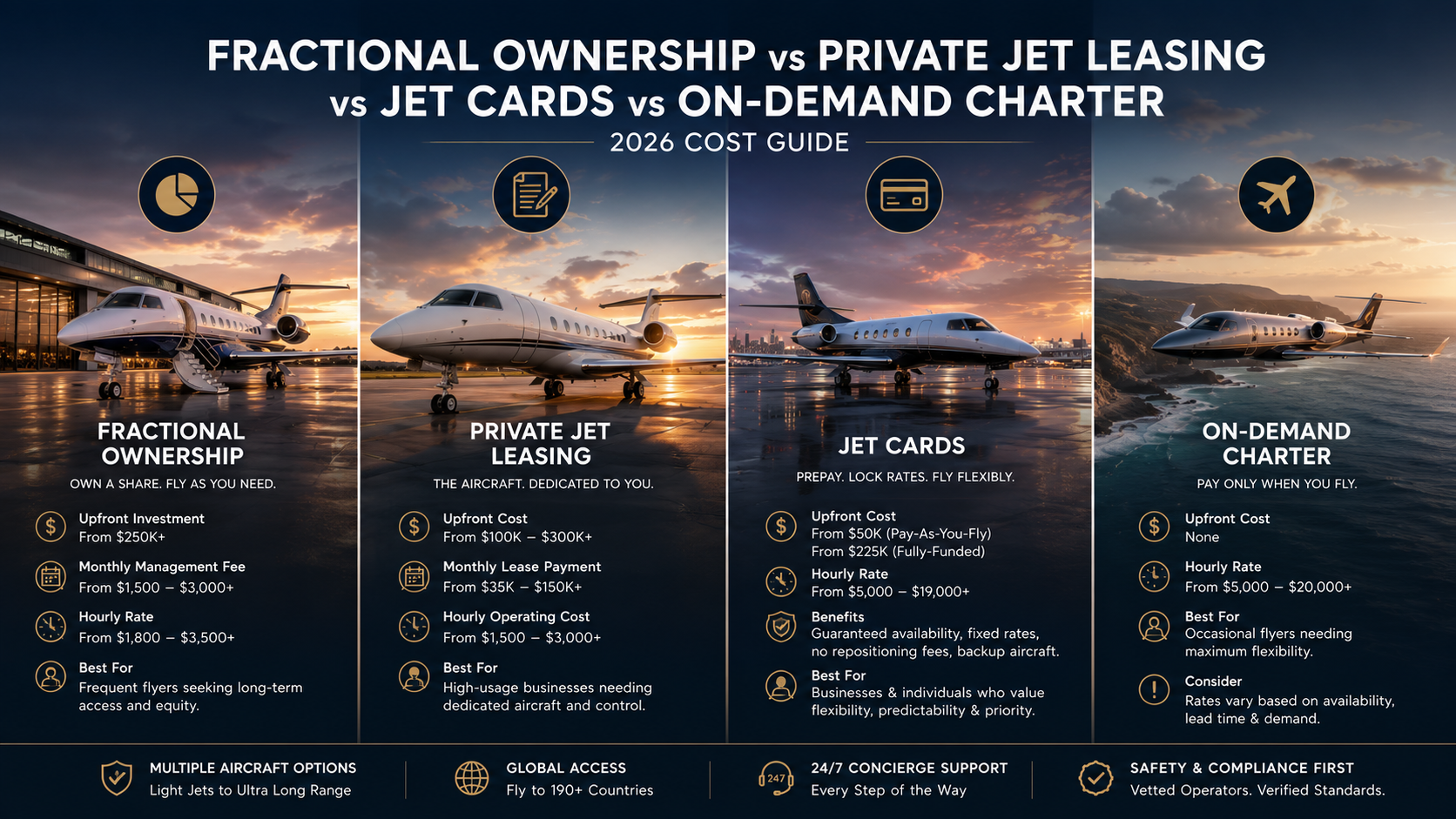
Navigating private jet access models can be complex, with options like fractional ownership, leasing, jet cards, and on-demand charter each offering unique pricing structures. Understanding these models is crucial for making informed decisions based on your flying habits and financial commitments. This guide breaks down the costs and benefits of each option, helping you choose the best fit for your travel needs.
Jay Franco Serevilla
Jul 25, 2026
|
5
min read
View all
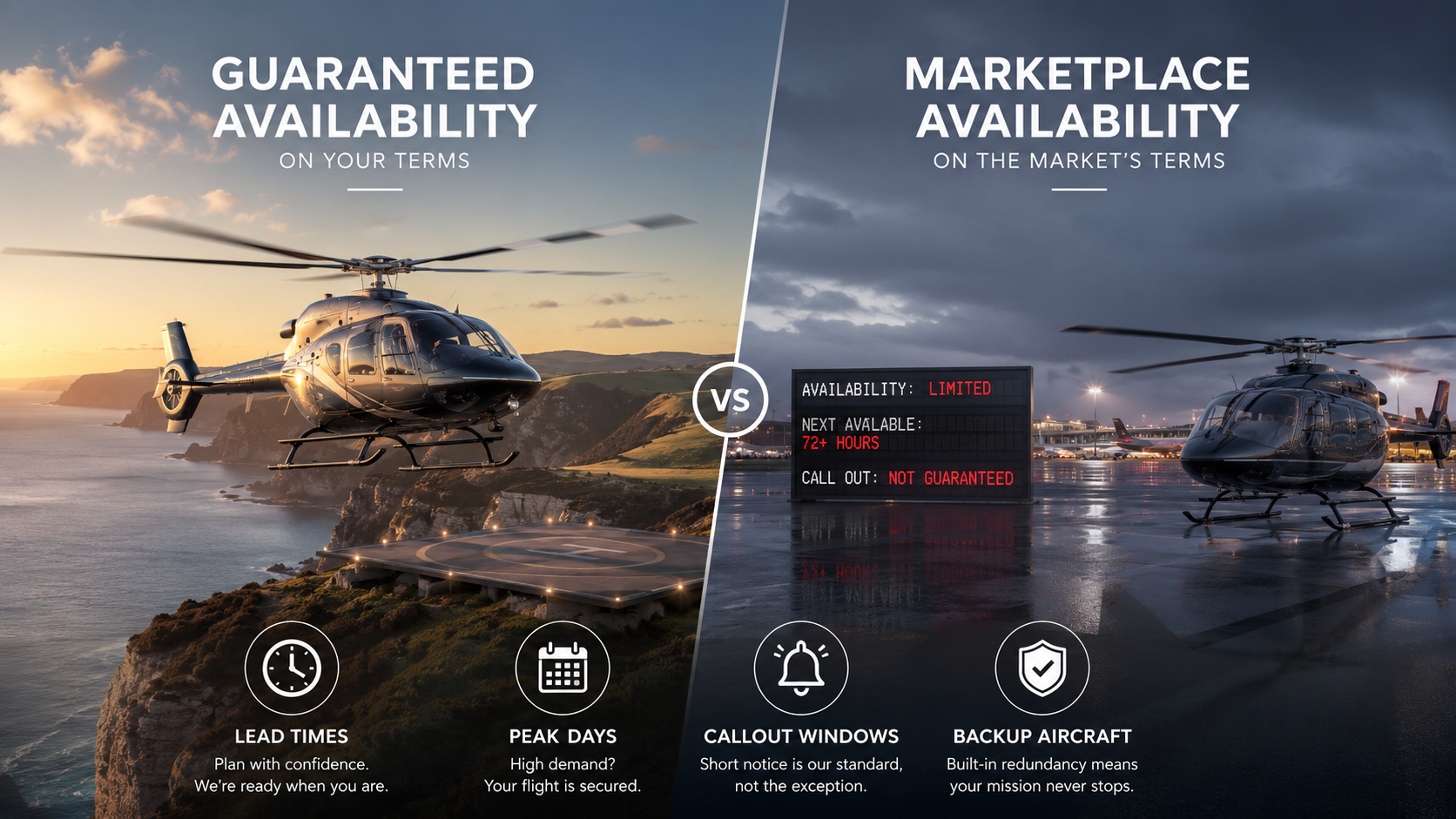
In private aviation, guaranteed availability offers a contract-backed promise for aircraft access, while marketplace availability provides real-time access to a larger fleet based on supply and demand. Understanding the differences in lead times, peak days, and backup aircraft options is crucial for making informed decisions. This guide breaks down the nuances of both models to help you choose the best fit for your flying needs.
Jay Franco Serevilla
Jul 25, 2026
|
5
min read
Explore our latest articles and updates.

5
min read
Jet Card Tax Guide: FET, Business Deductibility & State Sales Tax
The Jet Card Tax Guide outlines key tax considerations for private jet card users, including Federal Excise Tax (FET), state sales tax, and business deductibility rules, aimed at CFOs and finance teams managing aviation budgets. FET is a 7.5% tax on domestic flights, with pricing typically quoted as either "all-in" (including FET) or "plus-FET" (added on top). Jet card flights may be tax-deductible if they meet IRS criteria for business expenses, while personal travel is generally non-deductible. The guide emphasizes the importance of understanding tax implications for effective financial planning and compliance in private aviation.
Read More
5
min read
Jettly vs Competitors: Jet Card Provider Comparison Hub
This guide compares leading jet card providers—NetJets, Flexjet, Sentient, Wheels Up, XO, VistaJet, and Jettly—helping private flyers and business travelers choose the best option based on their needs. Key models include owned fleets for consistency (NetJets, Flexjet), broker-based cards for flexibility (Sentient, Magellan), and marketplace models for transparency and adaptability (Jettly, XO). Factors to consider include fleet size, guaranteed availability, pricing structures, and service areas, with costs typically ranging from $125,000 to over $325,000 for a 25-hour commitment. Ultimately, the right provider depends on individual travel patterns, preferences for aircraft consistency, and the desired level of flexibility.
Read MoreJoin our community and receive the latest blog updates directly in your inbox.
MEMBERSHIPS AND ASSOCIATIONS



Disclaimer: Jettly operates as a charter broker, offering access to a global digital jet charter marketplace. Jettly is not a direct air carrier and does not own or operate aircraft. All advertised flights are conducted by third-party air carriers that are fully licensed and hold the appropriate Part 135 or Part 121 certifications issued by the Federal Aviation Administration (FAA) or equivalent regulatory authorities under U.S. or foreign law. Jettly complies fully with the U.S. Department of Transportation's Part 295 and Part 298 Charter Broker regulations. Jettly does not carry additional liability insurance. Passengers are covered by aircraft operator insurance. TICO: 50023770


