


Login
Get Instant Pricing On 23,000+ Aircraft

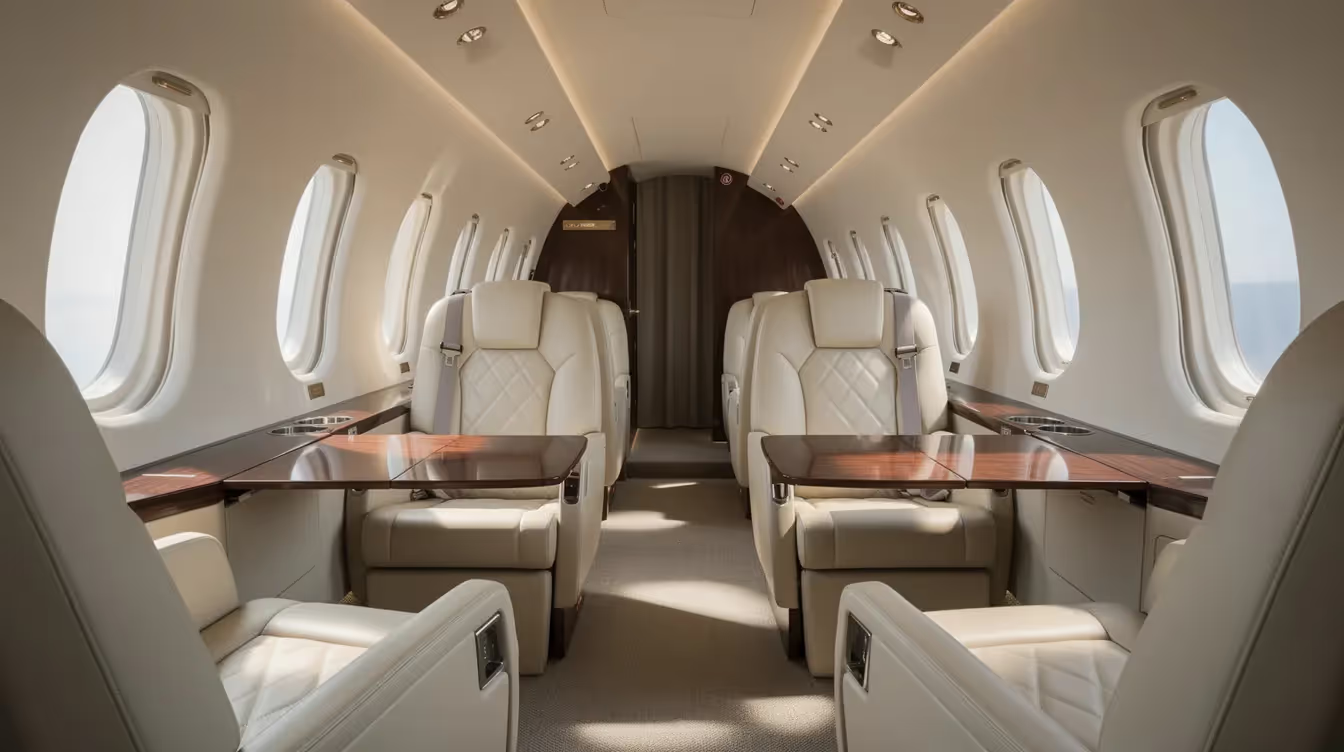
Jettly offers on-demand private jet charters, allowing travelers to book flights without long-term commitments, memberships, or ownership stakes. The platform connects users to over 20,000 aircraft globally, providing flexibility and instant pricing for customized travel experiences. This model is particularly advantageous for irregular travelers or those needing different aircraft types for various missions, with significant growth in demand reflected in rising charter prices. Jettly's user-friendly digital marketplace streamlines the booking process, ensuring transparency and personalized service for both business and leisure travelers.
Jay Franco Serevilla
May 12, 2026
|
5
min read



View all
This article explores Tiger Woods' $53 million Gulfstream G550 and how high-performance private aviation serves as a crucial tool for top athletes. Beyond comfort and luxury, the jet's low cabin altitude pressurization, massive storage for specialized physio equipment, and direct long-range flight capabilities help Woods manage chronic injuries and travel fatigue while navigating a demanding global competition schedule.
Roz C
Sep 1, 2026
|
5
min read

View all
This guide provides insights into helicopter flying times, helping travelers understand what to expect when booking a flight. Factors such as distance, weather, and aircraft type influence the duration of flights, with typical airborne times ranging from 15 to 60 minutes. Knowing these details allows for better planning and a more enjoyable charter experience.
Jay Franco Serevilla
Sep 1, 2026
|
5
min read
View all
This guide provides insights into helicopter flying times, helping travelers understand what to expect when booking a flight. Factors such as distance, weather, and aircraft type influence the duration of flights, with typical airborne times ranging from 15 to 60 minutes. Knowing these details allows for better planning and a more enjoyable charter experience.
Jay Franco Serevilla
Aug 30, 2026
|
5
min read

View all
The term 'jet air airlines' often refers to defunct carriers like Jet Airways and JetAir Caribbean. With these airlines no longer operational, travelers are turning to private jet charter services like Jettly for flexible and convenient travel options. Jettly offers instant pricing and access to over 20,000 aircraft, providing a modern alternative to traditional commercial flights.
Jay Franco Serevilla
Aug 30, 2026
|
5
min read

View all
Discover the most popular private planes in the aviation market, categorized by their range and passenger capacity. This guide highlights top jets like the Embraer Phenom 300 and Gulfstream G650ER, focusing on their features, charter demand, and pricing trends from 2023 to 2025. Whether you're a first-time flyer or a seasoned traveler, understanding these options can enhance your private travel experience.
Jay Franco Serevilla
Aug 30, 2026
|
5
min read

View all
Jettly's private jet limousine service offers a seamless travel experience by combining private jet charters with professional ground transportation. This integrated service ensures that travelers enjoy door-to-door convenience, privacy, and flexibility without the hassle of separate bookings. With access to over 20,000 aircraft and a range of vehicle options, Jettly caters to both business and leisure travelers seeking efficient and luxurious travel solutions.
Jay Franco Serevilla
Aug 30, 2026
|
5
min read
Explore our latest articles and updates.

5
min read
American Airlines: Commercial Travel Compared to Private Jet Charter with Jettly
This article compares American Airlines' commercial travel with private jet charter services offered by Jettly. It highlights the strengths and weaknesses of American's extensive network and loyalty program against the flexibility and convenience of private aviation. Travelers can determine when to choose commercial flights or private charters based on their specific needs and circumstances.
Read More
5
min read
Private Jet to Morocco: Charter Guide, Routes, and Pricing with Jettly
Chartering a private jet to Morocco offers travelers unparalleled flexibility and convenience, allowing direct access to over 25 airports across the country. With Jettly's platform, users can easily compare aircraft options, pricing, and routes, making it ideal for both business and leisure travel. Enjoy customized in-flight experiences and save costs with empty leg flights, ensuring a seamless journey tailored to individual needs.
Read MoreJoin our community and receive the latest blog updates directly in your inbox.
MEMBERSHIPS AND ASSOCIATIONS



Disclaimer: Jettly operates as a charter broker, offering access to a global digital jet charter marketplace. Jettly is not a direct air carrier and does not own or operate aircraft. All advertised flights are conducted by third-party air carriers that are fully licensed and hold the appropriate Part 135 or Part 121 certifications issued by the Federal Aviation Administration (FAA) or equivalent regulatory authorities under U.S. or foreign law. Jettly complies fully with the U.S. Department of Transportation's Part 295 and Part 298 Charter Broker regulations. Jettly does not carry additional liability insurance. Passengers are covered by aircraft operator insurance. TICO: 50023770


