


Login
Get Instant Pricing On 23,000+ Aircraft

>

A 2-million-dollar private jet sounds like the gateway to freedom at 40,000 feet. But what does that budget actually buy in 2025–2026, and what does it really cost to keep one flying? This guide breaks down the aircraft, the numbers, and the alternatives so you can make a decision based on data rather than daydreams.
A 2 million purchase price typically buys a pre-owned light jet (10–20 years old), a high-end turboprop like a Pilatus PC-12, or a technologically advanced personal jet category aircraft such as the Cirrus Vision Jet - not a large-cabin or midsize jet.
Total ownership costs over five years can match or exceed the original 2 million. Owning a private jet costs $400,000 to $800,000 annually, once you add maintenance costs, crew salaries, hangar space, insurance, and fuel costs.
Most jets in this price range seat 4–5 passengers, fly 1,000–1,500 miles per leg, and suit regional trips far better than long-haul flights or transatlantic missions.
Many first-time jet owners underestimate ongoing expenses and make expensive mistakes. Charter, jet cards, or Jettly's on-demand access often deliver better value for travelers flying fewer than 150–200 hours per year.
Readers can compare ownership with Jettly's global charter options and instant pricing at jettly.com.
Two million dollars is now an entry-level budget for jet ownership. At this price, buyers will mainly find light jets, very light jets, and turboprops - not new midsize jets or larger aircraft with full stand-up cabins.
Most private jets available at the 2 million mark are 10–20 years old, unless buyers choose newer turboprops or a Cirrus Vision Jet-style personal jet. A $2 million budget typically buys a pre-owned light jet, not a factory-fresh airframe. A brand-new light jet from Cessna, Embraer, or Bombardier generally starts at $7–10 million, placing it well beyond this range.
To understand how prices have shifted: in 2010, $2 million could buy a relatively modern light jet or a fresh-off-the-line turboprop. By 2025, inflation, rising demand, and regulatory mandates for avionics upgrades will have pushed values upward. Aircraft that once traded for $1.5 million may now list at $2.5 million or more, thanks in part to supply constraints in the private jet market.
Jettly's platform lets travelers access these same aircraft types on-demand - without tying up 2 million in a single asset. That flexibility is worth considering before writing a check.
The 1.5–2.5 million segment is dominated by proven, common aircraft that balance performance with predictable maintenance costs. There are four main categories:
Light jets: Twin-engine jets like the Citation CJ1/CJ2, designed for regional business travel with 4–6 seats.
Very light jets: Smaller, efficient twin- or single-engine jets such as the Embraer Phenom 100 or Cirrus Vision Jet, built for short-to-mid-range trips.
Definition: Very Light Jets (VLJs) are designed for efficiency and short-to-mid-range trips. Typically, VLJs seat 4 to 6 passengers comfortably.
Turboprops: Single-engine aircraft like the Pilatus PC-12 NG or Piper M600, offering strong utility, fuel economy, and access to shorter runways.
High-performance pistons: Aircraft like the Diamond DA62 - not a jet, but a modern design that fits a similar acquisition and operating budget for owner-operators.
Several of these models are single-pilot capable, including the Vision Jet, PC-12, and Phenom 100. That matters because it sharply reduces crew salaries and insurance premiums. For most aircraft in this bracket, single-pilot certification is a significant cost advantage, especially for buyers focused on the cheapest single-pilot private jets.
Many of these models are available for charter on Jettly, allowing readers to test real-world passenger comfort and performance before committing to aircraft ownership.
The Cirrus Vision Jet stands as the flagship example of a modern 2-million-dollar personal jet. It appeals to owner-pilots who value advanced avionics and safety features over raw speed or cabin size.
This single-engine design aircraft operates as a very light jet, seating 4–5 passengers. Late-model pre-owned G2/G2+ examples trade around $1.8–2.5 million, while new builds exceed $3.2 million. The Cirrus Vision Jet has a maximum range of approximately 1,150 nm, making it well-suited for regional missions.
What sets it apart is the Cirrus airframe parachute system - a whole-aircraft parachute system designed for last-resort emergencies. This is exceptionally rare among jets and has documented real-world saves in Cirrus piston aircraft. The system deploys a parachute that lowers the entire airframe to the ground if the pilot faces loss of control or engine failure in marginal conditions.
Advanced avionics provide real-time weather data and terrain awareness through the Garmin Perspective Touch+ suite. The Vision Jet also features autothrottle, auto radar integration, and the Safe Return emergency autoland system, which allows passengers to land the jet by pressing a single button. The Vision Jet is designed to be flown by a single pilot, simplifying operation and keeping crew costs low.
For new jet owners, this combination of safety systems and modern avionics often makes the Vision Jet more insurable and easier to manage than older light jets with outdated panels.
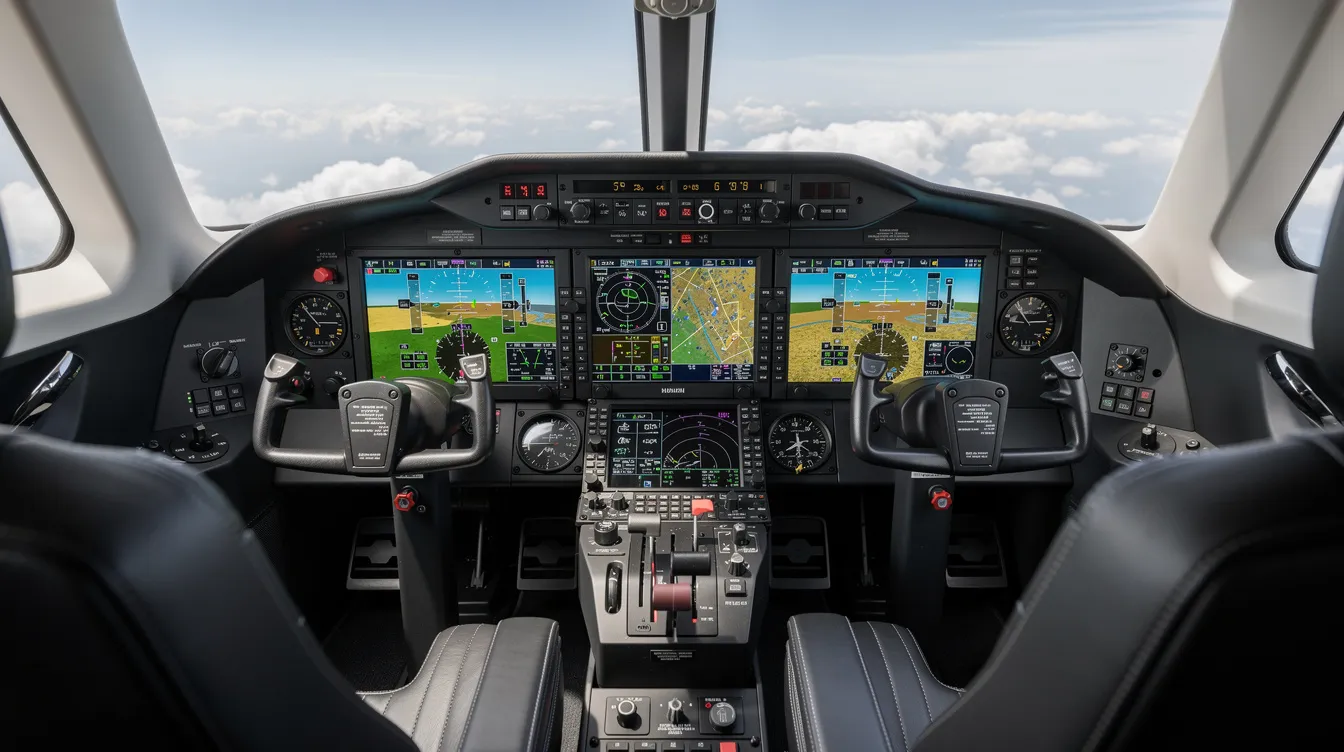
Beyond the Vision Jet, several aircraft models cluster near the 2 million mark:
Pilatus PC-12 NG: A rugged single-engine turboprop with 6–9-seat cabins, strong short-field performance, and a reputation for reliability across charter fleets. The Pilatus PC-12 NG typically has a range of 1,500–1,700 nm. Used examples trade between $1.8–4.8 million, depending on generation. Engine program enrollment is critical - a single unplanned engine removal can cost $500,000–900,000 if uncovered. For more on single-engine range capabilities, Jettly's guides offer detailed comparisons.
Diamond DA62: A high-end piston twin ideal for short hops and family travel. While not a turbine aircraft, its acquisition plus operating budget can mirror lower-cost turboprop options for owner-operators who prioritize lower operating costs and fuel economy.
Piper M500/M600: Single-engine turboprops that balance cruise speeds and efficiency, often falling between $1.5–2.5 million depending on year and equipment. These suit owners want turbine performance without jet-level operating costs.
Embraer Phenom 100: A VLJ twin with a wider cabin cross-section than most competitors. Used pricing averages approximately $2.26 million, with a range of roughly 1,178 nm and cruise speed near 385–400 knots. Newer variants with upgraded advanced avionics command higher prices.
Cessna Citation CJ1/CJ2: Common aircraft from the mid-2000s to early 2010s that appear frequently in this bracket, offering 4–6 passenger capacity and moderate range with modern avionics retrofits.
Most jets and turboprops around 2 million are optimized for regional missions, not nonstop continent-crossing travel. The service ceiling of these jets can reach up to 41,000 feet, but range is the real limiting factor.
Typical range expectations break down as follows:
|
Aircraft Category |
Range |
Cruise Speed |
|---|---|---|
|
Very Light Jets (Vision Jet, Phenom 100) |
1,000–1,200 nm efficiently |
340–380 knots |
|
Light jets (CJ1/CJ2 era) |
1,200–1,800 nm |
350–400 knots |
|
Turboprops (PC-12 NG) |
1,500–1,700 nm |
280–300 knots |
The range of Very Light Jets is approximately 1,100 to 1,500 nautical miles. Light jets typically have a range of 1,200–1,800 nm, while Very Light Jets can cover distances of 1,000–1,200 nm efficiently. Cruise speeds for these jets range from 340 to 380 knots.
Excellent short-runway performance allows access to smaller regional airports that commercial airlines and larger jets cannot use - a genuine advantage for reaching destinations closer to your final stop.
Cabin features in this price class include pressurization, air conditioning, club seating, a forward galley or small refreshment center, and optional in-flight Wi-Fi. You will not find full stand-up height or the amenities of midsize jets. But for a two-hour leg, these cabins serve well.
Concrete flight examples: New York to Miami (~1,100 nm) is doable nonstop in a Phenom 100 or PC-12 under light load. London to Ibiza (~600 nm) is comfortable in any VLJ. Readers can charter similar routes via Jettly's platform to test the experience.

Most 2-million-dollar jets and turboprops are not ideal for regular ocean crossings without technical stops or modifications. Transatlantic missions typically require larger aircraft with greater fuel capacity and redundancy.
Ferry tanks can extend range but introduce complexity, extra weight, reduced passenger count, additional regulatory approvals, and safety considerations that most owner-operators prefer to avoid. Headwinds, diversion requirements, and restricted airspace further limit realistic nonstop transoceanic options.
For occasional transatlantic or long-haul flights, using on-demand charter or larger jets via Jettly often makes more practical and financial sense than buying a small jet and forcing it into a mission profile it was not designed for.
Before purchasing, buyers should perform a simple mission map: list top city pairs and frequencies, then check if a regional 2 million aircraft actually fits the travel pattern. If even 10% of trips require coast-to-coast or overseas legs, a single-owned aircraft may not cover the full mission requirements.
Acquisition is only the starting point. Over several years, maintenance costs, fuel, crew, and insurance can match or exceed the original 2 million purchase price. Annual maintenance budgets are about 5% to 10% of aircraft value, meaning a $2 million aircraft should budget $100,000–200,000 per year in maintenance reserves alone.
Older light jets generally require more frequent inspections and parts replacement than new very light jets or late-model turboprops. Engines enrolled in hourly programs (like PT6 ESP or JSSI) spread costs predictably, while owners without coverage risk six-figure surprise bills when components hit time limits.
Advanced avionics, like those in the Cirrus Vision Jet or upgraded light jets, can improve dispatch reliability but add their own software subscriptions and update expenses. Ads b compliance and other regulatory mandates mean older panels may need costly retrofits to remain legal and insurable.
Skipping or deferring maintenance to save money - known as deferred maintenance - quickly erodes both safety and future resale value. It is one of the most expensive mistakes an owner can make. Often, the owner discovers at resale time that the money "saved" costs far more in reduced aircraft value.
Charter customers flying with Jettly only pay for flight hours and trip costs, with all heavy maintenance, storage, and regulatory compliance handled by certified operators. For a detailed look at what operating costs really involve, Jettly's resources break down the numbers further.
Here is how costs stack up for a 2-million-dollar light jet or VLJ:
Fixed annual costs (typically $200,000–$350,000):
Hangar space costs can be $25,000 to $60,000+ per year, depending on airport location
Insurance costs range from $15,000 to $50,000+ annually, influenced by hull value and pilot experience
Crew salaries or contracts: $100,000–180,000+ for a full-time pilot, less if single pilot capable
Navigation subscriptions, chart updates, recurrent training, and hangar co-op memberships
Variable costs per flight hour ($1,500–$2,000):
Fuel costs: VLJs burn roughly 90–150 gallons per hour. Fuel price volatility significantly impacts total variable spend
Engine and airframe maintenance reserves
Landing, handling, and de-icing fees
Catering and ground transportation
Worked example: A 2-million-light jet flown 150–200 hours per year could easily run $400,000–$800,000+ in total annual operating costs. At 200 hours, the effective cost per flight hour - including fixed costs - often exceeds $3,000–4,000 when every expense is accounted for.
When those numbers are compared against charter pricing for similar aircraft through Jettly and broader analyses of how much a private jet really costs, ownership only pulls ahead at significantly higher annual usage.
Beyond money, jet ownership introduces complexity in insurance approvals, pilot availability, training, and airport infrastructure. Many buyers underestimate these non-financial burdens until they are deep into the process.
Insurers heavily weigh pilot experience and recent flight hours. First-time buyers underestimate insurance hurdles frequently: new owners often must log supervised time or hire a professional crew before flying solo in turbine aircraft. Buyers underestimate insurance hurdles because they assume that owning the aircraft means immediate unrestricted access - but insurance companies disagree.
Even single-pilot certified light jets may still benefit from a second pilot or safety pilot in busy airspace, instrument conditions, or challenging weather, increasing ongoing expenses beyond initial projections.
Hangar availability at major business airports can involve waiting lists and monthly rates comparable to high-end office rents. For travelers who fly 100–150 hours per year, paying $40,000+ annually for hangar space that sits empty most days raises serious questions about capital efficiency.
These logistical hurdles are largely invisible to charter users on Jettly. Travelers simply select departure times and airports while certified operators manage crew, insurance, and hangar logistics behind the scenes. The National Business Aviation Association provides resources for owners navigating these challenges, but the complexity remains real.
Modern jets and turboprops in the 2 million bracket often include modern avionics that improve safety but require proper training and recurrent checks.
Key safety systems include:
Synthetic vision and terrain awareness displays
Traffic alert systems and auto radar integration
Autothrottle for workload reduction
The Cirrus airframe parachute system is unique to Cirrus aircraft
The Cirrus Vision Jet automatically descends to a safe altitude if hypoxia occurs - an automatic descent mode that activates when pressurization fails, lowering the aircraft to a breathable altitude without pilot input. These systems support but do not replace pilot proficiency.
Training programs associated with aircraft like the Cirrus Vision Jet are designed for owner-pilots and can help satisfy insurance requirements. But they add time and cost after purchase - typically several thousand dollars annually in recurrent training.
Potential owners can log hours on charter flights in similarly equipped cockpits to get comfortable with advanced systems before owning. Jettly's network includes many of these aircraft types for exactly this purpose.
The key question is not "Can I buy a 2 million dollar private jet?" but "Is that the smartest way to access private aviation for my actual annual usage?"
Full ownership: Best suited to travelers flying 250–300+ hours per year on predictable routes with consistent passenger count. Ownership of a private jet primarily improves time efficiency and productivity, but only at high utilization.
On-demand charter: Pay-per-trip flexibility with access to a wide fleet of light jets, turboprops, and larger aircraft. On-demand charter provides pay-per-trip flexibility - exactly what Jettly specializes in - with no long-term commitment or asset depreciation. Travelers can tap into Jettly's global network of private charter aircraft and explore affordable private jet charter options tailored to specific routes and budgets. Jettly's secure booking platform includes a security service layer that performs security verification before each transaction to protect users from malicious bots and unauthorized access. Once verification is successful, travelers can browse instant quotes and confirm flights in minutes. Each booking generates a unique response ID for tracking and transparency.
Jet cards: Pre-paid flight hour solutions with fixed or capped hourly rates. Jet cards offer guaranteed availability at fixed hourly rates, useful for frequent flyers who value budget predictability. Tools like Jettly's jet card flight cost estimator and its private jet membership programs help travelers understand and optimize this option. Learn more about how jet cards work and what they cost.
For many travelers, starting with an on-demand charter, a jet card program, or even exploring private jet lease cost structures provides a real-world usage baseline before deciding whether 2 million in jet ownership is justified.

The 150–200 flight hours per year rule of thumb is straightforward: flying less than 150 hours a year favors charter or jet cards over ownership. Below this range, high fixed costs (hangar, crew, insurance) get spread over relatively few hours, dramatically raising the effective cost per hour.
Charter via Jettly lets travelers choose the right aircraft size for each mission - rather than forcing every trip into a single-owned jet that may be too small or too large for the day's mission requirements. Travelers can compare options using comprehensive guides on how much it costs to rent a private jet or even crowdsource private jet flights and share empty seats to reduce per-passenger costs. Empty leg flights and dynamic pricing on Jettly can reduce per-trip cost for flexible travelers, something ownership cannot match.
Before buying, estimate the last 12–24 months of trips: number of flights, routes, passenger count, and preferred departure times. If the math points to fewer than 200 hours annually, ownership is likely to cost more per hour than on-demand access. For pricing comparisons, try Jettly's charter cost estimator.
The most expensive mistakes in jet ownership often occur before the aircraft ever leaves the hangar: in selection, inspection, and deal structure. Many buyers chase the lowest sticker price without considering what lurks beneath.
Common pitfalls include:
Buying aircraft with low hours but deferred maintenance or incomplete logbooks
Choosing older jets with obsolete avionics that need costly upgrades
Underestimating engine overhaul costs (often $300,000–600,000+ per event)
Ignoring hangar space availability and crew hiring timelines
First-time buyers underestimate how insurance requirements can delay operations by months
Align your mission profile - typical range, passenger count, airports used - with the aircraft under consideration. Choosing based purely on brand or appearance rather than mission requirements leads to regret.
Independent pre-purchase inspections, detailed logbook reviews, and security verification of enrollment in engine and avionics maintenance programs are non-negotiable. Missing records can reduce resale value by hundreds of thousands of dollars.
Newer buyers should spend a year or more using charter and jet cards through platforms like Jettly to collect real data on their travel habits before committing 2 million to ownership.
Practical mission planning starts with a simple exercise:
List your top 10–20 trips by city pair and distance
Note the typical passenger count for each
Check runway lengths at preferred airports
Consider weather patterns - do you need de-icing or hot-and-high performance regularly?
Compare those numbers against performance data for light jets, turboprops, and the Cirrus Vision Jet
Onboard features like air conditioning, Wi-Fi, and modern avionics may matter more to daily satisfaction than marginal increases in cruise speeds. Cabin features and passenger comfort on a two-hour regional leg can yield enormous returns in terms of willingness to fly more frequently.
Jettly's advisors can help travelers translate their mission profile into appropriate aircraft types for charter, giving them a blueprint if they ever choose to buy.
There is a genuine emotional appeal to aircraft ownership - having your own jet under one roof, ready when you are. But the decision should be driven primarily by math, safety, and real-world travel needs.
Ownership can make sense when:
Annual usage exceeds 250–300 flight hours
Travel is a time-critical regional business with consistent routes
The owner wants full control over the schedule and aircraft availability
Family travel patterns are predictable and frequent
Ownership is usually not ideal when:
Annual usage falls below 150 hours
Trips require different aircraft sizes - sometimes a turboprop, sometimes larger jets
Long-haul capability is occasionally needed
The buyer is new to private aviation and is still learning preferences
Many of the time-saving and privacy benefits of private aviation can be achieved through charter and jet cards instead of full jet ownership. The difference is that charter avoids capital risk, depreciation, and the burden of managing maintenance reserves, crew, and compliance.
For travelers weighing these options, Jettly's digital charter platform offers a practical way to compare real charter quotes with the projected total cost of owning a 2-million-dollar private jet.
These FAQs address practical concerns that go beyond the basics covered above - focusing on airframe life, financing, safety systems, cabin quality, and how to use charter as a stepping stone. All answers aim for clarity without unnecessary jargon.
For more detailed, personalized advice, reach out to aviation professionals or use Jettly's site tools.
Many light jets and turboprops can operate safely for several decades if properly maintained. Economic viability depends on engine overhaul intervals (typically every few thousand flight hours, costing mid- to high-six figures), parts availability, and avionics obsolescence. Modern advanced avionics, when kept current, can extend the useful life of an airframe by keeping it compliant and attractive to future buyers. Some owners strategically sell before the next major engine event to avoid the expense, preserving future resale value. Charter users on Jettly simply select aircraft that are already on strong maintenance programs - no timing decisions required.
Specialized aviation lenders do offer financing and leasing for 2 million jets, but terms are more complex than consumer auto loans. Lenders evaluate the buyer's net worth, credit history, business use plans, and the specific aircraft's age and maintenance history. Interest rates, required reserves, and insurance conditions all add to the total cost of jet ownership beyond the advertised financing rate. Potential buyers should compare monthly finance obligations plus annual operating costs with what the same budget would buy in annual charter hours via Jettly or through NetJets alternatives that emphasize on-demand flexibility.
CAPS is a last-resort whole-airframe parachute deployable in scenarios like loss of control, engine failure in marginal conditions, or pilot disorientation. It is not a substitute for proper training or decision-making, but an additional safety layer that has influenced many buyers toward Cirrus aircraft. While CAPS has documented real-world saves primarily in Cirrus piston aircraft, its presence in a jet underscores how safety systems have evolved at the entry level of private aviation.
Newer aircraft like the Vision Jet or late-model turboprops feature more efficient air conditioning, better sound insulation, and improved pressurization control than early-2000s jets. Older cabins may be noisier, slower to cool or heat, and lack modern lighting or USB/power access unless refurbished. Small quality-of-life elements such as temperature control and seat ergonomics often matter more on a two-hour leg than top speed numbers. Buyers should physically experience cabins on a hot or cold day - potentially via charter flights through Jettly - before committing to a particular airframe.
Start by booking regional trips on different aircraft classes through Jettly to understand real flight hour usage and preferences. Track routes, passenger loads, preferred departure times, and cabin comfort notes for 12–24 months to create a personal data set. This history helps future buyers choose between light jets, turboprops, or personal jets like the Cirrus Vision Jet that truly match their mission. Explore Jettly's instant pricing and global inventory at jettly.com to begin that process.
A 2-million-dollar private jet can provide impressive regional capability, advanced avionics, and the convenience of flying on your own schedule. But total ownership costs, maintenance, and operational complexity are substantial - often matching the purchase price within just a few years.
Charter, jet cards, and digital platforms like Jettly frequently deliver the same time savings and comfort without tying up capital or managing maintenance costs, crew logistics, and insurance renewals. For travelers flying fewer than 200 hours annually, the math typically favors on-demand access.
Map your actual travel patterns. Compare projected ownership expenses with on-demand charter rates for light jets and turboprops. The numbers will tell you whether a 2-million-dollar private jet is a smart investment or an expensive hobby.
Experience private travel tailored to your needs. Discover flight options, compare aircraft, or request a personalized quote at jettly.com.
Share this post:
Jay Franco Serevilla
Jun 24, 2026
|
5
min read
Discover tips and trends in the industry.

5
min read
Cessna 185 Takeoff Distance: Performance, Variables, and Real-World Planning
The Cessna 185 Skywagon is a versatile aircraft known for its impressive takeoff capabilities, requiring approximately 1,000 to 1,430 feet to clear a 50-foot obstacle under ideal conditions. Factors such as weight, density altitude, and runway surface can significantly affect these distances, making careful planning essential for safe operations. Understanding these variables is crucial for pilots and charter clients navigating remote airstrips.
Read More
5
min read
Private Plane India: How to Fly Private with Jettly
Flying private in India has become increasingly accessible for both business and leisure travelers. This guide provides insights on chartering private planes, including costs, benefits, and popular routes, making it easier to decide if private aviation suits your travel needs. With Jettly's platform, travelers can enjoy flexibility, luxury, and time savings while exploring over 20,000 aircraft options worldwide.
Read MoreStay updated with our latest insights and tips to elevate your journey with us.
MEMBERSHIPS AND ASSOCIATIONS



Disclaimer: Jettly operates as a charter broker, offering access to a global digital jet charter marketplace. Jettly is not a direct air carrier and does not own or operate aircraft. All advertised flights are conducted by third-party air carriers that are fully licensed and hold the appropriate Part 135 or Part 121 certifications issued by the Federal Aviation Administration (FAA) or equivalent regulatory authorities under U.S. or foreign law. Jettly complies fully with the U.S. Department of Transportation's Part 295 and Part 298 Charter Broker regulations. Jettly does not carry additional liability insurance. Passengers are covered by aircraft operator insurance. TICO: 50023770


