



Login
Get Instant Pricing On 23,000+ Aircraft

>
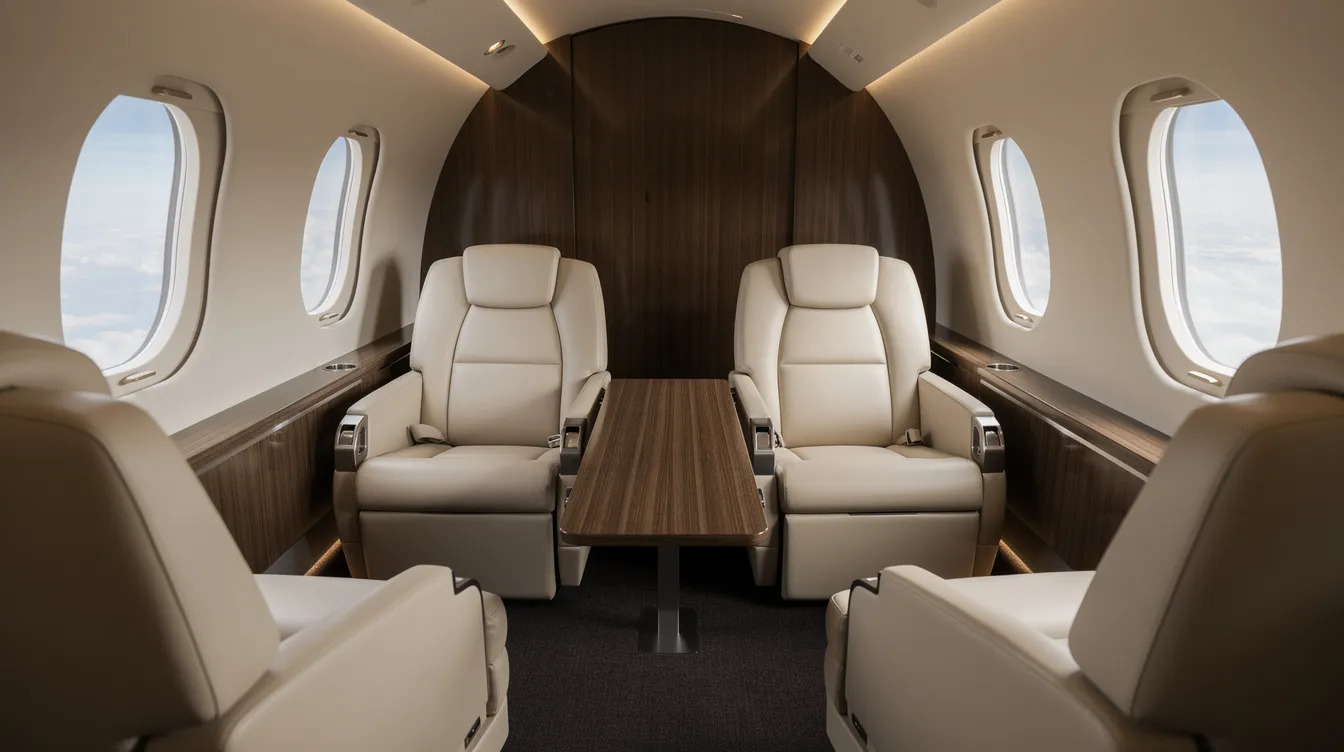
Choosing a 4-passenger private jet is one of the most practical decisions in private aviation for small groups. Whether it's a same-day business trip or a weekend getaway, light jets and very light jets sized for four travelers deliver speed, privacy, and access to smaller airports that major airlines simply don't serve.
This guide breaks down the aircraft types, performance specs, costs, and decision factors that matter when booking a 4-passenger private jet in 2026.
A 4-passenger private jet typically refers to a light jet or very light jet generally configured for four adults with luggage, even if the aircraft is certified for more seats. These aircraft are built for short to mid-range regional travel, covering routes of roughly 300 to 1,000 nautical miles non-stop.
Aircraft like the Cessna Citation CJ1, Embraer Phenom 100, and Eclipse 500 are among the best-known 4-passenger-friendly light jets, with four-passenger private jets typically cruising at speeds around 400–460 mph.
Charter rates for light jets typically range from $2,500 to $5,000 per flight hour, depending on model, route length, and market conditions. Jettly provides instant, transparent quotes without requiring jet card commitments.
Compared to turboprop aircraft, a 4-passenger private jet offers faster cruise speed and higher altitude for smoother flights. Compared to midsize jets, it delivers lower operating costs and a better cost match for small groups on shorter routes.
Jettly's digital platform lets travelers compare light jets and very light jets globally in real time-no fractional ownership or long-term contracts required.
A 4-passenger private jet is usually a light jet or very light jet configured primarily for four travelers, even if the airframe is certified for five to seven seats. These aircraft handle trips of roughly 300 to 1,000 nautical miles, covering most regional city pairs non-stop.
It's worth distinguishing this from a "4-seat aircraft" in general aviation. Single-engine piston aircraft like the Cirrus SR22 or Cessna 182 are technically four-seat planes, but they lack pressurized cabins, cruise far slower (200–250 knots), and don't offer the flight experience of a business jet. Light jets can accommodate up to four passengers comfortably in a pressurized cabin at altitudes above 35,000 feet.
The typical interior layout includes club seating for four, a compact refreshment center, a small enclosed or belted lavatory (depending on model), and limited but adequate baggage storage. Light jets often feature pressurized cabins for passenger comfort, with average cruise speeds of 440 mph. They typically have a range of up to 2,000 nautical miles, though practical range with four passengers and bags is often 800–1,500 nm.
For city pairs like New York to Chicago, London to Geneva, or Los Angeles to Las Vegas, these jets complete the trip non-stop in one to two hours with four passengers and luggage.
Both light jets and very light jets serve the 4-passenger market, but they differ in cabin volume, range, runway performance, and hourly rates. Understanding where each category excels helps travelers avoid overpaying for capability they don't need-or coming up short on a mission that demands more range.
Very light jets like the Eclipse 500, HondaJet, and Embraer Phenom 100 are examples of very light jets designed for short-haul flights and regional travel. Very light jets typically accommodate 1 to 4 passengers, cruise at speeds around 400 knots, and cover distances up to approximately 2,500 km. They're ideal for routes of 300–600 nm, access shorter runways, and carry relatively low operating costs per hour compared to larger aircraft. Hiring a VLJ can be more cost-effective for short trips where full light jet capability isn't necessary.
Larger light jets-such as the Citation CJ1, Learjet 31A, and Raytheon Premier I-handle 4–7 passengers with increased range up to roughly 1,500–2,000 nm. Their cabin height reaches 4.8–4.9 feet versus around 4.5 feet in many VLJs, offering more cabin space for flights lasting two to four hours. Fuel burn and operating costs are higher, but so is baggage capacity and overall comfort.
When should a traveler favor a VLJ? Short regional hops under 500 nm, budget-conscious private charters, and access to very short runways. A conventional light jet makes more sense when the mission requires longer range, more baggage, or a roomier cabin for a multi-hour flight.
Here's a closer look at specific aircraft frequently chartered as 4-passenger private jets in 2026.
Eclipse 500 - A VLJ with a typical 4-passenger layout, cruising around 370 knots with a range of approximately 1,100 nm under optimal conditions. The Eclipse 500 can complete a 600 NM trip in 1 hour 48 minutes, making it efficient for short-distance travel. Its lightweight construction and compact size keep charter rates at the lower end of the light jet spectrum.
Embraer Phenom 100 - Seating 4 to 6 passengers, this VLJ cruises at roughly 390–405 knots with a range of approximately 1,178 nm with four occupants. The Phenom 100 offers USB ports and Wi-Fi amenities, making it a strong choice for business travelers who need to stay connected.
Cessna Citation CJ1 - A proven light jet seating 5–6 with a cruise speed of approximately 380–389 knots. The Cessna Citation CJ1 has a range of 1,100 nautical miles, making it well-suited for routes like New York to Miami. Learn more about the Cessna CJ series for detailed specs.
Raytheon Premier I - Seats 6–7 but flies comfortably with four passengers at roughly 450 knots cruise speed and a range exceeding 1,000 nm. Its composite fuselage and glass cockpits make it one of the more modern-feeling aircraft in this class.
Bombardier Learjet 35 - A larger light jet seating 6–8, often chartered with four to six passengers for extra comfort. The Bombardier Learjet 35 can fly up to 2,056 nautical miles, making it capable of long-range flights that other aircraft in this category can't match. Cruise speed runs around 430–440 knots.
Aircraft availability varies by region, with North America and Europe offering the broadest selection. Travelers can filter for these types through Jettly's platform based on operator fleet composition and positioning.
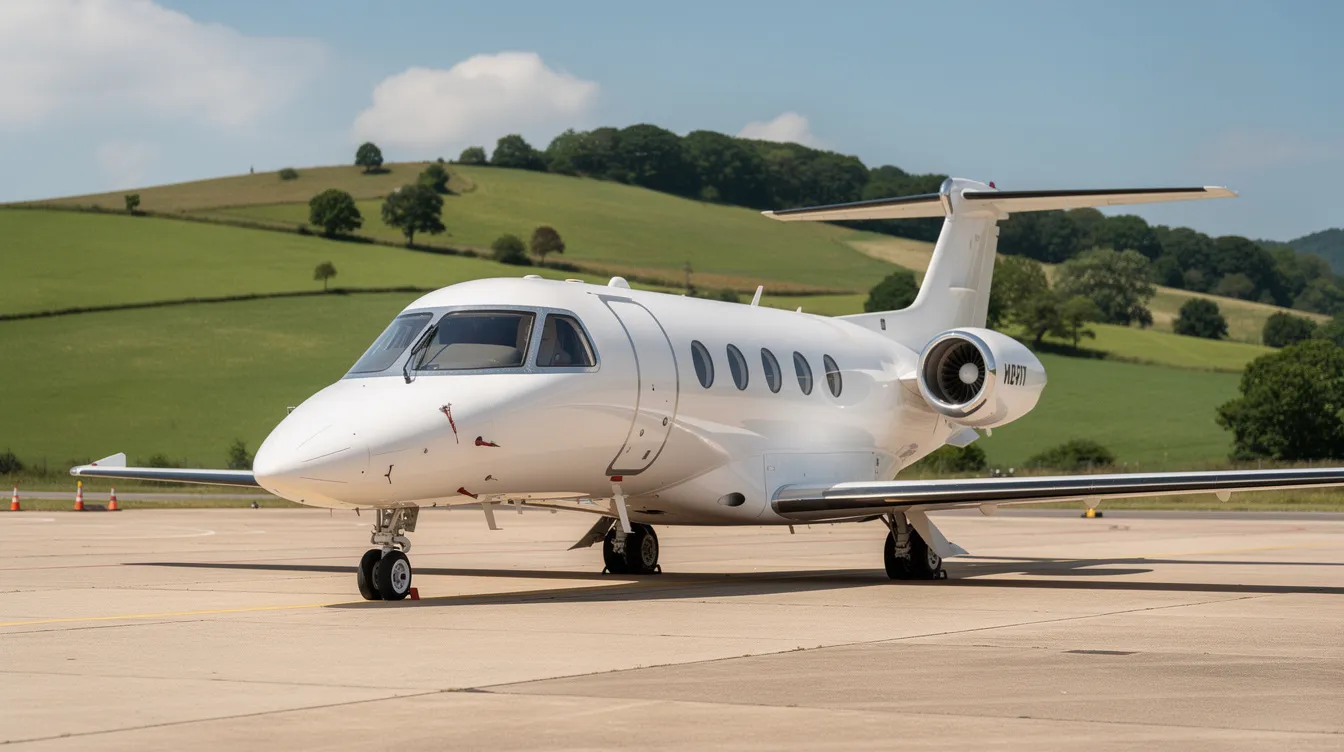
Performance metrics like cruise speed, range with four passengers, and runway requirements directly define which routes a 4-passenger private jet can handle efficiently. These numbers aren't abstract-they determine whether a trip works non-stop or requires a fuel stop.
Here are the key performance ranges for this category:
|
Metric |
Very Light Jets |
light jets |
|---|---|---|
|
Cruise speed |
340–400 knots (390–460 mph) |
370–450 knots (425–520 mph) |
|
Range (4 pax) |
600–1,200 nm |
1,000–2,000 nm |
|
Typical cruise altitude |
FL 350–FL 410 |
FL 350–FL 430 |
|
Takeoff distance (sea level) |
2,500–3,400 ft |
3,000–4,000 ft |
Cruising speeds for light jets average around 440 mph, which translates to meaningful time savings on routes over 300 nm compared to piston aircraft or turboprop alternatives.
Route examples with approximate flight times:
New York–Miami (~950 nm): about 2.5 hours
London–Nice (~550 nm): about 1.5–1.8 hours
Los Angeles–Las Vegas (~205 nm): around 40–50 minutes
Toronto–Chicago (~435 nm): about 1–1.2 hours
These flight times assume standard conditions and IFR reserves. Higher cruise speed gets passengers to their destination quickly, especially compared to single-engine piston aircraft or slower turboprop aircraft on legs over 400 nm.
Jettly's charter cost estimator presents estimated block times alongside cost, helping travellers compare different aircraft performance profiles in real time, while its jet card flight cost estimator helps users understand pricing for membership-based flying.
For four passengers, overall comfort depends on cabin dimensions, seat design, noise levels, and in-flight amenities as much as on speed. Comfortable cabin features are standard in modern four-passenger jets, and they make a noticeable difference on flights lasting two to four hours.
Most light jets include amenities like club seating and in-flight entertainment. Key features typically include fold-out work tables, USB power or outlets, individual reading lights, and often wi fi connectivity and basic entertainment systems depending on operator fit-out. Light jets offer more cabin space and better amenities for trips lasting 2–4 hours compared to smaller VLJs.
Cabin height in this category runs around 4.5–4.9 feet, with width near 4.5–5 feet. Passenger cabins allow movement between seats, but passengers cannot stand fully upright as in midsize jets or ultra-long-range jets. Most aircraft include a compact lavatory, refreshment centre with coffee, snacks, and chilled drinks, and temperature control suited for small cabins. The personalised service available on private charters extends to catering preferences and cabin temperature.
Consider the contrast: an Eclipse 500's compact cabin is well-suited for shorter flights of one to two hours, where the trade-off in cabin space is minor. A Phenom 100 or Citation CJ1 offers more elbow room, ample room for weekend bags, and a slightly wider cabin that makes a noticeable difference on a three-hour leg.
Jettly's platform shows photos and interior layouts for many aircraft, allowing travellers to choose cabin configurations best suited to four adults plus luggage before booking.
Turboprop aircraft like the Pilatus PC-12, King Air C90, or King Air 200 family are popular alternatives when flying four passengers, especially on shorter routes or into shorter runways. The choice between a jet and a turboprop comes down to speed, cost, and mission fit.
Turboprops typically cruise at 250–320 knots-slower than light jets-but offer excellent short-field performance, lower fuel burn, and potentially Turboprops typically cruise at 250–320 knots, which is slower than light jets, but they offer excellent short-field performance, lower fuel consumption, and often lower charter rates per hour on certain routes. on certain routes. For travellers where cost-effectiveness matters more than speed, turboprops can be the right aircraft, especially when combined with tips for booking the cheapest private jet flights.
In terms of comfort, modern turboprops often have larger cabins and more baggage volume than very light jets. However, propeller noise is more noticeable, and flight times run 20–40% longer on comparable routes. VLJs can access smaller airports that larger jets cannot, and turboprops share this advantage-sometimes even exceeding jets in short-field capability.
When does a turboprop make sense for four travellers?
Very short legs under 250 nm
Access to remote or unpaved airstrips
Cost-sensitive trips where extra flight time is acceptable
Routes where no efficient aircraft in the jet category offers a meaningful speed advantage
On longer regional routes of 500–900 nm, light jets deliver meaningful time savings and a higher cruise altitude, which many business travellers value. Through Jettly, travellers can compare 4 passenger private jet quotes versus turboprop quotes on exactly the same ro2ute, including estimated flight times and total trip cost.

Midsize jets and large cabin aircraft-think Gulfstream G280, Challenger 300, or Falcon 2000EX-can carry four passengers, but they're typically optimised for 6–10 or more. Using a midsize aircraft or larger jets for four travellers is like renting a bus for a carpool, and understanding the best private plane manufacturers for every budget and need can help clarify when those larger platforms make sense.
For a group of four, light jets usually offer a better balance of operating costs and mission capability for flights under roughly 1,500 nm. Midsize jets become attractive for longer, multi-leg itineraries or when extra cabin space is a genuine priority-not just a nice-to-have.
Midsize and larger aircraft offer stand-up cabins, larger galleys, more comprehensive catering, and better sleeping configurations. For a simple 1–2 hour hop with four travellers, that extra capability drives up cost without proportional benefit. A detailed comparison is available in Jettly's A detailed comparison is available in Jettly's comprehensive A detailed comparison is available in Jettly's comprehensive guide on light jets vs midsize jets.
The cost per hour for midsize jets may be 1.5 to 2 times that of a 4-passenger light jet, especially when factoring in additional fuel and high operating costs. A quick example: a 600 nm business round-trip for four passengers on a Phenom 100 might cost roughly $7,000–$10,000 in charter fees. The same route on a Challenger 350 could run $15,000–$ 22,000, with no meaningful time savings.
Jettly's marketplace includes everything from VLJs to ultra-long-range jets, enabling a direct side-by-side comparison when a customer is deciding how much cabin space they truly need for a four-person trip.
Charter pricing is typically quoted per hour or per trip, bundling aircraft, crew, fuel, basic catering, and insurance. Airport fees, de-icing, and repositioning can add to the total depending on route and conditions. Charter rates for light jets typically range from $2,500 to $5,000 per flight hour, fitting into the broader economics described in Jettly's guide on how much a private jet costs overall.
Here are realistic 2026 indicative price bands for 4-passenger compatible jets:
|
Aircraft Category |
Examples |
Approx. Cost Per Hour |
|---|---|---|
|
Very light jets |
Eclipse 500, Phenom 100 |
USD 2,500–3,500 |
|
Larger light jets |
CJ1, CJ2, Premier I, Learjet 31A |
USD 3,000–4,500 |
|
Midsize jets (for comparison) |
Citation XLS, Hawker 800 |
USD 4,500–7,000 |
Total trip cost depends on minimum flight-time charges, repositioning legs, overnight or waiting time, and taxes. Short same-day round trips may price differently than one-way itineraries. Chartering allows paying strictly for the hours flown without ownership costs, which is a core advantage for travellers who fly fewer than 100–150 hours per year, especially when compared to the cheapest private aircraft options across all categories.
Example estimate: A New York–Boston round-trip day charter using a Phenom 100 with four passengers involves roughly 1.5 hours of block time (0.75 hours each way). At approximately $3,000 per hour, the total charter cost would fall in the $4,500–$6,000 range including positioning and fees. For detailed pricing breakdowns, see how much it costs to rent a private jet.
Jettly focuses on transparent pricing: users enter route, date, and passenger count, then see real-time quotes from multiple operators before booking. For frequent flyers, private jet memberships may reduce effective per-hour costs through lower commissions or capped fees.
Private jet travel isn't always about luxury-sometimes it's simply the most logical way to move four people between two points. Private jets provide significant time savings compared to commercial flights, and chartering a private jet eliminates long security lines and delays. Travellers who only need to book a seat rather than a whole aircraft can also explore how to buy a seat on a private jet. Here are the situations where a 4-passenger private jet delivers clear value.
Corporate day trips. Four executives fly from London to Geneva for a morning meeting and return the same evening. No overnight hotel, no lost productivity. The flight experience on a light jet turns a two-day trip into a single business day.
Family leisure travel. Two adults and two children fly from Los Angeles to Aspen for a ski weekend. A light jet accesses Eagle County Regional Airport, cutting hours off the ground transfer compared to flying commercial into Denver. Private jets allow for direct point-to-point flights without layovers, similar to many aircraft discussed in Jettly's guide to the best plane for a family of four.
Urgent travel. Last-minute flights to handle legal, medical, or operational issues-situations where airline schedules or connections are impractical. Light jets also serve as the basis for air ambulance configurations in some fleets, though dedicated medical aircraft are a separate category.
Underserved routes. Four-passenger private jets shine on sectors without non-stop commercial flights, or where commercial aviation involves connections through congested hubs. Light jets can access smaller airports for greater convenience, connecting desired destinations that major airlines ignore. Comfort and privacy are primary benefits of flying in a private jet, and personal travel on these routes avoids the hassle of multiple airports and layovers.
Via Jettly, travellers can string together multi-leg itineraries-such as Toronto–New York–Washington, D.C.–Toronto-using a single light jet charter arranged within the platform. For first-time private jet flyers, the process is straightforward, and there are many options for getting a seat on a private jet easily.
The best private jet for four passengers depends on mission profile: distance, runway length, budget, baggage needs, and whether the flight is for work or rest. There's no universal "best"-only the right aircraft for the specific trip.
High-level criteria to evaluate:
Required range: Non-stop vs. tech stop. A 500 nm hop needs a VLJ; a 1,500 nm leg demands a larger light jet with longer range.
Airport access: Short or high-altitude runways favour VLJs and turboprops with lower operational costs and shorter takeoff rolls.
Cabin comfort: Noise tolerance, legroom, and whether onboard wi fi or specific cabin layouts are essential for the passenger capacity being served.
Budget: Lower operating costs on VLJs vs. more capable but pricier light jets.
Passenger mix matters too. Four adults with golf bags or ski gear need more baggage capacity than a compact VLJ typically offers. In those cases, a slightly larger light jet with more baggage space-such as the CJ2 or Premier I-keeps flight operations smooth without cramming belongings into every available corner, and Jettly's private charter aircraft inventory makes it easy to compare these models side by side.
Some travellers prioritise the newest airframes and advanced avionics, while others care more about cost per hour. Models like the Phenom 100 or later CJ-series often offer modern glass cockpits and upgraded cabins, balancing technology with operational efficiency. For a broader look at 4-seat aircraft options including ownership considerations, Jettly's guides cover the full range and connect to a wider guide to charter airlines and private flights.
Jettly's filters let users select aircraft category-very light jets, light jets, or turboprop aircraft-and refine by desired range or manufacturer, then compare two to three options side by side before booking.
Jettly is a digital private jet charter marketplace connecting customers to over 20,000 aircraft worldwide, including a wide selection of 4-passenger private jets and turboprops. The platform operates as an on-demand charter services provider, giving travellers access without the overhead of aircraft ownership and focusing on affordable private jet charter for a wide range of routes.
How the booking flow works:
Enter departure, destination, date, and passenger count (e.g., four travellers).
Receive instant pricing across applicable aircraft types, including VLJs, light jets, and turboprop alternatives.
Review aircraft photos, cabin layouts, and performance details.
Confirm flight details, catering requests, and ground transportation integration if needed.
Jettly partners with licensed operators that meet FAA Part 135 or comparable regulatory standards. The platform provides transparent pricing without forcing customers into traditional jet cards or fractional ownership-attractive for travellers flying fewer than 50–100 hours per year. Chartering a private jet avoids long-term commitments of owning an aircraft, giving travellers more control over their aviation spending, while Jettly's resources on Part 135 charter companies and how they work explain the regulatory framework behind these operations.
Dedicated account managers can assist with complex itineraries or last-minute changes, which is useful for business trips requiring multiple stops for four passengers in a single day. More details on private jet membership tiers, empty legs, crowdsourced flight options through sharing empty seats on private jet flights, and savings opportunities are available at Jettly's main site.
Even with smaller 4-passenger private jets, safety and regulatory oversight remain identical in importance to larger corporate jets or the standards that govern commercial air travel.
Charter flights arranged through Jettly are operated by certified air carriers holding national approvals such as FAA Part 135 in the United States, EASA-compliant AOCs in Europe, or equivalent authorisations elsewhere. Flight operations follow the same regulatory framework as larger private charters.
Operators maintain aircraft under strict maintenance schedules, ensure pilot training and currency, and may hold third-party safety ratings from organisations like ARGUS or Wyvern. These audits add a layer of accountability beyond minimum regulatory requirements.
Light jets and VLJs used as 4-passenger private jets feature modern avionics, redundant systems (including protocols for engine failure scenarios), and are subject to the same air traffic control, weather, and operational rules as larger jets. Even aircraft with jet engines designed for single-engine operation- like some VLJs-carry redundancies required by certification standards. While flight schools train pilots on these aircraft types, charter operators maintain far higher experience and recency requirements.
Jettly's role includes vetting partner operators and enabling customers to see relevant safety information. Travellers should share specific needs-night flying, icing conditions, or high-elevation airports-so the selected aircraft based on those requirements matches both safety and performance demands of the mission, whether it's a major hub or a regional destination such as private jet charter in Kolkata, West Bengal.
Environmental impact is increasingly part of the private aviation conversation, even for smaller 4-passenger private jets on regional trips.
Light jets and VLJs consume less fuel per hour than midsize or heavy jets, making them relatively efficient aircraft for their mission. However, per-passenger emissions can still exceed those of commercial flights on heavily booked routes. The trade-off is between fuel efficiency and the unparalleled convenience of point-to-point private travel.
Operational choices can reduce impact: flying direct routes between smaller airports, choosing the most efficient aircraft type for the distance, and avoiding unnecessary repositioning flights all improve the environmental profile. Newer VLJs with modern jet engines and lightweight construction tend to burn less fuel than older models.
Some charter operators working with Jettly are beginning to use Sustainable Aviation Fuel (SAF) on eligible routes or offer voluntary carbon offset programs. Travellers concerned with sustainability can discuss options with Jettly's team or select aircraft and itineraries optimised for fuel efficiency-including new-generation light jets or high-efficiency turboprop aircraft where appropriate, often discovered using tools like Jettly's airport locator and booking platform.
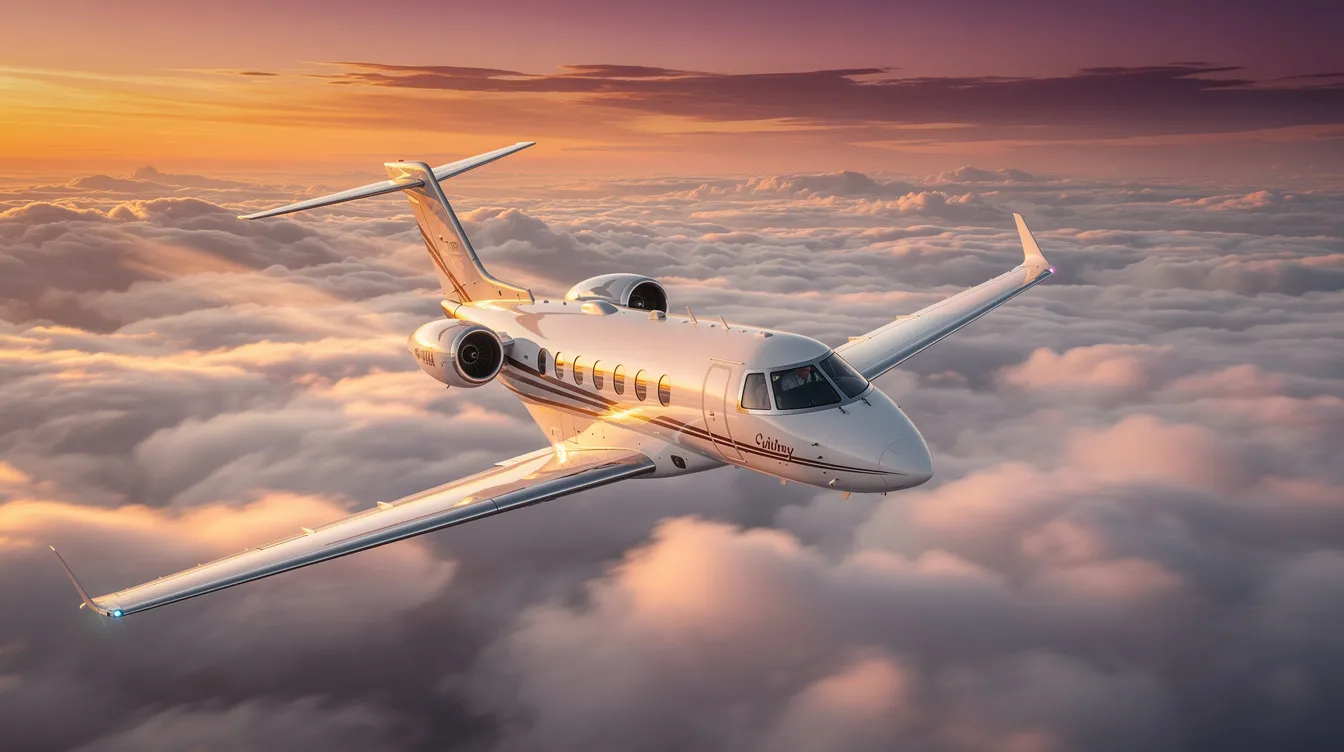
These questions address common concerns about luggage, international flights, pets, productivity, and the economics of chartering versus ownership for small-group private travel.
Luggage capacity varies by aircraft. Many 4-passenger private jets comfortably handle small roller bags and personal items for each traveller. On some VLJs, total baggage capacity runs around 50–70 kg (110–155 lb), while larger light jets can accommodate 250–300 kg (550–660 lb) across internal and external compartments.
If travellers need to bring bulky items like golf bags, skis, or instruments, it's important to share those details during the quoting process. Jettly can then match the trip with aircraft that have adequate baggage compartments, avoiding surprises on departure day. Some travellers opt for a slightly larger light jet specifically to carry more baggage without compromising on passenger capacity, and may also take advantage of dedicated services like Jettly Eats in-flight catering to enhance the onboard experience.
Many 4-passenger compatible light jets regularly perform international flights: U.S. to Canada, intra-European routes, and flights between Schengen and non-Schengen countries. The Cessna Citation CJ1 and Phenom 100 both have sufficient range for most European or North American cross-border city pairs.
Longer oceanic flights or very long distances may require fuel stops or larger aircraft categories. Jettly's team can advise on regulatory requirements, customs procedures, and optimal routing for small-group international itineraries-including routes where commercial aviation offers poor connections.
Many operators allow pets in the cabin on light jets, subject to local regulations, aircraft cleaning policies, and advance notification. Small dogs and cats are the most common, though policies vary.
Travellers should specify pet size and species when requesting a quote through Jettly. This ensures a pet-friendly operator and appropriate aircraft configuration can be arranged, including any necessary documentation or crates. Unlike commercial flights, pets typically travel in the cabin rather than cargo on private charters.
Most modern 4-passenger private jets offer fold-out tables, power outlets or USB ports, and-in many fleets- Wi-Fi connectivity suitable for email, messaging, and light web use. The Embraer Phenom 100 offers USB ports and Wi-Fi amenities as standard.
Those requiring high-bandwidth video conferencing or large data transfers should verify connectivity capabilities for the specific aircraft when booking via Jettly, as equipment and coverage vary by operator and region. For shorter flights under two hours, many executives find the cabin productive enough for email and document review.
Chartering through Jettly involves paying only for actual flight time and related trip costs, without taking on ownership expenses such as hangar fees, annual maintenance, crew salaries, insurance, and depreciation. There are no long-term flying requirements or fixed costs during months when you don't fly.
Ownership of a small single-engine or light jet typically becomes economical only for those flying 150–200+ hours per year. Travellers flying fewer hours usually find on-demand charter services more cost-effective and flexible, with low operating costs compared to the total expense of ownership. For a full breakdown, see how much it costs to purchase a private jet versus chartering one, and consider Jettly as a NetJets alternative for flexible private flying.
A 4-passenger private jet-whether a very light jet or a slightly larger light jet-offers an efficient blend of speed, flexibility, and privacy for small groups on short to mid-range routes. These aircraft handle the majority of regional travel needs, from 200 nm hops to legs approaching 2,000 nm, while keeping lower operational costs relative to midsize and heavy jets.
Choosing between a VLJ, a conventional light jet, or a turboprop depends on range, budget, airport access, and desired cabin comfort for four travellers. For long-haul flights or missions requiring a stand-up cabin, midsize aircraft or larger options make more sense. For leisure travel, day-trip business meetings, or reaching destinations served by multiple airports but underserved by commercial flights, a 4-passenger private jet is often the right aircraft for the job. These jets can reach your destination quickly with the shortest possible door-to-door travel time.
Jettly's global marketplace lets travellers compare thousands of suitable aircraft in real time, with transparent per-hour or per-trip pricing and no need for long-term jet card or fractional ownership commitments. The platform covers everything from VLJs to larger jets, giving small groups the ability to match their flight to their actual needs rather than paying for excess capacity.
Ready to experience private travel on your terms? Explore flight options or request a quote at https://www.jettly.com, discover Jettly's jet card programs, or even join the ULTRA high-ticket affiliate program if you want to promote private jet travel and earn commissions.
Share this post:
Jay Franco Serevilla
Jul 20, 2026
|
5
min read
Discover tips and trends in the industry.
5
min read
US Aviation Accidents: History, Safety Lessons, and the Role of Modern Private Air Travel
The history of US aviation accidents highlights significant progress in safety and reliability. Major incidents have led to crucial regulatory changes and technological advancements, benefiting both commercial airlines and private jet charters. Today, platforms like Jettly ensure travelers have access to vetted operators and transparent safety information, enhancing the overall flying experience.
Read More
5
min read
Last-Minute Private Jet Charter: How to Book Fast, Save with Empty Legs, and Fly in 2026
Last-minute private jet charters provide a fast and flexible travel solution for urgent trips, allowing bookings within hours. Jettly's digital marketplace connects travelers to over 20,000 aircraft, offering instant pricing and options for empty leg flights that can significantly reduce costs. This guide outlines how to book quickly, factors affecting pricing in 2026, and tips for choosing the right aircraft.
Read MoreStay updated with our latest insights and tips to elevate your journey with us.
MEMBERSHIPS AND ASSOCIATIONS



Disclaimer: Jettly operates as a charter broker, offering access to a global digital jet charter marketplace. Jettly is not a direct air carrier and does not own or operate aircraft. All advertised flights are conducted by third-party air carriers that are fully licensed and hold the appropriate Part 135 or Part 121 certifications issued by the Federal Aviation Administration (FAA) or equivalent regulatory authorities under U.S. or foreign law. Jettly complies fully with the U.S. Department of Transportation's Part 295 and Part 298 Charter Broker regulations. Jettly does not carry additional liability insurance. Passengers are covered by aircraft operator insurance. TICO: 50023770


