



Login
Get Instant Pricing On 23,000+ Aircraft

>

The Boeing 737-300 is a short-to-medium-range, narrow-body twin-engine airliner that shaped commercial aviation from the mid-1980s onward. As the initial member of Boeing's Classic series, this second-generation 737 replaced older models with better engines, a longer fuselage, and improved aerodynamics. While most major airlines have retired their 737-300 fleets, the aircraft continues to serve in cargo, VIP, and private charter roles around the world.
This article is tailored for airline professionals, charter customers, and aviation enthusiasts interested in the operational legacy and ongoing utility of the Boeing 737-300. The aircraft remains highly relevant today due to its continued use in specialized charter and cargo operations, as well as its unique position bridging early jetliner design and modern narrow-body efficiency. Whether you are evaluating aircraft for group travel, exploring aviation history, or seeking insight into the secondary market for classic airliners, the 737-300 offers a compelling case study in adaptability and enduring value.
The Boeing 737-300 is a second-generation Boeing 737 Classic variant that first flew on February 24, 1984, and entered airline service later that year. Boeing began its development in 1979.
Southwest Airlines operated one of the largest 737-300 fleets; other major operators included United Airlines, USAir, Lufthansa, and British Airways.
The aircraft seats up to 149 passengers in standard configuration, cruises at 430 knots (795 km/h), and covers a range of up to 2,685 nautical miles (4,973 km) with a service ceiling of 37,000 feet.
Two CFM56-3B1 turbofan engines deliver better fuel efficiency and reduced noise compared to the first-generation 737's JT8D powerplants.
Many 737-300 airframes have been retired or converted into freighters after their passenger service life; others now serve as VIP and group charter aircraft, available through platforms like Jettly.
The Boeing 737-300 is a mid-size, short- to medium-range jet within the Boeing 737 Classic family. It was introduced in the 1980s and served as a more capable successor to the 737-200. The aircraft was built to bridge the gap between older and modern aircraft designs in the Boeing 737 lineup, keeping the proven fuselage cross-section while adding new engines and a stretched cabin.
The model first flew in 1984 and entered airline service that same year. In its standard role, the plane carried between 128 and 149 passengers on domestic and regional routes. Airlines called it reliable and cost-effective for high-frequency operations on sectors under 2,500 nautical miles.
While the type has left frontline scheduled service in North America and Western Europe, it still flies with smaller airlines, cargo operators, and charter services across Latin America, Africa, and Asia. For travelers evaluating different types of planes or exploring private charter aircraft across multiple categories, the 737-300 occupies a specific niche: larger than a business jet, smaller than a widebody, and available at charter rates that reflect its age and operating economics.
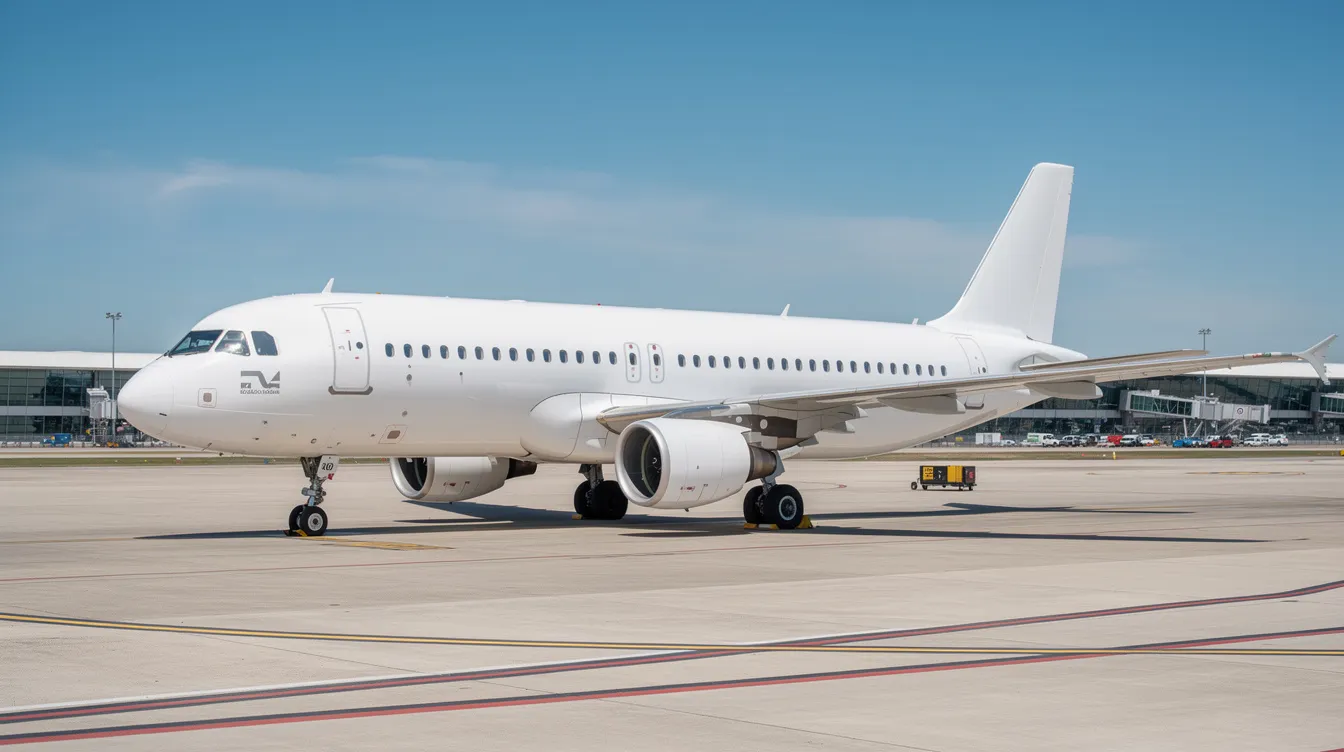
Boeing announced the 737 Classic program in response to rising fuel prices, airline demand for more capacity, and competition from aircraft like the McDonnell Douglas MD-80. The company envisioned a second generation 737 that would keep cockpit and systems commonality with the earlier 737-100 and 737-200 while delivering better range and lower fuel consumption.
Design discussions began around 1979. Engineers focused on fitting a new high bypass turbofan engine to the existing low-wing airframe, extending the fuselage by 9 feet 5 inches to add seats, and refining the wing for improved aerodynamics. The result was the Boeing 737-300, the baseline model of the Classic family, later joined by the stretched 737-400 and the shorter 737-500 to cover different passenger capacity needs.
The prototype first flew in February 1984. FAA type certification followed on November 14, 1984, and airline service began in April 1985. Across the Classic family, Boeing produced about 1,988 units in total. Production of the 737-300 itself ended in December 1999, when the last one was delivered to Air New Zealand.
The 737-300 retained the same basic fuselage cross section as earlier 737 models: six-abreast seating, a single aisle, and a cabin width that keeps the plane compact enough for quick turnarounds at gate-constrained airports. Where it diverged from its predecessors was in structural reinforcement, wing refinements, and engine integration.
The wing received strengthened structures to handle higher gross weights and updated flap and slat profiles for better low-speed handling. Boeing designed the aircraft to operate from shorter or secondary runways, which gave operators flexibility in route planning.
The most visible design change sits under the wings. The CFM56 engine has a larger fan diameter than the JT8D it replaced, which forced Boeing to flatten the bottom of each engine nacelle to maintain ground clearance on the low-mounted wing. That flattened intake lip became the visual signature of every 737 Classic built.
The cockpit received updated avionics and modern navigation and communication systems for its era. While the flight control system remained conventional (cable-and-hydraulic), the instrumentation brought the 737 closer to the glass-cockpit standard that would arrive with the Next Generation series.
The CFM56-3 series turbofan engines represent the single largest upgrade over earlier 737 versions. The 737-300 is powered by two CFM56-3B1 turbofan engines, each delivering roughly 20,000 to 22,000 pounds of thrust at takeoff, depending on the specific variant and de-rate settings, making it suitable for medium-haul missions that overlap with modern widebodies like the Airbus A330-300 on longer routes.
These high bypass engines reduced fuel consumption by a wide margin compared to the Pratt & Whitney JT8D on the 737-200. They also cut community noise and lowered cabin noise levels, a factor that mattered to airlines operating from noise-sensitive airports and that still matters to charter passengers today.
Core performance numbers for the 737-300:
Maximum cruise speed: 430 knots (Mach 0.74 to 0.78)
Maximum range: up to 2,685 nautical miles, depending on payload and configuration
Service ceiling: 37,000 feet
Typical takeoff distance at maximum takeoff weight: approximately 7,500 feet (2,286 m)
Landing distance: roughly 1,400 meters (4,600 ft) under standard conditions
The maximum range of the Boeing 737-300 is approximately 2,000 to 2,600 nautical miles under typical airline loading, though lighter loads can push the figure higher. That range covers most regional and continental city pairs: New York to Miami, London to Athens, or Toronto to Vancouver.
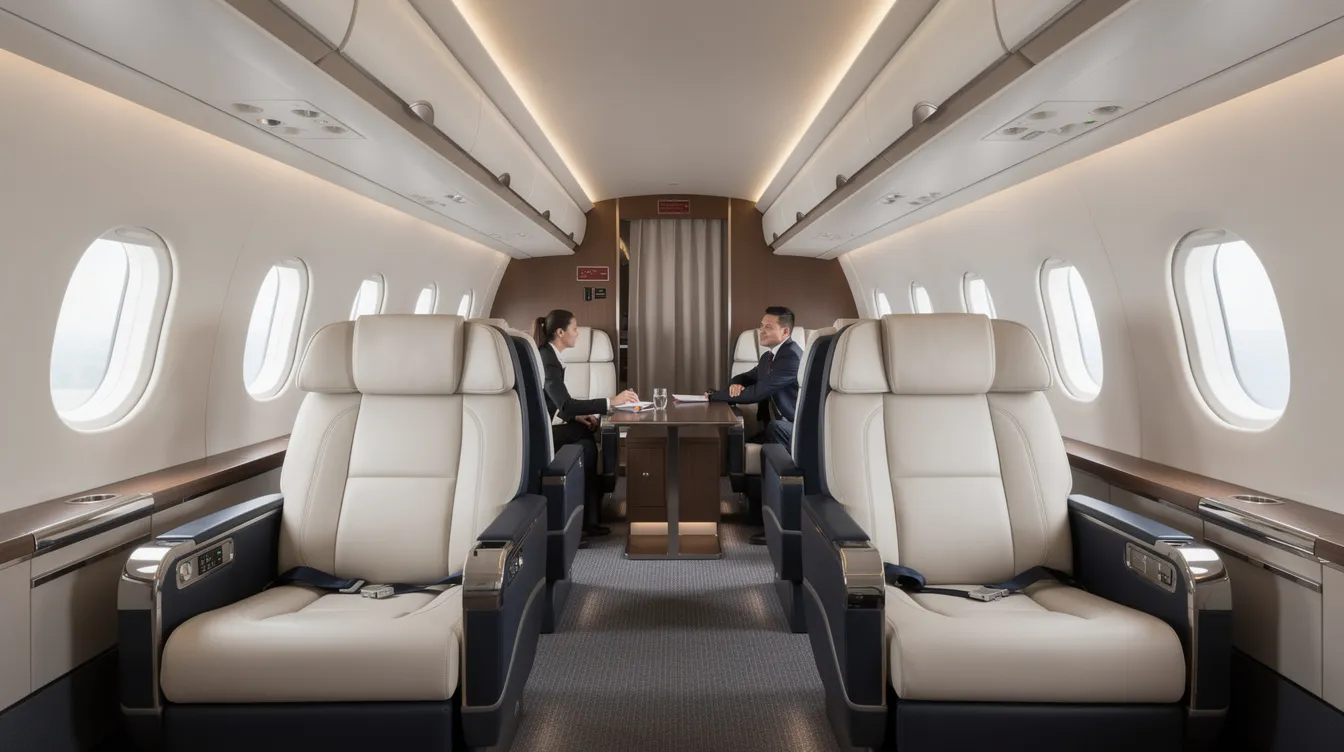
The 737-300 cabin follows a 3-3 economy layout with a single aisle. Standard airline seating holds between 128 and 149 passengers, depending on whether an operator uses a single-class or two-class arrangement. Boeing's own mixed-class specification envisioned about 126 total seats (8 first class, 118 economy).
The cabin can accommodate up to 149 passengers in a high-density single-class configuration. Seat pitch in airline service typically ranged from 30 to 32 inches in economy. Cabin height and overhead bin space are adequate but not generous by modern widebody standards.
Charter and VIP conversions change the equation. Nolinor, a Canadian operator, configures its 737-300 fleet in multiple layouts: 130-seat economy, a 44-seat VIP arrangement, and mixed configurations such as 24 VIP seats plus 66 economy seats. The aircraft offers flexible seating arrangements for VIP charters, with options including tailored cabin layouts and enhanced services such as bespoke in‑flight catering through Jettly Eats:
Lounge-style seating with conference tables
Enhanced catering stations
Improved insulation and noise reduction
Custom flooring, lighting, and entertainment systems
A charter customer booking through Jettly might fly a VIP-configured 737-300 with private zones for meetings, tailored catering, and space for a corporate team or extended family to travel together.
The aircraft has a length of 33.4 meters (109 ft 7 in) and a wingspan of 28.9 meters (94 ft 9 in). For groups comparing classic airliners with newer narrow-bodies, the 737-300 sits just below more modern options like the Boeing 737-800 in capacity and range. Below is a reference snapshot of the key specifications:
|
Specification |
Value |
|---|---|
|
Length |
33.4 m (109 ft 7 in) |
|
Wingspan |
28.9 m (94 ft 9 in) |
|
Height (tail) |
~11.3 m (37 ft) |
|
Maximum takeoff weight |
138,500 lbs (62,800 kg) |
|
Maximum payload |
27,880 lbs (12,650 kg) |
|
Fuel capacity |
5,311 US gallons (~20,100 liters) |
|
Range |
Up to 2,685 nautical miles (4,973 km) |
|
Maximum cruise speed |
430 knots (795 km/h / Mach 0.78) |
|
Service ceiling |
37,000 feet |
|
Takeoff distance (MTOW) |
~7,500 ft (2,286 m) |
|
Passenger capacity |
Up to 149 (single class) |
|
Crew |
2 pilots + cabin crew (varies by operator) |
|
Engines |
2x CFM56-3B1 turbofan |
The fuel capacity of 5,311 US gallons supports the aircraft's medium-haul range and allows operators some flexibility in fuel planning for routes with limited refueling infrastructure. Avionics packages vary by operator and vintage; many flying today are equipped with updated GPS and communication systems to meet current airspace requirements.
The Boeing 737-300 sits in the middle of the Classic family. The 737-500, at roughly 5.5 meters shorter, seats fewer passengers and targets thinner routes. The 737-400, stretched beyond the -300, carries up to 188 in high-density layouts but requires longer runways and burns more fuel per trip.
Within the Classic generation, the -300 found the widest adoption because its capacity and range matched the highest-demand domestic and short-haul international segments, though many operators today prefer newer narrow-bodies such as charterable Boeing 737-800 aircraft for greater efficiency and capacity.
Comparing the Classic to the later Next Generation family reveals clearer differences. The 737-700 and 737-800 (NG models) introduced redesigned wings with greater span, higher maximum takeoff weights, longer range, and upgraded glass cockpits. Fuel burn per seat dropped measurably, and noise emissions fell further. Airlines migrated from 737-300 fleets to 737-700 or 737-800 aircraft through the late 1990s and 2000s, primarily because per-seat fuel costs dropped and maintenance intervals improved.
For a charter customer comparing aircraft types, the practical differences come down to cabin age, noise levels, and refurbishment condition. A recently refurbished 737-300 in VIP configuration may deliver a better onboard experience than a worn airline-seat 737-800, even if the newer model is more fuel-efficient. Travelers considering Boeing 757 charters for longer routes should note that the 757 offers greater range and a taller cabin cross section, while ultra‑long‑haul group trips may be better suited to widebody options like a Boeing 767-300ER charter.
The Boeing 737-300 was widely adopted across North America, Europe, and parts of Asia from the mid-1980s through the early 2000s.
Southwest Airlines stands out as the most visible operator. Southwest built its entire fleet around the Boeing 737 family, and the -300 played a central role in its all-737 strategy through the 1990s. The airline used the type to support high-frequency, point-to-point routes across the United States.
Other operators that relied on the 737-300 as a backbone aircraft included USAir (later US Airways), Lufthansa, and British Airways. United Airlines, China Southern, and dozens of smaller carriers in Asia and Latin America also flew the type. Military and government users ranged from the Air Force of Chile to the People's Liberation Army Air Force in China, using modified 737-300 airframes for transport and special missions. The USAF did not operate the -300 variant directly, though it used other 737-based platforms.
As fuel prices climbed in the 2000s, airlines replaced their 737-300 fleets with Next Generation and Airbus A320 family aircraft to reduce fuel consumption. Rather than being scrapped immediately, many 737-300s transferred to secondary carriers, cargo operators, and charter companies. That transition is what keeps the model available for charter customers today, alongside a broad ecosystem of charter airlines serving private and group travelers.
When passenger airlines retire the 737-300, the airframe finds new life in freight, VIP, and specialized roles.
Passenger-to-freighter (P2F) conversions are the most common path. PEMCO has converted over 120 Boeing 737 Classic airframes into freighters, combi, and quick-change layouts. A typical freighter conversion involves cutting a large cargo door into the fuselage, reinforcing the cabin floor, and installing cargo handling systems. The max payload in freighter configuration reaches roughly 43,000 lbs, with usable cargo volume up to 5,973 cubic feet in some PEMCO conversions. The cost to acquire a used 737-300 and convert it runs between $4.2 million and $6.05 million, depending on airframe condition.
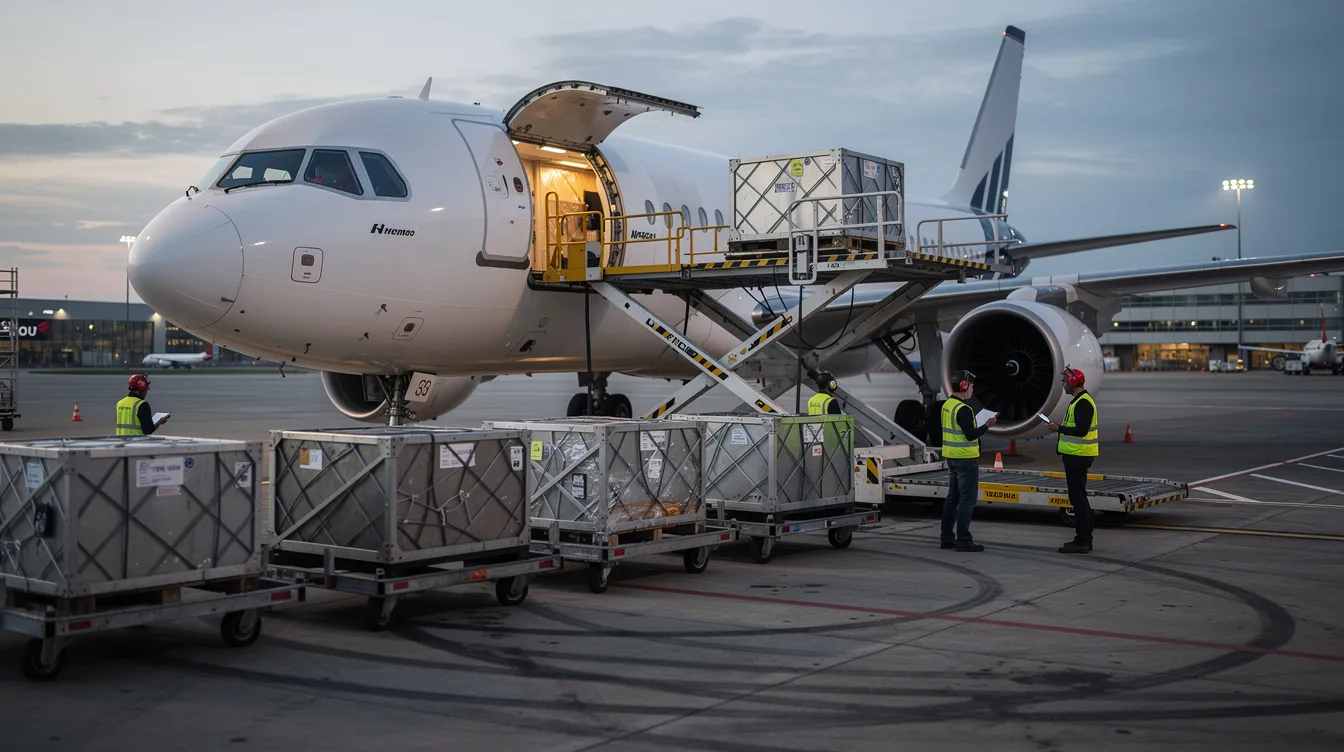
KF Aerospace certified a quick-change combi version in October 2014, allowing operators to swap between passenger and cargo configurations. This flexibility serves remote markets where the same aircraft might carry workers during the day and supplies at night.
VIP and corporate conversions strip out standard airline seats and install premium interiors: conference areas, lie-flat seating, enhanced communications, and custom catering. Government transport versions are used by several countries for official travel.
For Jettly customers, these conversions mean that a 737-300 charter can be configured for either large-group passenger travel or as a VIP aircraft, depending on mission requirements, and can be weighed against offerings from other leading private jet charter companies.
The 737 family as a whole has accumulated millions of flight hours across every inhabited continent. The 737 Classic series, including the -300, has experienced incidents and hull losses over decades of global operation. Those figures must be viewed relative to the very high number of flights the type has completed.
One notable safety concern arose in the 1990s with the rudder power control unit on 737 Classics. Investigations following two fatal accidents led to fleet-wide inspections, redesigned rudder components, and updated pilot training mandates. Boeing and the FAA addressed these issues across all affected aircraft.
For a 737-300 flying today, "aging aircraft" regulations impose strict requirements:
Structural inspections at defined intervals (C-checks and D-checks)
Life-limit tracking for fuselage pressurization cycles
Corrosion prevention and control programs
Landing gear overhauls and skin panel evaluations
Only airframes meeting all regulatory standards are allowed to carry passengers or cargo. Jettly works only with certified operators that comply with national aviation authority rules (FAA, EASA, Transport Canada), so aircraft available through the platform meet current safety expectations regardless of airframe age. Travelers can learn more about safety and compliance standards on the Jettly blog, as well as how Part 135 charter companies are regulated and audited.
The 737-300 was designed as an airline workhorse, but it has become an attractive option in the group private jet charter market for organizations moving 70 to 140 people at once.
Typical charter use cases include:
Sports teams traveling between cities during a season
Corporate roadshows visiting four or five offices in a week
Incentive trips where an entire sales team flies together
Music tours, film production crews, and large family events
A chartered 737-300 differs from a scheduled flight in several ways. The customer picks departure times, selects airports closer to final destinations (avoiding congested hubs), and controls the onboard service, from catering to cabin layout. For groups exceeding 50 people, a single 737-300 can cost less per seat than booking multiple private jets for 50 passengers, especially when leveraging shared and crowdsourced private flights to fill empty seats.
Cabin flexibility matters here. A budget-conscious sports organization might fill 130 standard seats. A corporate team might choose a VIP layout with 44 wide seats, meeting tables, and Wi-Fi for a working flight. The same airframe supports both missions.
Jettly is a digital private jet charter marketplace that includes larger airliners like the Boeing 737-300 alongside light, midsize, and heavy business jets. Users can search routes, see pricing ranges for various aircraft types, and filter by group size, range, and comfort level, using tools such as Jettly’s airport locator for thousands of global airfields.
A typical inquiry works like this: enter a route (say, Chicago to Las Vegas), select dates and passenger count, and compare options, then refine pricing further with Jettly’s jet card flight cost estimator. The platform might present a 737-300 for a 120-person group alongside alternatives like multiple midsize jets or a large cabin private jet. Jettly's cost estimator helps travelers compare total trip costs before committing, while its Jet Card program with fixed hourly rates can simplify budgeting for frequent flyers.
Jettly sources flights only from vetted operators with appropriate insurance, safety audits, and regulatory compliance for commercial charter. For travelers unfamiliar with the booking process, Jettly's aviation advisors can recommend whether a Boeing 737-300 or another aircraft class fits the mission best, and how Jettly compares as a flexible NetJets alternative for private flying.
This section is a practical guide for decision-making, not a technical comparison.
A Boeing 737-300 fits best when:
The group numbers 70 to 140 passengers
The route is under roughly 2,500 nautical miles
Everyone needs to be on the same aircraft (team cohesion, security, scheduling)
Per-seat cost matters more than cabin luxury
A traditional business jet fits better when:
The group is 8 to 15 executives needing privacy
The route exceeds 3,000 nautical miles nonstop
The departure airport has a short runway (under 5,000 ft)
Last-minute repositioning speed is critical
The cost dynamics are straightforward. A 737-300 has higher hourly operating costs than a light or midsize jet, but dividing those costs across 100+ passengers produces a lower per-seat figure, fitting into broader strategies for keeping overall aircraft rental costs affordable. Travelers exploring options on Jettly can compare a 737-300 against alternatives like private jets for 15 passengers or multiple smaller aircraft, factoring in budget, schedule flexibility, and the onboard experience they need, potentially pairing on‑demand charters with jet card pricing for predictable flight costs. Jettly's charter cost breakdown page offers additional context.
The Boeing 737-300 is not as fuel-efficient per flight as the newest 737 MAX or Airbus A320neo. The CFM56-3 engines represented a large step forward over first-generation 737 engines, but newer powerplants (CFM LEAP, PW1100G) have further reduced fuel consumption and emissions since the 2010s.
One area where the 737-300 can supplement efficiency gains: consolidation. Moving 120 passengers on a single 737-300 burns less total fuel than dispatching three midsize jets carrying 40 passengers each. Fewer aircraft movements also reduce the load on air traffic control and airport ground operations.
Some charter operators now offer carbon offset programs or access to sustainable aviation fuel (SAF) blends when airport infrastructure allows. Travelers booking a 737-300 through Jettly who want to reduce their environmental footprint can ask about offset options, fuel-efficient routing, whether the operator participates in any SAF programs, and how Jettly’s private jet memberships align with their wider travel plans.
Safety depends on maintenance quality, regulatory oversight, and operator standards rather than calendar age alone. Every 737-300 still carrying passengers undergoes rigorous structural inspections, pressurization cycle tracking, and component life-limit enforcement mandated by aviation authorities. Jettly works only with certified charter operators that follow FAA, EASA, or equivalent maintenance schedules for every aircraft in their fleet, including the 737-300.
In standard airline configuration, the cabin can accommodate up to 149 passengers. Charter layouts vary: high-density setups seat 130 or more for large groups, while VIP conversions reduce capacity to as few as 30 to 44 seats for added space and comfort, similar to how regional markets like Kolkata in West Bengal are served by tailored private jet charter options. When requesting a quote through Jettly, specifying both passenger count and comfort expectations helps match the right 737-300 configuration to the trip.
The aircraft handles short- and medium-haul routes well, covering distances up to about 2,685 nautical miles. That range includes most regional and continental city pairs: New York to Miami, London to Istanbul, or Los Angeles to Mexico City, making it a strong option for private jet charter itineraries to and from Atlanta, Georgia. For longer journeys, Jettly advisors can recommend a fuel stop or an alternative aircraft with greater range, drawing on a network of global charter operators like Dexter Air Taxi accessed via Jettly.
Cabin width and the six-abreast seat layout are similar to current single-aisle jets like the 737-800 or A320. Interior condition and noise levels depend on refurbishment history and operator investment. A VIP or recently refurbished 737-300 with upgraded insulation, modern lighting, and fewer seats can feel comparable in comfort to newer aircraft, particularly when flown as a private charter at reduced passenger loads.
Visit jettly.com, enter departure and arrival airports, select dates, and input passenger count. The platform displays available aircraft options, including the Boeing 737-300 when it fits the mission, and can highlight suitable airports through its airport locator and route planning tools. For trips where the right aircraft type is unclear, Jettly's team can compare a 737-300 against alternatives and recommend the best match.
Ready to move your group on your schedule? Explore flight options or request a quote at jettly.com, or, if you’re in the travel or aviation space, consider joining Jettly’s ULTRA high-ticket affiliate program to earn commissions by referring clients.
The Boeing 737-300 remains a significant aircraft in the history and ongoing operations of commercial and private aviation. As the first aircraft in Boeing's Classic series, it introduced advancements in fuel efficiency, passenger capacity, and operational flexibility that bridged the gap between early jetliners and modern narrow-body designs. Though largely retired from major airline fleets, the 737-300 continues to serve effectively in cargo, VIP, and group charter roles, offering a valuable option for travelers needing to move larger groups on short- to medium-haul routes.
Through platforms like Jettly, charter customers can access 737-300 aircraft configured to meet diverse needs—from high-density seating for sports teams to luxurious VIP layouts for corporate travel. While newer aircraft offer improvements in fuel economy and technology, the 737-300's proven reliability, versatility, and availability make it a practical choice for many missions today.
Ready to experience private travel on your terms? Explore flight options or request a quote at https://www.jettly.com.
Share this post:
Jay Franco Serevilla
Oct 17, 2026
|
5
min read
Discover tips and trends in the industry.
5
min read
Best Single-Engine Airplane for Cross-Country in 2026
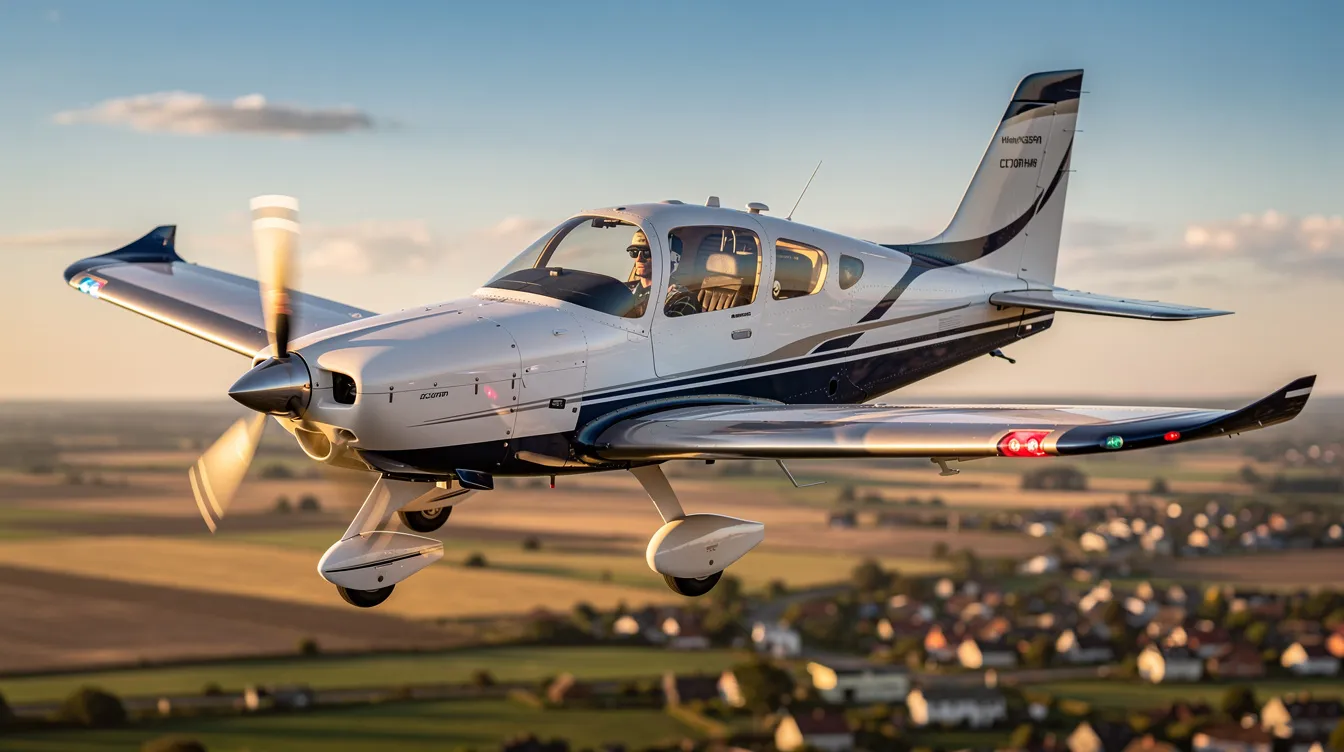
Choosing the best single-engine airplane for cross-country flying in 2026 involves evaluating speed, range, comfort, and cost based on your flying needs. This guide highlights top piston aircraft and high-performance singles, comparing ownership with charter options to help you make an informed decision. Whether for business or leisure, the right aircraft can enhance your travel experience significantly.
Read More
5
min read
Aircraft Classification: How Plane Types Shape Modern Civil and Private Aviation
Aircraft classification is crucial for understanding the diverse types of planes used in civil and private aviation. By categorizing aircraft based on design, purpose, and certification, travelers can make informed choices that enhance safety and efficiency. Jettly's digital charter marketplace simplifies this process, matching clients with the right aircraft for their specific missions.
Read MoreStay updated with our latest insights and tips to elevate your journey with us.
MEMBERSHIPS AND ASSOCIATIONS



Disclaimer: Jettly operates as a charter broker, offering access to a global digital jet charter marketplace. Jettly is not a direct air carrier and does not own or operate aircraft. All advertised flights are conducted by third-party air carriers that are fully licensed and hold the appropriate Part 135 or Part 121 certifications issued by the Federal Aviation Administration (FAA) or equivalent regulatory authorities under U.S. or foreign law. Jettly complies fully with the U.S. Department of Transportation's Part 295 and Part 298 Charter Broker regulations. Jettly does not carry additional liability insurance. Passengers are covered by aircraft operator insurance. TICO: 50023770


