



Login
Get Instant Pricing On 23,000+ Aircraft

>
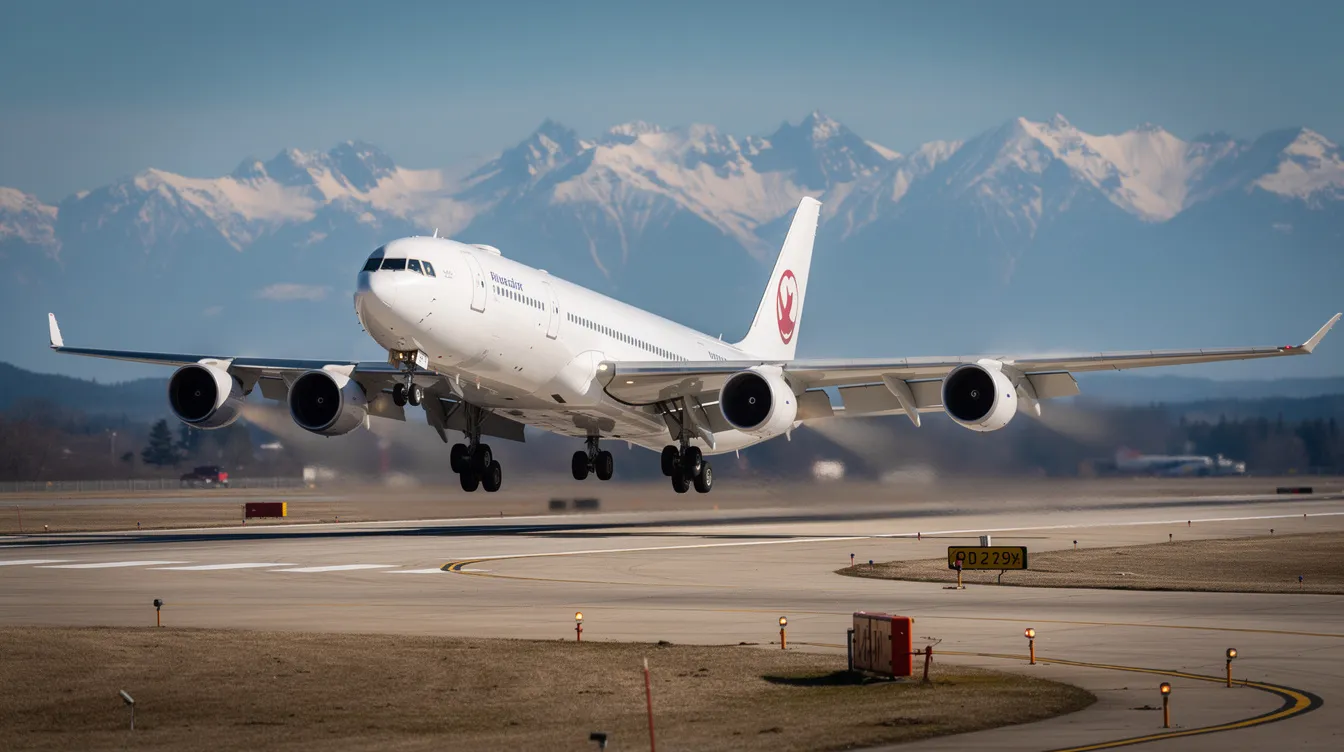
The Airbus A340 is a long-range, wide-body, four-engine commercial passenger jet built for intercontinental and ultra-long-haul flights. Designed for missions that span oceans and polar regions, it served as a backbone of long-haul air travel from the 1990s through the 2010s. While newer twinjets have largely replaced it in airline fleets, the A340 continues to fly in specialized roles and remains available for charter clients who need proven range, spacious cabins, and large-group capacity.
For corporate executives, high-net-worth travelers, sports teams, large corporate groups, and government delegations weighing private charter options, the A340 stands out when flexibility, cabin space, and nonstop reach matter more than operating economics. This guide examines the A340’s variants and performance, operating history, technical features, cabin layouts, safety record, charter use cases, and changing market role, including how platforms such as Jettly help source and book A340 charters for long-distance group travel.
The Airbus A340 family includes four main variants: A340-200, A340-300, A340-500, and A340-600, covering capacities from roughly 210 to 379 passengers and ranges from about 12,400 km to over 17,000 km.
The aircraft completed its first flight on 25 October 1991 and entered commercial service in 1993 with Lufthansa, with the A340-200 entering service on 15 March 1993.
The A340-600 was the longest passenger aircraft in the world until 2010, while the A340-500 was optimized for ultra-long-range flying with a range of 9,000 nautical miles—enough to connect Singapore to Newark non-stop.
The A340 features a distinctive four-engine configuration, providing notable redundancy in propulsion systems and allowing it to bypass many modern twin-engine operational restrictions.
More fuel-efficient twin-engine aircraft like the Boeing 777, Boeing 787, and Airbus A350 eventually replaced the A340 in most airline fleets due to lower operating costs and relaxed ETOPS regulations.
Today, A340 aircraft serve in government, VIP, and charter roles. Platforms like Jettly can arrange charter flights on selected A340s for large groups or premium long-haul missions requiring range and spacious cabin layouts.
The Airbus A340 is a long-range widebody produced between the early 1990s and 2011. Airbus conceived the program to serve intercontinental and ultra-long haul markets where four engines offered safety redundancy and regulatory advantages over twin-engine aircraft on extended overwater routes.
The family spans four variants with different fuselage lengths and mission profiles. The A340-200 and A340-300 covered standard long-range operations, while the A340-500 pushed into ultra-long-haul routes exceeding 9,000 nautical miles. The A340-600 targeted high-capacity sectors as a competitor to the Boeing 747. The A340 shares a basic fuselage cross-section and fly-by-wire system with the A330, reducing development and training costs across the Airbus aircraft lineup.
When it launched, the A340 aimed to compete with and replace earlier widebodies like the Boeing 747-200, DC-10, and L-1011 on long haul operations. Today, its relevance extends to private and charter use. The large cabin, proven long-range capability, and availability of VIP-configured frames make the A340 an attractive plane for government transport and group private jet charter missions within the broader market for private charter aircraft.
Airbus jointly launched the A330 and A340 programs in June 1987, targeting a family of widebodies that could share wings, cockpit systems, and manufacturing techniques to reduce costs. The A340-500 and A340-600 development program alone cost approximately US$2.9 billion—roughly 20% less than starting from scratch, thanks to commonality with earlier variants.
The strategic goal was clear: create a next-generation long-haul aircraft that could compete with Boeing and McDonnell Douglas while leveraging the flight deck commonality already established across the A320 family and the twin-engine A330. This approach meant pilots could cross-qualify between types with minimal additional training.
The A340's first flight took place on 25 October 1991 from Toulouse, France. Early flight testing revealed challenges including wing stiffness and flutter issues, which Airbus addressed through aerodynamic fairings, pylon modifications, and structural refinements before certification. The industrial setup reflected Airbus's multinational structure: wings were built in the UK at Broughton and Filton, while fuselage sections and final assembly took place in Toulouse. New manufacturing techniques including heavy automation and robotic wing-fuselage mating helped keep the production line efficient.
Lufthansa became the launch customer for the A340-200. The A340-200 entered service with Lufthansa on 15 March 1993, beginning long-haul flights on routes such as Frankfurt to New York and Frankfurt to Asia. Air France followed shortly after with the first aircraft of the A340-300 variant, replacing Boeing 747s on transatlantic services like Paris to Washington.
In June 1993, an A340-200 flew a first non-stop flight between Europe and New Zealand—approximately 19,000 km or 10,500 nautical miles—setting several distance and speed records. The aircraft was then the longest airliner to complete such a mission without refueling. That record was surpassed in 1997 by a Boeing 777-200ER, illustrating the growing capability of newer twinjets to encroach on A340 territory.
Early airline feedback praised the A340's quiet cabin, smooth ride quality, and the confidence that four engines provided on very long overwater segments. For passengers on overnight intercontinental flights, the aircraft quickly earned a reputation for comfort.
The A340-200 was the smallest and rarest member of the family. Its shorter fuselage paired with the same large wing as the A340-300 gave it greater range at the expense of passenger capacity—a design optimized for very long routes with relatively low demand.
The A340-200 has a typical seating capacity ranging from 210 to 250 passengers, with the A340-200 typically seating 261 passengers in three classes in a denser layout. It was powered by four CFM56-5C engines and offered an approximate range of 15,000 km (about 8,000 nautical miles), supported by high maximum takeoff weight and increased fuel capacity for long haul fuel loads.
Only about 28 units were built. Several frames were later converted to VIP or governmental use, taking advantage of generous range and cabin volume. Despite impressive long-range performance, the A340-200 saw limited commercial success. Its niche market, weight penalties, and the emergence of twin-engine aircraft with similar or better economics made it commercially marginal for most airlines.
The A340-300 was the baseline and most widely produced version, with around 218 deliveries. It served as a mainstay on medium and long-haul routes throughout the 1990s and early 2000s, flying trunk sectors between major hubs worldwide.
The A340-300 can accommodate 295 passengers in a three-class layout and typically seats between 250 and 290 passengers in mixed configurations, with up to 335 or more in two-class high-density setups. It typically has a range of 12,400 km (roughly 6,700 to 7,400 nautical miles depending on payload and weight variant), covering flights such as Europe to North America, Europe to Africa, and intra-Asia services.
The A340-200/300 is powered by four CFM56-5C engines and shares cockpit commonality with the A330 and A320 families. Airlines appreciated the quiet cabin environment and smooth ride on overnight long-haul operations. As more fuel-efficient aircraft entered primary fleets, many A340-300s transitioned to secondary airlines, charter operators, or VIP and government roles.
The A340-500 was developed in the late 1990s as the ultra-long range variant, featuring a longer fuselage than the A340-300, larger wings, and powerful Rolls-Royce Trent 500 engines. It was purpose-built for the world's longest routes.
The A340-500 can fly 9,000 nautical miles (16,020 to 17,000 km non-stop) and typically accommodates 270 to 310 passengers, with a capacity of 313 passengers in three classes. Singapore Airlines operated the longest non-stop flight with the A340-500, connecting Singapore to Newark and Singapore to Los Angeles—routes that were among the world's longest commercial flights until around 2013.
Technical innovations over earlier variants included higher MTOW, greater fuel capacity, a revised wing with a strengthened structure, and optimized aerodynamics for ultra-long-haul operations. Some airlines configured very spacious business class cabins for 18-plus-hour flights.
Despite record-setting range, the A340-500 fleet remained small. Operating costs, high fuel burn relative to passenger count, and pressure from newer twinjets capable of similar routes more economically limited growing demand for additional orders.
The A340-600 was the stretched, high-capacity member designed to compete with and replace older Boeing 747-200/300 quad jets. The A340-600 is 12 m longer than the A340-300, reaching an extraordinary length of about 75.36 meters. The A340-600 was the longest passenger aircraft in the world until 2010.
The A340-600 can accommodate 320 to 370 passengers in a three-class configuration, and can carry up to 379 passengers in three classes at maximum density. It can carry 379 passengers over 13,900 km (7,500 nautical miles), with some variants reaching 14,630 km. It uses four Rolls-Royce Trent 500 engines (Trent 556 variant).
The A340-600 offered comparable passenger capacity to some 747s with about 25% more cargo volume in the lower deck and a lower trip cost per seat on certain routes. Major operators included Virgin Atlantic (launch customer in 2002), Lufthansa, Iberia, and South African Airways.
The A340-600HGW (High Gross Weight) variant pushed the model further with an MTOW of 380 t (840,000 lb), increased fuel capacity, a reinforced structure, and advanced manufacturing techniques such as laser beam welding to extend range toward 7,900 nautical miles.
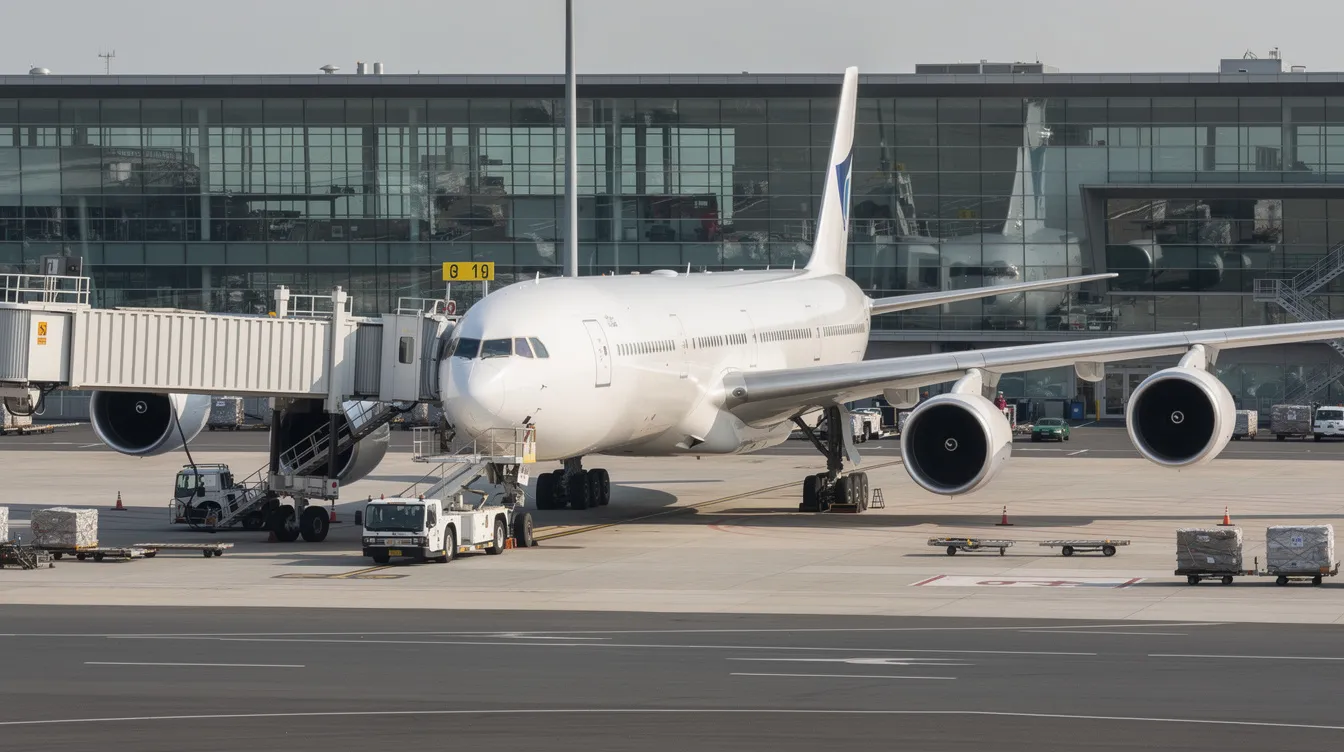
The A340's widebody twin-aisle fuselage provides significant flexibility for multiple cabin classes. The A340 typically features a 2-4-2 economy seating configuration for passenger comfort, giving each seat reasonable width and access to the aisle compared to denser 3-3-3 layouts on some competitors.
First class arrangements on long-haul A340 operators typically featured four-abreast seating, lie-flat suites, extensive personal space, and a focus on privacy for overnight intercontinental flights. Business class layouts evolved from six-abreast configurations in early years to staggered or reverse-herringbone seats, balancing productivity and rest with power outlets, generous seat pitch, and enhanced entertainment systems.
The long range of the A340 made it a popular platform for premium cabins, particularly on overnight flights between Europe, North America, Asia, and the Middle East where business class demand has historically been strong. A three-class cabin layout was standard on most operators.
Many retired A340s were converted into VIP aircraft with personalized cabins, conference areas, and bedrooms. These conversions make the A340 attractive to governments and large corporate groups arranging charter services through platforms like Jettly.
The four-engine configuration was central to the A340's design philosophy. When the aircraft was developed, ETOPS constraints limited how far twin-engine aircraft could fly from diversion airports. The A340 was historically exempt from strict ETOPS regulations, and four engines allow the A340 to bypass many modern twin-engine operational restrictions—enabling unrestricted routing across vast oceans and polar regions.
The A340-200/300 is powered by four CFM56-5C engines, while the A340-500/600 uses four Rolls-Royce Trent 500 engines with greater thrust for heavier long haul operations. The A340's four engines provide notable redundancy in propulsion systems, a feature valued by operators flying remote routes.
Major systems shared across the Airbus family include fly-by-wire controls, side-stick controllers, and a six-screen glass cockpit (EFIS). The A340's cruising speed typically ranges from Mach 0.82 to 0.83, with a maximum service ceiling of 41,000 feet. Maximum takeoff weights range from over 250 tonnes for early variants up to 380 tonnes for the A340-600HGW.
The A340 can operate effectively from high-altitude and hot-weather airports where the extra thrust margin of four engines proves valuable. However, the aircraft's four engines generally result in higher fuel consumption compared to modern twin-engine jets. The A340-600 uses 12% more fuel than the 777-300ER, though the A340-300 consumes 5% less fuel than the 777-200ER—showing that fuel efficiency comparisons depend heavily on the specific model and mission.
The aircraft's four engines also lead to higher maintenance costs compared to twin-engine aircraft, a factor that increasingly weighed against the type as airlines optimized for lower operating costs.
The A340 reached its operational peak in the late 1990s and 2000s. Airlines such as Lufthansa, Air France, Swiss, Virgin Atlantic, Iberia, Cathay Pacific, Singapore Airlines, and Etihad operated the type on global networks. The A340 fleet has completed over 2.5 million flights during its commercial career.
Signature long-haul and ultra-long-range routes included Europe to the US West Coast, Europe to South America, Europe to Southern Africa, Middle East to North America, and the record-breaking Singapore to Newark service using the A340-500. The aircraft served a crucial role on routes where nonstop flight capability and overwater redundancy mattered most, though later faced competition from efficient twins like the Airbus A330-300.
The gradual shift toward twin-engine designs like the Boeing 777, Boeing 787, and Airbus A350 was driven by ETOPS liberalization, lower fuel burn, and rising fuel price pressures that accelerated airline moves toward these types, along with reduced maintenance costs—a trend explored in resources such as the ultimate list of charter airlines. Key retirement milestones followed: Lufthansa initially retired some A340-600s in 2021, temporarily reactivated frames around 2022 to meet post-pandemic demand, and has targeted full retirement by mid-2027.
As of the mid-2020s, remaining operators include Mahan Air, Conviasa, Edelweiss Air, Hi Fly Malta, and a handful of others. Many A340 airframes have transitioned into commercial airline charter roles, cargo conversion, or storage.
The A340 became attractive to governments and VIP customers for several reasons: long range without refueling, a spacious fuselage suitable for office areas, meeting rooms, bedrooms, and secure communications installations. The cabin volume of this widebody plane accommodates layouts that smaller aircraft simply cannot match.
The A340-200 and A340-300 are common starting points for VVIP conversions, offering ranges near 8,000 nautical miles with room for tailored low-density layouts. Germany's Flugbereitschaft operates two A340-300s for Chancellor and government official transport. The French Air and Space Force previously used A340-200s for troop transport and government liaison.
VIP A340s typically operate with small passenger numbers but high customization: lounges, dining areas, sleeping quarters, and high-end in-flight connectivity tailored to government or corporate requirements.
For charter platforms, the A340 offers a compelling proposition. Jettly's marketplace may include access to select A340 aircraft configured for large corporate groups, sports teams, or governmental charters needing long range and large cabin volume, especially for members using private jet memberships. Learn more about chartering Airbus widebodies through Jettly's Airbus rental guide.
The Airbus A340 has an outstanding safety record. Throughout its commercial career, the type has not been involved in a fatal passenger accident—a remarkable achievement across more than three decades of service.
There have been a small number of hull-loss events (around six), usually involving runway excursions, ground fires, or other non-fatal incidents rather than in-flight structural failures. The quadruple-engine design, redundant systems, and robust certification standards contributed to the type's reputation as a safe long-haul platform.
Modern charter brokers and operators factor the A340's safety history, maintenance status, and regulatory compliance into aircraft selection for long-haul private flights. Regulatory oversight from EASA, FAA, and equivalent national authorities ensures that A340 operators—whether commercial or private charter—meet standard safety and airworthiness requirements.
In the charter market, the A340 is especially suited for large groups needing long-haul flights with fully customized schedules. Sports teams, music tours, corporate roadshows, and government delegations represent typical clients who benefit from the aircraft's capacity and range.
Typical charter configurations of ex-airline A340s include spacious business class cabins, optional first class sections, and economy seating that can be adapted to client needs—more legroom, more business class seats, or a mix that fits the mission. The benefit of four engines and long range means intercontinental private flights of 6,000 to 8,000-plus nautical miles can often be completed with minimal stops, especially when paired with tailored services such as in-flight catering for private jets.
Jettly's digital marketplace can, in some regions, provide access to A340 charters within its inventory of over 20,000 aircraft, with transparent pricing through its private jet charter cost estimator, route planning support, and bespoke onboard services like catering and branding.
When does an A340 make more sense than smaller private jets? Consider, especially if you're comparing on-demand pricing with jet card flight cost estimators:
Per-seat cost: For groups of 50 to 200-plus passengers, a single A340 charter often costs less per seat than multiple smaller jets, and options like crowdsourced private jet flights and shared empty seats can further reduce individual pricing.
Team cohesion: Keeping a large group together on one aircraft eliminates logistical complexity, much like corporate programs built around flexible jet cards and membership solutions.
Onboard workspace: Meeting space and sleeping areas during overnight long-haul flights add productivity, particularly when coordinated through experienced brokers such as Dexter Air Taxi private jet operators.
For a deeper comparison of large group aircraft options, see Jettly's guide to private jets for 50 passengers.

Several economic factors worked against the A340 over time, including rising fuel price pressure. Rising fuel prices through the 2000s hit quad jets harder than twins. Greater ETOPS flexibility allowed twin-engine aircraft to serve nearly all overwater routes previously reserved for four-engine types. Improved engine reliability made the safety argument for four engines less compelling.
The Boeing 777 was the first major competitor to undercut the A340's operating economics, and as fuel costs rose, airlines increasingly preferred more fuel-efficient twins; it was followed by the Boeing 787 and Airbus A350, which offered similar or better payload-range capability with substantially lower fuel burn and maintenance costs, especially on sectors often served by narrowbodies like the Boeing 737-800.
Airbus ceased A340 production in November 2011 after delivering a total of around 377 aircraft across all variants. Future widebody development shifted to more efficient twins such as the A350 XWB.
The decline in A340 residual values ironically made them attractive for certain charter and cargo conversions. Acquisition costs dropped significantly compared to newer aircraft, creating opportunity for operators willing to accept higher seat costs in exchange for lower capital outlay.
The A340 stands as an important transitional aircraft in the history of long-haul operations: technologically advanced for its era—with fly-by-wire, common cockpit philosophy, and impressive range—but eventually surpassed by the next generation of fuel-efficient designs that could compete on every measure except engine count.
Here is a concise comparison of each variant's approximate maximum range and typical seating capacity:
|
Variant |
Range (nautical miles) |
Range (km) |
Typical Capacity (three-class) |
|---|---|---|---|
|
A340-200 |
~8,000 nm |
~15,000 km |
~261 passengers |
|
A340-300 |
~6,700–7,400 nm |
~12,400 km |
~295 passengers |
|
A340-500 |
~9,000–9,200 nm |
~16,020–17,000 km |
~313 passengers |
|
A340-600 |
~7,500–7,900 nm |
~13,900–14,630 km |
~379 passengers |
Actual usable range depends on payload, headwinds, temperature, and alternate airport requirements. A London to Johannesburg sector, for example, falls well within the A340-300 range, while Frankfurt to Buenos Aires or Dubai to New York may require the extended reach of the A340-500.
Typical cruise altitudes sit near 35,000 to 41,000 feet at a speed of Mach 0.82 to 0.83. On 10- to 15-hour flights, these factors combine to produce block times that matter for clients evaluating overnight itineraries. For private charters, operators may choose to derate payload to increase range or improve performance on hot-and-high airports, showcasing the flexibility of the A340 in mission planning.
Prospective charter clients can explore how long flights take on various routes, or use Jettly's instant pricing tools and airport locator tool to determine whether an A340—or a smaller long-range jet—is best matched to their route distance and group size.
The following FAQ addresses common questions about the Airbus A340, long-haul operations, and charter use that aren't fully covered above.
While many major airlines have retired their A340 fleets, a number of aircraft remain in service with smaller carriers, charter operators, and government or VIP users as of the mid-2020s, supporting routes that include popular business centers like private jet charter in Chennai, Tamil Nadu. Roughly 77 to 137 frames remain active depending on how "active" is defined—some in scheduled commercial service, others in charter or governmental roles, including select missions such as private jet charter in Kolkata, West Bengal. Fleet sizes shrink each year, but the aircraft continues to operate on select long haul routes and special missions where its range and capacity remain valuable.
The main reasons include improvements in engine reliability, relaxed ETOPS rules that allowed twins to fly long overwater sectors safely, rising fuel prices, and significantly better fuel efficiency and maintenance economics for two engines versus four—factors that also influence route planning for services like private jet charter in Houston, Texas. Environmental and cost pressures pushed airlines toward aircraft like the Boeing 787 and Airbus A350, which burn less fuel per seat than the A340 on comparable routes.
Many passengers and crews praised the A340 for its quiet cabin, smooth ride, and generous seating layouts, especially in business class and first class on long-haul flights. Newer aircraft add benefits such as higher cabin humidity, larger windows, and lower cabin altitude—but a well-maintained A340 with modern interiors still delivers a very comfortable experience on intercontinental sectors.
Chartering an Airbus A340 is possible, particularly for large groups such as sports teams, corporate roadshows, or government delegations needing long range and ample seating, for example when traveling to major political centers using private jet charter in New Delhi, Delhi. Jettly's platform offers a starting point to check availability, compare aircraft options, and obtain instant pricing for routes that may justify a large aircraft like the A340 versus smaller business jets, whether you're flying into major hubs such as private jet charter in Atlanta, Georgia, or other global cities. Visit Jettly's charter guide for more details on how the process works.
Hourly rates for an A340 are significantly higher than for light or midsize jets—but per-seat cost can be competitive for large groups when the aircraft is near full occupancy. Actual pricing depends on route length, positioning flights, airport fees, and onboard services. Jettly's quote tools and its guide on affordable private jet charter provide transparent estimates tailored to specific trips, making it straightforward to compare options before committing.
Ready to explore charter options for your next long-haul trip? Request a quote, browse available aircraft at https://www.jettly.com, or review the best private jet charter companies to compare providers.
The Airbus A340 remains a notable aircraft in the history of long-haul aviation, recognized for its four-engine reliability, spacious cabin configurations, and impressive range capabilities. While it has largely been superseded by more fuel-efficient twin-engine jets, the A340 continues to serve specialized roles including VIP transport, government missions, and large group charters. Platforms like Jettly provide access to select A340 aircraft, offering travelers flexibility, comfort, and nonstop reach for demanding long-distance itineraries. For organizations or groups seeking a proven, roomy, and capable aircraft for intercontinental travel, the A340 stands as a compelling option in the evolving private jet charter market.
Ready to experience private travel on your terms? Explore flight options or request a quote at https://www.jettly.com.
Share this post:
Jay Franco Serevilla
Aug 24, 2026
|
5
min read
Discover tips and trends in the industry.

5
min read
VPS Airport Florida: Destin–Fort Walton Beach Airport (VPS) Private & Commercial Travel Guide
Destin–Fort Walton Beach Airport (VPS) serves as the main gateway to Florida's Emerald Coast, located on Eglin Air Force Base. This guide provides essential information for both commercial and private travelers, covering airport facilities, transportation options, and private jet services through Jettly.
Read More
5
min read
Private Jet Company Stock: Investor Guide to an Evolving Market
This guide provides insights for investors interested in private jet company stocks, highlighting the unique risks and opportunities in the evolving private aviation market. It emphasizes the importance of understanding key metrics and business models, while also introducing alternatives like digital charter platforms such as Jettly for those seeking private jet benefits without equity investment.
Read MoreStay updated with our latest insights and tips to elevate your journey with us.
MEMBERSHIPS AND ASSOCIATIONS



Disclaimer: Jettly operates as a charter broker, offering access to a global digital jet charter marketplace. Jettly is not a direct air carrier and does not own or operate aircraft. All advertised flights are conducted by third-party air carriers that are fully licensed and hold the appropriate Part 135 or Part 121 certifications issued by the Federal Aviation Administration (FAA) or equivalent regulatory authorities under U.S. or foreign law. Jettly complies fully with the U.S. Department of Transportation's Part 295 and Part 298 Charter Broker regulations. Jettly does not carry additional liability insurance. Passengers are covered by aircraft operator insurance. TICO: 50023770


