


Login
Get Instant Pricing On 23,000+ Aircraft

>
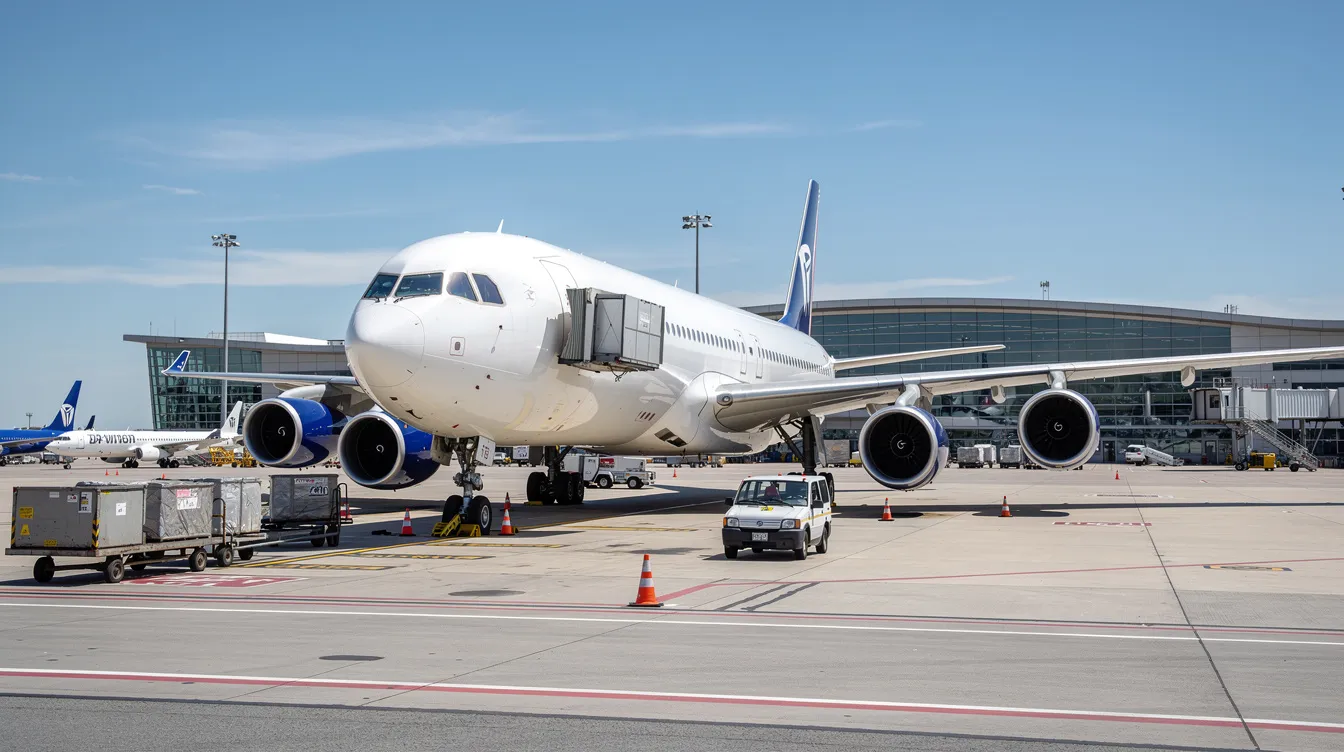
The Airbus A340 is a four-engined wide-body aircraft built for long-haul air travel, and its seating capacity ranges from 210 to 440 passengers depending on the variant and cabin layout. Whether you are comparing airliners for a group charter or simply curious about how airlines like Lufthansa and Air France configured these iconic jets, this guide breaks down the numbers for every A340 model still relevant today.
The Airbus A340 family includes four variants - the A340-200, A340-300, A340-500, and A340-600 - each with different fuselage lengths, ranges, and passenger capacity.
Typical seating ranges span roughly 210–250 seats for the A340-200, 295–335 for the A340-300 (up to approximately 440 in high-density layouts), 270–310 for the A340-500, and 320–370+ for the stretched A340-600.
Airlines like Air France, Lufthansa, and other airlines configure cabins differently - from two-class to four-class layouts - which strongly changes real-world seat counts.
Although Airbus ceased A340 production in November 2011 due to declining demand, the aircraft remains relevant for charter, VIP, and occasional long-haul scheduled service. Large-group charters can be sourced via platforms such as Jettly.
This article compares A340 seating to modern alternatives and explains when a chartered A340 or similar widebody may make sense versus smaller private jets.
The Airbus A340 is a four-engine, wide-body airliner designed for long-haul and ultra-long-haul routes. Developed alongside the twin-engine A330, it entered service on 15 March 1993 when Lufthansa began scheduled operations with the A340-200. Air France followed shortly after with its own A340-300 fleet. By December 2021, the A340 fleet had carried over 600 million passengers worldwide.
The family includes four variants: the A340-200, A340-300, A340-500, and A340-600. Each differs in fuselage length, range, and seating capacity. The quad-engine design originally allowed airlines to operate long overwater flights without ETOPS restrictions - serving routes connecting Europe to Asia, South America, and ultra-long-haul destinations such as Singapore to Newark.
Seating capacity is not fixed. Airbus provides typical three-class configuration benchmarks, but airlines choose their own layouts based on branding, route length, and cabin products. Standard passenger capacity changes based on aircraft length and layout - a principle that applies across the entire family.
Today, many A340S have transitioned from front-line scheduled flying to roles like charter, VIP, government, and seasonal high-demand operations. Understanding seating details matters for anyone planning group or charter travel on these aircraft, especially when comparing different private charter aircraft types and capacities.
Each A340 variant has a different fuselage length and maximum certified passenger capacity. These structural differences frame every seating number that follows.
The table below summarizes typical and maximum capacities. Numbers are based on Airbus reference layouts and common airline practices. Exact figures may vary by individual operator, since airlines customize their cabin configurations based on market demand.
|
Variant |
Typical Three-Class Seats |
High-Density / Max Certified |
Fuselage Length |
Primary Role |
|---|---|---|---|---|
|
A340-200 |
210–261 |
~420 |
59.4 m |
Ultra-long range, low capacity |
|
A340-300 |
295–335 |
~440 |
63.7 m |
Balanced range and capacity |
|
A340-500 |
270–313 |
~375 |
67.9 m |
Ultra-long range specialist |
|
A340-600 |
320–379 |
~475 |
75.4 m |
High-capacity stretched variant |
More detailed breakdowns by variant follow below, with real airline examples from Air France, Lufthansa, and other airlines.
The A340-200 is the shortest and rarest A340 variant. Only 28 were produced. It was optimized for very long range with modest seating capacity, powered by four CFM56 engines that gave it the range capabilities to serve thin, long-haul routes.
The A340-200 typically seats 261 passengers in three classes. In broader terms, typical configurations placed this variant between 210 and 250 passengers in a three-class configuration, depending on the mix of business class seats and economy class cabins. Two-class layouts pushed seat counts closer to 260–270.
The first aircraft in this variant entered service with Lufthansa on 15 March 1993, operating routes where range mattered more than maximum passenger count. The cabin cross-section - shared with the entire A330/A340 family - allows up to 8-abreast seating in economy, but many airlines favored a 2-4-2 arrangement for comfort.
A handful of A340-200s have been converted into VIP or government aircraft with very low seat counts, often under 100 seats. This is relevant for charter customers seeking large-cabin, long-range private configurations.
The Airbus A340-300 became the backbone of the family, offering a balanced mix of range and seating capacity for transcontinental and intercontinental routes. It was the most widely produced variant, with over 200 aircraft built before the production line closed.
In a typical three-class configuration, the A340-300 can accommodate 295 passengers. Depending on airline strategy, real-world seat counts range from 295 to 335 passengers. Airbus marketing materials often quoted around 295 seats as the benchmark.
High-density layouts used by some leisure or charter carriers reached 350–380 seats. The A340-300 can be configured for up to 440 passengers in an all-economy, single-class layout - the maximum certified capacity based on exit limits.
Air France historically operated A340-300s with roughly 275–280 seats in a three-class layout tailored to transatlantic routes. Other airlines configured cabins with varying ratios of business, premium economy, and economy sections.
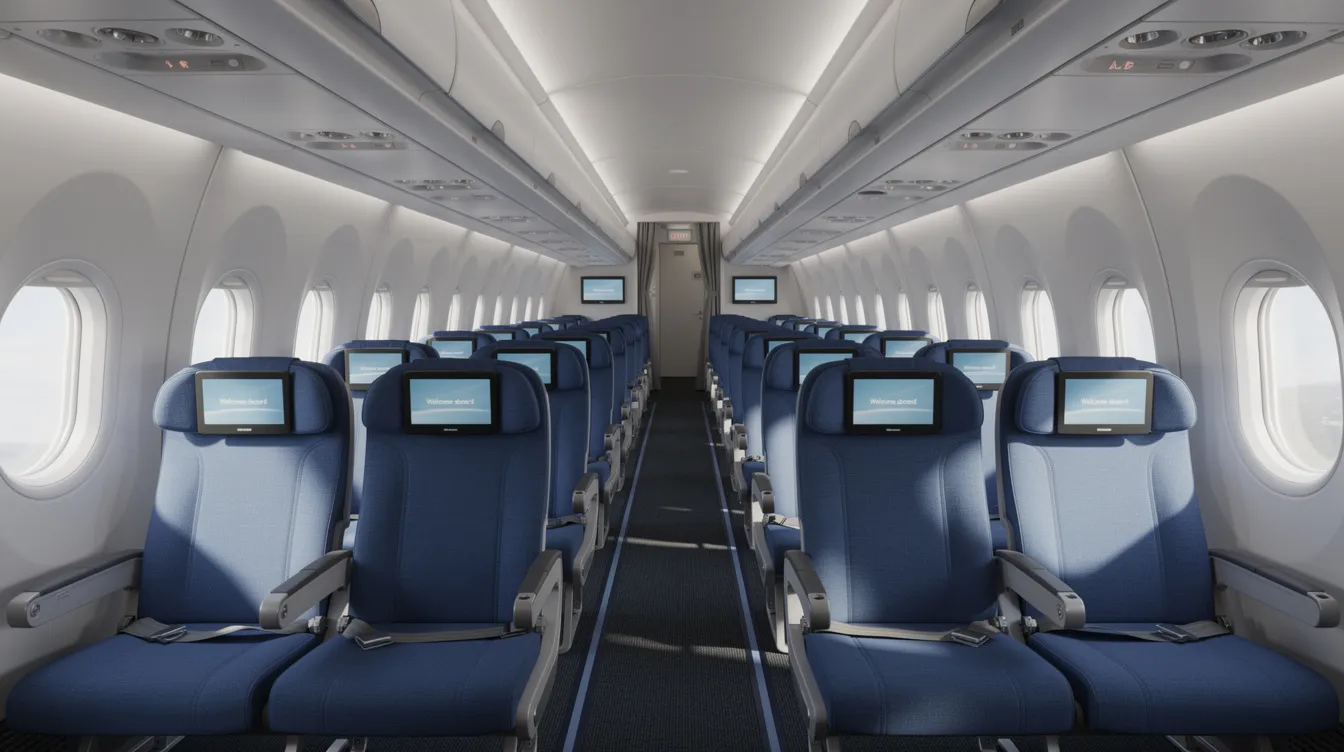
Seat pitch norms on long-haul A340-300 services typically ran 60–65 inches in business class (with lie-flat or angled-flat seats) and around 31–32 inches in economy with a 2-4-2 seating arrangement. That economy layout meant passengers were never more than one seat from a window or aisle.
The A340-500 is the ultra-long-haul specialist of the A340 family. With a range of over 15,000 km, it was developed to operate the world's longest non-stop routes - including the famous Singapore to Newark service.
The A340-500 features a three-class layout for 313 passengers as a reference configuration. In practice, the A340-500 typically seats 270 to 310 passengers in three classes, because many airlines deliberately reduced seating to add range and improve comfort on flights lasting 16–18 hours.
Singapore Airlines operated the A340-500 on the longest non-stop flight in commercial aviation history at the time - the first non-stop flight linking Singapore and Newark. Some of these aircraft carried all-business-class configurations with significantly fewer seats to maximize comfort and fuel capacity on that journey.
The A340-500's cabin dimensions are similar to the A340-300's, but additional fuel tanks and a higher maximum takeoff weight drove airlines to prioritize premium seating and long-haul amenities over raw passenger capacity. Several A340-500s have since entered VIP, head-of-state, or corporate transport roles with bespoke interiors - a development relevant for charter platforms arranging ultra-long-range private flights for large executive groups, especially when using a private jet charter cost estimator to budget multi-continent missions.
The A340-600 is the longest member of the family and was, for several years, one of the longest commercial airliners in the world. Designed to compete with high-capacity jets like the Boeing 747-400 and the Boeing 777-300, it featured a significantly stretched fuselage and more powerful engines to carry the added weight.
The A340-600 can carry 379 passengers in a three-class configuration according to Airbus reference data. In practice, the A340-600 typically seats 320 to 370 passengers in three classes, depending on the operator's cabin strategy.
The A340-600 was first flown commercially by Virgin Atlantic in August 2002. Lufthansa later became a major operator, running A340-600 layouts with approximately 8 first-class, 44–56 business-class seats, 28–32 premium economy, and 190–210 economy seats.
High-density two-class or single-class configurations can push overall capacity above 380 seats, with maximum certified figures often cited around 440–475 passengers depending on exit limits.
The long cabin supports multiple galleys and lavatories - often up to nine lavatories and several large galleys. This setup enabled full-service long-haul operations with multiple cabin classes and ample food and beverage service for passengers on flights lasting 12 hours or more.
Airbus A340 seating capacity figures are strongly influenced by cabin class mix. Adding a first-class section or enlarging the business cabin reduces total seat count, while all-economy layouts maximize it.
Common cabin class mixes among legacy carriers included:
Four-class: First, business, premium economy, economy
Three classes: Business, Premium Economy, Economy
Two-class: Business and economy
The Airbus A340 generally features a 2-4-2 economy layout across all variants, giving each passenger easy access to an aisle or window. Typical seat widths in economy ran about 18 inches, while business class seats ranged from 20 to 22 inches with considerably more pitch.
The route profile also mattered. Ultra-long-haul flights often use lower-density seating for weight and comfort reasons, while shorter high-demand long-haul routes sometimes use denser layouts. Airlines customize their cabin configurations based on market demand, which means two A340-300s from different carriers could differ by 50 or more seats.
Charter and ACMI operators may reconfigure ex-airline A340S for specific missions - such as all-economy pilgrimage flights or mixed-class corporate charters - resulting in capacities that differ from historical scheduled layouts, a trend reflected across the wider private and charter airline market.
Here is how major operators configured the Airbus A340 in practice, giving tangible seat counts for well-known airlines.
|
Airline |
Variant |
Approx. Total Seats |
Class Mix |
|---|---|---|---|
|
Air France |
A340-300 |
~275–280 |
Three-class (business, premium eco, economy) |
|
Lufthansa |
A340-300 |
~270–300 |
Three- or four-class |
|
Lufthansa |
A340-600 |
~281–330 |
Four-class (first, business, premium eco, economy) |
|
Virgin Atlantic |
A340-600 |
~308 |
Three-class |
|
Swiss Intl. Air Lines |
A340-300 |
~219–223 |
Three-class (premium-heavy) |
|
Edelweiss Air |
A340-300 |
~314 |
Two-class (leisure focus) |
Lufthansa's A340-600 configurations, for example, ranged from about 281 seats (with 8 first, 56 business, 28 premium economy, and 189 economy) to over 300 in revised layouts. Swiss International Air Lines operated a premium-heavy layout with fewer total seats but higher revenue per passenger.
As aircraft moved between airlines or into secondary markets, interior refits sometimes changed seating capacities significantly. For anyone planning a group private jet charter or large-cabin flight, checking the specific operator's current layout is essential, as is confirming suitable departure and arrival points with an airport locator tool.
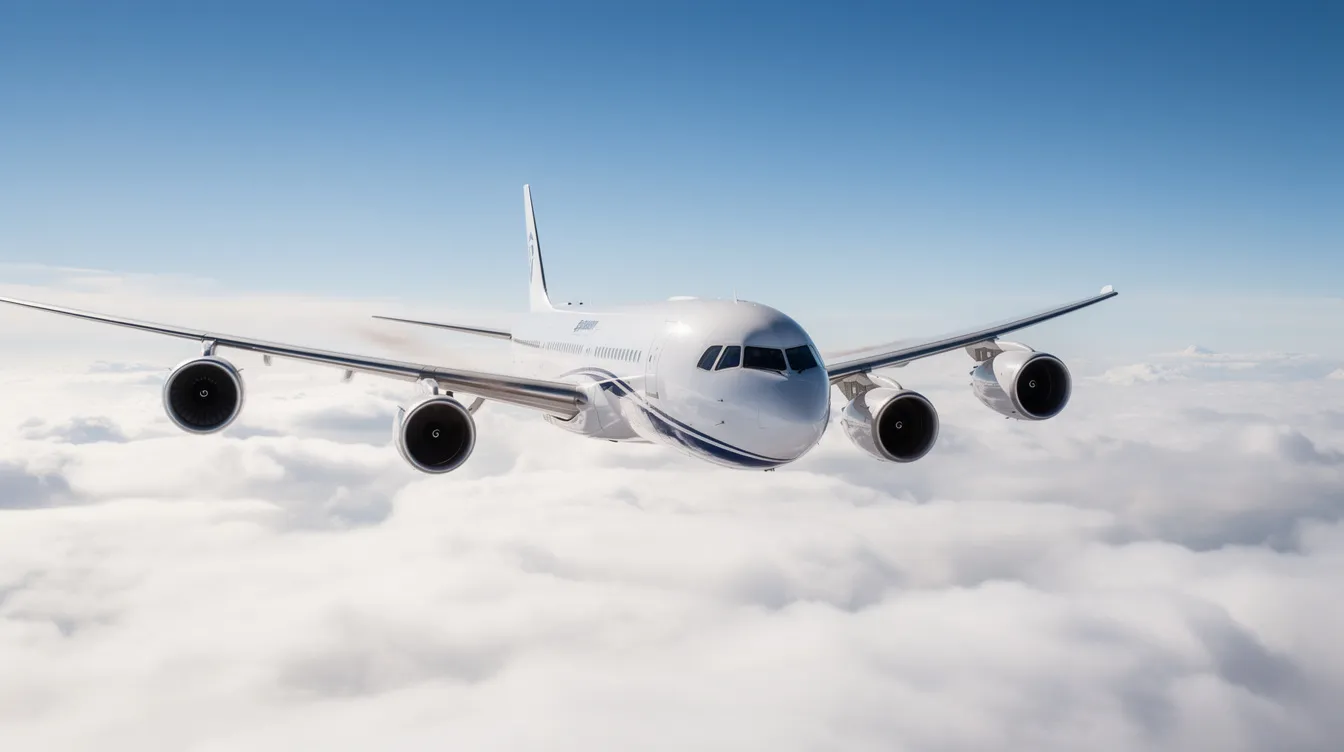
Modern twin-engine aircraft like the Airbus A350 and Boeing 787 now cover most routes the A340 once served, often matching similar seat ranges with lower operating costs. An A350-900 typically seats 280–320 in three classes, comparable to the A340-300, but burns significantly less fuel. This economic reality is why Airbus ended the A340 production line and shifted to the growing demand for efficient twinjets.
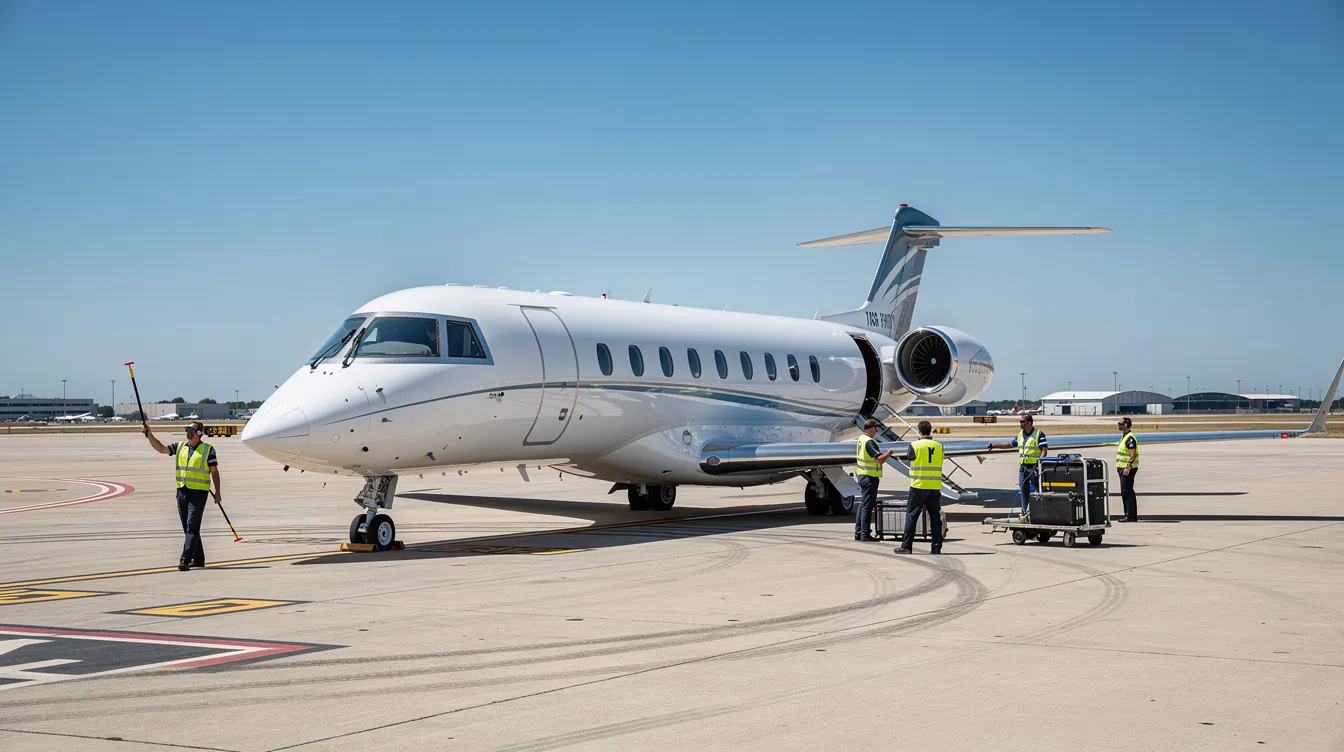
For charter customers, what matters is not only maximum seats but also cabin flexibility. Older A340S can be attractive for large groups needing 250–300+ seats, while smaller corporate groups are often better served by large-cabin business jets, especially when comparing options through affordable private jet charter solutions.
Jettly, as a digital private aviation platform, connects clients with aircraft across categories: light and midsize jets for small teams, heavy jets for 10–16 passengers, and - when needed - large airliners or VIP-configured widebodies including ex-A340s for events, sports teams, or incentive travel, all accessible through flexible private jet memberships.
Using a chartered widebody such as an A340 or similar airliner can consolidate what would otherwise require multiple commercial flights, offering private terminals, custom schedules, and tailored onboard service. For travelers planning large-scale movement - say, 150–300 guests for a conference or destination wedding - A340-class capacity combined with a bespoke charter solution can be arranged through Jettly.
Jettly's platform provides instant access to a global inventory of more than 20,000 aircraft, from compact private jets to large airliners capable of Airbus A340-like seating capacities. The platform verifies operators and safety credentials, so clients can focus on choosing the right fit for their trip.
Travelers can input passenger counts, route distance, and timing to receive suitable aircraft options or pair on-demand quotes with predictable-hour jet card programs. The platform lets clients compare costs and configurations - for example, a heavy jet versus a narrow-body airliner versus a widebody charter solution - with transparent pricing displayed on the page.
When researching aircraft options on any website, travelers sometimes encounter a security service performing security verification before the page loads - a common protection against malicious bots. Once verification is successful, the response ID confirms access. Jettly's own website is built for smooth, bot-free digital booking so clients can move from browsing to booking without waiting.
Jettly's team can also advise on cabin layout, seating style (business-class style seating versus all-economy charter layouts), and onboard amenities such as catering, Wi-Fi, and branding for corporate groups, drawing on insights similar to those in guides to the best private jet charter companies. Even though most private travelers will not charter a full Airbus A340, understanding widebody seating capacity helps benchmark what is possible when arranging complex group travel through the platform, including opportunities to share or crowdsource private charter flights to optimize costs and seat utilization.
Below are answers to common questions about A340 seating that go beyond the main sections above. Each relates back to long-haul use and private charter, where relevant.
Absolute maximum certified capacities depend on the variant and exit configuration. The A340-300 can be configured for up to 440 passengers in a single-class, high-density layout. The A340-600 can carry even more, with maximum figures often cited around 440–475 passengers depending on exit limits.
Most scheduled airlines never used these maximum figures in practice. Typical real-world layouts were closer to 295 seats for the A340-300 and 320–370 for the A340-600. Safety rules, evacuation requirements, and comfort standards all influence how close an operator can or wants to get to the certified maximum seat count. On the flight deck, crew requirements remain the same regardless of how many passengers sit in the cabin behind them.
Comfort depends more on airline cabin design than on the specific A340 variant. That said, many travelers praised the A340-300 and A340-600 for quiet cabins enabled by four engines distributing thrust more evenly along the wing. The 2-4-2 economy seating layout, established as the standard for the family, gave every passenger no more than one seat from an aisle.
Ultra long-haul A340-500 services often had particularly generous seat pitch and premium cabin ratios. Singapore Airlines' all-business configuration on that model was among the most comfortable A340 experiences ever offered - a layout planned specifically for flights lasting nearly 19 hours.
While uncommon for small groups, Airbus A340 aircraft can be chartered through specialized operators for large groups, sports teams, tour programs, or corporate events. Chartered A340S may retain airline-style seating to carry 250–300+ passengers, or they may be reconfigured with more spacious, business-heavy layouts.
Jettly can help source comparable large-capacity aircraft, including widebody airliners and VIP-configured jets, by matching passenger numbers, route distance, and budget on its global marketplace and advising whether shared charter flights or full charters make more sense for a given group size. Whether the mission involves a combined group of 200 employees or a sports franchise traveling across Europe, chartering an airliner can protect schedules and offer facilities that commercial service cannot match.
Newer twin-engine aircraft, such as the A350 and 787, typically offer similar or slightly higher seat counts in more fuel-efficient airframes. An A350-900 or 787-9 might seat 280–320 passengers in three-class layouts, comparable to many A340-300 cabins but with lower operating costs for airlines. McDonnell Douglas widebodies and older Boeing models have also been largely replaced by these modern twins.
From a passenger's perspective, seat width and pitch are usually determined by the airline's chosen layout rather than the aircraft model itself. However, cabin noise, humidity levels, and pressurization tend to be better on newer designs, which operate at higher cabin pressure altitudes and use composite fuselage materials. For charter operators, the choice often comes down to availability, price, and route - not just the aircraft generation.
A340 use on scheduled routes has declined as airlines shift to more efficient twins, but as of the mid-2020s, several carriers still operate A340 variants. Lufthansa has used A340-300s on selected long-haul routes, Mahan Air continues to fly the type in the Middle East and to Russia, and Edelweiss Air deploys A340-300s on leisure routes from Europe.
Some airlines reactivated stored A340-600s temporarily during capacity shortages between 2022 and 2024, when the growing demand for travel outpaced available twin-engine aircraft deliveries. Even as scheduled use shrinks, the A340 continues to appear in charter, ACMI, and VIP roles. The aircraft played a crucial role in the history of long-haul aviation, and its development pushed Airbus to compete directly with Boeing on intercontinental routes. Airports around the world remain equipped to handle the type, and its baggage and cargo capacity still make it suitable for certain operations.
For readers interested in exploring private charter options or getting a tailored quote, more information is available on Jettly's website.
The Airbus A340 family spans from roughly 210 seats on the A340-200 to well over 370 seats on typical A340-600 layouts, with maximum high-density configurations exceeding 400 passengers. Across all variants, the Airbus A340 seating capacity depends on the operator's chosen class mix, route profile, and service moment in the aircraft's life.
Understanding these ranges helps travelers and planners benchmark what a large long-haul aircraft can accommodate compared to smaller private jets. Whether the value lies in consolidating a corporate group onto one flight or securing a premium cabin for a cross-continental journey, knowing what each variant can carry is the starting point.
Jettly's platform simplifies the process of choosing the right aircraft size and configuration for private charters. Whether clients need a compact jet for 8 passengers or a large airliner with A340-class capacity for hundreds of guests, the platform matches aircraft to requirements with transparent pricing and instant booking.
Ready to plan your next flight on your terms? Explore aircraft options, compare categories, and request a charter quote tailored to your group size and route at https://www.jettly.com.
Share this post:
Jay Franco Serevilla
Jun 24, 2026
|
5
min read
Discover tips and trends in the industry.
5
min read
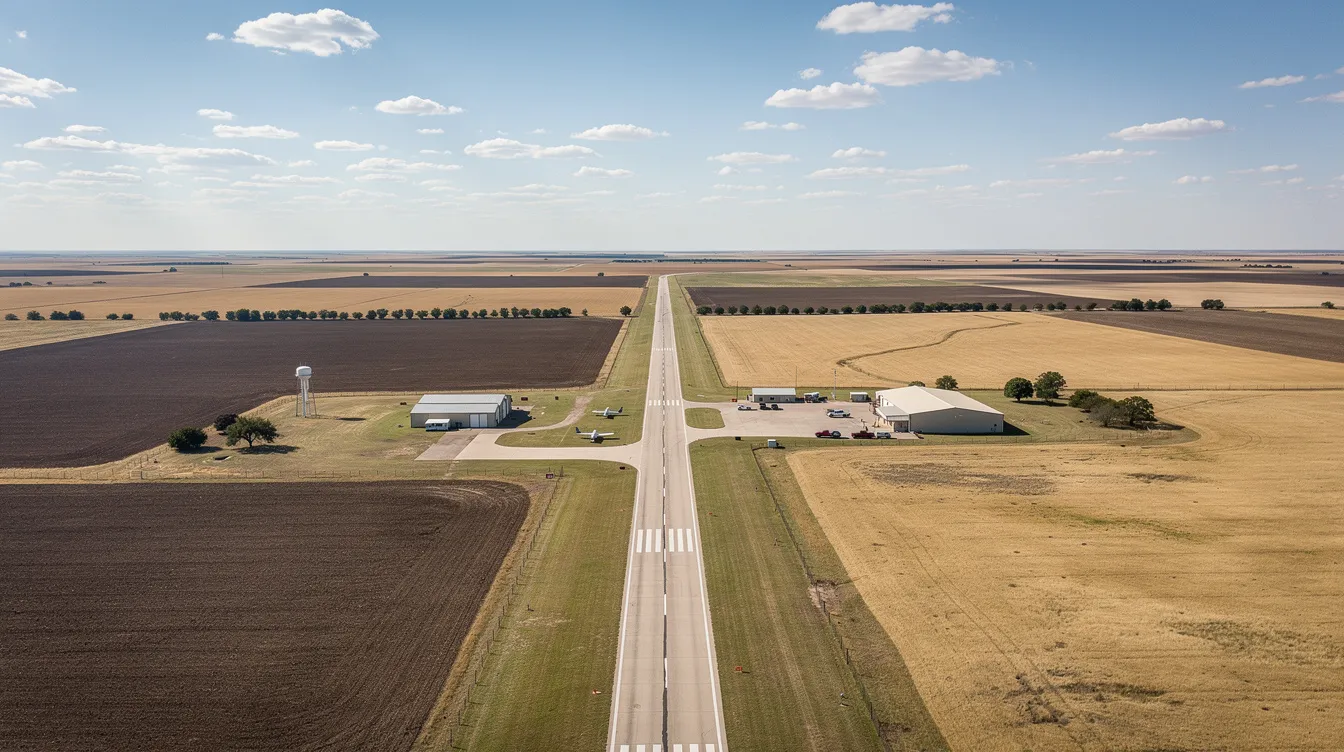
Hereford Municipal Airport (KHRX) Guide for Private Flyers
Hereford Municipal Airport (KHRX) is a public-use airport in Hereford, TX, catering to private flyers and business travelers. With a 6,100-foot runway and essential amenities, it provides direct access to the Texas Panhandle's agricultural region without the congestion of commercial terminals.
Read More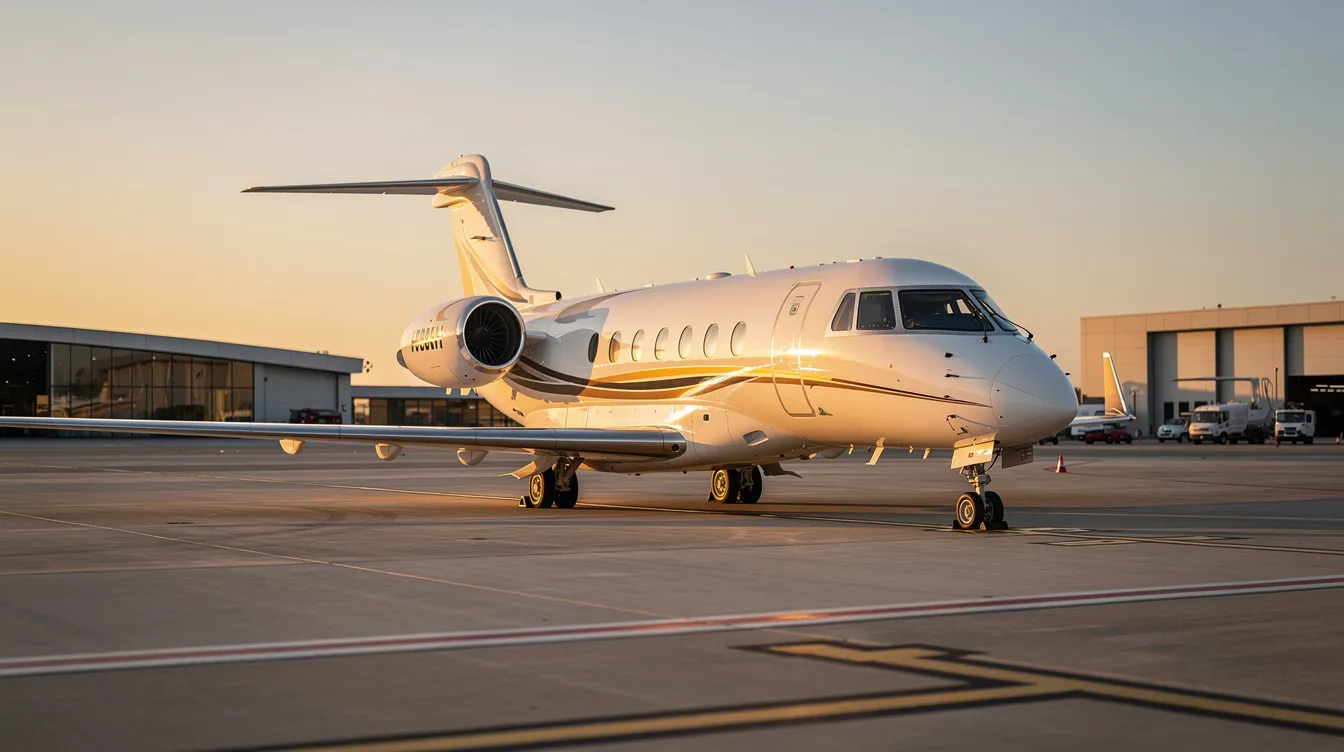
5
min read
10 Million Dollar Private Jet: What You Really Get for That Budget
A $10 million budget for a private jet offers access to top-tier light jets and pre-owned midsize jets, providing flexibility for business and family travel. This guide explores the aircraft options, operating costs, and the benefits of ownership versus chartering through platforms like Jettly. Understanding these factors can help buyers make informed decisions about their aviation needs.
Read MoreStay updated with our latest insights and tips to elevate your journey with us.
MEMBERSHIPS AND ASSOCIATIONS



Disclaimer: Jettly operates as a charter broker, offering access to a global digital jet charter marketplace. Jettly is not a direct air carrier and does not own or operate aircraft. All advertised flights are conducted by third-party air carriers that are fully licensed and hold the appropriate Part 135 or Part 121 certifications issued by the Federal Aviation Administration (FAA) or equivalent regulatory authorities under U.S. or foreign law. Jettly complies fully with the U.S. Department of Transportation's Part 295 and Part 298 Charter Broker regulations. Jettly does not carry additional liability insurance. Passengers are covered by aircraft operator insurance. TICO: 50023770


