



Login
Get Instant Pricing On 23,000+ Aircraft

>

Aircraft maintenance costs represent one of the largest components of overall aircraft operating costs, especially for business jets and charter fleets. These costs scale with flight hours and calendar time, combining scheduled tasks like annual inspections with unscheduled repairs.
Labor, parts, engine overhauls, heavy checks, and avionics upgrades are the primary cost drivers across an aircraft's life.
Understanding the aircraft maintenance cost breakdown helps travelers compare ownership versus on-demand charter through platforms like Jettly.
Operators bake long-term maintenance reserves into hourly charter rates, so Jettly customers see simplified, all-in pricing rather than individual maintenance line items.
Aircraft maintenance covers all technical work required to keep a plane airworthy, legal, and reliable - from inspections and repairs to upgrades. For both airlines and business jet operators, maintenance costs routinely account for 10–20% of total aircraft operating costs depending on age and utilization.
Routine inspections are mandated by regulatory bodies like the FAA, EASA, and Transport Canada, making maintenance non-negotiable. These aircraft maintenance costs include direct and indirect costs and can be categorized into variable expenses (tied to flight hours and cycles) and fixed expenses that do not change with aircraft usage, such as calendar-based checks and hangar preservation. Owners must budget for these directly, while charter customers on Jettly see them reflected within transparent, per-trip pricing.
Direct maintenance costs: encompass physical work servicing aircraft structures.
Indirect maintenance costs: cover overhead and support expenses for maintenance.
Variable expenses: tied to flight hours and cycles.
Fixed expenses: do not change with aircraft usage.
Aircraft maintenance costs include direct and indirect costs.
Maintenance costs arise from labor, parts, inspections, unscheduled events, and regulatory demands - all varying by aircraft type and mission profile. Complexity and size of an aircraft influence its costs significantly, and operational costs vary based on aircraft type and age.
Labor accounts for a substantial portion of maintenance expenses. Specialized technicians command high salaries due to expertise and certification requirements, with rates reaching $80–$100+ per hour for heavy inspections. Labor costs also depend on geographic location and technician availability. Direct maintenance costs encompass the physical work servicing aircraft structures, while indirect maintenance costs cover overhead and support expenses.
Parts and consumables significantly contribute to maintenance bills. Replacing components with OEM-approved parts incurs high costs due to certification, traceability, and specialized manufacturing. Parts and materials form a significant portion of every private jet maintenance cost invoice.
Age and utilization increase the frequency of inspections and maintenance costs. Older aircraft generally require more repairs and inspections than newer ones, and higher utilization rates can accelerate component wear. Maintenance costs are directly affected by the aircraft's age, flight hours, and complexity.
Regulatory compliance can impose unforeseen costs and incur additional testing and documentation expenses. Labor and parts volatility drive significant fluctuations in maintenance budgets year over year, and larger aircraft fleets can reduce overhead costs per unit by spreading fixed expenses across more airframes.
For a mid-size business jet, total maintenance reserves typically run USD 600–900 per flight hour, covering airframe, engine, and major components.
Aircraft maintenance expenses are split into scheduled upkeep and unscheduled repairs. The program includes line maintenance, base maintenance, and component overhauls - each with different cost profiles.
Line maintenance: day-to-day checks between flights - fluid servicing, oil top-ups, visual inspections, filters, and minor troubleshooting. Lower cost per event but frequent.
Base maintenance: deeper hangar checks (C/D checks for airlines, phase inspections for business jets) costing hundreds of thousands of dollars over days or weeks.
Engine overhauls: engine maintenance typically dominates maintenance budgets. With TBO intervals around 3,000–5,000 flight hours, overhauls cost $80,000–$1 million+ per engine. Engine overhauls and life-limited parts account for a high percentage of total spend - maintenance and overhaul represent the biggest cost component at 46%.
Annual inspections: for light aircraft like a Cessna 172, annual inspection fees typically range from $1,500 to $3,000 for labor alone, before defect rectifications.
Routine maintenance costs can be roughly half the cost of fuel for many operators. Unscheduled repairs - fuel leaks, avionics faults, bird strikes - can significantly increase maintenance costs and include unexpected faults that cause budget uncertainty. Parts availability and supply-chain delays can lead to increased downtime costs, compounding the financial impact.
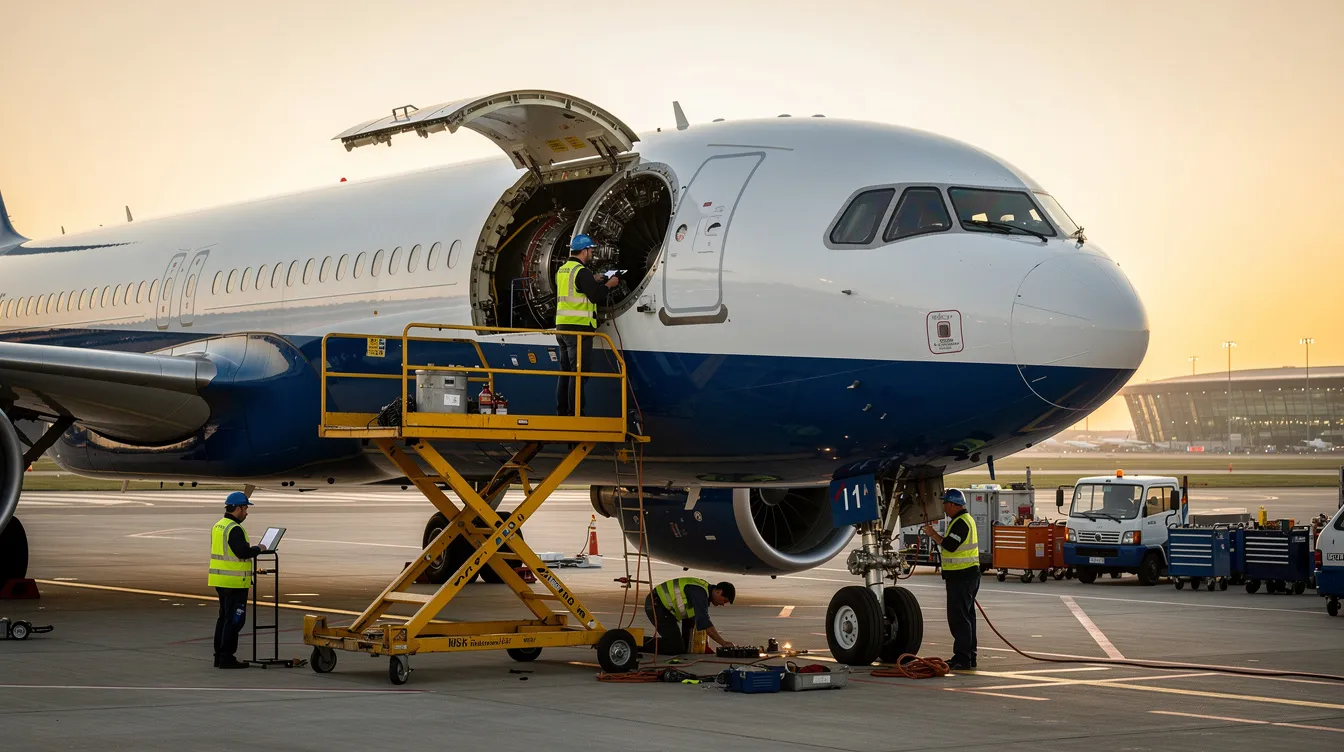
Operators convert large, irregular maintenance expenses into predictable per-hour maintenance reserves. These funds are set aside per flight hour for future airframe, engine, and component events based on manufacturer data and programs like JSSI or OEM power-by-the-hour schemes.
|
Aircraft Type |
Engine Reserve/Hr |
Airframe Reserve/Hr |
Total Maintenance Reserve/Hr |
|---|---|---|---|
|
Cessna 172 (piston) |
$15–$25 |
$10–$15 |
~$25–$40 |
|
Mid-size business jet |
~$400 |
~$250 |
~$600–$900 |
|
Heavy business jet |
$500+ |
$300+ |
$800+ |
For a small plane, owners save and verify reserve adequacy each year against the purchase price of an eventual overhaul. For charter operators working with platforms like Jettly, converting maintenance costs into per-hour figures or using a private jet charter cost estimator helps create transparent, all-in quotes that already account for long-term technical obligations. These hourly costs combine with fuel, crew, insurance, and ground handling to form comprehensive aircraft operating costs.
Safety is non-negotiable, but operators use several levers to manage costs across the aircraft's lifecycle.
Planning and scheduling: grouping work during planned ground time and coordinating parts in advance reduces unplanned downtime and AOG events.
Predictive maintenance and data analytics: engine health monitoring systems use technology and trend data to detect anomalies early, extending normal intervals and preventing expensive failures.
Repair-versus-replace decisions: choosing between OEM parts, approved alternatives, or component exchanges affects both direct costs and aircraft residual value. Life cycle and residual value considerations influence maintenance budgeting significantly.
Avionics and cabin upgrades: adjustments like ADS-B compliance or glass cockpit conversions improve capability but represent substantial capital outlays. Technological upgrades can significantly increase maintenance expenses.
Private owners must navigate these trade-offs month by month, maintaining the aircraft on their own and finding the right order of priorities. Charter customers booking via Jettly avoid exposure to surprise maintenance bills and simply choose aircraft and routes based on price, time, and comfort, especially when leveraging Jettly’s flexible private jet memberships.
On-demand charter remains an attractive alternative for travelers in aviation who want the benefits of private flying without committing to long-term maintenance obligations. For those provided fewer than 200 flight hours annually, chartering through Jettly can save significantly versus ownership when you factor in the full picture of how much a private jet costs.
Ready to fly without worrying about maintenance invoices? Use Jettly’s airport locator tool to explore flight options or request a quote at https://www.jettly.com.
Maintenance often represents 10–20% of total aircraft operating costs for business jets. This includes routine inspections, engine reserves, parts, specialized labor, and airline-style compliance documentation. The exact share depends on aircraft age, utilization, and whether the operator participates in a FAR Part 135 program governed by specialized Part 135 charter companies.
No. Charter passengers booking through Jettly do not receive separate maintenance invoices. Operators factor all maintenance costs and reserves into their hourly or per-trip charter rates, which Jettly displays transparently at booking.
Older airframes require more frequent structural inspections, corrosion control, and component replacements. Regulators may also issue additional Airworthiness Directives, adding labor hours and parts spend compared with newer planes.
By setting aside a fixed amount per flight hour into dedicated reserves for engines, airframe, and components, owners smooth out major expenses like overhauls and heavy checks - avoiding sudden six- or seven-figure cash calls each year.
For travelers flying fewer than 200 hours annually, on-demand charter via Jettly can be more cost-effective than full aircraft ownership. Chartering avoids fixed costs such as hangar fees, insurance, and long-term maintenance obligations while still granting access to a global fleet of over 20,000 aircraft on a trip-by-trip basis.
Aircraft maintenance costs are a significant and complex component of overall aircraft operating expenses. They are driven by labor, parts, inspections, unscheduled repairs, and regulatory compliance, all influenced by aircraft type, age, and utilization. By breaking down these costs into direct and indirect, fixed and variable categories, operators and owners can better budget and manage expenses.
For travelers and businesses considering private aviation, understanding this cost breakdown is essential. Platforms like Jettly simplify the process by incorporating maintenance reserves into transparent, all-in charter pricing, eliminating surprise bills and making private jet travel more accessible and predictable. Learn more about Jettly’s charter options at https://www.jettly.com.
Whether choosing ownership or on-demand charter, appreciating the nuances of aircraft maintenance costs helps make informed decisions that balance safety, reliability, and financial efficiency. For insights on ownership costs, see our detailed guide on how much a private jet costs.
Ready to experience private travel on your terms? Explore flight options or request a quote at https://www.jettly.com.
Share this post:
Jay Franco Serevilla
Sep 4, 2026
|
5
min read
Discover tips and trends in the industry.

5
min read
Elon Musk Aircraft: Inside Elon Musk's Private Jets, Fleet History, and How to Fly Similar Jets with Jettly
Elon Musk's private jet fleet, primarily consisting of Gulfstream models, showcases the intersection of luxury and necessity in modern aviation. This guide explores Musk's aircraft history, the evolution of his fleet, and how platforms like Jettly provide access to similar jets for those who seek the convenience of private travel without ownership. Discover the details of Musk's jets and how they reflect his dynamic lifestyle and business needs.
Read More
5
min read
Range of 737: How Far the Boeing 737 Flies, and When a Private Charter Makes More Sense
The Boeing 737 family offers a range from 1,500 to 3,850 nautical miles, making it versatile for various flight missions. While chartering a 737 can be cost-effective for large groups, private jet options through Jettly provide greater flexibility and access to more airports, often reducing total travel time. Understanding the range and capabilities of the 737 helps travelers make informed decisions about their flight options.
Read MoreStay updated with our latest insights and tips to elevate your journey with us.
MEMBERSHIPS AND ASSOCIATIONS



Disclaimer: Jettly operates as a charter broker, offering access to a global digital jet charter marketplace. Jettly is not a direct air carrier and does not own or operate aircraft. All advertised flights are conducted by third-party air carriers that are fully licensed and hold the appropriate Part 135 or Part 121 certifications issued by the Federal Aviation Administration (FAA) or equivalent regulatory authorities under U.S. or foreign law. Jettly complies fully with the U.S. Department of Transportation's Part 295 and Part 298 Charter Broker regulations. Jettly does not carry additional liability insurance. Passengers are covered by aircraft operator insurance. TICO: 50023770


