



Login
Get Instant Pricing On 23,000+ Aircraft

>
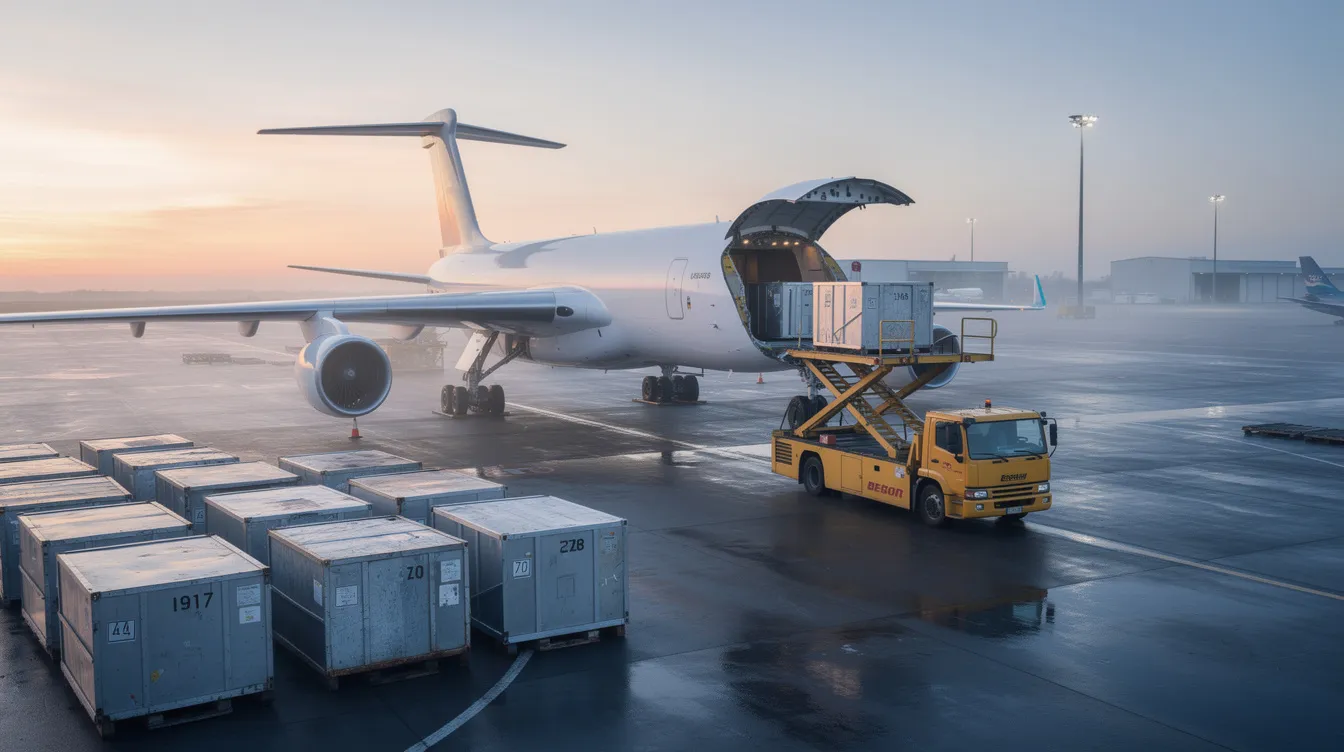
Moving an airplane from one location to another is rarely as simple as flying it there. Aircraft transport spans ferry flights, overland hauling of airframes on flatbed trailers, and time-critical shipping of aircraft components and jet engines across borders. It is an industry shaped by urgency, regulation, and high financial stakes.
Aircraft transport covers three core modes: ferry flights for airworthy aircraft, road hauling for disassembled airframes and helicopters, and air or sea freight for aircraft engines, landing gear, avionics, and other aircraft components. Airplanes are typically transported in sections for safety, with fuselages and wings shipped separately to meet highway size limits.
Jettly focuses on aircraft transport by air, using its global charter marketplace to arrange aircraft delivery flights, AOG parts moves, and urgent airplane shipping worldwide. The platform provides access to over 20,000 aircraft types, instant pricing, and real-time availability for time-critical missions.
The difference between airplane transport by truck and aircraft shipping by air charter comes down to speed and value at risk. Moving a Gulfstream G650 to a maintenance facility may justify a ferry flight, while rushing a CFM56 jet engine to resolve an AOG event in 2025 demands chartered cargo capacity measured in hours, not days. Shipping an aircraft can cost between $600 to $7,000 by road, while air charter costs reflect the urgency premium.
Readers can request a no-obligation quote for urgent aircraft shipping or private jet charter at Jettly, where transparent pricing and instant comparison options are core benefits.
Aircraft transport is the movement of complete aircraft and aircraft components-engines, wings, avionics racks, landing gear-by air, road, or sea between factories, maintenance bases, and operators. Air transport is the fastest method for moving goods globally, and air freight accounts for approximately 35% of global trade by value, making aviation logistics a critical link in supply chains far beyond the airline industry. Air transport is also critical for delivering humanitarian aid and medical supplies rapidly to disaster zones and remote regions.
Common scenarios include factory-to-customer aircraft delivery, ferrying a business jet to a new owner, repositioning a turboprop to a new base, and hauling aircraft that cannot fly due to damage or expired maintenance, where some operators are better equipped for unusual or damaged-aircraft moves. Aircraft shipping often requires specialized equipment and methods, from certified engine stands to oversize highway permits.
Even when a plane could technically fly, airplane transport by other means may still be required. Insurance limits, lack of qualified crew, regulatory restrictions, or the sheer cost of long repositioning flights can make road or chartered cargo flights more practical.
The concept of Aircraft on Ground (AOG) drives much of the urgency. When a wide-body aircraft sits grounded, revenue losses can exceed €200,000 per day. For corporate flight departments, even a single day of downtime disrupts schedules and erodes margins, making fast airplane transport critical. Air freight is essential for industries that rely on rapid replenishment of parts to keep fleets flying.
It is worth distinguishing between transport aircraft-cargo aircraft used as flying freighters-and the logistics business of transporting aircraft themselves. This article focuses on the latter.
The logistics plan depends on aircraft type, distance, cost, and urgency. Often a combination of modes is used-a disassembled fuselage may travel by truck to a port, cross an ocean by ship, and have its engine flown separately by cargo aircraft.
Air transport (ferry and cargo flights): Airworthy aircraft are flown to their destination safely by ferry pilots or charter operators. A 2024 ferry flight of a Learjet 45 from Toronto to Lisbon, for example, involved fuel stop planning across Reykjavik and Shannon. Cargo flights offer better reliability than maritime or road transport for time-sensitive shipments. However, aircraft cannot deliver goods directly to a customer's door and require additional ground transportation on arrival.
Road transport (trucks and trailers): Airplanes must be disassembled for safe transport by road. Fuselages must be separated, and wings removed, before hauling aircraft on flatbed trailers or lowboys. This is common for light airplanes-a Cessna 172 or Piper Cherokee heading to a paint shop or restoration facility. Transporting an aircraft requires specialized equipment and methods, including escort vehicles for oversize loads.
Sea transport (RO-RO and breakbulk): Wide-body aircraft sections and multiple small airplanes are shipped as breakbulk cargo on vessels, typically for intercontinental factory moves or salvage operations. Airplanes can be shipped in crates for safety during sea transport.
Each mode has distinct regulatory requirements: highway oversize permits for road loads, port handling rules for sea freight, and air cargo security screening for chartered flights. Jettly's core role is arranging airplane transport by air-both ferry flights and a wide range of private charter aircraft used for time-critical shipments.

A ferry flight repositions an aircraft from one airport to another without paying passengers. These flights happen after purchase, lease return, or major maintenance-and they represent one of the most common forms of aircraft delivery.
Typical scenarios include delivering a Bombardier Challenger 3500 from Montreal to a new owner in Dubai, or moving a Pilatus PC-12 from Denver to an MRO facility in Wichita using suitable private charter aircraft. Each mission requires performance planning, fuel stops, crew scheduling, insurance coverage, and overflight and landing permits for international routes such as New York–Reykjavik–London.
Charter brokers like Jettly use their global aircraft inventory-light jets, midsize, heavy, ultra-long-range-to match private charter aircraft types and highly skilled crews to specific delivery missions on short notice. Only operators regulated by authorities like the FAA, Transport Canada, and EASA are used, and all airworthiness directives and maintenance items must be current before departure.
The benefits of charter-based aircraft delivery versus owning a dedicated transport aircraft fleet are significant: lower fixed costs, pay-per-mission pricing, and instant comparison of options through Jettly's private jet charter cost estimator and digital platform. Learn more about what aircraft charter involves and how it applies to delivery flights.
Aircraft components-especially jet engines, APUs, and landing gear-are often more valuable than small airplanes. Full-life engines for narrow-body aircraft now represent roughly 80% of the value of a new aircraft, making secure transport a financial imperative.
Major component categories include CFM56 and LEAP-1A jet engines for the Airbus A320 family, Pratt & Whitney PT6 turboprop engines, Boeing 737 landing gear sets, composite winglets, and avionics racks.
Transporting aircraft engines requires specialized equipment and methods-engines are mounted on certified transport stands and cradles, then shipped by cargo aircraft or on flatbed trucks. Air cargo frequently utilizes temperature-controlled environments for sensitive components, pharmaceuticals, and perishable cargo. Aircraft engines and parts must be securely strapped down during transport to prevent shifting. Heavy Equipment Transport ships aircraft engines and parts safely using dedicated cradles and certified tie-down systems.
For AOG freight, the process involves booking priority capacity on the next available freighter or chartering a light jet or turboprop to move an engine overnight. Air freight is ideal for high-value, time-sensitive, or perishable items-and a grounded widebody losing over €150,000 per day makes the premium worthwhile. A dedicated transport agent coordinates the shipment from pickup through delivery.
Jettly can arrange rapid charter air freight for components: same-day sourcing of aircraft in North America or Europe via its airport locator tool, transparent pricing, and coordination with MROs at airports such as London Luton, Teterboro, or Van Nuys. Expert logistics agents handle route planning and scheduling to ensure faster delivery.
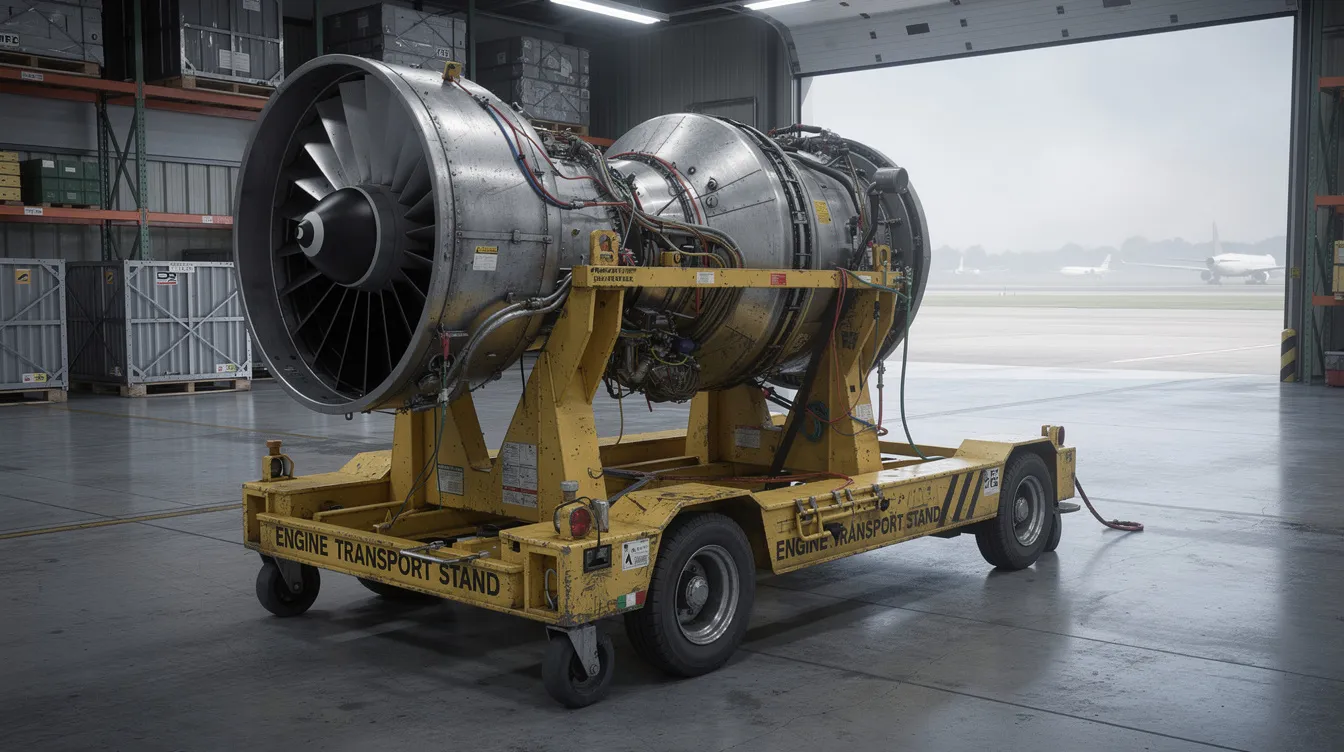
Aircraft transport solutions differ for light aircraft, business jets, helicopters, and airliners due to size, structure, and regulatory limits. Common aircraft types include small planes and military airframes, each with unique handling requirements. Airplanes must be broken down for safe transport by road, while airworthy jets and turboprops typically fly to their destination.
Typical Transport Methods: Road (disassembled) or single-pilot ferry
Example: Cessna 172, Piper PA-28
Details: Frequently transported disassembled by road within one region, or ferried by a single pilot for cross-country moves. Fuselages and wings are often detached for safe transport on trucks.
Typical Transport Methods: Ferry flight or staffed charter
Example: Citation XLS+, Gulfstream G550, Dassault Falcon 900
Details: Usually delivered via ferry flights or staffed charter flights as part of NetJets alternatives like Jettly. Road transport is used mainly after incidents or for museum pieces.
Typical Transport Methods: Truck (blades removed) or staged ferry
Example: Airbus H125, Bell 407
Details: Rotor blades and sometimes the main rotor head are removed for hauling aircraft by truck. For long distances, they are commonly flown with auxiliary fuel or staged ferry legs. Heavy Haulers ships helicopters, biplanes, and larger jets, and Heavy Haulers transports fuselages, wings, and other parts for various types of aircraft.
Typical Transport Methods: Ferry flight or heavy-haul trailer
Example: Boeing 737, Airbus A320, Boeing 787
Details: Transferred by ferry flight to storage facilities, flown to dismantling yards for part-out, or, for heavily damaged widebodies, moved by heavy-haul trailers with expert handling at every stage.
|
Aircraft Category |
Typical Transport Method |
Example Route |
Best Jettly Use Case |
|---|---|---|---|
|
Light airplane |
Road (disassembled) or single-pilot ferry |
San Diego–Phoenix |
Crew or parts charter |
|
Business jet |
Ferry flight or staffed charter |
Toronto–Vancouver |
Same-day charter delivery |
|
Helicopter |
Truck (blades removed) or staged ferry |
Los Angeles–Las Vegas |
Parts and crew transport |
|
Commercial airliner |
Ferry flight or heavy-haul trailer |
Frankfurt–Shannon |
Successful airplane transport requires detailed planning: route analysis, necessary permits, insurance, and risk assessment. Freight forwarders play a vital role in managing air freight logistics, coordinating between carriers, shippers, and customs authorities. Transporting aircraft involves careful route planning to avoid obstacles such as low bridges, narrow overpasses, and weight-restricted roads.
The main planning steps include a technical survey of the aircraft or parts, choice of airplane shipping mode, budgeting for costs, and selecting a qualified operator or carrier. Transporting aircraft involves obtaining necessary permits for oversized loads-fuselages are often over-dimensional and require special permits due to their main deck length and max width. Transporting a fuselage requires obtaining permits for oversized loads in every state or country the shipment crosses.
In the U.S., single-trip oversize permits typically cost $20–$300 per state, with superloads incurring engineering reviews and higher fees.
Risk control measures include weather routing for long-range ferry flights, alternate airport planning, crew duty-time compliance, and escort vehicles or pilot cars for heavy equipment on public roads. Transporting oversized aircraft may require escort vehicles for safety, especially when loads exceed the legal height limit or max weight thresholds. Cargo must comply with strict security screening and customs regulations during transport.
A practical checklist for anyone preparing to move an aircraft or major component in 2026:
Confirm the aircraft's airworthiness status or disassembly requirements
Verify insurance coverage for the chosen transport mode
Obtain all necessary permits and route approvals
Select the best trailer or charter aircraft for the load's max height, max length, and weight
Coordinate with customs if crossing international borders (especially into Canada or overseas)
Schedule the shipment with adequate lead time for crew rest and weather contingencies
Jettly's digital platform simplifies the early planning stage by showing available aircraft, approximate flight times, and pricing bands before formalizing the full logistics plan.
Aircraft shipping costs vary widely depending on distance, aircraft size, urgency, and transport mode. Air freight has higher costs compared to sea or road transportation, but speed often justifies the premium.
Realistic cost ranges for 2026: moving a light jet within North America by ferry flight may run from USD 8,000–20,000, while intercontinental heavy jet repositioning can exceed USD 150,000, figures that align with broader affordable private jet charter cost guidance. Shipping an aircraft by road can cost between $600 to $7,000 depending on distance and disassembly complexity. Airplanes must be disassembled for safe transport, increasing costs for road moves. Overseas aircraft transport typically costs more than domestic shipping due to customs, port handling, and longer transit times. Air transport has a higher carbon footprint and greenhouse gas emissions per unit of cargo than slower transport modes, a factor worth weighing against urgency.
Paying more for chartered air transport is justified in AOG situations where every grounded day costs tens of thousands, tight delivery dates for a new business jet, or high-value engines that must be moved under strict time and security constraints—especially when compared with simply buying a seat on a private jet for passenger travel.
Consider two scenarios: road hauling a vintage Beechcraft Bonanza over 2,000 km at competitive rates of $3–$8 per mile makes sense for a non-urgent restoration project, whereas individuals looking to get a seat on a private jet easily are typically solving a different, passenger-focused problem. But ferrying a modern Embraer Phenom 300 by air to deliver it to a buyer within 48 hours-where William Thomas, the new owner, needs the plane operational for a Monday morning departure-makes the charter premium a clear investment. The decision changes based on value and time sensitivity.
Jettly offers instant estimates online through its private jet charter cost estimator, a transparent breakdown of hourly rates and fees, and the ability to request a free quote tailored to specific aircraft transport missions.
Jettly is a digital private aviation platform, not a heavy-haul trucking company, and works exclusively with properly certified Part 135 charter companies. Its role centers on arranging on-demand aircraft transport by air worldwide-connecting airlines, MROs, and corporate flight departments with the right charter aircraft for urgent shipping services.
Operators use Jettly to source private charter aircraft quickly when they need urgent airplane shipping for technicians, replacement parts, or even small disassembled aircraft sections. The platform provides access to over 20,000 aircraft types globally-light jets, midsize jets, heavy jets, turboprops, and helicopters-with instant pricing, real-time availability, and options to crowdsource private jet flights and share empty seats.
Concrete use cases include chartering a turboprop from Frankfurt to Warsaw to deliver critical avionics overnight with utmost care, or booking a long-range jet from New York to São Paulo to move a maintenance team and high-value tools in one smooth journey—approaches that mirror the broader list of private charter airlines operating in the market. Expert logistics agents on the platform coordinate every detail for safe transport and secure transport of high-value shipments.
Frequent users in 2026 may choose private jet memberships for lower margins on multiple transport missions, while occasional users pay trip-by-trip for general freight or specialized equipment moves. Both models offer the same fleet access and digital convenience.
Ready to move aircraft, engines, or critical parts on your timeline? Learn more about Jettly's charter options, explore its Jet Card programs, and request a free quote for aircraft transport or urgent parts delivery at https://www.jettly.com.
These questions address practical concerns not fully covered above, with guidance relevant through 2026.
Urgent AOG charters can sometimes be arranged within a few hours through platforms like Jettly. Complex ferry flights with international permits-especially on intercontinental routes requiring overflight approvals for regions like Greenland or Iceland-generally need several days to two weeks of lead time for route planning and crew positioning.
Jettly focuses on airworthy aircraft and air charter. For non-airworthy airframes that must travel by road or sea, customers typically work with specialized heavy-haul companies such as Heavy Haulers, which has over 14 years of aircraft shipping experience. Many operators combine those ground services with Jettly-arranged crew transport flights for technicians or parts.
Limits depend on the selected aircraft type. Light jets handle smaller crates and avionics within their door dimensions, while midsize and heavy jets or dedicated cargo aircraft can transport heavier equipment like regional jet engine assemblies. Each aircraft has certified payload, max weight, and cargo door constraints that determine what fits.
While Jettly arranges aircraft and routes, customers or their freight forwarders handle customs paperwork. Operators and Jettly's support team coordinate schedules and documentation requirements at major cargo-capable airports to keep the shipment on track.
Many operators on the Jettly platform offer carbon offset options or efficiency programs. Readers should ask about available sustainability measures when requesting a quote for any aircraft transport charter, as options vary by operator and route.
Aircraft transport is a complex, highly regulated process that ensures aircraft and their components move safely and efficiently worldwide. Whether by air, road, or sea, each mode requires specialized equipment, careful planning, and adherence to permits and safety protocols. Jettly’s digital private jet charter platform simplifies urgent aircraft transport by providing instant access to a vast global fleet, transparent pricing, and expert coordination. This makes it an ideal solution for time-critical deliveries, AOG events, and routine repositioning flights. For those seeking reliable, fast, and secure aircraft transport, exploring Jettly’s services and requesting a quote is a practical next step.
Ready to experience private travel on your terms? Explore flight options or request a quote at https://www.jettly.com.
Share this post:
Jay Franco Serevilla
Jul 20, 2026
|
5
min read
Discover tips and trends in the industry.

5
min read
Air X: Private Aviation, Diversified Fleets, and Jet Support Explained
Air X represents a category of private jet charter operators known for their diversified fleets and integrated jet support, ensuring flexibility and safety. With over 7,050 flights in 2023, AirX Charter exemplifies excellence in private aviation, catering to corporate executives and high-net-worth individuals. Digital platforms like Jettly enhance access to these services, allowing travelers to book tailored flights effortlessly.
Read More
5
min read
Helidosa Aviation Group: Private Jet Charter, Safety Insights, and Alternatives
Helidosa Aviation Group is a leading private aviation operator in the Dominican Republic, offering a range of services including private jet charters and helicopter tours. Established in 1992, the company has expanded its fleet and services to cater to leisure and business travelers across the Caribbean and Americas. While Helidosa boasts a strong safety record, it has faced incidents that travelers should consider when booking.
Read MoreStay updated with our latest insights and tips to elevate your journey with us.
MEMBERSHIPS AND ASSOCIATIONS



Disclaimer: Jettly operates as a charter broker, offering access to a global digital jet charter marketplace. Jettly is not a direct air carrier and does not own or operate aircraft. All advertised flights are conducted by third-party air carriers that are fully licensed and hold the appropriate Part 135 or Part 121 certifications issued by the Federal Aviation Administration (FAA) or equivalent regulatory authorities under U.S. or foreign law. Jettly complies fully with the U.S. Department of Transportation's Part 295 and Part 298 Charter Broker regulations. Jettly does not carry additional liability insurance. Passengers are covered by aircraft operator insurance. TICO: 50023770


