



Login
Get Instant Pricing On 23,000+ Aircraft

>
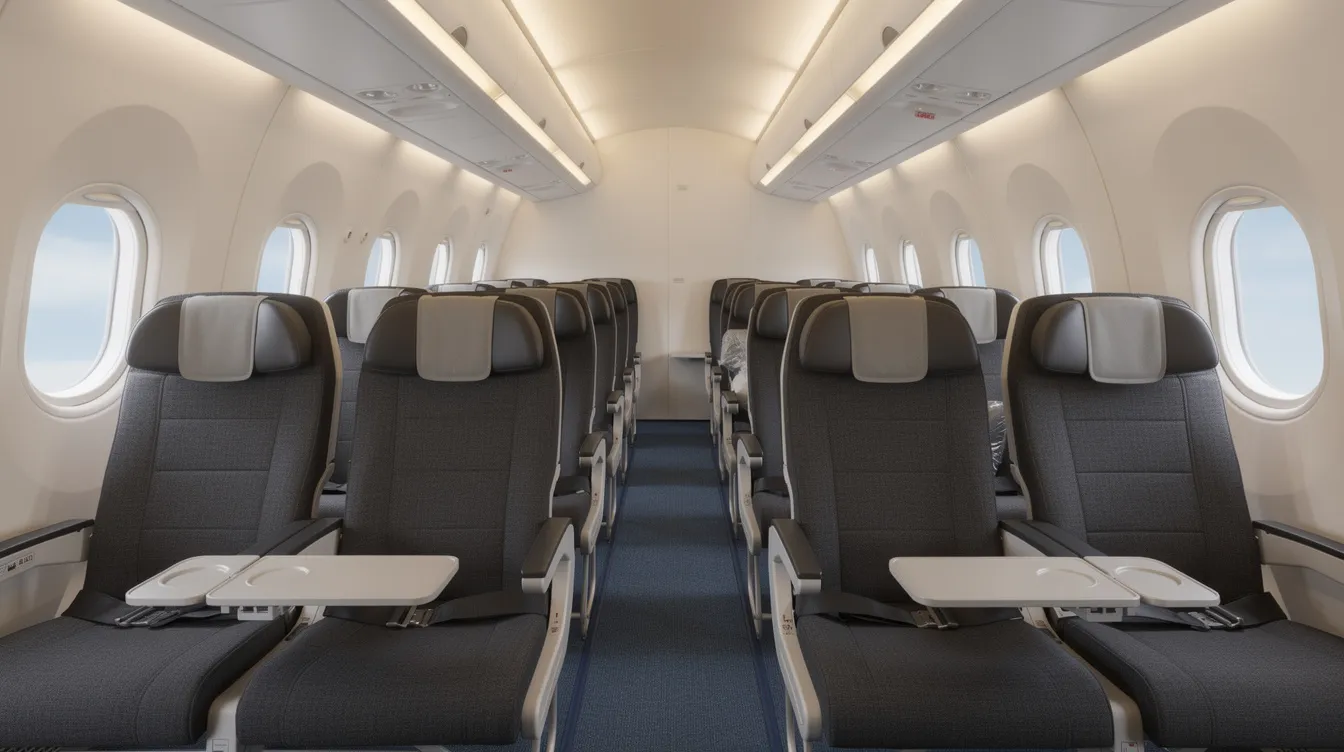
The airplane seat back is one of the most contested pieces of real estate in commercial aviation. It holds your tray table, your screen, and sometimes your sanity. Whether you are reclining your seat on a red-eye or bracing for the person in front to drop their seat back into your knees, the design and use of that airplane seat shape comfort, productivity, and relationships with fellow passengers on every flight.
Reclining is a right on most airlines, but it must be balanced with respect for the person behind, especially during meal service or when they are working on a laptop.
Seat pitch (typically 28 to 34 inches in economy class) and seat width (often 16 to 18 inches) are the two measurements that drive comfort in economy seating. Small changes in either make a huge difference.
Tray table design, power outlet placement, and in-flight entertainment options vary by airline seat type, aircraft age, and cabin class.
Private jet cabins, such as aircraft chartered through Jettly, largely avoid the middle seat issue and offer more flexible seat size, deeper recline, and generous legroom, especially on larger models whose layouts reflect how many passengers a private jet can carry.
Simple etiquette steps reduce conflict: check behind before reclining, time your recline outside meal service, and use the tray table thoughtfully.
This article compares commercial cabins with private jet travel across comfort, safety, and etiquette, and closes with a clear path to explore flights at https://www.jettly.com.
Airplane seat backs are engineered as structural, ergonomic, and safety systems. They do more than provide something to lean against. In a modern economy cabin, the seat back houses a fold-down tray table, an in-flight entertainment screen (10 to 13 inches on newer long-haul aircraft), a literature pocket for safety cards, and sometimes USB or AC power ports.
Comfort engineering in airplane seats focuses on posture management and fatigue reduction. The angle of recline, the firmness of the cushion, and the shape of the headrest all determine whether a passenger arrives rested or sore. On a five-hour flight, a person sitting at 6 feet tall in a 30-inch seat pitch cabin will feel every inch of recline from the seat in front.
Different cabins treat the seat back very differently. Economy class seats compress passengers into tight quarters with limited recline. Premium economy adds a few inches of pitch and width. Business class often provides lie-flat beds. Private jets replace dense rows with club-style seating where the relationship between one seat back and the next barely matters.
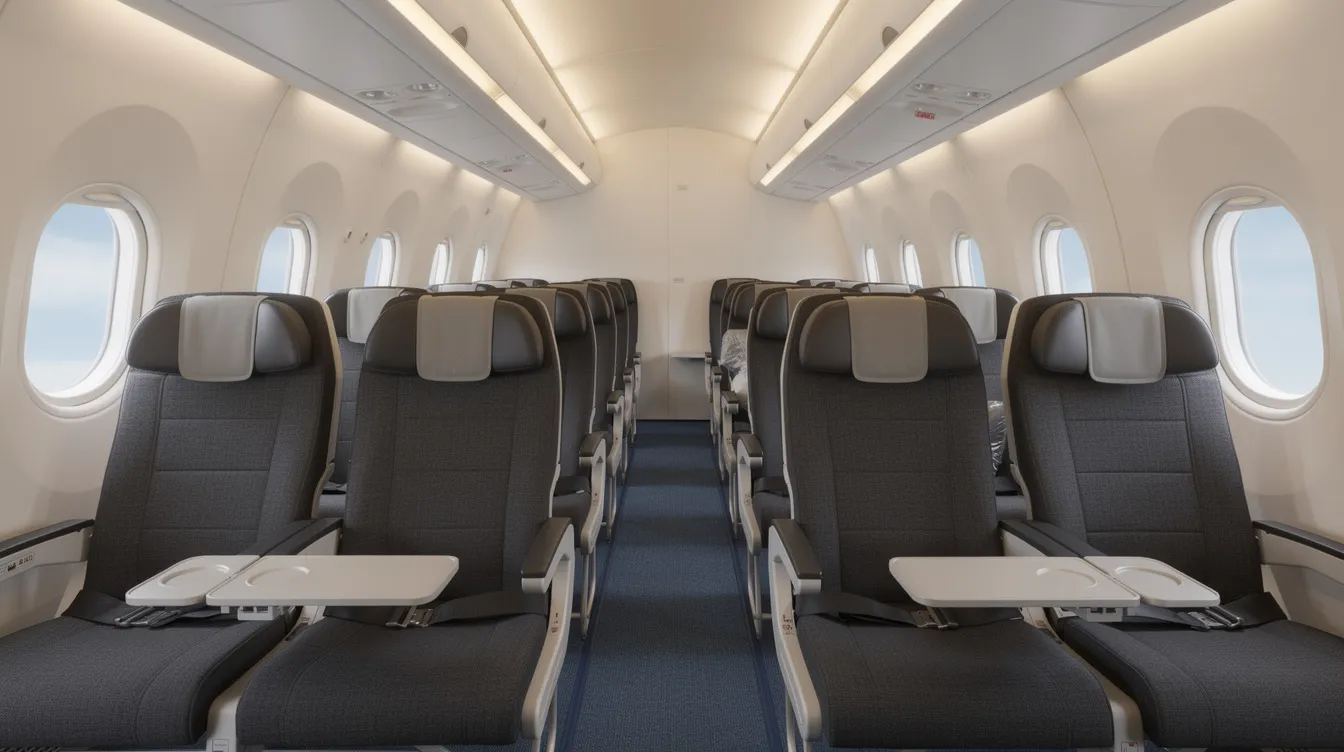
Commercial airplane seats mount to floor rails, which allows airlines to reconfigure rows to adjust seat pitch and cabin density. This modularity is why the same aircraft type can feel spacious on one carrier and cramped on another.
Airplane seat backs consist of a rigid internal frame wrapped in specialized materials. Modern airplane seat backs use high-strength lightweight materials like aluminum and composites to reduce aircraft weight while meeting safety requirements. Airplane seat back design balances human factors with aviation regulations, which is why every element, from padding thickness to screen placement, is the result of engineering trade-offs.
Core seat back elements include:
Tray table: folds down from mid-seat back; must latch securely
Literature pocket: holds safety card, airline magazine, and sometimes a device holder
IFE screen: ranges from 10 inches in economy to 24 inches in first class on long-haul flights
Coat hook: present on some aircraft, typically at the top of the seat back
Headrest with adjustable wings: many airplane seats feature adjustable headrests to prevent lateral head-bobbing during sleep
Slimline seats have less padding and are lighter than traditional seats. Modern slimline seat backs offer improved knee clearance without sacrificing comfort by relocating recline hardware and reducing frame thickness. Older seat designs used thicker foam and heavier structures, consuming more of the space behind.
Bulkhead rows and exit rows may have fixed or differently designed seat backs. In these positions, tray tables are stored in the armrest instead of the seat back, and entertainment screens may attach to movable arms.
Three dimensions define how comfortable a flight feels:
Seat width: typically 16 to 18 inches in economy. Average seat width in economy class was 17 to 18 inches in 2003, and it has not grown since; some configurations have shrunk it.
Seat pitch: economy class seat pitch typically ranges from 29 to 32 inches on most airlines, though some carriers go as low as 28 inches.
Usable legroom: the actual space between the seat back in front and a passenger's knees, which shrinks further when the person in front reclines.
Seats are engineered to balance comfort, safety, and efficient use of cabin space. Airlines face constant pressure to add more seats per aircraft, which is why average economy pitch dropped from about 35 inches in the 1970s to roughly 30 to 31 inches today on popular routes.
The middle seat passenger suffers most from limited seat size and shared armrests. When both neighbors recline, the person in the center loses lateral space and forward space simultaneously.
In business class, seat pitch often extends to 55 to 62 inches, with widths of 20 to 22 inches. Private jet club seating takes this further: a Learjet 60XR, for example, offers an interior cabin width of about 71 inches shared among six seats, giving each passenger room that would be unrecognizable in economy.
The tray table flips down from the airplane seat back in most economy cabins. It serves as a dining surface, desk, and device holder. Airplane seats incorporate integrated tray tables designed to latch securely during turbulence, keeping items in place during rough air.
Common problems when using the tray table include:
A 13- to 15-inch laptop screen getting pressed shut when the person in front reclines suddenly
Drinks and food spilling during unexpected seat back movement
Not enough space to fit both a meal tray and a computer during meal service
Reclining can block the view of laptops for passengers behind. Etiquette guidance: before reclining heavily, glance back. If the person behind is working, a brief heads-up takes two seconds and can prevent a cracked screen or spilled coffee.
Airplane seat backs must generally be upright for takeoff and landing for safety reasons. Regulations require tray tables to be stowed during taxi, takeoff, and landing so that passengers can brace properly and access the aisle without obstruction during a rapid evacuation.
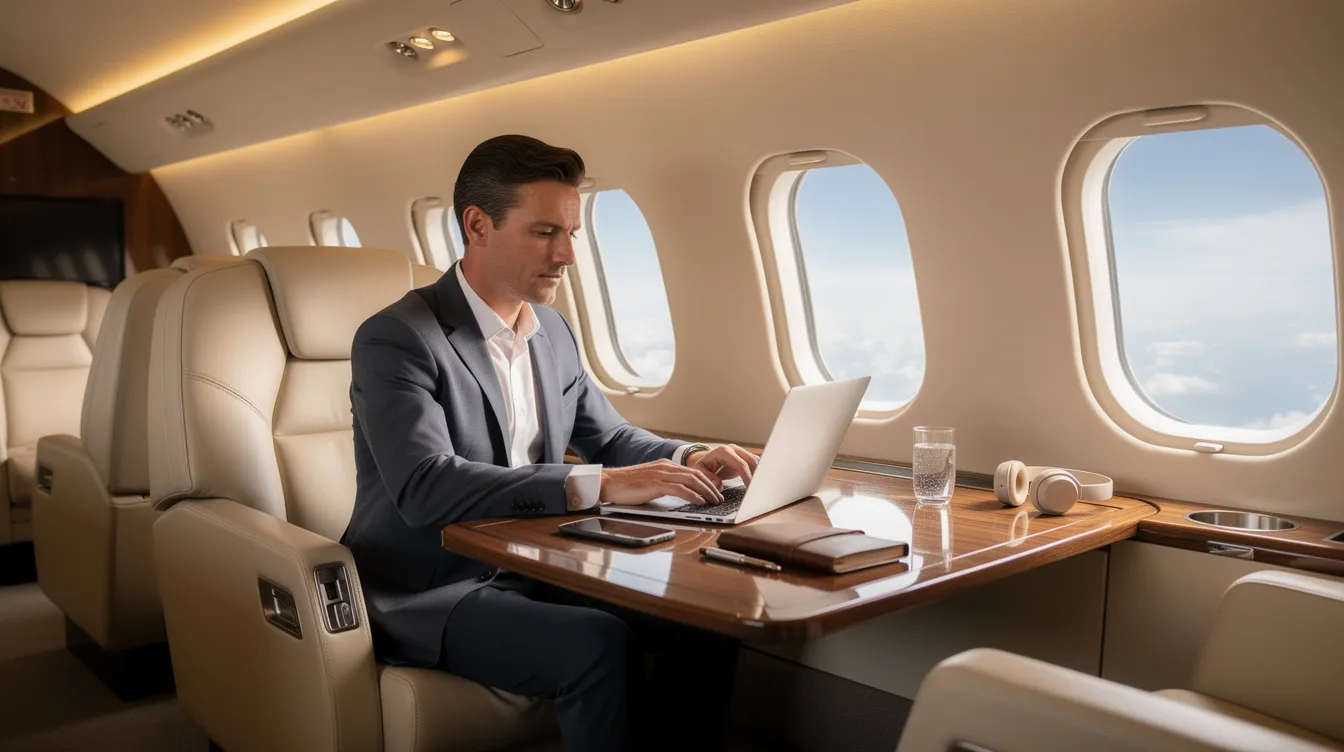
In premium cabins and on many private jets with custom layouts, larger side tables or credenzas replace the cramped fold-down tray, giving a stable workspace that does not depend on the seat back in front.
Airplane seats feature recline mechanisms that impact comfort and personal space. Most airline seats have reclining mechanisms for comfort, and reclining your airplane seat is technically allowed whenever the seatbelt sign is off. Yet it remains one of the most sensitive etiquette issues in flying. Many passengers find reclining seats disrespectful in coach, particularly on short daytime flights where sleep is not the goal.
The seat back belongs to the person sitting in it, but the space behind it is functionally shared with the person behind. That tension has no clean resolution, only etiquette.
Practical rules that reduce conflict:
Passengers should keep seats upright during meal service. Flight attendants encourage upright seats during meal service for the same reason.
Recline gradually rather than slamming the seat back.
Check on the person behind, especially if they are tall, eating, or holding a child on their lap.
If politely asked to bring the seat upright, consider adjusting, particularly on short hops.
Reclining is generally acceptable on long-haul flights, especially red-eye overnight services where most passengers are trying to sleep. A New York to London overnight crossing is a different context from a 90-minute afternoon shuttle.
On many private jets, recline is deeper and sometimes converts to a flat berth. Because cabins carry fewer passengers, the action rarely impacts another person's legroom, and premium touches like curated in-flight catering for private jets further distinguish the onboard experience from economy.
The middle seat is widely considered the least desirable airplane seat in standard 3-3 or 3-4-3 layouts on aircraft like the Boeing 737 and 777. The person in the middle has no window, no aisle access, and shared armrests on both sides.
When reclining passengers in both the front and neighboring seats are active, the middle seat occupant faces compressed legroom, restricted tray table access, and an uncomfortable angle for both rest and work. A seat reclined in front forces the middle passenger into an awkward leaning posture with nowhere to shift.
Coping strategies:
Select exit rows where recline may be limited, offering more legroom and enough space to sit without being squeezed.
Choose airlines with slightly better seat pitch; Copa Airlines, Japan Airlines, and ANA offer 34 inches in economy on certain routes.
Upgrade to cabins with 2-2 seating where the middle seat does not exist.
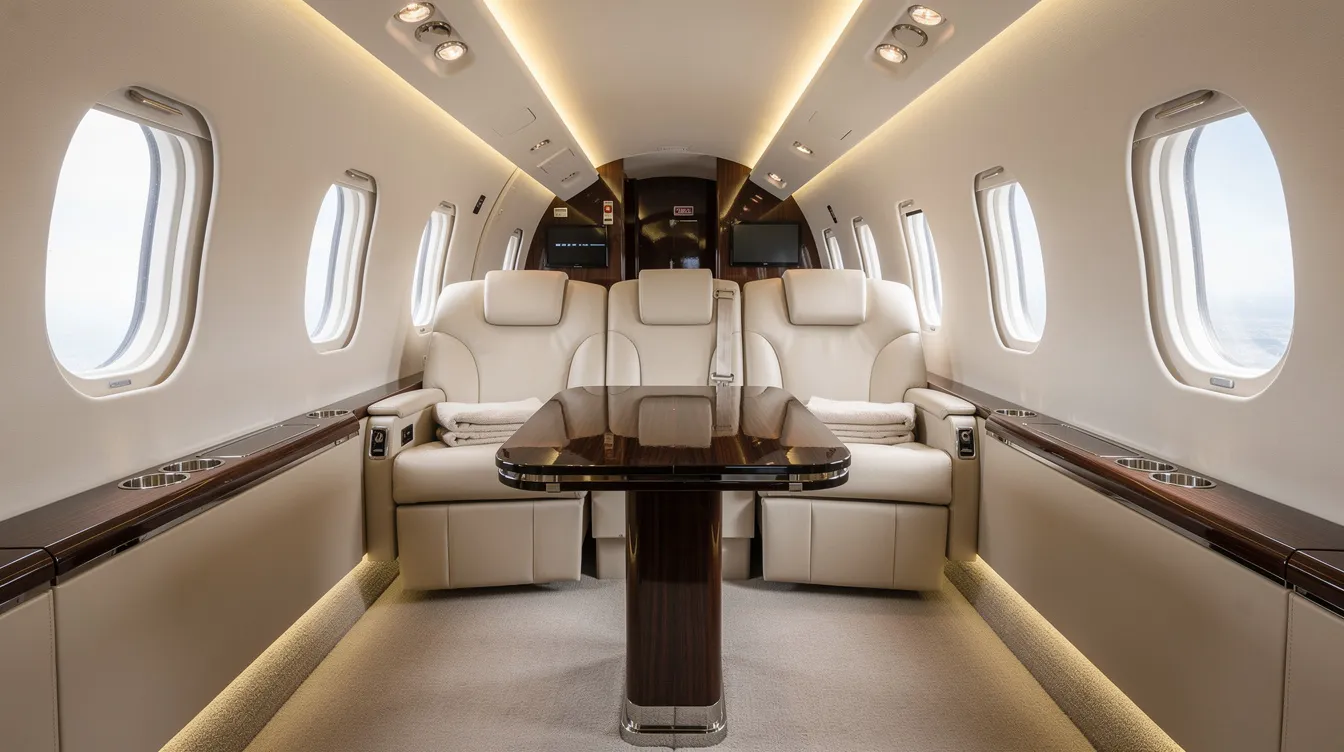
Private jet cabins typically use 1-1 or club-style seating. Every seat is effectively an aisle seat with clear access, eliminating middle seat conflicts entirely and making it easier to buy a single seat on a private jet rather than the whole aircraft. There is no other passenger's seat back inches from your face.
Aviation authorities, including the FAA, Transport Canada, and EASA, set strict standards for seat strength and seat back performance. Under FAA regulation 14 CFR §25.785, seat attachments must support occupant loads during emergency landings and crash forces.
Key safety requirements for airplane seat backs:
Seat backs are tested to resist 16G dynamic loads during crashes for safety.
Dynamic impact testing evaluates how seat designs protect occupants during survivable crashes.
Seat backs are designed not to deform during a crash to ensure evacuation within 90 seconds.
Fire-retardant and low-tox materials are used in seat backs to enhance safety in emergencies. Fire-blocking barriers in seat backs limit toxic smoke during a cabin fire.
Cushioning and upholstery on seat backs must meet FAA flammability requirements.
Some rows on commercial aircraft, especially those in front of emergency exits or the last row before a bulkhead, have restricted or no recline to preserve evacuation space and cabin geometry.
Seat backs must be upright, and tray tables stowed for taxi, takeoff, and landing so passengers can assume the brace position and reach aisles without obstruction. This is a safety issue, not a comfort preference.
Certified private charter operators available through platforms like Jettly fly under the same national and international safety regulations. Readers interested in the broader private aviation landscape can explore a comprehensive guide to private and charter airlines and understand how reputable Part 135 charter companies operate and are regulated. Their cabin layouts, however, are more spacious and easier to evacuate because fewer seats mean wider aisles and shorter distances to exits.
Dense rows of economy seating stand in contrast to the living-room-style layouts found on light jets, midsize jets, and heavy jets commonly chartered through Jettly, a NetJets alternative that lets travelers fly private with more flexibility and often lower cost, which features prominently among the best private jet charter companies.
Many private jets feature swivel, club, or divan seating. Passengers may face each other around a table instead of staring at the seat back of a stranger, even on longer international routes where private jets can cross oceans and borders efficiently. This arrangement reduces the importance of the traditional seat back in front and changes how personal space works entirely, especially on international private jet flights.
Practical differences include:
Seat width often exceeds 20 inches; some heavy jet seats are 22 inches or more
Deeper recline angles, with some business class seats recline to a full-horizontal flat position on larger charter aircraft
Adjustable lumbar support is common in long-haul business class seats and most private jet seating
Ergonomic shapes in seat design help distribute pressure evenly across the body, reducing fatigue on longer flights
Adjustable headrests support different passenger heights and help keep the head in position during rest
The absence of a middle seat and the smaller number of passengers per cabin nearly eliminates conflicts over reclining your seat or bumping the person behind, although travelers still need to understand how much a private jet costs and the full range of factors that affect private jet rental pricing when comparing these benefits to premium commercial cabins.
Travelers who frequently struggle with legroom, tray table space, or seatback etiquette on commercial flights may find that on-demand private charter aircraft, including some of the cheapest private aircraft options across jet and turboprop categories, address these pain points for key trips where comfort and productivity matter most.
Not all airplane seats are equal. Careful seat selection reduces the impact of recline conflicts and tight legroom before boarding.
Guidance for commercial flyers:
Use airline seat maps and third-party tools to locate seats with better seat pitch, non-reclining rows, or bulkhead positions.
Exit row seats offer more legroom but sometimes limited recline. Weigh the trade-off based on flight length.
Bulkhead seats remove the reclining seat back directly ahead but eliminate under-seat storage and may place screens on movable arms.
The only time to accept a non-reclining seat without complaint is on a short daytime flight where sleep is not the priority.
In private aviation, platforms like Jettly allow travelers to choose aircraft category, from light jet to midsize, heavy jet, or turboprop, based on cabin size, layout, and mission profile, often comparing the best private plane manufacturers for different budgets and needs. An executive choosing a midsize jet for Toronto to Vancouver can work at a conference-style table without worrying about someone reclining into their computer, while families can prioritize layouts from the best private planes for family travel comfort and care, especially if they apply tips for booking the cheapest private jet flights to keep costs manageable.
Jettly operates as a digital private jet charter marketplace with access to over 20,000 aircraft worldwide. The platform connects travelers with a network of operators, offering instant pricing and on-demand booking, and provides guidance on affordable private jet charter for cost-conscious travelers, including clear explanations of what drives the cost of a single private jet flight.
Private cabins accessible through Jettly generally provide greater seat width, more flexible recline, and generous legroom, making them especially appealing when paired with private planes well-suited to family travel comfort. Passengers can stand and move freely, work at proper tables, and configure seating to face colleagues or family members, or even participate in crowdsourced private jet flights that share empty seats or other shared charter flight options compared with full aircraft charters to lower costs. The cramped dynamics of a standard airline seat back become irrelevant.
Jettly's focus on transparent pricing, instant online quotes, and the option for membership or on-demand booking creates a clear alternative to frequent cramped economy seating, and its ULTRA high-ticket affiliate program even lets frequent travelers and content creators earn by referring others to these services. Operational efficiency matters too: flying into smaller airports closer to final destinations using an airport locator tool means comfort extends beyond the cabin. A traveler who saves 90 minutes on ground transport by landing at a regional field gains time that no amount of extra seat pitch in economy can match, whether they are flying into major hubs or booking a private jet charter to Chennai, Tamil Nadu, or arranging similar service through hubs like Atlanta, Georgia with its multiple private jet airports.
Even with planning, travelers will sometimes face tight seat pitch, a heavily reclining neighbor, or limited legroom. Here are concrete steps:
Politely ask the person in front to adjust their recline slightly. Most passengers will comply with a calm, direct request. An etiquette expert or protocol school instructor would say the same: be polite, be specific, and be brief.
Reposition devices away from the tray table edge to avoid pressure from the reclining seat.
Use a lumbar pillow to make the upright position more tolerable when the chair angle is fixed.
Book earlier flights with lower loads. A recent flight with open seats means more room to spread out.
Pay for extra-legroom seats when possible, or schedule key work trips on cabins with better seating, potentially leveraging easy ways to get a seat on a private jet when budgets allow.
If a seat back conflict escalates, involve cabin crew. Flight attendants are trained to mediate politely and ensure everyone can travel safely.
For a traveler who switches from an overbooked commercial evening flight to a same-day private charter for an important morning meeting, Jettly can function as a backup plan when seat comfort is non-negotiable, especially when supported by a jet card flight cost estimator that clarifies pricing in advance.
Most airlines allow reclining whenever the seatbelt sign is off. It is widely considered unacceptable to recline during meal service, immediately after takeoff, or just before landing. Sudden, full recline when the person behind is working on a laptop or has a child on their lap is also viewed as discourteous. A brief verbal check prevents most conflicts. Cabin crew may ask passengers to adjust recline temporarily to resolve disputes, and their instructions must be followed.
Exit rows with extra legroom, bulkhead seats where there is no direct reclining seat back ahead, and premium economy or business class seats with more space all reduce seat back friction. In bulkhead rows, entertainment screens may be mounted on movable arms rather than embedded in the seat back. On many private jets, seating is arranged in facing pairs around tables, so there is often no traditional seat back directly in front at all.
Certain rows, especially those in front of emergency exits or the last row before a bulkhead, may have fixed or restricted recline to preserve evacuation space. This is determined during the aircraft's certification process with regulators and is not at the discretion of crew or passengers. Check seat maps during booking to avoid non-reclining seats on long flights where rest is important.
Most private jet seats are wider and better padded than standard economy class seats and often offer deeper recline, leg rests, or full lie-flat options, especially on midsize and heavy jets. Because cabins carry fewer passengers, seats can be arranged so reclining rarely reduces someone else's legroom or tray table space. Travelers who value sleep and the ability to work without seat back conflicts can explore on-demand charter through platforms like Jettly using the charter cost estimator or structured jet card programs for predictable hourly rates.
Keep the screen at a slight angle rather than fully vertical so there is clearance if the seat back moves quickly. Use a stand or case that positions the device slightly back from the lip of the tray table, reducing pressure from the reclining seat. Pause work and reposition the device during meal service or when announcements suggest widespread seat adjustments are coming.
The airplane seat back affects far more than posture. It governs tray table use, screen placement, legroom, and the relationship with the person behind. A travel writer covering a past month of flights would confirm: small differences in seat pitch, recline behavior, and cabin design compound across hours in the air.
While reclining your seat is allowed, shared-space etiquette and awareness of constraints like seat pitch and seat size can reduce friction for everyone on the plane. Flying does not have to mean resigning yourself to uncomfortable arrangements.
Private jet solutions available through Jettly reduce many of these frictions by offering cabins without the middle seat problem, with generous legroom, flexible seating layouts, and airplane seat back designs built for comfort rather than density.
Ready to experience private travel on your terms? Explore flight options or request a quote at https://www.jettly.com.
Share this post:
Jay Franco Serevilla
Oct 29, 2026
|
5
min read
Discover tips and trends in the industry.
5
min read
Fly AAA: Guide to Seamless Private and Commercial Air Travel
This guide explores the benefits of flying AAA-style, whether through American Airlines or private jet charters via Jettly. It highlights the convenience, flexibility, and cost-saving opportunities available for travelers, including instant access to over 20,000 aircraft and tips for optimizing airport experiences. Discover how to choose the best travel option for your needs.
Read More
5
min read
Aircraft Time: How Flight Time Is Calculated, Planned, and Used in Private Aviation
Understanding aircraft time is essential in private aviation, influencing trip planning, pricing, and safety compliance. Flight time varies by region and is calculated differently, affecting everything from crew scheduling to fuel needs. Platforms like Jettly provide tools to accurately estimate flight time and costs, ensuring a seamless booking experience.
Read MoreStay updated with our latest insights and tips to elevate your journey with us.
MEMBERSHIPS AND ASSOCIATIONS



Disclaimer: Jettly operates as a charter broker, offering access to a global digital jet charter marketplace. Jettly is not a direct air carrier and does not own or operate aircraft. All advertised flights are conducted by third-party air carriers that are fully licensed and hold the appropriate Part 135 or Part 121 certifications issued by the Federal Aviation Administration (FAA) or equivalent regulatory authorities under U.S. or foreign law. Jettly complies fully with the U.S. Department of Transportation's Part 295 and Part 298 Charter Broker regulations. Jettly does not carry additional liability insurance. Passengers are covered by aircraft operator insurance. TICO: 50023770


