



Login
Get Instant Pricing On 23,000+ Aircraft

>
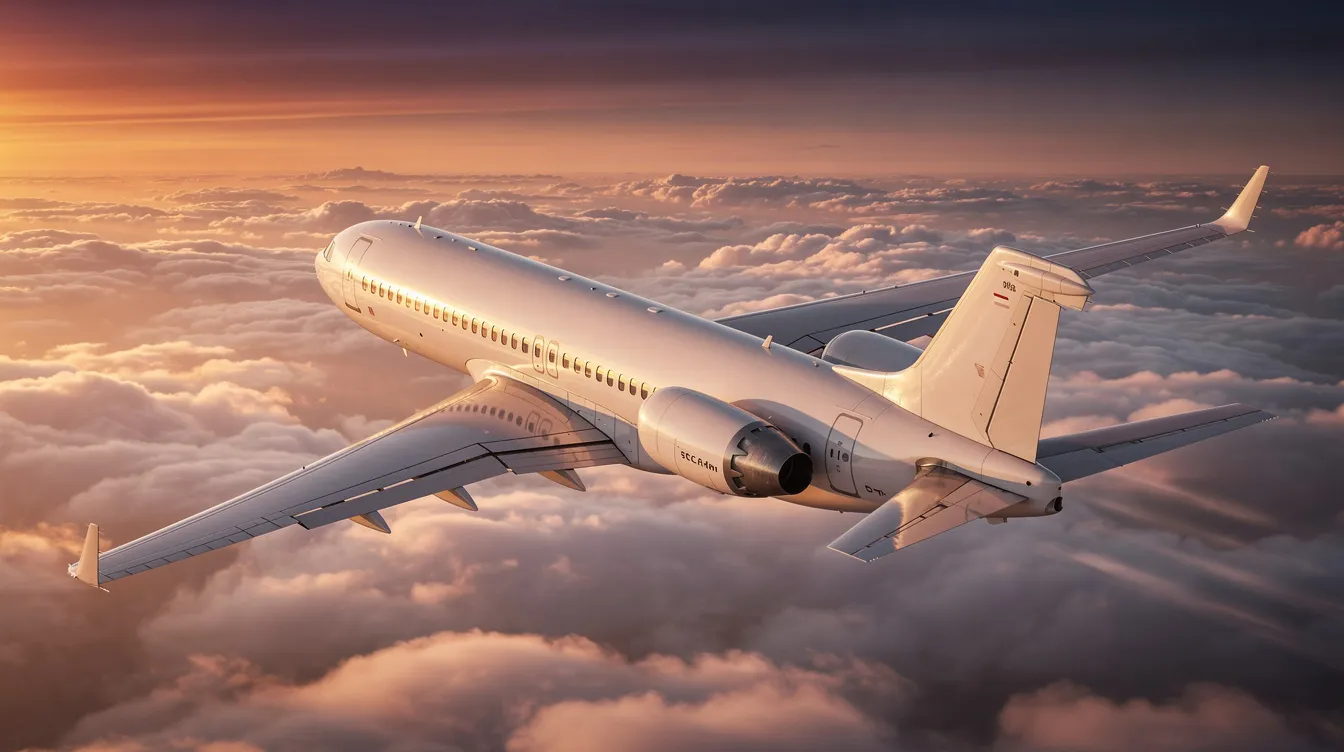
The word aeroplane covers a lot of ground. It describes every powered, fixed-wing aircraft that generates lift through its wings and thrust from a propeller or jet engine, from commercial airliners to private jets used for business and personal travel. But for millions of viewers, "aeroplane" also triggers instant recall of the 1980 film that turned aviation disaster tropes into comedy gold.
This article is for aviation enthusiasts, frequent flyers, and anyone interested in both the cultural and technical sides of aeroplanes.
From there, this article moves into the present for frequent flyers, corporate executives, high-net-worth travellers, and families who want the convenience, flexibility, and luxury of private aviation without the burden of ownership. It connects the cultural legacy of Aeroplane! to the technical evolution of aircraft, today’s business jet categories, charter costs, safety rules, empty leg flights, and how digital platforms such as Jettly make private aeroplane access faster, more transparent, and easier to match to a specific trip.
The 1980 movie Aeroplane! remains an uproarious spoof comedy featuring Robert Hays, Leslie Nielsen, Robert Stack, Peter Graves, Lloyd Bridges, and Kareem Abdul-Jabbar, delivering quotable lines that still resonate with each new generation.
Aeroplane technology evolved from the Wright brothers' 1903 flight through World War II innovations to today's advanced jet engines and private business jets that carry passengers across continents.
Digital charter platforms like Jettly now offer transparent pricing and access to 20,000+ aircraft worldwide, making it simple to search, compare, and book a private flight online.
The article closes with FAQs covering both the film and private jet charter, plus a clear invitation to explore Jettly's options.
For many people, the word aeroplane does not first bring to mind aerodynamics or boarding passes. It brings to mind a silly, funny, and endlessly rewatchable spoof that captured exactly how commercial flying looked and felt in the late 1970s.
Aeroplane! was released on June 27, 1980, by Paramount Pictures, running just 88 minutes. Principal photography began on June 20, 1979. Directed by Jerry Zucker, Jim Abrahams, and David Zucker—collectively known as ZAZ—the film parodies 1970s disaster films like Airport and draws its plot almost directly from the 1957 drama Zero Hour!. The film’s budget was about $3.5 million.
ZAZ purchased the rights to Zero Hour! and layered rapid-fire visual gags, puns, and slapstick over its serious story template. These Hollywood filmmakers turned a straight disaster genre framework into something no one had seen before.
The central plot follows ex-fighter pilot Ted Striker, who must overcome war trauma and land a Boeing 707 after the flight crew falls ill from food poisoning. Meanwhile, he tries to win back flight attendant Elaine Dickinson—a role in which Julie Hagerty made her film debut. The fictional Trans American Airlines jet reflects late-1970s cabin layouts, cockpit design, and in-flight service, creating a time capsule of that air travel era.
Iconic running jokes—"surely you can't be serious," the jive-talking passengers, the white zone and red zone airport announcements, Ted Striker's literal drinking problem—defined the comedy for decades. The film's humour includes risqué gags and double meanings alongside unabashedly juvenile sight gags, from inflatable autopilots to references that parodied television commercials of the day. Airplane! grossed $83 million at the US box office and $83 million in the US and Canada, is considered one of the best comedies of 1980, and holds a 97% positive rating from critics on Rotten Tomatoes. Whether you watch it in January or midsummer, the jokes still land.
ZAZ deliberately cast serious dramatic actors to play it straight amid total absurdity, and the strategy worked. The film features deadpan humour and absurd jokes delivered with complete sincerity by performers audiences associated with gravitas.
Robert Hays played Ted Striker, the film's lead character—an anxious former fighter pilot whose fear of flying drives the story. His grounded, earnest performance anchors the chaos around him. Robert Stack played Captain Rex Kramer, the tough-guy air traffic supervisor whose macho persona, built across years of serious TV dramas and the Hollywood Reporter spotlight, dissolves into comic frustration. Every scene he stars in subverts expectations.
Peter Graves plays Captain Clarence Oveur, the authoritative pilot whose increasingly inappropriate questions—including the infamous "have you ever seen a grown man naked" line—made the role legendary in comedy history. Lloyd Bridges plays Steve McCroskey, the control tower chief whose escalating "picked the wrong week to quit…" gag builds from smoking to amphetamines, each confession funnier than the last.
Leslie Nielsen portrayed Dr Rumack, transitioning from serious roles into the deadpan comedy icon audiences know today. Leslie Nielsen's line "I am serious… and don't call me Shirley" became one of AFI's top movie quotes. Nielsen's deadpan delivery launched his later career in The Naked Gun and other spoof projects.
Kareem Abdul-Jabbar appeared as co-pilot Roger Murdock, playing on his real NBA fame with the Los Angeles Lakers near Los Angeles International Airport. Ethel Merman had her final on-screen role in Aeroplane!, and supporting cast members like David Leisure's Hare Krishna packed each scene with layered jokes audiences still quote. The film is known for its quotable lines and slapstick gags that make any grown man laugh out loud.
The Boeing 707 in Aeroplane! may have been played for laughs, but the engineering behind real aircraft is anything but silly. Understanding how an aeroplane works helps explain why modern aviation—commercial and private—is as safe and reliable as it is.
Aeroplanes fly by balancing four aerodynamic forces: lift, weight (gravity), thrust, and drag. Lift is the upward aerodynamic force generated by the wings, created when air pressure above the wing is lower than that below. Gravity pulls the aeroplane downward, requiring lift to balance it for flight. Thrust is the forward force produced by the engines, which must overcome drag—the backward force or air resistance opposing the plane's motion—to move the aeroplane forward and accelerate.
The aerodynamic shape of the aeroplane minimises drag and maximises lift. Wings are shaped as airfoils with a curved upper surface and a flatter lower surface. Pilots use control surfaces such as ailerons, elevators, and rudders to manoeuvre the aircraft by managing roll, pitch, and yaw, and prospective owners can dive deeper into choosing the right personal aircraft when considering their own plane.
Aeroplanes are classified into categories based on design and mission. Commercial airliners transport passengers and cargo on scheduled routes, while business jets provide flexible transportation for business professionals. Military aircraft are designed for defence, combat, and troop transport. Cargo aircraft are built for transporting freight and mail, featuring large doors and reinforced floors. Amphibious aircraft operate on both land and water, featuring special fuselages. Research and experimental aircraft are utilised for developing new aviation technologies.
Propulsion varies: aeroplanes can be powered by piston engines, turboprops, or jet engines, each suited to different flight profiles and mission needs.
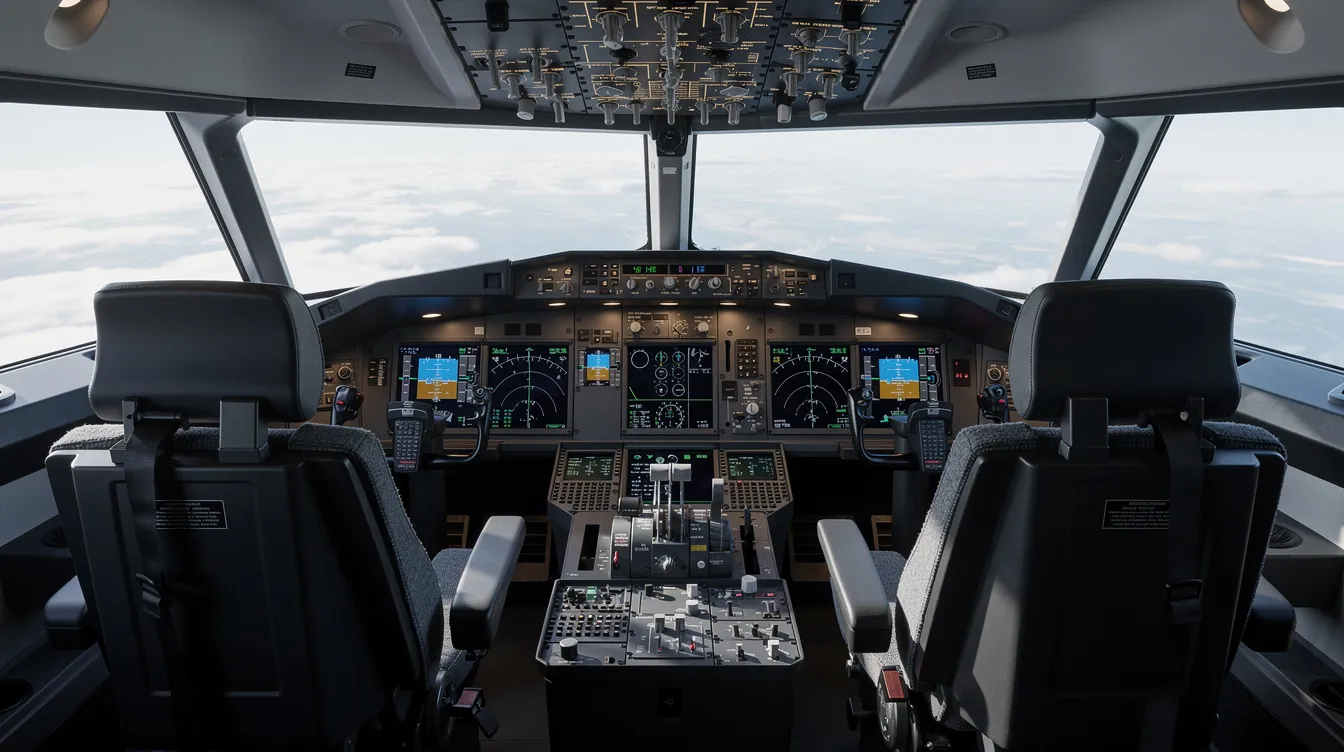
The history of aviation stretches from a windy beach in North Carolina to supersonic airliners crossing the Atlantic. Each milestone reshaped how people fly.
On December 17, 1903, the Wright brothers achieved the first sustained, controlled powered flight at Kitty Hawk, introducing three-axis control (pitch, roll, yaw) that engineers still use today. Through the 1920s and 1930s, airlines like Pan American and Imperial Airways began to develop scheduled routes using metal-framed aircraft such as the Douglas DC-3, which standardised passenger air travel across the country.
World War II accelerated aeroplane technology dramatically. Long-range bombers, early jet fighters, and pressurised cabins led to postwar civilian adaptations like the Boeing 377 Stratocruiser. The jet age arrived with the de Havilland Comet in 1952 and, more decisively, the Boeing 707 entering service in 1958—the same type visually echoed in the movie Aeroplane!. Wide-body jets followed: the Boeing 747 first flew in 1969, entered service in 1970, and Concorde offered supersonic service from 1976 to 2003.
Business aviation grew in parallel. The Learjet 23, certified in 1964, was among the first purpose-built business jets. Manufacturers like Gulfstream, Bombardier, and Dassault continued to develop larger, longer-range private jets—the ancestors of the best business jets available for charter today and key players among the best private plane manufacturers.
Beyond commercial airlines, a significant share of global flights involves private aircraft—business jets and turboprops that carry executives, families, and travellers who value flexibility.
Key categories include very light jets (under 6 passengers), light jets (6–8 seats), midsize and super-midsize jets (8–12 seats), and heavy jets (12–16+ seats) for intercontinental range. Turboprop aircraft like the Pilatus PC-12 handle shorter runways and remote airfields well. Families can compare the best private planes for families to find layouts and safety features that match their needs, and each configuration serves a different mission.
Common use cases for private aviation include last-minute business meetings, multi-city roadshows, family holidays to remote destinations, and medical or time-critical flights. The main advantages over commercial flying are direct access to smaller airports, departure on the traveller's schedule, privacy for work or rest, and tailored in-flight service such as specific catering through Jettly Eats in-flight catering for private jets or pet-friendly cabins.
Reputable charter operators must comply with safety regulations such as FAA Part 135 or equivalent oversight internationally, and travellers can benefit from understanding how Part 135 charter companies work and why they matter. The perception of aeroplanes shaped by comedies like Aeroplane! often contrasts sharply with the highly professional, predictable experience in modern business aviation.
Jettly is a digital private jet charter marketplace that makes accessing an aeroplane for private travel as straightforward as booking a commercial ticket on any website. The platform acts as a broker, not an operator, connecting travellers with vetted aircraft providers and partnering with instant-book operators like Zenflight private jet services.
Charter means booking the entire plane for a specific trip, paying per flight rather than owning a share or committing to a long-term jet card. Jettly connects users to a global fleet of 20,000+ aircraft—light jets, midsize jets, heavy jets, turboprops, and helicopters—through its private charter aircraft web interface or app.
The instant-pricing process is simple: enter your route (for example, New York to Miami or Toronto to Vancouver), select a date, add passenger count, and the platform returns aircraft options with estimated flight times and transparent pricing supported by a private jet charter cost estimator. For a complete walkthrough, readers can visit Jettly's guide on how to book a private jet.
Many travellers start with on-demand, ad hoc flights and later explore membership options or dedicated jet card programs for reduced fees, fixed hourly rates, or added services supported by tools like Jettly's jet card flight cost estimator. Jettly also coordinates ground transportation, custom catering, and specific requests such as quiet cabins for work or entertainment setups for families.

How much does chartering an aeroplane actually cost? Pricing varies by aircraft type, distance, airport fees, and fuel surcharges, and travellers can consult a complete guide to private jet rental costs for deeper context. Broad hourly ranges for 2026 include:
|
Aircraft Category |
Approx. Hourly Rate (USD) |
|---|---|
|
Turboprop |
$1,500–$3,000 |
|
Light Jet |
$2,500–$5,000 |
|
Midsize / Super-Midsize |
$5,000–$10,000 |
|
Heavy / Ultra Long Range |
$8,500–$14,000+ |
For detailed pricing by route, Jettly's private jet charter cost page breaks down what drives each number.
Empty leg flights—repositioning flights without passengers—can offer 30–75% discounts compared to standard charter rates. These come with fixed routes and departure windows but provide the same private aircraft experience, and Jettly's platform also supports crowdsourcing private jet flights and sharing empty seats to reduce costs further.
Safety remains central. Jettly requires operators in its network to hold FAA Part 135 certification (or international equivalents), pass third-party audits, and meet crew training and maintenance standards. On the environmental side, business jets burn more fuel per passenger than commercial flights at full capacity, but newer, more efficient aircraft, carbon offset programs, and optimised routing are helping reduce the footprint. Private charter works best as a tool for time-sensitive, high-value itineraries where the benefits clearly outweigh the costs.
Picking the right aeroplane depends on route length, passenger count, luggage, budget, and desired onboard comfort. As a general guide:
Turboprops and very light jets – short hops (e.g., Los Angeles to Las Vegas)
Light and midsize jets – regional trips (e.g., London to Geneva)
Heavy jets – transcontinental or transatlantic flights with larger groups
A private aeroplane can often use a closer regional airport, cutting total door-to-door time compared to a major hub, especially when paired with tools like Jettly's airport locator for private jet flights. Jettly's digital tools let travellers compare aircraft specs—range, cabin layout, baggage capacity, estimated flight time—side by side before booking. First-time flyers will find the process intuitive.
The cultural legacy of Aeroplane! gave us exaggerated chaos in the skies. The reality of booking and flying on a private aeroplane today is organised, tech-driven, and built for convenience, with travellers able to compare the best private jet charter companies, evaluate NetJets alternatives like Jettly, and browse a comprehensive list of charter airlines before deciding how to fly. Ready to experience private travel on your terms? Explore flight options or request a quote at https://www.jettly.com. Visit the platform to see what's available for your next trip.
Below are answers to common questions spanning both the cultural and practical sides of the word "airplane."
Jim Abrahams, David Zucker, and Jerry Zucker wrote and directed the 1980 film as a spoof of 1950s–70s disaster movies. They cast serious actors like Robert Stack, Leslie Nielsen, and Lloyd Bridges to deliver absurd jokes with total sincerity. Its enduring popularity comes from quotable lines, fast visual gags, and constant references in later shows and films that keep introducing it to each new generation.
Modern airline and private jet operations are highly regulated, standardised, and safety-focused. Professional crews follow strict checklists, and advanced avionics provide multiple layers of redundancy. The exaggerated emergencies and antics in Aeroplane! are comedic inventions designed to make audiences laugh—not reflections of how real aircraft operate.
Popular business routes may be available with as little as a few hours' notice, especially from major aviation hubs. However, booking several days to two weeks ahead typically improves aircraft choice and pricing. Last-minute requests are still possible but may come at a premium depending on availability, and travellers can weigh these tradeoffs by understanding shared charter flights versus full charters.
For solo travellers, private jets are usually more expensive. But for groups of 4–10 people on time-critical or multi-city itineraries, the per-person cost can rival business-class fares while saving hours of ground transit, layovers, and connections. Flying direct to smaller airports adds further value, whether you are arranging a private jet charter in Kolkata, West Bengal or planning private flights to and from New Delhi.
Enter your route, dates, and passenger count on Jettly's platform. The system returns a list of suitable aircraft with cabin sizes, ranges, estimated prices, and flight times. Filter by budget, nonstop capability, or cabin space. If you have special requirements—pets, specific catering, or ground transport—request a tailored quote for a complete package, and those who share Jettly with their audiences can also benefit from its ULTRA high-ticket affiliate program.
In summary, the word "aeroplane" carries rich cultural and technical significance—from the timeless comedy of the 1980 film Aeroplane! to the sophisticated reality of modern private jet travel. Understanding the evolution of aeroplanes and how digital platforms like Jettly simplify private jet charter empowers travellers to make informed choices that save time, increase convenience, and enhance comfort. Whether inspired by classic cinema or seeking efficient, flexible travel solutions, today’s private aviation options offer unmatched accessibility and transparency. Ready to experience private travel on your terms? Explore flight options or request a quote at https://www.jettly.com.
Share this post:
Jay Franco Serevilla
Jul 20, 2026
|
5
min read
Discover tips and trends in the industry.

5
min read
Leasing a Helicopter: How Helicopter Leasing Works (and When It Makes Sense)
Leasing a helicopter provides operators and individuals with access to aircraft without the hefty upfront costs of ownership. This flexible arrangement allows for predictable payments and can be tailored to suit various operational needs, whether through wet or dry leases. For those flying less frequently, on-demand charter services may offer a more cost-effective solution.
Read More
5
min read
How High Does a Helicopter Fly? Maximum Altitude, Limits & Practical Uses
Helicopters typically fly between 500 and 5,000 feet during routine operations, with some models reaching service ceilings of 20,000 feet or more. The highest recorded flight reached 40,820 feet in 1972, but most helicopters operate much lower due to factors like air density and engine power. Understanding these limits is essential for travelers considering helicopter charters for various missions.
Read MoreStay updated with our latest insights and tips to elevate your journey with us.
MEMBERSHIPS AND ASSOCIATIONS



Disclaimer: Jettly operates as a charter broker, offering access to a global digital jet charter marketplace. Jettly is not a direct air carrier and does not own or operate aircraft. All advertised flights are conducted by third-party air carriers that are fully licensed and hold the appropriate Part 135 or Part 121 certifications issued by the Federal Aviation Administration (FAA) or equivalent regulatory authorities under U.S. or foreign law. Jettly complies fully with the U.S. Department of Transportation's Part 295 and Part 298 Charter Broker regulations. Jettly does not carry additional liability insurance. Passengers are covered by aircraft operator insurance. TICO: 50023770


