


Login
Get Instant Pricing On 23,000+ Aircraft

>
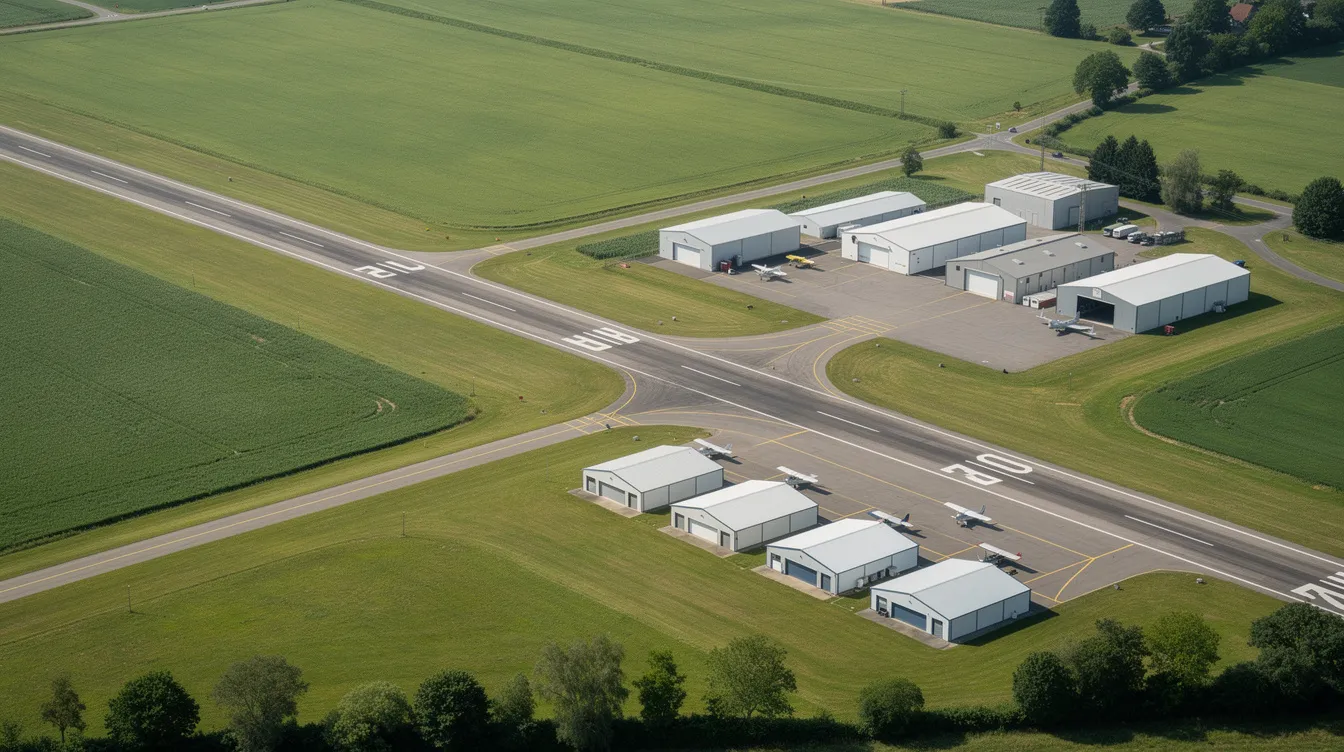
ARB is one of southeastern Michigan's busiest general aviation fields, and private flyers use it to skip the 40-mile drive from Detroit Metro. Here is what to know before booking a charter.
Ann Arbor Municipal Airport (IATA code ARB), also called Ann Arbor Muni (KARB), is a public general aviation facility in Michigan. The airport is located about 3 miles south of downtown Ann Arbor and the University of Michigan campus, in Pittsfield Township, with direct access from State Street and I-94.
This article covers ARB from a private and business aviation perspective: facilities, operations, ground logistics, and how Jettly arranges private jet charters to and from the field. For official airport details, check the airport or city page.
Unlike Detroit Metropolitan Wayne County Airport (DTW), which handles commercial airline traffic, Ann Arbor Airport focuses on general aviation. It does not host scheduled commercial passenger airlines. Its primary use is for general aviation rather than commercial flights; Ann Arbor Municipal Airport primarily serves private and charter flights, flight training, and air ambulance operations.
Typical users include local businesses, university-related travelers, medical and sports charters tied to Michigan Medicine and Wolverines athletics, and leisure flyers heading to or from Ann Arbor.
ARB sits at 801 Airport Drive, off South State Street. The drive from campus or downtown takes roughly 10 to 15 minutes under normal traffic. Ypsilanti is about 10 miles east; Saline is a short drive south.
Primary road access runs through I-94 (east-west) and US-23 (north-south). Both connect to State Street, which leads directly to the airport property.
Ground transportation services are accessible at Ann Arbor Municipal Airport. Options include:
Pre-booked black car or limousine providers
Uber and Lyft (active in the Ann Arbor area)
Hotel shuttles from nearby properties
Jettly can coordinate executive sedans, SUVs, or vans as part of a door-to-door trip, so ground logistics are handled before landing.
For car rental, major brands like Avis, Enterprise, Hertz, and Budget operate in the Ann Arbor area. Most do not maintain on-airport counters at ARB; instead, they provide delivery-to-FBO or shuttle pickup from nearby city locations. Economy rentals run $30 to $40 per day; midsize vehicles $50 to $60; SUVs $70 to $100.
Pre-book during peak periods: U-M football Saturdays, graduation week in late April or early May, and major academic conferences fill rental and hotel inventory fast. Nearby hotels include the Sheraton Ann Arbor (1.3 mi from ARB), Hilton Garden Inn (1.1 mi), Courtyard by Marriott (1.4 mi), and Residence Inn Downtown (about 4 mi, closer to campus).
Ann Arbor Airport covers 837 acres and is managed by the city of Ann Arbor. It supports general aviation, business jets, flight schools, and emergency flights.
The airport has two runways: one paved and one grass. Runway 6/24 is the primary paved surface, 3,500 feet of concrete at an elevation of 839 feet MSL. Runway 12/30 is a seasonal turf runway, approximately 2,750 feet, active during summer months for lighter aircraft. A runway safety extension project, which received a $623,200 MDOT-Aero engineering grant in December 2024, will bring Runway 6/24 to approximately 4,225 feet.
An FAA-operated control tower is active daily at Ann Arbor Municipal Airport, operating from 8 a.m. to 8 p.m. local time. The airport sits in Class D airspace during tower hours.
Ann Arbor Municipal Airport provides services such as aircraft fuel (Jet A and 100LL avgas), maintenance, and flight instruction. The airport had 75,200 aircraft operations in 2021, averaging about 206 per day. There are almost 170 aircraft hangars at the airport, including roughly 150 T-hangars and six box hangars, with aircraft parking available on the ramp for transient visitors. Hangar space can be tight during high-demand periods.
Nearby airports like Willow Run (YIP) and Detroit Metro (DTW) offer longer runways and instrument procedures that complement ARB when weather or aircraft class requires more runway. ARB is well suited for light jets, turboprops, and piston aircraft; larger cabin jets may need those longer fields, and Jettly advises on the best option for each trip.
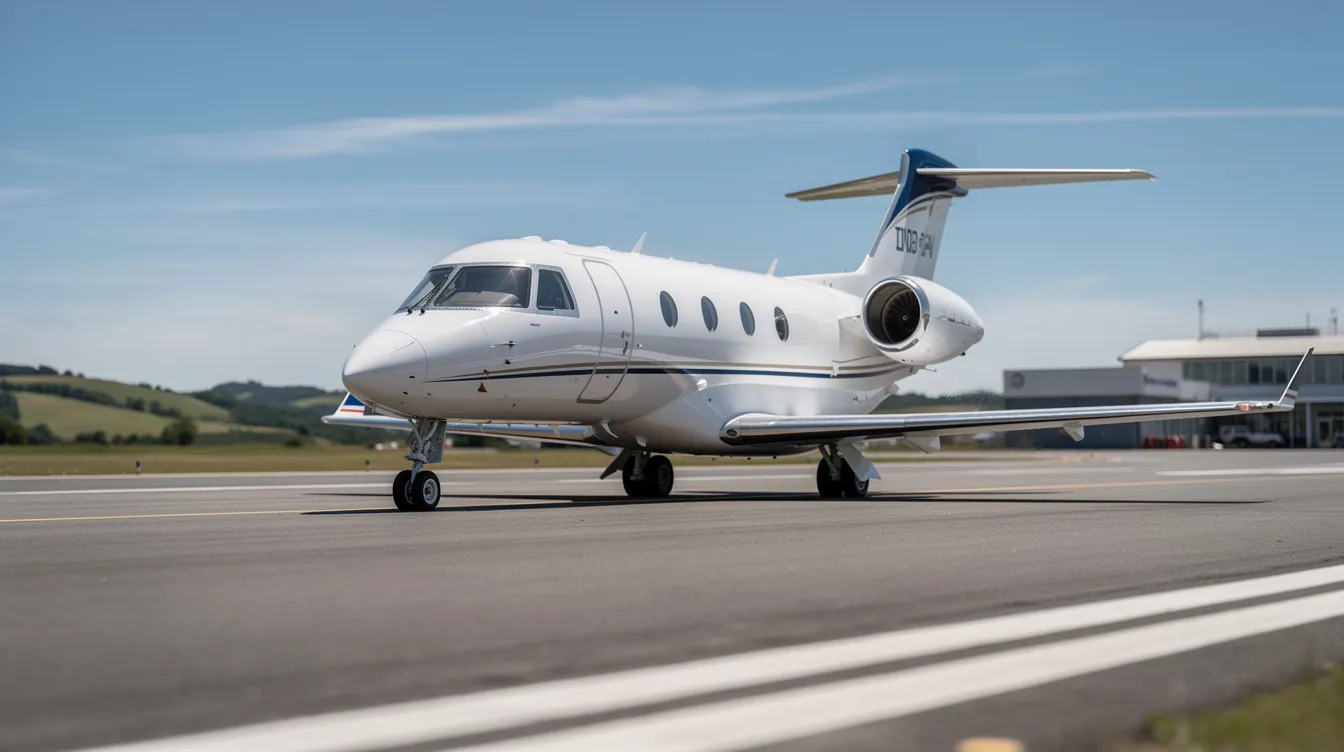
Fixed-Base Operators (FBOs) handle fueling, parking, and passenger services at general aviation airports. The airport has two FBOs offering various services: Solo Aviation Services and Ann Arbor Aviation Center.
Core FBO services at Ann Arbor Airport include:
Fuel (Jet A and 100LL)
Ramp and hangar storage
Flight planning resources and weather/NOTAM access
Aircraft maintenance and avionics
Showers, restrooms, and Wi-Fi
Passenger amenities cover comfortable lounges, quiet work areas, complimentary refreshments, and courtesy cars for short local trips. Crew amenities include pilot briefing rooms, rest areas, and after-hours service with advance notice.
For a Jettly-arranged charter, the process is straightforward: curbside drop-off at the FBO, a quick ID check, a short safety briefing, and direct ramp access to the aircraft. No long security lines, no terminal crowds. Catering can be arranged through local providers, from light snacks to full meals, coordinated by Jettly during trip planning.
Privacy is a natural feature of flying through ARB. The airport handled 206 operations per day on average in 2021; compare that to DTW's tens of thousands. Pilots, executives, families, and sports groups all use Ann Arbor Muni for exactly this reason.
Ann Arbor Municipal Airport operates close to residential areas, which shapes how flights are conducted. The Noise Abatement Program is voluntary for pilots. The program encourages quiet aircraft operation without safety compromise, using preferred departure and arrival tracks, recommended altitudes, and reduced-power climbs where conditions allow.
Local pilots are asked to avoid touch-and-go landings on holidays. New educational materials for pilots are being developed to keep the community updated on best practices. The Airport Advisory Committee approved new noise abatement procedures and continues to review the Airport Layout Plan, rules, and regulations, balancing aviation needs with those of nearby neighborhoods.
An Environmental Assessment for the runway safety extension was completed in late 2023, resulting in a Finding of No Significant Impact (FONSI). The document is available on the relevant city or airport site. Readers can contact the city or airport for additional details or updates. Those who want ongoing notices can ask to be included in airport or city communications. Airport regulations were updated in September 2013 to reflect current Federal Aviation Administration standards and community expectations.
All charter flights arranged through Jettly use operators meeting FAA Part 135 (or Transport Canada equivalent) regulations. Pilot qualifications, aircraft maintenance records, and safety standards are required before any operator enters Jettly's network. Incidents at ARB are rare relative to its 75,200 annual operations, and ongoing infrastructure improvements aim to keep it that way.
Q1: What types of aircraft can operate at Ann Arbor Municipal Airport?
ARB accommodates a range of general aviation aircraft including light jets, turboprops, piston aircraft, and select midsize jets. The primary runway is 3,500 feet long, suitable for most private and business aircraft. An extension to 4,225 feet is planned to improve capacity for midsize jets.
Q2: Are there commercial flights available at ARB?
No, Ann Arbor Municipal Airport focuses exclusively on general aviation and does not host scheduled commercial passenger airlines.
Q3: What ground transportation options are available at ARB?
Travelers can use pre-booked black cars, limousines, rideshare services like Uber and Lyft, hotel shuttles, or car rentals from nearby locations. Jettly can coordinate ground transport as part of a private charter.
Q4: How busy is Ann Arbor Municipal Airport?
In 2021, ARB averaged about 206 aircraft operations per day, primarily general aviation flights including private, business, and flight training operations.
Q5: Does Ann Arbor Airport have noise restrictions?
Yes, the airport has a voluntary Noise Abatement Program encouraging pilots to minimize noise impact by following recommended procedures and avoiding pattern traffic on holidays.
Q6: What services do the FBOs at ARB provide?
The two Fixed-Base Operators offer fueling (Jet A and 100LL), parking, maintenance, pilot lounges, Wi-Fi, showers, and passenger amenities such as comfortable waiting areas and courtesy cars.
Q7: Can I book a private jet charter directly to ARB through Jettly?
Yes, Jettly offers instant pricing and booking for private charters to and from ARB, with access to a wide range of aircraft suited to the airport's facilities.
Q8: Is parking available for private aircraft at ARB?
Yes, ARB has nearly 170 hangars and ramp parking spaces available for transient and based aircraft, although hangar space can be limited during peak times.
Q9: Where can I find official documents like the Airport Layout Plan or Environmental Assessment?
These documents are available through the city or airport websites. The Environmental Assessment for the runway safety extension is publicly accessible online.
Q10: What are the nearest major airports if ARB is unable to accommodate my aircraft?
Willow Run (YIP) and Detroit Metropolitan Wayne County (DTW) airports are nearby alternatives with longer runways and more extensive facilities for larger aircraft.
Private charter to ARB works on demand: pick the date, choose an aircraft matched to the runway and passenger count, and Jettly handles the rest.
Aircraft categories that fit ARB's current 3,500-foot runway include turboprops like the Beechcraft King Air 350 (seats up to 9), light jets such as the Cessna Citation CJ3 or Embraer Phenom 300, and select midsize jets at lighter loads. Once the extension to 4,225 feet is complete, performance margins improve for midsize jets carrying fuller passenger and fuel loads.
Common use cases:
Corporate executives visiting U-M or Ann Arbor tech firms
Medical researchers connected to Michigan Medicine
Alumni groups flying in for Wolverines football
Families arriving for campus tours or graduation week
Compared with flying into DTW, chartering to ARB cuts the ground transfer from about 40 miles to under 4. Jettly's platform offers instant pricing on many routes, access to over 20,000 aircraft globally, and transparent cost breakdowns covering fuel, FBO fees, and crew. No long-term ownership commitment is required.
Frequent flyers can explore Jettly memberships for additional savings. Occasional travelers can book on demand. Jettly also monitors empty-leg flights repositioning through ARB, which can reduce costs for flexible schedules.
For quotes, aircraft comparisons, or multi-leg itineraries involving Ann Arbor Municipal Airport, visit jettly.com; if you reference this ARB information elsewhere, please credit Jettly.
Share this post:
Jeff Ryan Serevilla
Sep 21, 2026
|
5
min read
Discover tips and trends in the industry.
5
min read
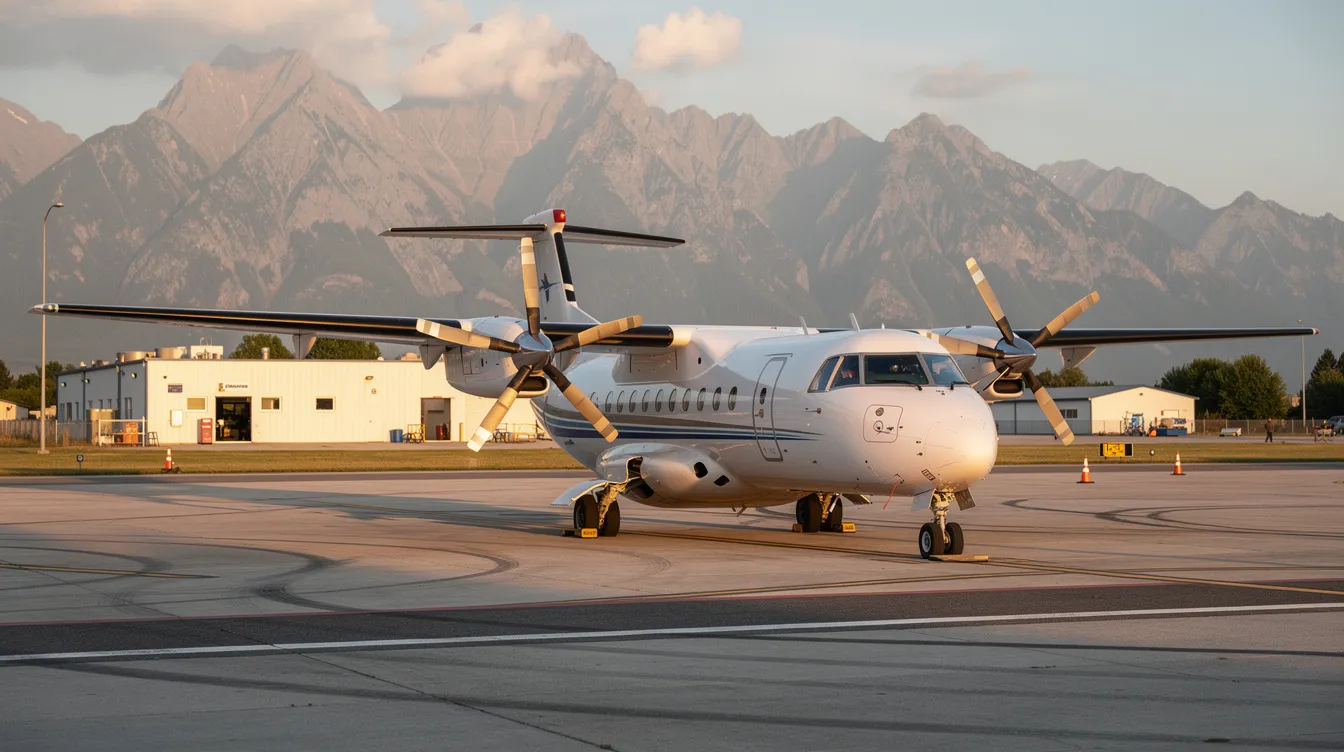
Beechcraft 1900D: Stand-Up Cabin Regional Airliner Guide
The Beechcraft 1900D is a 19-seat regional airliner known for its stand-up cabin, allowing passengers to walk upright. Despite production ending in 2002, it remains a popular choice for charter, cargo, and corporate shuttle services due to its versatility and efficiency. This guide covers its history, performance, and how to book a charter through Jettly.
Read More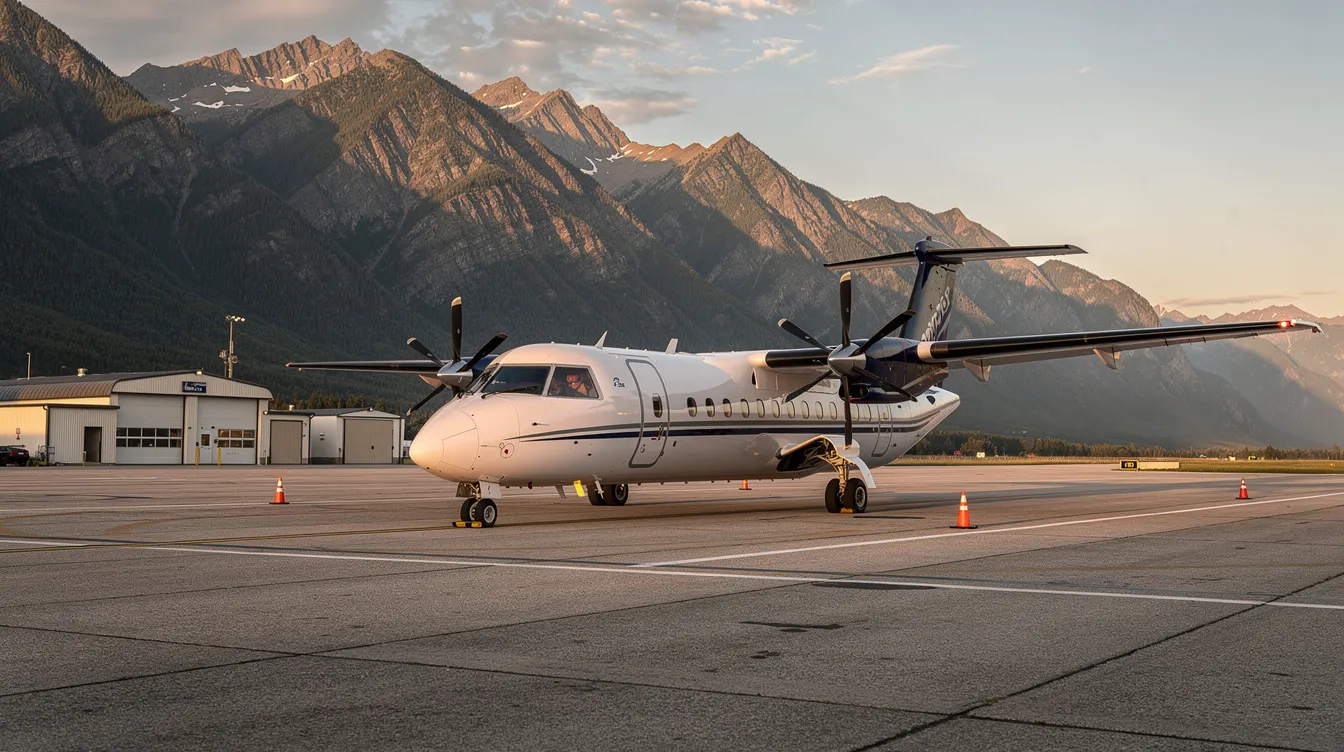
5
min read
B190 Plane (Beechcraft 1900 & 1900D): Regional Workhorse for Group Charters
The B190 plane, part of the Beechcraft 1900 family, is a versatile 19-seat turboprop airliner ideal for regional group charters. Known for its spacious cabin and short-field performance, the Beechcraft 1900D variant enhances passenger comfort with a stand-up cabin. Jettly offers seamless booking for this aircraft, making it a popular choice for corporate transport and commuter operations.
Read MoreStay updated with our latest insights and tips to elevate your journey with us.
MEMBERSHIPS AND ASSOCIATIONS



Disclaimer: Jettly operates as a charter broker, offering access to a global digital jet charter marketplace. Jettly is not a direct air carrier and does not own or operate aircraft. All advertised flights are conducted by third-party air carriers that are fully licensed and hold the appropriate Part 135 or Part 121 certifications issued by the Federal Aviation Administration (FAA) or equivalent regulatory authorities under U.S. or foreign law. Jettly complies fully with the U.S. Department of Transportation's Part 295 and Part 298 Charter Broker regulations. Jettly does not carry additional liability insurance. Passengers are covered by aircraft operator insurance. TICO: 50023770


