


Login
Get Instant Pricing On 23,000+ Aircraft

>
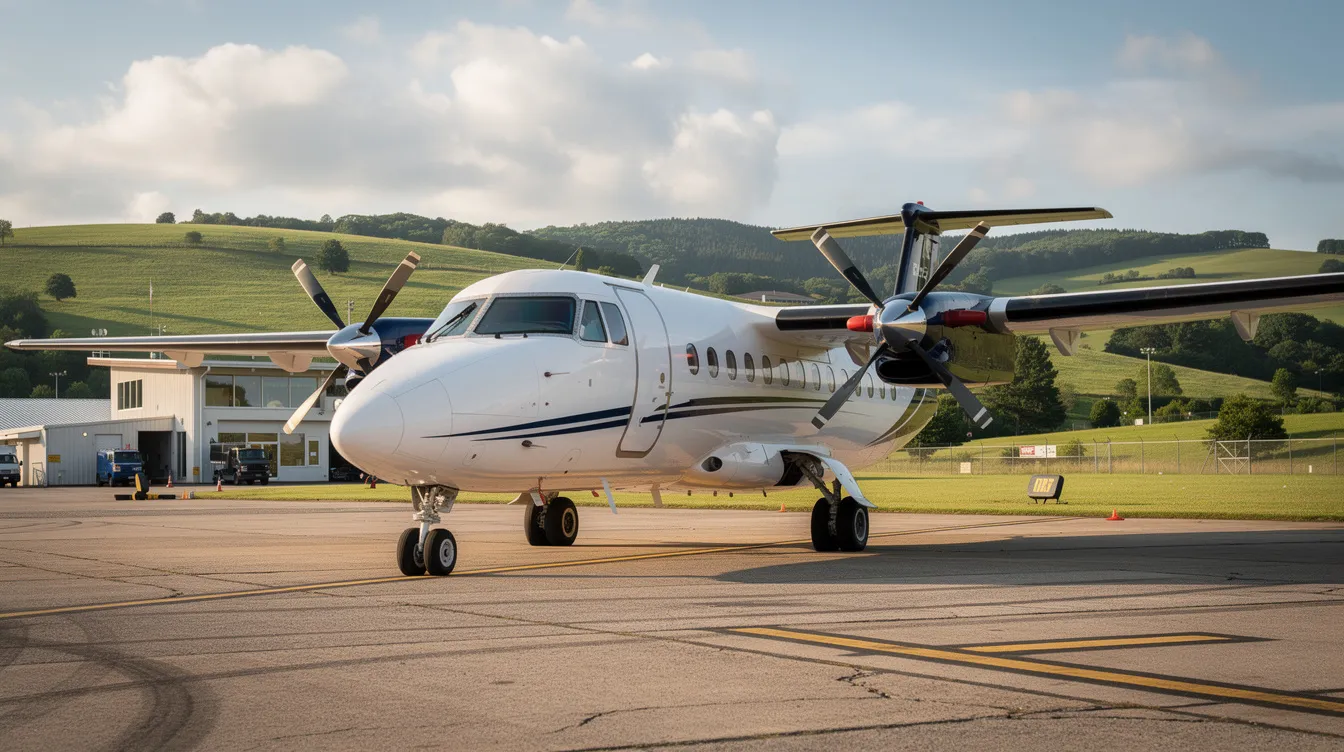
The ATR 72-201 and ATR 72-202 are early-production turboprop variants in the ATR 72-200 series, built for efficient regional group charter with 66 to 72 seats, twin Pratt & Whitney PW124B engines, and retractable tricycle landing gear for flexible short- to medium-haul operations. This guide is for group travel planners, corporate executives, sports teams, tour operators, and high-net-worth travelers comparing reliable, cost-effective alternatives to larger jets for regional routes. It covers the ATR 72-201 and ATR 72-202’s specifications, design differences, performance, cabin layout, operating economics, safety certifications, typical uses, and booking options through Jettly’s digital charter platform.
The ATR 72-201 and ATR 72-202 are early production variants of the ATR 72-200 series. The ATR 72-201 is equipped with passenger doors at both ends of the fuselage, while the ATR 72-202 has a large forward cargo door and a rear passenger door. Both variants typically carry 66 to 72 passengers and are powered by twin Pratt & Whitney PW124B engines, using four-bladed Hamilton Standard propellers. Both are equipped with retractable tricycle landing gear, enhancing their operational capabilities on various runways.
Variants: ATR 72-201 and ATR 72-202 are early production variants of the ATR 72-200 series, certified in September and December 1989, respectively.
Passenger Capacity: Both variants typically accommodate 66 to 72 passengers; the ATR 72-202 seats up to 70 passengers.
Engines and Propellers: Both are powered by twin Pratt & Whitney PW124B engines and use four-bladed Hamilton Standard propellers.
Door Configuration: The ATR 72-201 features passenger doors at both ends of the fuselage, while the ATR 72-202 has a large forward cargo door and a rear passenger door.
Landing Gear: Both are equipped with retractable tricycle landing gear for versatile airport operations.
Performance: Both cruise at approximately 278 knots with a range of up to 951 nautical miles.
Maximum Takeoff Weight: The ATR 72-202 has a maximum takeoff weight of 22,800 kg.
Operational Use Cases: Ideal for regional group charters, including corporate shuttles, sports teams, tour operators, and event travel.
Booking: Jettly offers global on-demand charter of ATR 72 aircraft with instant pricing and digital booking.
Summary Table: ATR 72-201 vs ATR 72-202
|
Feature |
ATR 72-201 |
ATR 72-202 |
|---|---|---|
|
Series |
ATR 72-200 (early production) |
ATR 72-200 (early production) |
|
Passenger Capacity |
66–72 |
Up to 70 |
|
Engine Type |
Twin Pratt & Whitney PW124B |
Twin Pratt & Whitney PW124B |
|
Propeller Type |
Four-bladed Hamilton Standard |
Four-bladed Hamilton Standard |
|
Door Configuration |
Passenger doors at both ends |
Large forward cargo door + rear passenger door |
|
Maximum Takeoff Weight |
~22,000 kg |
22,800 kg |
|
Range |
~951 NM |
~951 NM |
|
Landing Gear |
Retractable tricycle |
Retractable tricycle |
With these fundamentals established, let's explore the ATR 72 family and its role in regional aviation.
The ATR 72 is a twin-engine turboprop regional airliner that first entered service in 1989 with Finnair. It was designed for short- to medium-haul sectors, efficiently filling the gap between small commuter aircraft and full-size jets on routes where speed matters less than economics.
High-wing design: Provides ground clearance and engine protection, allowing operation from runways as short as 3,800 feet.
T-tail configuration: Enhances aerodynamic stability.
Retractable tricycle landing gear: Suited to semi-prepared surfaces and versatile airport operations.
Four-bladed Hamilton Standard propellers: Optimized for low noise and short-field takeoff performance.
The ATR 72 evolved from the smaller ATR 42, featuring a stretched fuselage, increased payload, and higher seat count for high-frequency operations. The ATR 72-201 and ATR 72-202 are part of the early "-200 series," preceding the later -500 and -600 upgrades but remaining in active service with airlines and charter operators worldwide.
Typical missions include island-hopping in the Caribbean and Mediterranean, cross-border regional links, and feeder traffic connecting secondary airports to major hubs.
Transition: Now that we've established the ATR 72's place in regional aviation, let's examine the ATR 72-201 in detail, focusing on its design, engines, and performance.
Fuselage Length: Approximately 27.2 m
Wingspan: Over 27.0 m
Height: Approximately 7.65 m
Landing Gear: Retractable tricycle landing gear, designed for operations on shorter runways at regional and secondary airports
Engines: Twin Pratt & Whitney Canada PW124B engines, each producing around 2,160 shp at takeoff
Definition: The PW124B is a turboprop engine known for reliability and fuel efficiency on short sectors, and engine maintenance is a meaningful part of turboprop operating economics and dispatch reliability.
Propellers: Four-bladed Hamilton Standard propellers
Definition: These propellers are optimized for low noise and short-field takeoff performance.
|
Parameter |
Value |
|---|---|
|
Cruise Speed |
~278 knots (~515 km/h) |
|
Service Ceiling |
25,000 feet |
|
Range (standard pax load) |
~951 NM |
|
Maximum Takeoff Weight |
~22,000 kg |
|
Takeoff Distance (MTOW, sea level) |
~1,409 m (~4,623 ft) |
|
Landing Distance |
~1,036 m (~3,399 ft) |
|
This 25,000-foot service ceiling helps the aircraft fly above some weather and traffic on regional sectors. |
Door Configuration: Passenger doors at both ends of the fuselage, facilitating faster boarding for group travel.
Transition: Building on the foundation of the -201, the ATR 72-202 introduces further refinements, which are detailed in the next section.
The ATR 72-202 is a closely related development of the -201, certified in December 1989. It maintains the same basic airframe dimensions and cabin layout but incorporates adjustments in certified weights and door configuration for improved versatility.
Door Configuration: Large forward cargo door and a rear passenger door, with these changes issued as part of the variant’s formal certification basis (main difference from -201)
Maximum Takeoff Weight: 22,800 kg, reflecting the certified weight for the variant
Passenger Capacity: Up to 70 passengers
Engines and Propellers: Twin Pratt & Whitney PW124B engines with four-bladed Hamilton Standard propellers, so the -202 did not introduce more powerful engines and instead kept the same powerplants as the -201
|
Parameter |
Value |
|---|---|
|
Cruise Speed |
278 knots |
|
Service Ceiling |
25,000 feet |
|
Range |
~951 NM |
|
Maximum Takeoff Weight |
22,800 kg |
Operational Flexibility: The forward cargo door allows for mixed passenger-cargo operations or loading of bulky equipment. It also makes some smaller or otherwise inaccessible destinations more practical, since bulky gear can be loaded without larger-aircraft infrastructure.
Transition: With the technical distinctions between the -201 and -202 established, let's move on to the passenger experience and cabin layout for these aircraft.
Cabin Length: Approximately 18–19 m
Internal Width: Close to 2.57 m
Standard Seat Pitch: 29–32 inches, depending on operator
Seating Configuration: 2-by-2 along a single aisle (no middle seat)
Windows: Large oval windows throughout the fuselage
Overhead Bins: Sized for regional carry-on luggage, with large overhead bins available in some operator interiors
Lavatory: Rear lavatory
Galley: Forward or mid-cabin galley for snacks and beverages
Discover a practical cabin with large windows, a simple 2-by-2 layout, and the essentials for short regional group trips, including comfort-oriented seating and useful storage.
Upgraded or semi-executive interiors
Small business-class sections
Club seating blocks with tables
Customized layouts for sports teams and corporate shuttles
Transition: Understanding the cabin experience, let's now explore the typical regional routes and use cases where the ATR 72-201 and -202 excel.

Milan–Rome
Paris–Bordeaux
Jakarta–Surabaya
Bangkok–Chiang Mai
Sydney–Canberra
Inter-island flights across the Caribbean and Mediterranean
Corporate shuttles between head offices and regional plants
Sports team travel to league matches
Incentive trips to island resorts
High-capacity movements for events and conferences
Commercial airline charter replacements on underserved routes
Short-field performance: Operates from runways as short as 3,800 feet
Access to secondary airports, reducing ground transfer time
Transition: Having reviewed operational scenarios, let's analyze the economics and efficiency of the ATR 72-201 and -202 for group charters.
Fuel Efficiency: Strong fuel efficiency compared to jets on short routes
CO2 Emissions: ATR 72-600 achieves ~69 grams of CO2 per seat per kilometer; -201 and -202 are slightly higher but still competitive, supporting an environmentally responsible profile in regional operations
Operating Cost Savings: Up to 45% lower trip costs compared to regional jets; annual savings can reach $2 million per aircraft for high-utilization operators, though fuel burn, crew, and engine maintenance all influence total trip economics
|
Factor |
Detail |
|---|---|
|
Charter Rates |
$13,000–$17,000 per flight |
|
Cost Variables |
Route distance, season, repositioning fees |
|
Per-Person Savings |
Empty-leg flights can further reduce charter costs |
Per-Seat Value: When filled with 60+ passengers, per-person cost can compare favorably to flexible business-class fares on commercial airlines.
Transition: Next, let's address the safety record, certification, and regulatory standards for these aircraft.
Certification: Both ATR 72-201 and ATR 72-202 were certified in 1989 under European aviation authorities
Regulatory Framework: Operated under EASA, FAA Part 121, or equivalent national rules; charters often under Part 135 or local commercial air transport certificates
Flight Hours: Millions of flight hours since the 1990s
Like many long-serving regional aircraft types, the ATR 72 family has been involved in accidents over decades of operation, while operators mitigate risk through training, maintenance, and procedural updates.
Continuous Improvement: Ongoing updates in procedures, crew training, and technical modifications
Airport Access: Built-in airstairs and high-wing design allow access to remote airports without ground support equipment
Operator Standards: Jettly works only with certified operators, ensuring compliance with safety regulations and robust maintenance programs
Transition: With safety and certification covered, let's compare the -201 and -202 to newer ATR 72 models.
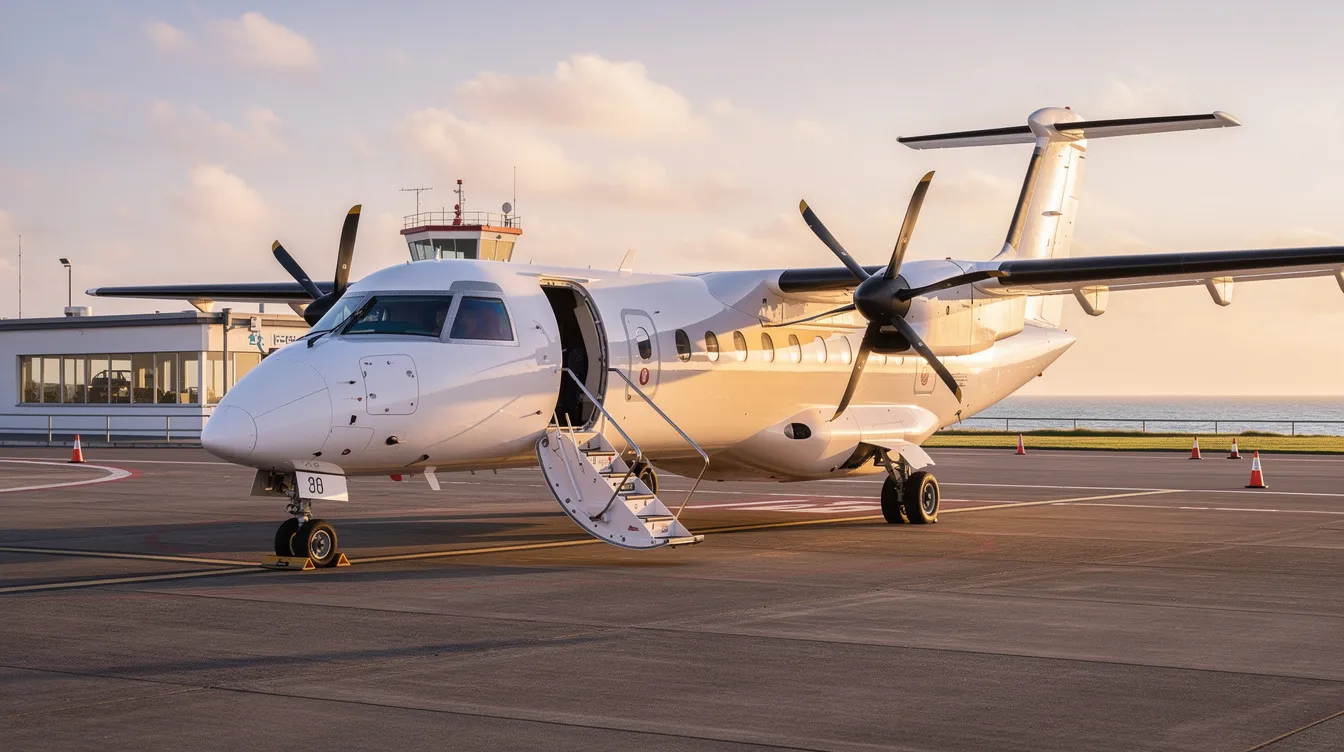
-500/-600: Use more powerful Pratt & Whitney PW127 engines (~2,475 shp), six-bladed propellers, improved aerodynamics
-201/-202: Use PW124B engines (twin turboprop, ~2,160 shp), four-bladed Hamilton Standard propellers
-600: Modern glass cockpit, larger LCD displays, advanced flight management
-201/-202: Analog/digital mix, older instrumentation
Quieter cabins with better insulation
Redesigned overhead bins with extra volume
Improved LED lighting systems
Flexible seating layouts (up to 78 passengers)
Optimized for extreme temperatures and high altitudes
Lower acquisition or lease costs mean the -201 and -202 remains attractive for operators because of proven economics on shorter sectors
Proven reliability on shorter regional routes
Highly competitive operating economics
More accessible charter rates for cost-conscious groups
Transition: Now, let's look at how to charter these aircraft for group travel through Jettly.
50–70 delegates traveling to a regional conference
Sports teams and support staff moving to away games
Tour operators transferring groups between islands
Corporate shuttle programs between head office and satellite facilities
Specify route, dates, and passenger count
Receive instant or rapid pricing options via Jettly's platform
Compare aircraft, schedules, and operators
Confirm booking online or with charter specialist support
Add-ons: Ground transfers, tailored in-flight catering, coordination with hotel arrivals/departures
Direct routing to secondary airports
Total control over departure times
Ability to keep teams together on one aircraft
Reduced total travel time via streamlined private terminals
Transition: To ensure a smooth charter experience, let's review practical planning considerations for baggage, turnarounds, and airport access.
Accommodates standard checked luggage for 60–70 passengers
Heavy or oversized items require advance weight-and-balance review
Built for quick ground turnaround (25–35 minutes in airline service)
Group charters: Plan for 40–50 minutes for organized boarding and catering
Operates from runways as short as 3,800–4,000 ft (1,150–1,200 m)
Opens options at regional, coastal, and island airports that can be inaccessible to larger aircraft
Check runway conditions, noise curfews, local handling services, and whether installed onboard systems or local support capability could affect arrangements at smaller airports
Transition: With practical planning in mind, let's discuss how to choose between the ATR 72 and other aircraft for your group charter needs.
Ideal for flying 40–70 people up to 900–1,000 miles
Best for regional routes with limited or inconvenient commercial options
Superior per-seat economics on short-distance sectors
ATR 72 vs. Smaller Business Jets: Lower per-seat cost, less onboard privacy
ATR 72 vs. Regional Jets: Similar block times on short sectors, lower fuel burn and trip cost
ATR 72 vs. Larger Charter Aircraft: More efficient for larger groups than 30-passenger planes, but not as large as full-size jets
Jettly Platform: Input passenger count, comfort level, and airports to compare aircraft categories and get tailored quotes
Transition: To wrap up, let's summarize why the ATR 72-201 and ATR 72-202 remain top choices for regional group charter.

The ATR 72-201 and ATR 72-202 remain essential workhorses in regional aviation, offering efficient, reliable, and cost-effective solutions for group charters. Their ability to operate from short runways and handle mixed passenger-cargo missions makes them versatile for diverse travel needs. While newer ATR models provide enhanced technology and comfort, the -201 and -202 variants continue to deliver strong operational value, especially for groups of up to 70 passengers. Through Jettly’s platform, travelers can access transparent pricing and seamless booking for these turboprops, unlocking convenient regional travel with the benefits of private charter. Whether for corporate shuttles, sports teams, or leisure groups, the ATR 72-201 and -202 offer a practical choice that balances capacity, efficiency, and flexibility.
Ready to experience efficient regional travel with an ATR 72 charter? Explore flight options or request a quote at https://www.jettly.com.
Share this post:
Jay Franco Serevilla
Jul 24, 2026
|
5
min read
Discover tips and trends in the industry.

5
min read
Cost of R44 Helicopter in 2026: Purchase, Operating Costs & Charter Alternatives
In 2026, the cost of owning a Robinson R44 helicopter varies significantly, with new models priced around $646,000 and used options starting under $100,000. Operating costs can range from $35,000 to $55,000 annually, depending on usage, while chartering offers a flexible alternative for those flying less frequently. This guide provides a comprehensive overview of purchase prices, operating expenses, and charter options to help potential buyers make informed decisions.
Read More
5
min read
Dauphin Helicopter: Eurocopter AS365 / AS365 N3 Guide for Private Charter
The Eurocopter AS365 N3 Dauphin is a versatile medium twin-engine helicopter ideal for private charters, offering speed, range, and comfort for various missions. With a capacity of 6-8 passengers, it excels in challenging environments and is supported by a robust global network. This guide provides essential insights into its capabilities, booking process, and operational history.
Read MoreStay updated with our latest insights and tips to elevate your journey with us.
MEMBERSHIPS AND ASSOCIATIONS



Disclaimer: Jettly operates as a charter broker, offering access to a global digital jet charter marketplace. Jettly is not a direct air carrier and does not own or operate aircraft. All advertised flights are conducted by third-party air carriers that are fully licensed and hold the appropriate Part 135 or Part 121 certifications issued by the Federal Aviation Administration (FAA) or equivalent regulatory authorities under U.S. or foreign law. Jettly complies fully with the U.S. Department of Transportation's Part 295 and Part 298 Charter Broker regulations. Jettly does not carry additional liability insurance. Passengers are covered by aircraft operator insurance. TICO: 50023770


