



Login
Get Instant Pricing On 23,000+ Aircraft

>
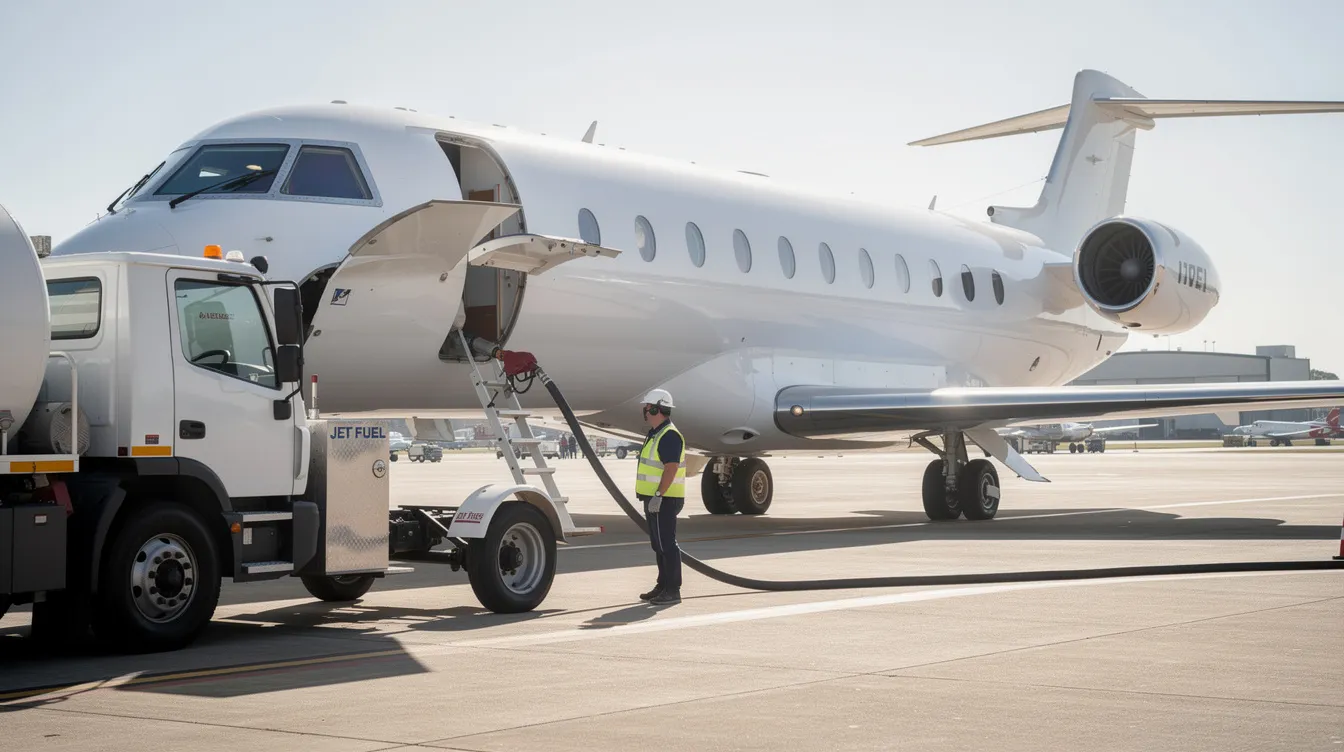
Aviation fueling is one of the most regulated and safety-critical operations in private aviation. Every charter flight depends on the right fuel, delivered cleanly, on time, and in the correct quantity. For travelers booking through platforms like Jettly, the fueling process runs behind the scenes—but it directly shapes flight safety, range, cost, and scheduling.
This guide is for private jet travelers, charter clients, and anyone interested in how aviation fueling works behind the scenes. Understanding aviation fueling is important for safety and efficiency, as it ensures that every flight operates reliably, meets regulatory standards, and avoids costly or dangerous errors.
Aviation fueling covers multiple fuel types—Jet A, Jet A-1, Jet B, aviation gasoline (avgas), and sustainable aviation fuels—each suited to specific aircraft engines and missions.
Private jets almost always use kerosene-based jet fuel such as Jet A or Jet A-1, while piston aircraft use avgas. Using the wrong fuel can cause engine failure after takeoff.
The fueling process at airports and FBOs involves strict fuel quality checks, safety procedures, and careful timing that affect private jet turnaround and departure slots.
Aviation fueling services, fuel farms, and global fuel suppliers work together to ensure clean, correctly specified fuel reaches aircraft safely, even at remote locations.
Jettly coordinates operators, handlers, and fuel suppliers so customers experience smooth, secure, and efficient private flights without dealing with this complex process themselves.
Aviation fueling is the full chain from refining or producing fuel, transporting it to airports, storing it in fuel farms, and pumping it into aircraft at FBOs or commercial terminals. It is a critical, highly regulated process that touches every flight, whether a short hop or an intercontinental journey.
The core fuels include:
Jet A: The primary jet fuel in the United States, used in turbine engines. It has a freezing point around −40°C.
Jet A-1: Used in turbine engines globally. It has a lower freezing point of −47°C, making it suitable for international operations.
Jet B: A kerosene-gasoline mixture historically used for military jets and extreme-cold operations. It is more flammable than Jet A-1 and rarely seen in private charter.
Aviation gasoline (Avgas): Used in older piston-engine aircraft. Avgas 100LL is the dominant grade, with a high octane rating and tetraethyl lead to prevent knocking in high-compression engines.
Sustainable Aviation Fuels (SAF): Produced from feedstocks like used cooking oil or synthesized carbon, SAF can reduce lifecycle carbon emissions significantly. Biokerosene is a renewable alternative to traditional jet fuel, and many modern business jets are certified to use SAF blends up to 50%.
Each is engineered for specific engine types—turbine or gasoline engines—and flight profiles. Strict adherence to safety standards is required at every point in the supply chain, and emergency response procedures must be established for all fueling operations.
For charter operations, accurate fueling is essential for flight planning. A midsize jet flying New York to Miami needs a different fuel load than a super-midsize covering Toronto to Vancouver. Getting the fuel type, quantity, and quality right determines whether the plane can carry its full payload, reach its destination with proper reserves, and depart on schedule.
Jettly relies on vetted Part 135 charter operators and airport partners that follow international standards for fuel quality and fueling process safety—so customers can focus on their trip, not the fuel in the tank.
Aviation fuels are categorized based on the type of aircraft engine they serve. Each must meet strict specifications for flash point, freezing point, energy content, and cleanliness before it ever reaches an aircraft.
Turbine engine fuels: Turbine engine fuels are kerosene-based and designed for gas turbine engines. Jet A and Jet A-1 are the standards for commercial airlines and business jets.
Jet A: The primary jet fuel in the United States, with a freezing point around −40°C. Used in turbine engines.
Jet A-1: Used in turbine engines globally. Has a lower freezing point of −47°C, making it suitable for international operations.
Jet B: A kerosene-gasoline mixture historically used for military jets and extreme-cold operations; compared with Jet A-1 in cold-weather contexts, it is more flammable, which is one reason it is rarely seen in private charter.
JP-8: A heavy-duty military-grade kerosene fuel used by NATO forces.
Avgas: Used in older piston-engine aircraft—common in flight schools, aero clubs, and bush flying. Avgas 100LL is the dominant grade, with a high octane rating and tetraethyl lead to prevent knocking in high-compression engines.
Sustainable Aviation Fuels (SAF): Produced from feedstocks like used cooking oil or synthesized carbon, SAF can reduce lifecycle carbon emissions significantly. Biokerosene is a renewable alternative to traditional jet fuel, and many modern business jets are certified to use SAF blends up to 50%.
Aircraft manufacturers specify approved fuels according to engine design, so fuel type is never a passenger choice—it is dictated by certification, performance needs, and regulatory approvals.
Almost every turbine-powered private jet in Jettly's network—light jets, midsize, super-midsize, and heavy—runs on Jet A or Jet A-1. These kerosene-based fuels offer high energy density (around 42.8 MJ/kg), controlled volatility, and low freezing points suitable for cruise altitudes above 35,000 ft. Jet A-1 fuel has a freezing point of −47°C, which prevents wax crystallization at high altitude.
Jet fuels must meet specific chemical and physical properties for safety. International specifications such as ASTM D1655 and DEF STAN 91-091 define permissible limits for density, thermal stability, aromatics, and more. Jet fuel is subject to comprehensive international quality specifications that protect both engine performance and passenger safety.
Common additives include:
Anti-icing agents
Static dissipaters
Corrosion inhibitors
Biocides
These matter most on long-range flights—think New York to London or Los Angeles to Honolulu—where fuel sits in wing tanks for hours at extreme temperatures. A heavy jet departing Teterboro for Paris must carry enough fuel for roughly 3,600 nautical miles plus reserves for alternates, holding, and weather, all while staying within maximum takeoff weight limits.
For charter clients using Jettly, none of this complexity surfaces. Operators and their fueling partners select appropriate private charter aircraft and handle verification of the correct fuel type, quantity, and specification before every departure.
Not all aircraft use jet fuel. Aviation gasoline (avgas) is primarily used in piston-engine aircraft, including many training planes, small private props, and some charter-eligible turboprops with piston conversions. Avgas 100LL meets ASTM D910 standards, with a motor octane number of 100 and a freezing point around −58°C.
Some piston aircraft can use approved motor gasoline (mogas) under strict conditions, but this is uncommon for high-end charter operations. Some compression-ignition aircraft use diesel fuel under approved engine and airframe certifications. Niche fuels like Jet B and military-specific grades exist but are rarely relevant for typical Jettly-arranged itineraries.
Environmental pressure is pushing the aviation industry toward unleaded avgas variants. Regulatory bodies like the FAA and EASA are evaluating replacements, which may gradually shift fueling logistics for piston fleets over the coming decade, and evolving fuel formulations are already influencing how much it costs to fuel a private jet.
Fuel contamination management is critical in aviation fueling. In practical terms, fuel quality means the fuel is the correct specification, clean of particles, dry, free of excess microbial content, and stable.
Water
Particulate matter
Microbial contamination
Water accumulation in fuel tanks increases microbial contamination risks, and microbial growth in aviation fuel can compromise aircraft operations by clogging filters and corroding fuel systems. Microbial contamination can occur at multiple points in the fuel supply chain—from refinery to storage tank to refueler truck.
Standard mitigation measures include:
Routine tank draining
Filtration with water separators
Microbiological fuel testing
Proper disposal of fuel samples
These measures are essential for aviation safety.
Industry standards encourage proactive management of microbial contamination, and organizations like the International Air Transport Association and the Joint Inspection Group promote proactive measures against fuel contamination across their global network of member facilities.
Fuel quality and safety protocols are essential for preventing accidents. If tests raise concerns at a small regional airfield, operators can delay fueling, source fuel from an alternative supplier, or reposition the aircraft—ensuring no flight departs with compromised fuel. Jettly works with operators who use vetted fuel suppliers and FBOs, embedding fuel quality management into every operation and partnering with leading private and charter airlines that prioritize rigorous fuel standards.
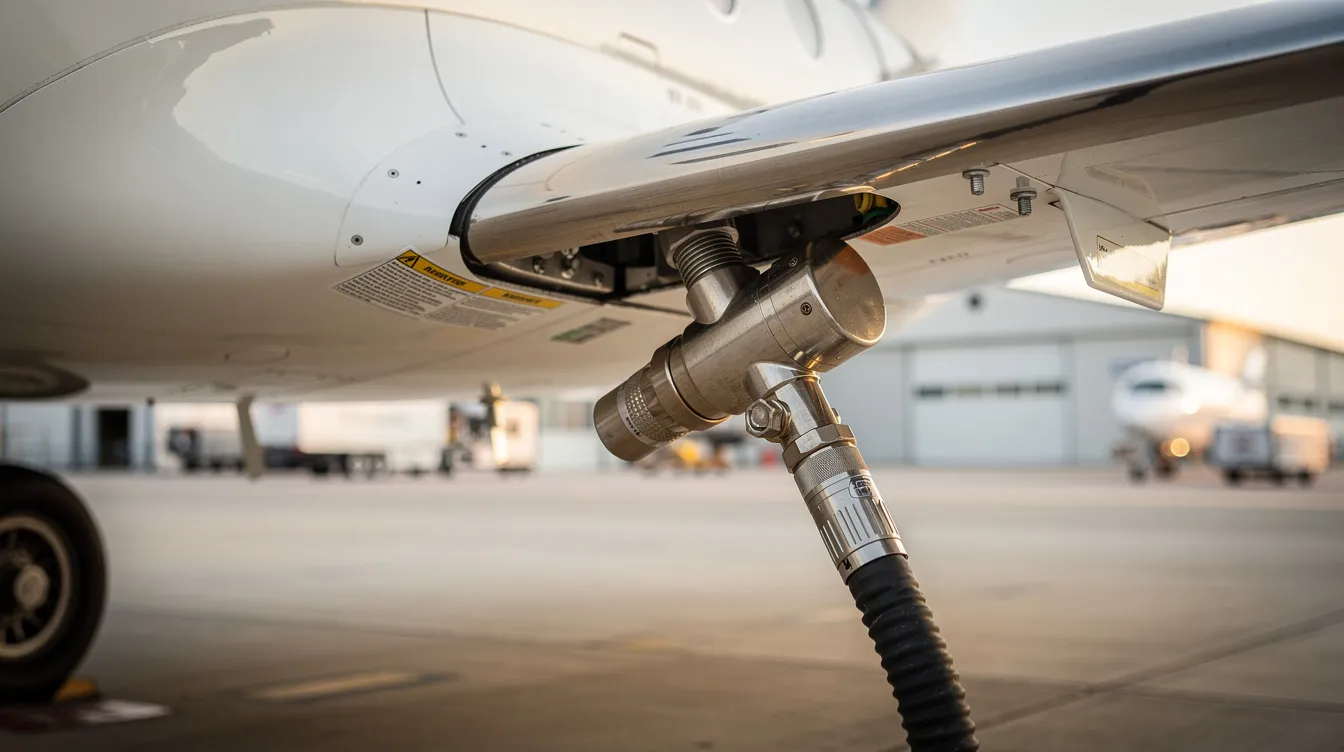
After landing, a private jet is marshaled to its stand, engines are shut down, and ground power is connected. The fueling process begins with confirmation of the fuel order—type, quantity, and any special requirements based on the flight plan.
Safety Training: Personnel must undergo comprehensive safety training for aviation fueling before handling any equipment.
Bonding and Grounding: Electrical bonding and grounding must be established before fueling starts, preventing static discharge that could ignite fuel vapors.
Positioning the Fuel Truck: The fuel truck is positioned, and bond wires are connected.
Supervised Fueling: Fueling proceeds under crew supervision, with pilots verifying fuel type and quantity before and during uplift.
Preventing Misfueling: Distinct nozzle shapes, restricted filler ports, clear labeling, and mandatory pilot verification of fuel type and uplift quantity all serve to prevent accidents.
A well-documented case involved a Cessna 421C misfueled with Jet A instead of 100LL avgas, resulting in engine overheating, a forced landing, and serious injuries.
Refueling a light jet with a small uplift takes roughly 10–20 minutes.
Larger jets needing near-full tanks may require 20–45 minutes.
At busy executive airports like Teterboro, Van Nuys, or London Luton, fuel truck availability can slow turnaround and affect departure slots during peak periods.
Many FBOs bundle aviation fueling services with parking, handling, in-flight catering for private jets, and ground transportation for efficiency.
In a typical Jettly-arranged charter, the operator files the flight plan, submits the fuel request, and the FBO team executes fueling so the aircraft is ready when passengers arrive.
An aviation fuel farm is the on-airport storage and handling facility that holds jet fuel and avgas in large tanks equipped with pumps, filters, meters, and safety systems. Fuel flows from refineries through pipelines, barges, rail, or tanker trucks to these fuel farms, then into refueler vehicles or hydrant systems that serve aircraft on the ramp.
Major fuel suppliers and specialized aviation fueling services firms—such as World Fuel Services, a global company with between 5,001 and 10,000 employees—contract with airports, FBOs, and operators to guarantee supply, competitive pricing, and technical compliance, and some are recognized as an industry leader in supply scale or technical support. There are 270 aviation fueling services in the United States alone, forming a connected network that supports both commercial airlines and private operations.
Material choices matter:
Stainless-steel piping
Double-walled tanks
High-grade seals
These prevent leaks, corrosion, and contamination. For a Jettly customer flying New York to Reykjavík to London, coordinated fueling at multiple airports—often across different suppliers and local regulations—is essential to reliability. In emerging markets or remote destinations, charter operations may depend on pre-arranged fueling and contingency plans if a fuel shipment is delayed, often coordinated through on-demand private jet operators with experience in challenging environments.
|
Fuel Type |
Engine Type |
Freezing Point |
Typical Use |
Key Characteristics |
|---|---|---|---|---|
|
Jet A |
Turbine |
10C |
US domestic commercial and private jets |
Kerosene-based, stable, higher freezing point |
|
Jet A-1 |
Turbine |
17C |
Global commercial and private jets |
Lower freezing point, suitable for international flights |
|
Jet B |
Turbine (military) |
12C |
Military and extreme cold regions |
More flammable, kerosene-gasoline mix |
|
Avgas 100LL |
Piston |
15C |
Older piston aircraft, training, bush flying |
Leaded, high octane, specialized for piston engines |
|
SAF (blends) |
Turbine |
Varies |
Sustainable aviation efforts |
Renewable, reduces carbon footprint |
This table summarizes the main fuel types used in private and commercial aviation, highlighting their engine compatibility, freezing points, and typical applications.
Many Jettly-arranged trips involve secondary or remote airports with constrained fuel infrastructure. Challenges include limited on-site storage, intermittent fuel deliveries, and weather or terrain that complicate ground logistics.
Consider a medical evacuation into a remote community in Northern Canada. Temperature extremes make Jet A freezing characteristics critical, and fuel supply may be interrupted by seasonal road closures, so working with instant-book private jet services that understand regional constraints becomes essential. Experienced operators use specialized expertise to coordinate remote fueling logistics with local suppliers days in advance, confirming the correct fuel grade, volume, and reserves for diversion options. Contingency strategies include:
Fuel tankering from previous stops
Planning tech stops at better-equipped airports
Scheduling flights earlier in the day to leave margin for delays
For the end customer, these complexities happen behind the scenes but directly influence route planning, aircraft selection, and scheduling. For more on how fuel consumption shapes private jet operations, Jettly's resources cover the details.
Fuel is typically the single largest variable operating cost in private aviation. Many travelers use a private jet charter cost estimator to understand how fuel and other variables affect their budget. Jet fuel price differences between airports, countries, and regions can shift routing and tech-stop choices—for example, refueling in Montréal instead of a smaller nearby field due to better pricing and infrastructure.
The trade-off between fuel load and payload is a constant in flight planning. More jet fuel means greater range but may reduce allowable passengers or baggage, especially on hot days or from short runways—considerations that also influence whether frequent flyers choose jet card programs with fixed hourly rates for predictable budgeting. Compare a light jet on a short New York–Boston hop (minimal fuel, fast turnaround, lower cost) with a super-midsize jet flying Los Angeles to Hawaii at near-maximum fuel and stricter weight planning.
Jettly's instant pricing reflects estimated fuel burn, local fuel prices, and required reserves, similar in spirit to its dedicated jet card flight cost estimator. Transparent charter pricing helps customers avoid unexpected surcharges. For a deeper look at what drives costs, see Jettly's breakdown of private jet operating costs.
Jettly does not act as a fuel supplier. The platform connects travelers with licensed air carriers and operators that manage aircraft maintenance, fueling, and flight operations. Jettly's vetted operator network uses established FBOs and aviation fueling services that comply with IATA, JIG, and local civil aviation authority requirements.
When a customer books through Jettly, the chosen operator calculates the required jet fuel, coordinates with fuel providers at origin and destination airports, and confirms the correct fuel type and volume. Jettly's digital tools—instant pricing, a worldwide aircraft inventory, and routing solutions—allow customers to see options that are feasible from a fueling and range perspective.
The result: reduced risk of fueling-related delays, smoother turnarounds, and confidence that every aircraft has been fueled to the highest safety and quality standards.
Ready to experience private travel on your terms? Explore flight options with Jettly's private jet membership plans, use the airport locator tool to find suitable departure points, or request a quote at https://www.jettly.com.

No. Passengers and charter clients do not select fuel type. Aircraft manufacturers specify approved fuels according to engine design, and operators must follow those specifications. Safety and regulatory compliance always take precedence over preference.
Turnaround times can vary slightly by airport—busy hubs like those serving Atlanta private jet charters or Houston private jet flights may experience peak-time delays—so operators often schedule fueling well in advance of boarding.
A light jet with a small uplift typically takes 10–20 minutes. Larger jets or near-full-tank fills may require 20–45 minutes. At busy hubs or during weather disruptions, fuel truck waits can add extra time, so operators often schedule fueling well before passengers arrive.
If you're passionate about innovation in aviation, you can also support cleaner flying by referring others to Jettly through its high-ticket affiliate program, which rewards partners for promoting modern private jet solutions like SAF-ready fleets.
Yes. Many modern business jets are certified to use blended SAF, often up to 50% with conventional jet fuel. However, availability is still limited to specific airports and suppliers. Customers interested in lower-carbon travel can ask operators via Jettly whether SAF is offered on particular routes.
If tests or inspections raise doubts, operators can delay fueling, source fuel from an alternative supplier, reposition the aircraft, or adjust routing with an extra tech stop. No flight departs until the captain and operator are satisfied that fuel meets required standards—a key reason some travelers choose Jettly as a flexible NetJets alternative that still maintains strict safety practices.
For a broader view of how aircraft type, route length, and market conditions interact with fuel to shape pricing, Jettly also offers guidance on affordable private jet charter costs.
Charter quotes factor in expected fuel burn, current regional jet fuel prices, and required reserves. Longer sectors and heavier aircraft generally mean higher fuel costs, whether you pay per trip or through jet card cost structures. Jettly's instant pricing tools give customers a transparent view of total trip cost, while operators manage real-world fuel purchasing and route optimization behind the scenes, and some travelers further reduce per-seat fuel impact by using shared and crowdsourced private jet flights. For detailed pricing insights, visit Jettly's cost of aviation fuel guide.
Aviation fueling is a complex, safety-critical process that underpins every private jet flight. From stringent fuel quality standards and contamination controls to precise fueling operations at FBOs and remote locations, every step ensures aircraft perform reliably and safely. Platforms like Jettly coordinate experienced operators and vetted fuel suppliers who comply with international standards such as those set by the International Air Transport Association (IATA) and the Joint Inspection Group (JIG). This coordination helps private jet travelers soar with confidence, enjoying the convenience, flexibility, and efficiency that private aviation offers.
As the industry looks to the future, sustainable aviation fuels and ongoing innovations in fuel management promise to reduce environmental impact while maintaining the highest safety and performance standards. Whether for business or leisure, understanding aviation fueling highlights why it is a foundational element of private jet travel.
Ready to enjoy private travel on your own terms? Discover flight options or get a quote at https://www.jettly.com.
Share this post:
Jay Franco Serevilla
Oct 13, 2026
|
5
min read
Discover tips and trends in the industry.
5
min read
Aviation Fueling: Jet Fuel, Avgas, and How Safe Refueling Works for Private Jets
Aviation fueling is a critical process for private jets, ensuring safety and efficiency through stringent regulations and quality checks. This guide explores the types of aviation fuels, the fueling process, and the importance of proper fuel management for charter flights. Understanding these elements is essential for travelers to appreciate how they impact flight safety, range, and costs.
Read More
5
min read
How Far Out Should You Book International Flights? (And When It Really Pays Off)
Knowing when to book international flights can save you significant money. Generally, aim to book 3 to 6 months in advance for economy fares, and 6 to 9 months for peak seasons. Understanding the best booking windows and seasonal trends is crucial for securing the best deals.
Read MoreStay updated with our latest insights and tips to elevate your journey with us.
MEMBERSHIPS AND ASSOCIATIONS



Disclaimer: Jettly operates as a charter broker, offering access to a global digital jet charter marketplace. Jettly is not a direct air carrier and does not own or operate aircraft. All advertised flights are conducted by third-party air carriers that are fully licensed and hold the appropriate Part 135 or Part 121 certifications issued by the Federal Aviation Administration (FAA) or equivalent regulatory authorities under U.S. or foreign law. Jettly complies fully with the U.S. Department of Transportation's Part 295 and Part 298 Charter Broker regulations. Jettly does not carry additional liability insurance. Passengers are covered by aircraft operator insurance. TICO: 50023770


