


Login
Get Instant Pricing On 23,000+ Aircraft

>
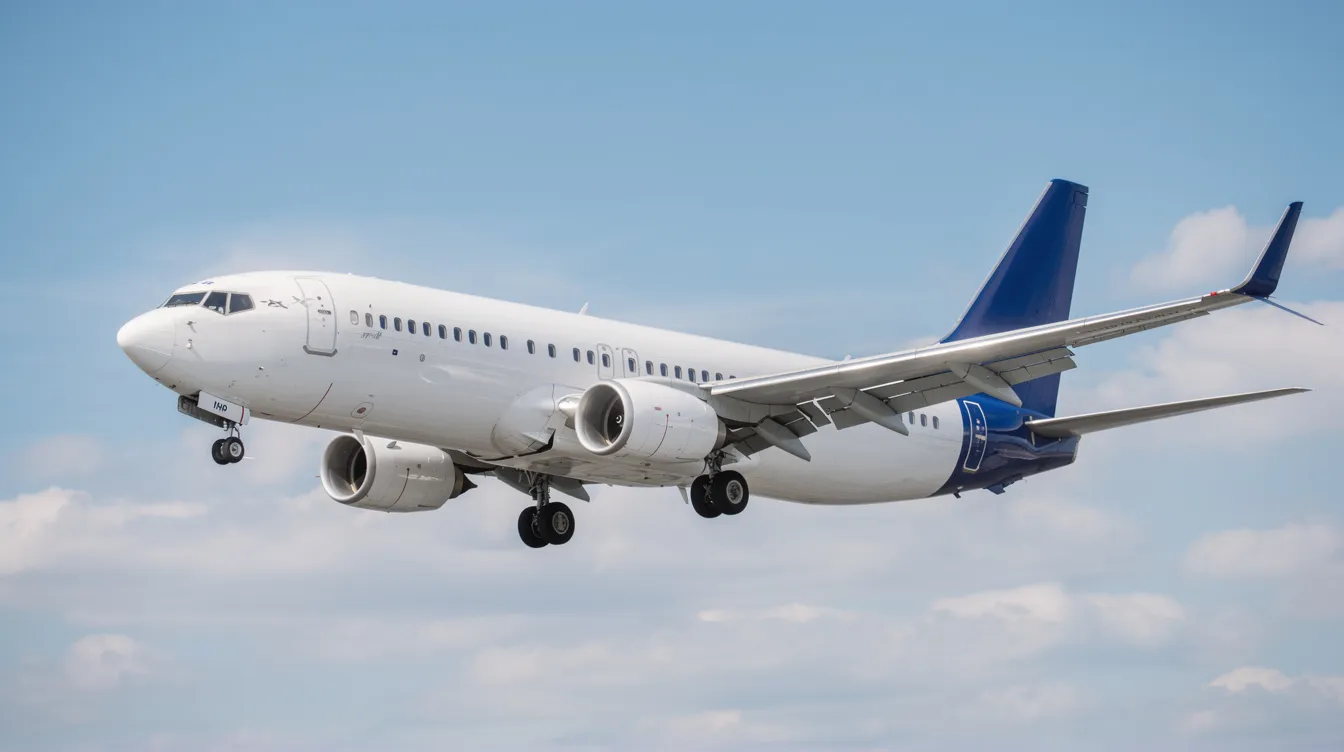
The Boeing 737 is a narrow-body, twin-engine jetliner and one of the most recognizable commercial aircraft families in aviation history, with over 10,000 units delivered since its introduction.
Spanning four generations—Original, Classic, 737 Next Generation, and the fourth-generation 737 MAX—the B737 has evolved through redesigned models to enhance performance, efficiency, range, and cabin comfort.
The 737 MAX series, launched on August 30, 2011, and certified on March 8, 2017, offers up to a 20% reduction in CO2 emissions per seat and a 50% smaller noise footprint compared with previous models, powered by 10–12% more efficient CFM LEAP-1B engines.
The 737 MAX family includes four main variants: MAX 7, 8, 9, and 10, with the 737 MAX 8 reaching a range of 3,550 nautical miles.
The 737-800, the best-selling 737 Next Generation model, can fly 260 nautical miles farther than earlier versions and consumes 7% less fuel than its competitors; the family also introduced a redesigned wing with a wider wingspan, larger area, greater fuel capacity, and a maximum altitude of 41,000 feet, while advanced winglets improve fuel efficiency by up to 3.5%.
Boeing Business Jet (BBJ) variants based on NG and MAX airframes serve as flying offices and VIP transports, available for charter through platforms like Jettly.
For large-group travel, the B737 remains a practical and cost-effective aircraft, accommodating between 85 and 230 passengers depending on the variant.
The Boeing 737, or B737, is a narrow-body, twin-engine jetliner and the highest-selling commercial aircraft family in history, used on short- to medium-haul routes around the world and also available in private charter configurations for group travel. Its design began on May 11, 1964, as a smaller companion to the 727 for short-haul flights. The first flight occurred on April 9, 1967, and Lufthansa became the launch customer on February 19, 1965. The 737-100 was the first aircraft in the family, and its prototype was used for testing during development before the 737 was first certified for commercial flight on December 15, 1967.
The Boeing 737 family is divided into four major generations: the Original, Classic, 737 Next Generation, and MAX series. Each generation introduced upgraded models and technologies as Boeing responded to changing airline and customer requirements and pressure from competition in the single-aisle market. The 737 Next Generation added upgraded design features, including a redesigned wing for longer range and a maximum altitude of 41,000 feet, while the 737 MAX series was launched on August 30, 2011, and gained FAA certification on March 8, 2017.
Since then, the 737 has become a foundational workhorse of world aviation, with flights taking off or landing every 1.5 seconds worldwide. Its worldwide deliveries and order totals have kept Boeing at the center of competition in the single-aisle market, and by mid-2025 the family had recorded more than 13,000 cumulative orders.
For aviation enthusiasts, charter customers, and industry professionals, this guide explains how the B737 evolved across its four generations, what changed in its technology, range, efficiency, environmental profile, and safety record, and how it compares as a private or group charter option through platforms such as Jettly. The family’s typical range runs from about 2,000 to more than 3,800 nautical miles, with seating from 85 on the 737-100 to 230 on high-density MAX variants, which is why it remains one of the most practical aircraft types for both airline operations and flexible charter planning.
The Boeing 737 family includes the Original, Classic, Next Generation, and MAX series, each representing significant design and technology milestones:
|
Generation |
Key Models |
Typical Seats |
Range (nautical miles) |
Era |
|---|---|---|---|---|
|
Original |
737-100, -200 |
85–120 |
Up to 2,550 |
1960s–1980s |
|
Classic |
737-300, -400, -500 |
120–188 |
~2,500 (737-300) |
1980s–1990s |
|
Next Generation |
737-600, -700, -800, -900/900ER |
110–215 |
Up to 3,115 |
1990s–2020 |
|
MAX |
MAX 7, 8, 9, 10, MAX 200 |
138–230 |
Up to 3,825 |
2017–present |
The Original 737-100 was the smallest variant, with only 30 produced, and it was the first aircraft in the series, built as the prototype for testing and certification, while the 737-200 featured a fuselage stretched by 36 inches compared to the -100. The 737-300 Classic model can carry 149 passengers with a range of 2,500 nautical miles, and Boeing stretched the fuselage to increase capacity. The 737 MAX series introduced advanced technology winglets and more efficient engines, with the MAX 8 variant reaching a range of 3,550 nautical miles.
The 737 MAX was grounded worldwide between March 2019 and December 2020 due to safety concerns but has since been recertified with enhanced safety features and pilot training. The MAX family has received approximately 7,000 firm orders from customers, reflecting renewed confidence. The 737 family later faced stronger competition from the Airbus A320 family in overall market share and deliveries.
Boeing has continuously introduced redesigned generations to enhance the 737’s performance and efficiency:
The Original series used Pratt & Whitney JT8D engines, typical of the era.
The Classic series replaced these with high-bypass CFM56-3 engines, reducing noise and fuel consumption.
The 737 Next Generation series introduced the CFM56-7 engine, plus a redesigned wing with a wider wingspan and larger area that increased fuel capacity, delivered greater fuel capacity for longer range, improved airflow, and enabled a maximum altitude of 41,000 feet, along with improved interior configurations and cockpit commonality across the family.
The 737 MAX program was launched on August 30, 2011, and features CFM LEAP-1B engines that are 10-12% more efficient than previous engines, advanced technology winglets, and aerodynamic refinements that reduce fuel use by 20% and CO2 emissions by the same margin.
The MAX also has a 50% smaller noise footprint than the 737-800, enhancing community compatibility around airports.
Sustainable aviation fuel (SAF) has been tested on the 737 MAX as part of Boeing’s environmental initiatives.
Across the lineup, Boeing has also upgraded systems over time using performance data, and some 737 variants support military applications and government transport roles.
The Boeing 737 is designed for rapid turnarounds and operates efficiently on short- to medium-haul routes, making it popular for domestic and high-frequency international flights. Its low-ground clearance design simplifies maintenance and servicing, while tools like Jettly’s airport locator platform for private jet charter help operators and travelers match 737 capabilities with suitable airports worldwide.
The 737-800 can fly 260 nautical miles farther than earlier models, a gain supported by the 737 Next Generation family’s redesigned wing and greater fuel capacity, and the NG series also offers a maximum cruise altitude of 41,000 feet for added operational flexibility. It also consumes 7% less fuel than competing aircraft. Winglets on the 737-800 improve fuel efficiency by up to 3.5%. The 737 MAX’s LEAP-1B engines and aerodynamic enhancements further improve fuel efficiency by 10-12% over the Next Generation series, even as Boeing faces strong competition from Airbus in the single-aisle market.
These efficiency gains translate into lower operating costs and reduced environmental impact, aligning with growing industry and customer emphasis on sustainability, especially for high-capacity models like the Boeing 737-800 charter aircraft.
Boeing 737 variants are frequently available for private and group charter through platforms like Jettly, which provides access to a broad portfolio of private charter aircraft across all categories, offering:
Airline-style layouts with full-economy cabins seating 150–189 passengers, or two-class interior configurations, ideal for sports teams or corporate shuttles, including configurations similar to popular Boeing 737-800 private charter options.
VIP and Boeing Business Jet (BBJ) configurations with 20–60 luxury seats, suitable for executive travel and long-range missions; auxiliary tanks can add increased range or extended range for longer sectors, often complemented by bespoke services such as in-flight catering for private jets.
Jettly’s transparent pricing and instant booking tools, including an online private jet charter cost estimator, simplify access to B737 charters, making it easier for groups to leverage the aircraft’s capacity and reliability for tailored travel needs, while fleet commonality is another reason some operators and customers favor certain 737 variants for charter.
Below are answers to common practical questions about the B737 that supplement the details covered above and connect to broader topics like the landscape of charter and private airlines.
Airline-configured 737 NG or MAX aircraft usually seat 150–189 passengers in single-class layouts, though some operators choose two-class interior configurations, and that flexibility helps airline customers match the aircraft to different service models. High-density configurations like the MAX 200 can push beyond 200 seats. In contrast, BBJ and VIP 737s chartered via platforms like Jettly trade seats for space, carrying 20–60 passengers in lounge-style seating with bedrooms and meeting rooms rather than standard airline rows, functioning similarly to tailored jet card and corporate jet solutions.
Ranges depend on the variant and payload. Early 737s cover roughly 1,500–2,550 nautical miles, while some ER versions and BBJ models offer extended range through extra fuel capacity; NG models reach 2,900–3,600 nm, and 737 MAX variants achieve up to about 3,825 nm, while larger widebodies like the Boeing 777-200 LR ultra-long-range airliner are used for missions far beyond typical 737 sectors. Common nonstop charter sectors like New York–Miami, London–Athens, and Toronto–Vancouver fall well within NG and MAX performance envelopes, as do many city pairs served by private jet charter services in Kolkata and other global hubs. BBJ variants with auxiliary fuel tanks can exceed 5,000 nm, giving them increased range for longer missions.
The B737's low ground clearance and relatively short-field performance help compared with larger widebody types, but it still requires longer runways and more robust infrastructure than light or midsize business jets. Jettly users planning to operate into shorter runways may be advised toward smaller jet categories, whereas B737 charters work well at medium and large airports or well-equipped secondary fields, especially when combined with strategies for easily securing a seat on a private jet.
Following the worldwide grounding from March 2019 to December 2020, the 737 MAX had originally gained FAA certification on March 8, 2017, before regulators including the FAA and EASA later required extensive software changes, flight control logic revisions, expanded training for pilots, updated procedures, and complete recertification before allowing it back into service. Operators offering MAX charters must comply with all of these requirements, and travelers looking to reduce costs can still apply principles of booking the cheapest private jet flights when evaluating 737 options. Platforms like Jettly work exclusively with certified operators that meet applicable safety and oversight standards, whether you’re chartering an entire aircraft or simply purchasing a seat on a private jet.
Total charter cost for a B737 is higher than for a light or midsize jet, and understanding what drives private jet charter pricing can help you evaluate whether a 737 is the right fit. However, cost per seat is often lower for large groups, making a 737 the more economical option for 80+ passengers compared with booking multiple smaller aircraft or purchasing many individual commercial tickets, especially when you consider options like crowdsourced and shared private jet flights. Jettly provides instant pricing estimates for B737 charters alongside other options, including a dedicated jet card flight cost estimator, so clients can decide which configuration best fits their budget and group size.
The Boeing 737 family remains a cornerstone of commercial aviation and an increasingly viable option for private charter. Its evolution through four generations reflects ongoing innovation in efficiency, safety, and passenger experience. It continues to serve airlines and other operators around the world, including some military applications.
With a broad range of variants and configurations, the B737 offers unmatched versatility for group travel, from regional shuttles to intercontinental VIP flights, especially when paired with flexible private jet membership programs. Major operators such as Southwest Airlines, United Airlines, American Airlines, and Ryanair have helped shape its market presence, and that reach is also reflected in the family’s long-running production and steady deliveries. Platforms like Jettly provide seamless access to these aircraft with transparent pricing and global availability, positioning themselves as a flexible alternative to traditional fractional ownership providers.
Ready to explore 737 charter options for your next group trip? Request a transparent quote at https://www.jettly.com.
Share this post:
Jay Franco Serevilla
Jul 24, 2026
|
5
min read
Discover tips and trends in the industry.

5
min read
Travel Insurance Airfare: How Flight Insurance Works for Private and Commercial Air Travel
Travel insurance for airfare is crucial for protecting your investment in non-refundable tickets against cancellations and delays. Whether you're flying commercially or chartering a private jet, understanding the nuances of flight insurance can save you from significant financial loss. This guide covers what flight insurance entails, its benefits, and when it's worth purchasing.
Read More
5
min read
Vonlane vs. Private Jet Charter: How Luxury Motorcoach Travel Compares to Jettly
This article compares Vonlane, a luxury motorcoach service in Texas, with Jettly, a private jet charter platform. While Vonlane offers a comfortable and convenient ground travel experience, Jettly provides flexibility and privacy for air travel. Discover which option suits your travel needs best.
Read MoreStay updated with our latest insights and tips to elevate your journey with us.
MEMBERSHIPS AND ASSOCIATIONS



Disclaimer: Jettly operates as a charter broker, offering access to a global digital jet charter marketplace. Jettly is not a direct air carrier and does not own or operate aircraft. All advertised flights are conducted by third-party air carriers that are fully licensed and hold the appropriate Part 135 or Part 121 certifications issued by the Federal Aviation Administration (FAA) or equivalent regulatory authorities under U.S. or foreign law. Jettly complies fully with the U.S. Department of Transportation's Part 295 and Part 298 Charter Broker regulations. Jettly does not carry additional liability insurance. Passengers are covered by aircraft operator insurance. TICO: 50023770


