


Login
Get Instant Pricing On 23,000+ Aircraft

>
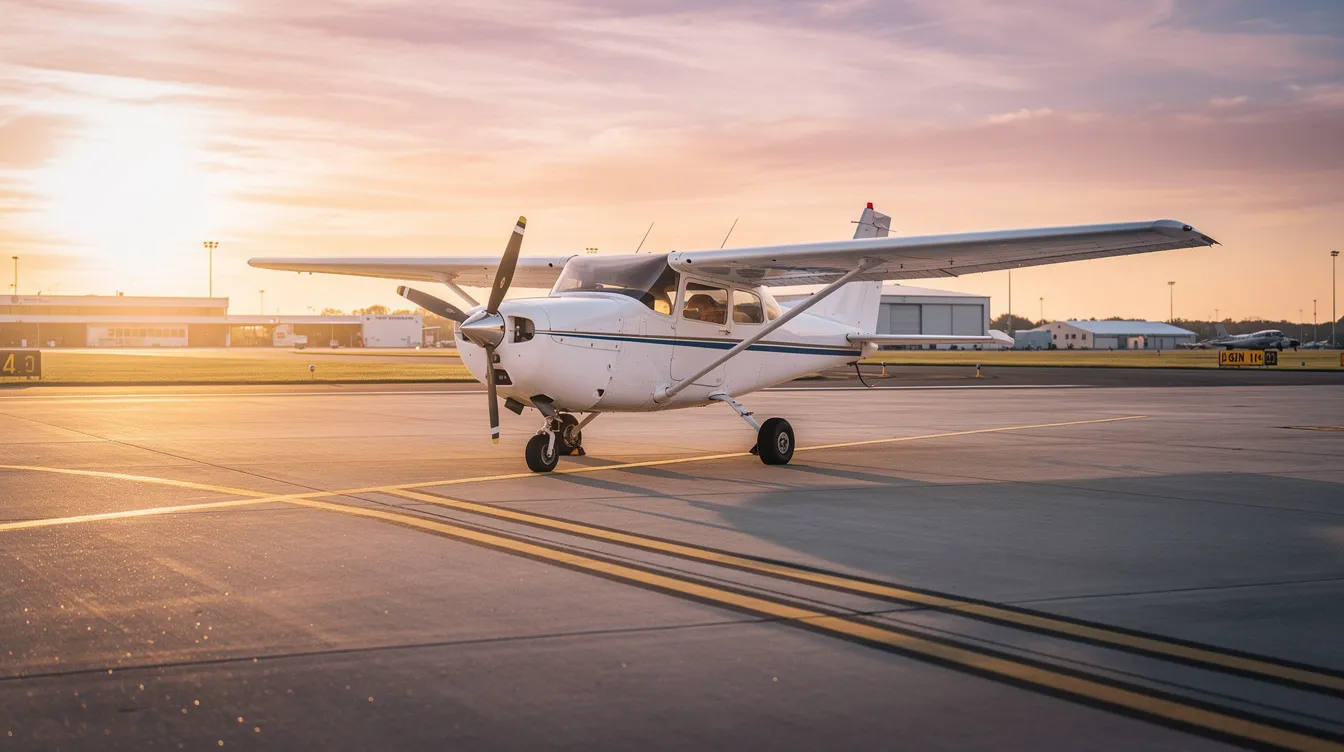
The Beechcraft Bonanza is a high-performance, single-engine general aviation aircraft with a production history stretching back nearly eight decades. Its first flight was on December 22, 1945, with production beginning in 1947. Over 18,000 Bonanzas have been produced since then, making it the longest continually produced aircraft in the world. Understanding the Beechcraft Bonanza range is critical for anyone planning a charter trip, evaluating aircraft options, or simply deciding whether this airplane fits a particular mission. This guide covers real-world range data, key variants, payload trade-offs, and how platforms like Jettly help match this aircraft to the right trip. This guide is intended for prospective charter customers, aircraft buyers, and aviation enthusiasts seeking detailed information on the Beechcraft Bonanza’s range and mission capabilities.
Modern Beechcraft Bonanza models typically deliver 700–1,000 nautical miles of maximum range depending on variant, fuel capacity, and payload.
Popular versions like the Bonanza A36, introduced in 1968 and still built today, and the current G36 can carry up to six passengers, but real-world range drops when cabins are full and baggage is heavy.
For charter and on-demand flights, the Bonanza range makes it ideal for 2–4-hour regional trips, often replacing long drives or short airline hops.
Range is shaped by fuel capacity, cruise power settings, winds aloft, and IFR reserves (typically 45–60 minutes), so brochure figures differ from practical planning numbers.
Jettly can source Bonanza and other private charter aircraft worldwide and help travelers compare range and cost against light jets and turboprops.
The Bonanza's long production run includes several variants, including the distinctive V-tail Bonanza produced until 1982 and the Model 36 Bonanza introduced in 1968 and still in production today. Its fuel capacity ranges from 40 to 80 gallons depending on the model, with typical cruise fuel burn varying from 13 to 17 gallons per hour. This variability in fuel capacity and consumption contributes to differences in range across models.
Depending on model and configuration, the Beechcraft Bonanza range spans roughly 700–1,000 nautical miles under favorable conditions. The current-production G36, for example, has a maximum range of 920 nautical miles at economy cruise. It is powered by a Continental IO-550-B engine with 300 horsepower and achieves a maximum cruise speed of 176 knots. The service ceiling of the Bonanza G36 is 18,500 feet, and it features short takeoff and landing capabilities suitable for smaller airports.
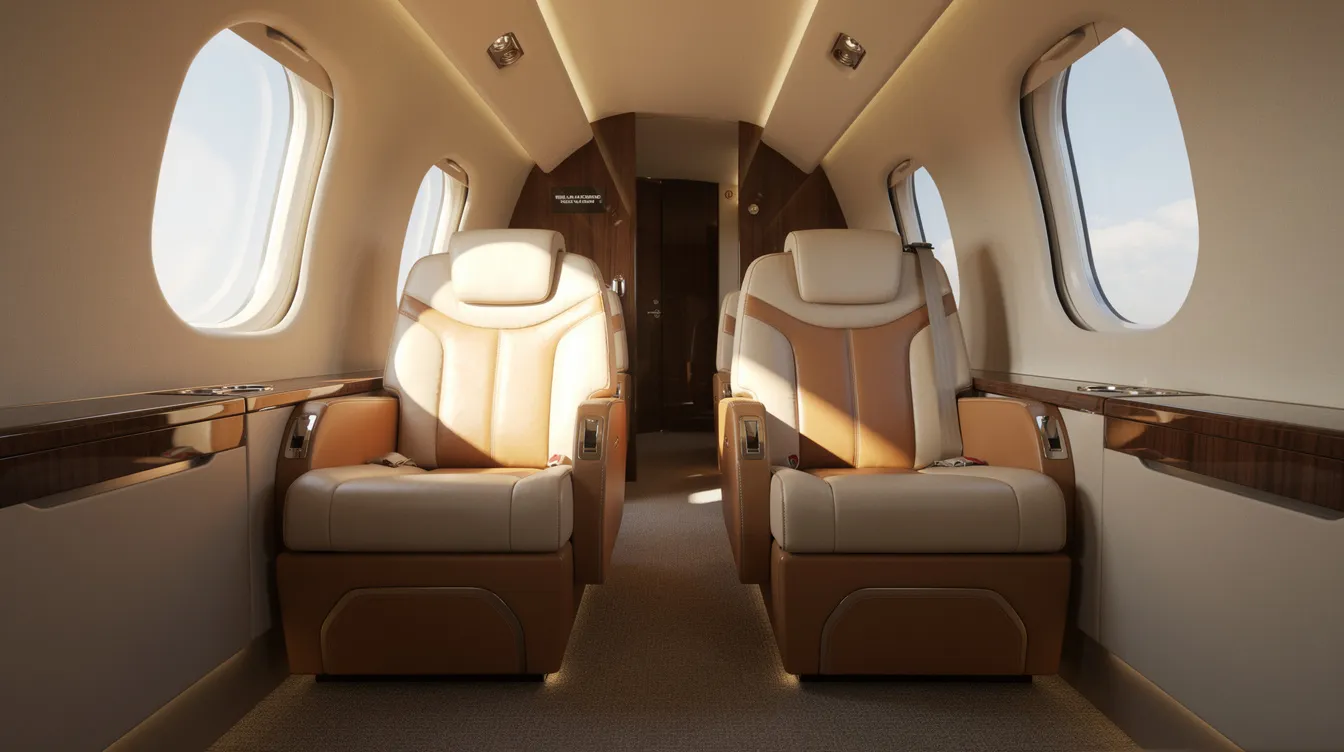
The Bonanza G36 seats up to six passengers comfortably in a club-style seating arrangement with high-quality upholstery and large windows. Standard air conditioning enhances passenger comfort, while a 10-cubic-foot baggage compartment supports luggage needs. Realistic range numbers are usually based on 2–4 people plus baggage, standard cruise power, and IFR fuel reserves. The figures in this article draw from typical POH data, Textron Aviation published specs, and common operator planning practices rather than marketing numbers alone.
The name "Beechcraft Bonanza" covers multiple generations and tail configurations. Here is how the major variants compare:
|
Variant |
Production Years |
Engine Power (HP) |
Fuel Capacity (Gallons) |
Max Range (NM) |
Passenger Capacity |
Notes |
|---|---|---|---|---|---|---|
|
V-tail Model 35/V35B |
Until 1982 |
185–285 |
40–60 |
550–850 |
4–6 |
Early models had V-tail design |
|
Bonanza A36 |
1968–Present |
~300 |
50–70 |
660–900 |
Up to 6 |
Conventional tail, longer fuselage |
|
Bonanza G36 |
Current |
300 (IO-550-B) |
50 |
~920 |
Up to 6 |
Latest avionics, short-field capability |
|
B36TC (Turbocharged) |
Various |
285–310 |
108 |
~985 |
Up to 6 |
Turbocharged, longest range |
The gap between "ferry range" (minimal payload, maximum fuel, fuel-stretching power) and practical charter range is significant. Payload considerations affect maximum distance capabilities for the Beechcraft Bonanza, as weight limits require trade-offs between fuel and passengers or baggage.
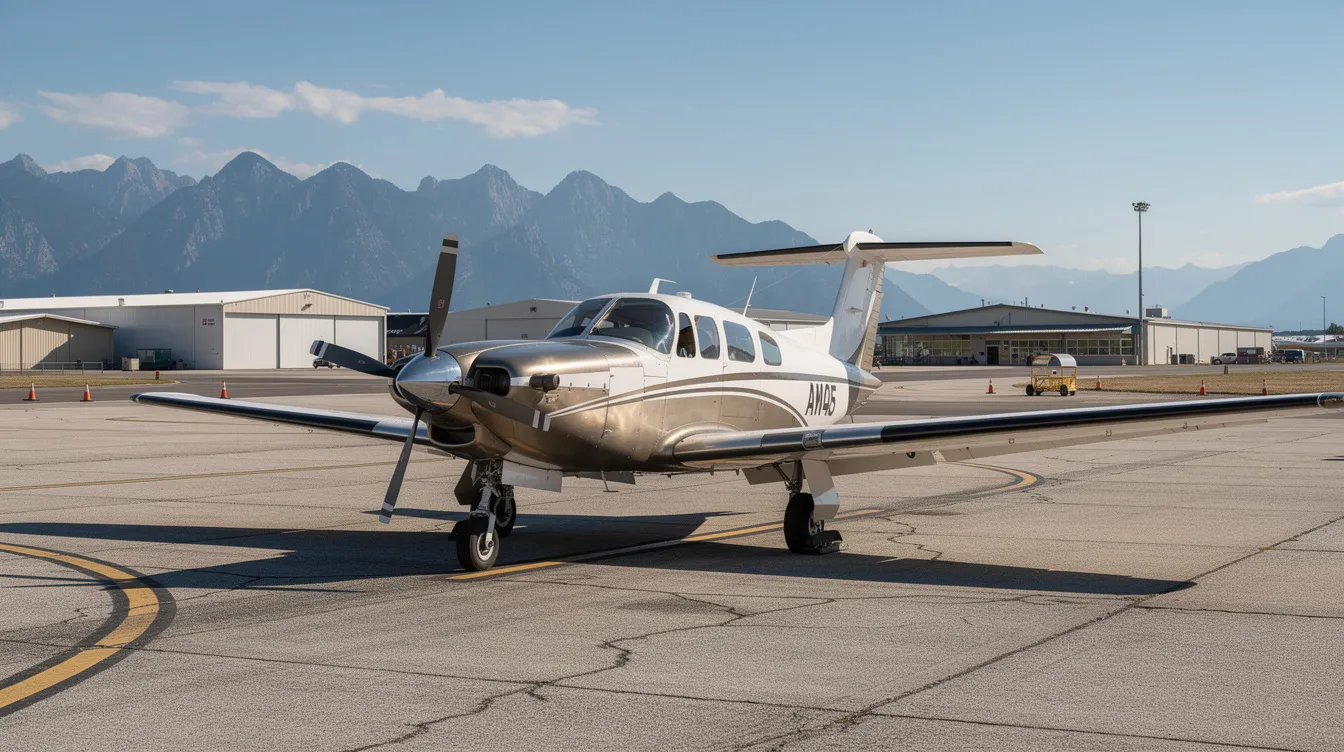
Published numbers assume ideal conditions. Real trips in a Beechcraft Bonanza are affected by weight, weather, and pilot choices. Here are the main factors:
Payload: With up to six passengers and baggage on board, fuel often must be reduced to stay within maximum takeoff weight limits approved by the FAA. The G36's useful load is about 1,133 lb; full fuel weighs roughly 444 lb, leaving only ~689 lb for occupants and cargo.
Cruise power settings: High-speed cruise (~17 GPH in a G36) covers ground faster but shortens range. Economy cruise (~13 GPH) extends it. The range of the Bonanza is influenced by power settings and aircraft loading.
Winds aloft: Headwinds on westbound legs can cut effective range by 10–20%. Tailwinds on favorable routing can exceed brochure numbers.
Fuel reserves and regulations: IFR flight planning typically requires 45 minutes to one hour of fuel at landing. This shortens the usable planning range compared to brochure figures.
Aircraft condition: Older airframes, engine wear, and minor changes in aerodynamic cleanliness all affect real-world fuel burn. Well-maintained aircraft with approved modifications tend to track closer to book numbers.
A practical planning figure for many Bonanza missions is around 500–700 NM nonstop with comfortable reserves and normal payload, even though the aircraft can technically go farther; cost-conscious travelers often pair these planning ranges with a private jet charter cost estimator when comparing Bonanza flights to turboprops or jets.
Business travelers and families use the Bonanza A36 and G36 for specific kinds of trips. Here is what those flights look like in practice:
400–600 NM business routes: Trips like Dallas to Denver (~520 NM) or Toronto to New York (~350 NM) are handled nonstop at normal cruise with 2–4 passengers and baggage. These missions sit well inside the aircraft's comfortable range envelope.
Near-maximum legs (~800–900 NM): Routes like Chicago to Boston (~850 NM) push closer to limits. Pilots may choose an economy cruise, reduce payload, or plan a fuel stop for comfort and safety margins.
Short-haul hops (200–400 NM): Los Angeles to Las Vegas (~230 NM) or similar runs highlight the airplane's utility and practicality. Range is less the constraint—flexibility for same-day out-and-back flying without refueling is the value, and some travelers even offset costs by using crowdsourced private flights and shared empty seats.
Owner-piloted vs. charter: Owner pilots might stretch range more aggressively. Charter operators and platforms like Jettly plan conservatively for safety, comfort, and schedule reliability, whether arranging shared charter flights or full private charters.
The Bonanza G36 is also equipped for smaller-airport utility, with short takeoff and landing capabilities that open access to runways larger turboprops and jets cannot use. For missions beyond about 800–1,000 NM, travelers often compare the Bonanza against light jets that cruise faster and maintain similar or greater range.

While the Bonanza seats up to six passengers in a single-engine piston cabin, it is common to fly with 3–4 adults plus baggage to balance comfort, weight, and range. The aircraft is noted for its high-quality construction and long-term value, and the cabin reflects that.
Cabin layout: The cabin features a club-style seating arrangement with high-quality upholstery and large windows. The A36/G36 includes aft cargo doors for easy loading. The Bonanza G36 has standard air conditioning for passenger comfort.
Removable rear seats: The rear seats can be removed to increase cargo space, which is useful for operators flying fewer passengers with bulkier baggage or equipment.
Weight and balance: Adding more passengers and luggage may require reducing fuel, particularly on hot days or from higher-elevation airports where density altitude compresses performance.
Full fuel, full seats: A "full fuel, full seats" scenario is rarely realistic. Operators usually trade either payload or range to stay within limits. For a family of four, the Bonanza strikes a strong balance between cabin space and range.
Platform guidance: Jettly's private jet membership options and platform can show travelers how passenger count and baggage expectations influence aircraft selection—sometimes recommending a larger turboprop or light jet instead of a fully loaded Bonanza for longer distances.
The Bonanza is a standout high-performance piston option in Jettly's inventory, but it sits alongside turboprops and light jets with different speed and range profiles. Comparative performance indicates the Bonanza has superior speed and efficiency as a general aviation aircraft in the piston category, yet stepping up to turbine power changes the equation.
Single-engine turboprops: Aircraft like the Pilatus PC-12 or TBM series fly 1,200–1,800 NM at 250–330 knots, well beyond any Bonanza variant. They also climb above the weather faster, which matters for longer missions.
Light jets: Citation CJ series or Phenom 100 models cruise at 350–450 knots with comparable or greater range, though direct operating costs are significantly higher; structured jet card programs for frequent flyers can help smooth those expenses for travelers who routinely outgrow Bonanza-class range.
Where Bonanza wins: Regional trips under 600–700 NM, smaller groups, access to shorter runways, and cost-sensitive missions where jet speeds are not essential. The Bonanza excels in combining range, speed, and passenger comfort among general aviation aircraft at its price point.
For longer legs or tight schedules, Jettly's instant pricing and inventory comparison and jet card flight cost estimator allow travelers to evaluate whether stepping up offers better value.
Jettly is a digital private aviation platform that aggregates over 20,000 aircraft worldwide, including Beechcraft Bonanza models and comparable piston and turboprop aircraft operated by vetted operators.
A traveler enters route, dates, and passenger count on the platform, then sees which aircraft—including Bonanza options—can handle the trip nonstop within comfortable range limits.
Jettly's instant pricing lets users compare the cost of a Bonanza-class charter to turboprops and light jets on the same route, factoring in flight time, range, and cabin size, supported by a detailed guide on affordable private jet charter pricing.
For flights near the upper end of Bonanza range, travelers can test scenarios—one fuel stop vs. nonstop in a faster aircraft—to see which combination delivers better schedule reliability and value, often referencing comparisons of the best private jet charter companies and providers.
Learn more about Jettly's charter options at www.jettly.com.
While Textron Aviation lists max ranges near 920 NM for the modern G36, most pilots and operators plan around 500–700 NM nonstop with typical passengers, baggage, and IFR reserves. Lighter loads, long-range cruise settings, and favorable winds can extend this. Heavy loads, headwinds, and hot-and-high operation can shorten it. Passengers using Jettly can review realistic planning distances for specific aircraft and routes before booking, drawing on broader guides to the charter airline and private aviation landscape.
The G36 can accommodate up to six passengers, but full seats plus baggage usually mean fuel must be reduced to stay within maximum takeoff weight, which cuts range. For maximum advertised range, operators often assume fewer passengers and lighter baggage. For six adults on longer trips, Jettly may recommend a larger turboprop or light jet with more payload capacity, sometimes as a flexible alternative to NetJets-style fractional ownership.
A coast-to-coast route like New York to Los Angeles is far beyond the nonstop range of any Beechcraft Bonanza. Such trips can be done with multiple fuel stops, but for time-sensitive travelers, Jettly commonly matches those journeys to jets or large turboprops with higher cruise speed, often through vetted operators such as Dexter Air Taxi for private jet services. The Bonanza is most efficient on regional legs rather than multi-stop cross-continent itineraries.
Flying higher within the Bonanza's typical 10,000–18,500 ft envelope (with supplemental oxygen as required) can improve true airspeed and fuel efficiency, often extending range modestly. The actual benefit depends on winds aloft, turbulence, and airspace constraints. Charter operators accessed through Jettly consider these factors when planning routes, and marketplace partners like Zenflight’s instant-book private jet service apply similar planning logic on turbine aircraft.
Travelers can use Jettly's online platform to input their route, dates, and passenger count, then see aircraft options—including Bonanza models—ranked by price, estimated flight time, and suitability. The platform lets users compare piston aircraft, turboprops, and jets side by side, supported by tools like an airport locator for global private flights. Ready to experience private travel on your terms? Explore flight options or request a quote at https://www.jettly.com.
The Beechcraft Bonanza remains a versatile and enduring choice for private aviation, balancing range, speed, and comfort in a single-engine piston aircraft. Its range of approximately 700 to 1,000 nautical miles makes it ideal for regional trips, providing a practical alternative to driving or commercial flights. With its continuous production since 1947 in Wichita, Kansas, and ongoing development, the Bonanza combines proven reliability with modern upgrades like the G36’s advanced avionics and cabin amenities. Whether flying with a full complement of passengers or optimizing payload for longer legs, understanding the Bonanza’s range capabilities helps travelers and charter operators plan efficient, convenient trips. Platforms like Jettly simplify access to this iconic aircraft by offering transparent pricing and instant booking options, making private flight more accessible than ever.
Ready to experience private travel on your terms? Explore flight options or request a quote at https://www.jettly.com.
Share this post:
Jay Franco Serevilla
Jul 1, 2026
|
5
min read
Discover tips and trends in the industry.
5
min read
When Are Flight Tickets Cheapest? Timing, Trends, and Smart Alternatives
Knowing when flight tickets are cheapest can lead to significant savings. This guide explores optimal booking windows, travel days, and strategies for both commercial and private flights, emphasizing the importance of tracking prices and flexibility in travel plans.
Read More
5
min read
How to Get Lower Ticket Prices on Private Jet Flights with Jettly
Discover how to lower ticket prices on private jet flights with Jettly's expert strategies. By understanding pricing dynamics and utilizing tools like empty leg flights and flexible bookings, travelers can secure significant savings. This guide empowers both frequent and first-time flyers to make informed decisions for a cost-effective private jet experience.
Read MoreStay updated with our latest insights and tips to elevate your journey with us.
MEMBERSHIPS AND ASSOCIATIONS



Disclaimer: Jettly operates as a charter broker, offering access to a global digital jet charter marketplace. Jettly is not a direct air carrier and does not own or operate aircraft. All advertised flights are conducted by third-party air carriers that are fully licensed and hold the appropriate Part 135 or Part 121 certifications issued by the Federal Aviation Administration (FAA) or equivalent regulatory authorities under U.S. or foreign law. Jettly complies fully with the U.S. Department of Transportation's Part 295 and Part 298 Charter Broker regulations. Jettly does not carry additional liability insurance. Passengers are covered by aircraft operator insurance. TICO: 50023770


