


Login
Get Instant Pricing On 23,000+ Aircraft

>
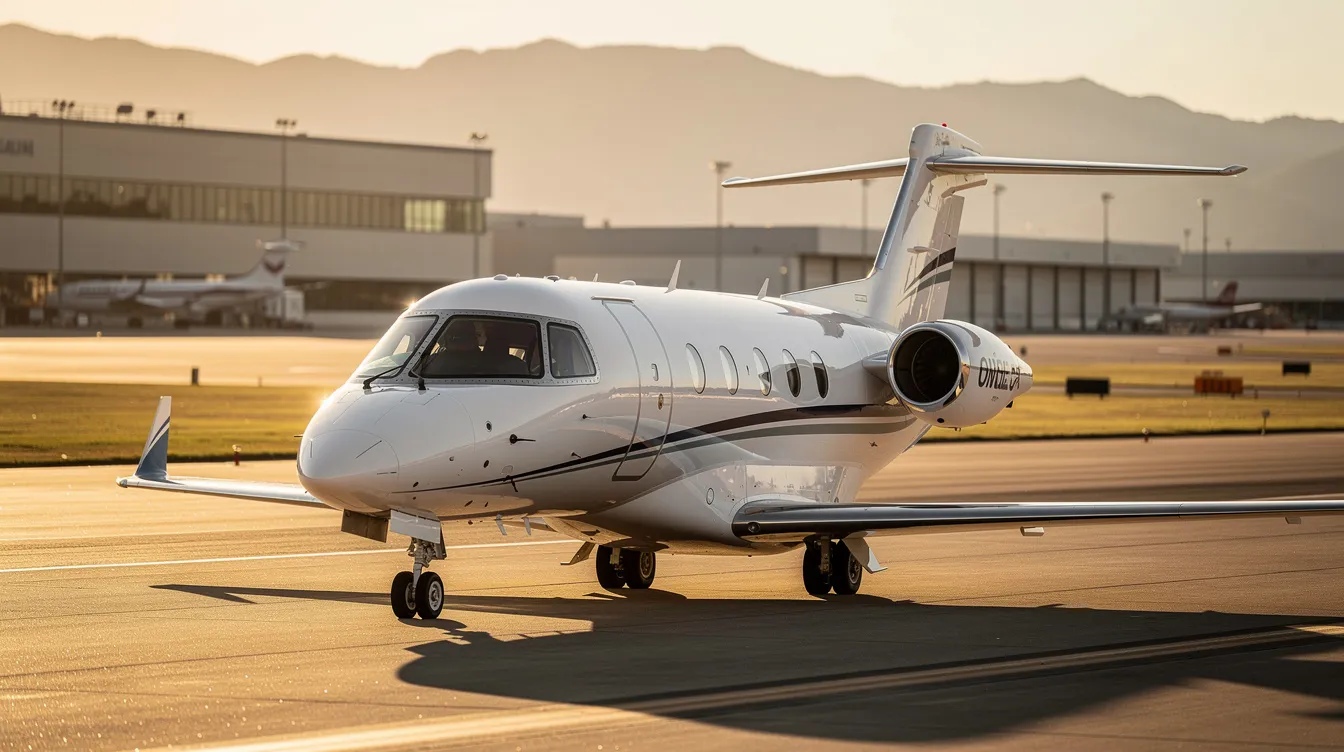
This guide is intended for business travelers, charter customers, and prospective owners seeking a comprehensive overview of the Beechcraft Premier 1A’s features, performance, and market value. The Beechcraft Premier 1A is a light business jet introduced in 2006, built around a carbon-fiber composite fuselage optimized for short- to mid-range business travel. It sits within the Beechcraft Premier family alongside the original Premier I and the unrealized Premier II / Hawker 200. The Premier 1A first flew in 1998 and entered service in 2001 in its original Premier I form before the improved 1A variant began deliveries. It was designed to compete with jets such as the Cessna Citation CJ2/CJ3 and Learjet 40/45.
With 165 Premier 1A aircraft produced by August 2025 and a total of 297 Premier 1 and 1A airframes built, the model remains well represented in charter fleets and on the pre-owned market. This article covers its development history, technical specifications, cabin experience, operating costs, and how to charter one through Jettly.
The Beechcraft Premier 1A is a composite-fuselage light jet produced from 2006 to 2013, sitting between very light jets and larger business jets with seating for up to six passengers.
It delivers a range of approximately 1,500 nautical miles and cruises efficiently at around Mach 0.80, making it practical for regional business trips such as New York–Miami or London–Rome.
Powered by twin Williams FJ44-2A engines and equipped with Rockwell Collins Pro Line 21 avionics, the Premier 1A balances performance with operational flexibility, including single-pilot certification.
Pre-owned Premier 1A aircraft currently range from roughly $1.687 million for a 2004 Premier 1 to $1.8 million for a 2008 Premier 1A, with some listings up to $2.5 million depending on year, hours, and maintenance status. Currently, 13 Premier 1A aircraft are for sale.
Through Jettly's charter platform, travelers can book a Beechcraft Premier 1A on-demand, compare it to other light jets like the Citation CJ series or Phenom 100/300, and receive instant pricing.
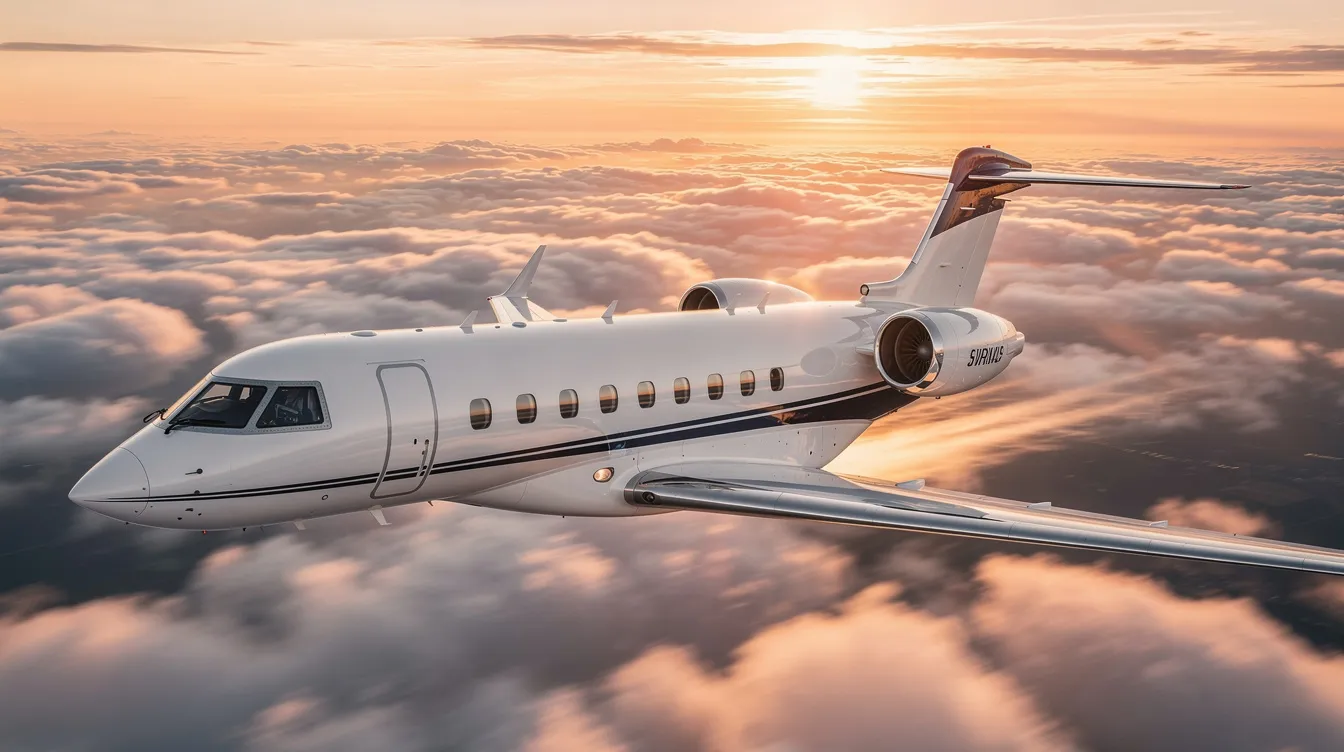
Raytheon entered the light jet category in the late 1990s with the original Premier I, a composite-fuselage design certified around 2001. Customer feedback on cabin noise, brakes, and systems refinement drove the development of the Premier 1A as an upgrade from the original Premier I, with production running until the company announced its end in 2013.
Corporate transitions reshaped the brand: Raytheon's business jet division became Hawker Beechcraft, which later faced bankruptcy in 2012–2013 under financial pressure. This effectively ended new Premier-series production and led to Textron Aviation acquiring the assets.
The Premier II was announced on 19 May 2008 as a higher-performance derivative featuring more powerful engines, winglets, and longer range. However, the global financial crisis slowed the launch, and the program was ultimately canceled after only two prototypes. Today, "Premier IA" and "Premier 1A" are used interchangeably in the marketplace.
The aircraft features a carbon fiber/epoxy composite fuselage using honeycomb sandwich construction. This design allows a larger circular cross-section for cabin width without excessive weight, giving the Premier 1A an edge over traditional aluminum airframes, and the structure is durable enough that it typically needs few repairs. The length of the Premier 1A is 46 ft with a wingspan of 44 ft 6 in and a maximum takeoff weight of 12,500 lbs.
Power comes from two Williams FJ44-2A engines, each producing about 2,300 lbf of thrust. These powerful engines deliver solid fuel efficiency and relatively low noise for the light jet segment.
The Pro Line 21-equipped cockpit includes integrated GPS, TCAS II (often Change 7.1), EGPWS/TAWS, and dual FMS-3000. The aircraft is certified for single-pilot operation, and many upgraded airframes include ADS-B compliance and WAAS/LPV capability for flexible routing and access to more airports.
The Premier 1A has a maximum cruise speed of 426 knots—an efficient cruising speed around Mach 0.80. It has a range of approximately 1,500 nautical miles with four passengers under standard conditions and reserves.
Key performance figures:
|
Parameter |
Value |
|---|---|
|
Maximum operating altitude |
41,000 ft |
|
Takeoff distance |
3,792 feet at sea level |
|
Landing distance |
~3,100 ft at typical weights |
|
Maximum cruise speed |
426 knots (Mach 0.80) |
|
Range |
~1,500 nautical miles |
|
Service ceiling |
41,000 ft |
These runway numbers mean the aircraft can be flown into many secondary airports, not practical for larger jets. Common mission profiles include Toronto–Chicago, New York–Miami, Los Angeles–Denver, or intra-European routes like Paris–Madrid, all of which can be arranged through providers featured in a comprehensive guide to private charter airlines and operators.
The cabin size is comparable to some midsize jets despite being classified as a light jet. The Premier 1A is known for its spacious cabin in the light jet class, thanks to its circular composite fuselage.
The cabin features a flat-floor design, which means there are no steps or dropped aisles, maximizing usable space and comfort for passengers. The cabin measures 5.5 ft wide and 5.4 ft high, providing ample headroom and shoulder space for a light jet.
Cabin length: 13.5 feet
Cabin height: 5 ft 5 in (5.5 feet high)
Cabin width: 5.5 feet
Cabin volume: 315 cubic feet
Seating: up to six passengers
It features seating for up to six passengers in a typical four-seat club arrangement plus two forward-facing seats. The cabin has fully adjustable leather chairs, fold-out tables, and a refreshment center. The Premier 1A includes a private lavatory, large oval windows, and improved cabin noise insulation over earlier Premier I models. Interior finishes include wood veneers and overhead storage areas.

The Premier 1A sits between the original Premier I and the planned Premier II / Hawker 200. Compared to the original Premier, the 1A offers updated Pro Line 21 avionics, improved interior quality, better systems reliability, and refinements to brakes and cabin insulation. Shoppers comparing aircraft families and brands can also benefit from understanding the best private plane manufacturers for different budgets and missions.
The Premier II would have delivered roughly 20% more range with more powerful engines and winglets, but Hawker Beechcraft's 2013 bankruptcy prevented full production. Charter customers and operators still gravitate toward the Premier 1A for its balance of cabin comfort, speed, and acquisition cost. Jettly organizes aircraft profiles clearly so customers understand which model variant they are viewing when searching.
The Premier 1A is considered cost-effective to maintain over its lifetime. Before committing to ownership or charter, understanding what drives the cost of a single private jet flight helps frame these numbers in context. Here's a snapshot of current economics:
|
Cost Category |
Approximate Range |
|---|---|
|
Pre-owned price (2008 Premier 1A) |
$1,800,000 |
|
Pre-owned price (2004 Premier 1) |
$1,687,000 |
|
Annual fixed costs (full-time operation) |
~$400,000–$500,000 |
|
Variable cost per flight hour |
~$2,000–$3,000 |
|
Charter hourly rate |
~$3,500–$4,000 |
Currently, 13 Premier 1A aircraft are for sale from the 165-unit production run. Any buyer or owner should also evaluate maintenance status and refurbishment history, since updated paint can improve perceived market appeal and influence the asking price. For charter customers on Jettly, hourly rates for a Premier 1A typically fall below midsize jet pricing, making it a strong value for 2–6 passengers on sub-1,000 nm missions; those comparing options can review Jettly's guide to affordable private jet charter pricing for additional context.
Rather than owning outright, travelers can access the Premier 1A through Jettly's private charter aircraft network on its on-demand charter marketplace. The process is straightforward: search by route and date, filter by the light jet category, and view available options, including the Premier 1A or comparable aircraft like the Citation CJ series. From the search results page, users can move directly into specific aircraft options.
Jettly uses certified operators with compliance across regional aviation authorities, vetting maintenance programs, and crew experience on every flight. The platform's instant pricing tools, including its private jet charter cost estimator, let customers compare the Premier 1A against peers before booking, and it can also help parties who want to sell or list aircraft.
Business travel: Executives flying same-day return trips within 1,000 nm, accessing secondary airports closer to meetings.
Leisure and family trips: Small groups heading to resort destinations with moderate luggage, benefiting from the club seating layout or exploring shared and crowdsourced private jet flights to reduce per-seat costs.
Urgent or medical travel: Time-sensitive regional transfers where a fast-response light jet is needed.
Jettly allows travelers to input their origin, destination, and timing to quickly see whether a Premier 1A is the most efficient choice for their mission or whether one of its flexible private jet membership plans might better fit frequent flyers.
The Premier 1A meets stringent FAA and international certification standards. The fleet has accumulated significant global flight hours since entering operation, with incidents being relatively rare in context.
One notable accident occurred on 17 August 2023 when a Raytheon 390 Premier I crashed near Kuala Lumpur–Subang during approach. Investigations focused on multiple operational and environmental factors rather than airframe design flaws.
Charter customers using Jettly can focus on operator-quality-audited maintenance, experienced pilot crews, and adherence to safety regulations—factors often more significant than the specific aircraft model.
Compared to very light jets like the Citation Mustang or Eclipse 500, the Premier 1A offers more cabin space, higher cruise speed, and greater comfort for passengers at a somewhat higher hour rate, though travelers focused purely on budget may gravitate toward the cheapest private aircraft options across categories.
Against mainstream competitors like the Citation CJ2/CJ3 and Embraer Phenom 100/300, it holds its own on range and speed while offering a distinctly spacious cross-section from its composite fuselage. Buyers comparing aircraft might also look at the cheapest single-pilot jets for budget-conscious owners. Older designs like the Beechjet 400A share a similar mission profile but use traditional aluminum construction.
Jettly's inventory and instant pricing let customers see cost differences between a Premier 1A and its peers side by side.
Yes. "Premier 1A" and "Premier IA" refer to the same upgraded model that followed the original Premier I. The different spellings stem from marketing and documentation variations, but the specifications, performance, and configuration are identical.
Under typical conditions with four passengers and standard reserves, the Premier 1A can cover roughly 1,500 nautical miles nonstop. This covers routes like New York–Miami or London–Rome comfortably, though heavier loads or strong headwinds may reduce range modestly.
The Premier 1A is certified for single-pilot operation thanks to its Pro Line 21 avionics. However, most commercial charter operators—including those accessible via Jettly—fly with two-pilot crews to align with internal safety policies.
The aircraft offers external baggage compartments plus interior storage, generally accommodating carry-on and checked bags for 4–6 passengers. Jettly's booking team can confirm exact limits based on the specific operator and configuration.
Charter rates for a Premier 1A typically run $3,500–$4,000 per hour, well below midsize jets like the Hawker 800XP or Citation XLS. This makes it more cost-effective for small groups on sub-1,000 nm legs. Jettly's website allows customers to compare real-time pricing before booking.
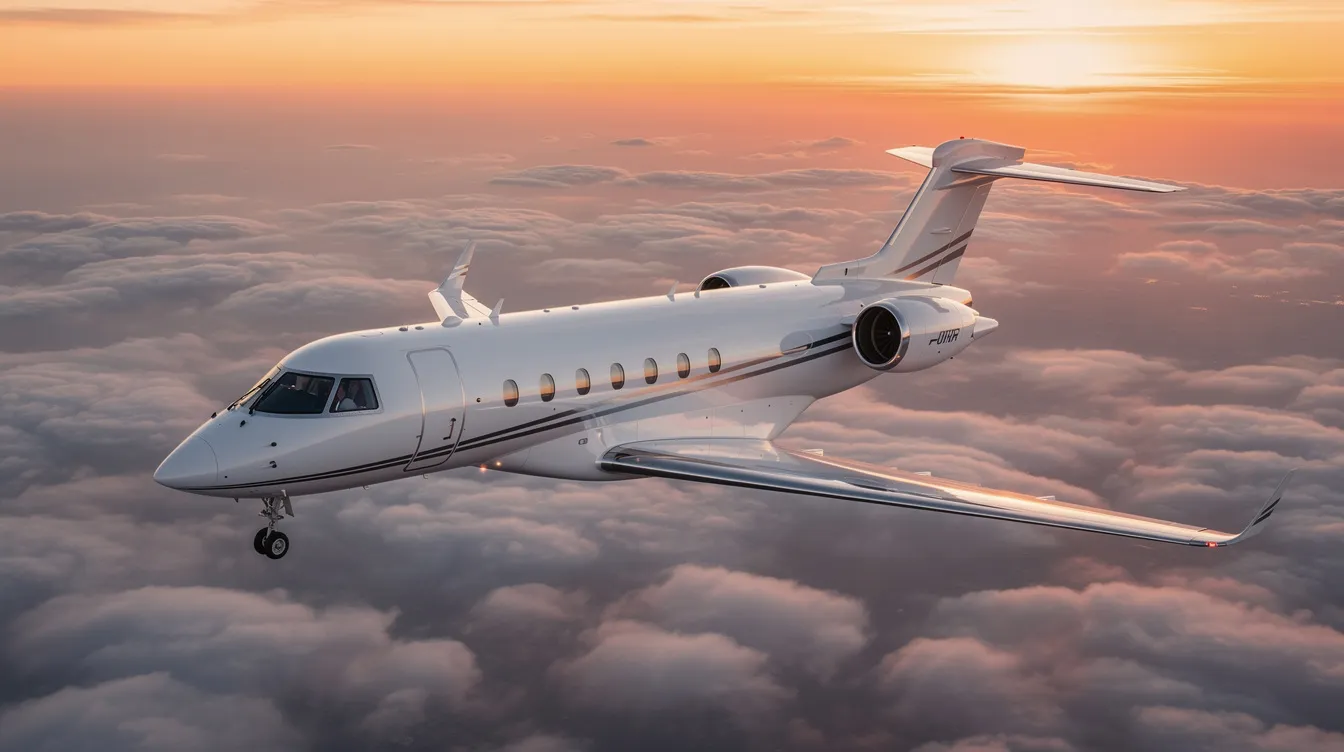
The Beechcraft Premier 1A remains a compelling option in the light jet market despite production ending in 2013. Its composite fuselage, six-passenger cabin, 1,000+ nm range, and competitive economics make it a practical fit for business teams, families, and frequent regional flyers.
Ready to experience private travel on your terms? Explore charter options, compare the Premier 1A with other light jets, or request a quote at https://www.jettly.com.
Share this post:
Jay Franco Serevilla
Jun 15, 2026
|
5
min read
Discover tips and trends in the industry.
5
min read
NY to Aruba Flight Time: How Long It Takes & The Fastest Ways to Get There
The flight time from New York to Aruba typically ranges from 4 hours 30 minutes to 5 hours, with an average of about 4 hours 43 minutes. Factors such as departure airport and flight type can significantly affect total travel time, especially when considering connecting flights. For those seeking convenience, private jet charters can offer similar in-air times while reducing overall travel duration.
Read More
5
min read
NYC to Miami Flight Duration: How Long Is the Flight & How to Save Time
Traveling from New York City to Miami typically takes about 3 hours on a nonstop flight, making it a convenient option for both business and leisure travelers. Understanding flight durations and booking strategies can help optimize your travel experience, whether you choose commercial flights or private jet charters. With multiple airlines offering direct services, planning ahead can lead to significant time and cost savings.
Read MoreStay updated with our latest insights and tips to elevate your journey with us.
MEMBERSHIPS AND ASSOCIATIONS



Disclaimer: Jettly operates as a charter broker, offering access to a global digital jet charter marketplace. Jettly is not a direct air carrier and does not own or operate aircraft. All advertised flights are conducted by third-party air carriers that are fully licensed and hold the appropriate Part 135 or Part 121 certifications issued by the Federal Aviation Administration (FAA) or equivalent regulatory authorities under U.S. or foreign law. Jettly complies fully with the U.S. Department of Transportation's Part 295 and Part 298 Charter Broker regulations. Jettly does not carry additional liability insurance. Passengers are covered by aircraft operator insurance. TICO: 50023770


