


Login
Get Instant Pricing On 23,000+ Aircraft

>
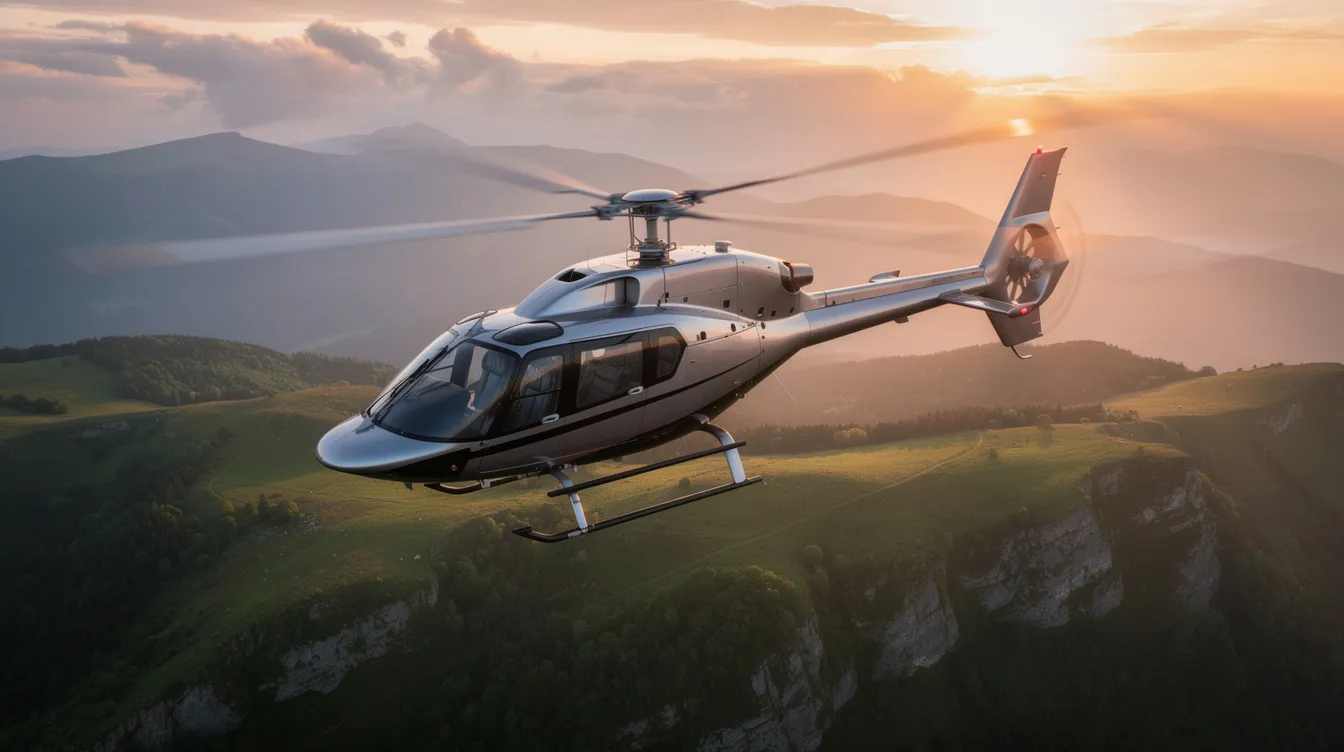
Searching for the best helicopter leads to wildly different answers depending on who is asking. A first-time owner shopping for a personal helicopter has a completely different checklist than a defense ministry evaluating an attack helicopter or a corporation outfitting a VIP fleet.
This article compares helicopters across four distinct roles - personal use, family and lifestyle travel, business and corporate commuting, and VIP or head-of-state transport - then profiles leading military attack helicopters for readers interested in the technology side. Each section uses real-world specs, approximate 2025–2026 cost ranges, and fleet histories rather than generic descriptions.
For private individuals and businesses, chartering via a platform like Jettly is often more practical than ownership, especially when combining helicopter transfers with longer private jet legs, and frequent flyers may benefit from structured private jet membership options. Attack helicopters are included for completeness, but they are not available for civilian use.
There is no single best helicopter. The right helicopter depends entirely on mission profile, passenger count, range, weather requirements, and budget.
For personal use, the Robinson R44 Raven II remains the world's best-selling four-seat piston helicopter, while the Guimbal Cabri G2 leads in two-seat safety and modern design.
In the corporate and VIP space, the Airbus H145, Leonardo AW139, and Sikorsky S-92 cover everything from executive commuting to head-of-state transport.
The AH-64E Apache Guardian is the benchmark attack helicopter, with over 5.3 million flight hours and service across multiple air forces worldwide.
For most private individuals and businesses flying fewer than 150–200 hours per year, chartering through a digital platform like Jettly is often more cost-effective than ownership - and a private jet can handle the longer legs.
Choosing the right helicopter is similar to choosing between a sedan, an SUV, and an armored vehicle. The best choice depends on mission type, range, passenger count, weather capability, and total budget.
Major decision factors include:
Mission type: personal, corporate, VIP, offshore, utility, rescue, or combat
Usage frequency: annual flight hours directly affect whether ownership or charter makes sense
Required range: helicopters are ideal for journeys under 100 nautical miles, though turbine models can stretch well beyond 300 nm
Payload: passengers plus baggage plus fuel, all governed by maximum takeoff weight
Weather capability: VFR-only piston aircraft versus IFR-capable twin-engine turbines that can operate in low-visibility conditions
Budget impacts both purchase and ongoing operating costs. Piston helicopters cost $100,000 to $500,000 new. Turbine helicopters range from $500,000 to $1,000,000 new for entry-level singles, climbing into the tens of millions for large twins. Usage frequency affects the hourly operating cost - spreading fixed costs over more hours lowers the per-hour figure, but also means more maintenance reserves.
Weather capability is crucial for safe helicopter operation, and certification standards (FAA Part 27, EASA CS-27) define minimum safety thresholds. For most private flyers doing under 200 flight hours per year, on-demand charter is often more cost-effective than buying or leasing, and tools like Jettly’s private jet charter cost estimator can help compare helicopter transfers with longer jet legs.
A strong personal helicopter balances a compact footprint, relatively low purchase and running costs, straightforward maintenance, and a good safety record. Piston-powered light helicopters - both two-seat and four-seat - dominate this category because they are cheaper to buy and run than turbine alternatives.
Typical personal use missions include training, weekend trips, local commuting, and access to rural properties within 100–150 nm. Helicopters classified as single-engine typically have lower ownership costs than turbine types, making them the natural starting point, while many owners pair them with on-demand access to a broad range of private charter aircraft for longer journeys.
Standout personal helicopter models:
Robinson R22 Beta II - the world's most popular two-seat helicopter
Guimbal Cabri G2 - a forgiving two-seat helicopter with modern safety features
Robinson R44 Raven II - the best-selling four-seat piston helicopter globally
Rotor X A600 Turbo - a popular kit helicopter for builders who want lower entry cost
Practical considerations for 2026 include hangar availability, local maintenance shops certified for your model, pilot training requirements, and insurance access. Safety features often involve pilot training and mechanical systems rather than just hardware improvements, and pilot proficiency is critical for safe helicopter operation, as noted in accident investigations. Fixed-wing owners weighing helicopters against jets should also understand the landscape of private plane manufacturers for different budgets when planning a broader fleet or charter strategy.
Jettly can be used by aspiring owners to "test drive" the personal helicopter experience via helicopter charter before committing to ownership.
Each personal helicopter model suits a different type of private pilot and mission. Here is what sets the top contenders apart.
Robinson R22 Beta II: The R22's first flight dates to the late 1970s, and the current Beta II variant remains in production. It is a two-seat, piston-powered trainer and personal aircraft with the lowest acquisition cost in the certified helicopter market. Hourly operating costs sit in the low hundreds of dollars. It is the best choice for pilots focused on building hours or flying solo on short local hops.
Guimbal Cabri G2: Certified by EASA in 2007 and later by the FAA, the Cabri G2 features a three-blade main rotor, a Fenestron shrouded tail rotor, and modern glass cockpit options. It cruises at roughly 100 knots with a range around 380–400 nm. New pricing sits near $400,000–$450,000. It is popular in both training and private ownership thanks to its composite airframe and forgiving handling.
Robinson R44 Raven II: The R44 is popular for small business use and family flying alike. The Raven II variant carries a fuel-injected Lycoming IO-540 engine, cruises at about 110 knots, and offers a range near 300 nm. New prices in 2025–2026 run from roughly $370,000 to $540,000, with operating costs around $200–$350 per flight hour depending on utilization.
Rotor X A600 Turbo (Kit Helicopter): Kit helicopters like the Rotor X A600 Turbo offer a lower entry cost but require significant build time, technical skill, and regulatory compliance under homebuilt rules. The Schweizer 300 series is known for its rugged design and is another option in the training and personal segment. Meanwhile, the Robinson R66 Turbine is the most affordable production turbine helicopter available, bridging the gap between piston and turbine for owners who want more power.
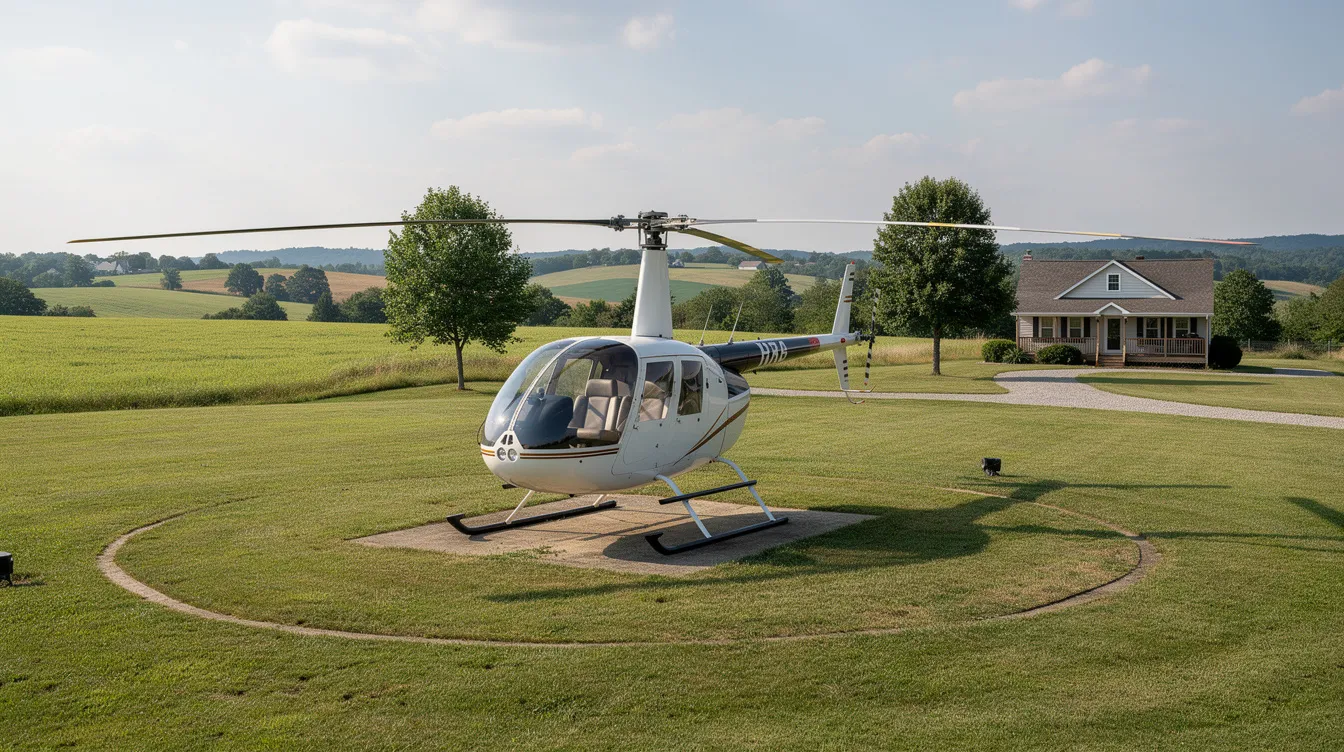
Families typically move from two-seat to four- or five-seat helicopters when comfort, capacity, and safety margins on longer leisure trips become priorities. Family helicopters typically have a minimum of four seats.
Common family mission profiles include weekend trips to vacation homes, ski resorts, islands, or remote properties that are hard to reach by ground, with the ability to land close to the destination making access easier for families. Interior comfort - noise levels, vibration dampening, cabin configuration, child seating, and luggage space - matters far more on a two-hour family flight than on a solo training hop.
Key family-friendly models:
|
Model |
Seats |
Engine Type |
Typical Range |
Notes |
|---|---|---|---|---|
|
Robinson R44 Raven II |
4 |
Piston |
~300 nm |
World's best-selling family helicopter |
|
Bell JetRanger III |
4–5 |
Turbine |
~374 nm |
Millions of hours flown safely across decades |
|
Eurocopter EC120 Colibri |
5 |
Turbine |
~350 nm |
Offers five seats for family use, light and quiet |
|
Leonardo AW109 |
6–8 |
Twin turbine |
~500 nm |
Ideal for families needing two engines and speed |
The Airbus H125 holds the world record for the highest-altitude landing and takeoff, making it a strong option for families who fly to mountain destinations. For families who want access to these aircraft without long-term commitments, Jettly's marketplace and tools like its airport locator platform connect travelers to helicopter and small aircraft charters without maintenance burdens.
Typical corporate missions include city-to-city executive commuting, plant or site visits, client shuttles from airports to offices, and time-critical meetings. Corporate helicopters need to provide fast and efficient transport, and they often feature modern glass cockpits and all-weather capabilities.
The best corporate helicopters include the Leonardo A109 and Airbus H135. Here is how the leading business models compare:
Airbus H125 (AS350): Known for its efficiency in commercial operations, single-engine, seats up to five, strong hot-and-high performance. An aircraft designed for utility and commercial work.
Bell 407: Seats up to six passengers for business use, single-engine turbine, solid range and speed.
Bell 505: Boasts modern avionics that enhance usability and visibility in flight, making it a capable light corporate shuttle.
Leonardo A109: Fast and reliable for business transport, twin-engine, IFR-capable, still in production.
Airbus H135: Entered service in 1996 and has received many upgrades since. Twin-engine, IFR, widely used in EMS and corporate roles. The Airbus H145 is highly regarded for its practicality in emergency medical services and doubles as a corporate platform.
AW169: A twin-engine, IFR-capable corporate helicopter that fills the gap between light singles and larger twins.
Bell 429 Global Ranger: Designed for both speed and utility operations, twin-engine, modern cockpit.
Helicopters integrate well with private jet travel: short hops from city centers or remote sites to primary airports where private jets handle the longer legs. Chartering through a digital platform allows businesses to scale up or down by mission, whether on-demand or via structured jet card flight cost programs. Learn more about coordinating jet legs with private jet charter costs.
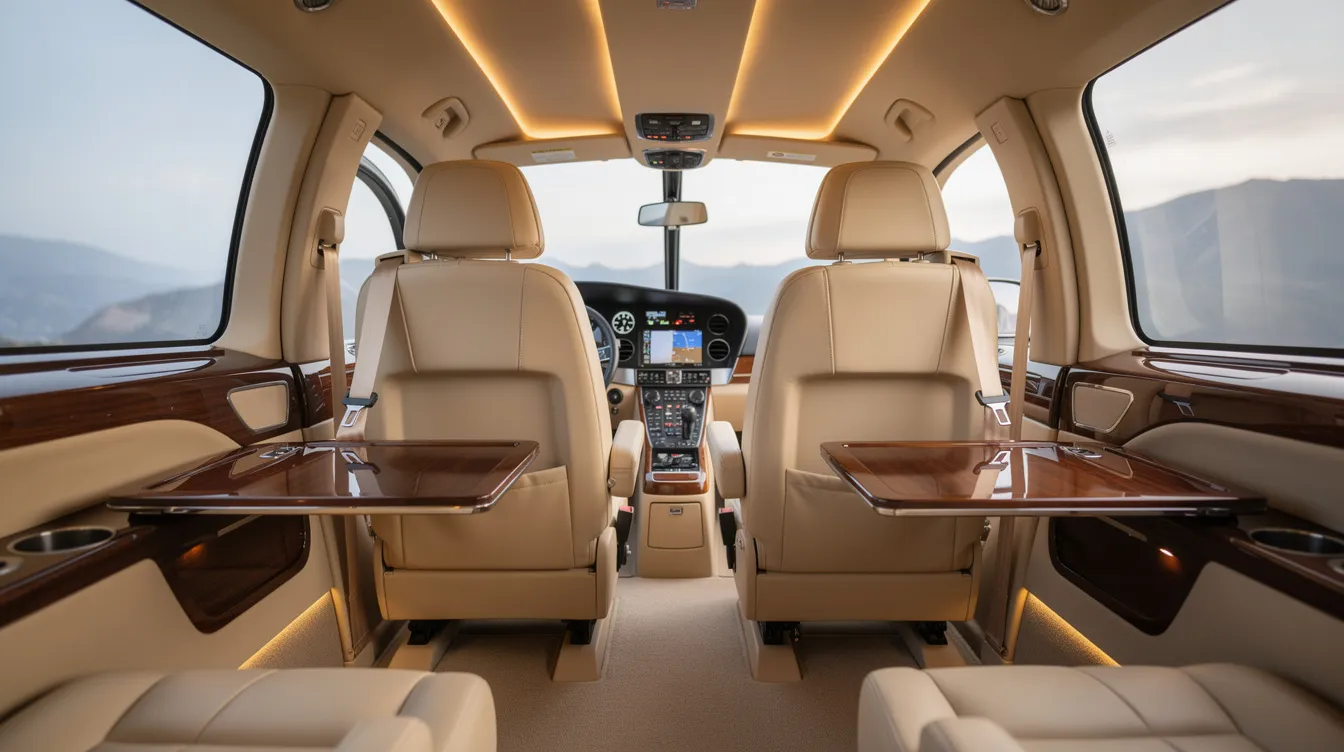
The VIP helicopter market sits at the top of civilian rotorcraft: cabins customized like flying lounges, enhanced noise insulation, and high safety margins with twin engines and advanced avionics, with the most lavish examples often shaped by how much money a buyer is willing to spend on customization, cabin finishes, and onboard features.
Sikorsky S-92: The S-92's first flight was in 1998. It is built for heavy lifting and offshore oil rig transport applications, but its large cabin and redundant systems make it the preferred aircraft for more than 25 heads of state worldwide. The S-92 is the most expensive luxury helicopter at roughly $27 million. It has surpassed 2 million flight hours across 28+ countries, supported by Lockheed Martin through its Sikorsky division. The Bell 525 can seat up to 16 passengers, positioning it as another option in the super-medium VIP class.
Other leading VIP platforms:
Leonardo AW139 - the gold standard in the intermediate twin-engine class, used for VIP, offshore, and rescue missions
Leonardo AW169 - compact twin for urban VIP shuttles
Airbus H160 - features 68 patented technologies focused on comfort and noise reduction, with new features that set it apart in the skies
ACH130 Aston Martin Edition - introduced in 2020, blending luxury automotive design with helicopter capability
Eurocopter Mercedes-Benz EC145 - can seat up to 10 passengers in a bespoke cabin layout
AgustaWestland AW109 Grand Versace - features handcrafted Versace leather upholstery for the ultimate personal luxury statement
Helicopter models are categorized by niche uses such as budget utility or luxury travel. For high-net-worth individuals who need point-to-point travel, Jettly can facilitate access to VIP-configured aircraft, bespoke in-flight catering through Jettly Eats, and jets without long-term fleet commitments.
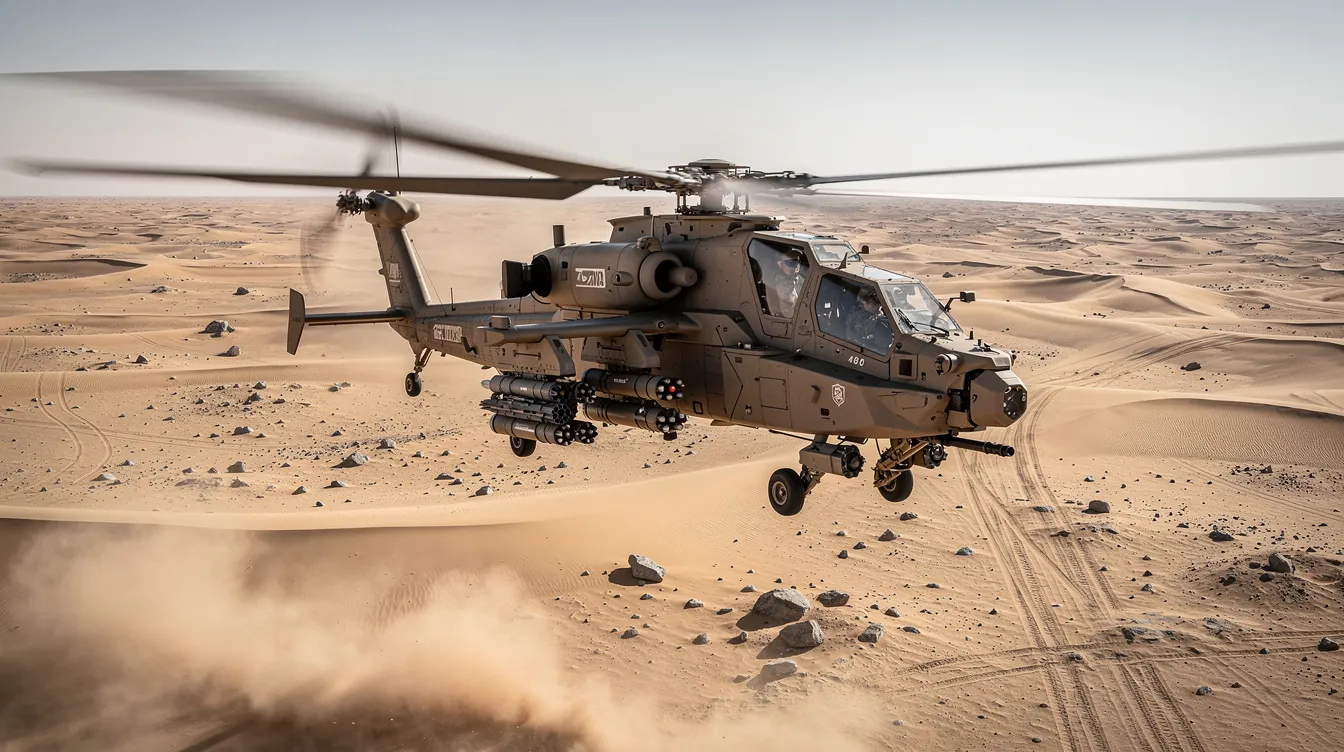
Attack helicopters are not for civilian use, but they generate strong reader interest in any best helicopter ranking due to their advanced technology and combat performance.
An effective attack helicopter combines survivability, weapon loadout, situational awareness via radar and sensors, networked capability with other aircraft and drones on the battlefield, and the ability to operate in contested environments.
AH-64 Apache: The AH-64's first flight was in 1975, with mass production beginning in the early 1980s. The latest model, the AH-64E Apache Guardian, has logged over 5.3 million flight hours, including 1.3 million in combat across Iraq and other theaters. It carries up to 16 Hellfire missile rounds, 76 rockets, and 1,200 rounds of 30mm chain-gun ammunition, and it can fire missiles, rockets, and its 30mm gun in close air support and anti-armor engagements. Its crew of two - pilot and gunner - can operate at high speeds up to 150+ knots, with a service ceiling around 20,000 ft. The fleet exceeds 1,300 aircraft globally, and the army expects it to remain operational into the 2060s. It can also shoot and control drones, extending its reach across the battlefield.
Other major attack helicopters:
|
Model |
Country |
First Flight / Enter Service |
Top Speed |
Combat Radius |
Key Feature |
|---|---|---|---|---|---|
|
Mi-28 Havoc |
Russia |
1982 / 2006 |
~300 km/h |
~450 km |
Heavy armor, all-weather |
|
Ka-52 Alligator |
Russia |
1997 / 2011 |
~300 km/h |
~460 km |
Side-by-side crew, ejection seats |
|
Z-10 |
China |
2003 / 2009 |
~300 km/h |
~400 km |
Domestic supply chain, exported to Pakistan |
|
Tiger |
Western Europe |
1991 / 2003 |
~280 km/h |
~400 km |
Joint Franco-German program |
|
T129 ATAK |
Turkey |
2009 / 2014 |
~270 km/h |
~350 km |
Based on AW129, combat-proven |
The Ka-52 has also seen deployment in Russian Navy service in maritime roles. Next-generation developments include the Leonardo AW249 (expected to enter service by 2030) and China's heavy Z-21 concepts. These platforms are evolving attack helicopter roles with stealth features, bombs and missile integration, and unmanned teaming capability for the 2030s battlefield.
Sikorsky, a Lockheed Martin company with a long history in rotorcraft, designed the S-92 as a versatile large helicopter platform. Its first flight was on December 23, 1998, and the aircraft was certified by both the FAA and EASA.
Key milestones:
Over 2 million flight hours accumulated globally
Operated in 28+ countries by civilian operators, navies, and governments
More than 275 aircraft delivered; used by roughly 25 heads of state
The VH-92A Patriot - the latest model of the U.S. Presidential helicopter fleet - is based on the S-92 airframe and achieved Initial Operational Capability in December 2021
Major mission sets include:
Offshore energy transport - crew changes on oil rigs, often over rough seas
Head-of-state transport - large cabin for staff, press, and security; equipped with ballistic protection and communications suites
Search and rescue - over water and in extreme weather, with a stand-up cabin and rear ramp
Executive shuttle and firefighting in Canada and elsewhere
The S-92's redundant systems, crashworthy fuel tanks, and high reliability make it the platform of choice for operators where safety margins must be absolute. While individuals rarely own an S-92 privately, high-end charter and government contracts can provide access, complementing long-range jet travel booked through platforms like Jettly and the broader ecosystem of charter airlines and private operators.
Owning a personal helicopter versus using on-demand charter involves very different cost structures and levels of flexibility. Private owners benefit from the balance of performance and operating costs in helicopter selection, but the math does not always favor buying.
Ownership cost breakdown (2025–2026 ballpark):
Acquisition: $200,000–$540,000 for piston; $500,000–$5,000,000+ for turbine
Hangar or parking: $10,000–$30,000 per year
Insurance: $8,000–$25,000+ per year
Maintenance reserves and overhauls: varies widely; engine overhaul alone can run $50,000–$150,000
Pilot training and currency: $5,000–$15,000 per year
At low annual hours - say under 150 - the fixed costs dominate and per-hour cost balloons. For an R44 Raven II flown 100 hours a year, total annual cost can reach $45,000–$60,000 or more. Charter rates for similar aircraft might be higher per hour but carry zero fixed overhead, and some travelers offset expenses further by using crowdsourced and shared private flights.
Helicopter mission profiles can include transportation, medical services, and utility operations. A charter broker and marketplace like Jettly gives access to multiple helicopter and jet types worldwide, avoiding depreciation risk and allowing mission-by-mission aircraft selection, while structured jet card programs can add predictable pricing for frequent flyers.
Practical scenarios:
Use a personal helicopter for frequent local hops but rely on charter for longer trips
Skip ownership entirely and rely on a blend of helicopter and private jet charters booked digitally
Own a light piston model for personal flying and charter turbine twins for business or bad-weather missions
Jettly is a digital private aviation platform focused on private jet charter, with access to a broad network of over 20,000 private charter aircraft that can include helicopters in certain markets. Travelers can use Jettly's instant pricing and booking tools to arrange private jet flights and then coordinate helicopter transfers for last-mile access where available.
Prospective partners who regularly reach high-net-worth travelers can also monetize referrals into this ecosystem through Jettly’s high-ticket affiliate program.
Key value points:
Global aircraft inventory with transparent pricing and optional private jet membership plans
No long-term contracts or jet-card minimums required, though structured jet card solutions are available for predictable hourly rates
On-demand booking or membership-based savings for frequent flyers supported by tools like a private jet charter cost estimator
Concrete examples:
A business trip from New York to Miami via private jet, plus a heli transfer to a downtown helipad - saving an hour of ground transport each way and mirroring many of the options described in guides on how to buy a seat on a private jet
A Toronto-to-Muskoka weekend where a jet plus helicopter combo saves hours versus driving through traffic, similar to strategies for getting a seat on a private jet easily
A family vacation transported to a Caribbean island resort, combining a midsize jet with a short helicopter hop from the main airport, using one of the best private jet charter companies to coordinate the trip
These multimodal trips are where the advantage of a single booking platform becomes clear, especially if you’re comparing Jettly as a flexible alternative to NetJets-style programs. Learn more about Jettly's charter options at https://www.jettly.com.
These FAQs address common questions not fully covered in the main sections above.
The Robinson R22 Beta II is the most affordable certified option and is ideal for pilots still building hours. The Guimbal Cabri G2 offers a more forgiving flight envelope and modern safety features for a slightly higher price. If carrying passengers is a priority, the Robinson R44 Raven II provides four seats and proven reliability. The best fit depends on whether the pilot is still training, how many passengers are needed, and typical trip distance. Many first-time owners use charter flights first to better understand their real mission profile.
No. Attack helicopters such as the AH-64 Apache, Mi-28, Ka-52, and Z-10 are military aircraft and cannot be chartered or owned by civilians under normal circumstances. Civilians mainly encounter attack helicopters at airshows, museums, or military demonstrations. Those wanting a similar high-performance experience usually opt for scenic flights in powerful civilian turbine helicopters with experienced pilots.
Helicopters excel at short to medium trips - typically under 150–200 nautical miles - and remote access where no runway exists. Private jets are the better vehicle for longer city-to-city or international routes, offering higher speeds, pressurized cabins, and greater range. Many travelers combine both: a helicopter for the first or last-mile segment and a plane for the main leg. Platforms like Jettly make coordinating this combination straightforward via centralized booking.
Piston helicopters like the R44 often cost $200–$350 per flight hour including fuel and maintenance reserves. Turbine helicopters can range from $500 to several thousand dollars per hour depending on size, power, and role. Insurance, hangar fees, and periodic overhauls add substantial fixed costs that must be spread across annual flight hours. Charter rates typically bundle these costs into a simple hourly or per-leg price, which can be more predictable for low-usage operators.
Jettly's core service is private jet charter, but in many markets the platform can arrange helicopter transfers or point-to-point flights through its operator network. Availability of specific helicopter types and routes depends on local operators, regulations, and helipad infrastructure. Visit https://www.jettly.com or contact support for details on helicopter availability for your preferred routes and dates.
The best helicopter is role-specific. Light piston models like the R44 Raven II serve personal use and small business pilots well. Mid-size turbines such as the AW109 and H135 handle corporate commuting and all-weather missions. Large twins like the S-92 and AW139 dominate VIP and head-of-state roles. And purpose-built attack helicopters like the AH-64E Apache Guardian remain in a class of their own for military forces around the world.
Mission profile, safety, weather capability, and total cost of operation matter more than brand prestige alone. For many private individuals and companies, combining helicopter and private jet charter via a digital platform is the best choice instead of full ownership.
Ready to explore private flight options on your terms? Request a quote at https://www.jettly.com.
Share this post:
Jay Franco Serevilla
Aug 19, 2026
|
5
min read
Discover tips and trends in the industry.
5
min read
Jet Stream Turbulence: What Private Fliers Need to Know
Jet stream turbulence is a common challenge for private fliers, occurring unexpectedly in clear skies and often causing discomfort. Understanding its causes and effects can help travelers manage their flights more effectively, especially as climate change is projected to increase turbulence severity. This article outlines practical strategies for navigating jet stream turbulence, including flexible routing and aircraft selection.
Read More
5
min read
Turbulence in Planes: What It Is, How Pilots Handle It, and Why Private Jets Feel Different
Turbulence is a common concern for air travelers, often misunderstood but generally not dangerous. This guide explains the science behind turbulence, how pilots manage it, and why private jets can offer a smoother experience. Understanding turbulence can help alleviate anxiety and enhance confidence during flights.
Read MoreStay updated with our latest insights and tips to elevate your journey with us.
MEMBERSHIPS AND ASSOCIATIONS



Disclaimer: Jettly operates as a charter broker, offering access to a global digital jet charter marketplace. Jettly is not a direct air carrier and does not own or operate aircraft. All advertised flights are conducted by third-party air carriers that are fully licensed and hold the appropriate Part 135 or Part 121 certifications issued by the Federal Aviation Administration (FAA) or equivalent regulatory authorities under U.S. or foreign law. Jettly complies fully with the U.S. Department of Transportation's Part 295 and Part 298 Charter Broker regulations. Jettly does not carry additional liability insurance. Passengers are covered by aircraft operator insurance. TICO: 50023770


