


Login
Get Instant Pricing On 23,000+ Aircraft

>
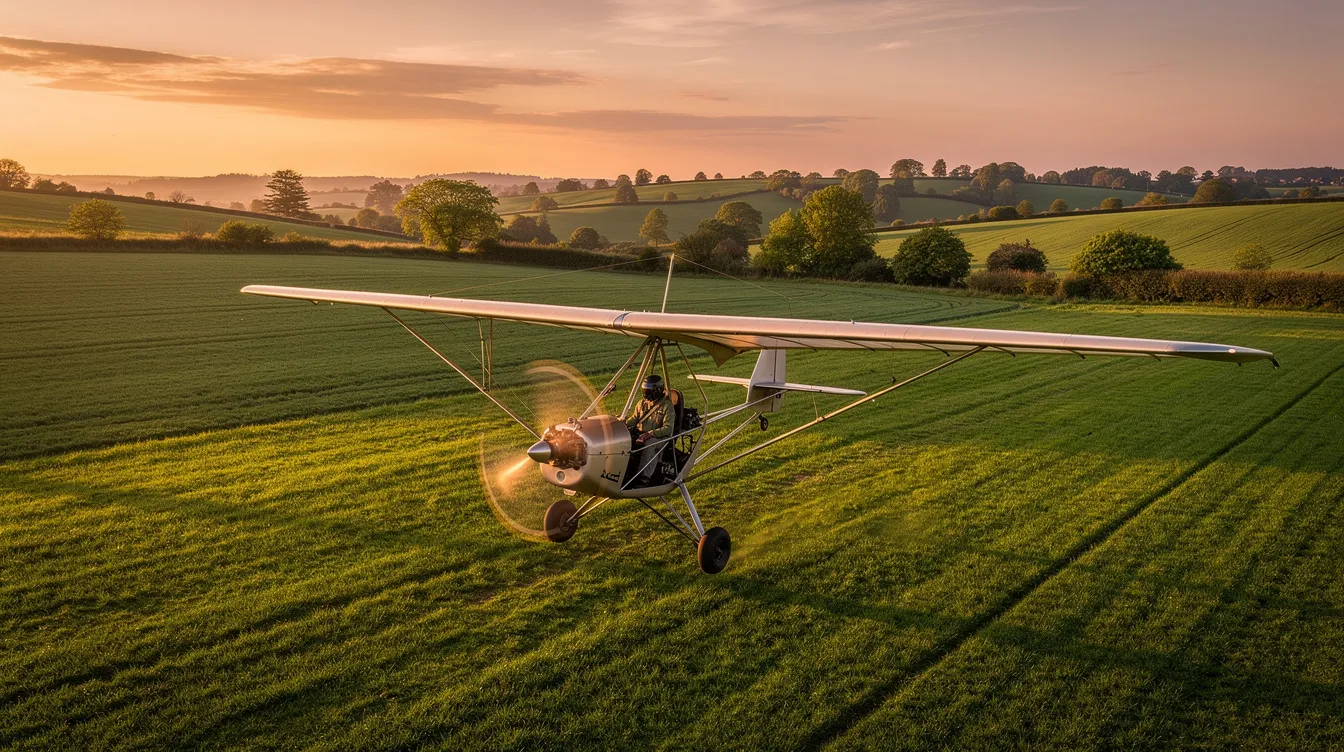
This guide is for aspiring pilots, aviation enthusiasts, and anyone interested in exploring the world of ultralight aircraft. Ultralight aviation offers an accessible, affordable, and exhilarating entry point into personal flight, making it a compelling option for those seeking hands-on flying experiences. Whether you're curious about the rules, the best models, or how ultralight flying fits alongside private jet charter, this comprehensive resource will help you navigate the exciting possibilities of ultralight aviation.
Ultralight aviation puts a pilot alone in the sky with minimal machine and maximum sensation. Governed by FAA Part 103 in the United States, the best ultralight aircraft weigh under 254 pounds empty, fly at speeds up to 63 mph, and require no pilot's license to operate. This guide breaks down the top models, the rules that matter, and how ultralight flying fits alongside private jet charter for a well-rounded aviation lifestyle.
Ultralight aircraft are single-seat vehicles that weigh under 254 pounds empty and fly solo. Under FAA Part 103, no pilot's license, medical certificate, airworthiness certificate, or registration is required. That said, structured pilot training is strongly recommended by manufacturers, safety organizations, and experienced ultralight pilots alike.
The best ultralight aircraft for any given pilot depends on mission (local recreational flying vs. scenic cross-country hops), budget (used models under $10,000 to premium factory-built planes above $40,000), and type (fixed-wing, trike, powered parachute, or amphibious ultralights).
Many ultralights offer a unique open-air cockpit experience, burning just 1.5 3 gallons of fuel per hour and covering 50 150 miles on a single tank. They complement, rather than replace, light sport aircraft and private jets.
For long-range, multi-passenger, or time-critical travel, platforms like Jettly connect travelers to over 20,000 charter aircraft worldwide with instant pricing and on-demand booking, filling exactly the gaps ultralights cannot.
In the U.S., an ultralight aircraft is defined under FAA Part 103 as a single-seat, unpowered or powered vehicle built for recreation only. The term is used more broadly around the world-many European "microlights" allow two seats and weigh up to 472.5 kg-but this article follows U.S. FAA rules and uses "single seat" and Part 103 consistently.
Key Part 103 limits for powered ultralights:
Maximum empty weight of 254 lb (115 kg), excluding floats and safety devices
Maximum level flight speed of 55 knots (63 mph)
Power-off stall speed no more than 24 knots (28 mph)
Fuel capacity capped at 5 U.S. gallons
Single seat only-no passenger allowed
Daytime VFR operations only
Light sport aircraft differ significantly. LSAs can carry two seats, weigh up to 1,320 lb for landplanes (1,430 lb for seaplanes), cruise at 100 140+ mph, and require at least a sport pilot certificate. Many models marketed as "ultralights" in Europe would qualify as LSAs or experimentals under FAA regulations. Understanding these distinctions matters for ultralight pilots shopping across borders.
FAA Part 103 governs single-occupant, recreational ultralight vehicles in the U.S. Aircraft meeting all criteria need no airworthiness certificate, no registration, and no pilot's license. These FAA rules make ultralight aviation one of the most accessible entry points into flying.
Specific limits to keep in mind:
Maximum empty weight: 254 lb (155 lb for unpowered ultralights like a hang glider)
Top speed: ultralights cannot exceed a top speed of 63 mph (55 knots) in level flight
Stall speed: 24 knots calibrated airspeed, power off
Fuel: 5 U.S. gallons maximum
Operations: daytime VFR only, away from congested areas
Ultralights do not require registration or an airworthiness certificate
Amphibious ultralights and float-equipped models often push the weight limit. Floats, safety gear, and extra weight from customization options can easily move an airframe past 254 lb, bumping it into Experimental or LSA territory. Buyers should confirm that a specific configuration still qualifies.
Airspace interaction is straightforward. Ultralights normally operate in uncontrolled airspace (Class G). Entry to controlled airspace-Class B, C, D, or E surface areas-requires prior coordination or permission. While no pilot's license is legally mandated, many manufacturers and pilot organizations strongly recommend at least basic pilot training before a first solo.
Aviation can be grouped into two categories of personal flying-hands-on and hands-off-with a broad spectrum in between. Ultralights sit at the hands-on extreme, light sport aircraft occupy the middle, and private jets handle the rest.
Ultralights cruise at 40 60 mph with an aircraft's range of roughly 50 150 miles per tank. They serve local recreational flying from grass strips and private fields, while pilots looking beyond ownership can also consider affordable aeroplane rental options for access to larger aircraft.
Light sport aircraft reach 100 140 mph, cover 400 600+ miles, carry two seats, and require at least a sport pilot certificate or private pilot license. Sport pilots gain more capability at modest training cost-often fewer hours than a full private pilot license.
Private jets and turboprops deliver 1,000 3,000+ nautical miles of range at 400 500+ knots with multiple seats, operating under FAA Part 135 or Part 91 with commercially certified pilots and a wide ecosystem of charter airlines and private flight providers.
Many aviation enthusiasts enjoy both ends of the spectrum: hands-on ultralight aviation on weekends and chartered private jets via platforms like Jettly for business or family trips, often comparing the best private jet charter companies to match their service expectations. Later sections show real-world use cases where ultralight flying and private jet charter naturally complement one another.
Choosing the best ultralight aircraft starts with picking a category. The aircraft type should match a pilot's comfort level, local flying environment, and budget. Here are the main groupings:
Powered fixed-wing ultralights deliver the classic airplane feel: a propeller in front (or behind), wings generating lift, and standard three-axis control. Many models from well-known brands dominate the lightweight aircraft market.
Weight-shift trikes use a hang-glider-style wing with a motorized cart underneath. Steering comes from shifting body weight. Trikes are popular for their simplicity and open-air views.
Powered parachutes and powered paragliders fly under a fabric canopy, offering extremely slow speed and forgiving flight characteristics. Ultralights include powered fixed wings and powered parachutes among other aircraft types. Powered parachutes are sensitive to wind and turbulence.
Gyroplanes and minimalist rotorcraft (sometimes loosely grouped with helicopters) exist in small numbers under Part 103 but are less common and more complex to operate.
Amphibious ultralights can land on both water and land, typically via floats or hull-style fuselages. They're the rarest category due to weight constraints.
Ultralight flying offers a unique open-air cockpit experience in most of these categories. Each type has trade-offs: trikes handle turbulence less gracefully than fixed-wings; powered parachutes can't penetrate headwinds; amphibious setups add weight and cost. Narrow down the type first, then pick a model.
Powered fixed-wing ultralights feel most like traditional airplanes and dominate many "best ultralight aircraft" rankings. They typically offer the best blend of speed, climb performance, and controllability within Part 103 limits.
Aerolite 103: One of the most popular Part 103 designs, available as a kit or factory-built. Aerolite 103 kits start at about $23,000 for assembly, with engine packages adding $6,500 13,500 depending on power. Cruise is around 50 55 mph; stall sits near 26 mph. The Aerolite community is large, making parts and advice easy to find. Electric propulsion options are available but currently limited to roughly 20 40 minutes of endurance.
Quicksilver MX 103: An open-cockpit, tube-and-fabric design known for forgiving flight characteristics. Starting prices sit in the high teens for a basic kit. Its high-wing layout gives solid visibility and predictable handling-a strong pick for newer pilots.
Hummel Ultracruiser: An all-metal airframe option that proves lightweight aircraft don't need fabric. Kit pricing varies, and builders must choose lighter engines carefully to keep empty weight under 254 lb.
When comparing fixed-wing ultralights, pay attention to build quality, parts-support network, folding wings for storage and transport, and how easily the airframe stays within the maximum empty weight. Many models require careful engine selection and avionics discipline to remain Part 103 compliant.
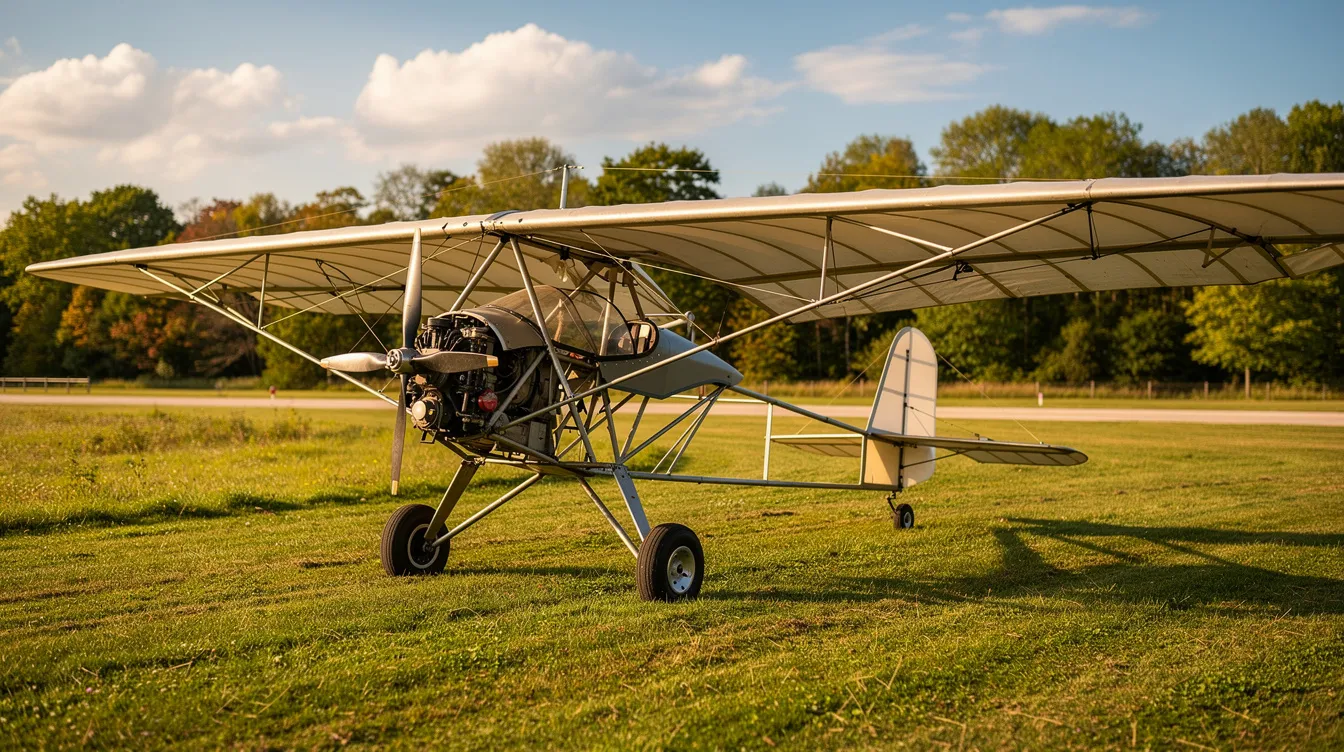
Amphibious ultralights are aircraft capable of operating from both land and water, typically through bolt-on floats or an integrated hull fuselage. They represent a small slice of the market-fewer than roughly five percent of ultralights sold-because floats add significant weight and drag.
Key considerations:
Floats commonly add 30 60 lb to an airframe, which can push an otherwise compliant ultralight past the 254 lb Part 103 limit into Experimental or LSA categories.
A handful of builders offer lightweight float-equipped variants of popular fixed-wing designs or float trikes adapted to stay close to the weight threshold.
Buyers should calculate actual empty weight with floats, safety gear, and optional equipment before assuming the airplane remains a legal ultralight.
Pilots who intend to fly frequently from water may be better served by seaplane-rated light sport aircraft that fit within Sport Pilot rules, especially if they already hold or plan to obtain a pilot's license. Amphibious LSAs allow two seats, greater payload, and a wider safety margin-albeit at higher cost and regulatory overhead than other aircraft in the ultralight class.
This section highlights well-regarded ultralight aircraft frequently mentioned by pilots and reviewers, focusing on single-seat Part 103-compliant or near-compliant designs.
Thunder Gull 2000: A sleek, fiberglass-bodied fixed-wing design from Earthstar. The Thunder Gull 2000 has a maximum range of 165 miles, with cruise speeds near the Part 103 limit and stall speed around 25 mph with flaps. With a lightweight engine (such as a Hirth or Zanzottera), builders have reported empty weights as low as 241 lb. Its high performance and clean aerodynamics make it a favorite, though options and heavier engines can push it beyond Part 103.
Jordan Lake Air-Bike 103: A bare-bones, open-air single-seat design built for pure fun. The Jordan Lake Air-Bike 103 kit costs approximately $6,995-the Air-Bike 103 kit costs less than $7,000- making it one of the most affordable entry points. It trades refinement for simplicity and low cost.
Kolb Firefly: Equipped with folding wings for easy trailering and storage, the Firefly offers STOL performance (takeoff roll around 150 ft) and a Rotax 447 engine option. Empty weight sits near 252 lb, so builders must be disciplined with extras.
Maverick 2 RT trike: A weight-shift trike with customizable wings and higher weight capacity within the trike sub-category. Good for pilots who prefer the hang-glider-style control feel over three-axis sticks and rudders.
When comparing these models, consider comfort (open vs. enclosed), ease of trailering, build hours for DIY ultralight aircraft kits (many kits take 150 400 hours), community support, and how each model's specifications match local rules and conditions. Many models offer videos online showing flights and builds-worth watching before committing.
Ultralight ownership spans a wide cost range. Here are the brackets pilots typically encounter as of the mid-2020s:
Used aircraft: Used ultralight aircraft can sometimes be found for under $10,000, particularly older fixed-wing or powered parachute frames.
New kits: New ultralight kits typically cost between $15,000 and $35,000, depending on airframe complexity and engine choice.
Factory-built / ready-to-fly: Ready-to-fly ultralights usually range from $25,000 to $50,000 or more for premium configurations with advanced avionics or electric propulsion.
Key cost components beyond the airframe:
Engine: Two-stroke engines (Rotax 447, Hirth F-33) are lighter and cheaper; four-strokes and electric packs cost more and may add extra weight.
Avionics: From basic analog gauges ($200 400) to simple digital instruments ($1,000+).
Ballistic parachutes: Optional safety devices that add weight but can save lives. Budget $2,000 4,000.
Fuel burn: Most fixed-wing ultralights burn 1.5 3 gallons per hour. At current fuel prices, that's roughly $7 15/hour.
Maintenance: Fabric replacement, propeller inspections, engine servicing. Annual costs are modest-often $500 1,500 for well-maintained planes.
Storage: Hangar fees, tie-down, or trailering. Folding-wing designs cut hangar costs significantly.
Compared to chartering a private jet or exploring how much a private jet costs overall, ultralight ownership is affordable for local hobby flying. Charter jets avoid ownership costs entirely for long-range business and leisure travel-each model serves a different mission.
|
Feature |
Ultralight Aircraft |
Light Sport Aircraft (LSA) |
Private Jets |
|---|---|---|---|
|
Pilot License Required |
No (if FAA Part 103 compliant) |
Yes (Sport Pilot Certificate) |
Yes (Professional Pilot License) |
|
Maximum Occupants |
1 |
1-2 |
Multiple (varies by aircraft) |
|
Maximum Empty Weight |
254 lbs (unpowered, less) |
Up to 1,320 lbs |
Varies widely (several thousand lbs) |
|
Maximum Speed |
63 mph |
100-140 mph |
400-600+ mph |
|
Typical Range |
50-150 miles |
300-600 miles |
1,500-5,000+ miles |
|
Medical Certificate |
No |
Yes or valid driver's license |
Yes |
|
Registration & Certification |
Not required |
Required |
Required |
|
Operational Airspace |
Mainly uncontrolled, with ATC clearance for controlled airspace |
Controlled and uncontrolled airspace |
Controlled airspace |
|
Flight Conditions |
Day VFR only |
Day VFR and some IFR |
All conditions |
|
Cost Range |
$10,000-$50,000+ |
$50,000-$200,000+ |
$2 million and up |
No pilot license is required for ultralight aircraft in the U.S., provided the aircraft fully meets FAA Part 103. Ultralights cannot carry passengers; they are single-seat only. Ultralights must operate in day VFR conditions only. That's the legal picture. The practical picture is different: training is strongly recommended.
Sensible training for ultralight pilots looks like this:
Dual instruction in a two-seat LSA or trainer with a certified flight instructor
Ground school covering weather, airspace rules, and emergency procedures
Supervised solo transition to the specific ultralight type, with progressive skill-building
A pilot's license becomes mandatory when flying aircraft that exceed Part 103 limits, carry a passenger, or fall into LSA or Experimental categories. A sport pilot certificate requires fewer hours of training than a full private pilot license, making it accessible for pilots who want to fly two-seat LSAs as well.
Safety best practices:
Fly conservatively: respect weather minimums, avoid gusty or turbulent conditions
Perform regular inspections even though formal FAA checks aren't required
Stick to weight-and-balance limits-extra weight beyond specs degrades performance and safety
Use helmets, harnesses, and consider a ballistic parachute
Coordinate with local airport management and check NOTAMs before each flight, just as with other aircraft
Many aviation enthusiasts blend ultralight aviation for local, sensory flying with private jet charter for longer, time-sensitive trips. The two experiences serve fundamentally different purposes.
Ultralight aircraft typically fly short hops of 50 150 miles for sightseeing and practice. Private jets arranged through Jettly routinely cover routes like New York 6 Miami or Toronto 6Vancouver nonstop at high speed.
Jettly's digital marketplace model offers instant pricing, access to a global inventory of 20,000+ aircraft, tools like a jet card flight cost estimator, and world-class jet card programs with on-demand booking without long-term jet card or fractional commitments.
Ultralights operate under personal responsibility and Part 103. Charter flights sourced on Jettly meet strict operator, pilot, and maintenance standards across a broad range of private charter aircraft; passengers focus on schedule and comfort rather than flight planning.
A typical customer profile: a business traveler or high-net-worth individual who enjoys building or flying an own aircraft on weekends but relies on Jettly for fast, multi-passenger trips to business meetings, events, or vacation homes.
Most ultralight flying happens close to home: rural grass strips, private airparks, small uncontrolled airports, and suitable lakes or beaches for water-equipped models. The sky feels different at 500 feet AGL in an open-cockpit machine than it does at 35,000 feet in a Cessna Citation.
Common flight profiles include low-altitude evening flights around the local area, pattern work to practice takeoffs and landings, and scenic routes following rivers or coastlines on calm days.
Weather constraints are real. Most ultralight aircraft fly only in good VFR conditions with light winds. Low wing loading and modest power margins make many ultralights unsuitable for anything beyond gentle air.
Logistics matter: trailering an ultralight to a field, folding or removing wings for storage, coordinating with landowners, and respecting noise and privacy concerns are all part of the routine.
Editor's note: Ultralight pilots who fly to remote strips for weekend camping often apply the same weight-to-performance ratio thinking to their ground gear. In the hiking and camping world, the "Big Four" essentials-backpack, shelter, sleep system, and sleeping pad-drive base weight decisions. Ultralight camping gear minimizes base weight to enhance comfort and reduce energy expenditure on the trail, much like shaving ounces from an airframe keeps it under 254 lb. Packability and compressibility are important factors to consider in ultralight gear, especially for sleeping bags and tents. Multi-use designs in ultralight gear can significantly save weight and space, such as trekking-pole shelters. Framed ultralight packs distribute weight better for base weights closer to 12 20 lbs compared to frameless designs. Ultralight sleeping bags should feature high fill power for efficient warmth-to-weight performance. Ultralight tents should ideally prioritize packed weight, waterproofing, and usable interior space. A high R-value for sleeping pads indicates better thermal insulation; target R-values above 4.0 for colder conditions.
Materials such as Dyneema Composite Fabric are valued for their waterproof characteristics and high strength-to-weight ratio, similar to how aircraft designers choose advanced composites. Silicone-treated polyester (Silpoly) fabric does not absorb water and does not sag when wet-useful for both tent fly and aircraft fabric applications. Ultralight gear prioritizes weight savings while maintaining durability and weather protection, a philosophy that mirrors ultralight aviation design at every level.
These relaxed, local flights differ sharply from the structured, multi-leg itineraries flown by private jets. When the mission demands range and speed, Jettly's airport locator and charter platform and other charter options pick up where ultralight flying leaves off.
Ultralight aviation has an active grassroots community offering support, mentorship, and group flying opportunities. Getting involved accelerates learning and keeps pilots safer.
Key organizations: EAA (Experimental Aircraft Association) Ultralight Chapters across the U.S., national ultralight associations, and regional clubs that organize training, safety seminars, and aircraft selection advice.
Common activities: Weekend fly-outs, "pancake breakfasts" at local airfields, group cross-country flights, and maintenance workshops where experienced builders help newcomers assemble all the parts of a kit.
Online resources: Forums and social media groups discuss the best ultralight aircraft models, kit-building tips, local rules, and share build videos. These communities are invaluable for peer advice before buying.
This sense of community parallels how digital platforms like Jettly simplify access to professional aviation on the charter side, as outlined in comprehensive guides to charter airlines and private flights-different audiences and missions, but the same goal of making flight more accessible.
Many pilots now consider environmental impact when choosing how they fly. All this matters for the future of personal aviation.
Ultralight aircraft consume relatively little fuel, typically between 1.5 and 3 gallons per hour, resulting in relatively low emissions for short local flights.
A one-hour flight in a lightweight aircraft may consume less fuel than a daily car commute.
Early electric ultralight prototypes and light sport aircraft point toward lower-emission personal aviation within the coming decade. Current battery energy density limits endurance to roughly 20 to 40 minutes in the lightest electric designs, but the technology is improving.
Private jet operators and platforms such as Jettly work with operators who can offer carbon offset options or more fuel-efficient aircraft types, including some of the cheapest private aircraft options, to reduce the footprint of longer trips.
Responsible flying-choosing efficient routes, combining legs when feasible, and using offsets where available-helps balance a passion for flight with environmental awareness across the world of aviation.
In the U.S., if an aircraft fully meets FAA Part 103-single-seat, 254 lb maximum empty weight, 5 gallons of fuel, 55-knot speed limit, and all other criteria-no pilot's license, medical certificate, aircraft registration, or airworthiness certificate is required. Any aircraft exceeding those limits, or carrying a passenger or instructor, normally falls into Light Sport or Experimental categories and requires at least a sport pilot certificate. Even when a license is not legally required, structured pilot training is strongly recommended for safety and insurance purposes.
Safety depends more on pilot training, maintenance discipline, and conservative decision-making than on any single "safest" model. Many beginners start with well-proven fixed-wing designs or trikes with large, slow wings and strong community support-rather than exotic or heavily modified ultralights. Review accident records, talk to owners' groups, and take a demo or training flight before deciding. High-performance designs may tempt experienced pilots, but forgiving handling matters most when starting out.
Typical Part 103 ultralight aircraft, limited to 5 gallons of fuel, often have a practical range of 50 150 miles depending on cruise speed, engine efficiency, and wind conditions. Compare that with light sport aircraft that can fly several hundred miles and private jets that cover 1,000 3,000+ nautical miles nonstop, with many ways to get a seat on a private jet easily. Ultralights are designed primarily for local recreational flying rather than point-to-point travel.
Many ultralights operate from small, uncontrolled airports, private fields, or grass strips that may not support jet operations. Some airports with paved runways can accommodate both, but local rules may restrict ultralights in busy controlled environments-pilots should always check airport procedures and talk with management. Jettly's network includes thousands of airports worldwide, some of which are also popular with local ultralight pilots, and its resources on affordable airplane rental and access options can help travelers compare different ways to use those fields, but operations are subject to each airport's policies.
Unlike flying an ultralight yourself, Jettly connects customers to professional charter operators with access to a diverse fleet of private charter aircraft. Travelers choose an itinerary, view instant pricing on suitable aircraft-from lighter turboprops to heavy jets equipped for intercontinental flights-or even share empty seats on crowdsourced private jet flights, and book digitally. Flights are crewed by licensed pilots following commercial standards, and tools like Jettly's jet card flight cost estimator help frequent travelers plan budgets, so the customer can focus on schedule and comfort rather than flight planning or weather decisions. Think of Jettly as the tool for fast, efficient regional or international trips where bringing your own aircraft simply isn't practical.
The best ultralight aircraft is the one that fits a pilot's experience, mission, budget, and local regulations-whether a minimalist single-seat fixed wing, a trike, or an amphibious ultralight. Understanding FAA Part 103, investing in proper training, and practicing conservative safety habits are essential before purchasing or flying any ultralight aircraft.
Ultralight aviation offers pure, hands-on flying close to home. For long-distance, multi-passenger, or time-critical travel, private jet charter through Jettly solves the problem without ownership burdens or a pilot's license.
Ready to explore the other side of personal aviation? Learn more about Jettly's affordable private jet charter pricing, consider flexible private jet memberships, and request instant pricing at https://www.jettly.com.
Share this post:
Jay Franco Serevilla
Sep 21, 2026
|
5
min read
Discover tips and trends in the industry.
5
min read
Cirrus Vision Jet Cruise Speed Knots: Performance, Safety, and Charter Use
The Cirrus Vision Jet boasts a maximum cruise speed of 311 knots, making it a competitive choice for regional travel. This guide explores its performance, safety features, and how charter users can leverage its capabilities through platforms like Jettly. Understanding cruise speed is essential for effective trip planning and maximizing the jet experience.
Read More
5
min read
Pilot Training Price in 2026: What It Really Costs to Become a Pilot
In 2026, pilot training costs in the U.S. range from $4,500 for a basic sport pilot certificate to over $130,000 for comprehensive career-track programs. Understanding these costs is crucial for aspiring pilots and career changers to budget effectively and avoid unexpected expenses. This guide breaks down the various training milestones and associated costs, helping you plan your aviation journey with confidence.
Read MoreStay updated with our latest insights and tips to elevate your journey with us.
MEMBERSHIPS AND ASSOCIATIONS



Disclaimer: Jettly operates as a charter broker, offering access to a global digital jet charter marketplace. Jettly is not a direct air carrier and does not own or operate aircraft. All advertised flights are conducted by third-party air carriers that are fully licensed and hold the appropriate Part 135 or Part 121 certifications issued by the Federal Aviation Administration (FAA) or equivalent regulatory authorities under U.S. or foreign law. Jettly complies fully with the U.S. Department of Transportation's Part 295 and Part 298 Charter Broker regulations. Jettly does not carry additional liability insurance. Passengers are covered by aircraft operator insurance. TICO: 50023770


