


Login
Get Instant Pricing On 23,000+ Aircraft

>
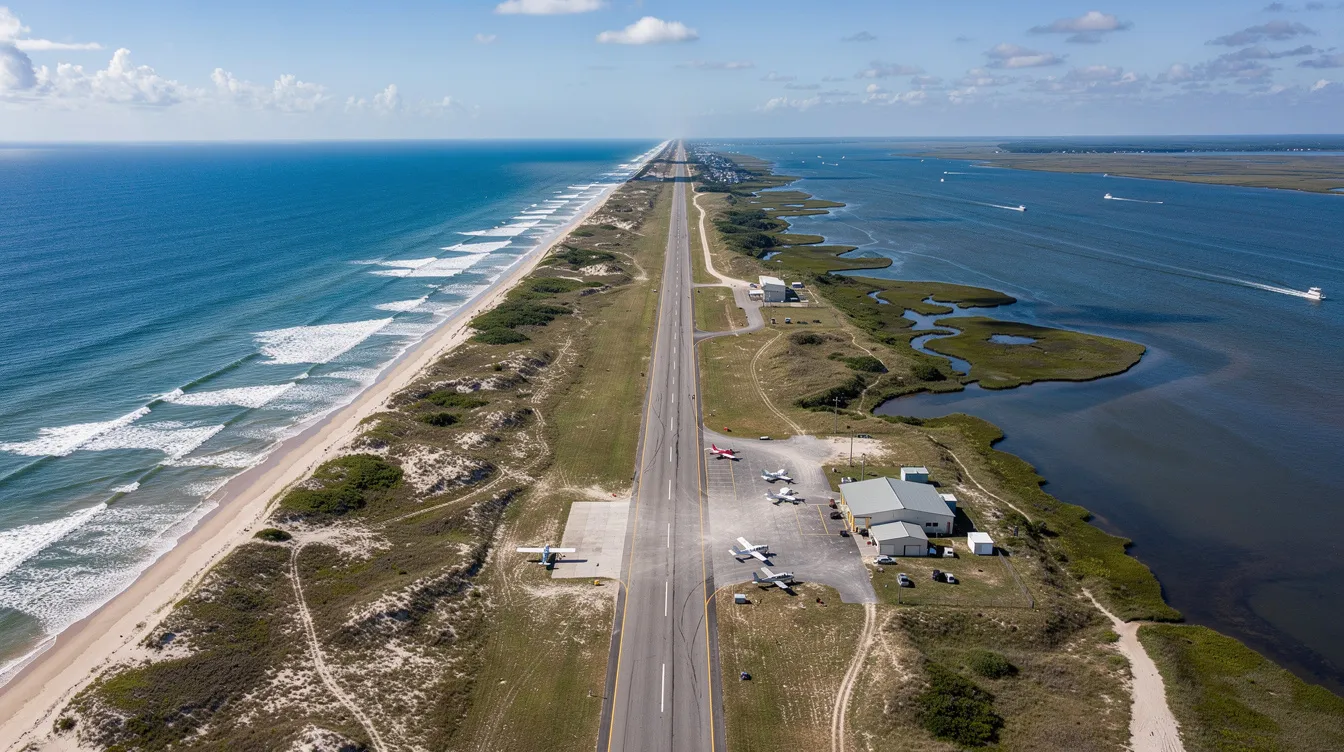
Billy Mitchell Airport (HSE) is a public-use general aviation airport located on Hatteras Island in North Carolina’s Outer Banks. As a public-use general aviation airport, it is open to the public and primarily serves private pilots, charter travelers, frequent flyers, and Jettly clients seeking access to the Outer Banks region. The airport is situated within the Cape Hatteras National Seashore and is jointly operated by the North Carolina Department of Transportation and the National Park Service. Billy Mitchell Airport mainly accommodates private pilots, military, and medevac flights, rather than scheduled commercial airlines.
This comprehensive guide is designed specifically for private pilots, charter travelers, frequent flyers, and Jettly clients. It covers everything you need to know about Billy Mitchell Airport’s facilities, location, operating limitations, historical background, and nearby full-service airport alternatives for larger aircraft. Understanding these details is essential for planning safe, efficient travel to the Outer Banks, ensuring you select the right airport and services for your needs.
Billy Mitchell Airport (HSE), also known as Frisco Airstrip, is a public-use general aviation airport on Hatteras Island within Cape Hatteras National Seashore, overseen in part by the National Park Service and the North Carolina Department of Transportation's Division of Aviation.
The airport is unattended and daylight-only, with a single 3,002 by 75 feet asphalt runway designated 7/25, no fuel, and free short-term parking—making it suited to VFR general aviation and small private charters, not scheduled airlines.
The field honors Brigadier General Billy Mitchell, whose early 1920s air power tests off the Outer Banks helped shape modern aerial warfare doctrine and national defense strategy.
Jettly can arrange private flights into nearby full-service airports like Dare County Regional Airport (MQI) or Michael J. Smith Field (MRH), while HSE mainly serves local GA pilots, island hoppers, and scenic flyers.
Billy Mitchell Airport (FAA: HSE) is a public-use general aviation airport in Frisco, North Carolina, located on Hatteras Island in the heart of the Outer Banks. A general aviation airport is an airfield primarily used by private pilots, military, and medevac flights, rather than scheduled commercial airlines. As a public-use airport, Billy Mitchell Airport is open to the public and available for general aviation operations. The airport is situated within the federally protected Cape Hatteras National Seashore and is commonly called Frisco Airstrip, positioned just south of the village of Frisco off NC Highway 12.
Billy Mitchell Airport is jointly operated by the North Carolina Department of Transportation and the National Park Service under a cooperative agreement. The airfield covers 100 acres at an elevation of 16 feet above mean sea level, surrounded by dunes, maritime scrub, and Atlantic beach access within a short mile of shoreline recreation.
The airport is non-towered and unattended, open daily from 30 minutes before sunrise to 30 minutes after sunset. There are no scheduled commercial flights. In 2022, Billy Mitchell Airport recorded 9,200 aircraft operations, with approximately 97% classified as general aviation. The airport features a small terminal building with a lounge area and Wi-Fi access, and is predominantly a destination for private pilots and visitors to Hatteras Island. Two port-a-potties are located by the terminal building for convenience.
Billy Mitchell Airport provides access to nearby camping facilities and local beaches, making it a practical entry point for recreational visitors. Jettly primarily routes private jet travelers to larger, better-equipped airports in the region, using HSE as a reference point for local access to Hatteras and the coast.
Next, we explore the historical significance of Billy Mitchell and the airport’s origins.
Billy Mitchell Airport was constructed in the early 1960s by the North Carolina Department of Aviation and later incorporated into the Cape Hatteras National Seashore framework. It is now jointly managed with the National Park Service.
The airport is named after World War I pilot Billy Mitchell, born December 29, 1879, in Milwaukee, Wisconsin. Mitchell rose to Brigadier General in the U.S. Army and became the most vocal advocate of his era for an independent air force. He argued that aircraft could sink battleships, a claim considered radical at the time.

In the early 1920s, Mitchell conducted aerial bombing tests that proved his point. His bombers sank the German battleship Ostfriesland in 1921, and in September 1923 they destroyed the USS Virginia and USS New Jersey off the coast near Hatteras Island. Local residents helped build improvised runways by leveling sand flats with hand tools, horse carts, and tractors—a detail that still connects the site to its experimental roots.
Mitchell's death came in 1936, but his vision of air power as central to national defense and global transportation eventually reshaped military doctrine across Europe and the world. The Outer Banks field provides a more intimate link to his history than Milwaukee's larger Mitchell Airport, tying directly to where those famous tests took place.
With this historical context in mind, let’s examine the airport’s current facilities, operations, and pilot information.
|
Feature |
Details |
|---|---|
|
Runway designation |
7/25 |
|
Runway dimensions |
3,002 by 75 feet |
|
Surface |
Asphalt |
|
Elevation |
16 feet AMSL |
|
Airport area |
100 acres |
|
Parking spaces |
31 on primary apron, 8 midfield |
|
Operating hours |
Daylight only (30 min before sunrise to 30 min after sunset) |
|
Lighting |
None |
|
Fuel availability |
None |
|
Terminal |
Small building with lounge and Wi-Fi |
|
Restrooms |
Two port-a-potties |
|
Traffic (2022) |
9,200 operations (97% general aviation) |
The runway length accommodates light single-engine and twin-engine aircraft and some small turboprops. Most midsize and heavy business jets cannot safely operate here.
Small terminal building with lounge area
Wi-Fi access available
Two port-a-potties located by the terminal building
Basic shelter for pilots
39 total tie-downs (31 on primary apron, 8 midfield)
14-day stay limit enforced by the National Park Service
Open daily from 30 minutes before sunrise to 30 minutes after sunset (daylight-only operations)
No runway lighting
Unattended and non-towered field
CTAF/UNICOM: 122.9 MHz
No fuel (avgas or Jet A) available on site
No on-site maintenance or staffed FBO
Nearest avgas and Jet A available at Dare County Regional Airport (MQI) in Manteo and Michael J. Smith Field (MRH) to the south
Pilots should carry their own tie-down equipment as conditions and availability allow
Billy Mitchell Airport serves private pilots and provides access for military and medevac flights. Most Jettly-arranged private jet flights for travelers heading to Hatteras Island will use MQI or MRH as primary gateways, with ground transportation bridging the final distance. This can be planned in advance using Jettly's airport locator and charter booking platform.
Now that you know the operational details, let’s look at what to expect when visiting Cape Hatteras National Seashore and the Outer Banks via Billy Mitchell Airport.
Billy Mitchell Airport is a low-key doorstep to the Cape Hatteras National Seashore. The airport provides access to nearby camping facilities and local beaches—a short drive puts you at ocean- or sound-side beach access, the Frisco campground, or Hatteras Village.
Visitors can enjoy a variety of recreational options, including:
Surf fishing and surfing the Outer Banks' famous breaks
Climbing the Cape Hatteras Lighthouse (when open seasonally, often through July and October)
Visiting museums and maritime history sites
Kiteboarding on the sound side
Ground transportation is limited directly from the Frisco airstrip.
There is no on-demand taxi or rideshare service.
Visitors should pre-arrange rental cars at larger airports or coordinate with local providers.
Check NOTAMs and NPS advisories before any flight or airport arrival—seasonal weather from hurricanes and nor'easters can disrupt access, especially in September through December.
The airport is open only during daylight hours, from 30 minutes before sunrise to 30 minutes after sunset.
The 14-day parking limit is strictly enforced by the National Park Service.

Jettly can support a seamless itinerary by arranging a private jet into a larger regional airport and coordinating ground transport so travelers can walk onto Hatteras Island's beaches within hours of departure from any East Coast city. Travelers can use Jettly's jet card flight cost estimator to understand pricing on common Outer Banks routes.
With your arrival and activities planned, let’s see how Jettly can further streamline your travel to and from Billy Mitchell Airport and the Outer Banks.
Because of runway length, lack of lights, and minimal services, Billy Mitchell Airport is better suited to light GA aircraft. Most Jettly customers fly into nearby full-service airports when visiting the Outer Banks.
A typical pattern: a business or family group charters a light or midsize jet via Jettly from New York, Washington, or Atlanta into Dare County Regional Airport (MQI), then drives south along NC 12 to reach Hatteras Island. Frequent flyers who value predictable hourly rates often benefit from Jettly's jet card programs for corporate and leisure travel. Jettly's platform provides instant pricing and access to a wide aircraft inventory, letting travelers compare options from turboprops to larger jets that can accommodate groups and operate into coastal North Carolina airports, including ultra-long-range aircraft like the Gulfstream G-V for extended itineraries.
For pilots already planning to fly into HSE with smaller airplane types, Jettly can still be useful for longer segments—such as arranging a jet from a home city to MQI or MRH, then meeting ground transport or a personal aircraft at the site, especially for those comparing Jettly as a flexible NetJets alternative for private flying. Those flying privately several times a year may find Jettly's private jet membership plans a more flexible way to manage regular Outer Banks trips.
All charter flights arranged through Jettly are operated by licensed, regulated air carriers, with Jettly acting as a broker that connects travelers to vetted operators such as Dexter Air Taxi and other private jet providers. Pilots flying directly into HSE remain responsible for their own performance planning in the area's sometimes challenging crosswinds and sea-level density conditions.
Ready to plan a trip to Cape Hatteras National Seashore and the wider Outer Banks? Use Jettly's resources on affordable private jet charter costs to budget your journey, then explore flight options or request a quote at https://www.jettly.com.
For further clarity, let’s address some frequently asked questions about Billy Mitchell Airport.
Yes. Billy Mitchell Airport is a public-use airport open to general aviation pilots. There is no tower and no scheduled airline service. Operations are limited to daytime hours—30 minutes before sunrise to 30 minutes after sunset. Pilots should check current FAA publications and NOTAMs before every flight. National Park Service rules apply on the surrounding property, including parking limits and conduct on seashore land. The field is free to access, though the 14-day parking limit is strictly enforced.
The 3,002-foot runway usually restricts operations to light singles, light twins, and some small turboprops. Most business jets need longer, better-equipped runways with lighting and instrument approaches. Private jet travelers should use airports like Dare County Regional Airport (MQI) or Michael J. Smith Field (MRH), which offer fuel, runway lights, and services suited to jet traffic, and can be reached using Jettly's global private charter aircraft network. Jettly typically arranges charters into these larger fields and coordinates onward ground transportation to Hatteras Island, drawing on expertise outlined in its broader guide to private and charter airlines and how they operate. For more on how airport access works for private jets, Jettly's guides break it down clearly.
No. There is no avgas, Jet A, or on-site maintenance at Billy Mitchell Airport, and no staffed FBO. Pilots should plan fuel stops at MQI, MRH, or another complete regional airport before or after operating into HSE. The small pilot facility offers restrooms, Wi-Fi, and basic shelter—not mechanical support. Carry your own tie-down equipment as conditions and availability allow.
Travelers chartering via Jettly can fly into regional gateways such as Norfolk (ORF), New Bern (EWN), or Dare County Regional Airport (MQI), depending on route and aircraft type, and can enhance the onboard experience with Jettly Eats in-flight catering on longer legs to the Outer Banks. Jettly can coordinate with operators and third-party providers to arrange car service or rental vehicles so passengers can continue by road along the Outer Banks to Hatteras Island, and in some cases travelers can offset charter costs by using Jettly's platform to crowdsource flights and share empty seats. Visit https://www.jettly.com to explore route options and request tailored quotes for trips to the national seashore or Ocracoke Island Airport area nearby, or learn how to earn referral income through Jettly's ULTRA high ticket affiliate program.
Billy Mitchell Airport serves as a vital gateway for private pilots and visitors to the Outer Banks, offering convenient access to Cape Hatteras National Seashore within a unique natural setting. While its facilities and runway length limit operations to smaller general aviation aircraft, the airport’s proximity to beaches, campgrounds, and recreational activities makes it an attractive destination for those seeking a more intimate aviation experience. For private jet travelers, Jettly provides seamless connections to nearby full-service airports with greater amenities and longer runways, ensuring a smooth and flexible journey to this scenic region. By understanding Billy Mitchell Airport’s capabilities and limitations, pilots and travelers can plan efficient, enjoyable trips to the Outer Banks with confidence.
Ready to experience private travel on your terms? Explore flight options or request a quote at https://www.jettly.com.
Share this post:
Jay Franco Serevilla
Jul 29, 2026
|
5
min read
Discover tips and trends in the industry.

5
min read
US Commercial Airline Fatalities by Year: Trends, Data, and Safety Progress
U.S. commercial airline fatalities have significantly decreased over the decades, showcasing a remarkable improvement in aviation safety. With many recent years recording zero fatalities, travelers can feel confident in the safety of commercial flights. This article analyzes trends, key accidents, and the role of regulatory changes in shaping the current landscape of airline safety.
Read More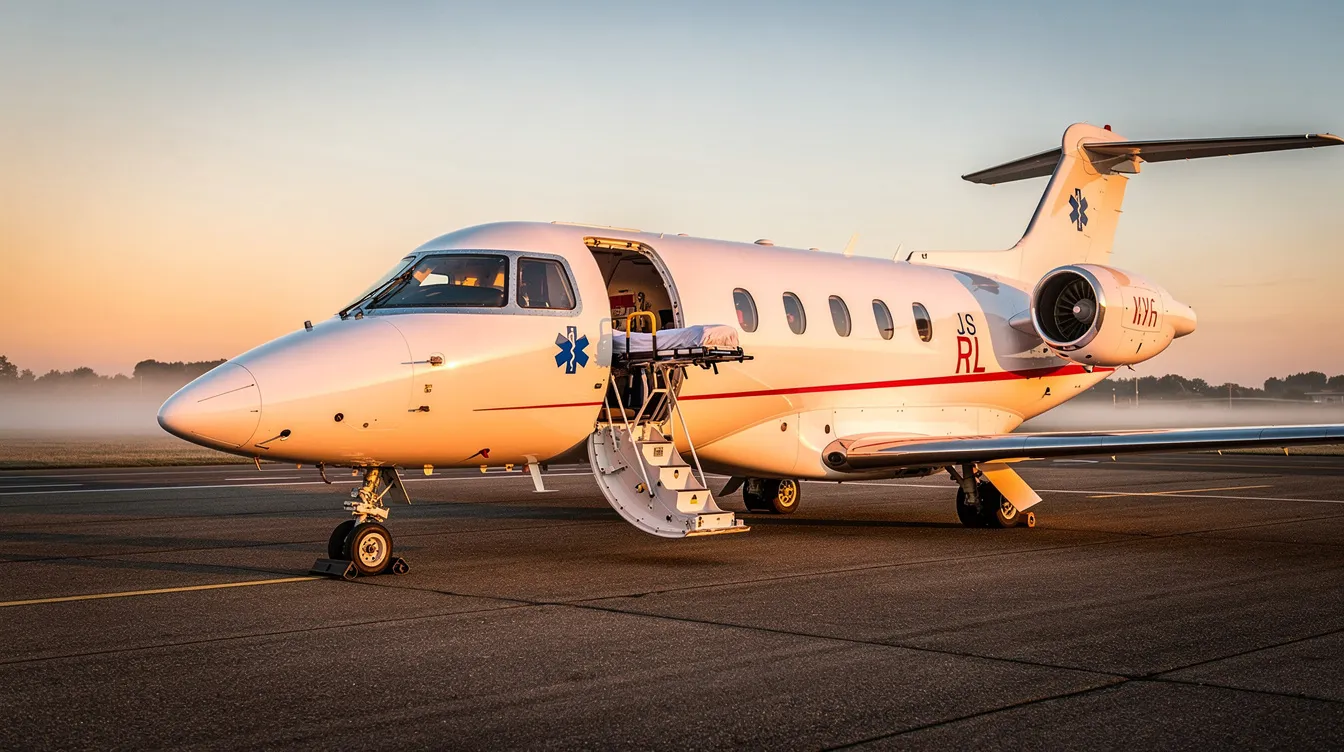
5
min read
International Medical Flight Cost: What to Expect and How to Control It
International medical flight costs can range from $20,000 to over $200,000, influenced by factors like distance, aircraft type, and medical care level. Understanding these costs and exploring options like private jet charters can help families make informed decisions during emergencies. Platforms like Jettly offer tools for comparing aircraft and pricing to optimize transport solutions.
Read MoreStay updated with our latest insights and tips to elevate your journey with us.
MEMBERSHIPS AND ASSOCIATIONS



Disclaimer: Jettly operates as a charter broker, offering access to a global digital jet charter marketplace. Jettly is not a direct air carrier and does not own or operate aircraft. All advertised flights are conducted by third-party air carriers that are fully licensed and hold the appropriate Part 135 or Part 121 certifications issued by the Federal Aviation Administration (FAA) or equivalent regulatory authorities under U.S. or foreign law. Jettly complies fully with the U.S. Department of Transportation's Part 295 and Part 298 Charter Broker regulations. Jettly does not carry additional liability insurance. Passengers are covered by aircraft operator insurance. TICO: 50023770


