


Login
Get Instant Pricing On 23,000+ Aircraft

>
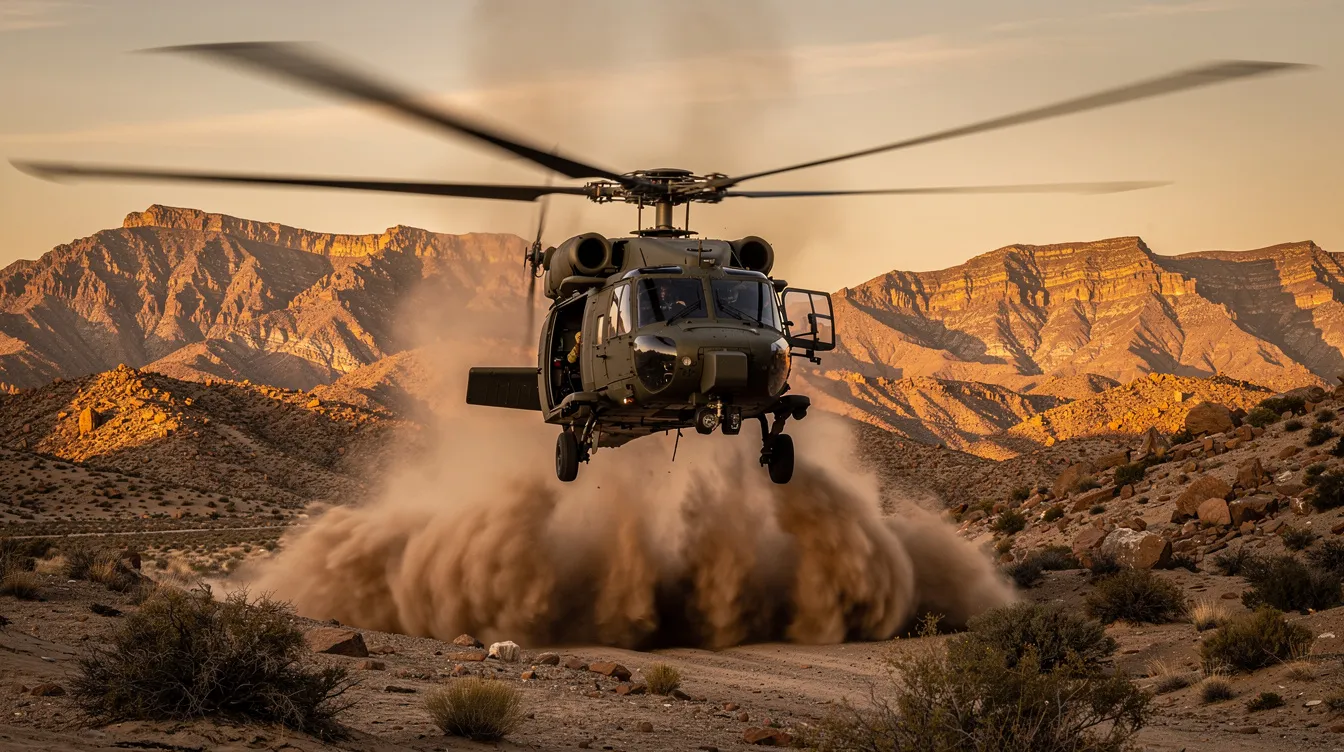
The Sikorsky UH-60 Black Hawk has a typical combat radius of about 320 to 370 miles and a maximum ferry range of roughly 1,200 to 1,400 miles, depending on the variant, payload, and fuel setup. Understanding blackhawk helicopter range is useful for readers interested in rotary-wing aviation, military operations, helicopter performance comparisons, and even travelers evaluating aircraft capabilities against civilian helicopters or private charter options. In this article, we break down the factors that determine how far the Black Hawk can fly, including fuel capacity, payload, mission type, variant differences, operational planning, and environmental conditions, along with how its range compares with civilian aircraft and private aviation solutions available through Jettly.
The Sikorsky UH-60 Black Hawk helicopter offers a typical combat radius of about 320–370 miles and a maximum ferry range of roughly 1,200–1,400 miles, depending on variant, payload, and fuel configuration.
Range changes significantly with mission type - troop transport, search and rescue, special operations, and coast guard duties each impose different weight, altitude, and equipment demands that affect how far the helicopter can fly.
Later Black Hawk variants like the UH-60L, UH-60M, HH-60W, and Firehawk gained significant improvements in lift capacity, fuel options, and avionics, which together extend practical range and mission endurance.
While Black Hawk helicopters are military platforms, understanding their capabilities helps readers compare rotary-wing endurance with civilian charter helicopters and private jets available through platforms like Jettly.
The Sikorsky UH-60 Black Hawk is a twin-engine, medium-lift utility helicopter that has served as a backbone of US Army aviation since entering service in June 1979. Its origins trace back to the Utility Tactical Transport Aircraft System (UTTAS) program, which began in the late 1960s. The first YUH-60A prototype completed its first flight on 17 October 1974, and after extensive flight testing and competitive evaluation, the Army selected the UH-60 for production in December 1976. Deliveries of the UH-60A began in October 1978.
The Black Hawk first saw combat in Grenada in 1983 and subsequently played a major role in the Gulf War of 1991, with over 300 Black Hawks participating. During the 1993 Battle of Mogadishu, two Black Hawks were shot down, highlighting the helicopter's involvement in intense combat operations. The Black Hawk has also been extensively used in operations in Iraq and Afghanistan, accumulating over 15 million flight hours in combat.
A standard UH-60 typically has a combat range of about 370 miles—meaning it can fly out, execute its mission, and return to base with fuel reserves. Its maximum ferry range reaches approximately 1,380 miles when configured with auxiliary fuel and minimal payload. The difference between those two numbers matters. Combat radius accounts for a round trip plus loiter time and reserves. Ferry range is a one-way maximum used for repositioning the aircraft.
The UH-60 Black Hawk is designed to balance speed, payload, and survivability rather than optimize any single factor. That balance makes it one of the most versatile helicopters in military aviation. Compared with fixed-wing aircraft and private jets, helicopters like the Black Hawk trade very long range for vertical takeoff, hover capability, and access to remote landing zones that no runway-dependent aircraft can reach.
The headline numbers for the UH-60 Black Hawk look like this: a cruise speed of about 151 knots (roughly 174 mph), an internal fuel capacity of approximately 360 gallons, a combat radius near 368 miles, and a maximum ferry range of around 1,380 miles when configured for long-distance repositioning with additional fuel. The aircraft reaches a maximum speed of 183 mph and can operate at a service ceiling of 19,000 feet.
The operational range of a standard UH-60 Black Hawk helicopter under typical utility mission conditions sits around 300 to 360 miles. Operating at maximum speeds consumes more fuel than cruising speeds, so most mission profiles are planned around efficient cruise rather than top speed. That 360-gallon internal fuel load supports roughly 2.3 to 2.5 hours of flight time under demanding mission conditions, which translates to usable range once you factor in cruise speed and required reserves.
Published maximum range values assume optimal conditions: light payload, an efficient cruise profile, and possibly auxiliary tanks. Heavily armed configurations with external stores, weapons pylons, or a full complement of troops will achieve substantially less range than those brochure numbers suggest.
Combat radius is the round-trip distance a Black Hawk can fly from base to a target area and back, with fuel reserved for loiter time and contingencies. Ferry range is the maximum one-way distance achievable with minimal payload and maximum fuel. These are fundamentally different planning numbers.
A Black Hawk supporting air assault or rescue missions usually operates well within its combat radius. Pilots and planners typically work with a practical one-way distance of about 150–200 miles, leaving margin for time on station and a safe return. The combat environment and mission requirements can reduce the effective range well below brochure maximums.
Consider a notional mission from a coastal air force base to a vessel 180 miles offshore. The outbound leg, 30–40 minutes of low-speed search or hover, and the return leg fit comfortably within the 320–370 mile combat range envelope. That leaves fuel for diversions or unexpected delays—exactly the kind of margin that keeps crews alive.
Contrast that with a ferry scenario. Here the aircraft is stripped of weapons, most cargo, and combat equipment. External tanks are mounted on stub wings, and the helicopter is flown point-to-point over 1,200 miles or more. The purpose is simply relocating the aircraft, not executing an operational mission. The helicopter can carry 9,000 lbs of cargo externally during sling-load operations, but in a ferry configuration, that cargo hook hangs empty to save weight and drag.
The max gross weight on many UH-60 variants sits around 22,000 lbs. Operating near that limit with troops, cargo, or an internal or external load significantly reduces range and climb performance. The empty weight of the aircraft already accounts for a large portion of that allowance, so every additional pound of mission load comes at the expense of fuel or range.
Typical mission payloads include a four-person crew (pilot, co-pilot, and two crew chiefs) plus 11 fully equipped soldiers seated on troop seats, or up to 9,000 lbs of external sling load beneath the aircraft. The helicopter's internal cargo capacity is 2,600 lbs. Carrying payload increases fuel consumption for the UH-60 Black Hawk because the engines must generate more power to maintain airspeed and altitude, burning through available fuel faster.
Compare a lightly loaded ferry flight to a combat lift with 11 troops carrying body armor, ammunition, and door-mounted machine guns. The heavier configuration shortens range by eating into available fuel reserves. Light vehicles can also be slung beneath the aircraft, adding both weight and aerodynamic drag that further reduces the distance achievable on a single fuel load.
Commanders plan missions by trading off payload, route, altitude, and fuel load to stay within a safe fuel margin. In hot-and-high conditions—like those encountered across the Middle East or mountainous regions—max gross weight limits and range are both constrained simultaneously.
The Black Hawk's fuel system relies on internal fuel tanks with an approximate capacity of 360 gallons on most UH-60 models. These tanks feature crashworthy, self-sealing construction designed to improve survivability in combat, reducing the chance of catastrophic fuel leaks after hard landings or ground fire.
External or auxiliary fuel tanks can substantially increase endurance and push ferry range into the 1,200–1,400 mile band. The External Stores Support System (ESSS) provides stub wings capable of carrying 230-gallon tanks on each pylon. Some configurations support even larger tanks. Auxiliary fuel tanks allow for extended mission radii in Black Hawk helicopters, which is critical for self-deployment flights across oceans or between distant theaters.
Some variants—especially special operations and long-range search and rescue configurations—routinely add auxiliary tanks and may incorporate aerial refueling capability to extend mission time well beyond standard endurance. With external tanks, total endurance can stretch to 4–5 hours or more.
Fuel planning on any real mission considers reserve requirements, expected hover time, potential diversions, and extra burn from low-level tactical flying. All of these reduce the "usable" range compared with brochure numbers. Payload configurations and fuel reserve needs are crucial in mission planning for helicopters, and Black Hawk crews rely on detailed performance charts to get the math right every time.
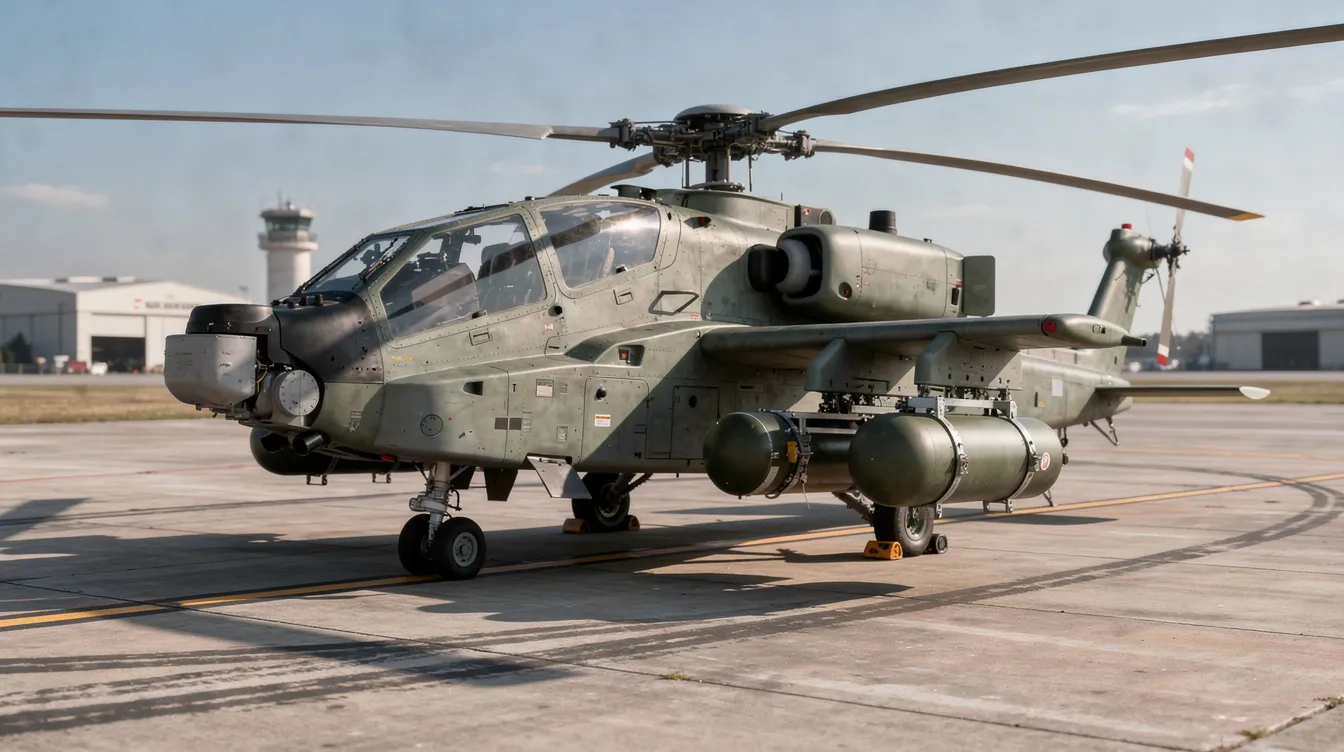
The name "Black Hawk" covers a broad family of helicopters, including the UH-60A, UH-60L, UH-60M, HH-60 rescue variants, MH-60 special operations aircraft, and international S-70 export versions. Each variant is tuned for a different balance of range, payload, and mission systems. Over 4,000 Black Hawks are in service worldwide, operated by US military forces and allied nations including South Korea, and countries whose Pakistani government and other military forces have procured export variant models. Lockheed Martin, which acquired Sikorsky, now oversees ongoing production.
The UH-60A offered baseline performance. The UH-60L added more powerful GE-701C engines and an improved gearbox, giving better lift capacity and helping preserve usable range at higher loads. The UH-60L variant has an external lift capacity of 9,000 lbs. The Army ordered significant quantities of the L model during the latter part of the 1980s and through the 1990s.
The UH-60M variant, approved for development in 2001, began production in 2006 with upgraded GE-701D engines, advanced composite rotor blades, and digital avionics. These upgrades create significant improvements in hot-and-high performance and practical range under real-world conditions. The HH-60M variant is designed specifically for medical evacuation, fitted with medical mission equipment to support casualty transport. The UH-60V updates the older UH-60L's analog cockpit systems to digital, extending the useful life of earlier airframes. The VH-60N variant serves as Marine One for presidential transport.
Naval variants like the SH-60 Seahawk—the Navy's adaptation—carry sensors, weapons, and maritime equipment that add weight and drag. External fuel tanks and optimized cruise profiles help offset the range penalty, but the additional equipment means maritime Black Hawks typically operate with a shorter effective radius than clean utility configurations.
|
Variant |
Cruise Speed (mph) |
Combat Radius (miles) |
Max Ferry Range (miles) |
Internal Fuel Capacity (gallons) |
External Fuel Tanks |
Max Payload (lbs) |
Notes |
|---|---|---|---|---|---|---|---|
|
UH-60A |
174 |
~320–370 |
~1,200–1,380 |
360 |
Optional ESSS tanks |
9,000 external |
Baseline model with GE T700-GE-700 engines |
|
UH-60L |
174 |
~320–370 |
~1,200–1,380 |
360 |
Optional ESSS tanks |
9,000 external |
Upgraded GE-701C engines and gearbox |
|
UH-60M |
174 |
~320–370 |
~1,200–1,380 |
360 |
Optional ESSS tanks |
9,000 external |
GE-701D engines, composite blades, digital avionics |
|
HH-60M |
174 |
~320–370 |
~1,200–1,380 |
360 |
Optional ESSS tanks |
Medical equipment |
Medevac variant with specialized mission kit |
|
SH-60 Seahawk |
~150 |
~200–250 |
~1,000 |
360 |
Optional tanks |
Lower due to sensors |
Navy maritime variant with extra equipment |
|
MH-60 |
Variable |
Variable |
Extended with tanks |
360 + auxiliary |
Yes |
Variable |
Special operations, external tanks, aerial refueling |
|
Firehawk |
~150 |
Short tactical |
Shorter ferry range |
360 |
Optional |
8,000 water load |
Firefighting variant with internal water tank |
Specialized Black Hawk derivatives are purpose-built for long-range combat search and rescue, special operations, and deep insertion missions where extended range and endurance are non-negotiable.
The HH-60W "Jolly Green II" is a modern rescue variant with substantially increased internal fuel capacity compared with the earlier HH-60G Pave Hawk. Its range reaches approximately 690 statute miles with internal fuel alone, and it is air-refuelable for even longer missions. The aircraft also carries defensive systems, weather radar, and advanced avionics tailored to contested rescue environments.
Special operations versions—often labeled MH-60—may use external tanks, an in-flight refueling probe, and lightweight mission kits to achieve long-range infiltration and exfiltration profiles. These aircraft sometimes fly hundreds of miles at low level before inserting teams, relying on terrain-following radar and electro-optical sensor systems for navigation and threat avoidance. The direct action penetrator (DAP) configuration adds heavy armament for escort and fire support during wartime use in a war zone. Some MH-60 variants have also served as an airborne laboratory for electronic warfare testing.
These configurations usually trade cabin volume or payload for fuel and mission systems. Range is only one part of the equation alongside survivability, low observable tactics, and navigation accuracy in contested environments.
Black Hawk helicopters play a critical role in search and rescue and medical evacuation. The HH-60M variant is designed for medical evacuation, fitted with medical mission equipment that allows flight medics to stabilize wounded troops en route to surgical facilities. Black Hawks perform search and rescue missions with a rescue hoist that can extract survivors from water, dense forest, or urban rubble.
Range calculations for rescue missions must include time spent in low-speed patterns, hover, hoist operations, and diversions. All of these increase fuel burn and reduce the total distance achievable compared with a simple out-and-back cruise at altitude.
Consider a medevac scenario: a Black Hawk launches from an inland base, flies 120 miles to a casualty site, hovers for hoist extraction of wounded troops, then proceeds another 50 miles to a trauma center. The total mission distance might reach 250 miles or more, and planning must ensure sufficient reserves at every stage. If the casualty site requires extended hover time, the crew may need to shorten their outbound distance or carry reduced payload to preserve fuel.
Coast Guard and Air Force rescue versions operating over water often integrate extended-range tanks and survival equipment so they can reach ships or downed aircrews hundreds of miles offshore, then remain on scene long enough to complete multiple hoists before returning.
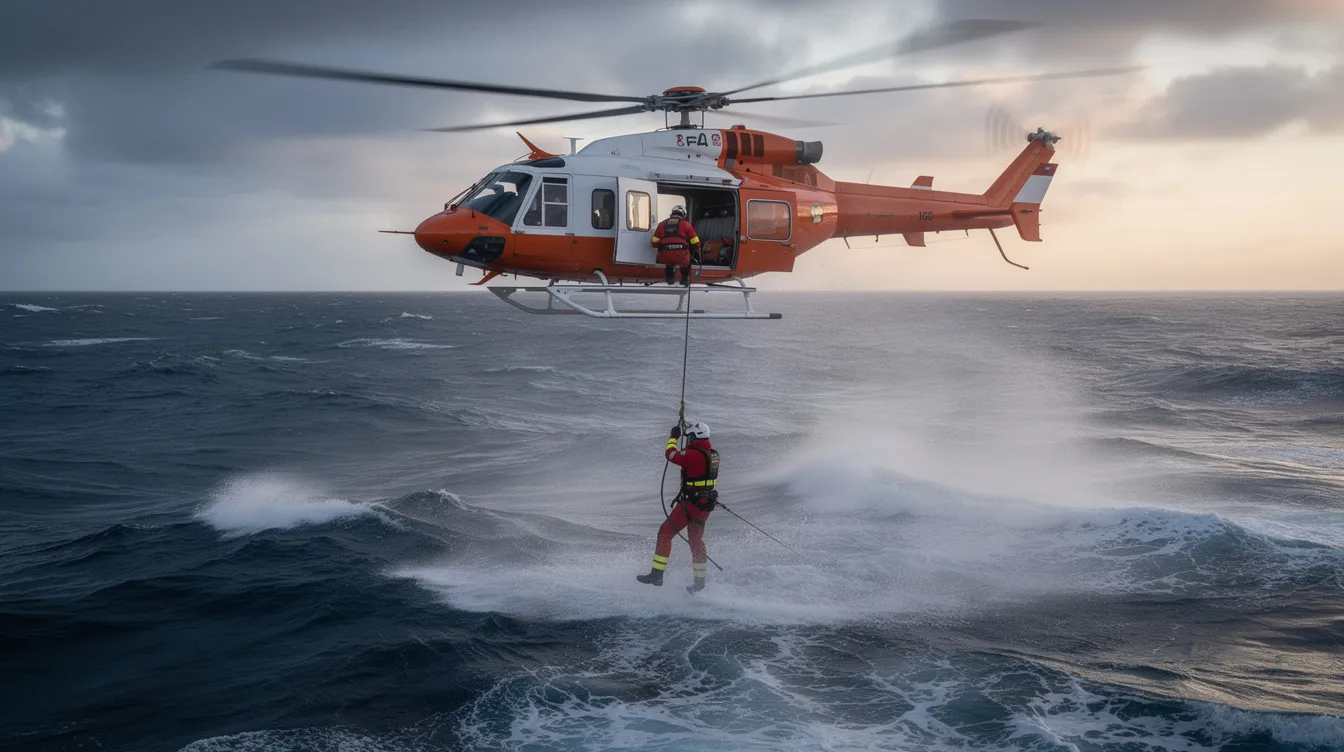
Maritime versions of the Black Hawk family—often designated Seahawk—serve navies and coast guard organizations for anti-submarine warfare, search and rescue, and patrol. Over-water range and endurance are critical in these roles because the helicopter may be hundreds of miles from the nearest land-based alternative.
Operating from ships constrains fuel in unique ways. Helicopters must carry enough fuel to depart the vessel, execute their mission at distance, and retain a safety margin for recovering to a moving deck or diverting to another platform. The deck of a frigate in heavy seas is not a forgiving alternate landing zone.
Maritime Black Hawks may carry sonar, radar, weapons like torpedoes and Hellfire missiles, and crew-served machine guns, all of which increase weight and reduce range unless offset by external fuel tanks and efficient cruise planning. Weight and drag from external stores can limit the operational range substantially. Two Black Hawk helicopters operating in tandem can extend search coverage, but each must independently manage its own fuel margins.
In a typical coast guard-style mission, the helicopter launches from a cutter, flies 150 miles out to a distress call, conducts search and rescue for 30–40 minutes, and returns. Commanders work backward from remaining fuel to define maximum outbound distance, always keeping a reserve for the unexpected.
Armed Black Hawk configurations can carry an impressive array of firepower: door-mounted machine guns, 70 mm rocket pods, .50 caliber forward guns, and up to 16 AGM-114 Hellfire missiles on weaponized variants. Some configurations serve as dedicated attack platforms capable of performing multiple duties in a single sortie.
Adding stub wings, weapons pylons, and munitions increases both drag and weight. This raises fuel burn at a given cruise speed and directly lowers effective mission radius compared with an unarmed utility configuration. The external load of weapons and pylons effectively shortens the helicopter's range envelope by consuming fuel that would otherwise extend distance.
Compare a utility troop transport profile to an armed escort profile. The escort flies tactical routes at varying altitudes and speeds with frequent power changes, consuming more fuel per mile. The transport, by contrast, flies a more predictable route at efficient cruise. A single mission might involve both roles—two Black Hawk helicopters working together, one carrying troops while the other provides overwatch with weapons hot.
Planners balance weapons load and fuel load based on expected threat level, distance to the objective, and required loiter time. Sometimes the crew sacrifices maximum firepower to preserve the range needed for a deep-strike escort role. That trade-off is a constant calculation in any war zone.
The Firehawk is a modified Black Hawk used for wildfire suppression. The Black Hawk can conduct firefighting missions carrying 1,000 gallons of water or retardant—roughly 8,000 lbs—plus a crew of firefighters and specialized equipment. It is one of the most capable aerial firefighting platforms available to public agencies.
In wildfire operations, raw maximum range is less important than on-station endurance, climb performance in hot conditions, and the ability to shuttle repeatedly between water sources and fire lines. Frequent water pickup cycles near lakes, rivers, or portable tanks keep the Firehawk close to the action rather than flying long distances.
Carrying an internal fire attack tank and external belly hardware adds drag and weight, reducing ferry range. But the Firehawk can still reposition between bases and fire zones that may be several hundred miles apart, relying on its ferry range capability for strategic moves between deployments.
A typical scenario: a Firehawk operated by a state agency deploys from its main base to a regional staging area 300 miles away. Once on scene, it conducts short-range shuttle flights—perhaps 10–15 miles each cycle—between a water source and the fire line. Strategic ferry range and tactical operating radius complement each other throughout the wildfire campaign.
Temperature, altitude, and humidity meaningfully affect rotorcraft performance. High temperatures and high altitudes can lower fuel efficiency in Black Hawks because thin, warm air reduces rotor lift and forces engines to work harder. Weather and altitude impact the fuel efficiency of the UH-60 Black Hawk in ways that no amount of pilot skill can fully overcome.
High-density altitude conditions force pilots to reduce payload or fuel load to stay within power and max gross weight limits. This creates a painful trade-off: the helicopter either flies shorter distances or carries less, but it cannot do both at full capacity in degraded conditions.
Compare a Black Hawk operating at sea level in cool 60°F conditions versus one flying from a mountainous forward base at 8,000 feet on a 100°F day—sometimes called desert hawk conditions. The same 360-gallon fuel load yields meaningfully less range when engines must work harder to maintain hover and climb. The tail rotors also demand more power in thin air, further reducing available energy for forward flight.
Modern variants and upgraded engines partly mitigate these effects. The UH-60M's GE-701D engines offer significant improvements over earlier models in hot-and-high performance. But mission planners still build conservative fuel margins for demanding environments like Afghanistan's mountain valleys or the Andes, where density altitude can spike well beyond sea-level assumptions.

Military forces use detailed performance charts, weather data, and mission profiles to convert brochure range numbers into safe, real-world flight plans for Black Hawk helicopters. No crew relies on the published maximum; every mission gets its own fuel calculation.
A planner might calculate a mission by determining distance to the objective, expected loiter time, route altitude, external loads, and threat-driven maneuvers. The Army released updated planning guidance with each new variant introduction, incorporating data collected from field operations. They then add required fuel reserves to ensure the helicopter can divert to an alternate landing zone if the primary site becomes unavailable.
In mixed formations, the slowest or shortest-range aircraft often dictates the entire operation's fuel plan. A heavily loaded Black Hawk carrying troops and cargo internally may require staging bases or refueling points that the entire formation must accommodate. This is especially true during large-scale air assault operations where dozens of helicopters move simultaneously.
For humanitarian aid, disaster relief, and search and rescue, agencies must also consider fuel availability at remote airfields or improvised landing zones. In some cases, ground teams pre-position fuel bladders, or tanker aircraft coordinate to extend the helicopters' operating radius. During the latter part of major disaster responses, logistics chains for aviation fuel often become as critical as the rescue missions themselves.
The Sikorsky UH-60's maximum ferry range of roughly 1,200–1,400 miles is exceptional for a helicopter. Most civilian helicopters have shorter ranges and lower max gross weight, though they are optimized for corporate, offshore, or utility missions rather than combat. A typical light turbine helicopter might manage 300–500 miles on internal fuel—comparable to the Black Hawk's combat radius but well short of its extended ferry capability, and their passenger capacity limitations across helicopter types also shape mission planning.
Private jets accessible through platforms like Jettly routinely achieve ranges of 1,500 to over 6,000 miles depending on aircraft category. Even a light jet covers 1,000–1,500 miles nonstop, while heavy jets and ultra-long-range business jets can fly several thousand miles without stopping. That vastly exceeds any helicopter's range, but jets require runways rather than small landing zones, and travelers often compare leading private jet charter companies and platforms when choosing how to access that capability.
Helicopters—including Black Hawk-type aircraft in civilian roles—excel on shorter sectors where vertical takeoff, rooftop or remote site access, and point-to-point flexibility matter more than raw distance. For reaching a private island, offshore platform, or mountain resort with no runway, a helicopter is the only option, and understanding where private aircraft can land, from major airports to remote airfields, helps clarify when a helicopter is preferable to a jet.
Travelers evaluating charter options should consider whether their mission resembles a Black Hawk-style profile (short to mid-range, challenging locations) or a jet profile (city-pair routes like New York–Miami or Toronto–Vancouver). Platforms like Jettly let users filter by range, aircraft category, and comfort to match the right aircraft to the mission, and tools such as its airport locator for private charter flights help identify suitable departure and arrival fields.
Jettly does not broker military Black Hawk helicopters. But understanding UH-60 range and mission design helps illustrate how range, payload, and routing trade-offs apply equally in civilian charter planning. The same discipline that keeps military planners safe keeps charter customers on schedule.
Jettly's digital platform allows users to filter aircraft by range and category—light jet, midsize, heavy jet, turboprop, or helicopter—to ensure the chosen aircraft comfortably covers the intended route with reserves. Its global inventory of private charter aircraft across multiple jet categories mirrors how Black Hawk planners work from conservative range assumptions rather than maximum-brochure optimism.
For short missions to remote resorts, private islands, ski lodges, or yacht rendezvous points, customers might choose helicopters or short-field turboprops. For cross-country or transcontinental segments, the right tool is a private jet with the range to cover the distance nonstop, supplemented by ground or helicopter connections at each end—considerations similar to those in guides to choosing the best cross-country aircraft for long-distance travel.
Just as military operators configure Black Hawks differently for transport troops missions, armed escort, or rescue, Jettly customers can match aircraft type and range to specific use cases—urgent business trips, family vacations, or medical travel, using tools like a private jet charter cost estimator to understand budget implications. The unit cost per mile varies by aircraft, but the underlying logic is the same: pick the platform that fits the mission.y.
This FAQ addresses common questions about Black Hawk range, fuel, and mission profiles that supplement the detailed sections above.
Under typical utility mission conditions—carrying crew and passengers but not maxing out payload—a UH-60 often operates within a practical radius of about 150–200 miles from base. That gives a round-trip range in the 300–400 mile band with reserves. The proposed troop transport variant and standard utility configurations both work within these parameters. Brochure ferry range figures of 1,200+ miles assume minimal payload and auxiliary fuel, so they represent a ceiling rather than a practical everyday number.
Hover time is limited by fuel and weight. Prolonged hovering consumes more fuel than forward flight, so crews typically plan only tens of minutes of hover or low-speed search within the total endurance budget. A helicopter hovering at max gross weight burns fuel at a much higher rate than one cruising at 150 knots. Mission planners adjust range expectations accordingly, sometimes reducing outbound distance to preserve hover reserves.
Using the external cargo hook to lift up to 8,000–9,000 lbs significantly increases drag and power demand. Both effects raise fuel burn and reduce maximum speed, so sling-load missions—whether carrying equipment, light vehicles, or supplies—are typically shorter in range and carefully planned around nearby staging or refueling points. The aircraft can carry cargo internally at up to 2,600 lbs with less drag penalty, preserving more range.
Civilian S-70-series helicopters derived from the Sikorsky UH-60 Black Hawk exist and retain broadly similar fuel capacities and performance envelopes. Their actual range in service depends on interior configuration, optional fuel tanks, and mission role—whether VIP transport, utility work, or firefighting. Export versions have been sold to numerous countries, and the aircraft's versatility translates well to civilian operations.
Even long-range Black Hawk configurations usually top out around 1,200–1,400 miles. Many private jets available through Jettly comfortably exceed that, with light jets covering 1,000–1,500 miles and larger business jets flying several thousand miles nonstop. Jets are better suited for medium- to long-haul travel, while helicopters remain the right choice for short sectors and locations without runways.
The blackhawk helicopter range—a combat radius of roughly 320–370 miles paired with a maximum ferry range approaching 1,380 miles—makes the Sikorsky UH-60 one of the most capable medium-lift rotary-wing platforms ever built. From its first deliveries to the US Army in 1979 through ongoing production by Lockheed Martin today, the Black Hawk family has proven its range and endurance across every imaginable mission.
Real-world range is shaped by mission type—whether the aircraft is configured to transport troops, conduct rescue missions, support special operations, perform coast guard patrols, or fight wildfires. Weapons load, lift capacity utilization, and environmental conditions all determine how far the helicopter actually flies on any given day.
The same planning discipline behind Black Hawk missions—matching aircraft capability to route and purpose—applies when selecting helicopters or jets for charter through digital platforms such as Jettly. Whether the requirement is a short hop to a remote destination or a cross-country flight, the right aircraft makes all the difference. Learn more about helicopter charter and compare with private jet options to find the ideal aircraft for your mission.
Ready to experience private travel on your terms? Explore flight options or request a quote at Jettly.
Share this post:
Jay Franco Serevilla
Jul 25, 2026
|
5
min read
Discover tips and trends in the industry.

5
min read
Corporate Jet Charter for 8 People: Aircraft Categories, Duty of Care, Billing Controls, and Wi‑Fi for Onboard Work
This comprehensive guide outlines the essentials for corporate jet charters accommodating teams of eight, focusing on aircraft categories, duty of care, billing controls, and onboard connectivity. It emphasizes the importance of selecting the right jet type, ensuring reliable Wi-Fi for work, and implementing effective billing practices to manage costs. By understanding these factors, organizations can enhance their private aviation experience and ensure smooth travel for their leadership teams.
Read More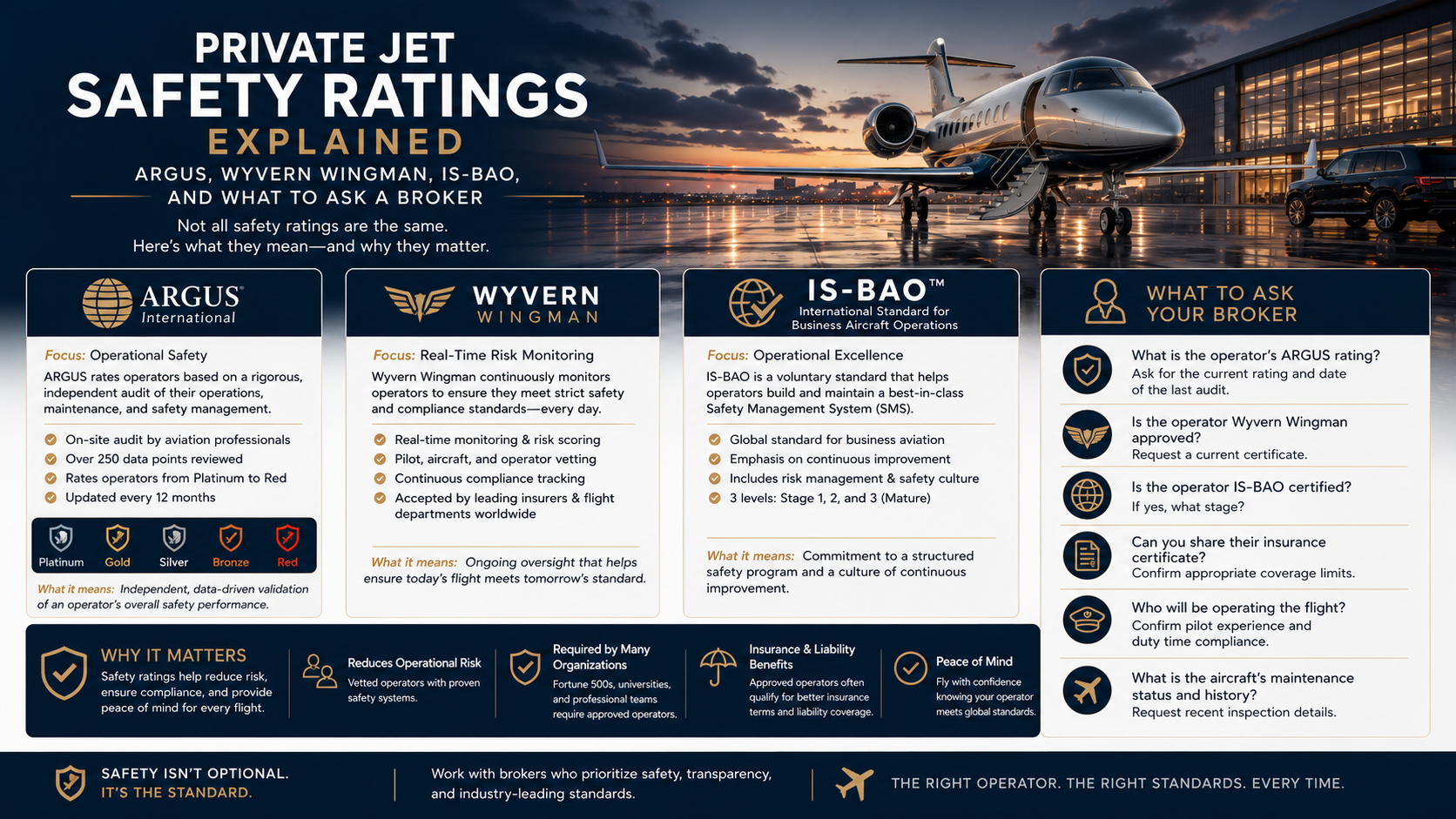
5
min read
Private Jet Safety Ratings Explained (ARGUS, WYVERN Wingman, IS-BAO, and What to Ask a Broker)
Private jet safety ratings, such as ARGUS, WYVERN, and IS-BAO, are essential tools for evaluating charter operators. These ratings assess how well operators train crews, maintain aircraft, and manage risks, providing an extra layer of safety assurance. Understanding these ratings and verifying the operator's credentials can significantly enhance your travel safety.
Read MoreStay updated with our latest insights and tips to elevate your journey with us.
MEMBERSHIPS AND ASSOCIATIONS



Disclaimer: Jettly operates as a charter broker, offering access to a global digital jet charter marketplace. Jettly is not a direct air carrier and does not own or operate aircraft. All advertised flights are conducted by third-party air carriers that are fully licensed and hold the appropriate Part 135 or Part 121 certifications issued by the Federal Aviation Administration (FAA) or equivalent regulatory authorities under U.S. or foreign law. Jettly complies fully with the U.S. Department of Transportation's Part 295 and Part 298 Charter Broker regulations. Jettly does not carry additional liability insurance. Passengers are covered by aircraft operator insurance. TICO: 50023770


